Crypto Courtroom Drama: Kevin O’Leary Wins Nearly $3M Against YouTuber ‘Bitboy’

bitcoinistPublicado em 2026-02-16Última atualização em 2026-02-16

Resumo

Kevin O'Leary, known as "Mr. Wonderful" from Shark Tank, has been awarded a $2.8 million default judgment by a US federal court against YouTuber Ben "BitBoy" Armstrong. The ruling stems from a defamation lawsuit after Armstrong failed to respond to allegations that he made false social media posts accusing O'Leary of involvement in a fatal 2019 boating incident. The damages include $78,000 for reputational harm, $750,000 for emotional distress, and $2 million in punitive damages. The case is unrelated to crypto, but highlights legal risks for influencers spreading unverified claims.

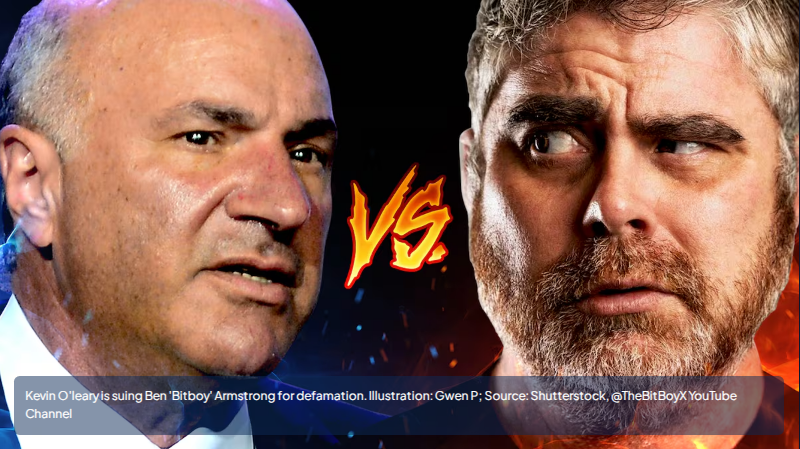
Businessman and TV personality Kevin O’Leary, known as “Mr. Wonderful” from Shark Tank, has won a $2.8 million judgment after a US federal court entered default against popular YouTuber Ben “BitBoy” Armstrong.

The ruling comes after Armstrong failed to respond to a defamation lawsuit related to false claims he made on social media, which accused O’Leary of involvement in a 2019 boating accident that resulted in fatalities.

Those claims were never proven in court, and reporters have noted the legal action focused on restoring reputation and seeking damages for harm caused by the statements.
Court Enters Default Judgment

The court award totals roughly $2.8 million in combined damages. That figure breaks down into about $78,000 for reputational injury, $750,000 for emotional distress, and $2,000,000 in punitive damages meant to punish the conduct.

Judge Beth Bloom presided over the matter in the US District Court for the Southern District of Florida, which handled filings and issued the judgment. The ruling came after procedural steps that allow a plaintiff to obtain judgment when a defendant fails to respond.

Allegations And Timeline

Reports say the posts at the center of the case appeared in March of last year. They accused the businessman of being connected to lethal conduct and alleged a cover-up. O’Leary has never been charged in relation to that incident, and later court records showed related parties were cleared at trial.

Total crypto market cap currently at $2.33 trillion. Chart: TradingView

The defamation suit alleged the statements crossed the line from opinion into false factual claims that damaged reputation and caused distress. Because Armstrong did not appear or meaningfully answer the complaint, the court treated the claims as conceded for purposes of final judgment.

Crypto Connection And Implications

Armstrong is a well-known personality in the world of cryptocurrency, operating the popular site BitBoy Crypto. His messages reach thousands of cryptocurrency fans and investors, which helped to spread the false claims.

Although the case itself is not related to cryptocurrency, it shows the legal danger that cryptocurrency influencers may face when posting unverified or defamatory information online. This decision may make other personalities in the cryptocurrency world more careful about what they post online.

Featured image from Getty Images, chart from TradingView

Perguntas relacionadas

QWhat was the total amount of the default judgment awarded to Kevin O'Leary against Ben Armstrong?

AThe total default judgment awarded to Kevin O'Leary was approximately $2.8 million.

QWhat were the three categories of damages included in the court's award and what were their amounts?

AThe damages were broken down into $78,000 for reputational injury, $750,000 for emotional distress, and $2,000,000 in punitive damages.

QWhy did the US federal court enter a default judgment in this case?

AThe court entered a default judgment because Ben Armstrong failed to respond to the defamation lawsuit.

QWhat was the nature of the false claims that Ben Armstrong made about Kevin O'Leary?

AArmstrong made false claims on social media accusing Kevin O'Leary of involvement in and a cover-up of a fatal 2019 boating accident.

QWhat potential impact does this case have on other cryptocurrency influencers, according to the article?

AThe article suggests the ruling may make other cryptocurrency influencers more careful about posting unverified or defamatory information online due to the legal dangers it highlights.

Leituras Relacionadas

Winter for Crypto IPOs: Consensys and Ledger Withdraw Applications

The crypto IPO window is tightening significantly in 2026, marked by prominent companies delaying or pausing their public listing plans. Following a successful 2025 "harvest year" that saw Circle, Bullish, and Gemini go public amidst a bull market, the tide has turned. Consensys, developer of MetaMask, recently postponed its IPO until at least fall 2026. Hardware wallet leader Ledger also suspended its planned US listing due to unfavorable market conditions, with Kraken having previously delayed its own plans. This shift is driven by a cooling market in 2026, characterized by a significant Bitcoin price correction, declining trading volumes, and reduced investor risk appetite for crypto stocks. The poor post-IPO performance of 2025 listings like Circle and Bullish, which saw major share price declines, has heightened investor caution. This contrasts sharply with the current AI sector, where companies like SpaceX, OpenAI, and Anthropic are commanding massive valuations and investor enthusiasm based on narratives of stable, exponential growth. Crypto companies now face pressure to transition from hype-driven models to demonstrating reliable cash flows and robust compliance. While the paused IPO plans may lead to valuation resets and affect ecosystem liquidity, they also accelerate industry consolidation toward stronger, more compliant infrastructure players. A potential recovery in Bitcoin's price and clearer regulations could reopen the IPO window in the latter half of 2026.

marsbitHá 3h

Winter for Crypto IPOs: Consensys and Ledger Withdraw Applications

marsbitHá 3h

ChatGPT Can Manage Your Money for You. Would You Trust It with Your Bank Account?

OpenAI has launched a personal finance tool for ChatGPT, currently in preview for US-based ChatGPT Pro users. This feature allows users to connect their bank and investment accounts (via Plaid, supporting over 12,000 institutions) directly to ChatGPT. It analyzes transactions, generates visual dashboards, and offers conversational financial advice—such as budgeting or planning for major purchases—based on the user's actual data. This move follows OpenAI's acquisitions of fintech startups Roi and Hiro Finance, signaling a strategic push into vertical "super assistant" applications, similar to its earlier health-focused feature. However, the launch has sparked significant privacy concerns. Critics question the safety of granting such sensitive financial access to an AI, especially amid ongoing lawsuits alleging OpenAI shared user chat data with third parties like Meta and Google. OpenAI emphasizes that ChatGPT only reads data (no transaction capabilities), deletes it within 30 days if disconnected, and offers opt-out options for model training. Yet, trust remains a major hurdle. The trend reflects a broader industry shift: AI companies like Anthropic and Perplexity are also targeting high-value, data-rich domains like finance and health. While technically promising, the tool operates in a regulatory gray area—it provides personalized guidance but disclaims formal financial advice or liability. Ultimately, OpenAI's challenge is convincing users to trust an AI with their most private financial information.

marsbitHá 3h

ChatGPT Can Manage Your Money for You. Would You Trust It with Your Bank Account?

marsbitHá 3h

Trading

Spot
Futuros
活动图片