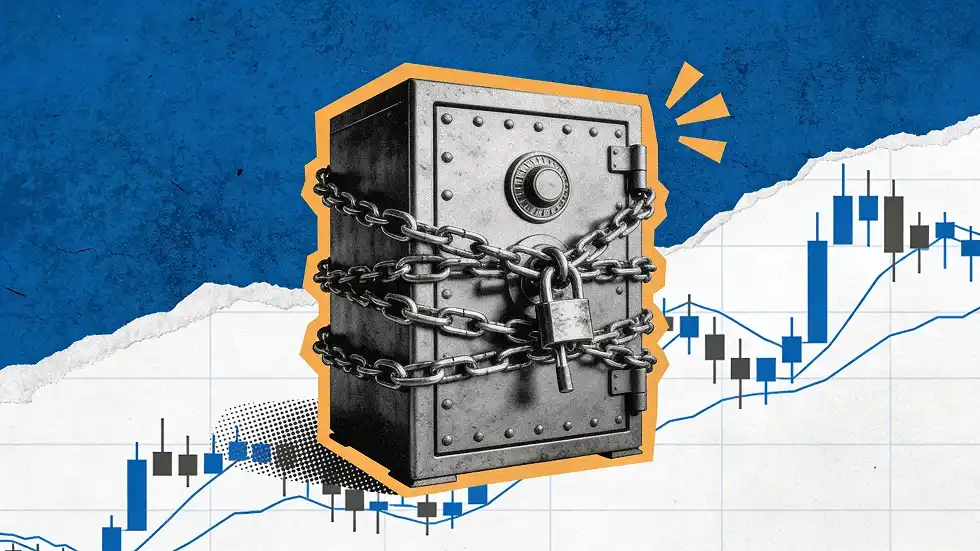
Bridgewater Founder Ray Dalio: The Concept and Mechanism of the All Weather Portfolio

marsbitPublicado em 2026-03-24Última atualização em 2026-03-24

Resumo

Ray Dalio, founder of Bridgewater Associates, shares the core principles behind the All Weather Portfolio—a strategy designed to perform well across all economic environments with minimal need for market timing. The goal is to achieve returns significantly higher than cash or low-risk assets, with lower risk than traditional portfolios like the 60/40 stock-bond mix. Dalio emphasizes that cash, while safe from default, often yields the worst long-term real returns, especially during high inflation. The All Weather Portfolio is built on the concept of risk parity, balancing asset classes based on their risk contributions rather than capital allocation. By understanding how different assets (such as bonds, gold, inflation-linked securities, and commodities) react to changes in growth and inflation, the portfolio is structured to maintain stability. It aims to be passively held, avoiding market timing, which Dalio argues most investors—even professionals—cannot execute successfully. Originally developed for his family, the strategy has been refined over 30 years. Dalio encourages investors to understand and apply these principles to build confidence and resilience, particularly in volatile markets. He plans to release a detailed “recipe” for constructing such a portfolio in the future.

Author :@RayDalio

Compiled by: He Tongxue

Bridgewater Founder I am at a stage in my life where my primary goal is to pass on the principles I have learned over the past 60 years—principles that have helped me and that I believe can also help others. I believe one of the most important investment principles I can convey is about what the "All Weather Portfolio" is and how to construct such a portfolio. I believe these principles are particularly valuable in risky times like the present.

For me, the most important thing for most investors is to have a portfolio that: a) is well-diversified/designed to achieve the highest possible return with minimal risk; b) does not require market timing. The reasons are: a) Although most people believe the safest investment is cash (such as short-term Treasury bills, or interest-bearing deposits like high-quality money market funds with near-zero default risk), because it does not default, these cash investments inevitably yield the lowest after-tax returns over the long term and perform particularly poorly during periods of high inflation—meaning they lose significant purchasing power. It is also true that b) almost all investors (including most seasoned professional investors) cannot effectively time the market, even if they think they can. Therefore, I believe that for most investors managing their own portfolios, investment should involve as little or even no market timing as possible.

The All Weather Portfolio is a passively held portfolio with expected returns significantly higher than low-risk assets like cash, but with risk much lower than high-risk assets like stocks and bonds, and this holds true in any environment. This differs from most portfolios—such as the classic 60/40 stock-bond portfolio, or those that perform well in good times and poorly in bad times. So to be clear, the All Weather Portfolio is a type of portfolio designed to achieve the above goals, not a specific investment product. It is more like a financial engineering challenge aimed at achieving this balance, from which investment products can be derived. My All Weather Portfolio is constructed in my own way, which I will briefly describe here and elaborate on later. Naturally, my approach has evolved and improved over time, and I have some ideas to make it even better. But anyone can implement it in their own way—perhaps I should hold a competition to see who can build the best method.

I will start by explaining how I developed my method and how it works.

About 30 years ago, I tried to create an investment strategy for my family so they could invest without my guidance after I passed away. I believed I needed a portfolio that could:

a) Provide returns significantly higher than cash (i.e., equal to or exceeding the classic 60/40 stock-bond portfolio);

b) Have lower risk than the 60/40 portfolio;

c) Not perform poorly in any specific type of economic environment;

d) Not require market timing.

In my view, the only way to achieve such an All Weather Portfolio was to hold a variety of diversified, higher-return but higher-risk investments, so that when combined, due to the mutual diversification effects among these asset classes, the overall portfolio would achieve the same high returns as individual assets but with lower risk. To achieve better diversification, I developed the concept of "Risk Parity"—that is, adjusting investments with different risk levels (i.e., different volatilities) by increasing the risk/volatility of low-risk/low-volatility investments and reducing the risk/volatility of high-risk/high-volatility investments, so that their risk levels become more balanced. Then I balanced my exposure to each asset class based on the most fundamental factors driving their returns. In other words, by understanding how each asset class responds to changing economic conditions (such as inflation and growth—for example, bonds perform poorly when inflation and growth rise, while inflation-hedging assets like gold, inflation-linked bonds, and commodities perform well), and by allocating equal risk in environments where inflation and growth rise and fall, I could create a passive strategic allocation portfolio that remains well-balanced across all economic scenarios. Thirty years later, I still firmly believe that having this core strategic portfolio is crucial. My All Weather Portfolio is my ideal, continuously held strategic asset allocation—i.e., the "beta" (asset class) portfolio. Although I also make many tactical bets based on my judgments about market trends to create "alpha," these are achieved by creating a well-diversified alpha portfolio, which I call the"Pure Alpha" strategy. (I won’t explain this method in detail now, as it would digress too far.)

I developed this All Weather method together with my excellent Bridgewater team, especially Bob Prince and Greg Jensen, who have been at Bridgewater for 40 and 30 years respectively and remain co-chief investment officers there. After building it, I found the method simple and straightforward enough that almost anyone could implement it, and I couldn’t imagine we would be paid for managing money for others using it. So I showed almost everyone I knew how to do it (and I still want to do this today), but to my surprise, many clients asked us to manage their money using this strategy. We launched it as a product, and naturally, it has evolved and improved since then. Bridgewater is now operating and optimizing it in their own way, and I am operating and optimizing it in my own way. The difference between us is: they manage All Weather accounts for others, while I only do it for my family and family foundation, while showing others how to do it.

Whether investors build their own All Weather Portfolio or have someone else do it, what I most hope is to help people understand how it works and give them the opportunity to apply it, so they can have confidence in achieving good returns without suffering unacceptable losses in market/economic environments that most people consider bad. I have written a lot about how to build my All Weather Portfolio and distributed it widely. (For example, if you want to systematically learn my investment principles, you can access them through the online course I collaborated on with the Singapore Wealth Management Institute:). In any case, I will soon write out my "recipe" to more clearly explain how you can build your own All Weather Portfolio, and I will share it once it is ready.


Criptomoedas em alta

Perguntas relacionadas

QWhat is the primary goal of Ray Dalio's All Weather Portfolio?

AThe primary goal is to create a portfolio that is well-diversified and engineered to provide returns significantly higher than cash with much lower risk than stocks and bonds, without the need for market timing, and to perform reasonably well in all economic environments.

QAccording to Dalio, why is cash not the safest long-term investment?

ABecause while it carries minimal default risk, cash investments (like short-term Treasuries) provide the lowest after-tax returns over the long term and perform particularly poorly during periods of high inflation, leading to a significant loss of purchasing power.

QWhat is the core concept of 'Risk Parity' as described in the article?

ARisk Parity is the concept of adjusting investments with different risk/volatility levels so that their risk levels are equalized. This is done by increasing the risk/volatility of low-risk investments and decreasing the risk/volatility of high-risk investments, allowing them to better balance each other.

QHow does the All Weather Portfolio achieve balance across different economic conditions?

AIt achieves balance by understanding how different asset classes perform under varying economic conditions (like rising/falling inflation and growth) and then allocating an equal amount of risk to environments where inflation and growth are rising versus environments where they are falling.

QWhat is the key difference between the 'All Weather' (Beta) portfolio and the 'Pure Alpha' strategy mentioned by Dalio?

AThe All Weather portfolio is the core strategic, passive asset allocation (Beta) designed to perform in all environments. The Pure Alpha strategy consists of additional tactical bets based on market views to generate excess returns, and it is implemented through a separate, well-diversified alpha portfolio.

Leituras Relacionadas

Will MicroStrategy Fall Into a Death Spiral? How Will the Macro Outlook Evolve in the Second Half of the Year?

**Summary:** The discussion centers on recent Bitcoin price declines and the evolving financial strategy of MicroStrategy (MSTR). The core argument is that the primary pressure is not from one-off Bitcoin sales by MSTR, but from the market's new expectation that MSTR may need to engage in *sustained, small-scale* Bitcoin sales to cover cash flow obligations for its growing portfolio of preferred shares and debt instruments (like STRC). This shift is driven by its stated goal of maintaining "bitcoins per share neutrality." The market is now testing whether it can absorb this potential ongoing selling pressure without entering a severe "death spiral" with Bitcoin's price. A resolution may involve MSTR softening its approach to avoid damaging both its stock and Bitcoin. The conversation then explores the parallel rise of AI-related stocks. The guest posits that AI is fundamentally restructuring labor, with "tokens" (representing access to AI models/compute) becoming a new form of capital and a substitute for human execution. This drives corporate efficiency and profits, benefiting upstream hardware providers (semiconductors, data centers), which explains the sustained rally. This represents the early stages of a "machine economy." Regarding crypto exchanges offering US stock trading, this is seen as a natural evolution. With few crypto-native assets generating lasting value, exchanges are pivoting to distribute valuable real-world assets (RWAs). This doesn't necessarily harm crypto's long-term prospects, as blockchain infrastructure may become crucial for future machine-to-machine economies. The analysis concludes that the era of rampant altcoin speculation is likely over, heavily damaged by the liquidity shock of the "1011" event (likely referring to a major market crash). Meme-driven capital has largely migrated to US equities. Looking ahead, macroeconomic uncertainty is rising due to potential large IPOs (e.g., SpaceX) and the US elections. While short-term market corrections are possible, the long-term trends of AI-driven productivity gains and the maturation of blockchain towards real-world utility and institutional adoption remain intact.

marsbitHá 6m

Will MicroStrategy Fall Into a Death Spiral? How Will the Macro Outlook Evolve in the Second Half of the Year?

marsbitHá 6m

Will MicroStrategy Fall into a Death Spiral? What Will the Macro Trend Be in the Second Half of the Year?

The podcast features investor Didier discussing the recent Bitcoin downturn and the evolving strategy of MicroStrategy (MSTR). He argues the core pressure is not macro factors or ETF outflows, but the market pricing in an expectation that MSTR will engage in continuous, small-scale Bitcoin sales to fund its increasing preferred stock and debt obligations under its "bitcoin-per-share neutrality" principle. This creates a structural headwind. However, he is cautiously optimistic a "death spiral" is avoidable without new major shocks, as market support is likely to emerge at a certain price point. Didier then posits that the AI-driven bull market in US stocks (semiconductors, data centers) is fundamentally driven by AI agents and tokens becoming the "new labor force," displacing human roles and boosting corporate margins. This shift toward a machine economy is still in its early stages. He comments on crypto exchanges adding US stock trading, viewing it as a natural move toward valuable real-world assets as truly valuable crypto-native assets remain scarce. For crypto-native traders, he suggests existing strategies (e.g., meme-chasing or value investing) can translate to similar assets in US markets. The discussion notes the severe liquidity damage from the "1011 event" (likely referring to a major market crash) has essentially ended the altcoin cycle, with speculative momentum shifting to the more liquid US stock market. Regarding the macroeconomic outlook for H2 2024, Didier expresses increased caution due to potential market pressure from upcoming mega-IPOs (e.g., SpaceX) and US midterm election risks. Long-term, he remains bullish on AI's productivity gains and its convergence with blockchain/Web3, which he sees maturing into a more institutional, real-asset-focused phase.

链捕手Há 8m

Will MicroStrategy Fall into a Death Spiral? What Will the Macro Trend Be in the Second Half of the Year?

链捕手Há 8m

Dylan Patel: Founder of SemiAnalysis, Praised by Jensen Huang, is a 'Beekeeper' and 'Forum Enthusiast'

Dylan Patel, founder of the independent research firm SemiAnalysis, has an unconventional background. A former beekeeper from rural Georgia, he entered the semiconductor world as a self-taught "forum warrior," discussing chip technology anonymously online from a young age. He launched the SemiAnalysis blog in May 2020, which later transitioned to a paid subscription model. The firm has grown from a one-person operation to a global team of around 60, with a dedicated teardown lab. Its detailed, technically-focused analysis on semiconductor supply chains, AI infrastructure, and products has earned significant industry recognition. Notably, NVIDIA founder Jensen Huang has publicly cited their reports. In a landmark case, a critical 2024 report on AMD's MI300X GPU software stack led to a 90-minute call with AMD CEO Lisa Su, who thanked him for the constructive feedback. SemiAnalysis later acknowledged AMD's improvements. The firm's influence on markets was seen when a report on NVIDIA's Rubin memory configuration was partially shared, affecting memory stock prices. Dylan Patel emphasized the importance of context, contrasting the shared excerpt with the report's actual title. SemiAnalysis, now a multi-faceted consultancy with revenue projected to reach $100 million, is known for its deep technical insights that influence major industry players and investment decisions.

marsbitHá 58m

Dylan Patel: Founder of SemiAnalysis, Praised by Jensen Huang, is a 'Beekeeper' and 'Forum Enthusiast'

marsbitHá 58m

Dylan Patel: SemiAnalysis, Praised by Jensen Huang, is Founded by a 'Beekeeper and Forum Warrior'

Dylan Patel, founder of the independent research firm SemiAnalysis, has an unconventional background. Growing up in rural Georgia, he later worked as a beekeeper in Minnesota. His entry into semiconductors began as a self-taught "forum warrior," engaging anonymously in online tech communities from a young age. In May 2020, he started the SemiAnalysis blog on WordPress, later moving it to Substack as a paid subscription service. The firm has since evolved from a one-person operation into a global company with around 60 employees, featuring a dedicated chip teardown lab. Its revenue, reaching $20 million last year, is projected to surpass $100 million this year. SemiAnalysis is highly regarded in the AI and semiconductor industry for its deep technical analysis. NVIDIA founder Jensen Huang has publicly praised its reports. In a notable instance, a critical report on AMD's MI300X GPU software shortcomings prompted a 90-minute call with CEO Lisa Su, who thanked Patel for the "constructive feedback." A later report acknowledged AMD's subsequent improvements. The firm's analyses have significant market impact. For example, a June report discussing potential memory configuration changes in NVIDIA's next-generation servers was cited as a factor in pressure on memory-related stocks. Patel plans to establish a venture capital firm, having already made personal investments in about 20 startups. SemiAnalysis combines roles as a consultancy, model platform, and tech lab, focusing on the practical bottlenecks in AI infrastructure.

Odaily星球日报Há 1h

Dylan Patel: SemiAnalysis, Praised by Jensen Huang, is Founded by a 'Beekeeper and Forum Warrior'

Odaily星球日报Há 1h

Ethereum Q1 Report: On-chain Activity Hits Record High, Tokenized Assets Lead the Industry

Ethereum Q1 2026 Report: On-chain activity hits record high, tokenized assets lead the industry. In Q1 2026, Ethereum's network experienced a unique divergence: on-chain activity soared while USD-denominated metrics declined. Monthly active users reached 13.2 million, transactions hit 200.4 million, and TPS averaged 25.78, all setting new highs. However, total value locked (TVL) fell 11.0% to $316.2B, DEX volume dropped 24.0% to $134.5B, and ETH's fully diluted market cap fell 30.3% to $290B. A key driver was the Blob Parameter Fork (BPO#2) in January, which increased data capacity and caused a sharp 47.9% drop in layer-1 transaction fees despite higher usage. Etherean's tokenized asset market cap reached $203.4B, up 42.9% year-over-year. While stablecoins ($178.9B) saw a slight dip, tokenized funds ($19.4B, +73.1% YoY), commodities ($4.7B, +325.9% YoY), and stocks ($365.1M) grew strongly. Ethereum dominates cross-chain comparisons, holding 71% of TVL, 79.2% of active loans, 61.8% of stablecoins, and 73% of tokenized funds among top chains. The report highlights a "Jevons Paradox" scenario: network expansion reduces per-transaction costs but unleashes latent demand, driving long-term growth. Ethereum's strategy mirrors Amazon's early focus on scale over profit. Its open, neutral foundation is seen as critical for institutional adoption, as evidenced by growing activity from firms like BlackRock and JPMorgan. The roadmap targets further scalability, aiming for thousands of TPS by 2029 to solidify its role as a global financial settlement layer.

marsbitHá 1h

Ethereum Q1 Report: On-chain Activity Hits Record High, Tokenized Assets Lead the Industry

marsbitHá 1h

Trading

Spot
Futuros

Artigos em Destaque

Como comprar RAY

Bem-vindo à HTX.com!Tornámos a compra de Raydium (RAY) simples e conveniente.Segue o nosso guia passo a passo para iniciar a tua jornada no mundo das criptos.Passo 1: cria a tua conta HTXUtiliza o teu e-mail ou número de telefone para te inscreveres numa conta gratuita na HTX.Desfruta de um processo de inscrição sem complicações e desbloqueia todas as funcionalidades.Obter a minha contaPasso 2: vai para Comprar Cripto e escolhe o teu método de pagamentoCartão de crédito/débito: usa o teu visa ou mastercard para comprar Raydium (RAY) instantaneamente.Saldo: usa os fundos da tua conta HTX para transacionar sem problemas.Terceiros: adicionamos métodos de pagamento populares, como Google Pay e Apple Pay, para aumentar a conveniência.P2P: transaciona diretamente com outros utilizadores na HTX.Mercado de balcão (OTC): oferecemos serviços personalizados e taxas de câmbio competitivas para os traders.Passo 3: armazena teu Raydium (RAY)Depois de comprar o teu Raydium (RAY), armazena-o na tua conta HTX.Alternativamente, podes enviá-lo para outro lugar através de transferência blockchain ou usá-lo para transacionar outras criptomoedas.Passo 4: transaciona Raydium (RAY)Transaciona facilmente Raydium (RAY) no mercado à vista da HTX.Acede simplesmente à tua conta, seleciona o teu par de trading, executa as tuas transações e monitoriza em tempo real.Oferecemos uma experiência de fácil utilização tanto para principiantes como para traders experientes.

291 Visualizações TotaisPublicado em {updateTime}Atualizado em 2026.06.02

Como comprar RAY

Discussões

Bem-vindo à Comunidade HTX. Aqui, pode manter-se informado sobre os mais recentes desenvolvimentos da plataforma e obter acesso a análises profissionais de mercado. As opiniões dos utilizadores sobre o preço de RAY (RAY) são apresentadas abaixo.

活动图片