Blockchain Lending Platform Figure Hit By Data Breach – Details

bitcoinistPublicado em 2026-02-16Última atualização em 2026-02-16

Resumo

Figure Technology, a blockchain lending platform, suffered a data breach after an employee fell victim to a social engineering attack. The breach resulted in the theft of approximately 2.5GB of customer data, including full names, home addresses, dates of birth, and phone numbers. The hacker group ShinyHunters claimed responsibility and publicly released the data after alleged failed ransom negotiations. The company confirmed that its core blockchain systems and financial services remained secure, emphasizing the incident was due to human error, not a technical flaw. Figure is offering free credit monitoring to affected customers and has launched an internal review. The exact number of impacted individuals has not been disclosed.

Figure Technology confirmed that some customer files were stolen after an employee was tricked, according to reports. The company says the intrusion happened when an internal account was used to download a limited batch of records. The breach did not stem from a flaw in its blockchain system, but from human error.

Reports say the stolen material was later posted online by a hacker collective that claimed responsibility. The group is said to have released about 2.5GB of data after alleging that ransom talks broke down. That public dump quickly drew attention across the crypto and fintech space.

Customer Names, Contact Details Among Items Exposed

Based on reports that reviewed samples of the leaked files, the exposed data includes full names, home addresses, dates of birth, and phone numbers. These are the kinds of details often used in identity fraud or targeted scams.

The exact number of affected customers has not been shared publicly. That missing figure leaves uncertainty about how large the fallout could be.

Security researchers warn that even when bank accounts or crypto wallets are untouched, personal data alone can create serious risk. Phishing calls, fake loan offers, and account takeover attempts often follow this type of leak.

Total crypto market cap at $2.34 trillion on the daily chart: TradingView

Figure Hit By Social Engineering Attack

According to coverage of the incident, attackers used a social engineering method to gain access to an employee’s credentials or active session. Instead of breaking through code, they relied on deception. Once inside, files were downloaded through that employee’s access rights.

The company said it detected suspicious activity and moved to block it. Outside forensic specialists were brought in to review system logs and determine what was accessed. A broader internal review is also under way.
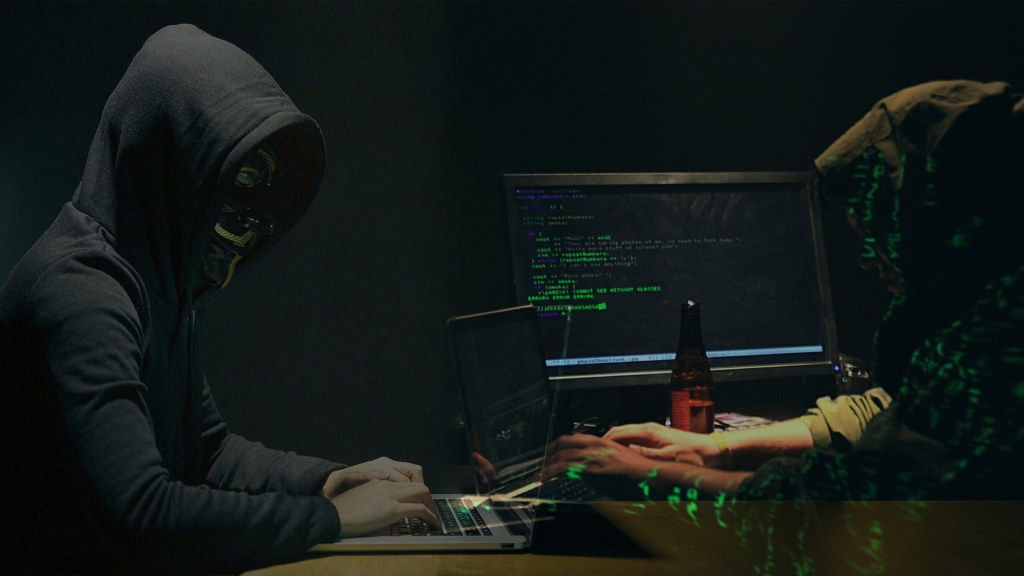
Image: CybersecAsia

ShinyHunters claimed responsibility for the breach on its leak site. The group has been linked to prior data exposures involving tech and finance firms. In this case, the data was made public after payment demands were reportedly rejected.

Figure said it will notify customers whose information was involved. Free credit monitoring services are being offered to those who receive formal notice. Impacted individuals are being advised to watch for unusual activity and unsolicited messages.

Funds And Core Services Secure

Reports note that lending operations and on-chain systems were not breached. The platform’s core financial infrastructure was not described as affected. Still, the exposure of personal records carries its own weight.

Financial companies remain frequent targets because they hold detailed customer files. A single employee account, if misused, can open a door wider than expected. That lesson has surfaced again here.

Regulators may seek further details in the coming weeks. Customers will be waiting for clearer numbers. The long-term cost, both financial and reputational, will depend on how widely the data spreads and how quickly protective steps are taken.

Featured image from Yahoo Finance, chart from TradingView

Perguntas relacionadas

QWhat was the cause of the data breach at Figure Technology?

AThe data breach was caused by human error, specifically a social engineering attack where an employee was tricked, leading to the misuse of an internal account to download customer records.

QWhat type of customer data was exposed in the Figure breach?

AThe exposed data includes full names, home addresses, dates of birth, and phone numbers of customers.

QWhich hacker group claimed responsibility for the data breach?

AThe hacker collective ShinyHunters claimed responsibility for the breach and later posted the stolen data online.

QWere Figure's core financial systems or blockchain infrastructure compromised in the attack?

ANo, the company confirmed that its lending operations, on-chain systems, and core financial infrastructure were not breached in the attack.

QWhat steps is Figure taking to help affected customers?

AFigure is notifying affected customers, offering free credit monitoring services, and advising them to watch for unusual activity and unsolicited messages.

Leituras Relacionadas

Understanding Hash in One Article: The "Browser Miner" on Ethereum

Hash is an Ethereum-based ERC-20 token described as a "browser-minable post-quantum token." Its key features include enabling browser-based GPU mining without specialized hardware, a fixed supply cap of 21 million tokens, immutable and permissionless smart contracts with no team allocation or pre-mining, and an emphasis on post-quantum security using Keccak256 hashing. The mining mechanism is a simplified on-chain proof-of-work where miners solve unique challenges tied to their wallet address. Key design elements prevent answer theft, with epochs resetting every 100 blocks (~20 minutes) and a per-block minting limit. Emission follows a Bitcoin-like halving schedule every 100,000 mints, starting at 100 tokens per mint. Projections suggest all tokens could be mined within approximately 294 days if a target rate of one mint per minute is sustained. Hash emphasizes "post-quantum" security by leveraging hash-based primitives like Keccak256, which are considered more resistant to quantum attacks compared to elliptic-curve cryptography. While not a fully post-quantum asset, it aligns with Ethereum's broader post-quantum research narrative. The project completed its Genesis sale at $0.03 and began trading on Uniswap, with its price reaching around $0.19. The initial circulating supply is small, with 5% sold in Genesis and 5% allocated to liquidity. The majority (47.6% of total supply) is allocated to early-stage mining, leading to a front-loaded emission schedule. This structure, combined with low initial liquidity, makes Hash a high-volatility, high-risk project dependent on sustained miner participation and market demand to absorb new supply.

marsbitHá 3m

Understanding Hash in One Article: The "Browser Miner" on Ethereum

marsbitHá 3m

OpenAI's Largest Internal Wealth Creation: 600 People Cash Out a Total of $6.6 Billion, 75 Take Home the Maximum $30 Million Each

A Wall Street Journal report reveals OpenAI's unprecedented pre-IPO wealth creation. In a single employee stock sale last October, over 600 current and former employees sold shares, collectively cashing out approximately $6.6 billion. Due to high investor demand, the company tripled the individual sale cap to $30 million, with about 75 employees selling the maximum amount. This event represents the largest such transaction in tech industry history for a private company. OpenAI's valuation was $500 billion for this tender offer. Employees with over two years of tenure were eligible, allowing many post-ChatGPT hires their first liquidity event. The company's stock has reportedly grown over 100-fold in seven years. Following a restructuring, employees collectively hold about 26% of OpenAI. The scale of executive wealth is also staggering. In court testimony related to Elon Musk's lawsuit, President and co-founder Greg Brockman confirmed his OpenAI stake is worth around $30 billion. Analysis indicates about 165 current and former employees hold a combined ~$164.9 billion in equity, averaging nearly $1 billion per person in paper wealth. OpenAI's per-employee stock-based compensation is estimated to be 34 times the average of major tech firms before their IPOs. OpenAI continues its rapid ascent, closing a $122 billion funding round at an $852 billion valuation in March. With monthly revenue hitting $2 billion, over 900 million weekly ChatGPT users, and plans for a potential trillion-dollar IPO in late 2026, this wealth-creation engine shows no signs of stopping.

链捕手Há 26m

OpenAI's Largest Internal Wealth Creation: 600 People Cash Out a Total of $6.6 Billion, 75 Take Home the Maximum $30 Million Each

链捕手Há 26m

Understanding CPO (Co-Packaged Optics) in One Article: Why Nvidia Is Willing to Spend $3.2 Billion on a Fiber?

NVIDIA and Corning announced a multi-year strategic partnership on May 6, 2026, with NVIDIA committing up to $3.2 billion to support Corning's U.S. expansion. This investment will triple Corning's manufacturing plants and significantly boost its optical fiber and communications production capacity. The core driver behind this massive investment is the fundamental shift from copper to optical interconnect technology within AI data centers. As GPU clusters scale, copper wires face critical limitations: severe signal attenuation over distance, high energy consumption for signal integrity, and excessive heat generation. Optical fiber, transmitting light instead of electrical signals, solves these issues with minimal loss, near-light speed, and lower power needs. The article outlines a three-stage evolution of data center interconnect: 1. **Traditional Copper Interconnects:** The mainstream solution of the 2010s, now being phased out due to scaling bottlenecks. 2. **Pluggable Optical Modules:** The current mainstream, where modules convert electrical signals to light externally. This process still introduces energy loss and latency. 3. **CPO (Co-Packaged Optics):** The next-generation technology where the optical engine is integrated directly with the GPU chip package. This drastically reduces the electrical signal travel distance to mere millimeters, slashing power consumption and latency while boosting data density. NVIDIA CEO Jensen Huang has identified CPO as an essential core technology for AI infrastructure. NVIDIA's investment signifies a strategic shift from being a buyer to actively controlling its supply chain for critical components. With demand for specialized optical fiber far outstripping supply—evidenced by soaring prices—securing long-term manufacturing capacity has become a competitive necessity. While Corning's expansion may pressure some suppliers, a projected global fiber supply gap of 5-15% over the next few years creates a significant opportunity window, particularly for Chinese manufacturers competitive in optical preforms, chips, and modules. Ultimately, NVIDIA's move is not about chasing a trend but an engineering imperative. The transition to light-based interconnects like CPO is driven by the physical limits of copper, marking a definitive step in the ongoing AI computing revolution.

marsbitHá 50m

Understanding CPO (Co-Packaged Optics) in One Article: Why Nvidia Is Willing to Spend $3.2 Billion on a Fiber?

marsbitHá 50m

Trading

Spot
Futuros
活动图片