21Shares released its latest report, “State of Crypto”, arguing that Bitcoin [BTC] has not broken away from its traditional four-year market cycle.
The report noted that many analysts believed the cycle had ended at the start of 2026. However, Bitcoin’s price action has continued to closely resemble previous post-halving cycles.
Bitcoin peaked near $126,000 in October 2025 before entering a sharp correction. Since then, its trajectory has largely mirrored earlier market cycles.
Is the Bitcoin cycle broken yet?
The authors stress, however, that this does not totally refute the notion that the market has changed.
They said,
Bitcoin’s cycle is evolving, but it has not broken yet.
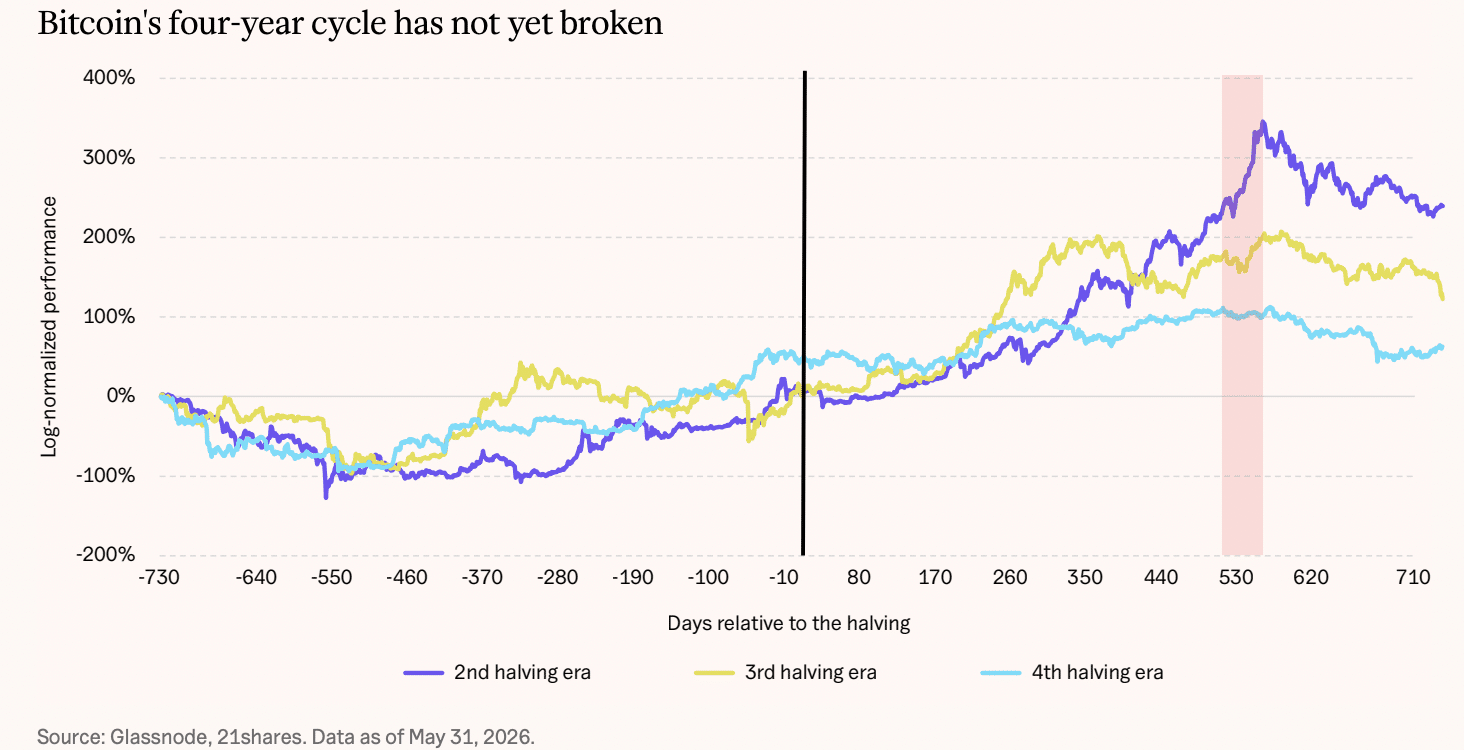
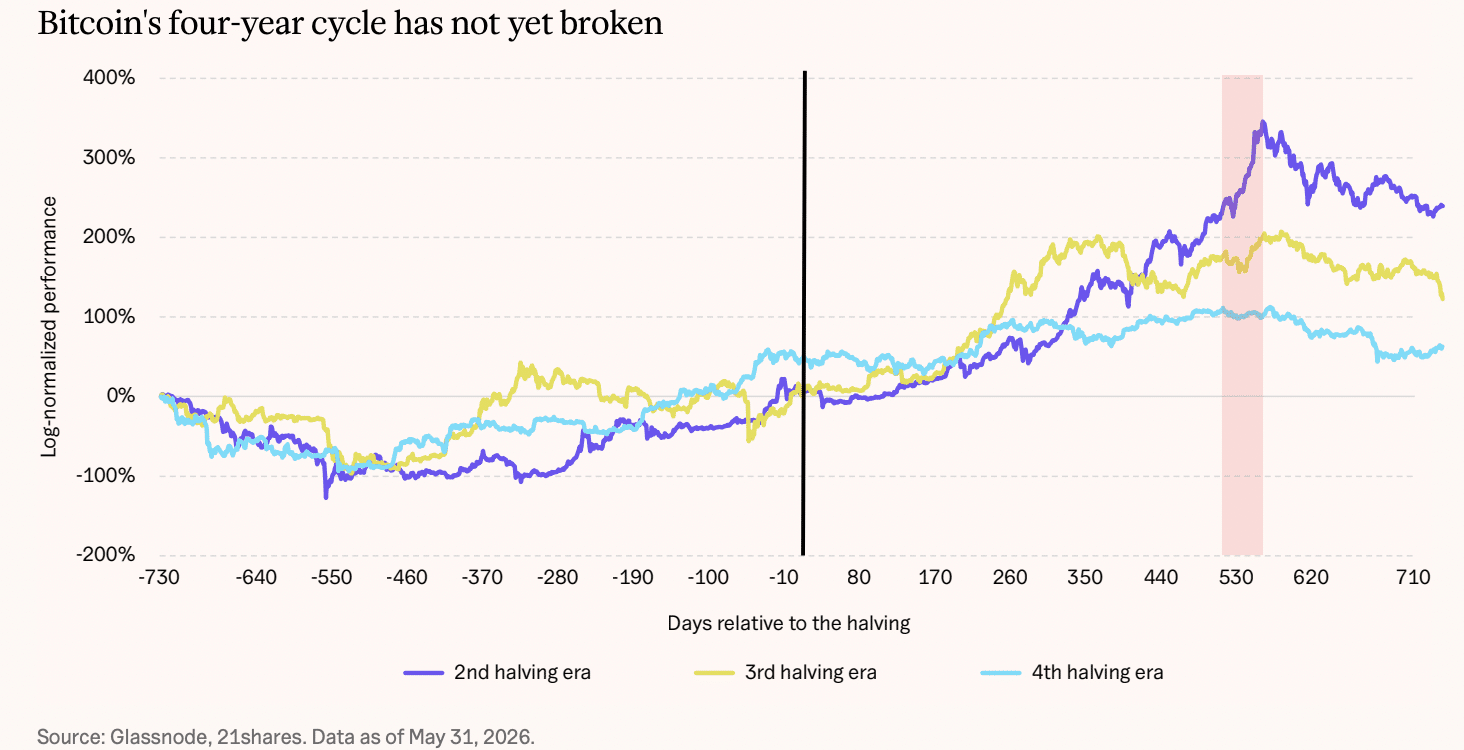
Therefore, the current 50% decline is much less severe than the 80% to 90% drawdowns that have occurred in past bear markets. Another key difference is that,
Notably, bitcoin has also, so far, avoided the outright capitulation that defined earlier downturns—it has not yet traded below its aggregate cost basis of $54,000.
If the market stays above this level, it indicates that it has not yet entered the widespread panic-selling phase, which has historically signaled the bottom of bear cycles.
Mixed sentiment might confuse investors
The report argued that stronger fundamentals do not make Bitcoin immune to market cycles. Investor sentiment, it said, remains heavily influenced by broader macroeconomic conditions.
Even so, 21Shares projected that Bitcoin could recover toward $100,000 by the end of 2026.
That outlook aligned with AMBCrypto’s analysis, which suggested Bitcoin could rebound toward $65,460 if bullish momentum strengthens.
But the ETF market is showing signs of stress, with outflows of $2.92 billion in June 2026 and $2.34 billion in May. Even though March and April saw billions in inflows, only outflows occurred in January and February.
What is the SOPR ratio hinting at?
Meanwhile, the LTH/STH SOPR ratio, which contrasts the profits made by long-term holders (LTHs) and short-term holders (STHs), has been below 1 for the most part (with sporadic spikes above 1) and has recently fallen to about 0.7.
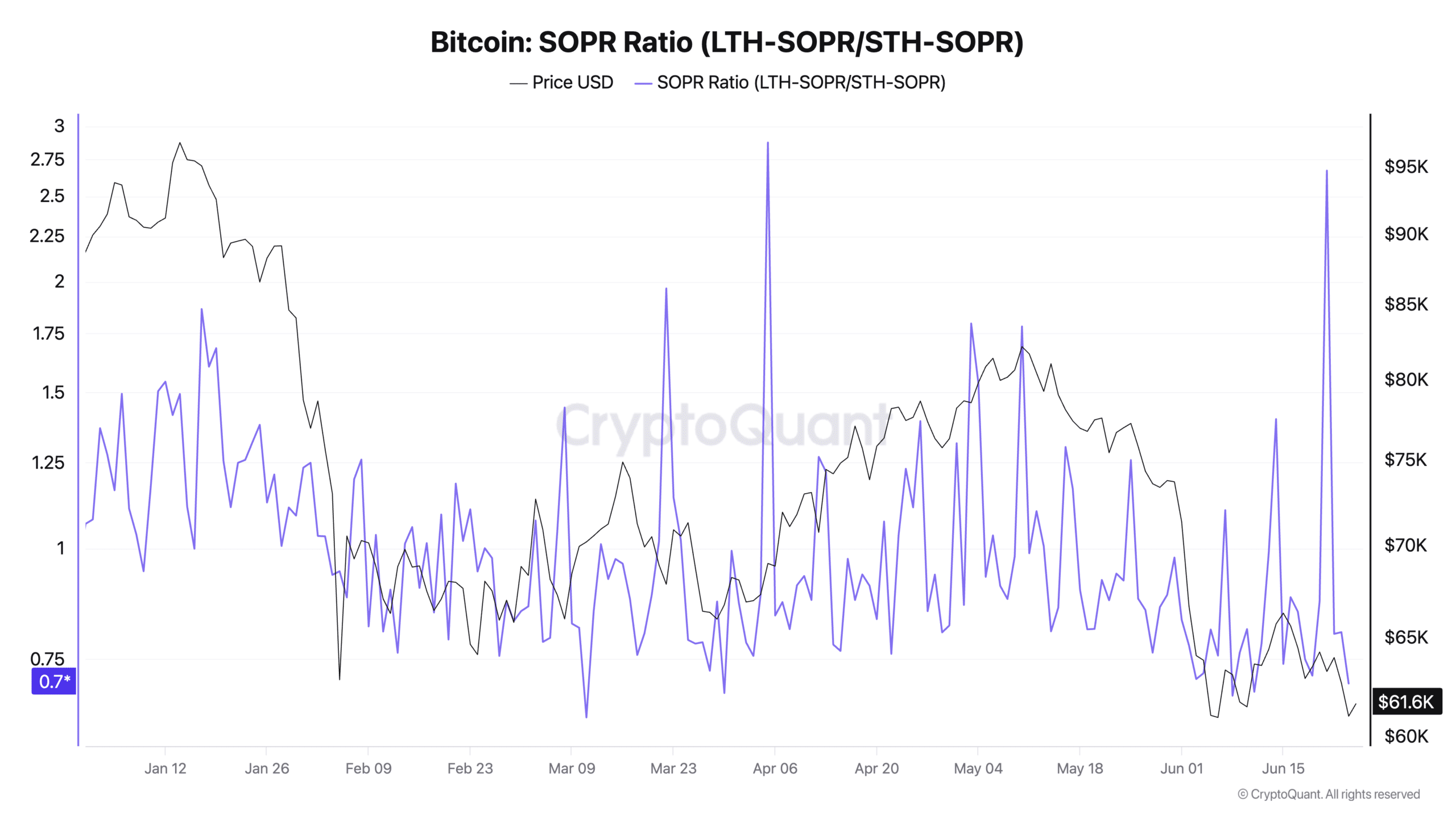
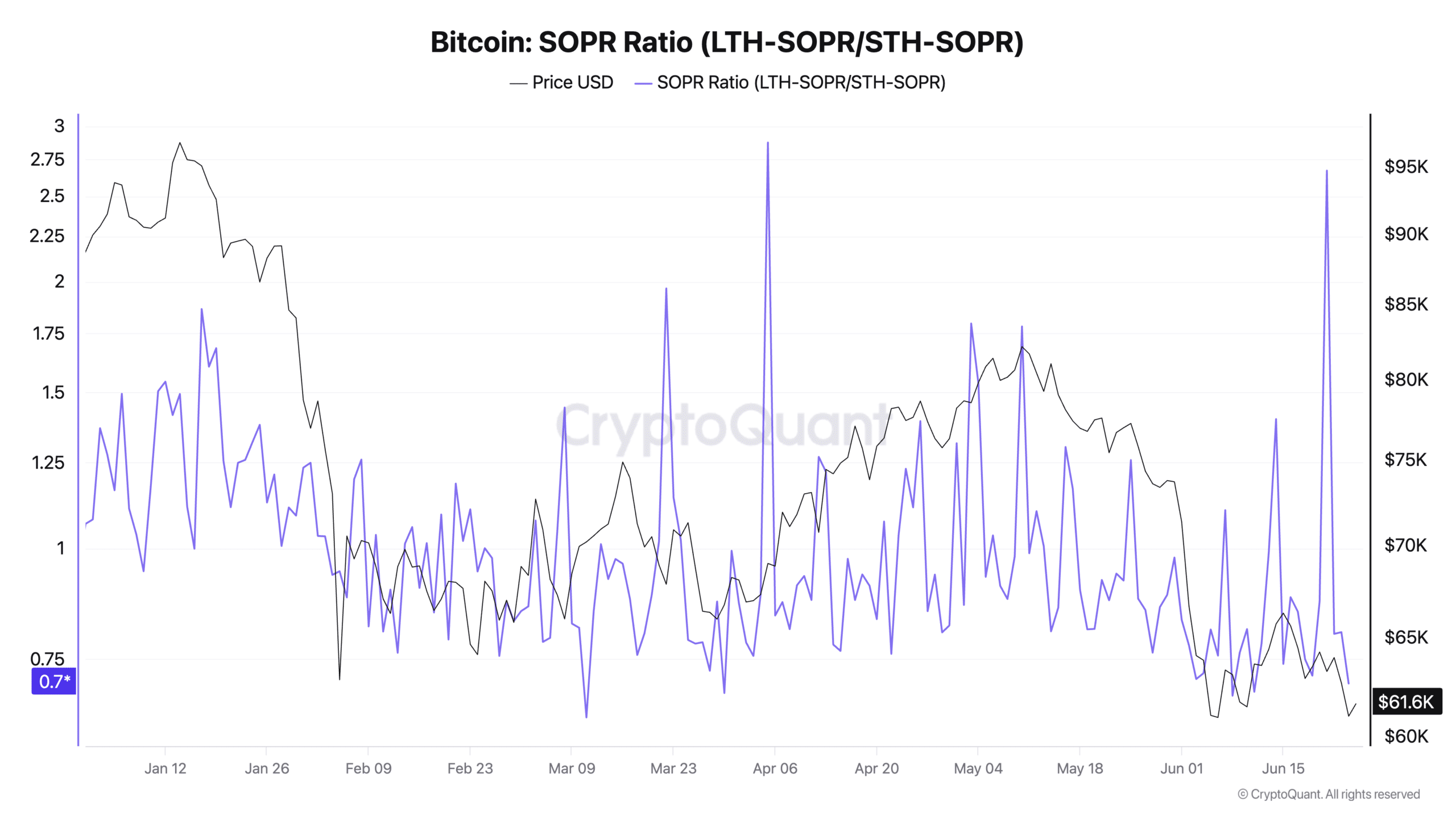
While seasoned investors continue to exhibit conviction, the most recent reading suggests that short-term holders responding to recent price volatility are the main source of selling pressure.
Additionally, the most recent Bitfinex Alpha report indicates that market makers’ net gamma exposure has turned negative. This happens as Bitcoin was trading below the gamma flip level of roughly $68,000–$70,000. It is more likely that volatility will be elevated in this setting because dealers’ hedging activity tends to intensify rather than stabilize price swings.
Final Summary
- Following $126,000 in October 2025, Bitcoin experienced a significant decline in value.
- Short-term investor caution remains, but institutional adoption of Bitcoin is still strengthening its fundamentals.