Bitcoin Pizza Day 16th Anniversary: 10,000 Bitcoins for Two Pizzas Then, Now Worth $780 Million

marsbitPublicado em 2026-05-22Última atualização em 2026-05-22

Resumo

Sixteen years after the first Bitcoin pizza purchase, the event remains a pivotal moment in cryptocurrency history. In May 2010, programmer Laszlo Hanyecz offered 10,000 BTC on a small forum for two Papa John's pizzas. After four days, a user named Jeremy Sturdivant accepted, completing the first recorded real-world transaction using Bitcoin. Those 10,000 BTC, then worth about $41, are now valued at roughly $780 million. This transaction, recorded in Bitcoin block 57043, marked the asset's first price discovery and its move from a digital experiment to a medium of exchange. Hanyecz, an early developer who created GPU mining code, viewed it not as a loss but as a successful proof-of-concept. He repeated similar trades, spending tens of thousands of mined BTC on pizza throughout 2010. In 2018, Hanyecz commemorated the event by buying two pizzas again, this time for just 0.00649 BTC via the Lightning Network, demonstrating Bitcoin's potential for fast, low-cost microtransactions. Today, Bitcoin is a mainstream financial asset held by millions, with major institutions like MicroStrategy accumulating large treasuries and Wall Street offering Bitcoin ETFs. Yet, the "Pizza Day" story endures as a symbol of Bitcoin's origin—a simple exchange that welded digital code to tangible value, a connection that remains powerfully relevant.

Author: Vernacular Blockchain

In the early morning of May 18, 2010, in Jacksonville, Florida, a 28-year-old programmer posted a message on a forum with only 230 members.

His name was Laszlo Hanyecz. The post said, he was willing to pay 10,000 bitcoins for someone to order two large pizzas delivered to his home. The toppings should be onions, green peppers, and sausage, absolutely no anchovies.

This wasn't an impulse buy. It was the first complete price discovery in Bitcoin's history.

Those two pizzas were a weld rod.

Sixteen years later, the two ends of that rod have moved in completely opposite directions. Back then, those 10,000 bitcoins were worth $41, enough for two Papa John's pizzas. Today they are worth $780 million, enough to buy a medium-sized private jet fleet.

Meanwhile, Papa John's is still Papa John's, and pizzas still cost a few dozen bucks each.

Those two pizzas welded a piece of digital code to the physical world for the first time. From that moment on, Bitcoin was no longer just a toy miners gave to each other.

01. A Forum Post That Sat for 4 Days

The post sat for 4 days with no takers.

The forum's 230 members were mostly scattered outside the U.S., and ordering a pizza remotely had its challenges. Hanyecz himself couldn't resist replying, asking if the offer was too low.

On the fifth day, a 19-year-old student from California saw the post.

His name was Jeremy Sturdivant, forum ID jercos. The two negotiated on IRC. Sturdivant, who also had no way to settle with Bitcoin, simply pulled out his debit card, placed a cross-state order at the Papa John's on Atlantic Boulevard in Jacksonville, and fronted about $41. The pizzas themselves were only worth $25 to $30.

On May 22, the pizzas were delivered to Hanyecz's home. Hanyecz sent 10,000 bitcoins to Sturdivant's wallet, throwing in an extra 1 bitcoin as a miner fee. Bitcoin blockchain block 57043 forever records this 10001 BTC transfer.

Sturdivant didn't hold on to them. When Bitcoin rose to around $400, he converted those coins into fiat currency, used it to travel with his girlfriend, and upgraded his computer parts. At today's price, the opportunity cost of that trip is $780 million.

Interestingly, Sturdivant never said he regretted it. He later said in an interview that no one back then really saw those 10,000 coins as money, just an interesting experiment.

It was the first time a decentralized asset stepped out of the code and landed on a cardboard box containing hot pizza.

02. Hanyecz Was No Fool

Mainstream media loves to paint Hanyecz as the foolish geek who craved pizza and lost hundreds of millions. That narrative simply doesn't hold up.

Hanyecz wasn't just a user; he was a developer. He was one of Bitcoin's early code contributors, and the first person in the industry to successfully run a full node on a Mac system. More importantly, he was the first to write GPU mining code and open-source it to the community for free.

The entry of GPUs into mining multiplied the hashrate several times over through parallelization, kicking open the door to the entire mining arms race that followed.

In the summer of 2010, the block reward was still 50 BTC, and the network's total hashrate was extremely low. Hanyecz set up a few GPU mining rigs and practically mined with his eyes closed. His wallet peaked at 43,900 coins in June 2010.

For him, 10,000 bitcoins was just 200 blocks of output.

So that pizza deal wasn't a loss for him; it was a satisfying case of arbitrage across dimensions. Using digital code he mined at nearly zero cost to exchange for hot, real food that filled his stomach. For a geek, that was more exciting than making money.

He repeated the process several more times. Throughout the summer of 2010, he traded a cumulative total of 80,000 to 100,000 bitcoins for pizzas. That wallet was completely emptied by June 2011, most likely transferred to cold storage.

In August, he voluntarily stopped his pizza offers. The reason wasn't regret; it was that the network's hashrate had increased, changing the marginal cost of mining coins.

Looking back on that transaction later, he only said one thing: If no one had been willing to accept it, Bitcoin wouldn't be where it is today.

03. Eight Years Later, He Bought Pizza Again

On February 25, 2018, Hanyecz made another move.

This time he bought two pizzas, spending only 0.00649 bitcoin, equivalent to about $60. The payment method had changed; he used the Lightning Network. The Lightning Network had just launched its mainnet test at the time, with very few people using it daily. Once again, Hanyecz was the first to try it.

The mainnet's 1MB block size and 10-minute block interval meant it could only handle about 7 transactions per second. That throughput simply couldn't support daily, high-frequency spending; with high fees, buying a cup of coffee wasn't even feasible.

The Lightning Network moves transactions off-chain, allowing for instant settlement with near-zero fees, only interacting with the mainnet when channels open or close.

The symbolic weight of this pizza transaction was as significant as the one in 2010. It showed the world that Bitcoin could actually handle small, high-frequency spending scenarios.

But an old problem remained unsolved: Papa John's itself still didn't accept Bitcoin. In both transactions, the merchant received fiat currency converted by an intermediary.

That last mile, from 2010 to 2018, remained uncrossed.

04. Sixteen Years Later, Pizzas Are Barely Affordable

Fast forward to May 2026, the 16th anniversary of Pizza Day.

Bitcoin's price fluctuates between $77,000 and $78,000. A wave of high CPI data earlier in the year pushed the price down from $82,000 to around $76,800, but it was quickly supported by on-chain buying and Nvidia's earnings report.

This was no longer a game for a small forum of 230 people. Global Bitcoin holders now number in the hundreds of millions.

The most aggressive example is MicroStrategy. This company, transformed by Michael Saylor into a Bitcoin treasury, held 843,700 bitcoins as of May 17, accounting for over 4% of the total supply, with a book value of $65.3 billion.

Just from May 11 to 17 that week, they added another 24,900 coins at an average price of $81,000.

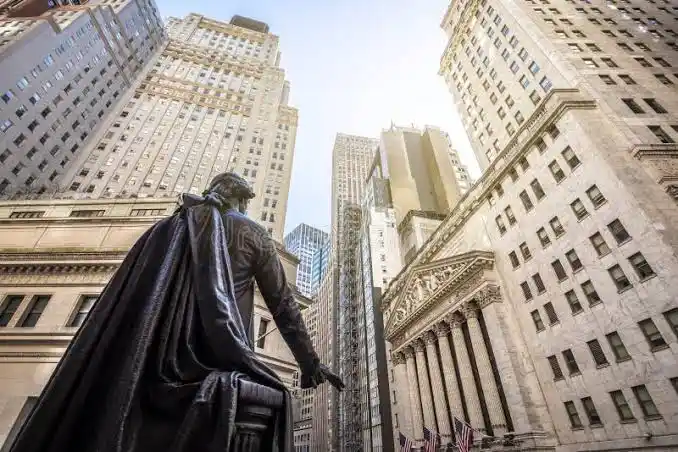
Wall Street's gateway is also wide open. The total assets under management for all US crypto spot ETFs are nearing $120 billion. Bitcoin ETFs alone hold $103.785 billion in net assets, with a cumulative net inflow of $58.718 billion historically.

Morgan Stanley's newly launched MSBT in April slashed its management fee to 14 basis points, directly challenging BlackRock's IBIT at 25 basis points. The asset that once required forum coordination just to order a pizza in Jacksonville now sits in traditional brokerage clearing accounts.

05. Conclusion

The other side of the story is in Africa.

For ordinary people there, Pizza Day isn't a financial anecdote; it's an awakening to escape local currency devaluation and the exploitation of cross-border remittances.

Cold wallet manufacturers repeat the same mantra every Pizza Day: Not your keys, not your coins.

Hanyecz never expressed regret. He himself said that the meaning of that transaction was never about how much the two pizzas were worth.

The Papa John's pizzas, sliced into eight pieces, cooled long ago, and the box probably ended up in a landfill. But the record of that transfer in Block 57043 on the blockchain remains.

And that weld point is still hot.

Criptomoedas em alta

Perguntas relacionadas

QWhat was the significance of the first Bitcoin pizza transaction in 2010?

AIt marked the first time Bitcoin was used to purchase a tangible, physical good, effectively establishing its initial market price and demonstrating that the cryptocurrency could function as a medium of exchange beyond being a mere novelty among miners.

QHow did Laszlo Hanyecz obtain the 10,000 Bitcoins he used to buy the pizzas?

ALaszlo Hanyecz was an early Bitcoin developer and the first to create and open-source GPU mining code. In 2010, he mined Bitcoin extensively using GPU rigs when the network difficulty was very low, amassing a peak of 43,900 BTC in his wallet. The 10,000 BTC for the pizzas represented a small fraction of his easily mined holdings.

QWhat technological solution did Hanyecz use for his 2018 pizza purchase, and why was it significant?

AIn 2018, Hanyecz used the Lightning Network to buy two pizzas for only 0.00649 BTC. This was significant because it demonstrated that Bitcoin's scaling solution could enable fast, low-fee, small-value transactions suitable for everyday purchases like coffee or pizza, addressing the limitations of Bitcoin's main blockchain throughput.

QAccording to the article, how has the institutional adoption of Bitcoin evolved since 2010?

AInstitutional adoption has grown massively. Companies like MicroStrategy hold hundreds of thousands of Bitcoin as treasury assets, and Wall Street has embraced it through spot Bitcoin ETFs in the US, which now manage over a trillion dollars in assets. Bitcoin has moved from a niche forum experiment to being integrated into traditional financial systems.

QWhat is the enduring symbolic meaning of the 'Bitcoin Pizza Day' transaction, as implied in the article's conclusion?

AThe transaction created a permanent 'weld point' on the blockchain (Block 57043). Its enduring meaning is not the monetary value lost or gained, but that it was the crucial first step that connected the digital code of Bitcoin to the physical world, proving someone was willing to accept it and paving the way for its future as an asset and medium of exchange.

Leituras Relacionadas

Unpacking the Truth Behind On-chain Assets: Leverage, Liquidity, and Risk

The article analyzes the concept of "real-world asset" (RWA) tokenization, arguing that while tokenizing assets on-chain is a useful step, it is far from transformative on its own. The author compares it to placing a barcode on a shipping container—it enables identification but does not build the necessary market infrastructure. The core argument is that true value emerges not from tokenization, but from integrating these tokens into DeFi systems where they can be valued, financed, hedged, traded, and liquidated under stress. Key challenges identified include: 1. **Multiple Time Clocks**: A fundamental tension exists between blockchain's 24/7 settlement and the slower, business-hour-dependent processes of traditional markets, custody, and redemption. This "duration mismatch" can create dangerous liquidity gaps during crises. 2. **Liquidity Misconceptions**: True liquidity is not measured by Total Value Locked (TVL) or trading pairs, but by the ability to exit a position within a required timeframe at an acceptable price. It requires analyzing multiple exit paths and stress-testing scenarios. 3. **Leverage and Risk**: Leverage unlocks economic utility (e.g., using tokenized assets as collateral) but also introduces fragility. Risk models must account for more than asset volatility, incorporating factors like legal enforceability, oracle freshness, and market structure. Paradoxically, a "safer" asset like tokenized Treasury bonds could require a higher collateral discount than ETH due to slower, less-proven liquidation mechanisms. 4. **A Risk Graph**: RWA risk should be modeled as a network of interconnected dependencies (e.g., issuers, custodians, oracles, stablecoin pools), not a single score. Failures can propagate through this graph, turning operational issues into systemic liquidity crises. The article states that tokenized government bonds are merely an entry point, while more complex frontiers like computing power and energy assets present greater challenges and opportunities. It also examines the interplay and risks between tokenized stocks and perpetual futures contracts. The conclusion is that the future lies not in "tokenizing everything," but in building robust market layers where tokenized rights become resilient financial primitives within a programmable capital system. The token is just the barcode; the market is the machine.

marsbitHá 11m

Unpacking the Truth Behind On-chain Assets: Leverage, Liquidity, and Risk

marsbitHá 11m

The End of Mathematics: 40 Top Mathematicians Gather at Secret OpenAI Meeting

In August 2026, OpenAI hosted a closed-door summit with approximately 40 leading mathematicians, including recent Fields Medalist Jacob Tsimerman and OpenAI researcher Sébastien Bubeck. The meeting, spurred by a series of recent AI breakthroughs in mathematics, grappled with the potential existential threat AI poses to the field. The backdrop includes several high-profile AI achievements: OpenAI models disproving long-standing conjectures like the unit distance problem, generating 10 new mathematical discoveries, and Anthropic's Claude aiding in constructing complex multidimensional objects. These results often bypass traditional academic pipelines, appearing directly on social media. The mathematical community is divided. Over 3000 researchers signed the "Leiden Statement," advocating for responsible AI use and verification. Others resist AI entirely to preserve human-centric mathematics. A key concern is AI's current inability to *explain* proofs, particularly the difficult steps, which is central to mathematical understanding. At the summit, Bubeck outlined four potential futures: mathematics becoming like collaborative software engineering, a compute-driven field like physics, a curatorial exercise where humans interpret AI output, or a mass transition of mathematicians into AI safety. While emphasizing that "mathematics only makes sense when mathematicians learn from it," no consensus was reached. The event highlights a profound moment of reflection. As AI demonstrates increasing competence in solving complex problems, mathematicians are forced to question their future role and the very meaning of their discipline.

marsbitHá 16m

The End of Mathematics: 40 Top Mathematicians Gather at Secret OpenAI Meeting

marsbitHá 16m

Anthropic's New Models 'Catch the Gossip', The Strongest Fable 5 Unexpectedly Falls Flat

Anthropic has been discovered working on two new, previously unknown models codenamed "Marshmallow" (claude-marshmallow-eap) and "Melon" (claude-melon-eap), with early tests showing Marshmallow potentially surpassing Claude Opus 5 in conversational naturalness. Their emergence coincides with surprising new data revealing that Anthropic's flagship Fable 5 model, released two months ago as its strongest and most expensive offering, is being largely ignored by the enterprise market. According to spending data from Ramp tracking over 70,000 US companies, Fable 5 accounts for only about 11% of total token spending on Anthropic's models. This pales in comparison to OpenAI's flagship GPT-5.6 Sol, which commands roughly 25% of token spending in the same period. The tepid adoption is largely attributed to Fable 5's extremely high cost—double that of Opus 4.8 and ten times that of Haiku 4.5—without delivering proportionally superior performance for most business applications. Compounding the issue, the later-released Claude Opus 5, priced at half the cost of Fable 5, has achieved comparable or even better results in key benchmarks like programming and knowledge work, quickly surpassing Fable 5 in enterprise spending share. Furthermore, the rapid rise of powerful, low-cost open-source models—whose token usage share surged from 11% in April to 62% in August while costing less than 4% of enterprise AI budgets—applies additional pressure. Analysts suggest the sudden appearance of Marshmallow and Melon may be an urgent move by Anthropic to address this gap in its lineup. The goal is to offer models that are not only powerful but also cost-effective enough for businesses to adopt widely and sustainably, moving beyond a flagship that serves more as a showcase than a workhorse.

marsbitHá 16m

Anthropic's New Models 'Catch the Gossip', The Strongest Fable 5 Unexpectedly Falls Flat

marsbitHá 16m

Three Months After the Passing of Little Dog Rosie, Her Medical Records Transformed into an AI Healthcare Company

Three months after the passing of his dog Rosie, AI entrepreneur Paul S. Conyngham secured $4 million in seed funding from Founders Fund for his new startup, Gamgee. The company aims to industrialize the experimental, AI-assisted process he pioneered to create a personalized mRNA cancer vaccine for Rosie, who suffered from mast cell tumors. With no formal biology background, Conyngham used AI tools like ChatGPT and AlphaFold to analyze Rosie's tumor DNA, identify target neoantigens, and design a custom mRNA vaccine sequence. Laboratory partners at UNSW produced the vaccine. Initial treatment showed tumor reduction, but Rosie's cancer later recurred and she was euthanized. Gamgee's goal is to streamline this "N-of-1" approach into a repeatable service for canine cancer patients, handling sequencing, vaccine design, production, and delivery. Clinical trials are planned in Australia in collaboration with research institutions. The company also eyes a longer-term vision of establishing personalized, mRNA-based medicine across species. The story highlights the broader challenge in personalized cancer treatment: compressing the entire timeline from design and regulatory approval to manufacturing and administration to match the patient's prognosis. While AI can accelerate target discovery, the remaining logistical and regulatory hurdles are significant. The article concludes by emphasizing that, for now, consulting qualified veterinary oncologists remains the responsible path for pet owners.

marsbitHá 26m

Three Months After the Passing of Little Dog Rosie, Her Medical Records Transformed into an AI Healthcare Company

marsbitHá 26m

Trading

Spot

Artigos em Destaque

O que é BITCOIN

Compreender o HarryPotterObamaSonic10Inu (ERC-20) e a Sua Posição no Espaço Cripto Nos últimos anos, o mercado de criptomoedas assistiu a um aumento na popularidade das moedas meme, cativando não apenas os traders, mas também aqueles que procuram envolvimento comunitário e valor de entretenimento. Entre estes tokens únicos está o HarryPotterObamaSonic10Inu (ERC-20), um projeto intrigante que mistura referências culturais no tecido das criptomoedas. Este artigo explora os principais aspetos do HarryPotterObamaSonic10Inu, examinando os seus mecanismos, a sua ética orientada pela comunidade e o seu envolvimento com o vasto panorama cripto. O que é o HarryPotterObamaSonic10Inu (ERC-20)? Como o nome sugere, o HarryPotterObamaSonic10Inu é uma moeda meme construída na blockchain Ethereum, classificada sob o padrão ERC-20. Ao contrário das criptomoedas tradicionais, que podem enfatizar a utilidade prática ou o potencial de investimento, este token prospera no valor de entretenimento e na força da sua comunidade. O projeto visa promover um ambiente onde utilizadores envolvidos possam reunir-se, partilhar ideias e participar em atividades inspiradas por diversos fenómenos culturais. Uma característica notável do HarryPotterObamaSonic10Inu é a zero taxa sobre transações. Este elemento atraente visa encorajar a negociação e o envolvimento da comunidade, isento de encargos adicionais que podem desencorajar os traders de pequena escala. A oferta total da moeda está fixada em mil milhões de tokens, uma cifra que marca a sua intenção de manter uma circulação substancial dentro da comunidade. Criador do HarryPotterObamaSonic10Inu (ERC-20) As origens do HarryPotterObamaSonic10Inu estão um pouco envoltas em mistério; os detalhes sobre o criador permanecem desconhecidos. O desenvolvimento deste token carece de uma equipa identificável ou de um plano explícito, o que não é raro no setor das moedas meme. Em vez disso, o projeto surgiu de forma orgânica, com o seu progresso a depender fortemente do entusiasmo e da participação da sua comunidade. Investidores do HarryPotterObamaSonic10Inu (ERC-20) No que diz respeito a investimentos externos e apoios, o HarryPotterObamaSonic10Inu também permanece ambíguo. O token não lista quaisquer fundações de investimento conhecidas ou apoio organizacional significativo. Em vez disso, o “sangue vital” do projeto é a sua comunidade de base, que informa o seu crescimento e sustentabilidade através da ação coletiva e do envolvimento no espaço cripto. Como Funciona o HarryPotterObamaSonic10Inu (ERC-20)? Como uma moeda meme, o HarryPotterObamaSonic10Inu opera principalmente fora dos quadros tradicionais que muitas vezes governam o valor dos ativos. Existem vários aspetos distintivos que definem como o projeto funciona: Transações Sem Taxas: Sem taxas sobre transações, os utilizadores podem comprar e vender o token livremente, sem a preocupação de custos ocultos. Envolvimento da Comunidade: O projeto prospera na interação da comunidade, aproveitando plataformas de redes sociais para criar entusiasmo e facilitar a participação. Discussões, partilha de conteúdo e envolvimento são elementos cruciais que ajudam a expandir o seu alcance e a fomentar a lealdade entre os apoiantes. Sem Utilidade Prática: Deve ser notado que o HarryPotterObamaSonic10Inu não oferece utilidade concreta dentro do ecossistema financeiro. Em vez disso, é classificado como um token principalmente para entretenimento e atividades comunitárias. Referência Cultural: O token incorpora de forma inteligente elementos da cultura popular para atrair interesse, conectando-se tanto com entusiastas de memes como com seguidores de criptomoedas. HarryPotterObamaSonic10Inu exemplifica como as moedas meme operam de forma diferente de projetos de criptomoedas mais tradicionais, entrando no mercado como construções sociais inovadoras em vez de ativos utilitários. Linha do Tempo do HarryPotterObamaSonic10Inu (ERC-20) A história do HarryPotterObamaSonic10Inu é marcada por vários marcos notáveis: Criação: O token surgiu de um meme viral, capturando a imaginação de muitos entusiastas de criptomoedas. Datas específicas de criação não estão disponíveis, sublinhando a sua ascensão orgânica. Listagem em Exchanges: O HarryPotterObamaSonic10Inu conseguiu entrar em várias exchanges, permitindo um acesso e negociação mais fáceis pela comunidade. Iniciativas de Envolvimento da Comunidade: Atividades contínuas direcionadas a melhorar a interação comunitária, incluindo concursos, campanhas em redes sociais e geração de conteúdo por fãs e defensores. Planos de Expansão Futura: O roteiro do projeto inclui o lançamento de uma coleção de NFTs, mercadorias e um site de eCommerce relacionado aos seus temas culturais, envolvendo ainda mais a comunidade e tentando adicionar mais dimensões ao seu ecossistema. Pontos-Chave sobre o HarryPotterObamaSonic10Inu (ERC-20) Natureza Orientada pela Comunidade: O projeto prioriza a contribuição coletiva e a criatividade, assegurando que o envolvimento dos utilizadores está na vanguarda do seu desenvolvimento. Classificação como Moeda Meme: Representa o epítome da criptomoeda baseada em entretenimento, destacando-se dos veículos de investimento tradicionais. Sem Afiliação Direta com o Bitcoin: Apesar da semelhança no nome do ticker, o HarryPotterObamaSonic10Inu é distinto e não tem qualquer relação com o Bitcoin ou outras criptomoedas estabelecidas. Foco na Colaboração: O HarryPotterObamaSonic10Inu é projetado para criar um espaço de colaboração e partilha de histórias entre os seus detentores, proporcionando uma via para a criatividade e o fortalecimento da comunidade. Perspectivas Futuras: A ambição de expandir além da sua premissa inicial para NFTs e mercadorias delineia um caminho para o projeto potencialmente entrar em avenidas mais mainstream dentro da cultura digital. À medida que as moedas meme continuam a capturar a imaginação da comunidade cripto, HarryPotterObamaSonic10Inu (ERC-20) destaca-se devido aos seus laços culturais e abordagem centrada na comunidade. Embora possa não se encaixar no molde típico de um token orientado para utilidade, a sua essência reside na alegria e camaradagem fomentadas entre os seus apoiantes, destacando a natureza em evolução das criptomoedas em uma era cada vez mais digital. À medida que o projeto continua a desenvolver-se, será importante observar como as dinâmicas comunitárias influenciam a sua trajetória no panorama em constante mudança da tecnologia blockchain.

2.4k Visualizações TotaisPublicado em {updateTime}Atualizado em 2024.12.03

O que é BITCOIN

Como comprar BTC

Bem-vindo à HTX.com!Tornámos a compra de Bitcoin (BTC) simples e conveniente.Segue o nosso guia passo a passo para iniciar a tua jornada no mundo das criptos.Passo 1: cria a tua conta HTXUtiliza o teu e-mail ou número de telefone para te inscreveres numa conta gratuita na HTX.Desfruta de um processo de inscrição sem complicações e desbloqueia todas as funcionalidades.Obter a minha contaPasso 2: vai para Comprar Cripto e escolhe o teu método de pagamentoCartão de crédito/débito: usa o teu visa ou mastercard para comprar Bitcoin (BTC) instantaneamente.Saldo: usa os fundos da tua conta HTX para transacionar sem problemas.Terceiros: adicionamos métodos de pagamento populares, como Google Pay e Apple Pay, para aumentar a conveniência.P2P: transaciona diretamente com outros utilizadores na HTX.Mercado de balcão (OTC): oferecemos serviços personalizados e taxas de câmbio competitivas para os traders.Passo 3: armazena teu Bitcoin (BTC)Depois de comprar o teu Bitcoin (BTC), armazena-o na tua conta HTX.Alternativamente, podes enviá-lo para outro lugar através de transferência blockchain ou usá-lo para transacionar outras criptomoedas.Passo 4: transaciona Bitcoin (BTC)Transaciona facilmente Bitcoin (BTC) no mercado à vista da HTX.Acede simplesmente à tua conta, seleciona o teu par de trading, executa as tuas transações e monitoriza em tempo real.Oferecemos uma experiência de fácil utilização tanto para principiantes como para traders experientes.

5.0k Visualizações TotaisPublicado em {updateTime}Atualizado em 2026.06.02

Como comprar BTC

O que é $BITCOIN

OURO DIGITAL ($BITCOIN): Uma Análise Abrangente Introdução ao OURO DIGITAL ($BITCOIN) OURO DIGITAL ($BITCOIN) é um projeto baseado em blockchain que opera na rede Solana, com o objetivo de combinar as características dos metais preciosos tradicionais com a inovação das tecnologias descentralizadas. Embora partilhe um nome com o Bitcoin, frequentemente referido como “ouro digital” devido à sua percepção como uma reserva de valor, o OURO DIGITAL é um token separado projetado para criar um ecossistema único dentro da paisagem Web3. O seu objetivo é posicionar-se como um ativo digital alternativo viável, embora os detalhes sobre as suas aplicações e funcionalidades ainda estejam em desenvolvimento. O que é o OURO DIGITAL ($BITCOIN)? OURO DIGITAL ($BITCOIN) é um token de criptomoeda explicitamente projetado para uso na blockchain Solana. Em contraste com o Bitcoin, que fornece um papel amplamente reconhecido como armazenamento de valor, este token parece focar em aplicações e características mais amplas. Aspectos notáveis incluem: Infraestrutura Blockchain: O token é construído na blockchain Solana, conhecida pela sua capacidade de lidar com transações de alta velocidade e baixo custo. Dinâmicas de Oferta: O OURO DIGITAL tem um fornecimento máximo limitado a 100 quatrilhões de tokens (100P $BITCOIN), embora os detalhes sobre o seu fornecimento circulante ainda não tenham sido divulgados. Utilidade: Embora as funcionalidades precisas não estejam explicitamente delineadas, existem indicações de que o token poderia ser utilizado para várias aplicações, potencialmente envolvendo aplicações descentralizadas (dApps) ou estratégias de tokenização de ativos. Quem é o Criador do OURO DIGITAL ($BITCOIN)? Neste momento, a identidade dos criadores e da equipa de desenvolvimento por trás do OURO DIGITAL ($BITCOIN) permanece desconhecida. Esta situação é típica entre muitos projetos inovadores no espaço da blockchain, particularmente aqueles alinhados com finanças descentralizadas e fenómenos de moedas meme. Embora tal anonimato possa fomentar uma cultura orientada pela comunidade, intensifica as preocupações sobre governança e responsabilidade. Quem são os Investidores do OURO DIGITAL ($BITCOIN)? As informações disponíveis indicam que o OURO DIGITAL ($BITCOIN) não tem apoiantes institucionais conhecidos ou investimentos proeminentes de capital de risco. O projeto parece operar num modelo peer-to-peer focado no apoio e adoção da comunidade, em vez de rotas de financiamento tradicionais. A sua atividade e liquidez estão principalmente situadas em exchanges descentralizadas (DEXs), como a PumpSwap, em vez de plataformas de negociação centralizadas estabelecidas, destacando ainda mais a sua abordagem de base. Como Funciona o OURO DIGITAL ($BITCOIN) A mecânica operacional do OURO DIGITAL ($BITCOIN) pode ser elaborada com base no seu design de blockchain e nas características da rede: Mecanismo de Consenso: Ao aproveitar o exclusivo proof-of-history (PoH) da Solana combinado com um modelo de proof-of-stake (PoS), o projeto assegura uma validação eficiente das transações, contribuindo para o alto desempenho da rede. Tokenomics: Embora mecanismos deflacionários específicos não tenham sido extensivamente detalhados, o vasto fornecimento máximo de tokens implica que pode atender a microtransações ou casos de uso de nicho que ainda estão por definir. Interoperabilidade: Existe o potencial para integração com o ecossistema mais amplo da Solana, incluindo várias plataformas de finanças descentralizadas (DeFi). No entanto, os detalhes sobre integrações específicas permanecem não especificados. Cronologia de Eventos Chave Aqui está uma cronologia que destaca marcos significativos relacionados ao OURO DIGITAL ($BITCOIN): 2023: O lançamento inicial do token ocorre na blockchain Solana, marcado pelo seu endereço de contrato. 2024: O OURO DIGITAL ganha visibilidade ao tornar-se disponível para negociação em exchanges descentralizadas como a PumpSwap, permitindo que os utilizadores o negociem contra SOL. 2025: O projeto testemunha atividade de negociação esporádica e potencial interesse em envolvimentos liderados pela comunidade, embora não tenham sido documentadas parcerias ou avanços técnicos notáveis até ao momento. Análise Crítica Forças Escalabilidade: A infraestrutura subjacente da Solana suporta altos volumes de transações, o que pode aumentar a utilidade do $BITCOIN em vários cenários de transação. Acessibilidade: O potencial preço de negociação baixo por token pode atrair investidores de retalho, facilitando uma participação mais ampla devido a oportunidades de propriedade fracionada. Riscos Falta de Transparência: A ausência de apoiantes, desenvolvedores ou um processo de auditoria publicamente conhecidos pode gerar ceticismo em relação à sustentabilidade e confiabilidade do projeto. Volatilidade do Mercado: A atividade de negociação depende fortemente do comportamento especulativo, o que pode resultar em volatilidade significativa dos preços e incerteza para os investidores. Conclusão O OURO DIGITAL ($BITCOIN) surge como um projeto intrigante, mas ambíguo, dentro do ecossistema em rápida evolução da Solana. Embora tente aproveitar a narrativa do “ouro digital”, a sua divergência do papel estabelecido do Bitcoin como reserva de valor sublinha a necessidade de uma diferenciação mais clara da sua utilidade pretendida e estrutura de governança. A aceitação e adoção futuras dependerão provavelmente da abordagem da atual opacidade e da definição mais explícita das suas estratégias operacionais e económicas. Nota: Este relatório abrange informações sintetizadas disponíveis até outubro de 2023, e desenvolvimentos podem ter ocorrido além do período de pesquisa.

533 Visualizações TotaisPublicado em {updateTime}Atualizado em 2025.05.13

O que é $BITCOIN

Discussões

Bem-vindo à Comunidade HTX. Aqui, pode manter-se informado sobre os mais recentes desenvolvimentos da plataforma e obter acesso a análises profissionais de mercado. As opiniões dos utilizadores sobre o preço de BTC (BTC) são apresentadas abaixo.

活动图片