The End of Mathematics: 40 Top Mathematicians Gather at Secret OpenAI Meeting

marsbitPublicado em 2026-08-24Última atualização em 2026-08-24

Resumo

In August 2026, OpenAI hosted a closed-door summit with approximately 40 leading mathematicians, including recent Fields Medalist Jacob Tsimerman and OpenAI researcher Sébastien Bubeck. The meeting, spurred by a series of recent AI breakthroughs in mathematics, grappled with the potential existential threat AI poses to the field. The backdrop includes several high-profile AI achievements: OpenAI models disproving long-standing conjectures like the unit distance problem, generating 10 new mathematical discoveries, and Anthropic's Claude aiding in constructing complex multidimensional objects. These results often bypass traditional academic pipelines, appearing directly on social media. The mathematical community is divided. Over 3000 researchers signed the "Leiden Statement," advocating for responsible AI use and verification. Others resist AI entirely to preserve human-centric mathematics. A key concern is AI's current inability to *explain* proofs, particularly the difficult steps, which is central to mathematical understanding. At the summit, Bubeck outlined four potential futures: mathematics becoming like collaborative software engineering, a compute-driven field like physics, a curatorial exercise where humans interpret AI output, or a mass transition of mathematicians into AI safety. While emphasizing that "mathematics only makes sense when mathematicians learn from it," no consensus was reached. The event highlights a profound moment of reflection. As AI demonstrat...

Jacob Tsimerman, who just won the Fields Medal last month, announced at the awards ceremony that he will soon join OpenAI to conduct AI safety research.
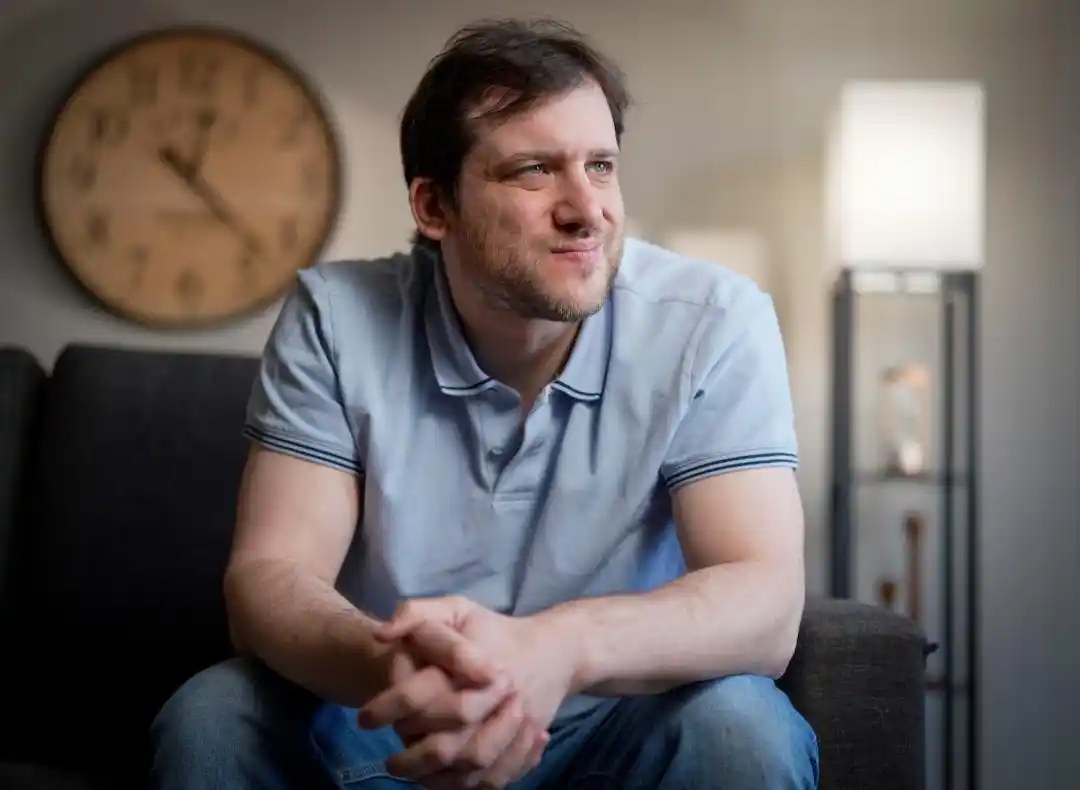
Further reading: Fearing AI extinction, Fields Medal winner takes leave to go to OpenAI! Aiming to tame AI with mathematics

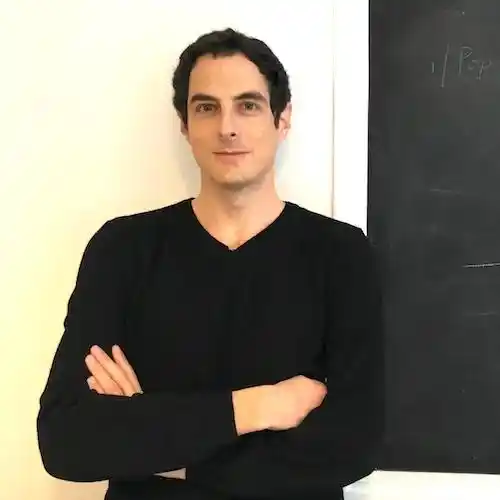
In early August, he and OpenAI research scientist Sébastien Bubeck convened a closed-door summit of about 40 mathematicians at the headquarters in San Francisco. The title of one presentation was 'The End of Mathematics.'
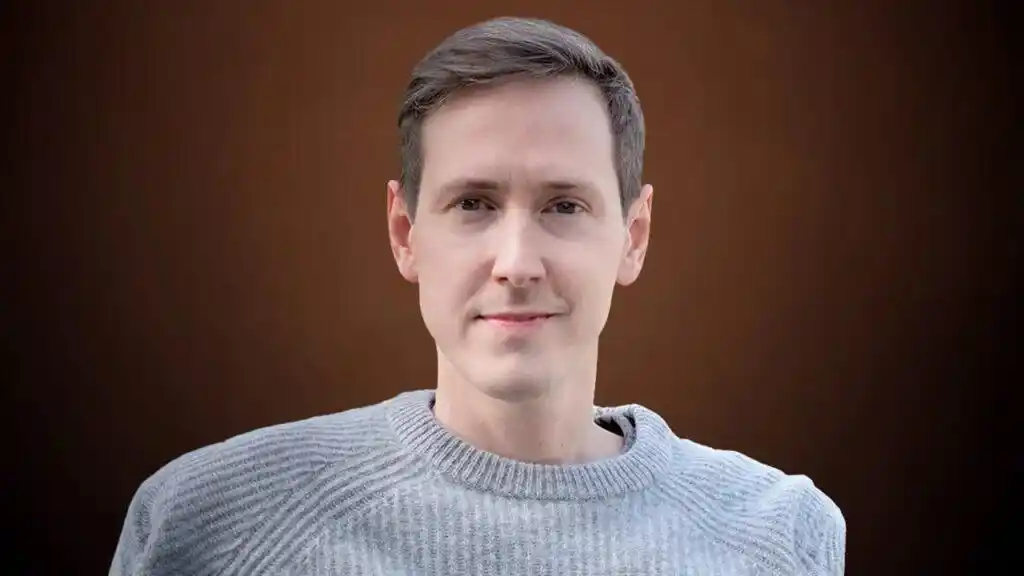
OpenAI research scientist Sébastien Bubeck

The presenter, University of Toronto professor Daniel Litt, said:

It's possible we are ultimately headed towards a world without high-quality mathematical research, where human mathematical expertise has completely vanished.
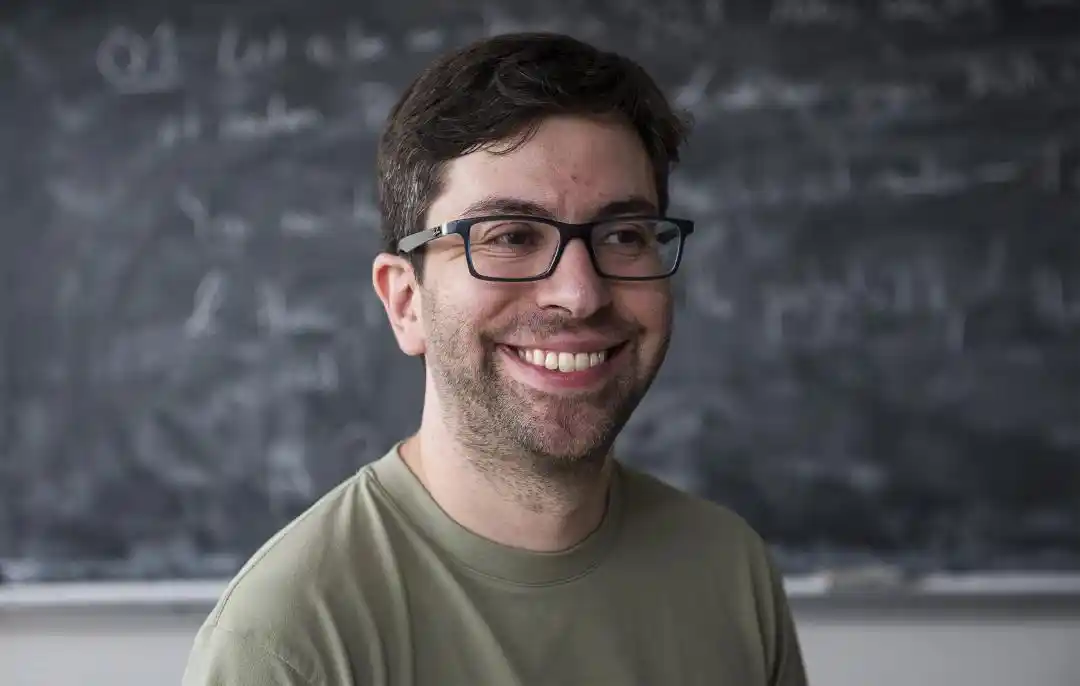
He believes the extreme outcome is unlikely, but mathematicians must take action.

MIT mathematician Drew Sutherland put it more directly and starkly:

Perhaps we are just the canary in the coal mine; mathematicians are the first to suffer.

Mathematics is chosen as AI's testing ground because it serves as a proxy indicator for high-level intellectual activity—what can be done in mathematics will eventually be replicated in other fields.

AI is Starting to 'Do Math' in Bulk

The direct background for this summit is the intensive release of results.

In May, a yet-to-be-released model from OpenAI disproved the unit distance conjecture.

Further reading: OpenAI completely stuns the mathematics world, cracking an 80-year-old core conjecture! Fields Medal winner exclaims he couldn't sit still

This old problem concerning 'the arrangement of points on an infinite plane' had remained unsolved for years. The AI used a known but difficult-to-manipulate technique from algebraic number theory, effectively crossing subfields to apply tools.

Tsimerman's assessment at the time was that he would 'accept without hesitation' this result in any journal.

This is viewed by many mathematicians as AI's first major mathematical breakthrough.

Subsequently, results have poured out one after another.

In August, OpenAI announced ten AI-generated discoveries in mathematics and computer science at once, covering multiple subfields that typically take years to master.

Further reading: Sudden! OpenAI's next-generation AI conquers 10 Fields Medal-level problems

Anthropic has also been busy.

Anthropic employee Levent Alpöge used Claude to assist in constructing a pair of orthogonal vectors on a 668-dimensional hypercube.

Mathematicians have long believed such a construction existed, but no one had actually built it.

Alpöge announced the result by posting on X: a 24,000-character thread consisting entirely of plus and minus signs.
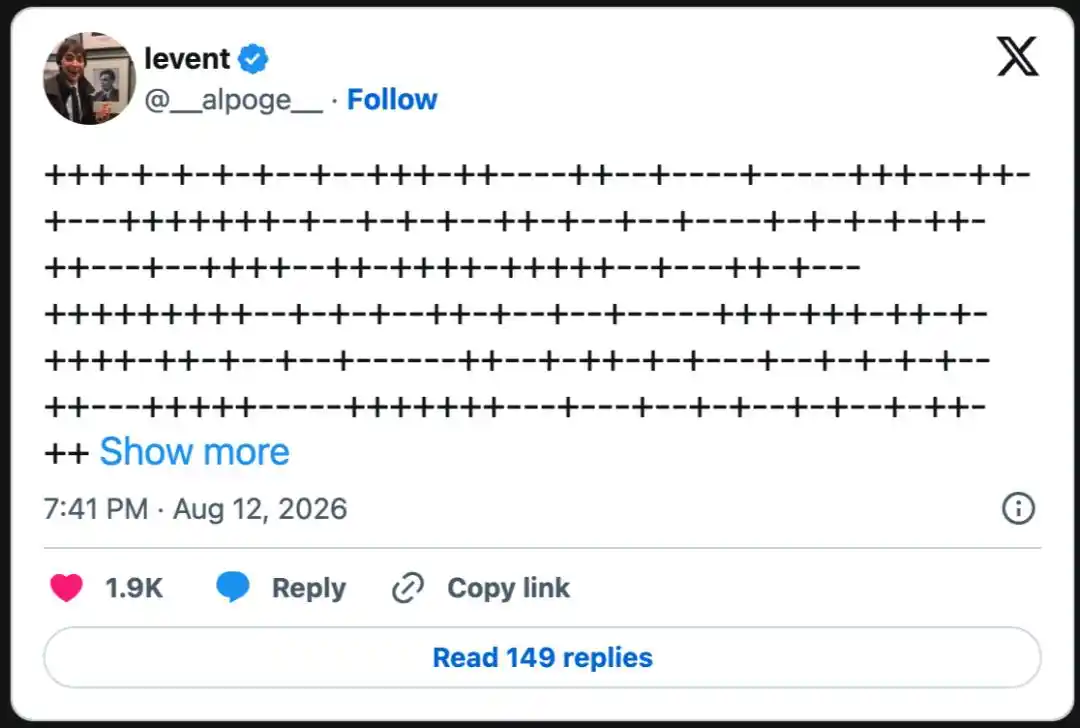
https://x.com/__alpoge__/status/2087504785952182273

Traditional mathematical research follows a fixed pipeline: seminar discussions, circulation among peers, posting on the preprint server arXiv, and finally publication in a journal after peer review.

AI-generated results are bypassing this pipeline.

Dmitry Rybin, an entrepreneur based in Shenzhen, asked ChatGPT to 'make a breakthrough' to disprove a network flow hypothesis. Every time the model failed, he encouraged it to continue, acting as an AI cheerleader.

ChatGPT eventually provided a counterexample. After verifying it, Rybin posted a tweet. At the time, he was watching a movie with friends.
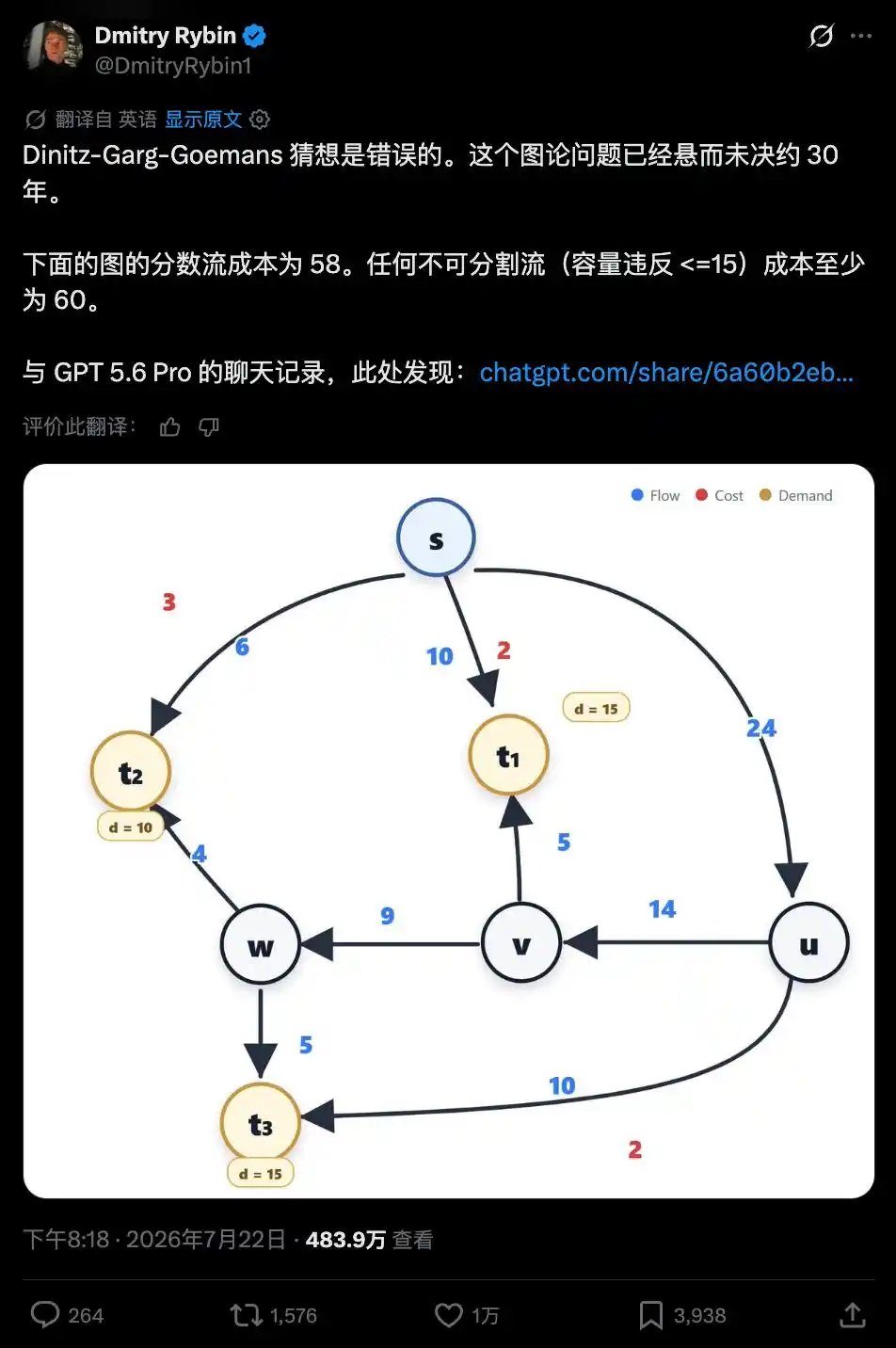
https://x.com/DmitryRybin1/status/2079904005652893709

Further reading: GPT-5.6 disproves a 30-year-old graph theory conjecture! Peking University alumnus solves 6 problems in 5 days

Mathematician David Bessis raised doubts about this:

You post on Twitter saying you proved a big problem while cooking pasta? Of course it will go viral.

The question is, what happens after it goes viral? Who organizes this pile of things, who figures out what's really going on?
Last week, Anthropic also announced that one of its employees had their internal version of Claude 'give it a serious try' on the Riemann hypothesis.

The Riemann hypothesis has remained unsolved for over a hundred years, with a $1 million prize offered for its solution.

Under repeated prompts like 'continue' and 'think again,' the model produced new discoveries on a related problem.

Further reading: Sudden, Claude sets a new record on the Riemann hypothesis!

3000 People Signed a Petition, Then What?

The reaction from the mathematics community is divided.

In June, an open letter titled 'The Leiden Declaration' was released, signed by over 3,000 mathematicians.

Further reading: Setting rules for AI! Mathematicians panic as AI just solves an 80-year-old math problem

The letter calls on researchers to use AI tools responsibly, ensuring results are verified and citations are proper.

Another group of mathematicians has gone further, advocating for a complete rejection of AI and AI companies to preserve humanity's place in mathematics.

Northwestern University mathematics professor Bryna Kra attended the summit and is also one of the 16 initiators of the Leiden Declaration.
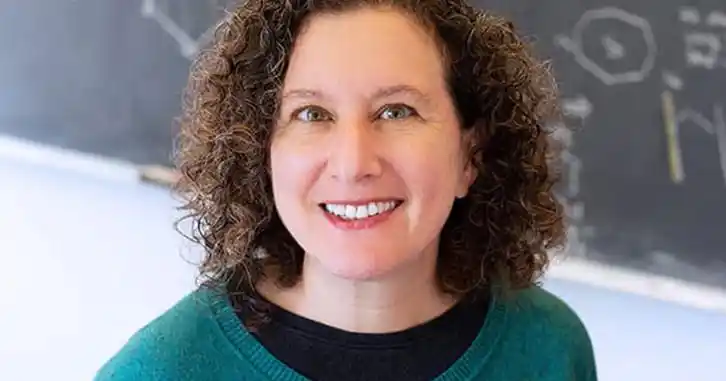
She said:

The core of mathematics is understanding results, not just proving them.

A proof that is not understood does not become part of the literature.

AI can prove theorems, but can it explain how it proved them?

Harvard University mathematician Melanie Matchett Wood helped write the human-readable version of the proof for OpenAI's unit distance conjecture result.
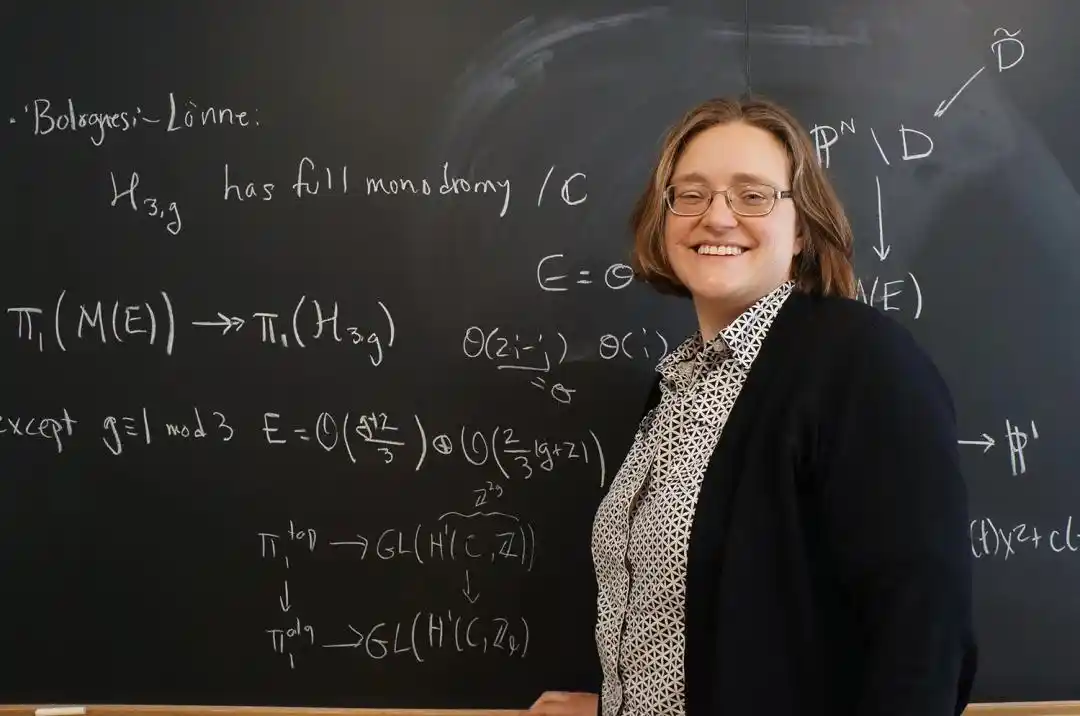
She found that top AI models share a common flaw in explanation: they elaborate extensively on simple parts but gloss over the difficult parts.

She said:

Top AI models are not yet capable of identifying the truly difficult parts of an argument and explaining them clearly.

German mathematician Andreas Thom offered a more precise distinction.
One of the ten new results announced by OpenAI was a new construction related to 'non-sofic groups,' filling a gap between two papers by Thom and his collaborator Gábor Kun in 2016 and 2019.

The two subsequently published a follow-up paper, simplifying and extending the AI's discovery.

Thom said:

The AI is solving problems in a very intelligent, substantial way.

But new concepts only emerged after human involvement in the proof process; that's not something AI has achieved on its own yet.

Faced with this division, summit organizer Bubeck described four possible futures after the meeting:

Mathematics becomes like software engineering, with AI helping hundreds of people collaborate to tackle the same problem;

Becomes like physics, relying on massive computing power and AI models as substitutes for particle accelerators;

Becomes museum curation, with AI responsible for production and humans responsible for selection and interpretation;

Or mathematicians collectively transition to working on AI safety.

Bubeck said:

We must put people, put mathematicians, first.

Mathematics only makes sense when mathematicians learn something from it.

'A civilization without people is meaningless.'

But the 40 attendees did not reach a consensus.

Tsimerman said:

There is no conclusion yet on what the mathematics community wants.

The purpose of this meeting was more to start a conversation than to make a specific decision.

He himself has not officially started at OpenAI.

The fact that a Fields Medal winner chooses to go to an AI company to do safety research is itself a microcosm of the mathematics community's predicament.

As for what he does next, the next signal may be more noteworthy than the presentations at this summit.

References:

https://www.washingtonpost.com/technology/2026/08/19/mathematicians-ask-whats-left-humans-when-ai-can-do-math-research/

This article is from the WeChat public account "New Zhiyuan", author: ASI启示录, editor: Marco

Perguntas relacionadas

QWhat is the main concern expressed by mathematicians like Daniel Litt regarding AI in mathematics?

ADaniel Litt expressed the concern that the world might eventually move towards a scenario with no high-quality mathematical research and a complete disappearance of human mathematical expertise.

QAccording to the article, what recent mathematical conjecture was disproven by an unreleased OpenAI model?

AIn May, an unreleased OpenAI model disproved the unit distance conjecture, a longstanding problem about point arrangements on an infinite plane.

QWhat did the 'Leiden Declaration' signed by over 3000 mathematicians call for?

AThe 'Leiden Declaration' called for the responsible use of AI tools in mathematical research, ensuring that results are verified and properly cited.

QWhat common flaw did Harvard mathematician Melanie Matchett Wood identify in top AI models' explanations of proofs?

AMelanie Matchett Wood identified that top AI models tend to explain simple parts of a proof at great length while glossing over the difficult parts, failing to articulate the truly challenging aspects of an argument.

QWhat four possible futures for mathematics did OpenAI researcher Sébastien Bubeck describe?

ASébastien Bubeck described four possible futures: 1) Mathematics becomes like software engineering, with AI helping hundreds collaborate on one problem. 2) It becomes like physics, relying on computational power and AI models. 3) It becomes like museum curation, with AI producing and humans selecting and interpreting. 4) Mathematicians collectively transition to AI safety research.

Leituras Relacionadas

The Biggest Political Economy Question in the AI Era: As Robots Become More Capable, How Do Humans Share the Value?

In the AI era, the most pressing political economy question is: as machines become increasingly capable, how can humanity share in the value they create? An article originally critiquing China's tech focus has sparked a deeper debate on this global challenge. Historically, industrial progress improved efficiency but still relied on human labor for wealth creation and distribution. AI is fundamentally different—it is now replacing cognitive and knowledge work. As AI and robots take over more tasks, economic growth may continue while direct human participation in value creation shrinks, creating a core tension between productivity gains and widespread income generation. The issue is not unique to China. While leading tech companies amass enormous wealth, labor's share of income is declining globally. The core problem is a broken link: technological innovation and corporate profits are not translating into sufficient consumer income and demand. Three potential paths forward are outlined: a traditional capitalist model where profits primarily go to capital owners; a state-capitalist approach with public investment in AI; and more innovative models like digital sovereign wealth funds, universal shareholding, or AI-era basic income schemes to directly distribute AI-generated value. The future competitive advantage may lie not just in technological supremacy, but in which society can build a new, inclusive distribution system for the intelligent economy. The ultimate challenge is ensuring that as AI creates value, humans have a means to obtain income and share in the resulting widespread social benefits.

marsbitHá 7m

The Biggest Political Economy Question in the AI Era: As Robots Become More Capable, How Do Humans Share the Value?

marsbitHá 7m

Generating Profits for Seven Consecutive Quarters, Emerging Markets Carry Trade Outperforms Everything

For the seventh consecutive quarter, dollar-funded emerging market carry trades have delivered positive returns, marking the longest winning streak since 2008. According to Bloomberg's index, this strategy has gained approximately 22% since late 2024, outperforming U.S. Treasuries, emerging market sovereign, and corporate dollar debt. The core of the trade involves borrowing low-interest currencies like the U.S. dollar, euro, or yen to invest in high-yielding emerging market assets, such as Turkish lira bonds offering over 40% returns. Returns were amplified by favorable currency moves, with the dollar weakening against most emerging market currencies and other traditional funding currencies. For instance, the trade gained 48% on the Colombian peso in the past year. A key test came in August 2024 with a historic joint U.S.-Japan currency intervention, which caused only a modest 1% dip in the carry trade risk premium as investors shifted funding from the yen to the euro and Swiss franc. Looking ahead, the primary risk is the timing of Federal Reserve policy changes. While persistent inflation allows the Fed to hold rates, a rapid rise in long-term U.S. yields could threaten the trade. Another concern is crowding, as massive inflows increase vulnerability to a sudden reversal. High interest rates in regions like Latin America and Eastern Europe, supported by external factors like Middle East tensions and energy prices, continue to sustain the opportunity. Major investors remain engaged, favoring currencies like the Mexican peso, South African rand, and Turkish lira.

marsbitHá 22m

Generating Profits for Seven Consecutive Quarters, Emerging Markets Carry Trade Outperforms Everything

marsbitHá 22m

Unpacking the Truth Behind On-chain Assets: Leverage, Liquidity, and Risk

The article analyzes the concept of "real-world asset" (RWA) tokenization, arguing that while tokenizing assets on-chain is a useful step, it is far from transformative on its own. The author compares it to placing a barcode on a shipping container—it enables identification but does not build the necessary market infrastructure. The core argument is that true value emerges not from tokenization, but from integrating these tokens into DeFi systems where they can be valued, financed, hedged, traded, and liquidated under stress. Key challenges identified include: 1. **Multiple Time Clocks**: A fundamental tension exists between blockchain's 24/7 settlement and the slower, business-hour-dependent processes of traditional markets, custody, and redemption. This "duration mismatch" can create dangerous liquidity gaps during crises. 2. **Liquidity Misconceptions**: True liquidity is not measured by Total Value Locked (TVL) or trading pairs, but by the ability to exit a position within a required timeframe at an acceptable price. It requires analyzing multiple exit paths and stress-testing scenarios. 3. **Leverage and Risk**: Leverage unlocks economic utility (e.g., using tokenized assets as collateral) but also introduces fragility. Risk models must account for more than asset volatility, incorporating factors like legal enforceability, oracle freshness, and market structure. Paradoxically, a "safer" asset like tokenized Treasury bonds could require a higher collateral discount than ETH due to slower, less-proven liquidation mechanisms. 4. **A Risk Graph**: RWA risk should be modeled as a network of interconnected dependencies (e.g., issuers, custodians, oracles, stablecoin pools), not a single score. Failures can propagate through this graph, turning operational issues into systemic liquidity crises. The article states that tokenized government bonds are merely an entry point, while more complex frontiers like computing power and energy assets present greater challenges and opportunities. It also examines the interplay and risks between tokenized stocks and perpetual futures contracts. The conclusion is that the future lies not in "tokenizing everything," but in building robust market layers where tokenized rights become resilient financial primitives within a programmable capital system. The token is just the barcode; the market is the machine.

marsbitHá 46m

Unpacking the Truth Behind On-chain Assets: Leverage, Liquidity, and Risk

marsbitHá 46m

Trading

Spot
活动图片