Assisting Turkey in Freezing $1 Billion in Assets, Tether's Compliance Approach Has Changed

marsbitPublicado em 2026-02-09Última atualização em 2026-02-09

Resumo

On January 30, Turkish authorities froze assets worth over $500 million belonging to Veysel Sahin, who is accused of operating an illegal gambling platform and money laundering. Tether Holdings SA, the issuer of the $185 billion stablecoin USDT, assisted in the freeze at the request of the Turkish government. This action is part of a broader Turkish operation that has frozen over $1 billion in assets. Tether has increasingly collaborated with global law enforcement agencies to combat cryptocurrency-related crimes, including money laundering, drug trafficking, and sanctions evasion. According to Tether CEO Paolo Ardoino, the company follows legal procedures when working with authorities such as the U.S. Department of Justice and the FBI. Analysis by Elliptic shows that Tether and its competitor Circle have blacklisted around 5,700 wallets holding approximately $2.5 billion in assets, with three-quarters of these containing USDT. Tether claims to have assisted in over 1,800 cases across 62 countries, freezing $3.4 billion in USDT tied to illicit activities. This marks a shift from Tether’s earlier tensions with U.S. regulators, including a 2021 settlement over misrepresenting reserves. The company has recently re-entered the U.S. market with a compliant stablecoin, USAT, and has gained regulatory acceptance under the Trump administration. Despite these efforts, USDT remains under scrutiny for its use in criminal activities, including a recent case involving $1 billion in ...

Written by: Ryan Weeks, Todd Gillespie, Taylan Bilgic

Compiled by: Luffy, Foresight News

On January 30, Turkish authorities announced the freezing of assets worth over $500 million under the name of Veysel Sahin, who is accused of operating an illegal gambling platform and suspected of money laundering. The Istanbul Chief Prosecutor revealed that an unnamed cryptocurrency company carried out the freeze at the request of the Turkish government.

This company is Tether Holdings SA, the issuer of the stablecoin USDT with a market capitalization of $185 billion. Recently, the company has actively assisted governments worldwide in combating various cryptocurrency-related criminal activities, including money laundering, drug trafficking, and sanctions evasion.

Tether CEO Paolo Ardoino stated in a recent interview with Bloomberg News: "Law enforcement approaches us, provides relevant information, we verify the information, and then take action in accordance with the laws of the country. We follow this process when cooperating with the U.S. Department of Justice, the FBI, and other agencies."
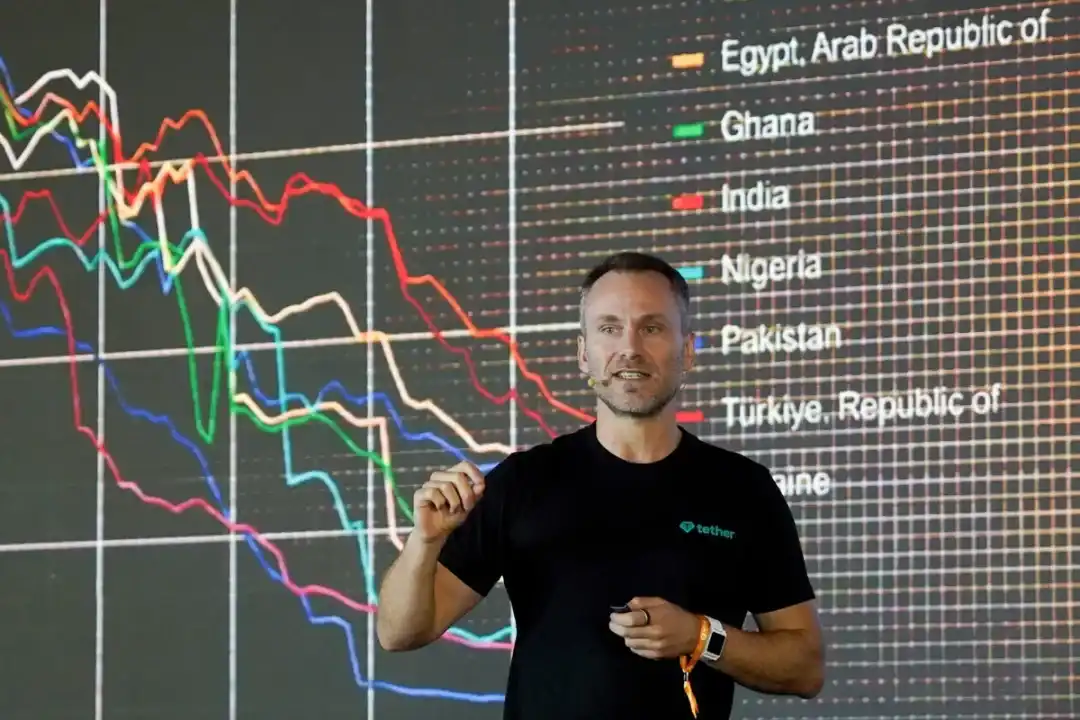
Tether declined to comment further on the case. Bloomberg was unable to reach Sahin. A Turkish official also refused to disclose the name of the company mentioned in the prosecutor's statement.

The frozen assets of 460 million euros (approximately $544 million) are part of a large-scale law enforcement operation in Turkey, where the total frozen assets involved now exceed $1 billion. According to Turkish television NTV, a few days after the announcement of the freezing of Sahin's assets, another individual was investigated for suspected money laundering and illegal gambling, and crypto assets worth $500 million under their name were also frozen. However, it is currently unclear whether this asset freeze involved tokens issued by Tether.

A Turkish official, who spoke anonymously on sensitive legal matters to Bloomberg, revealed that authorities discovered the "financial traces" of these suspected illegal proceeds by tracking fund flows and analyzing crypto assets. The official added that similar asset freezes targeting individuals involved in illegal gambling and payment systems will be implemented in the future.

For Tether, this freezing operation is just one of its increasingly frequent fund freezes, highlighting the growing efforts of this cryptocurrency giant to cooperate with global law enforcement agencies.

A report released in January by analytics firm Elliptic showed that by the end of 2025, Tether and its competitor Circle Internet Group Inc. had blacklisted approximately 5,700 wallets, involving assets of about $2.5 billion, a figure that was negligible two years ago. At the time of freezing, three-quarters of these wallets held USDT.

Arda Akartuna, Head of Crypto Threat Intelligence for Asia-Pacific at Elliptic, said: "As legitimate applications of cryptocurrency and the integration of global payments accelerate, illegal usage has also increased, prompting stablecoin issuers to intervene more actively."

Tether often publicizes its efforts to combat criminal activities, including in communications aimed at potential investors, as the company seeks funding at a valuation of up to $500 billion. According to its website, Tether has assisted law enforcement agencies in 62 countries with over 1,800 cases, freezing $3.4 billion worth of USDT related to suspected illegal activities.

Nathan McCauley, Co-founder and CEO of Tether partner Anchorage Digital Bank, said in an interview: "They (Tether) are extremely proactive in their cooperation. Among stablecoin issuers, the company has the 'recognized best reputation' with law enforcement agencies."

Anchorage is the issuer of Tether's compliant dollar stablecoin USAT, which was launched in late January, marking Tether's return to the U.S. market.

This represents a significant shift from the tense relationship between Tether and U.S. regulators a few years ago. After clashing with regulators in 2018, Tether largely exited the U.S. market and paid $41 million in 2021 to settle charges of misrepresenting its reserves.

However, the second Trump administration has welcomed the cryptocurrency industry. Last year, Ardoino attended, along with several other executives, the ceremony where President Trump signed the stablecoin regulatory bill.
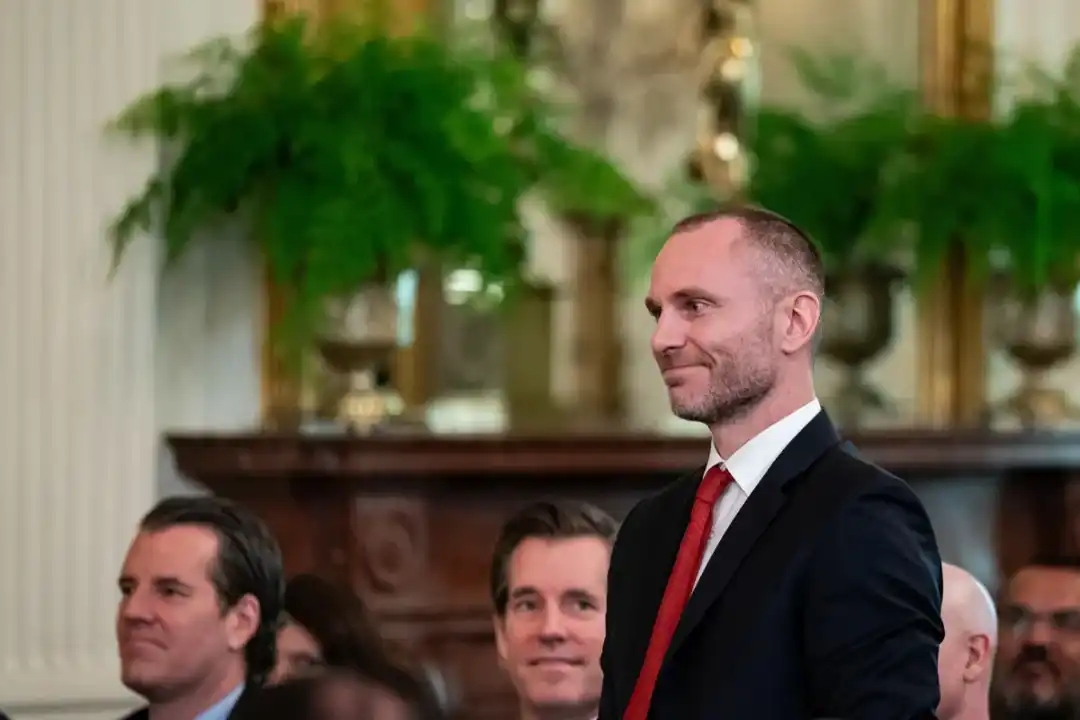
Even so, Tether's USDT continues to face scrutiny from regulators due to its widespread use by criminals.

On January 9, the U.S. Attorney's Office for the Eastern District of Virginia announced charges against a Venezuelan citizen for laundering $1 billion using USDT. A recent report by Elliptic showed that the Central Bank of Iran purchased over $500 million worth of USDT to alleviate its currency crisis and evade U.S. sanctions.

Turkish fugitive Sahin is accused of leading an organization that laundered money for illegal online gambling platforms. According to local media, Sahin was sentenced to 10 years in prison in 2017, released in 2023, and sentenced to another 21 years in prison month later. His current whereabouts are unknown, but the Turkish official news agency Anadolu Agency reported on January 30 that "the relevant authorities are advancing the legal process for his extradition back to Turkey."


Perguntas relacionadas

QWhat was the Turkish government's action against Veysel Sahin, and which company assisted in this operation?

AThe Turkish government froze assets worth over $500 million belonging to Veysel Sahin, who was accused of operating an illegal gambling platform and money laundering. The company that assisted in this operation was Tether Holdings SA, the issuer of the USDT stablecoin.

QHow has Tether's approach to compliance and law enforcement cooperation changed recently?

ATether has significantly increased its cooperation with global law enforcement agencies, actively assisting in combating cryptocurrency-related crimes such as money laundering, drug trafficking, and sanctions evasion. It has frozen assets in numerous cases and has a recognized reputation for its proactive stance.

QWhat is the total value of assets that Tether has frozen in connection with alleged illegal activities, according to its website?

AAccording to Tether's website, the company has assisted law enforcement in over 1,800 cases across 62 countries and frozen $3.4 billion worth of USDT related to suspected illegal activities.

QWhat significant legal and regulatory challenges has Tether faced in the past, particularly in the United States?

AIn 2018, Tether had conflicts with U.S. regulators, which led to its near-exit from the U.S. market. In 2021, it paid $41 million to settle charges that it misrepresented its reserves.

QWhat recent development marks Tether's return to the U.S. market, and who is its partner in this initiative?

ATether's return to the U.S. market is marked by the launch of its compliant dollar stablecoin, USAT, in late January. Its partner in issuing this stablecoin is Anchorage Digital Bank.

Leituras Relacionadas

Ethereum Q1 2026 Report: Fees Decline, Users and Transaction Volume Hit New Highs

Ethereum Q1 2026 Report: Fees Down, Users & Transactions Hit New Highs Token Terminal's Q1 2026 report on Ethereum presents a pivotal development: the network achieved record highs in monthly active users (13.2M, +85.9% YoY), total transactions (200.4M, +81.5% YoY), and throughput (25.78 TPS), while transaction fees on the mainnet plummeted by 47.9% quarter-over-quarter. This shift is attributed to the network's strategic move into a "low fees for scale" phase, exemplified by the Fusaka upgrade which increased data capacity and lowered block space costs, releasing pent-up demand (a manifestation of Jevons's Paradox). The report highlights a core narrative shift for Ethereum: from a DeFi-centric blockchain to a global financial settlement layer. It maintains a dominant position in tokenized assets, holding majority market shares among top chains in stablecoins (61.8%), tokenized funds (73.0%), and tokenized commodities (84.0%). Growth in tokenized funds (+73.1% YoY) and commodities (+325.9% YoY) was particularly strong, driven by institutions like BlackRock and JPMorgan entering the space. Contrasting these usage gains, several USD-denominated value metrics declined in Q1: fully diluted market cap fell 30.3% QoQ, total value locked (TVL) dropped 11.0%, and ecosystem transaction volume decreased 24.0%. The report interprets this as Ethereum prioritizing long-term network expansion and cementing its role as the default settlement layer for finance over short-term fee capture. The commentary from Etherealize argues that, much like the early internet, Ethereum's open, permissionless model is poised to win over closed alternatives as institutional tokenization accelerates.

marsbitHá 1h

Ethereum Q1 2026 Report: Fees Decline, Users and Transaction Volume Hit New Highs

marsbitHá 1h

He Just Raised 2.7 Billion, and Li Fei-Fei Also Invested

Pete Florence, a former senior research scientist at Google DeepMind and a key contributor to the Vision-Language-Action (VLA) model architecture, is deliberately distancing his startup, Generalist AI, from the trendy "world model" label. He argues that the industry should prioritize concrete goals over buzzwords. His goal is to create robots that can perform a vast range of unseen tasks with high speed and success rates, without needing task-specific training data. Recently, his company raised $400 million (¥2.7 billion) at a $2 billion valuation. Notable investors include NVIDIA's NVentures, Bezos Expeditions, NFDG, as well as Xiaomi co-founder Lin Bin, Zoom founder Eric Yuan, and renowned AI scientist Fei-Fei Li. Florence's approach stems from his academic background at MIT under Professor Russ Tedrake, focusing on understanding the physical world. After joining DeepMind, he developed models like Transporter Network and co-created the VLA framework. He left in 2025 to found Generalist AI. The company has launched two models: GEN-0, which demonstrated that scaling laws apply to physical motion, and GEN-1. GEN-1 was trained on over 500,000 hours of physical interaction data collected via a specialized wearable device. It achieves a 99% success rate on precise mechanical tasks like folding boxes and maintains performance three times faster than its predecessor. Florence believes GEN-1 is reaching a commercial utility threshold similar to the GPT-3 inflection point. The substantial funding round, following GEN-1's release, signifies strong investor confidence in Generalist AI's practical, goal-driven path to creating versatile, useful robots, regardless of the "world model" terminology.

marsbitHá 1h

He Just Raised 2.7 Billion, and Li Fei-Fei Also Invested

marsbitHá 1h

Two Legends Lost in Three Days: Is Google's AI Talent Dam Cracking?

In three days, Google lost two AI legends. On June 18, Noam Shazeer, co-author of the seminal "Attention is All You Need" paper and Gemini co-lead, left for OpenAI. Just 48 hours later, John Jumper, 2024 Nobel laureate and AlphaFold lead, departed DeepMind for Anthropic. This follows Andrej Karpathy joining Anthropic in May. These moves highlight a structural trend: top AI talent is concentrating at mission-driven, pre-IPO firms like OpenAI and Anthropic, while Google becomes a primary source. The exodus stems from a core mission mismatch. Google's ad-centric model often subordinates AI research to product and revenue goals, creating friction for pioneers like Shazeer, who returned in 2024 only to leave again. In contrast, OpenAI and Anthropic offer singular focus on pushing AI boundaries, whether towards AGI or safety-aligned models, which deeply appeals to top researchers like Jumper. Financial incentives amplify the pull. With both OpenAI and Anthropic nearing IPO, employees stand to gain immensely from equity, an upside Google's mature stock cannot match. Furthermore, the 2023 merger of Google Brain and DeepMind, intended to consolidate strength, has instead created cultural tension and slowed the path from research to product, as evidenced by Gemini's pace. This talent redistribution is reshaping the AI landscape. While Google retains vast data and compute resources, its true crisis is the quiet, continuous loss of the people who define the field's future. The real moat in AI is not infrastructure, but the concentration of brilliant minds—a battle Google is currently losing.

marsbitHá 3h

Two Legends Lost in Three Days: Is Google's AI Talent Dam Cracking?

marsbitHá 3h

Behind the AI Report Card, Lies a Chinese 'Exam Setter'

Beyond the familiar performance charts like MMLU-Pro and MMMU, which major AI models strive to ace, stands a key "examiner": Chinese-Canadian researcher Wenhu Chen. An assistant professor at the University of Waterloo and founder of TIGERLab, Chen addresses the crucial need for more rigorous AI evaluation. As models like GPT-4 began scoring near-perfect results on older benchmarks like MMLU, it became difficult to distinguish their true capabilities. In response, Chen introduced MMLU-Pro in 2024, featuring harder, more reasoning-focused questions with more answer choices, successfully reintroducing meaningful performance gaps. His work extends to multi-modal evaluation with MMMU and its enhanced version, MMMU-Pro. These benchmarks test a model's ability to understand and reason with complex information from images, charts, and text across diverse academic subjects, exposing the significant challenges even top models face in genuine comprehension. Chen's background in complex QA, table reasoning, and his experience at Google DeepMind on projects like Gemini inform his approach. He understands that effective benchmarks must anticipate how models might "cheat" by memorizing data or avoiding visual analysis. His lab also actively researches video understanding and generation models (e.g., UniVideo, Vamba), ensuring his evaluation work is grounded in practical model-building challenges. Now at Meta's Super Intelligence Lab, Chen continues his focus on multi-modal data and evaluation, representing the deep yet often unseen contributions of Chinese talent in shaping the fundamental tools of the AI industry.

marsbitHá 3h

Behind the AI Report Card, Lies a Chinese 'Exam Setter'

marsbitHá 3h

Trading

Spot
Futuros
活动图片