Altcoin Season Index rises as Bitcoin hits 60% resistance – Then why a true alt season isn’t here yet?

ambcryptoPublicado em 2026-02-19Última atualização em 2026-02-19

Resumo

The Altcoin Season Index has risen to levels last seen in early January, suggesting a potential shift in market dynamics as Bitcoin dominance (BTC.D) fails to reclaim the 60% resistance level. ETH/BTC has also gained intraday momentum, further supporting a classic rotation setup where altcoins gain while Bitcoin cools. However, a full altcoin season remains unlikely. The ETH/BTC ratio is at a key inflection point, having previously failed to hold support, indicating that current movements may be driven by speculative hype rather than genuine utility. On-chain data reveals Bitcoin's continued dominance in trading volumes, with Binance data showing BTC volumes at 36.8%, compared to 35.3% for altcoins and 27.8% for Ethereum. This suggests capital is still favoring Bitcoin or short-term speculative plays rather than broad altcoin adoption, keeping a true alt season at bay for now.

With risk-off sentiment still hanging over the market, investors are rotating capital into altcoins, a move that has historically helped mitigate losses by spreading exposure rather than putting all funds into one place.

The Altcoin Season Index has jumped back to levels we last saw in early January, which oftean signals the start of a broader rotation. ETH/BTC is up 2.6% intraday, adding further weight to this setup.

On the flip side, Bitcoin dominance [BTC.D] has posted three weekly lower lows and hasn’t been able to reclaim the 60% mark, now down nearly 2.5%. Taken together, it looks like a classic rotational setup, altcoins gaining momentum while BTC cools off.

That said, a full-blown altcoin season still looks a ways off.

The ETH/BTC ratio is sitting at a key inflection point. After the mid-January breakdown, it failed to hold 0.033 as support, triggering a correction. Back then, however, the altcoin season eventually kicked off.

That divergence showed investors were chasing hype-driven plays over projects with real utility. Now, with the Altcoin Season Index jumping and ETH/BTC chopping sideways, a similar dynamic seems to be forming.

Naturally, the big question: Are investors still favoring Bitcoin’s risk/reward over “high-cap” altcoins? If so, the current weakness in BTC.D could be temporary, without triggering a meaningful rotation into altcoins.

Bitcoin dominance in inflows could signal on-chain power

On-chain metrics show a clear shift in investor positioning.

The jump in the Altcoin Season Index, along with a range-bound ETH/BTC ratio, backs AMBCrypto’s view that investors are chasing yield through speculative plays rather than moving into blockchains during market FUD.

CryptoQuant data confirms this trend: Bitcoin trading volumes on Binance have regained dominance, making up 36.8% of total exchange volume. In comparison, altcoins account for 35.3% and Ethereum 27.8%.

Looking back, altcoins represented 59.2% of Binance trading volumes in November. By mid-February that had fallen to 33.6%, marking almost a 50% drop in altcoin activity, a clear sign of capital rotating back into BTC.

All this on-chain data reinforces AMBCrypto’s thesis.

Even with the recent altcoin jump, a full-blown alt season still looks unlikely. Investors are either chasing Bitcoin’s risk/reward or short-term speculative plays rather than Ethereum [ETH], keeping a broad altcoin rotation at bay.


Final Summary

  • Altcoin Season Index and ETH/BTC are signaling short-term activity, yet BTC dominance and inflows suggest capital is still flowing toward Bitcoin.
  • On-chain metrics and trading volume shifts show investors chasing speculative plays rather than broad L1 adoption, keeping a major altcoin rotation at bay.

Perguntas relacionadas

QWhat does the recent rise in the Altcoin Season Index and the drop in Bitcoin dominance suggest about current market rotation?

AThe recent rise in the Altcoin Season Index and the drop in Bitcoin dominance suggest a classic rotational setup where capital is moving into altcoins as Bitcoin cools off, but it is driven by short-term speculative plays rather than a broad, fundamental shift into alternative blockchains.

QWhy does the article suggest that a full-blown altcoin season is still unlikely despite the recent market activity?

AA full-blown altcoin season is still unlikely because on-chain data and trading volumes show that investors are primarily chasing Bitcoin's risk/reward or short-term plays rather than making significant, sustained investments into Ethereum or other major altcoins, which prevents a broad market rotation.

QWhat key level did the ETH/BTC ratio fail to hold as support, and what was the significance of this failure?

AThe ETH/BTC ratio failed to hold the 0.033 level as support. This failure triggered a correction and indicated that investors were favoring hype-driven speculative plays over projects with real utility, a dynamic that is similar to what is being observed in the current market.

QAccording to CryptoQuant data, how has Bitcoin's trading volume on Binance changed relative to altcoins?

ACryptoQuant data shows that Bitcoin's trading volume on Binance has regained dominance, accounting for 36.8% of total exchange volume, while altcoins account for 35.3% and Ethereum for 27.8%. This is a significant shift from November, when altcoins represented 59.2% of volumes.

QWhat is the main thesis presented by AMBCrypto regarding investor behavior in the current crypto market?

AAMBCrypto's main thesis is that investors are chasing yield through short-term speculative plays and are favoring Bitcoin's risk/reward profile, rather than moving capital into foundational blockchain projects like Ethereum. This behavior is preventing a true, sustained altcoin season from occurring.

Leituras Relacionadas

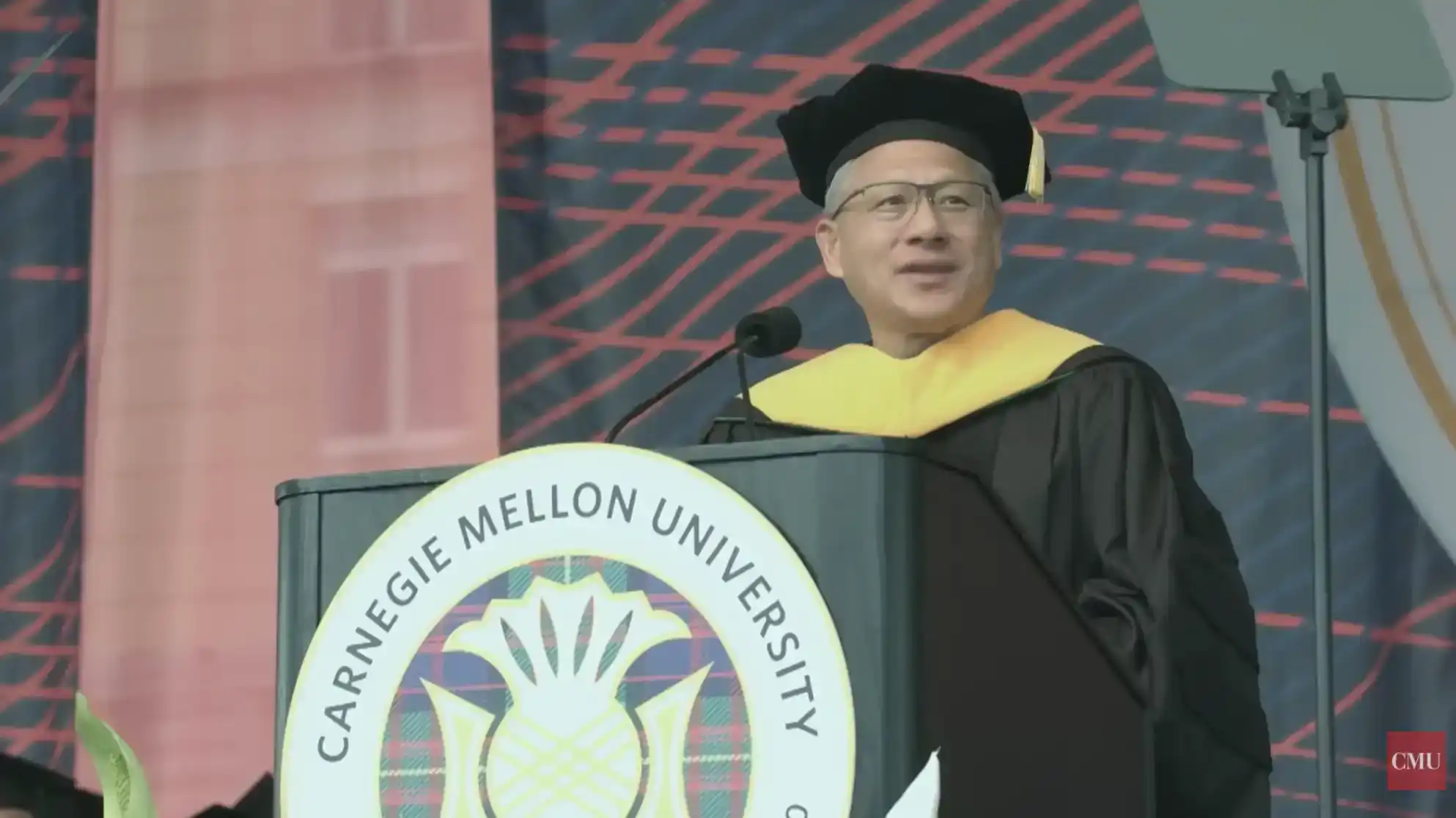
Jensen Huang's CMU Speech: In the AI Era, Don't Just Watch, Build

Jensen Huang, CEO of NVIDIA and a first-generation immigrant, delivered the commencement address to Carnegie Mellon University's class of 2026. He shared his personal journey from a humble background to founding NVIDIA, emphasizing resilience, learning from failure, and the responsibility that comes with leadership. Huang framed the present moment as the dawn of the AI revolution, a shift he believes is more profound than previous computing waves. He described AI as fundamentally resetting computing—moving from human-written software to machines that understand, reason, and use tools. This will create a new industry for generating intelligence and transform every sector. While acknowledging AI's potential to automate tasks and displace some jobs, Huang distinguished between the *tasks* of a job and its core *purpose*. He argued AI will augment human capability, not replace humans. The real risk, he stated, is not AI itself, but people being left behind by those who effectively use AI. He presented AI as a generational opportunity for massive infrastructure investment—in chip factories, data centers, energy grids, and advanced manufacturing—that could re-industrialize nations like the U.S. and bridge the digital divide by making computing and intelligent tools accessible to all. Huang called for a balanced approach: advancing AI safely and responsibly, establishing prudent policies, ensuring broad access, and encouraging universal participation. He urged the graduates not to fear the future but to engage with optimism and ambition, reminding them of CMU's motto, "My heart is in the work." His core message was clear: this is their moment to actively build and shape the AI-powered future, not merely observe it.

marsbitHá 9m

Jensen Huang's CMU Speech: In the AI Era, Don't Just Watch, Build

marsbitHá 9m

The Era Has Arrived Where Human Writers Must Prove They Are Not Machines

The article describes an era where AI-generated content is flooding the market, forcing human authors to prove they are not machines. It begins with the example of dozens of AI-written, error-ridden biographies of Henry Kissinger appearing on Amazon within hours of his death, a pattern repeated for other deceased celebrities and even living experts who find fraudulent books under their names. This spam content has exploded, with monthly new book releases on platforms like Amazon reaching 300,000 by late 2025. The issue spans genres, from suspiciously high proportions of AI-written teen romance and self-help books to dangerous, AI-generated foraging guides containing lethal advice. The platforms' automated review systems, designed to catch plagiarism and banned words, are ill-equipped to detect AI-generated text that avoids these pitfalls while being nonsensical or fraudulent. The problem has infiltrated traditional publishing. A major publisher, Hachette, had to recall a bestselling horror novel after AI detection tools suggested 78% of its content was machine-generated. An acclaimed European philosophy book was later revealed to be entirely written by AI under a fake author persona. In response, authors are fighting back. At the 2026 London Book Fair, 10,000 writers published a blank book titled "Don't Steal This Book" containing only their signatures—using emptiness as a protest weapon in an age of AI overproduction. Initiatives like the "Human Author Certification" program have emerged, ironically placing the burden on humans to prove their work is not machine-made. The article warns of a vicious cycle: AI-generated low-quality books pollute the data used to train future AI models, leading to "model collapse" and an ever-worsening flood of digital waste, eroding trust in publishing and devaluing human creativity.

marsbitHá 35m

The Era Has Arrived Where Human Writers Must Prove They Are Not Machines

marsbitHá 35m

Trading

Spot
Futuros

Artigos em Destaque

Como comprar ALT

Bem-vindo à HTX.com!Tornámos a compra de AltLayer (ALT) simples e conveniente.Segue o nosso guia passo a passo para iniciar a tua jornada no mundo das criptos.Passo 1: cria a tua conta HTXUtiliza o teu e-mail ou número de telefone para te inscreveres numa conta gratuita na HTX.Desfruta de um processo de inscrição sem complicações e desbloqueia todas as funcionalidades.Obter a minha contaPasso 2: vai para Comprar Cripto e escolhe o teu método de pagamentoCartão de crédito/débito: usa o teu visa ou mastercard para comprar AltLayer (ALT) instantaneamente.Saldo: usa os fundos da tua conta HTX para transacionar sem problemas.Terceiros: adicionamos métodos de pagamento populares, como Google Pay e Apple Pay, para aumentar a conveniência.P2P: transaciona diretamente com outros utilizadores na HTX.Mercado de balcão (OTC): oferecemos serviços personalizados e taxas de câmbio competitivas para os traders.Passo 3: armazena teu AltLayer (ALT)Depois de comprar o teu AltLayer (ALT), armazena-o na tua conta HTX.Alternativamente, podes enviá-lo para outro lugar através de transferência blockchain ou usá-lo para transacionar outras criptomoedas.Passo 4: transaciona AltLayer (ALT)Transaciona facilmente AltLayer (ALT) no mercado à vista da HTX.Acede simplesmente à tua conta, seleciona o teu par de trading, executa as tuas transações e monitoriza em tempo real.Oferecemos uma experiência de fácil utilização tanto para principiantes como para traders experientes.

213 Visualizações TotaisPublicado em {updateTime}Atualizado em 2025.03.21

Como comprar ALT

Discussões

Bem-vindo à Comunidade HTX. Aqui, pode manter-se informado sobre os mais recentes desenvolvimentos da plataforma e obter acesso a análises profissionais de mercado. As opiniões dos utilizadores sobre o preço de ALT (ALT) são apresentadas abaixo.

活动图片