The DeepSeek Fundraising Story

marsbitPublicado em 2026-06-18Última atualização em 2026-06-18

Resumo

"The DeepSeek Funding Story: Insights from the $2.15 Billion Round" This article details behind-the-scenes narratives from DeepSeek's recent massive funding round. Key highlights include the legendary four-hour online investor meeting where CEO Liang Wenfeng, despite not being a charismatic speaker, impressed attendees with his focus on AGI and team stability. He emphasized the philosophy of "ordinary people doing extraordinary things" and a steadfast commitment to solely advancing intelligence. The fundraising process, initiated in April, saw initial demands for a minimum investment of 5 billion RMB, no syndication, and a pure RMB structure. These terms were later adjusted to a 1.5 billion RMB minimum to accommodate more investors. A notable absence was the lack of participation from major VC firms Sequoia China and Hillhouse Capital, despite early rumors, making IDG the only established VC in the final lineup. The investor list, while showing 10 entities, actually involved nearly 100 underlying institutions and individuals upon closer examination. Significant participants included Monolith Capital, which doubled its commitment to 3 billion RMB, and Zhenxingu Capital, an unexpected entrant. Liang Wenfeng's paramount condition for all investors was a strict agreement not to poach DeepSeek employees. The article reflects on DeepSeek's unexpected openness to funding and the mix of strategies—synergy, insight, brand alignment, and persistence—that secured investors a stake. ...

Author:@Liu Jing, elsewhere

Information about DeepSeek's funding is already widespread.

For the known information, "elsewhere" will not reiterate. What follows are some untold stories or details we have learned.

The Legendary Four-Hour Meeting

Let's start with that investor meeting, the one passed around by word of mouth, the "four-hour meeting."

In mid-May, DeepSeek organized this online meeting using the Tencent Meeting system. By then, the investor lineup was mostly settled, with each institution having two attendance slots.

Liang Wenfeng spoke first, followed by a Q&A session where investors asked questions and Liang provided answers.

Legend has it that a CVC investor spent a full ten minutes asking questions: first a lengthy self-introduction, then three long questions. The atmosphere became somewhat awkward at one point—this scene is easy to imagine. Some people whispered among themselves, asking who that person was.

But Liang didn't mind, answering each question seriously. Although after answering the second question, he momentarily forgot the third one and asked the investor to repeat it.

Before this, most of the investors who got in hadn't even met Liang Wenfeng in person offline, so this was their first interaction with him. As a result, after the meeting ended, many felt the experience lingered with them.

Liang Wenfeng's memorable quotes and spirit began to circulate in the market.

Restraint and AGI

Liang Wenfeng is not an exceptionally eloquent speaker; his pace of speech is not fast either. But a few quotes from that meeting are often mentioned (paraphrased, the exact wording might vary slightly)—

"We have no fame or influence; we are a group of very ordinary people."

"The narrative I like is ordinary people accomplishing extraordinary things.For DeepSeek, our core is ensuring team stability—this is more important than money or resources. This is the greatest risk and also the greatest challenge."

"Assuming AGI will account for 20% of GDP, those who want 5% will lose to those who want 1%, and those who want 1% will lose to those who want 0.1%."

"What we want to do are things related to improving intelligence; we won't do anything else."

"AGI is a sufficiently big thing; everything else is just part of the process."

Throughout the four hours, Liang Wenfeng repeatedly emphasized the same themes: pursuing only AGI; less is more; restraint, etc.

From 5 Billion to 1.5 Billion

Formal fundraising roughly started in April this year. There was reportedly a so-called "fund whitelist": a list of institutions with strong investment capacity and good brands.

Initially, DeepSeek required a minimum ticket size of 5 billion RMB, prohibited syndicating shares, and required a pure RMB structure.

Against this backdrop, an investment tycoon initially rumored to be a sure participant but ultimately not involved was, according to market gossip, excluded because they had allegedly pitched shares to Middle Eastern LPs.

But in China, there are very few market-oriented funds capable of a single investment of 3 billion RMB. So, some VCs repeatedly negotiated whether multiple fund entities could participate.

Therefore, looking at the outcome, the minimum fund commitment was reduced to 1.5 billion RMB, and the fundraising method became more flexible.

There was also talk that participating institutions ideally should not have invested in other large models. This was highly unlikely, for a simple reason—being a top-tier fund without having invested in large models is contradictory.

At the investor meeting, Liang Wenfeng also expressed that DeepSeek was willing to help other companies—even including large model companies. Of course, the premise remained that they wouldn't poach his people.

Monolith

Monolith Capital appeared early on the investor list. The change was that the initial version was 1.5 billion, and the final amount was 3 billion.

The change in numbers is said to be related to the adjustment in Guozhitou's allocation, which freed up some shares—judging from the latter's figure of 980 million RMB, it seems designed to be just under 1 billion.

Regardless, being willing to make big bets is indeed Cao Xi's distinctive style. He has already proven it once with Kimi.

Monolith is likely the youngest VC among the participating institutions in this round.

Zhengxingu

Zhengxingu is probably the most surprising presence on the final list.

Many interpret it as Zhengxingu not having invested in any Chinese large model company before, thus being more eager to get on board. But according to our information, they actually invested in Kimi, roughly between $6 billion and $10 billion valuation. However, relative to their fund size, the invested amount was relatively limited.

One market interpretation is that Zhengxingu's founder comes from a secondary market background, seemingly having more connection with Huafang. But actually, in the secondary market, quantitative investing and fundamental investing are two distinct circles, even with different values.

According to our understanding, besides Lin Lijun and his partnerYe Chunyan, this investment also happened due to the efforts of a new investor who joined.

Zhengxingu was also one of the earliest VCs to communicate with DeepSeek.

Could DeepSeek Be the Biggest Miss for Sequoia and Hillhouse?

Now to the most surprising part of this deal.

In the initial rumors, Hillhouse would participate, investing 5 billion. Zhang Lei also reportedly told friends multiple times that since 2025, he has occasionally communicated with Liang Wenfeng, visiting Liang's home when in Beijing.

But this narrative later evolved into: Hillhouse would not participate, but Zhang Lei would invest personally. The reasons vary, some say it's related to Hillhouse's fundraising rhythm, others say it's related to regulation.

In the end, neither Zhang Lei nor Hillhouse appeared on the list.

As for Sequoia China, it was almost considered from the beginning as not participating. The most widespread version concerns worries about overseas LPs. We asked many people close to Sequoia, and they roughly expressed similar sentiments. Of course, there are other circulating theories.

The final result is that Sequoia and Hillhouse, the two institutions that seemed almost certain to be involved, ultimately did not appear. A senior lawyer told us that, in theory, companies with an RMB structure cannot be hidden.

Among the old-guard VCs, only IDG invested.

Thus, someone asked us a question: Could DeepSeek become the biggest miss for Sequoia and Hillhouse?

That's hard to assess. However, according to our understanding, DeepSeek may not only raise this one round.

Nearly 100 Institutions and Individuals

Looking at the investor list, only 10 entities participated. But "elsewhere" simply conducted a preliminary look-through of the fund entities and found that the actual number of participants is quite high.

For example, the behind-the-scenes investors of CATL-affiliated off-balance-sheet CVC—Puquan Capital—include: state-owned capital from Xiamen, Ordos, etc., entities related to CATL, and the National Green Development Fund.

Several funds related to IDG Capital in this transaction have strong insurance capital attributes, accounting for a very high proportion of the 3 billion. Additionally, there are entities related to Nongfu Spring, Septwolves, etc.

Monolith's current LPs are mainly state-owned capital from Zhejiang and Shanghai, as well as listed companies like By-health and Yanghe Brewery.

Furthermore,iHealth Labs Inc. (Jiu'an Medical)is also a participant. In fact, Jiu'an is also an LP behind many GPs.

A rough estimate, after a shallow look-through and simple deduplication, shows that nearly 100 institutions or individuals participated in this round of DeepSeek's financing.

The Biggest Requirement: Don't Poach People

We won't elaborate on DeepSeek's investment terms here. Just one additional point: Whether towards large corporations or VC funds, Liang Wenfeng's most important requirement is: Do not poach DeepSeek's people or encourage them to start their own ventures.

"China's Largest Listed Company"

If we return to viewing this as an investment, what kind of odds does DeepSeek really have?

One participating investor once expressed an overly worried thought: Could this be too much of a consensus investment? According to investment industry experience, consensus outcomes are often mediocre.

But for DeepSeek, it's hard to say that. Or rather, we cannot understand it through a simple investment lens. Whether it's its significance for China's AGI industry or its spiritual meaning.

As one investor put it: "They are doing all this with immense goodwill. He seems to be telling us: The world should have been like this all along."

So while some hesitated, others believed, "couldn't find any reason not to invest"—if, as some expect, it goes for an IPO, could DeepSeek potentially become China's largest listed company on the A-share market?

Low Profile and Ambition

While following DeepSeek's fundraising progress, a prominent feeling emerged: For most people, DeepSeek was probably a completely unexpected answer. Even the most competitive investors didn't expect it to open for funding one day.

So as mentioned before, most well-known investment figures also only recently connected with the company. Objectively, Liang Wenfeng has indeed long avoided meeting investors.

When the fundraising news broke, many institutions didn't even try to seek an investment opportunity. But looking at the result, some got their ticket based on so-called synergies, some on insight, some on brand ethos, and some simply on sheer effort.

"elsewhere" tried to ask some investors; most didn't want to discuss this investment much. The sensitivity of the deal is one aspect, but more so it seems a conscious desire to maintain this low profile, feeling honored to be part of it.

One participating investor said that throughout the transaction process, he treasured every document, hoping to frame them someday. Another investor repeated twice the 16-character phrase released with DeepSeek V4 Preview:"Not seduced by praise, not intimidated by slander, act according to the Way, uphold oneself with integrity."

Criptomoedas em alta

Perguntas relacionadas

QWhat were the core philosophies and quotes of Liang Wenfeng (梁文锋) during the legendary four-hour investor meeting for DeepSeek's fundraising?

ADuring the four-hour investor meeting, Liang Wenfeng emphasized philosophies of humility, focus, and restraint. Key quotes attributed to him include: 'We have no fame or influence, we are a group of very ordinary people.' 'My favorite narrative is a group of ordinary people doing extraordinary things.' 'Our core at DeepSeek is ensuring team stability—this is more important than money or resources. This is the biggest risk and the biggest challenge.' 'Assuming AGI will account for 20% of GDP, those who want 5% will lose to those who want 1%, and those who want 1% will lose to those who want 0.1%.' 'We focus only on things related to improving intelligence, we won't do anything else.' 'AGI is a sufficiently big thing; everything else is just a process.' He consistently stressed pursuing only AGI, the principle of 'less is more,' and the virtue of restraint.

QHow did DeepSeek's fundraising terms and participant list evolve from the initial plan to the final outcome?

ADeepSeek's fundraising started around April with an initial plan requiring a minimum commitment of 5 billion RMB per fund, no syndication of shares, and a pure RMB structure. Due to the scarcity of Chinese funds capable of single commitments of 3 billion RMB, the minimum was eventually lowered to 1.5 billion RMB, and the fundraising method became more flexible. While there was a preference for funds that hadn't invested in other LLM companies, this was largely impractical. The final list of 10 direct institutional investors included Monolith (increasing from 1.5B to 3B RMB), Zhenxingu, IDG Capital, and溥泉资本 (associated with CATL), among others. Notably, Sequoia China and Hillhouse Capital, initially rumored to participate, were absent from the final list. A shallow穿透 analysis revealed nearly 100 underlying entities (including LPs like local SOEs, insurers, and listed companies) ultimately participated.

QWhat was the most important requirement set by Liang Wenfeng for DeepSeek's investors?

AThe most important requirement set by Liang Wenfeng for DeepSeek's investors, whether large corporations or VC funds, was that they must not poach DeepSeek's employees or encourage them to leave and start their own ventures. This condition was emphasized to protect the company's core asset and biggest challenge: team stability.

QWhy were Sequoia China and Hillhouse Capital absent from DeepSeek's final investor list, despite early rumors of their involvement?

AAccording to the article, Sequoia China was largely considered unlikely to participate from the beginning. The most widespread reason cited was concerns regarding its overseas Limited Partners (LPs), though other explanations also circulated. For Hillhouse Capital, early rumors suggested it would invest 5 billion RMB, with founder Zhang Lei having regular contact with Liang Wenfeng. Later, it was said Hillhouse as a firm wouldn't participate, but Zhang Lei might invest personally. The final absence was attributed to factors like Hillhouse's fundraising rhythm or regulatory considerations. Ultimately, neither firm appeared on the list, making IDG Capital the only traditional major VC to invest.

QWhat broader significance does DeepSeek's fundraising hold beyond a mere financial investment, according to perspectives in the article?

ABeyond a financial transaction, DeepSeek's fundraising holds significant symbolic meaning. It is seen not just through a simple investment lens but for its importance to China's AGI industry and its spiritual or philosophical impact. One investor described the DeepSeek team as operating with 'immense goodwill' and showing 'how the world ought to be.' Another pondered if DeepSeek, upon a potential IPO, could become the largest listed company in China's A-share market. The participants displayed a sense of honor and a conscious desire to maintain the company's low-profile ethos, with some treasuring deal documents as artifacts and citing DeepSeek's motto: '不诱于誉,不恐于诽,率道而行,端然正己' (Not lured by praise, not frightened by slander, follow the path, and correct oneself uprightly).

Leituras Relacionadas

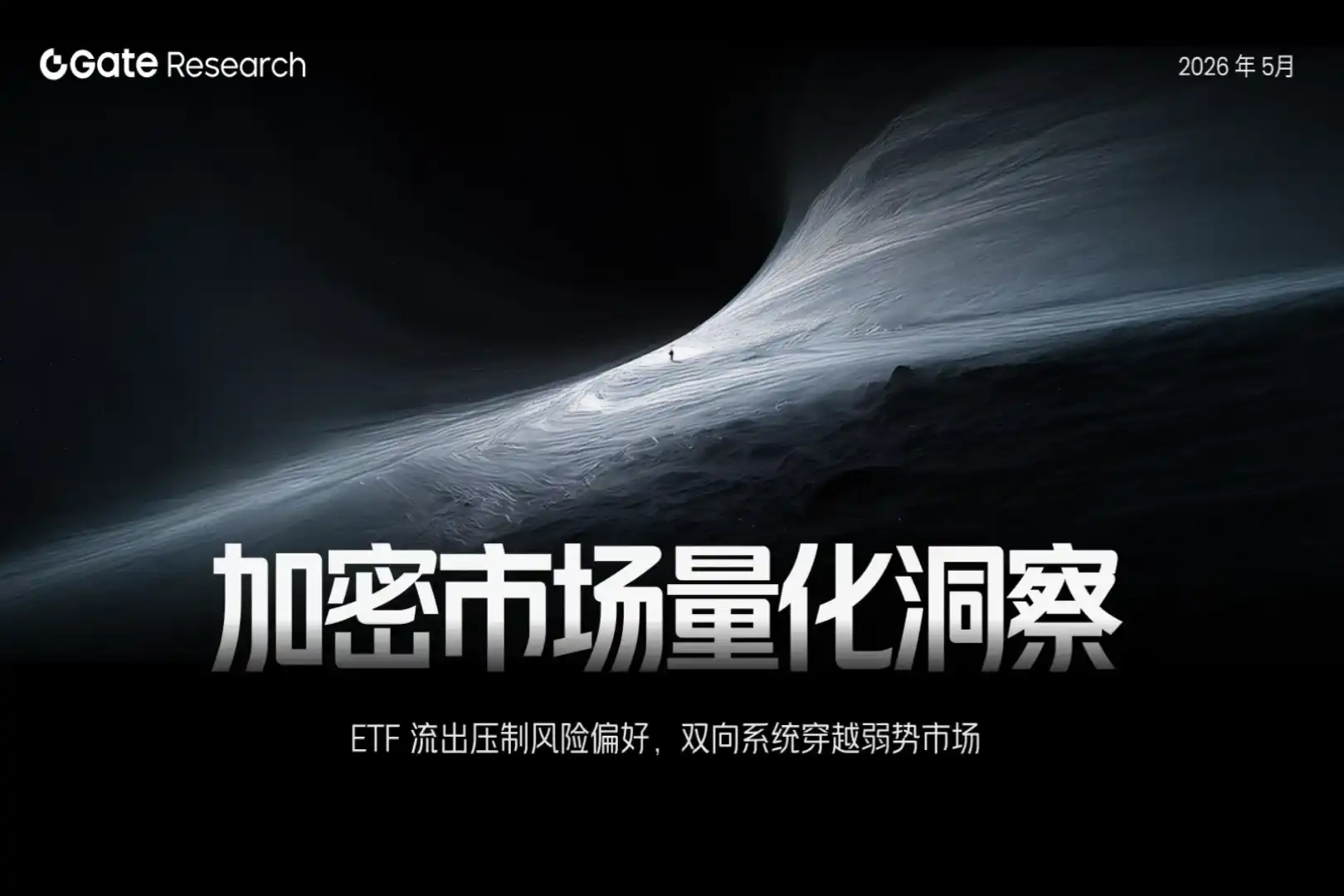
Gate Research Institute: ETF Outflows Suppress Risk Appetite, Two-Way System Navigates Weak Market

Gate Institute Research Report: May 2026 Crypto Market Review & Strategy Analysis In May 2026, the crypto market shifted from an early-month rally to a mid-month correction, concluding with low-volatility consolidation. BTC, ETH, and SOL peaked in early May before declining. The primary market dynamic was a divergence between weakening spot ETF inflows and persistently high leverage-driven perpetual trading volume. A dual-direction moving average cluster breakout strategy outperformed, returning +2.11% for an equally-weighted BTC/ETH/SOL portfolio. This contrasted with a -6.09% return for buy-and-hold and -3.65% for a long-only version of the strategy. Profits were primarily generated from short positions on ETH and SOL during the mid-to-late May downtrend, demonstrating the month's suitability for two-way trend trading. Market structure evolved in three phases: an initial surge (May 1-6), a failure and reversal (starting May 7), and low-volatility compression (May 22 onward). While stablecoin supply remained stable, significant outflows from mainstream BTC and ETH ETFs created selling pressure. Concurrently, high correlation with the S&P 500 (~0.6) and stronger performance from AI equities like Nvidia highlighted crypto's position as a high-beta risk asset within a broader risk-budget framework, lacking independent momentum. The successful strategy employed a 4-hour chart system using a cluster of six moving averages (EMA6,12,24 & SMA6,12,24). A breakout signal was triggered after the cluster width compressed below 2.2%. Trades were managed with a 2.5% fixed stop-loss, a 3:1 Risk/Reward (7.5%) take-profit, and an EMA12-based exit rule to control losses from false breakouts. The strategy's low win rate but high payoff from a few large trend moves was effective in May's conditions. The report concludes that for June, a disciplined, bidirectional approach remains superior to subjective directional bets. The framework should adapt signal weighting based on BTC's position relative to key EMAs, ETF flow trends, and the relative strength of the Nasdaq, prioritizing risk management and trend preservation.

marsbitHá 5m

Gate Research Institute: ETF Outflows Suppress Risk Appetite, Two-Way System Navigates Weak Market

marsbitHá 5m

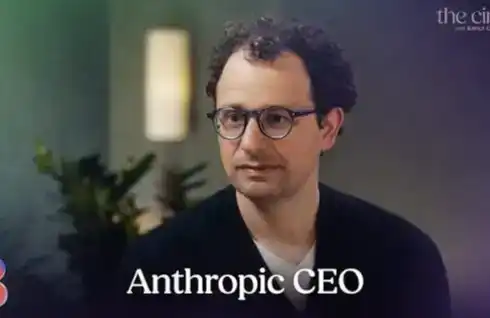
Anthropic CEO's Latest Interview: On Technological Explosion, Safety Red Lines, and the Civilization Contract

Interview with Anthropic CEO Dario Amodei covers the intense pressures and ethical dilemmas of leading AI development. He describes the experience as "exponential growth," feeling constant acceleration akin to relativistic time dilation. The discussion delves into his departure from OpenAI, rooted in a fundamental loss of trust and divergent values rather than mere technical disagreements. Amodei emphasizes Anthropic's enterprise-focused business model, arguing it aligns better with safety and responsible deployment than consumer-facing, ad-driven models. He addresses critical issues like AI's impact on employment, advocating for proactive macroeconomic policies and a shift towards "doing more with the same resources" to avoid widespread job displacement. On safety and governance, he details Anthropic's cautious approach, including delaying the release of the powerful "Mythos" model due to its advanced cyber capabilities. He stresses the need for "human-in-the-loop" principles in military applications, setting red lines against autonomous weapons and mass surveillance. Amodei calls for industry collaboration among trustworthy actors to establish standards and advocates for a balanced regulatory framework with checks and balances, such as Anthropic's Long-term Benefit Trust, rather than corporate or government monopoly over the technology. He expresses geopolitical concerns, particularly regarding China, and a belief that AI should bolster liberal democracies. While acknowledging a non-zero risk of civilizational catastrophe from advanced AI, he asserts Anthropic's actions are aimed at significantly reducing that probability. The interview concludes with Amodei arguing that trust must be earned through concrete actions, like sacrificing commercial gain for safety, to distinguish Anthropic in a Silicon Valley landscape he criticizes for eroded public trust.

marsbitHá 8m

Anthropic CEO's Latest Interview: On Technological Explosion, Safety Red Lines, and the Civilization Contract

marsbitHá 8m

The Brutal Truth Behind CARDS' $535M FDV: Only $43M in Net Revenue and Halved Profit Margins

The article titled "The Brutal Truth Behind CARDS' $535 Million FDV: Only $43 Million Net Revenue, Profit Margins Halved" provides a critical analysis of Collector Crypt (CC), a platform combining physical collectible cards with NFTs in a gacha-style system. Key findings include: * CC has generated $635 million in total user deposits. However, 90.6% ($576 million) is instantly returned to users via automatic card buybacks, resulting in only $43 million in net platform revenue (6.7% retention). * Activity is highly concentrated among dozens of high-frequency wallets, with an average of only ~420 daily active players. * There is minimal secondary market activity for the cards (under $5 million total), indicating the platform functions more as a gambling casino than a collector's marketplace. eBay sales as a percentage of gacha volume have declined for six consecutive quarters. * Despite a tripling in transaction volume, net profit margins have been halved from 11.2% to 5.8% as activity shifts to higher-priced card packs with lower margins. * Value captured by the CARDS token is minimal: only $140,000 (from burns and recent buybacks), representing just 3.4% of CC's cumulative net revenue. In contrast, wallets linked to operational infrastructure have off-ramped $45.7 million in USDC. * The token's ~$535 million Fully Diluted Valuation (FDV) represents a 7.3x multiple of annualized net revenue. Only 20.5% of the token supply is floating, with 72% allocated to insiders and locked until November 2027. The conclusion is that CC has found product-market fit as a high-speed gambling platform for a niche user base, not as a growing collector economy. The token currently captures a negligible share of the platform's revenue.

Foresight NewsHá 33m

The Brutal Truth Behind CARDS' $535M FDV: Only $43M in Net Revenue and Halved Profit Margins

Foresight NewsHá 33m

Trading

Spot
Futuros

Artigos em Destaque

O que é $S$

Compreender o SPERO: Uma Visão Abrangente Introdução ao SPERO À medida que o panorama da inovação continua a evoluir, o surgimento de tecnologias web3 e projetos de criptomoeda desempenha um papel fundamental na formação do futuro digital. Um projeto que tem atraído atenção neste campo dinâmico é o SPERO, denotado como SPERO,$$s$. Este artigo tem como objetivo reunir e apresentar informações detalhadas sobre o SPERO, para ajudar entusiastas e investidores a compreender as suas bases, objetivos e inovações nos domínios web3 e cripto. O que é o SPERO,$$s$? O SPERO,$$s$ é um projeto único dentro do espaço cripto que procura aproveitar os princípios da descentralização e da tecnologia blockchain para criar um ecossistema que promove o envolvimento, a utilidade e a inclusão financeira. O projeto é concebido para facilitar interações peer-to-peer de novas maneiras, proporcionando aos utilizadores soluções e serviços financeiros inovadores. No seu núcleo, o SPERO,$$s$ visa capacitar indivíduos ao fornecer ferramentas e plataformas que melhoram a experiência do utilizador no espaço das criptomoedas. Isso inclui a possibilidade de métodos de transação mais flexíveis, a promoção de iniciativas impulsionadas pela comunidade e a criação de caminhos para oportunidades financeiras através de aplicações descentralizadas (dApps). A visão subjacente do SPERO,$$s$ gira em torno da inclusão, visando fechar lacunas dentro das finanças tradicionais enquanto aproveita os benefícios da tecnologia blockchain. Quem é o Criador do SPERO,$$s$? A identidade do criador do SPERO,$$s$ permanece algo obscura, uma vez que existem recursos publicamente disponíveis limitados que fornecem informações detalhadas sobre o(s) seu(s) fundador(es). Esta falta de transparência pode resultar do compromisso do projeto com a descentralização—uma ética que muitos projetos web3 partilham, priorizando contribuições coletivas em vez de reconhecimento individual. Ao centrar as discussões em torno da comunidade e dos seus objetivos coletivos, o SPERO,$$s$ incorpora a essência do empoderamento sem destacar indivíduos específicos. Assim, compreender a ética e a missão do SPERO é mais importante do que identificar um criador singular. Quem são os Investidores do SPERO,$$s$? O SPERO,$$s$ é apoiado por uma diversidade de investidores que vão desde capitalistas de risco a investidores-anjo dedicados a promover a inovação no setor cripto. O foco desses investidores geralmente alinha-se com a missão do SPERO—priorizando projetos que prometem avanço tecnológico social, inclusão financeira e governança descentralizada. Essas fundações de investidores estão tipicamente interessadas em projetos que não apenas oferecem produtos inovadores, mas que também contribuem positivamente para a comunidade blockchain e os seus ecossistemas. O apoio desses investidores reforça o SPERO,$$s$ como um concorrente notável no domínio em rápida evolução dos projetos cripto. Como Funciona o SPERO,$$s$? O SPERO,$$s$ emprega uma estrutura multifacetada que o distingue de projetos de criptomoeda convencionais. Aqui estão algumas das características-chave que sublinham a sua singularidade e inovação: Governança Descentralizada: O SPERO,$$s$ integra modelos de governança descentralizada, capacitando os utilizadores a participar ativamente nos processos de tomada de decisão sobre o futuro do projeto. Esta abordagem promove um sentido de propriedade e responsabilidade entre os membros da comunidade. Utilidade do Token: O SPERO,$$s$ utiliza o seu próprio token de criptomoeda, concebido para servir várias funções dentro do ecossistema. Esses tokens permitem transações, recompensas e a facilitação de serviços oferecidos na plataforma, melhorando o envolvimento e a utilidade gerais. Arquitetura em Camadas: A arquitetura técnica do SPERO,$$s$ suporta modularidade e escalabilidade, permitindo a integração contínua de funcionalidades e aplicações adicionais à medida que o projeto evolui. Esta adaptabilidade é fundamental para manter a relevância no panorama cripto em constante mudança. Envolvimento da Comunidade: O projeto enfatiza iniciativas impulsionadas pela comunidade, empregando mecanismos que incentivam a colaboração e o feedback. Ao nutrir uma comunidade forte, o SPERO,$$s$ pode melhor atender às necessidades dos utilizadores e adaptar-se às tendências do mercado. Foco na Inclusão: Ao oferecer taxas de transação baixas e interfaces amigáveis, o SPERO,$$s$ visa atrair uma base de utilizadores diversificada, incluindo indivíduos que anteriormente podem não ter participado no espaço cripto. Este compromisso com a inclusão alinha-se com a sua missão abrangente de empoderamento através da acessibilidade. Cronologia do SPERO,$$s$ Compreender a história de um projeto fornece insights cruciais sobre a sua trajetória de desenvolvimento e marcos. Abaixo está uma cronologia sugerida que mapeia eventos significativos na evolução do SPERO,$$s$: Fase de Conceituação e Ideação: As ideias iniciais que formam a base do SPERO,$$s$ foram concebidas, alinhando-se de perto com os princípios de descentralização e foco na comunidade dentro da indústria blockchain. Lançamento do Whitepaper do Projeto: Após a fase conceitual, um whitepaper abrangente detalhando a visão, os objetivos e a infraestrutura tecnológica do SPERO,$$s$ foi lançado para atrair o interesse e o feedback da comunidade. Construção da Comunidade e Primeiros Envolvimentos: Esforços ativos de divulgação foram feitos para construir uma comunidade de primeiros adotantes e investidores potenciais, facilitando discussões em torno dos objetivos do projeto e angariando apoio. Evento de Geração de Tokens: O SPERO,$$s$ realizou um evento de geração de tokens (TGE) para distribuir os seus tokens nativos a apoiantes iniciais e estabelecer liquidez inicial dentro do ecossistema. Lançamento da dApp Inicial: A primeira aplicação descentralizada (dApp) associada ao SPERO,$$s$ foi lançada, permitindo que os utilizadores interagissem com as funcionalidades principais da plataforma. Desenvolvimento Contínuo e Parcerias: Atualizações e melhorias contínuas nas ofertas do projeto, incluindo parcerias estratégicas com outros players no espaço blockchain, moldaram o SPERO,$$s$ em um jogador competitivo e em evolução no mercado cripto. Conclusão O SPERO,$$s$ é um testemunho do potencial do web3 e das criptomoedas para revolucionar os sistemas financeiros e capacitar indivíduos. Com um compromisso com a governança descentralizada, o envolvimento da comunidade e funcionalidades inovadoras, abre caminho para um panorama financeiro mais inclusivo. Como em qualquer investimento no espaço cripto em rápida evolução, potenciais investidores e utilizadores são incentivados a pesquisar minuciosamente e a envolver-se de forma ponderada com os desenvolvimentos em curso dentro do SPERO,$$s$. O projeto demonstra o espírito inovador da indústria cripto, convidando a uma exploração mais aprofundada das suas inúmeras possibilidades. Embora a jornada do SPERO,$$s$ ainda esteja a desenrolar-se, os seus princípios fundamentais podem, de facto, influenciar o futuro de como interagimos com a tecnologia, as finanças e uns com os outros em ecossistemas digitais interconectados.

69 Visualizações TotaisPublicado em {updateTime}Atualizado em 2024.12.17

O que é $S$

O que é AGENT S

Agent S: O Futuro da Interação Autónoma no Web3 Introdução No panorama em constante evolução do Web3 e das criptomoedas, as inovações estão constantemente a redefinir a forma como os indivíduos interagem com plataformas digitais. Um projeto pioneiro, o Agent S, promete revolucionar a interação humano-computador através do seu framework aberto e agente. Ao abrir caminho para interações autónomas, o Agent S visa simplificar tarefas complexas, oferecendo aplicações transformadoras em inteligência artificial (IA). Esta exploração detalhada irá aprofundar-se nas complexidades do projeto, nas suas características únicas e nas implicações para o domínio das criptomoedas. O que é o Agent S? O Agent S é um framework aberto e agente, especificamente concebido para abordar três desafios fundamentais na automação de tarefas computacionais: Aquisição de Conhecimento Específico de Domínio: O framework aprende inteligentemente a partir de várias fontes de conhecimento externas e experiências internas. Esta abordagem dupla capacita-o a construir um rico repositório de conhecimento específico de domínio, melhorando o seu desempenho na execução de tarefas. Planeamento ao Longo de Longos Horizontes de Tarefas: O Agent S emprega planeamento hierárquico aumentado por experiência, uma abordagem estratégica que facilita a decomposição e execução eficientes de tarefas intrincadas. Esta característica melhora significativamente a sua capacidade de gerir múltiplas subtarefas de forma eficiente e eficaz. Gestão de Interfaces Dinâmicas e Não Uniformes: O projeto introduz a Interface Agente-Computador (ACI), uma solução inovadora que melhora a interação entre agentes e utilizadores. Utilizando Modelos de Linguagem Multimodais de Grande Escala (MLLMs), o Agent S pode navegar e manipular diversas interfaces gráficas de utilizador de forma fluida. Através destas características pioneiras, o Agent S fornece um framework robusto que aborda as complexidades envolvidas na automação da interação humana com máquinas, preparando o terreno para uma infinidade de aplicações em IA e além. Quem é o Criador do Agent S? Embora o conceito de Agent S seja fundamentalmente inovador, informações específicas sobre o seu criador permanecem elusivas. O criador é atualmente desconhecido, o que destaca ou o estágio nascente do projeto ou a escolha estratégica de manter os membros fundadores em anonimato. Independentemente da anonimidade, o foco permanece nas capacidades e no potencial do framework. Quem são os Investidores do Agent S? Como o Agent S é relativamente novo no ecossistema criptográfico, informações detalhadas sobre os seus investidores e financiadores não estão explicitamente documentadas. A falta de informações disponíveis publicamente sobre as fundações de investimento ou organizações que apoiam o projeto levanta questões sobre a sua estrutura de financiamento e roteiro de desenvolvimento. Compreender o apoio é crucial para avaliar a sustentabilidade do projeto e o seu impacto potencial no mercado. Como Funciona o Agent S? No núcleo do Agent S reside uma tecnologia de ponta que lhe permite funcionar eficazmente em diversos ambientes. O seu modelo operacional é construído em torno de várias características-chave: Interação Humano-Computador Semelhante: O framework oferece planeamento avançado em IA, esforçando-se para tornar as interações com computadores mais intuitivas. Ao imitar o comportamento humano na execução de tarefas, promete elevar as experiências dos utilizadores. Memória Narrativa: Utilizada para aproveitar experiências de alto nível, o Agent S utiliza memória narrativa para acompanhar os históricos de tarefas, melhorando assim os seus processos de tomada de decisão. Memória Episódica: Esta característica fornece aos utilizadores orientações passo a passo, permitindo que o framework ofereça suporte contextual à medida que as tarefas se desenrolam. Suporte para OpenACI: Com a capacidade de funcionar localmente, o Agent S permite que os utilizadores mantenham o controlo sobre as suas interações e fluxos de trabalho, alinhando-se com a ética descentralizada do Web3. Fácil Integração com APIs Externas: A sua versatilidade e compatibilidade com várias plataformas de IA garantem que o Agent S possa integrar-se perfeitamente em ecossistemas tecnológicos existentes, tornando-o uma escolha apelativa para desenvolvedores e organizações. Estas funcionalidades contribuem coletivamente para a posição única do Agent S no espaço cripto, à medida que automatiza tarefas complexas e em múltiplos passos com mínima intervenção humana. À medida que o projeto evolui, as suas potenciais aplicações no Web3 podem redefinir a forma como as interações digitais se desenrolam. Cronologia do Agent S O desenvolvimento e os marcos do Agent S podem ser encapsulados numa cronologia que destaca os seus eventos significativos: 27 de Setembro de 2024: O conceito de Agent S foi lançado num artigo de pesquisa abrangente intitulado “Um Framework Agente Aberto que Usa Computadores como um Humano”, mostrando a base para o projeto. 10 de Outubro de 2024: O artigo de pesquisa foi disponibilizado publicamente no arXiv, oferecendo uma exploração aprofundada do framework e da sua avaliação de desempenho com base no benchmark OSWorld. 12 de Outubro de 2024: Uma apresentação em vídeo foi lançada, proporcionando uma visão visual das capacidades e características do Agent S, envolvendo ainda mais potenciais utilizadores e investidores. Estes marcos na cronologia não apenas ilustram o progresso do Agent S, mas também indicam o seu compromisso com a transparência e o envolvimento da comunidade. Pontos-Chave Sobre o Agent S À medida que o framework Agent S continua a evoluir, várias características-chave destacam-se, sublinhando a sua natureza inovadora e potencial: Framework Inovador: Concebido para proporcionar um uso intuitivo de computadores semelhante à interação humana, o Agent S traz uma abordagem nova à automação de tarefas. Interação Autónoma: A capacidade de interagir autonomamente com computadores através de GUI significa um avanço em direção a soluções computacionais mais inteligentes e eficientes. Automação de Tarefas Complexas: Com a sua metodologia robusta, pode automatizar tarefas complexas e em múltiplos passos, tornando os processos mais rápidos e menos propensos a erros. Melhoria Contínua: Os mecanismos de aprendizagem permitem que o Agent S melhore a partir de experiências passadas, aprimorando continuamente o seu desempenho e eficácia. Versatilidade: A sua adaptabilidade em diferentes ambientes operacionais, como OSWorld e WindowsAgentArena, garante que pode servir uma ampla gama de aplicações. À medida que o Agent S se posiciona no panorama do Web3 e das criptomoedas, o seu potencial para melhorar as capacidades de interação e automatizar processos significa um avanço significativo nas tecnologias de IA. Através do seu framework inovador, o Agent S exemplifica o futuro das interações digitais, prometendo uma experiência mais fluida e eficiente para os utilizadores em diversas indústrias. Conclusão O Agent S representa um ousado avanço na união da IA e do Web3, com a capacidade de redefinir a forma como interagimos com a tecnologia. Embora ainda esteja nas suas fases iniciais, as possibilidades para a sua aplicação são vastas e cativantes. Através do seu framework abrangente que aborda desafios críticos, o Agent S visa trazer interações autónomas para o primeiro plano da experiência digital. À medida que avançamos mais profundamente nos domínios das criptomoedas e da descentralização, projetos como o Agent S desempenharão, sem dúvida, um papel crucial na formação do futuro da tecnologia e da colaboração humano-computador.

679 Visualizações TotaisPublicado em {updateTime}Atualizado em 2025.01.14

O que é AGENT S

Como comprar S

Bem-vindo à HTX.com!Tornámos a compra de Sonic (S) simples e conveniente.Segue o nosso guia passo a passo para iniciar a tua jornada no mundo das criptos.Passo 1: cria a tua conta HTXUtiliza o teu e-mail ou número de telefone para te inscreveres numa conta gratuita na HTX.Desfruta de um processo de inscrição sem complicações e desbloqueia todas as funcionalidades.Obter a minha contaPasso 2: vai para Comprar Cripto e escolhe o teu método de pagamentoCartão de crédito/débito: usa o teu visa ou mastercard para comprar Sonic (S) instantaneamente.Saldo: usa os fundos da tua conta HTX para transacionar sem problemas.Terceiros: adicionamos métodos de pagamento populares, como Google Pay e Apple Pay, para aumentar a conveniência.P2P: transaciona diretamente com outros utilizadores na HTX.Mercado de balcão (OTC): oferecemos serviços personalizados e taxas de câmbio competitivas para os traders.Passo 3: armazena teu Sonic (S)Depois de comprar o teu Sonic (S), armazena-o na tua conta HTX.Alternativamente, podes enviá-lo para outro lugar através de transferência blockchain ou usá-lo para transacionar outras criptomoedas.Passo 4: transaciona Sonic (S)Transaciona facilmente Sonic (S) no mercado à vista da HTX.Acede simplesmente à tua conta, seleciona o teu par de trading, executa as tuas transações e monitoriza em tempo real.Oferecemos uma experiência de fácil utilização tanto para principiantes como para traders experientes.

1.3k Visualizações TotaisPublicado em {updateTime}Atualizado em 2026.06.02

Como comprar S

Discussões

Bem-vindo à Comunidade HTX. Aqui, pode manter-se informado sobre os mais recentes desenvolvimentos da plataforma e obter acesso a análises profissionais de mercado. As opiniões dos utilizadores sobre o preço de S (S) são apresentadas abaixo.

活动图片