21Shares Mid-Year Key Report: Bitcoin's Four-Year Cycle Remains Intact, Stablecoins and Tokenization Emerge as New Growth Engines

marsbitPublicado em 2026-06-25Última atualização em 2026-06-25

Resumo

21Shares Mid-Year Report 2026: Bitcoin Cycle Intact, Stablecoins & Tokenization Emerge as New Engines This mid-year review assesses progress against 21Shares' ten predictions for 2026. While the overarching shift from narrative to fundamentals holds, performance varies. Key findings show Bitcoin's four-year cycle remains evident despite market maturation. Global crypto ETP AUM has declined to ~$140B, lagging the $400B target, though product innovation continues. Stablecoin supply surpassed $320B, demonstrating non-cyclical demand but falling short of the $1T forecast due to slower regulatory clarity. DeFi TVL, stalled at ~$140B, was hindered by major security incidents. Corporate crypto treasuries hold ~1.28M BTC ($100B), with consolidation pressuring weaker players. Prediction markets are on track, with $57.5B volume already surpassing half the $100B annual target. AI agent infrastructure is ready, but adoption is early. Ethereum L2 consolidation is underway, with the top 5 capturing nearly 90% of activity. Compliant token launches have a platform but lack mainstream volume. Tokenized RWAs total ~$31B on public chains, but institutional pipeline growth is strong. In summary, fundamentals like stablecoins, tokenization, and prediction markets are advancing, but targets require faster adoption or price appreciation. The market is maturing, yet cyclical patterns persist.

Author: 21shares Research

Compiled by: Jiahuan, ChainCatcher

Introduction

Welcome to the mid-year update of State of Crypto. In this report, we revisit our predictions for 2026 made at the start of the year to see how they have held up after six months.

At the beginning of the year, we proposed that 2026 would be the year the crypto industry transitions from narrative-driven to fundamentals-driven.

Specifically, we identified four core drivers: structural inflows into regulated exchange-traded funds (ETFs) and exchange-traded products (ETPs), enterprise adoption of stablecoins, tokenization of commodities and pre-IPO companies, and on-chain use cases moving from concept to scale.

Six months later, reality is more complex than we anticipated. Some calls have arrived ahead of schedule: annual trading volume in prediction markets is already close to our full-year target, consolidation in Ethereum scaling solutions is playing out as we expected, tokenized commodities are gaining renewed attention in gold and energy due to geopolitical hedging needs, the pre-IPO market is moving mainstream with a pipeline of marquee projects from SpaceX to Anthropic taking shape.

The overall direction we outlined for 2026 remains largely intact, but some predictions are ahead of schedule, while others are lagging. In this report, we take an objective look at each forecast, presenting where the market actually stands, not where we wish it were.

I. The BTC Cycle: Still Unbroken

Prediction at the start of the year: Bitcoin's four-year cycle is over.

Entering 2026, we thought Bitcoin's four-year cycle might be over. Six months later, we must be candid: the price action looks familiar. After peaking around $126,000 in October 2025, BTC pulled back sharply, a pattern highly consistent with previous post-halving cycles.

But this doesn't mean our call was entirely wrong. The market structure has indeed changed: ETF holdings are increasingly institutionalized, and the current drawdown of around 50% is far less severe than the 80%+ bear market drops of the past.

Bitcoin has also not broken below the global average cost basis of approximately $54,000, avoiding the kind of total capitulation selling seen in previous bear cycles. These are signals of a more mature market with stickier capital.

But stronger fundamentals do not mean BTC has become a "cycle-less" asset. Like most asset classes, cycles persist; only their shape changes. Investors ultimately still look at price and relative opportunity costs. Commodities, US stocks, and AI-themed stocks are all competing for the same pool of capital, and this still influences behavior.

Taken together, the continued expansion in adoption keeps us cautiously optimistic. The number of wallets holding BTC continues to grow. Our year-end base case expectation is for Bitcoin to return near $100,000, not to break to new all-time highs.
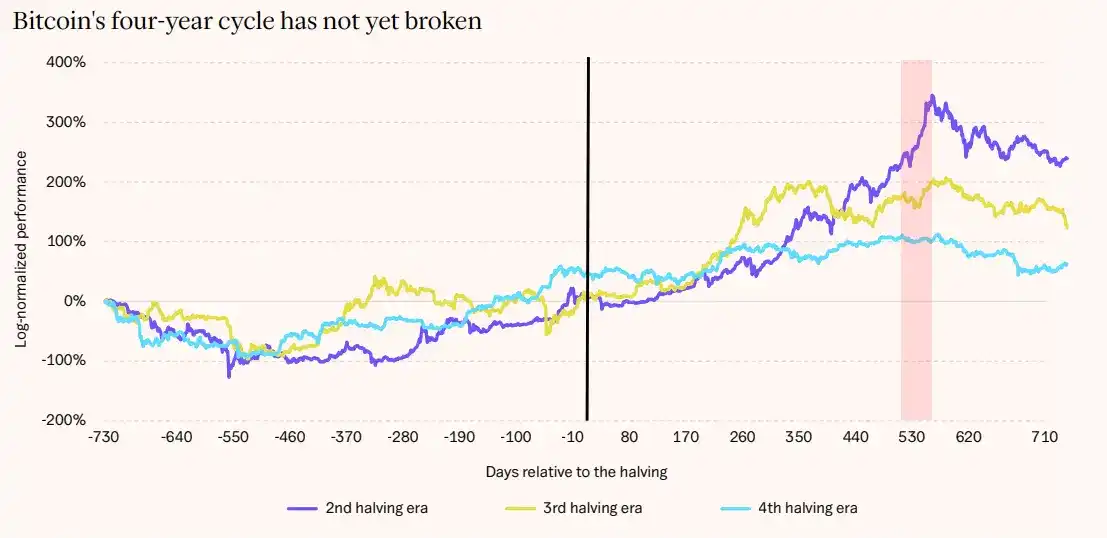
[Chart 1: Bitcoin's Four-Year Cycle Not Yet Broken]

Chart Description: Plots Bitcoin's log-normalized performance in the 2nd, 3rd, and 4th halving cycles, with the halving day as the origin (x-axis: days since halving, y-axis: log returns). The trajectory of the 4th halving cycle closely resembles that of the previous two cycles.

Data Source: Glassnode, 21Shares

II. Crypto ETPs: AUM Declines Instead of Rising

Prediction at the start of the year: Global crypto ETP AUM will surpass $400 billion.

We predicted that global crypto ETP assets under management (AUM) would exceed that of the largest and best-known Nasdaq-100 ETF (QQQ) by year-end. This forecast was built on an expected starting point of $250 billion. The reality is that AUM was around $172 billion at the end of 2025, lower than expected, and has been declining since the start of the year.

As of May 2026, total global crypto ETP AUM is approximately $140 billion, down about 15% year-to-date, with BTC ETPs accounting for roughly $110 billion of that.

The headline numbers look bad, but the underlying support is noteworthy. Despite net outflows of around $3 billion from US spot BTC ETFs year-to-date, BTC-denominated holdings remain near all-time highs, just over 1.25 million BTC, only about 8% below the peak. Investors are navigating the volatility or quietly building strategic positions, even with BTC far from its highs.

The product landscape is also maturing rapidly. The SEC's uniform listing standards have turned last year's backlog of applications into a wave of new products beyond just BTC and ETH.

Hyperliquid stands out in particular: the US spot ETF tracking this asset attracted over $150 million in net inflows in less than a month since launch, demonstrating that traditional capital is still flowing towards digital assets showing fundamental growth, even in a weak broader market.

Meanwhile, Morgan Stanley launched the first bank-sponsored spot BTC ETF in April, bringing one of the largest US advisor networks into the asset class. BlackRock and Goldman Sachs are racing to launch options-based BTC yield strategy ETFs, expanding the crypto product matrix beyond pure Delta One exposure.

The structural drivers remain. Institutional adoption is advancing, and regulatory momentum is real. But global ETP AUM largely follows the BTC price. Reaching our initial target would require a combination of significant price recovery and sustained net inflows simultaneously.

For reference, QQQ, propelled by the strength of AI and tech stocks, now boasts nearly $500 billion in AUM. Closing this gap is not impossible, but the combination of required conditions suggests this story more likely belongs to the next cycle.
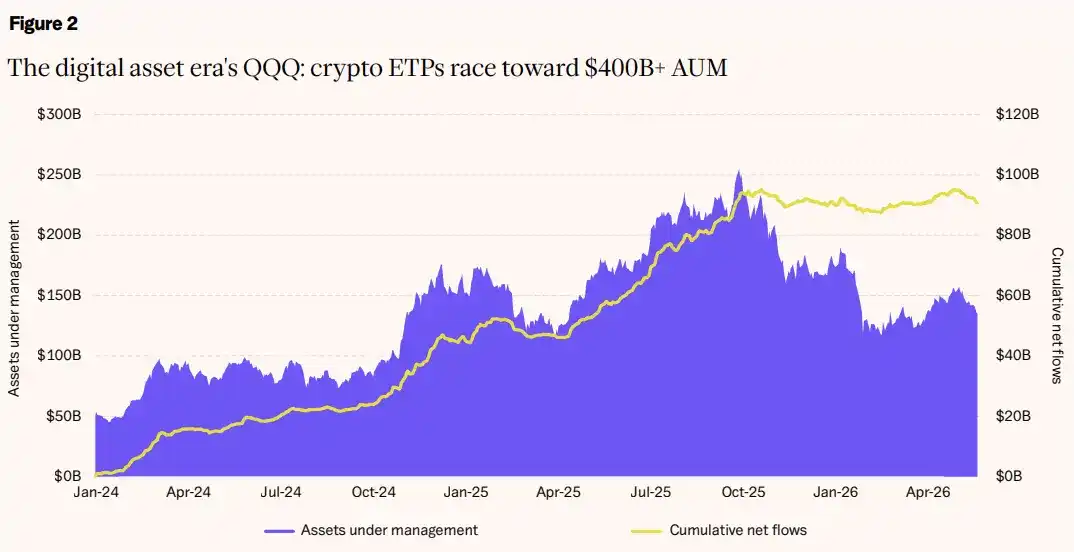
[Chart 2: The QQQ of the Digital Asset Age: Crypto ETPs Compete for Over $400 Billion AUM]

Chart Description: Left axis shows global crypto ETP Assets Under Management (AUM); right axis shows cumulative net inflows. From January 2024 to May 2026, AUM peaked in mid-2025 and subsequently declined, but cumulative net inflows remain elevated.

Data Source: Bloomberg, 21Shares

III. Stablecoins: $1 Trillion Target Arrived at Least a Year Early

Prediction at the start of the year: Stablecoin supply will reach $1 trillion.

Our prediction that stablecoin supply would reach $1 trillion was based on the assumption that regulatory clarity would unlock large-scale institutional and corporate adoption. Clarity has indeed arrived, but only partially.

The GENIUS Act was signed into law in July 2025, establishing the first federal stablecoin framework in the US. The EU's MiCA regulation is fully effective, with 14 licensed issuers and roughly 20 compliant stablecoins in circulation. The infrastructure is in place: total supply is approximately $320 billion, a significant increase from a year ago, but still only a third of the $1 trillion target.

The second step of regulatory clarity has been slower. The CLARITY bill has stalled for months, primarily over how to treat yield-bearing stablecoins, with banking groups warning that deposit-like yields could siphon funds from traditional lenders.

In mid-May, a compromise limiting passive, deposit-like yields passed the Senate Banking Committee, but this delay has dampened the near-term prospects for what could have been the biggest growth engine for the category.

Overshadowed by the headline number is genuine resilience. Stablecoin supply contracted over 30% during the last bear market; this time, supply continues to hit new all-time highs even as the market weakens, and far less new capital has entered the ecosystem than in the last cycle. For us, this is the strongest evidence of stablecoins as a core crypto use case: demand no longer relies on the cycle.

Growth is also expanding beyond the US dollar. The circulating supply of non-USD stablecoins has reached an all-time high of around $2 billion for the first time, growing over 40% year-to-date.

Traditional giants are also moving: Visa, Mastercard, Stripe, and Coinbase are reportedly jointly preparing a US stablecoin platform; Japan's three megabanks — MUFG, SMBC, and Mizuho — announced they will jointly issue trust-based stablecoins by early 2027, targeting $7 billion in issuance by 2028.

When payment and banking giants start building their own rails, whether adoption will arrive is no longer the question.

A more realistic year-end range is $400-$600 billion, reflecting steady growth in trading, cross-chain transfers, and remittances, rather than the explosive surge we originally anticipated. The direction is correct, but the timeline ran ahead of the adoption curve.
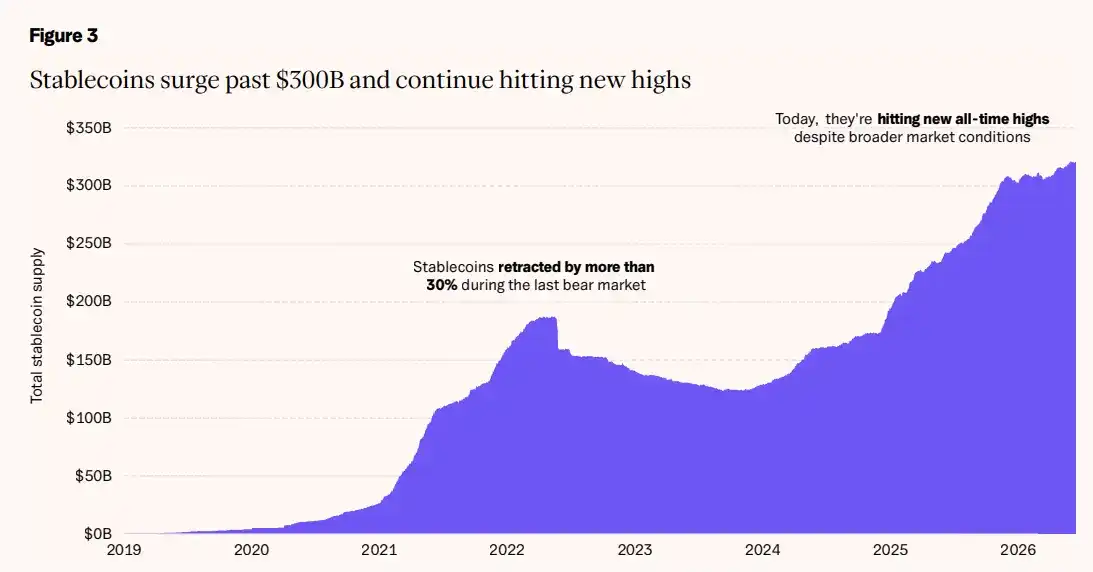
[Chart 3: Stablecoins Break Through $300 Billion and Continue Setting New All-Time Highs]

Chart Description: Change in total stablecoin supply from 2019 to 2026. Supply contracted over 30% during the 2022-2023 bear market, while currently, despite a down market environment, supply continues to reach new all-time highs.

Data Source: DeFiLlama, 21Shares

IV. DeFi: Security Incidents Dent Growth

Prediction at the start of the year: DeFi TVL will exceed $300 billion.

We predicted that DeFi Total Value Locked (TVL) would exceed $300 billion in 2026, more than doubling from the ~$130 billion at the time. This growth has not materialized. TVL sits around $140 billion, with its growth trajectory interrupted by a brutal year for security.

More than 50 security incidents have occurred so far in 2026, with cumulative losses exceeding $840 million, an increase of about 70% year-over-year. April was the single worst month in DeFi history.

A single incident at KelpDAO drained nearly $300 million, triggering over $13 billion in outflows within two days, severely denting institutional confidence in the restaking sector. We view these as growing pains of an emerging industry, not a final verdict, but they have certainly forced a lot of capital to the sidelines.

Beneath the surface weakness, capital is concentrating towards applications with real revenue and user bases.

Hyperliquid, the on-chain, full-financial asset exchange, continues to generate over $1 billion in annualized revenue, returning the majority of it to token holders via buybacks, and is up over 100% year-to-date.

Morpho, the lending engine behind Coinbase's crypto-collateralized loans, has become the highest-valued lending company in the space with a market cap over $1.2 billion, surpassing Aave. Its deposit base has recovered to near its all-time high of around $8 billion, with Apollo committing to acquire up to 9% of its token supply. Select protocols with genuine revenue are attracting outsized capital even in weak conditions.

The massive liquidity surge needed to push TVL to $300 billion hasn't arrived. Significant acceleration is more likely in 2027, before market conditions improve and confidence repairs.
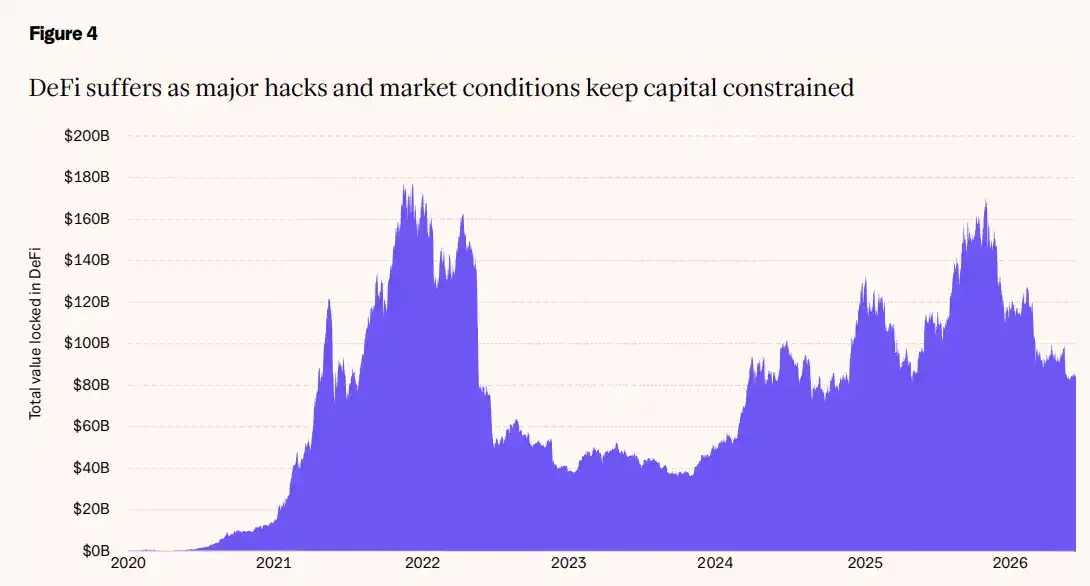
[Chart 4: DeFi Capital Constrained by Major Security Incidents and Market Conditions]

Chart Description: Change in DeFi Total Value Locked (TVL) from 2020 to 2026. TVL peaked in late 2021, declined sharply, partially recovered in 2024-2025, and has remained around $140 billion in 2026.

Data Source: DeFiLlama, 21Shares

V. Digital Asset Treasuries: The Weak Accelerating Their Exit

Prediction at the start of the year: Digital asset treasury companies' crypto holdings will exceed $250 billion, but only a few will survive.

We predicted that the total value of crypto holdings by digital asset treasury companies would exceed $250 billion by year-end, while warning that only a few would survive. On the second point, we've been proven right. On the first, the market is halfway there, but heavily reliant on price appreciation to close the gap.

Approximately 200 publicly traded companies hold BTC as a strategic asset, with combined holdings nearing 1.28 million BTC, already surpassing the 1 million milestone we highlighted last year.

The issue is valuation: at current prices, the total value of corporate crypto treasuries is about $100 billion, far from the $250 billion target. Strategy still dominates overwhelmingly, holding over 845,000 BTC at an average cost of ~$75.7k, representing over 4% of the total BTC supply, but has been in an unrealized loss position as of mid-2026.

The consolidation we pointed to is happening, just not in the form of well-capitalized players acquiring distressed assets, but rather by the weak naturally exiting.

Smaller treasury firms with market caps below the value of their BTC holdings, locked out of fundraising markets, are being forced to sell the very assets they were meant to accumulate.

Nakamoto Holdings sold BTC at an ~40% realized loss to maintain operations, with its stock down ~99% from its 2025 peak.

MARA liquidated over 15,000 BTC to pay off convertible bonds.

Strategy also executed its first BTC sale in four years (32 BTC to pay preferred stock dividends). The amount was negligible (less than 0.004% of holdings), and buying resumed a week later, but it was symbolic: business obligations will compete with BTC accumulation.

Not every company that adopted the treasury model in 2025 has the capital structure or conviction to withstand a sustained pullback.

This stress is precisely the scenario our consolidation call anticipated. Among 18 major treasury firms, 13 have market caps below the value of their BTC holdings. Acquiring one effectively means buying BTC at a discount. Consolidation is starting from the deepest pockets.

Twenty One Capital (the second-largest treasury firm), backed by Tether, is progressing with a merger involving payments company Strike and miner Elektron Energy to create a vertically integrated BTC operating company. Notably, its market cap already exceeds the value of its BTC holdings, while most peers trade at a discount.
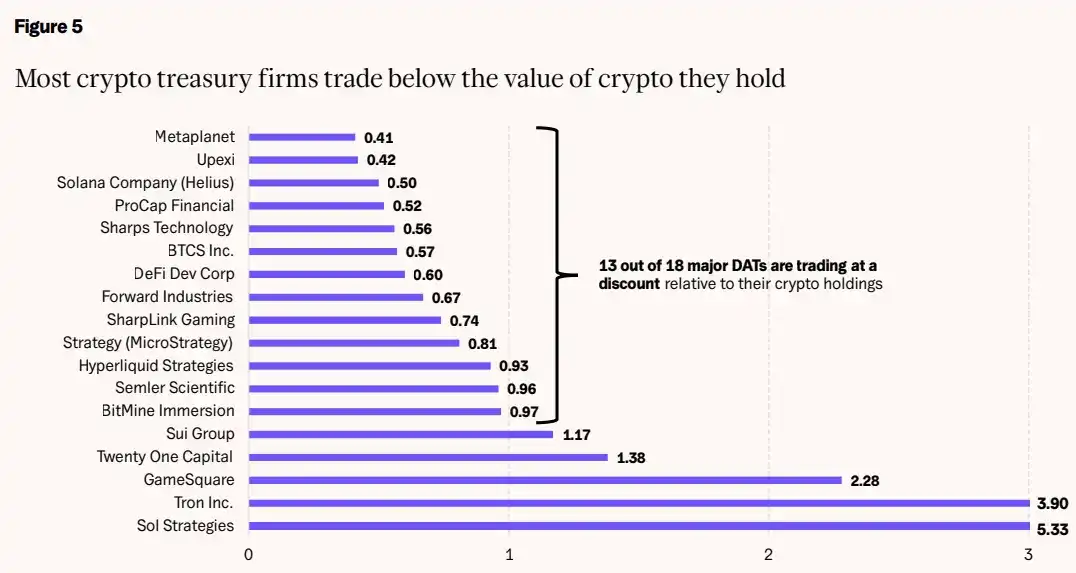
[Chart 5: Most Crypto Treasury Firms Trade at a Discount to Their Crypto Asset Value]

Chart Description: mNAV (Market Cap / Net Asset Value of Crypto Holdings) ratio for 18 major digital asset treasury companies.

Data Source: SEC EDGAR; CoinGecko; Yahoo Finance, 21Shares

VI. Prediction Markets: Half the Annual Target Achieved in Half a Year

Prediction at the start of the year: Prediction markets will bring millions of users on-chain, with annual trading volume reaching $100 billion.

We predicted prediction markets would reach $100 billion in annual trading volume. Progress has even exceeded our own expectations. As of the end of May, $57.5 billion has been traded, over half the annual target and more than ten times the volume from the same period last year. At the current pace, $100 billion would be achieved around early Q4.

We think it will be faster. Catalysts for event-driven trading are concentrated in the second half of the year: the FIFA World Cup is underway, and US House and Senate midterm elections are in November.

Activity has cooled off since the January peak (over $15 billion in a single month), but this is the natural rhythm of an event-driven market between major events. The last time event flow was concentrated (Q4 2025), monthly volume tripled. If a similar surge occurs in H2, the year could head towards $200 billion.

Our expected drivers are materializing one by one. Regulatory clarity arrived: the CFTC closed its investigations into Polymarket and Kalshi; PredictIt won its court case; and Intercontinental Exchange committed up to $2 billion to expand Polymarket.

Platform integration followed: Google and X embedded real-time odds into their own platforms. And 2026 happens to provide the political and macroeconomic volatility these markets were built for.

The competitive landscape is also broadening. Hyperliquid entered the prediction market space via HIP-4 in May. Its volume remains far below Polymarket and Kalshi's for now, but within weeks of launch, it was processing about a fifth of BTC outcome contract trading volume.

Its design points in a unique direction: a trader-focused, composable financial outcome market, a use case beyond the typical audience of Polymarket or Kalshi. The pie is getting bigger, with different segments driven by different forces.

While a US federal framework is settled, regulators elsewhere are drawing the opposite conclusion: Spain blocked both platforms citing a lack of gambling licenses in late May; Brazil, India, Indonesia, and Portugal have also restricted access this year; and some US states are challenging sports event contracts under their own betting-related laws.

These restrictions haven't materially impacted volume yet, as the growth engine remains the US, but the issue is being resolved market by market.

Nevertheless, the biggest events of H2 are yet to come. We expect 2026 to significantly surpass the original forecast, cementing prediction markets alongside stablecoins and tokenization as one of crypto's clearest product-market fits.
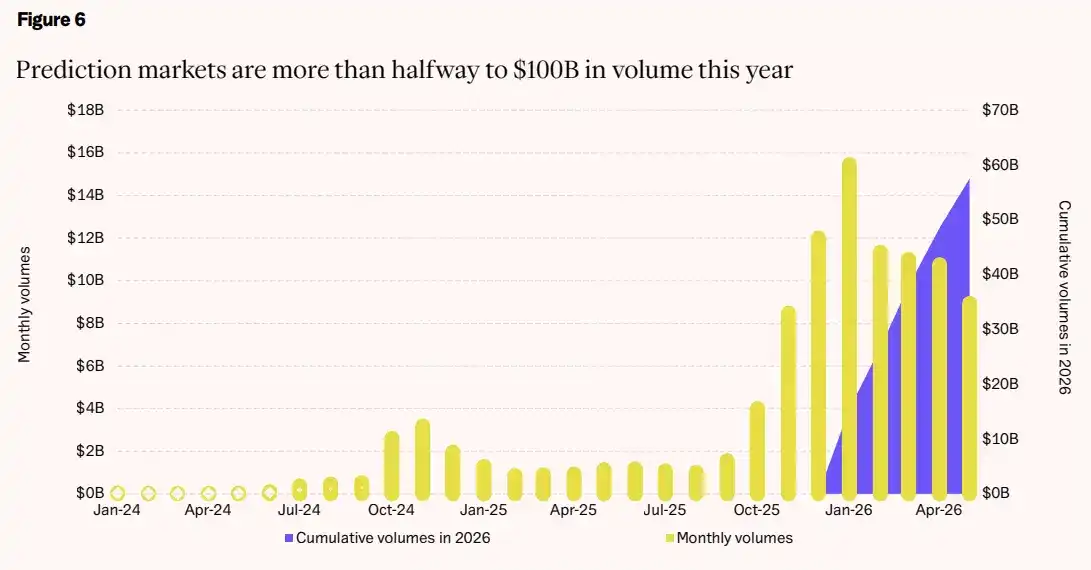
[Chart 6: Prediction Markets Have Already Traded Over Half of Their $100 Billion Annual Target This Year]

Chart Description: Left axis shows monthly trading volume (bars); right axis shows cumulative 2026 trading volume (line). Explosive peaks occurred in Q4 2025 and January 2026, followed by a pullback. Cumulative volume reached ~$57.5 billion by end of May.

Data Source: Dune, 21Shares

VII. The AI Agent Economy: Still in Its Infancy

Prediction at the start of the year: The AI agent economy becomes a reality in 2026.

We predicted that AI agents would become active in 2026, directly interacting with blockchain applications to manage yield, automate payments, optimize liquidity, and minimize human intervention. This prediction is directionally correct: blockchain infrastructure is ready, first products are live, but mass adoption hasn't arrived.

In fact, infrastructure progress has been faster than we expected. ERC-8004 (the identity and reputation layer for autonomous agents on Ethereum) went live on mainnet in January and has begun deploying to other EVM-compatible networks.

The x402 protocol revived the HTTP 402 "Payment Required" status code, designed at the birth of the web but never used, for machine-to-machine payments. It has grown from an internal Coinbase project to a standard co-governed by Coinbase, Cloudflare, and Stripe, with backing from AWS, Google, Mastercard, Microsoft, and Visa.

Traditional finance is also converging in the same direction. Visa, Mastercard, and Stripe are each building their own agent payment protocols. In March 2026, Santander and Mastercard completed Europe's first end-to-end real-time payment executed by an AI agent.

Volumes remain tiny. The x402 protocol's cumulative transaction volume is still in the tens of millions of dollars, more proof-of-concept than mature economy. What's missing is the killer app or integration that makes the agent economy as intuitive as stablecoin transfers or prediction market trading. That breakthrough may still be ahead, but we believe 2026 will be remembered as the "foundation-laying year."
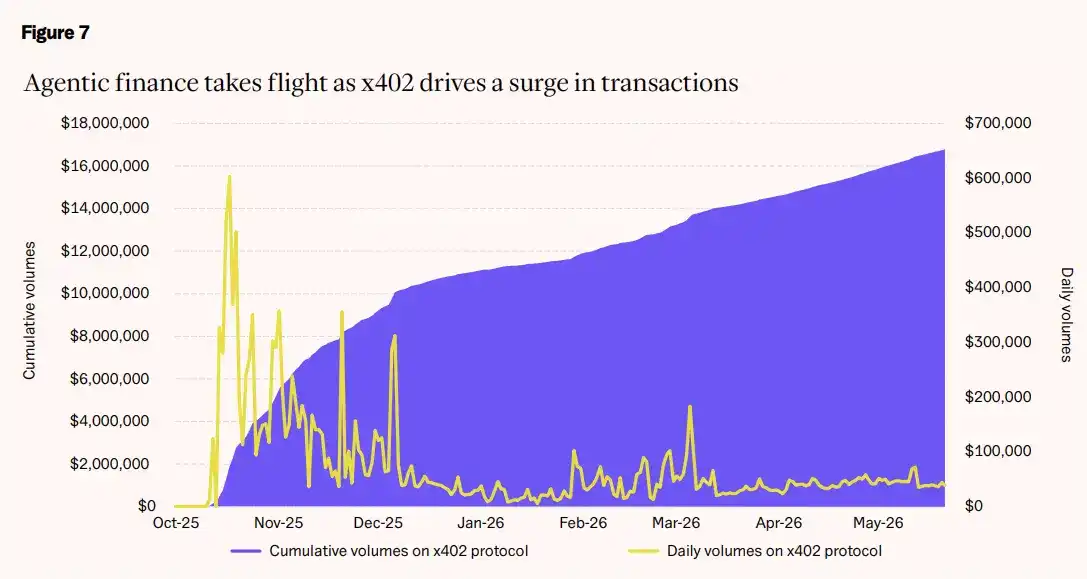
[Chart 7: AI Agent Finance Takes Off, x402 Drives Transaction Surge]

Chart Description: Left axis shows x402 protocol cumulative transaction volume (line); right axis shows daily transaction volume (line). From October 2025 to May 2026, cumulative volume grew from 0 to ~$17 million, with daily volume peaking at ~$600k in January 2026.

Data Source: Dune, 21Shares

VIII. Ethereum L2s: Consolidation Proceeds as Expected

Prediction at the start of the year: Most Ethereum scaling solutions will die out in 2026.

We predicted that most scaling solutions (Layer 2, L2) would not survive 2026, with market share concentrating among a few dominant players. This call has landed.

In February, it received an unexpected endorsement: Ethereum co-founder Vitalik Buterin publicly declared that "the rollup-centric roadmap is no longer tenable."

His reasoning aligned with our analysis: most L2s have stagnated on decentralization and sovereignty, while Ethereum itself is steadily scaling. Scaling solutions without differentiation lose their reason for being. His advice: "differentiate or die."

The data bears this out. The top 5 L2s now command nearly 90% of daily active users in the ecosystem. Asset concentration is similarly stark: Base and Arbitrum control about 70% of total value.

The winners share common traits: built-in distribution channels, credible paths to decentralization, and business models that accumulate value rather than "renting" users with incentives.

The remaining 70+ scaling solutions split the leftovers, with over 50 already irrelevant by any meaningful activity metric. Some once well-known chains have only a few hundred daily active users, running on treasury funds rather than real demand.

However, the elimination tournament isn't over. The final stages (acquisitions, formal shutdowns, migrations to app-chains) are still underway, and we expect acceleration in the second half of the year.
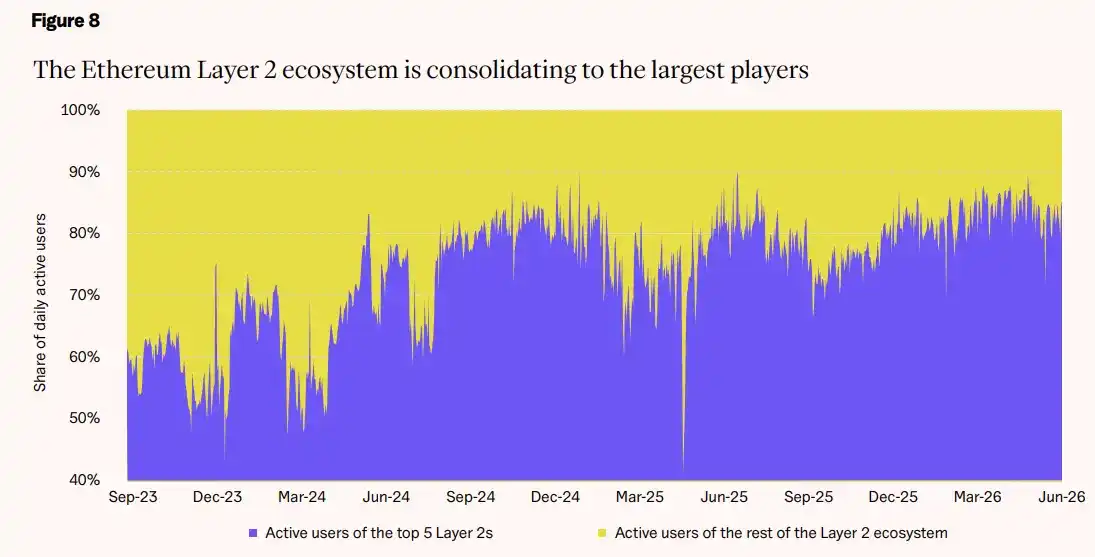
[Chart 8: Ethereum Layer 2 Ecosystem Concentrating Towards the Largest Players]

Chart Description: Comparison of daily active user share between the top 5 L2s and the rest of the L2 ecosystem from September 2023 to June 2026. The share of the top 5 L2s increased from ~70% to nearly 90%.

Data Source: TokenTerminal, 21Shares

IX. Compliant Token Offerings: Platform Ready, Capital Still on the Sidelines

Prediction at the start of the year: Compliant token offerings become a mainstream capital market in 2026.

We predicted that compliant token sales would become a mainstream capital market in 2026, a compliant revival of the 2017-2018 wave, built on transparency and institutional backing. The market exists, but whether it can be called "mainstream" is a harder question.

Infrastructure built out faster than expected. Coinbase acquired Echo for $375 million and began hosting token sales on its own platform, marking the first time US retail investors could legally participate since 2018.

Benchmark cases proved the possibility: high-performance chain Monad raised $216 million from 86,000 buyers on Coinbase. The $50 million round for Ethereum scaling network MegaETH saw $1.39 billion in interest. In Europe, Legion completed multiple compliant offerings across DeFi, DePIN, and infrastructure under the MiCA framework.

Platform quality is vastly improved from 2017: KYC, AML, structured allocations, lockups, and anti-hype rules are now standard. Compliant platforms have captured the majority of fundraising amounts in most months, a complete reversal from the unregulated frenzy of the previous wave.

But sobering limitations exist. Excluding the November peak driven by Monad, monthly fundraising amounts have trended down, hitting the lowest levels for compliant platforms in recent months.

The biggest drag isn't regulation but opportunity cost: AI, robotics, and space stocks have created unprecedented returns in public markets, siphoning off risk capital that might have otherwise flowed into token offerings.

Deal flow has decreased since the November peak, and capital raised through these platforms remains in the hundreds of millions of dollars, a small fraction of the ~$30 billion total raised in the 2017 wave. The investor base, while enthusiastic, remains largely crypto-native.

"Mainstream" status means compliant token sales stand alongside traditional IPOs as an accepted capital formation tool. That will likely require more years of case-building, track records, and broader retail awareness.
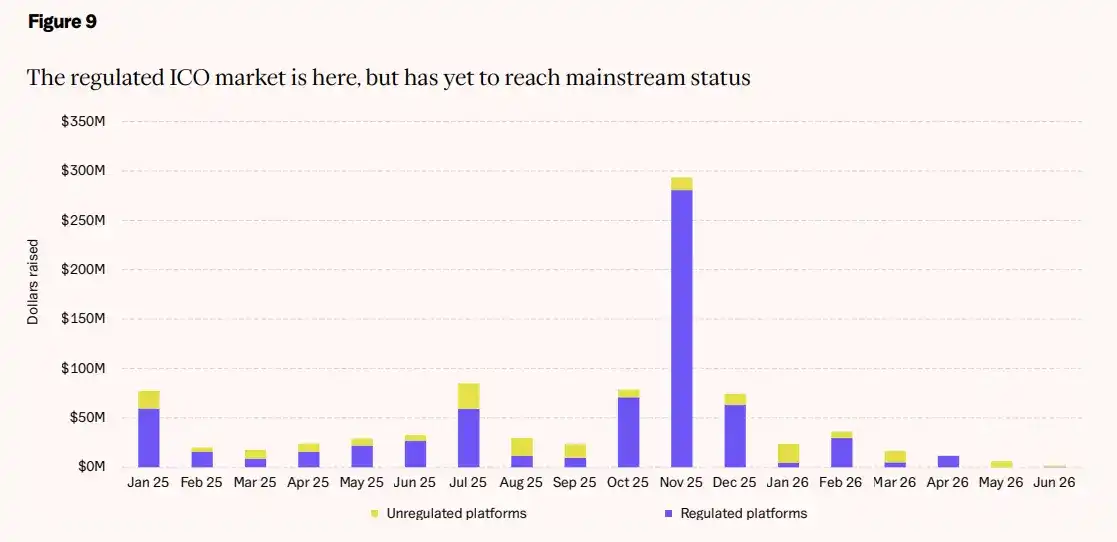
[Chart 9: The Compliant Token Offering Market Exists, But Has Not Yet Reached Mainstream Status]

Chart Description: Monthly fundraising amounts by non-compliant platforms (blue) and compliant platforms (yellow) from January 2025 to June 2026. A peak of ~$300 million occurred in November 2025 (driven by Monad), followed by a consistent decline. Compliant platforms have captured the dominant share in most months.

Data Source: CryptoRank, Messari, The Block, Company Disclosures, 21Shares

X. Tokenized Assets: Rapid Growth, Target Still Distant

Prediction at the start of the year: The total value of tokenized assets will exceed $500 billion.

We predicted that tokenized real-world assets would exceed $500 billion by year-end. Whether that number looks hopeless or within reach depends entirely on the measuring stick.

Measured by public chain distribution, the market was around $31 billion as of early June, with ~$15 billion in tokenized US Treasuries and ~$5 billion in commodities, a mere 6% of the target.

But if assets represented on-chain (like securities already circulating as 24/7 collateral on permissioned institutional networks such as Canton) are included, the figure nears $350 billion. The gap between the two numbers is the core narrative of tokenization in 2026: the speed at which institutional assets are being put on-chain is roughly ten times that of on-chain native distribution. "Representation" is the entry point; "distribution" is the destination.

This entry point will widen noticeably in the second half. Canton has been operational for a while (industry participants were already funding tokenized Treasuries 24/7 on it last year), but the qualitative leap comes from the DTCC (Depository Trust & Clearing Corporation).

This institution, which custodies over $100 trillion in securities, is beginning to tokenize US Treasuries held at the DTC onto a blockchain. Limited production trades are scheduled for July, with the full platform launching in October. Backed by an SEC no-action letter, this marks the first time core US market infrastructure has been cleared to put assets on-chain.

Our sub-predictions are progressing at different speeds. Tokenized stocks have doubled to ~$1.4 billion, still far from the $10 billion path we envisioned, but the pipeline is the strongest: Nasdaq received SEC approval in March to put stocks on-chain, with Kraken as the global distributor; the NYSE is also building its own tokenized settlement platform.

The CLARITY bill (which we expect to unlock bank issuance and custody of tokenized instruments) has passed the Senate Banking Committee, awaiting a full vote.

Reaching $500 billion in distributed value by December would still require a very unconventional acceleration. But the institutions laying the pipes are precisely those that run the existing financial system. That matters.
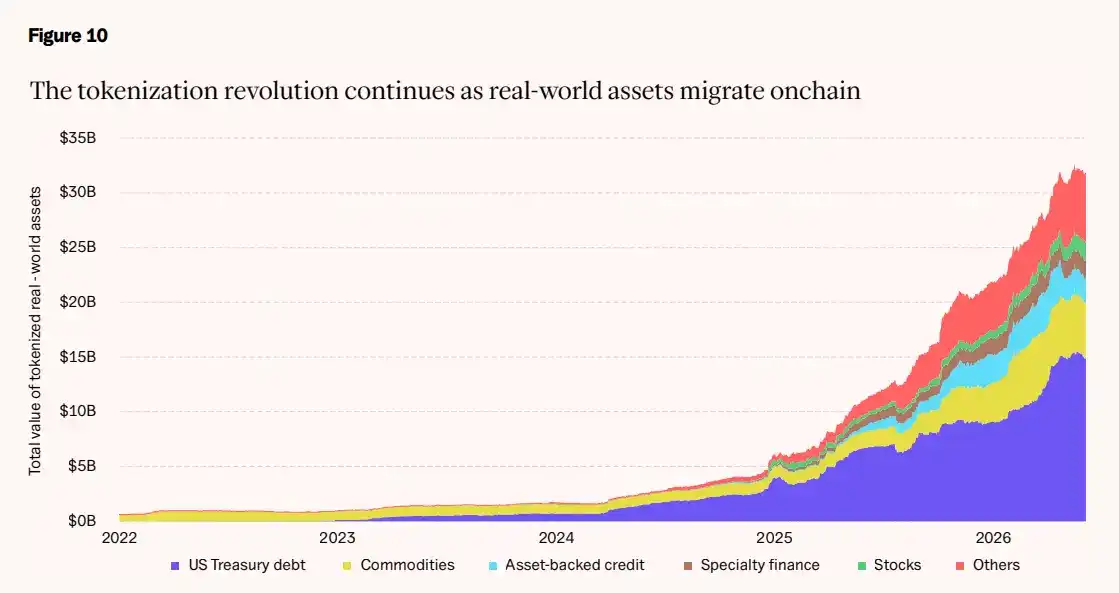
[Chart 10: The Tokenization Revolution Continues, Real-World Assets Accelerate On-Chain]

Chart Description: Composition of the total value of tokenized real-world assets from 2022 to 2026. Includes US Treasuries (largest share), Commodities, Asset-Backed Credit, Special Finance, Stocks, and Other categories. Total value grew from less than $5 billion at the end of 2022 to ~$31 billion in mid-2026.

Data Source: rwa.xyz, 21Shares

Criptomoedas em alta

Perguntas relacionadas

QAccording to the report, what is the current status of Bitcoin's four-year cycle?

AThe report concludes that Bitcoin's four-year cycle has not been broken. The price action after the 2025 halving, where BTC peaked around $126k and then retraced significantly, closely mirrors patterns seen in previous cycles. While the market structure has changed (e.g., more institutional ETF holdings, shallower 50% drawdowns vs. 80+% historically), the cyclical nature persists, though its form is evolving.

QWhy did the report's prediction for global crypto ETP AUM exceeding $400 billion fail to materialize?

AThe prediction that global crypto ETP AUM would exceed $400 billion (the size of QQQ) failed because the starting AUM at the end of 2025 (~$172B) was lower than the assumed $250B baseline, and AUM has declined by about 15% year-to-date to ~$140B as of May 2026, largely following Bitcoin's price drop. While underlying adoption drivers remain strong, reaching the initial target would require significant price recovery and sustained net inflows simultaneously.

QWhat is the primary reason given for the DeFi TVL falling short of the $300 billion prediction?

AThe primary reason for DeFi TVL (~$140B) falling far short of the $300 billion prediction is a 'brutal year for security,' with over 50 incidents and $840M+ in losses year-to-date. Major exploits, like the ~$300M KelpDAO hack, severely damaged institutional confidence, particularly in the restaking sector, causing significant outflows and forcing capital to the sidelines.

QWhich prediction is significantly ahead of schedule and is expected to be achieved early?

AThe prediction for prediction markets is significantly ahead of schedule. The annual trading volume target of $100 billion is on track to be reached early, with $57.5B already completed by the end of May 2026 (over half the annual goal). Driven by events like the FIFA World Cup and US midterm elections, the report suggests the full-year volume could potentially reach $200 billion.

QWhat key distinction does the report make regarding the measurement of tokenized real-world assets (RWAs)?

AThe report makes a key distinction between 'on-chain representation' and 'on-chain distribution' when measuring tokenized RWAs. Using a public chain distribution lens, the market is only about $31B. However, if including assets 'represented' on-chain (e.g., securities circulating as collateral on permissioned institutional networks like Canton), the figure is closer to $350B. This gap highlights that institutional assets are moving on-chain ('representation') about ten times faster than they are being natively issued and distributed on public chains.

Leituras Relacionadas

The Crypto Industry Enters the 'Show Me' Era: Vision Alone Is No Longer Enough

The crypto industry has entered a "Show Me" era, where grand visions and white papers are no longer sufficient to gain traction. This shift is driven by increased skepticism, high-profile bad actors, and notably, the serious entry of traditional finance (TradFi) institutions like BlackRock, Fidelity, and JPMorgan Chase, which are launching real, scaled products such as tokenized funds and blockchain-based settlement. This raises the bar for what constitutes a credible project. The communication dynamic has fundamentally changed. The focus is no longer on "what you are building" but on "what you have built and who is using it." Startups must now provide a "proof stack": verifiable data like mainnet transaction volume and active wallets, genuine partnerships with signed contracts, and evidence of organic product-market fit from real users, not just investors. Announcements must be backed by concrete, chain-verifiable evidence. For communication strategies, this means leading with proven facts and hard data—even if modest—rather than speculative narratives. A compelling story must be grounded in demonstrated results. While vision remains important, the balance has inverted from 80% vision/20% substance to the opposite. This higher threshold ultimately benefits builders with genuine traction, filtering out noise and allowing their real signals to stand out clearly. The "Show Me" era is a permanent maturation, demanding that communication strategies prove value, not just promise it.

链捕手Há 4m

The Crypto Industry Enters the 'Show Me' Era: Vision Alone Is No Longer Enough

链捕手Há 4m

Meta Follows the Trend into Prediction Markets: Can It Avoid Repeating the Failure of the Metaverse?

Meta, the tech giant behind Facebook, has reportedly formed a team to develop "Arena," a new application focused on prediction markets. Users would use platform points to place bets on outcomes in politics, sports, and global events. This move follows Meta's massive, nearly $900 billion, losses from its heavily-invested metaverse division, Reality Labs. The prediction market industry is already showing strong demand, with leading platforms like Kalshi and Polymarket facilitating hundreds of billions in annual volume. Meta, with its 3.56 billion daily active users across its apps, possesses the unprecedented scale to bring this niche activity to a mainstream audience, similar to its past success in cloning features like Stories and Reels. However, Arena faces significant hurdles. Meta plans to start with a points-based system to avoid strict financial regulations, but this may dilute the core incentive of accurate prediction that real-money markets provide. More critically, Meta enters the space with a major trust deficit stemming from its past regulatory battles, notably the failed Libra/Diem stablecoin project, and its controversial history with political content and misinformation. The prediction market sector itself is under increasing regulatory scrutiny, with recent CFTC actions including fines and the first-ever insider trading case. While Meta's vast user base offers a unique opportunity to expand the market, its success hinges on navigating complex regulations and rebuilding the credibility necessary for a platform dealing with sensitive topics like elections. The outcome could range from Meta dramatically growing the industry to Arena becoming a high-profile regulatory target before it can scale.

Foresight NewsHá 21m

Meta Follows the Trend into Prediction Markets: Can It Avoid Repeating the Failure of the Metaverse?

Foresight NewsHá 21m

Stock Soars 1200% on First Day, 80s Sales Engineer's Reversal: From Selling FRP to a Fortune of 29 Billion

On its first day of listing, Zhenbao Technology (stock code "N Zhenbao") surged by 1207%, marking itself as the second "ten-bagger" new stock of the year on the STAR Market. The closing price of 585 yuan propelled it into the top 20 of the A-share market by stock price. Dubbed the "first share of semiconductor consumables," the company is backed by a comprehensive shareholder list including National Integrated Circuit Industry Investment Fund Phase II, SMIC, BOE, and YMTC. Zhenbao's business model focuses on supplying critical consumable components like silicon rings and quartz parts to semiconductor fabs. Unlike expensive core equipment with low repurchase rates, these consumables require frequent replacement as long as production lines are running, generating stable recurring revenue—a key reason for its high market valuation. Founder Wang Bing, an 80s-born former sales engineer, built the company by identifying a supply chain vulnerability: foreign monopolies on high-purity materials led to high costs and unstable deliveries for domestic fabs. Zhenbao's strategy emphasized reliability and speed over absolute top-tier performance, offering products at about 50% of the price with 80% of the performance but 100% on delivery and responsiveness. To achieve this, the company vertically integrated its operations across "raw materials + components + surface treatment," ensuring supply chain control and cost reduction. Its clientele now spans major domestic fabs like BOE and Huahong, as well as international players like SK Hynix and Texas Instruments. However, risks accompany its rapid expansion. The IPO raised approximately 1.605 billion yuan primarily for capacity expansion, which will bring significant annual depreciation costs, potentially impacting future profitability. The company's growth is heavily reliant on sustained high levels of fab expansion, making it vulnerable to the semiconductor industry's cyclical downturns. Other concerns include high accounts receivable (70.83% of revenue at one point in 2025), heavy reliance on its top five customers (over 70% of sales), and questions about the stability and authenticity of its R&D investments, evidenced by volatile R&D headcount and unusual spikes in R&D energy consumption. While the "consumables story" commands a premium, long-term valuation will depend on maintaining high capacity utilization and healthy cash flow conversion.

marsbitHá 27m

Stock Soars 1200% on First Day, 80s Sales Engineer's Reversal: From Selling FRP to a Fortune of 29 Billion

marsbitHá 27m

Warsh Deals a Heavy Blow to the 'Dollar Devaluation Trade'! Gold Crashes, Bitcoin Slumps, How Long Can the Chip Frenzy Hold?

The "dollar devaluation trade" that dominated Wall Street this year is rapidly unraveling, driven by a hawkish pivot from Fed Chairman Kevin Warsh and a surging U.S. dollar. This double pressure has triggered a sharp sell-off in non-yielding assets. Gold broke below $4,000 an ounce, silver tumbled below $60, and Bitcoin fell under $60,000, with all retreating significantly from their earlier 2025 peaks. The dollar index hit a 14-month high. Warsh's emphasis on price stability has solidified market expectations for aggressive rate hikes, increasing the opportunity cost of holding assets like precious metals. Concurrently, massive fund flows are rotating out of metals and cryptocurrencies into the semiconductor sector, providing a temporary boost to stocks like Micron and SK Hynix. However, analysts warn this chip rally shows signs of a speculative top. Extreme volatility, with semiconductor stocks seeing trillion-dollar swings, is historically characteristic of major market turning points. Factors like month-end rebalancing, a flood of new equity issuance, and insider selling further signal potential exhaustion. While Micron's strong earnings briefly stemmed selling, it may offer a favorable exit point for remaining chip bulls. The sustainability of the semiconductor frenzy is now in serious doubt as the broader market reprices assets around a stronger dollar and tighter monetary policy.

华尔街日报Há 35m

Warsh Deals a Heavy Blow to the 'Dollar Devaluation Trade'! Gold Crashes, Bitcoin Slumps, How Long Can the Chip Frenzy Hold?

华尔街日报Há 35m

Micron Shuts Up the Bears, Makes India's 'Buffett' Regret: Sold Too Early, Missed Out on $2 Billion

Indian value investor Mohnish Pabrai, a disciple of Warren Buffett, revealed his costly mistake of selling shares in Micron Technology too early. He initially invested in 2017, holding it for six years and building a position as large as 77% of his portfolio, based on a thesis that the memory chip industry would consolidate into a stable oligopoly of Samsung, SK Hynix, and Micron. However, he sold his entire stake in September 2023, fearing oversupply after Samsung announced production expansion. Shortly after his exit, demand for high-bandwidth memory (HBM) surged with the rise of AI, and Micron's stock price skyrocketed over 15 times in two years. Pabrai estimates this premature sale cost him roughly $20 billion in potential gains. He expressed similar regret over selling his investment in SK Hynix too soon, stating he violated his own principle of holding companies forever. Reflecting on these errors, Pabrai emphasized his core investment checklist principles: avoiding leverage, focusing on the durability of a company's competitive moat, and assessing management's character. Despite these personal trading missteps, his long-term view on the remaining memory chip leaders remains bullish, advising current holders not to sell as "the party is just getting started." He concluded by sharing his philosophical outlook, prioritizing character over wealth, and his goal to donate his entire fortune before his passing.

marsbitHá 1h

Micron Shuts Up the Bears, Makes India's 'Buffett' Regret: Sold Too Early, Missed Out on $2 Billion

marsbitHá 1h

Trading

Spot
Futuros

Artigos em Destaque

O que é $S$

Compreender o SPERO: Uma Visão Abrangente Introdução ao SPERO À medida que o panorama da inovação continua a evoluir, o surgimento de tecnologias web3 e projetos de criptomoeda desempenha um papel fundamental na formação do futuro digital. Um projeto que tem atraído atenção neste campo dinâmico é o SPERO, denotado como SPERO,$$s$. Este artigo tem como objetivo reunir e apresentar informações detalhadas sobre o SPERO, para ajudar entusiastas e investidores a compreender as suas bases, objetivos e inovações nos domínios web3 e cripto. O que é o SPERO,$$s$? O SPERO,$$s$ é um projeto único dentro do espaço cripto que procura aproveitar os princípios da descentralização e da tecnologia blockchain para criar um ecossistema que promove o envolvimento, a utilidade e a inclusão financeira. O projeto é concebido para facilitar interações peer-to-peer de novas maneiras, proporcionando aos utilizadores soluções e serviços financeiros inovadores. No seu núcleo, o SPERO,$$s$ visa capacitar indivíduos ao fornecer ferramentas e plataformas que melhoram a experiência do utilizador no espaço das criptomoedas. Isso inclui a possibilidade de métodos de transação mais flexíveis, a promoção de iniciativas impulsionadas pela comunidade e a criação de caminhos para oportunidades financeiras através de aplicações descentralizadas (dApps). A visão subjacente do SPERO,$$s$ gira em torno da inclusão, visando fechar lacunas dentro das finanças tradicionais enquanto aproveita os benefícios da tecnologia blockchain. Quem é o Criador do SPERO,$$s$? A identidade do criador do SPERO,$$s$ permanece algo obscura, uma vez que existem recursos publicamente disponíveis limitados que fornecem informações detalhadas sobre o(s) seu(s) fundador(es). Esta falta de transparência pode resultar do compromisso do projeto com a descentralização—uma ética que muitos projetos web3 partilham, priorizando contribuições coletivas em vez de reconhecimento individual. Ao centrar as discussões em torno da comunidade e dos seus objetivos coletivos, o SPERO,$$s$ incorpora a essência do empoderamento sem destacar indivíduos específicos. Assim, compreender a ética e a missão do SPERO é mais importante do que identificar um criador singular. Quem são os Investidores do SPERO,$$s$? O SPERO,$$s$ é apoiado por uma diversidade de investidores que vão desde capitalistas de risco a investidores-anjo dedicados a promover a inovação no setor cripto. O foco desses investidores geralmente alinha-se com a missão do SPERO—priorizando projetos que prometem avanço tecnológico social, inclusão financeira e governança descentralizada. Essas fundações de investidores estão tipicamente interessadas em projetos que não apenas oferecem produtos inovadores, mas que também contribuem positivamente para a comunidade blockchain e os seus ecossistemas. O apoio desses investidores reforça o SPERO,$$s$ como um concorrente notável no domínio em rápida evolução dos projetos cripto. Como Funciona o SPERO,$$s$? O SPERO,$$s$ emprega uma estrutura multifacetada que o distingue de projetos de criptomoeda convencionais. Aqui estão algumas das características-chave que sublinham a sua singularidade e inovação: Governança Descentralizada: O SPERO,$$s$ integra modelos de governança descentralizada, capacitando os utilizadores a participar ativamente nos processos de tomada de decisão sobre o futuro do projeto. Esta abordagem promove um sentido de propriedade e responsabilidade entre os membros da comunidade. Utilidade do Token: O SPERO,$$s$ utiliza o seu próprio token de criptomoeda, concebido para servir várias funções dentro do ecossistema. Esses tokens permitem transações, recompensas e a facilitação de serviços oferecidos na plataforma, melhorando o envolvimento e a utilidade gerais. Arquitetura em Camadas: A arquitetura técnica do SPERO,$$s$ suporta modularidade e escalabilidade, permitindo a integração contínua de funcionalidades e aplicações adicionais à medida que o projeto evolui. Esta adaptabilidade é fundamental para manter a relevância no panorama cripto em constante mudança. Envolvimento da Comunidade: O projeto enfatiza iniciativas impulsionadas pela comunidade, empregando mecanismos que incentivam a colaboração e o feedback. Ao nutrir uma comunidade forte, o SPERO,$$s$ pode melhor atender às necessidades dos utilizadores e adaptar-se às tendências do mercado. Foco na Inclusão: Ao oferecer taxas de transação baixas e interfaces amigáveis, o SPERO,$$s$ visa atrair uma base de utilizadores diversificada, incluindo indivíduos que anteriormente podem não ter participado no espaço cripto. Este compromisso com a inclusão alinha-se com a sua missão abrangente de empoderamento através da acessibilidade. Cronologia do SPERO,$$s$ Compreender a história de um projeto fornece insights cruciais sobre a sua trajetória de desenvolvimento e marcos. Abaixo está uma cronologia sugerida que mapeia eventos significativos na evolução do SPERO,$$s$: Fase de Conceituação e Ideação: As ideias iniciais que formam a base do SPERO,$$s$ foram concebidas, alinhando-se de perto com os princípios de descentralização e foco na comunidade dentro da indústria blockchain. Lançamento do Whitepaper do Projeto: Após a fase conceitual, um whitepaper abrangente detalhando a visão, os objetivos e a infraestrutura tecnológica do SPERO,$$s$ foi lançado para atrair o interesse e o feedback da comunidade. Construção da Comunidade e Primeiros Envolvimentos: Esforços ativos de divulgação foram feitos para construir uma comunidade de primeiros adotantes e investidores potenciais, facilitando discussões em torno dos objetivos do projeto e angariando apoio. Evento de Geração de Tokens: O SPERO,$$s$ realizou um evento de geração de tokens (TGE) para distribuir os seus tokens nativos a apoiantes iniciais e estabelecer liquidez inicial dentro do ecossistema. Lançamento da dApp Inicial: A primeira aplicação descentralizada (dApp) associada ao SPERO,$$s$ foi lançada, permitindo que os utilizadores interagissem com as funcionalidades principais da plataforma. Desenvolvimento Contínuo e Parcerias: Atualizações e melhorias contínuas nas ofertas do projeto, incluindo parcerias estratégicas com outros players no espaço blockchain, moldaram o SPERO,$$s$ em um jogador competitivo e em evolução no mercado cripto. Conclusão O SPERO,$$s$ é um testemunho do potencial do web3 e das criptomoedas para revolucionar os sistemas financeiros e capacitar indivíduos. Com um compromisso com a governança descentralizada, o envolvimento da comunidade e funcionalidades inovadoras, abre caminho para um panorama financeiro mais inclusivo. Como em qualquer investimento no espaço cripto em rápida evolução, potenciais investidores e utilizadores são incentivados a pesquisar minuciosamente e a envolver-se de forma ponderada com os desenvolvimentos em curso dentro do SPERO,$$s$. O projeto demonstra o espírito inovador da indústria cripto, convidando a uma exploração mais aprofundada das suas inúmeras possibilidades. Embora a jornada do SPERO,$$s$ ainda esteja a desenrolar-se, os seus princípios fundamentais podem, de facto, influenciar o futuro de como interagimos com a tecnologia, as finanças e uns com os outros em ecossistemas digitais interconectados.

74 Visualizações TotaisPublicado em {updateTime}Atualizado em 2024.12.17

O que é $S$

O que é AGENT S

Agent S: O Futuro da Interação Autónoma no Web3 Introdução No panorama em constante evolução do Web3 e das criptomoedas, as inovações estão constantemente a redefinir a forma como os indivíduos interagem com plataformas digitais. Um projeto pioneiro, o Agent S, promete revolucionar a interação humano-computador através do seu framework aberto e agente. Ao abrir caminho para interações autónomas, o Agent S visa simplificar tarefas complexas, oferecendo aplicações transformadoras em inteligência artificial (IA). Esta exploração detalhada irá aprofundar-se nas complexidades do projeto, nas suas características únicas e nas implicações para o domínio das criptomoedas. O que é o Agent S? O Agent S é um framework aberto e agente, especificamente concebido para abordar três desafios fundamentais na automação de tarefas computacionais: Aquisição de Conhecimento Específico de Domínio: O framework aprende inteligentemente a partir de várias fontes de conhecimento externas e experiências internas. Esta abordagem dupla capacita-o a construir um rico repositório de conhecimento específico de domínio, melhorando o seu desempenho na execução de tarefas. Planeamento ao Longo de Longos Horizontes de Tarefas: O Agent S emprega planeamento hierárquico aumentado por experiência, uma abordagem estratégica que facilita a decomposição e execução eficientes de tarefas intrincadas. Esta característica melhora significativamente a sua capacidade de gerir múltiplas subtarefas de forma eficiente e eficaz. Gestão de Interfaces Dinâmicas e Não Uniformes: O projeto introduz a Interface Agente-Computador (ACI), uma solução inovadora que melhora a interação entre agentes e utilizadores. Utilizando Modelos de Linguagem Multimodais de Grande Escala (MLLMs), o Agent S pode navegar e manipular diversas interfaces gráficas de utilizador de forma fluida. Através destas características pioneiras, o Agent S fornece um framework robusto que aborda as complexidades envolvidas na automação da interação humana com máquinas, preparando o terreno para uma infinidade de aplicações em IA e além. Quem é o Criador do Agent S? Embora o conceito de Agent S seja fundamentalmente inovador, informações específicas sobre o seu criador permanecem elusivas. O criador é atualmente desconhecido, o que destaca ou o estágio nascente do projeto ou a escolha estratégica de manter os membros fundadores em anonimato. Independentemente da anonimidade, o foco permanece nas capacidades e no potencial do framework. Quem são os Investidores do Agent S? Como o Agent S é relativamente novo no ecossistema criptográfico, informações detalhadas sobre os seus investidores e financiadores não estão explicitamente documentadas. A falta de informações disponíveis publicamente sobre as fundações de investimento ou organizações que apoiam o projeto levanta questões sobre a sua estrutura de financiamento e roteiro de desenvolvimento. Compreender o apoio é crucial para avaliar a sustentabilidade do projeto e o seu impacto potencial no mercado. Como Funciona o Agent S? No núcleo do Agent S reside uma tecnologia de ponta que lhe permite funcionar eficazmente em diversos ambientes. O seu modelo operacional é construído em torno de várias características-chave: Interação Humano-Computador Semelhante: O framework oferece planeamento avançado em IA, esforçando-se para tornar as interações com computadores mais intuitivas. Ao imitar o comportamento humano na execução de tarefas, promete elevar as experiências dos utilizadores. Memória Narrativa: Utilizada para aproveitar experiências de alto nível, o Agent S utiliza memória narrativa para acompanhar os históricos de tarefas, melhorando assim os seus processos de tomada de decisão. Memória Episódica: Esta característica fornece aos utilizadores orientações passo a passo, permitindo que o framework ofereça suporte contextual à medida que as tarefas se desenrolam. Suporte para OpenACI: Com a capacidade de funcionar localmente, o Agent S permite que os utilizadores mantenham o controlo sobre as suas interações e fluxos de trabalho, alinhando-se com a ética descentralizada do Web3. Fácil Integração com APIs Externas: A sua versatilidade e compatibilidade com várias plataformas de IA garantem que o Agent S possa integrar-se perfeitamente em ecossistemas tecnológicos existentes, tornando-o uma escolha apelativa para desenvolvedores e organizações. Estas funcionalidades contribuem coletivamente para a posição única do Agent S no espaço cripto, à medida que automatiza tarefas complexas e em múltiplos passos com mínima intervenção humana. À medida que o projeto evolui, as suas potenciais aplicações no Web3 podem redefinir a forma como as interações digitais se desenrolam. Cronologia do Agent S O desenvolvimento e os marcos do Agent S podem ser encapsulados numa cronologia que destaca os seus eventos significativos: 27 de Setembro de 2024: O conceito de Agent S foi lançado num artigo de pesquisa abrangente intitulado “Um Framework Agente Aberto que Usa Computadores como um Humano”, mostrando a base para o projeto. 10 de Outubro de 2024: O artigo de pesquisa foi disponibilizado publicamente no arXiv, oferecendo uma exploração aprofundada do framework e da sua avaliação de desempenho com base no benchmark OSWorld. 12 de Outubro de 2024: Uma apresentação em vídeo foi lançada, proporcionando uma visão visual das capacidades e características do Agent S, envolvendo ainda mais potenciais utilizadores e investidores. Estes marcos na cronologia não apenas ilustram o progresso do Agent S, mas também indicam o seu compromisso com a transparência e o envolvimento da comunidade. Pontos-Chave Sobre o Agent S À medida que o framework Agent S continua a evoluir, várias características-chave destacam-se, sublinhando a sua natureza inovadora e potencial: Framework Inovador: Concebido para proporcionar um uso intuitivo de computadores semelhante à interação humana, o Agent S traz uma abordagem nova à automação de tarefas. Interação Autónoma: A capacidade de interagir autonomamente com computadores através de GUI significa um avanço em direção a soluções computacionais mais inteligentes e eficientes. Automação de Tarefas Complexas: Com a sua metodologia robusta, pode automatizar tarefas complexas e em múltiplos passos, tornando os processos mais rápidos e menos propensos a erros. Melhoria Contínua: Os mecanismos de aprendizagem permitem que o Agent S melhore a partir de experiências passadas, aprimorando continuamente o seu desempenho e eficácia. Versatilidade: A sua adaptabilidade em diferentes ambientes operacionais, como OSWorld e WindowsAgentArena, garante que pode servir uma ampla gama de aplicações. À medida que o Agent S se posiciona no panorama do Web3 e das criptomoedas, o seu potencial para melhorar as capacidades de interação e automatizar processos significa um avanço significativo nas tecnologias de IA. Através do seu framework inovador, o Agent S exemplifica o futuro das interações digitais, prometendo uma experiência mais fluida e eficiente para os utilizadores em diversas indústrias. Conclusão O Agent S representa um ousado avanço na união da IA e do Web3, com a capacidade de redefinir a forma como interagimos com a tecnologia. Embora ainda esteja nas suas fases iniciais, as possibilidades para a sua aplicação são vastas e cativantes. Através do seu framework abrangente que aborda desafios críticos, o Agent S visa trazer interações autónomas para o primeiro plano da experiência digital. À medida que avançamos mais profundamente nos domínios das criptomoedas e da descentralização, projetos como o Agent S desempenharão, sem dúvida, um papel crucial na formação do futuro da tecnologia e da colaboração humano-computador.

687 Visualizações TotaisPublicado em {updateTime}Atualizado em 2025.01.14

O que é AGENT S

Como comprar S

Bem-vindo à HTX.com!Tornámos a compra de Sonic (S) simples e conveniente.Segue o nosso guia passo a passo para iniciar a tua jornada no mundo das criptos.Passo 1: cria a tua conta HTXUtiliza o teu e-mail ou número de telefone para te inscreveres numa conta gratuita na HTX.Desfruta de um processo de inscrição sem complicações e desbloqueia todas as funcionalidades.Obter a minha contaPasso 2: vai para Comprar Cripto e escolhe o teu método de pagamentoCartão de crédito/débito: usa o teu visa ou mastercard para comprar Sonic (S) instantaneamente.Saldo: usa os fundos da tua conta HTX para transacionar sem problemas.Terceiros: adicionamos métodos de pagamento populares, como Google Pay e Apple Pay, para aumentar a conveniência.P2P: transaciona diretamente com outros utilizadores na HTX.Mercado de balcão (OTC): oferecemos serviços personalizados e taxas de câmbio competitivas para os traders.Passo 3: armazena teu Sonic (S)Depois de comprar o teu Sonic (S), armazena-o na tua conta HTX.Alternativamente, podes enviá-lo para outro lugar através de transferência blockchain ou usá-lo para transacionar outras criptomoedas.Passo 4: transaciona Sonic (S)Transaciona facilmente Sonic (S) no mercado à vista da HTX.Acede simplesmente à tua conta, seleciona o teu par de trading, executa as tuas transações e monitoriza em tempo real.Oferecemos uma experiência de fácil utilização tanto para principiantes como para traders experientes.

1.3k Visualizações TotaisPublicado em {updateTime}Atualizado em 2026.06.02

Como comprar S

Discussões

Bem-vindo à Comunidade HTX. Aqui, pode manter-se informado sobre os mais recentes desenvolvimentos da plataforma e obter acesso a análises profissionais de mercado. As opiniões dos utilizadores sobre o preço de S (S) são apresentadas abaixo.

活动图片