If a state-of-the-art chip manufacturing equipment might become unable to source spare parts, receive software updates, or lose manufacturer support in the future, can it still be considered truly reliable equipment?
In the past, global semiconductor companies primarily compared equipment based on performance, yield, efficiency, and cost when making purchasing decisions. Whose technology was more advanced, whose equipment was closer to the production line. However, since the US has continuously intensified export controls, this rule is changing.
According to Reuters citing informed sources, Samsung Electronics and SK Hynix are evaluating etching equipment from China's AMEC (Advanced Micro-Fabrication Equipment Inc.) at their factories in China. This related testing does not mean the two companies will immediately replace their existing suppliers, nor does it indicate that domestic equipment has entered their global procurement systems. Samsung later also denied testing or considering using AMEC equipment, and there is currently no evidence of a large-scale procurement agreement between the parties.
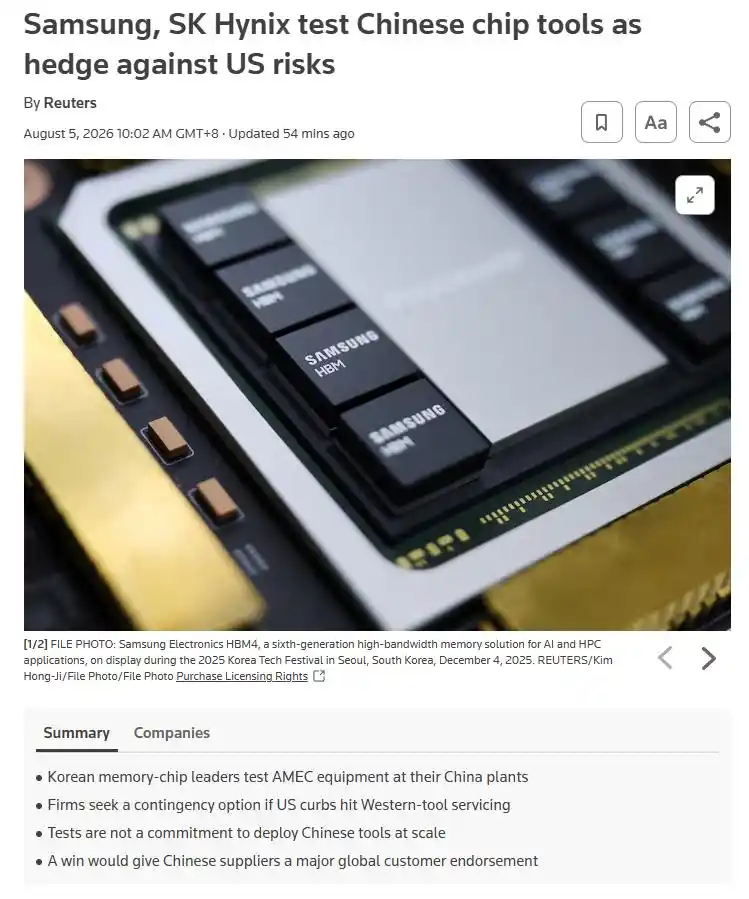
But what's truly worth paying attention to in this news was never whether AMEC could immediately secure an order.
The more important question is, why are Samsung and SK Hynix, which already have mature European and American equipment supply chains, beginning to need to test Chinese equipment?
The answer isn't just that domestic equipment has become stronger. What they worry about isn't just the performance of the equipment today, but whether US equipment can be supplied continuously in the future. Whether equipment can be imported, parts can be replaced, and software can be updated is increasingly affected by policy permits.
US export controls have changed not only what equipment China can buy, but also how global semiconductor companies judge whether a piece of equipment is worth long-term reliance.
Competition in chip manufacturing equipment still depends on who is more advanced. But from this moment on, it may need to compare one more thing: who can stay for the long haul.
US Equipment Becomes a Risk in Customers' Eyes for the First Time
Chip manufacturing equipment is not a one-time purchase.
After an etching machine enters a fab, it typically needs to run for many years, requiring continuous part replacements, software updates, process adjustments, and long-term on-site service from the supplier. For fabs requiring continuous production, whether the equipment can be purchased is only the first step; whether it can be maintained for the next decade truly determines if it qualifies for the production line.
This was also the hardest aspect for American equipment companies to replace in the past.
Companies like Applied Materials, Lam Research, and KLA have accumulated not just technical specifications, but also global service networks, vast process databases, and credit formed through long-term service to leading clients. Fabs choosing them meant lower process risk and the assurance that even if problems arose years later, parts and engineers could still be found.
This certainty was a barrier harder to replicate than leading in a single technology.
But now, the US is undermining it with its own hands.
Previously, some factories of Samsung and SK Hynix located in China had US "Validated End-User" status, allowing them to obtain controlled equipment within certain limits without applying for licenses for each purchase. Later, the US Department of Commerce revoked this status. Even if existing factories can temporarily maintain production, future equipment imports, parts entry into China, and software updates now face more approval processes and policy changes.
Equipment companies may be willing to continue service, and customers may be willing to continue purchasing, but whether this cooperation can continue is no longer entirely decided by the buyer and seller.
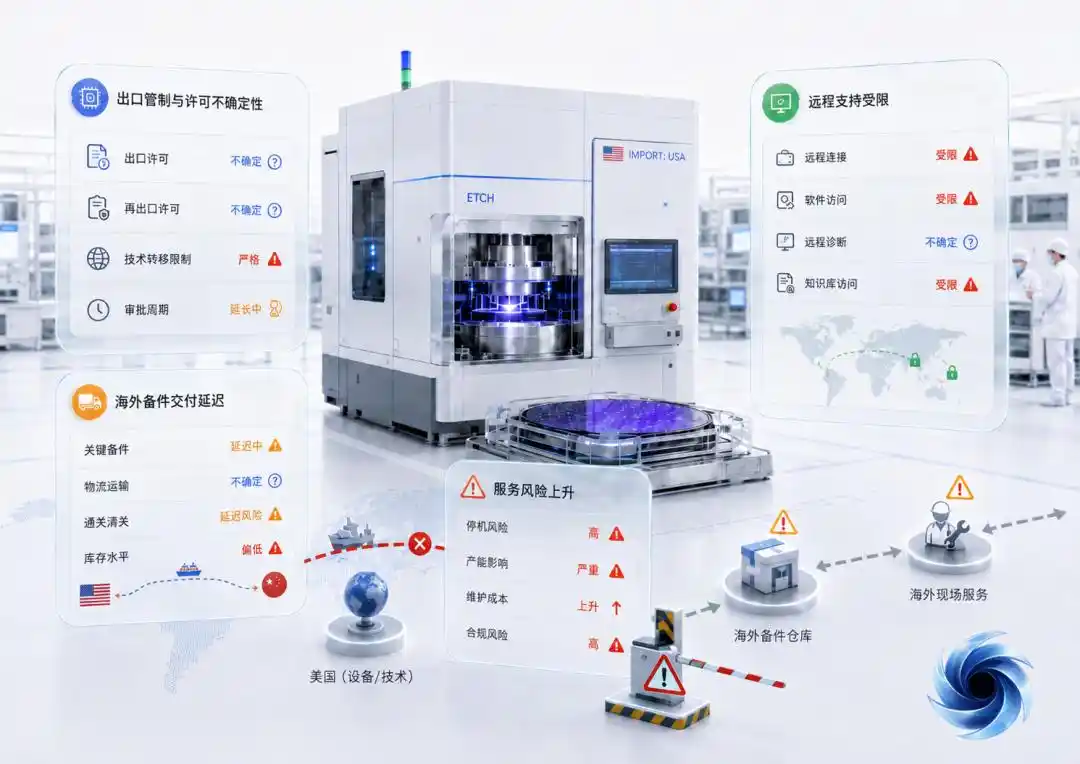
For a fab with an investment scale calculated in tens of billions of dollars and a planning cycle spanning over a decade, this uncertainty itself is a risk. Companies cannot wait until equipment truly becomes unmaintainable to start looking for alternatives for the first time.
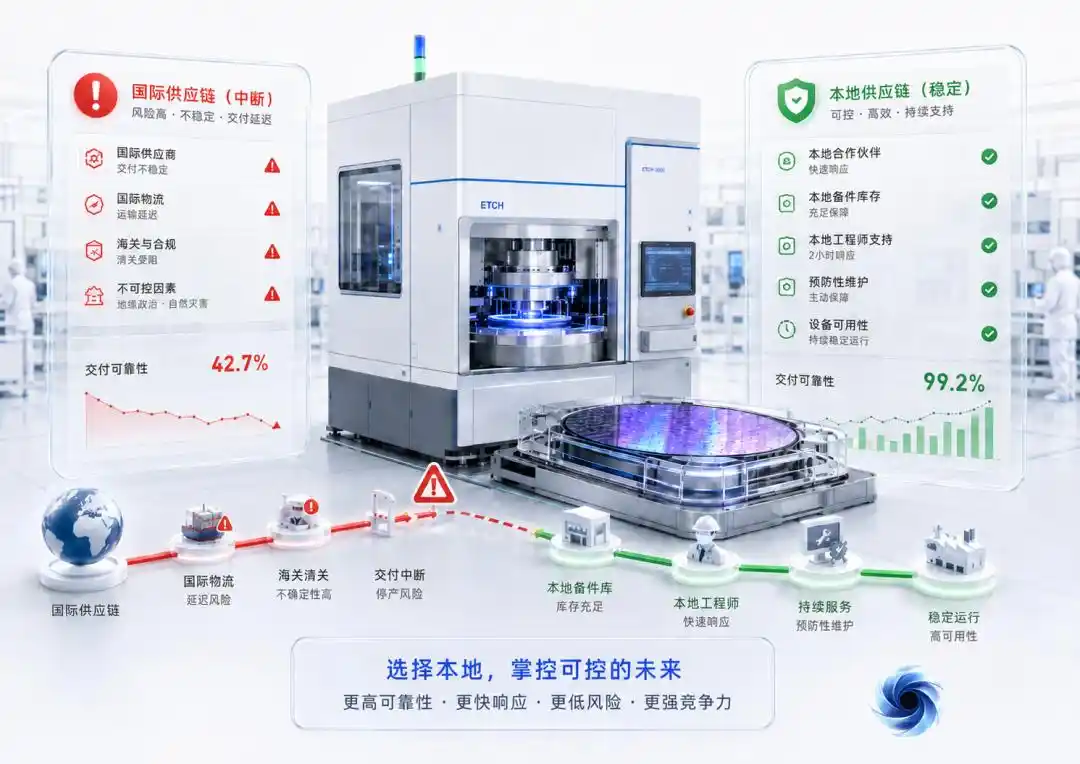
Therefore, what Samsung and SK Hynix were reportedly testing is, on the surface, AMEC's etching equipment, but in reality, also the reliability of the US supply chain. They need to confirm in advance whether, should original equipment become unsupportable, Chinese equipment could keep the production lines running.
The US's biggest industrial advantage in the past was not just being able to manufacture the most advanced chip equipment, but also making global customers believe that these equipment would still be maintained ten years later. What export controls are consuming is precisely this kind of credibility, which is harder to build than technology.
In the Past, Customers Didn't Dare to Use It; Now, Customers Have to Test It
Over the past few years, domestic chip manufacturing equipment has been placed within the narrative of "import substitution."
This term usually carries an implicit premise: overseas equipment remains the first choice, and domestic equipment is a forced second choice when overseas products become unavailable. Chinese fabs accelerating the verification of domestic equipment is due both to the progress of domestic manufacturers themselves and the risk of disruption in the original supply chain.
But Samsung and SK Hynix possibly evaluating Chinese equipment reflects a different logic.
They currently haven't completely lost the ability to use European and American equipment. Testing Chinese equipment is to prevent a day in the future when the original supply chain suddenly becomes inoperable.
This is precisely the difference between a "substitute" and an "alternative supplier." A substitute solves an already occurred supply cut-off; an alternative supplier guards against a risk that hasn't happened yet but can no longer be ignored. The former is often sought temporarily after the problem occurs, while the latter requires completing testing, certification, and process verification in advance while the original equipment is still running.
Companies can temporarily not use the spare tire, but they cannot wait until the tire blows out to confirm for the first time if the spare tire fits.
For domestic chip manufacturing equipment, the significance of this change might be greater than a short-term order. What is truly scarce in the semiconductor equipment industry is not just purchase contracts, but the qualification for verification in the real production lines of leading customers.
Competition in chip equipment cannot be won by a single press conference or a parameter sheet. New equipment needs to go through lengthy process testing, yield debugging, and stability verification. Only by entering real production environments can manufacturers obtain sufficient data, discover problems not exposed in the lab, and continuously improve products based on customer feedback.
Therefore, whether Samsung and SK Hynix eventually make large-scale purchases of AMEC equipment is certainly important, but whether they are willing to start testing is equally noteworthy.
In the past, the biggest obstacle for Chinese equipment was that customers didn't dare to use it. Now, the US is creating a new reason for Chinese equipment: customers have to test it.
The US originally hoped to compress the growth space of Chinese manufacturers through equipment controls, but is objectively forcing multinational companies to open a door that was very difficult to open in the past.
Why Are Domestic Equipment Just Able to Seize This Opportunity
Of course, relying solely on changes in the external environment cannot make an immature piece of equipment enter the production lines of Samsung or SK Hynix.
If domestic equipment still remained at the stage of laboratory prototypes and demonstration projects, no matter how much US policies tightened, multinational corporations wouldn't risk their real production lines. The premise for Chinese equipment to be seriously evaluated is that they have already crossed the basic threshold in some process segments.
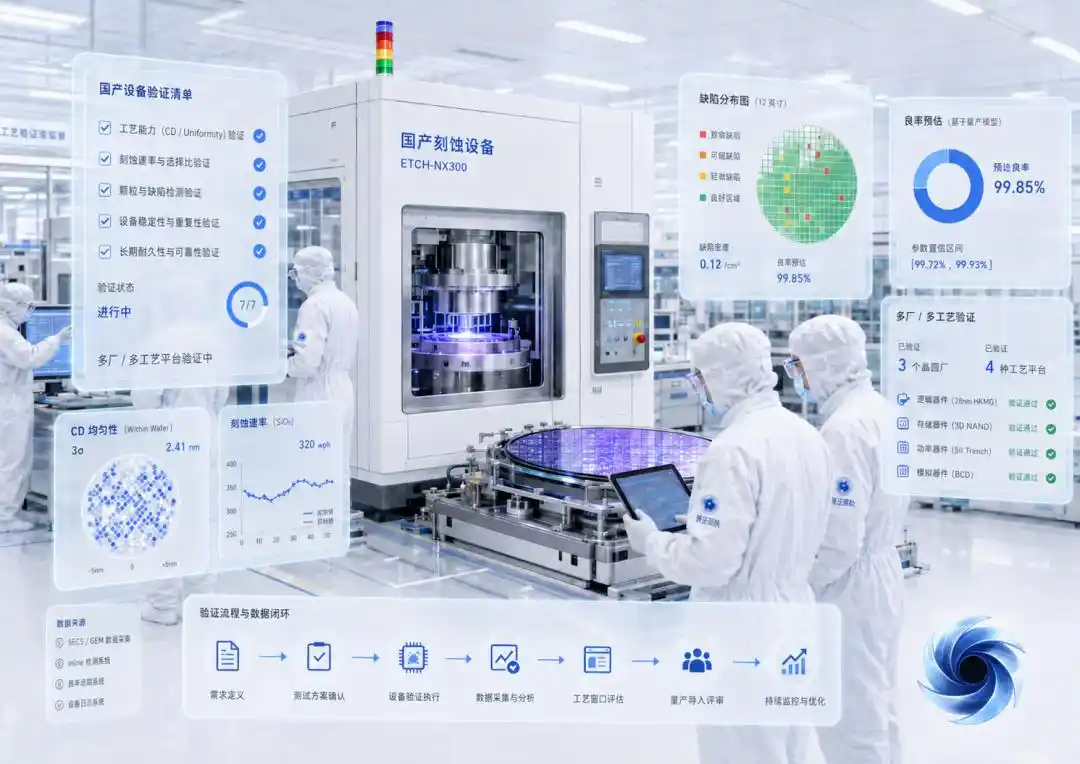
Etching is precisely one of the areas with faster progress.
As 3D NAND stacking layers continue to increase and advanced logic chip structures become more complex, etching equipment needs to precisely remove materials in deeper and narrower structures, with its importance and usage frequency both rising. In recent years, AMEC, leveraging the expansion of domestic memory and wafer manufacturing companies, has gained extensive real production scenarios, with its equipment progressing from early adoption to scaled use.
In 2025, AMEC's etching equipment sales revenue was approximately 9.832 billion yuan, a year-on-year increase of about 35%. More important than the number itself is that domestic etching equipment is no longer just a few prototypes for verifying capabilities, but has begun to participate long-term in real mass production, continuously iterating based on customer production data.
Progress in domestic equipment isn't limited to etching. Naura has expanded its products to multiple segments including etching, thin-film deposition, and thermal processing; ACM Research (Shanghai) has accumulated more customers in cleaning and electroplating equipment; companies like Piotech and Hwatsing have entered key processes such as thin-film deposition and chemical mechanical polishing, respectively.
This doesn't mean China already has the capability to cover complete advanced production lines, but at least indicates that in some segments, domestic equipment has moved from "can it be made" to the stage of "can it participate long-term in mass production."
Policy can force companies to seek a second option, but it cannot make equipment that doesn't meet production requirements gain recognition out of thin air. If Samsung and SK Hynix are truly willing to conduct testing, behind it lies both the pressure from US export controls and the foundation formed by years of accumulation by Chinese equipment companies.
Without the former, multinational corporations might not have the motivation to change their supply chains; without the latter, even if opportunities arise, domestic equipment couldn't seize them.
The Competition in Chip Manufacturing Equipment Stops Being Just About Who Is More Advanced
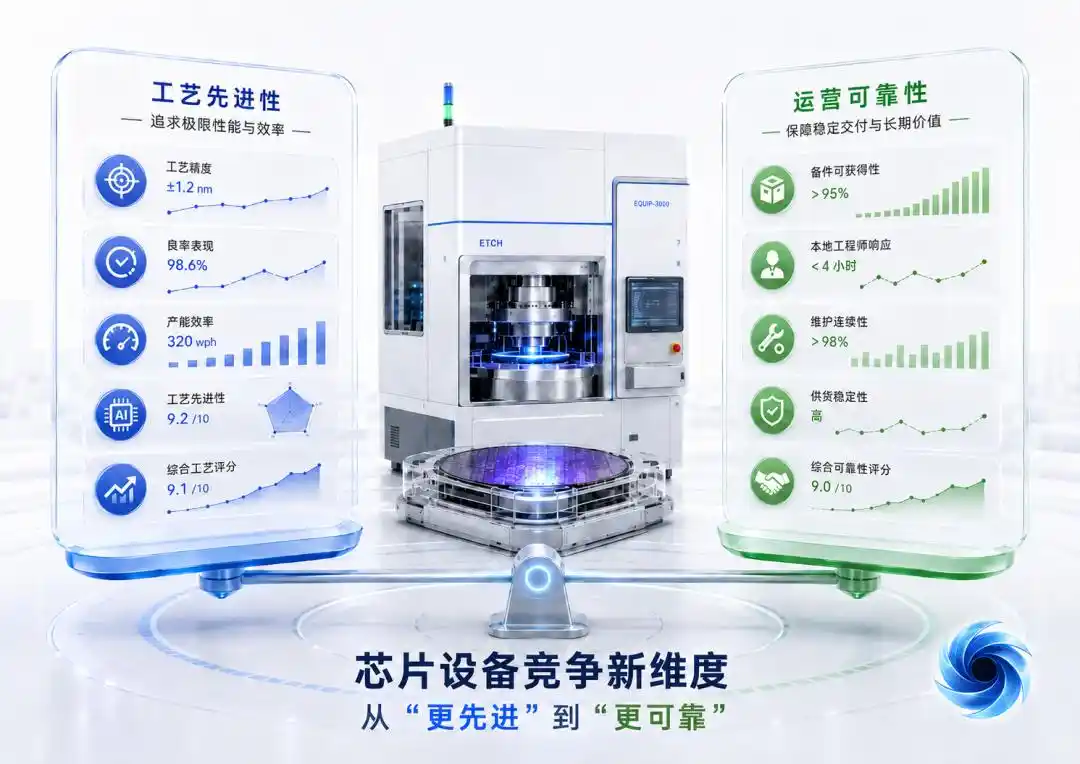
In the past, when global semiconductor companies procured equipment, they mainly compared performance, yield, efficiency, cost, and service capabilities.
By these standards, American, Japanese, and Dutch manufacturers held clear advantages. Even if domestic equipment had lower prices or faster response times, as long as process stability and customer verification were insufficient, it was difficult to enter the world's leading fabs.
Export controls are adding a new dimension to this evaluation system: whether a supplier might suddenly stop service due to a third country's policies.
Even if a piece of equipment leads in performance today, if it might not be able to source parts tomorrow or receive software updates years later, its advancement needs to be recalculated. For chip manufacturers, advanced equipment that cannot be continuously maintained is just as much a risk source for the production line as equipment that cannot achieve stable mass production.
Domestic equipment hasn't suddenly become more advanced because of US controls, but US equipment has become less certain due to policy intervention. The US still controls many of the most advanced chip manufacturing equipment, but is losing another equally important capability: making customers believe supply won't be suddenly cut off by politics.
This doesn't mean global semiconductor companies will immediately abandon US manufacturers. The technology, service capabilities, and customer accumulation of US equipment companies are still hard to replace. But as soon as customers start seriously preparing second suppliers, the nearly default single-supplier landscape of the past has already begun to change.
This change isn't limited to the semiconductor industry either.
The globalization of the past few decades pursued efficiency, with companies tending to concentrate orders with the supplier with the best performance, lowest cost, and largest scale. As long as the international trade environment was relatively stable, relying on a single supplier, while carrying theoretical risk, could bring lower costs and higher efficiency.
Today, companies increasingly need to prepare second sources for batteries, energy, computing power, chips, and critical equipment. A second supplier was often seen as a compromise with higher costs and lower efficiency in the past, but is now gradually becoming part of whether a company can operate sustainably.
The efficiency era pursued the optimal solution; the risk era needs substitutability.
Domestic chip manufacturing equipment happens to be at the intersection of this change. They are still technologically catching up to international giants, but are gaining value at the supply chain level that they didn't have before. For fabs located in China, local equipment companies mean not only closer service and faster response, but also supply that won't be easily affected by another country's export permits.
Technical capability remains the foundation, but supply chain certainty is also starting to be factored into the competitiveness of equipment.
US export controls ostensibly restrict Chinese customers, but in the long term, they may weaken the credibility of US suppliers as stable global suppliers.
Getting Close to the Global Supply Chain Does Not Equal Entering the Global Market
However, domestic equipment getting closer to the global supply chain does not mean it has become a mainstream global supplier.
The scenario currently exposed for evaluating AMEC equipment is still the factories of Samsung and SK Hynix located in China, not their new production lines in South Korea or other countries. Testing Chinese equipment in Chinese factories can prove domestic equipment has an opportunity to enter the production systems of multinational corporations, but there is still a clear gap from global procurement.
There is also a long verification cycle between testing and batch procurement. Process stability, equipment lifespan, parts supply, intellectual property risks, and service systems will all affect the final outcome. Samsung's denial of the related reports also indicates that even if such testing exists, it is still in a sensitive and early stage.
More importantly, China's semiconductor equipment industry still has many unavoidable weaknesses. In high-end lithography, advanced metrology, some core components, and key process equipment, Chinese companies still have significant gaps compared to leading international manufacturers. An advanced chip production line requires a large number of different equipment to work together. Making progress only in segments like etching, cleaning, and deposition is far from meaning the entire production line has broken free from overseas supply chains.
So, this isn't a story of domestic equipment having completed internationalization. It only illustrates that industrial competition has entered a new stage. Domestic equipment mainly relied on Chinese customers for verification in the past; now they are beginning to have the opportunity to enter the Chinese factories of multinational corporations. The next step of whether they can move towards the production lines of these companies in South Korea, the US, and other markets still depends on technical capability, service systems, and long-term credibility.
US policy can create an opportunity for Chinese companies to be seen, but it cannot complete true globalization for them.
In 2025, Mainland China, Taiwan, and South Korea together contributed close to 80% of global semiconductor equipment spending. The world's most important chip production capacity, equipment demand, and process verification scenarios are still highly concentrated in East Asia. The US can restrict equipment flow to China, but it is difficult to bypass the core position of East Asia in global chip manufacturing.
In the past, Chinese fabs used domestic equipment to reduce reliance on overseas equipment. Now, multinational semiconductor companies evaluate Chinese equipment to reduce reliance on US policy. The two demands are converging in the same batch of factories.
In Conclusion
The US originally wanted to use its equipment advantage to keep China out of the global advanced semiconductor industry. But the more controls there are, the more global customers realize that the supplier with the most advanced technology may not necessarily be the supplier with the lowest risk.
Chinese equipment hasn't suddenly surpassed US equipment because of this; there are still huge gaps in many segments. But they are transitioning from being an alternative for Chinese companies when they can't buy overseas products to becoming a second choice that multinational corporations need to verify in advance.
This might be the most noteworthy side effect of this round of export controls: the US hasn't directly made domestic equipment more advanced, but it has given global customers a reason they must test it.
Domestic chip manufacturing equipment hasn't yet received a passport to the global market, just an admission ticket to the global supply chain examination hall. Whether they can truly stay ultimately depends on technology, yield, and service.
It's just that from now on, competition in chip manufacturing equipment is no longer just about who is more advanced.
Global customers will also ask one more question:
Who can stay for the long haul.
This article only discusses industrial and technological development and does not constitute investment advice.
This article is from the WeChat public account "Tech Vortex", author: Wang Qinzhou