Embodied AI Companies Have Yet to Learn How to Spend Money | TMTpost In-depth

marsbitPublicado em 2026-08-13Última atualização em 2026-08-13

Resumo

Embodied AI companies in China are facing unprecedented challenges in capital management after a wave of massive funding. The industry, seen as the ultimate carrier for AI, attracted approximately 43.8 billion RMB in the first half of 2026 alone, creating a landscape where even small startups hold billions in cash. However, this influx has exposed a critical gap: many founders—often scientists and engineers—lack experience in deploying such large sums effectively. The article highlights contrasting and often problematic approaches to spending. Some companies practice extreme frugality, drastically limiting R&D, marketing, and even basic operational costs to extend their financial runway, sometimes resorting to living off investment income. This "wait-it-out" strategy, while conserving cash, risks stifling innovation, causing talent drain, and missing crucial product development windows. In one case, excessive cost-cutting led to catastrophic data loss. Conversely, other firms spend recklessly. Examples include a company secretly paying 100 million RMB for ineffective TV exposure, jeopardizing its IPO plans, and others funding multiple unproven product lines simultaneously or creating deceptive demos to attract further investment. The cautionary tale of Vicarious Surgical, which burned through over $100 million on an overly complex proprietary arm before failing, is cited. A core issue is the immense and often opaque cost structure. High salaries for scarce AI talent, exorb...

A single marketing push almost brought down a company.

An investor discovered that a well-known embodied AI company they had invested in paid a full 100 million RMB—in cash plus equity—to a TV gala show without reporting to or seeking approval from the board and shareholders. In return, they got mere minutes of exposure.

And the effect was less than ideal. "It didn't showcase the product's value and advantages. Viewers felt nothing, even ridiculed it," the investor said.

More seriously, this massive marketing expense directly lowered the company's R&D ratio, triggering a red line under Hong Kong Stock Exchange's strict requirements on R&D intensity. The company might have to go back to the end of the queue to knock on the capital market's door again.

In fact, after the gala, several investors gathered in the founder's office for a confrontation. Emotions ran high, and someone even slammed the table.

Sometimes, money sitting idle in the account is also a danger. Last fall, an embodied AI company, despite having hundreds of millions on its books, insisted on cutting costs. The founder refused to let the hardware team travel to oversee the production line. Hundreds of mass-produced robots were accepted remotely via video. When potential investors learned of this, the financing round fell through.

This is not just a few companies making occasional mistakes. After a frenzy of financing in the embodied AI sector, the first signs of backlash regarding money are emerging.

According to incomplete statistics, the domestic embodied AI sector raised about 43.8 billion RMB in the first half of this year. IT桔子 data shows that in the first half of the year, there were 288 financing events involving 226 companies, with disclosed funding exceeding 46 billion RMB. Extending the period from July 2025 to June 2026, this number swells to 503 financing events, totaling over 96 billion RMB.

On average, that's more than one financing event per day. This sector, seen as the "ultimate carrier of AI," is devouring capital at an unprecedented rate. Single transactions of 1 billion RMB or more exceeded 25 in the first half of 2026 alone. Among them, Tashi Zhihang secured $455 million in a single round in April, setting a new record for embodied AI financing in China.

Such intensive capital injection has spawned a phenomenon previously unseen in China's internet history—the embodied AI industry is likely the sector with the highest "disposable amount per capita" ever. A company with just over a hundred employees might have billions of RMB in cash on hand, something almost unimaginable in past internet startup cycles.

But the money came too fast, bringing new problems. The industry is crowded with scientists and engineers, most adept at reconstructing world models in three-dimensional space but rarely seasoned capital operators, let alone experienced in spending large sums. They find themselves in an equally complex but entirely unfamiliar environment: when lab thinking meets the floodwaters of the capital market, how to make money generate real value is becoming a tougher test than raising it.

And similarly lacking reference points are the investment institutions that were previously the best at accounting.

Spending money has become the most unfamiliar subject in the embodied AI track.

To Spend or Not to Spend

Behind the glory of financing lies the different survival strategies of embodied AI companies.

Embodied AI entrepreneur Liu Yuan once attended a dinner where, after a few drinks, the conversation drifted from technology and products to the same topic—financing, and who had more money left. He couldn't help revealing that his company had enough cash on its books to last 50 months.

"I thought I was very frugal and had a lot of money on hand," Liu Yuan said. But to his surprise, someone at the table immediately told him their company had at least enough cash for 100 months.

In other sectors, that would be an enviable number. But in the embodied AI industry, how much security these numbers actually buy is something even the entrepreneurs probably can't say.

Soon, Liu Yuan heard that more than one company in the industry, after securing funding, was using returns from financial products to fund R&D and sustain the team. As long as the team size doesn't expand rapidly, the principal on the books can remain largely untouched.

A group of lightweight companies focusing on "brain algorithms and conceptual landing" became the biggest beneficiaries of the capital boom and the most frugal players in the industry.

A frequently cited example is the industry-leading brain-focused embodied AI company Star Chart (Xinghai Tu). It raised over 4 billion RMB cumulatively in two years since its founding, setting an early-stage financing record for the sector. An insider claimed Star Chart spent less than 100 million RMB in total over two years, with extremely low capital utilization and very ample cash reserves.

But according to industry insiders, Star Chart implements extremely strict budget controls internally. Marketing, recruitment, and operational expenses are compressed to the extreme. It has reportedly achieved basic breakeven, "to the point where even office printing paper usage might be strictly limited." This model is jokingly called the "last-man-standing" strategy within the industry.

A former employee of an embodied AI company revealed that the "scourge" that nearly killed his previous company was saving a few hundred thousand RMB per year on redundant cloud service fees and off-site backup costs. Management kept only a single local server storing scene programs and positioning maps for thousands of robots. An unexpected campus power outage damaged the hard drive, and all data was lost. More critically, customized programs for government and enterprise clients weren't archived either. "The company ultimately spent a huge sum and paid a high price to barely pass the crisis."

A more well-known case is Unitree. Unitree's IPO prospectus shows that in 2025, its gross profit margin reached over 60%. While many embodied AI companies were "deep in debt" and burning money, Unitree had already achieved profitability with such a high margin.

Yet, even so, Unitree remains very frugal in spending. It hardly does any PR, and its R&D expenditure is only just over 90 million RMB—not even enough to cover a year's compute power costs for some AI startups.

This is completely different from the understanding of financing during the internet boom—taking money and spending it fast, pursuing scale through marketing and competition. A similar operating style can be traced back to the "Groupon Wars" period, where Meituan ultimately dragged down competitors with extremely low costs.

More than one entrepreneur told us that embodied AI companies are using cash reserves to prove their safety, which has become a new metric for measuring a company's viability. This appears to be an extremely prudent way of operating—for entrepreneurs who have gone through multiple capital cycles, controlling cash burn can hardly be called a mistake. But the question is, in an industry where the technical path is not yet determined and product capabilities still need continuous validation, does money sitting idle for a long time mean the company is sufficiently disciplined, or does it mean it hasn't found a direction worth investing in? It's hard to get a direct answer from financial numbers.

The most direct consequence is that not spending money in the embodied AI industry easily sparks speculation: How much R&D is this company actually doing?

This is also one of the hardest questions to answer in the industry. Money saved or spent is easily seen, but missed product windows rarely appear on financial statements in time. Many consequences only become apparent one or two years later.

The management of a star startup once set "extending the cash runway" as its most important operating goal. To reduce expenses, the company froze multiple R&D positions, reduced the number of component validation batches, and postponed planned data collection. From a financial perspective, these measures quickly showed results—monthly expenses dropped significantly, and the cash runway extended by nearly a year.

But months later, the company found many engineers had been poached by competitors. And a product that should have entered small-batch delivery was delayed from mass production qualification due to compatibility issues with core components.

Looking at the broader startup field, if cash flow tightness is due to insufficient financing, such relatively extreme measures are at least understandable. But in the embodied AI industry, companies are sitting on large piles of cash. In multiple embodied AI projects, a similar chain has repeatedly appeared: to control spending, companies first reduce testing rounds, then postpone supply chain validation, and then freeze R&D hiring. Each decision can be justified individually, but together, they can keep products stuck at the prototype stage.

A hardware head once called this state "affluent stagnation."

But where some save, others spend freely. Liu Yuan heard of a case two years ago where a humanoid robot company, after securing funding, didn't first polish a viable application scenario. Instead, it simultaneously launched multiple different product lines and spent a lot on business development and government/enterprise receptions. More seriously, the company built a "logistics scene" in the office using shelves and cardboard boxes, claimed multimodal perception capability by using open-source models to draw a few detection boxes, and its so-called automated sorting was actually manually controlled by someone hidden from view.

"This is basically using a packaged demo to raise funds and tell stories," Liu Yuan said.

Overseas, the once-starry embodied AI company Vicarious Surgical was also rumored to be a cautionary tale of reckless spending. It reportedly raised over $300 million from investors including Bill Gates, and its market value once exceeded $1.2 billion. But the company spent its money on persisting with self-developed, overly complex "bionic robotic arms," abandoning mature commercial solutions. This decision led to infinitely extended R&D cycles, runaway iteration costs, and products that never reached mass-production qualification.

In the end, Vicarious Surgical lost over $100 million in the most critical two years of its development and ultimately had to file for bankruptcy liquidation.

The Unclear Accounts

To understand the industry's mindset towards "spending," one must first grasp the real costs of this business. But how to account for embodied AI costs is precisely a lesson some entrepreneurs haven't yet learned.

A person long involved with embodied AI companies tried to estimate a company's real expenses in the simplest way for us.

Typically, you open the company's recruitment page, count the number of algorithm, hardware, and engineering positions, then calculate labor costs based on office location, team size, and market salaries. Next, you look at the company's model releases, robot shipments, and supply chain situation to back-calculate compute power, data, and hardware investment.

Adding these numbers together, he found a significant gap between many companies' projected cash burn and the actual costs likely to occur.

Labor is the first unavoidable expense. Embodied AI is a highly interdisciplinary field, with intense demand for algorithm talent. In some core cities, the monthly salary for an ordinary embodied AI algorithm engineer has reached around 50,000 RMB. Some recruitment data suggests an even higher average, close to 63,000 RMB. Including year-end bonuses, social security, housing fund, and other employment costs, the annual expenditure for a mature algorithm engineer easily approaches 1 million RMB. For senior talent in reinforcement learning, world models, motion control, and core hardware, annual salaries of 2 to 3 million RMB are not uncommon.

More tellingly, in April 2026, UBTECH announced a global recruitment for a "Chief Scientist of Embodied AI," offering a starting annual salary of 15 million RMB, potentially up to 124 million RMB. ByteDance's Volcano Engine is also recruiting a "Senior Operation Algorithm Expert (Embodied AI)" with a monthly salary of 95,000 to 120,000 RMB. Even top fresh PhD graduates from renowned labs at Tsinghua, Peking, Fudan, Jiaotong, Zhejiang University, Harbin Institute of Technology, etc., commonly command starting salaries of 600,000 or even 700,000 RMB. Yu Hongxiang, Chief Industrial Application Technology Engineer at the Zhejiang Humanoid Robot Innovation Center, revealed, "Some very outstanding recent graduates might get offers in the 2 to 3 million RMB range."

For an embodied AI company with around 200 people, R&D personnel typically make up half. Labor costs alone would require at least 100 million RMB—and that's just an average. If the team scales up, the number climbs accordingly. A person familiar with industry salary structures calculated for us that a 300-person embodied AI company would spend around 300 million RMB per year on labor alone.

"Previously, there was a rumor in the industry that a top brain company spent only 100 million RMB in two years. This might be unclear accounting or the entrepreneur's selective storytelling," the investor said. "For a 300-person scale, even halving the average annual salary, annual labor costs would still be 150 million RMB." The implication is that even with extreme hiring restraint, maintaining a sizable R&D team makes it hard to compress labor costs to a very low level.

Moreover, this talent demand far outstrips current supply. Zhaopin data shows that in Q1 this year, job postings in the robotics industry grew 38%, with positions for industrial robotics engineers, robotics algorithm engineers, and robotics debugging engineers growing 38%, 37%, and 60% respectively.

This supply-demand imbalance also drives up labor costs. An algorithm engineer who jumped from an internet giant to an embodied AI unicorn revealed he received three job offers from headhunters, with some startups offering salary increases up to 150%.

But labor costs are just the beginning. What truly blurs the accounts are the bottomless pits of compute power and data.

Making a few VLA (Vision-Language-Action) large model demos costs at least 30 to 50 million RMB per year. If you're building world models, annual compute power consumption hits the 100-million-RMB mark. Procuring and operating 100,000 A100 chips easily exceeds 1 billion RMB. "For a truly self-developed large model and hardware company, the money is far from enough," the founder of a company committed to self-developed large models privately lamented to us.

So, is not building an embodied brain the answer? From the current industry development, barriers in the embodied hardware—like dexterous hands, flexible materials, joints—are gradually peaking. The industry already views the embodied brain as key to future commercialization. Not developing the brain presents two problems: it becomes hard to tell a compelling story to investors, and companies face high risk of obsolescence when brain technology matures.

Of course, there are players like Unitree who plan to "pick the fruit" via M&A once embodied brain tech matures. But not all embodied AI companies can afford to wait like Unitree. Most choose to build their own "brain."

And data is another money-guzzling beast. An industry-common estimate is that achieving a general-purpose humanoid robot brain requires at least one million hours of high-quality data. A data collection robot costs about 200,000 RMB with a lifespan of about 1,000 hours. Labor costs about 120 RMB per hour, with high-quality real-world data accounting for only about 20%. A rough estimate puts the cost per effective data hour at about 1,600 RMB. One million hours of effective data implies an investment of about 1.6 billion RMB.

But reality is far harsher than numbers on paper.

A founder of a leading company once "slipped up" in a non-public exchange—buying and collecting data for one million hours probably costs 100 to 200 million RMB, and training on this data costs about ten times that. More anxiety-inducing is data quality. An industry insider, Xu Qing (pseudonym), revealed that out of 10,000 hours of real-world data collected, often only dozens to a few hundred hours are usable for model training.

"If it's a very complex task, maybe just dozens of hours. For slightly simpler scenarios, maybe 200 to 300 hours," he said. "Spending tens of millions to collect 100,000 hours of data might only improve model capability by five percent."

This means over 99% of collection costs could be sunk costs.

Zheng Sipeng, partner at Wisdom Without Borders (Zhizai Wujie), calculated a more detailed public estimate: 30 seconds of real-world data collection costs 10-15 RMB, accumulating to about 1,000 RMB per hour. Completing pre-training on one million hours of real-world data would require investment on the order of 1 billion RMB.

More astonishing is the severe value inversion in the data collection chain. Reportedly, most frontline data collectors earn only tens of RMB per hour, but the data they collect is sold to embodied AI companies for 300-500 RMB per hour. The hardest-working collection环节 gets the least, while the least value-adding middle环节 gets the most.

Beyond data, there's the hardware body.

The material cost for a large-size humanoid robot is commonly estimated at 150,000 to 200,000 RMB. Producing 500 prototypes or small-batch products could cost nearly 100 million RMB in hardware materials alone. This doesn't include mold opening, testing, rework, warehousing, after-sales, or products that fail acceptance.

Once money enters these环节, it's hard to fully account for. Adding all these numbers together likely pieces together a dilemma with no standard answer.

An investor recalled that in other industries, you could at least cross-check a company's operations through revenue, inventory, clients, and bank statements to decide when to ramp up spending or tighten the belt. What you got for the money spent was roughly predictable. For embodied AI companies, core assets often remain in the R&D process. Previously effective paths are now失效.

This also explains why some brilliant minds who secured huge funding collectively lose their judgment on spending. It seems the true cost of embodied AI (labor, compute, data) and whether there will be more major expenditures in the future still lack consensus in the industry.

Where Did the Money Actually Go?

When it comes to spending, it's not just some embodied AI entrepreneurs who are confused, but also the people who gave them the money.

Entrepreneurs found that during 2026 financing rounds, more and more investors began asking: How much exactly did the company spend in the past six months, and on what?

Getting a standard answer is relatively easy. "The industry basically has a fixed script for this," an investor said. In the entrepreneur's narrative, each item has a clear proportion. The problem is, just as costs are hard to clarify, these numbers are difficult to verify further down. External shareholders struggle to make precise judgments.

"Can you believe that investors in a certain leading company basically have no idea where the money went? Completely no idea," a person familiar with the situation revealed. "Some investors just put money in and don't follow up, especially some minority shareholders who can't access the company's real financials."

An example: a small company was about to close a 20-30 million RMB financing round, with the process nearing completion. The CFO mistakenly sent the potential investor another set of internal accounts. After re-checking, the investor stopped the financing.

It's unclear if this was a genuine mistake or intentional by the finance staff. What alarmed the investor was that if that email hadn't been sent wrong, they might never have seen the discrepancy between the two sets of numbers.

Why would a company developing embodied large models dare not admit how much it spent? The answer isn't complicated—if remaining cash is too ample, it might affect the next funding round. But admitting to burning through hundreds of millions a year means the money only lasts a few months, requiring constant fundraising, which would severely shake investor confidence.

In the embodied AI industry, everyone must tell a "I can survive a long time" story.

But such incidents prompted some investment firms to change their post-investment management approach. Starting this year, news kept coming from the industry—aggressive institutions began stationing personnel at portfolio companies. Previously, they typically sent directors or observers to important meetings, regularly listening to operational reports, rarely directly介入 daily finances. Now, some investors have sent finance, audit, and even anti-fraud personnel into embodied AI companies for long-term checks on procurement,报销, and related-party transactions.

There are even more extreme individual cases. For a logistics vertical embodied AI company, a large proportion of their finance team are personnel stationed by the investors to work on-site, and almost every expense needs investor confirmation and review, "even some office supply purchases need review by the investor's finance personnel before proceeding," the company's负责人 once told us.

An investor said their biggest worry isn't just entrepreneurs spending recklessly, but new利益 spaces emerging internally after rapid funding scale-up. Robotics R&D involves chips, sensors, servers, components, data services, and external testing, with many suppliers and缺乏统一标准的报价. The same service can vary in price severalfold between companies.

When technical procurement lacks公开市场 prices, it's hard for investors to distinguish reasonable premiums from利益输送. Hence, some began combining financial checks with technical reviews.

This concern isn't unfounded. Previously, media reported that during IPO preparations, a leading embodied AI company brought in investment banks and accounting firms for financial辅导. The audit slashed revenue by half, as nearly half was low-quality, comprising related-party transactions and碎片化收入. More alarmingly, "left-hand-to-right-hand" data transactions have emerged: companies sell robots to data collection centers, get paid, then turn around and buy data from those same centers.

Thus, money ultimately空转s within the industry闭环.

This change hasn't made relations between investors and entrepreneurs easier. The core of their debates gradually shifted from "whether to spend" to "who has the right to decide how to spend."

During the most active internet创业 period, capital and entrepreneurs developed a relatively mature合作 model. Companies raised money, expanded teams, bought traffic, subsidized users, then used growth metrics to secure the next round. Even without最终盈利, investors could judge if the money worked through new users, retention rates, transaction volume, and market share.

Embodied AI lacks such a reference system. Autonomous driving experienced a similar capital-intensive phase, but vehicles, road testing, and production milestones were relatively clear. Large model companies also needed巨额算力, but software products reached users faster. Embodied AI simultaneously bears pressure from hardware, algorithms, data, and场景交付, any of which can持续消耗 cash.

We learned some institutions are trying to replace simple annual budgets with stage goals. After completing a round of technical verification, a company can启动 the next batch of compute power investment. Only after products reach stability metrics do they enter larger-scale production. Additionally, beyond data collection hours, they also check effective rates and model improvement.

This method can reduce some无效开支 but still doesn't solve all problems. Embodied AI R&D has high uncertainty. A failed training run未必毫无价值. If investors only reward successful outcomes, entrepreneurs might偏向选择 easy-to-showcase, low-risk projects.

A more现实 problem: not all investors have enough motivation to dig deep.

An interviewee said some minority shareholders hold only 2-3%股份, struggling to get complete operational information. Others, after investing, care more about the next funding round and secondary share sales than持续追踪 company finances and R&D. If industry valuations keep rising, even with operational issues, early investors might exit via the next round.

For instance, in May 2026, listed company Hangzhou Kelin announced plans to acquire up to 41.57% of Kepler Robotics for不超过 300 million RMB. The market soon discovered that Kepler's CEO Hu Debo had officially left in February 2026 and registered a new company, "Suota Wujie," in April, diving into embodied AI "brain" R&D. More intriguingly, Kepler revealed Hu had stopped serving as CEO as early as June 2025,仅负责 sales and marketing, and the company canceled his equity incentives. A co-founder出走 right before acquisition, company valuation shrinking from 1.06 billion RMB six months prior to 720 million RMB—this "sell-off" drama is filled with unspoken博弈 between the founding team and capital.

This creates a dangerous misalignment in the embodied AI industry: as long as capital keeps flowing in, many problems can be postponed. Once fundraising slows, gaps between product, revenue, and cash burn will be exposed simultaneously.

A资深 investor判断 the real watershed might emerge in the second half of 2026. Leading companies can still secure large funds, while SMEs that haven't completed Series B and lack stable orders will see生存空间 shrink rapidly.

But capital shows no signs of wanting to leave yet.

An investor estimated with peers the funding scale for the second half. He特意强调 this was just a "back-of-the-envelope" calculation, not rigorous statistics—with more long-term capital entering China's investment market,新增资金 in H2 could reach 500 billion RMB.

Embodied AI will remain a key battleground for investors. In their view, China's embodied AI industry has a complete supply chain, engineering talent pool, and manufacturing capability, making it one of the few tech sectors with a chance to lead globally.

This means the industry likely won't cool immediately due to a few failures. More money will come in, and already-funded companies might raise even larger next rounds.

It seems the embodied AI industry spent the past few years solving the problem of having money. Next, it faces a harder question: when funds far exceeding a company's current operational capacity enter its account, who decides the speed and direction in which it should be spent.

As more money pours into the industry, this lesson on spending money will only become more urgent.

(By Leo Zhang from ToB Zatan, Author: Zhang Shenyu, Editor: Yang Lin)

Criptomoedas em alta

Perguntas relacionadas

QWhat is the core problem facing embodied AI companies regarding their financial management?

AThe core problem is that embodied AI companies, flush with massive capital from intense funding, lack experience in managing and spending large sums of money effectively. This leads to two extremes: some companies become overly frugal, potentially stalling product development and R&D, while others spend recklessly on ineffective marketing or misguided projects without clear value creation.

QWhat are the main cost components that make financial calculation difficult for embodied AI companies?

AThe main cost components are: 1) High personnel costs for specialized R&D talent (e.g., algorithms, hardware), with salaries often reaching millions. 2) Immense and often unpredictable compute power costs for training large models. 3) The extremely high and inefficient cost of data collection, where the majority of collected data is unusable, leading to massive sunk costs. 4) The significant hardware costs for robot prototypes and small-batch production.

QHow does the article describe the relationship between investors and embodied AI startups regarding financial oversight?

AThe relationship is strained and marked by a lack of transparency and trust. Investors struggle to understand how funds are truly being spent, as the industry lacks standard metrics. In response, some have become more intrusive, sending financial and audit personnel to oversee daily operations, expenses, and supply chain purchases within the companies they funded, to prevent mismanagement or fraudulent transactions.

QWhat are the two contrasting financial strategies mentioned in the article that embodied AI companies adopt?

AThe two contrasting strategies are: 1) The 'frugal/extreme budget control' model, where companies minimize spending on marketing, hiring, and operations, sometimes even living off investment income, to extend their cash runway. 2) The 'reckless spending' model, where companies squander funds on ineffective marketing (like a billion-yuan TV show slot), unproductive business activities, or pursuing overly complex and costly in-house R&D projects that never reach commercialization.

QDespite the financial mismanagement issues, why does the article suggest capital will continue to flow into the embodied AI sector?

ACapital is expected to continue flowing because investors see China's embodied AI industry as possessing a complete supply chain, a strong engineering talent pool, and manufacturing capabilities. This positions it as one of the few technology sectors with the potential to lead globally. Therefore, the long-term strategic value outweighs current management growing pains, and large amounts of new capital are still projected to enter the market.

Leituras Relacionadas

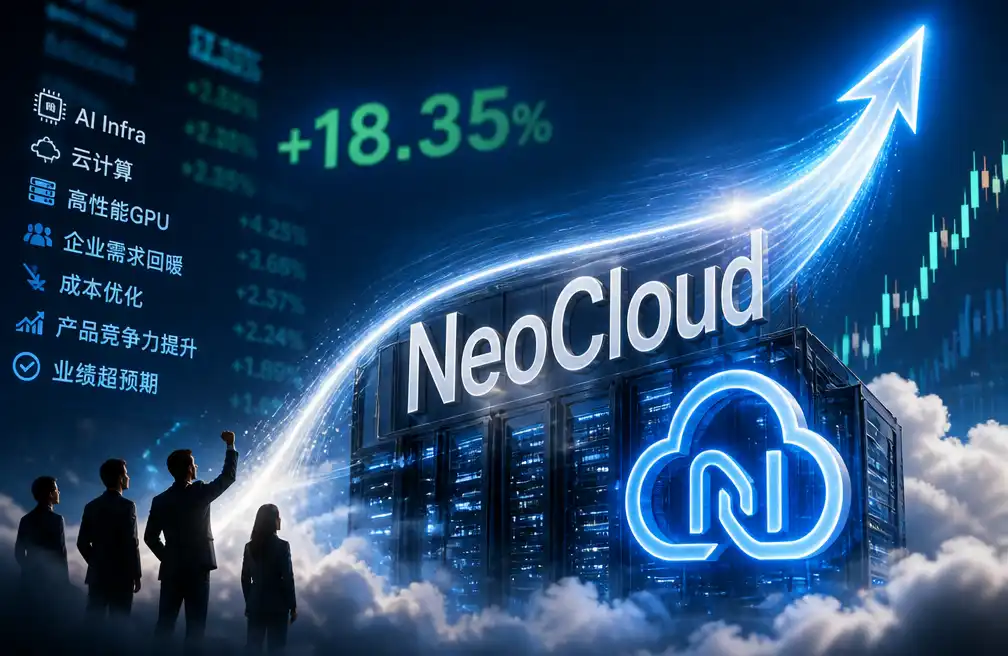
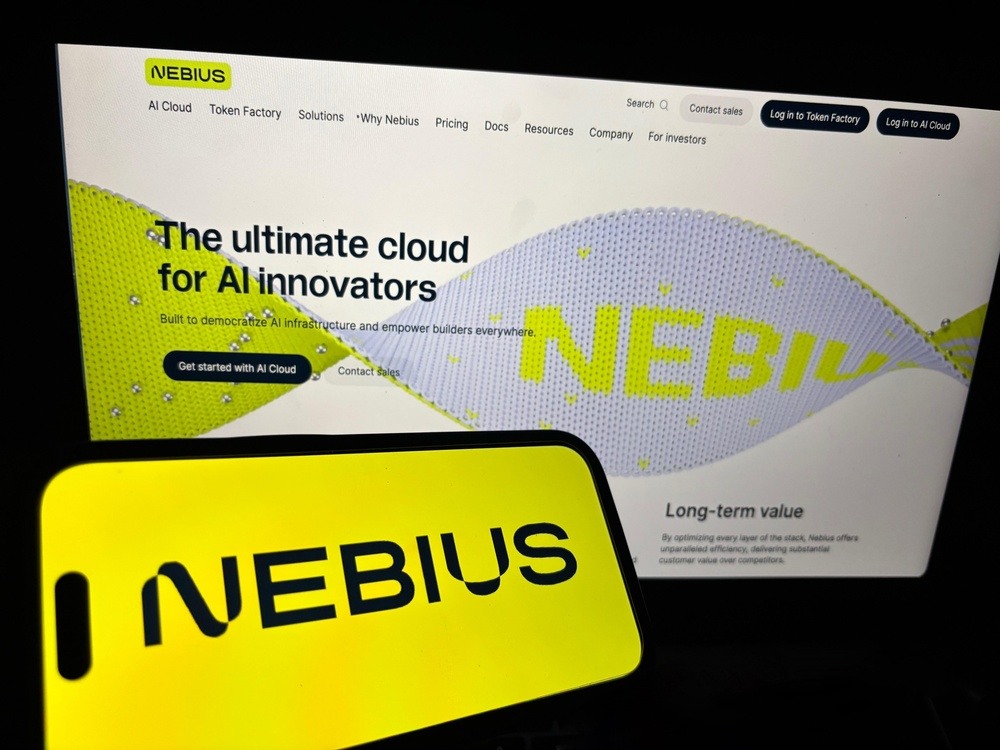
Why Has NeoCloud Experienced the Largest Rally in This Round of U.S. Tech Stock Rebound?

This round of tech stock rebound saw NeoCloud companies like CoreWeave and Nebius among the biggest gainers. The market is essentially pricing in highly leveraged AI infrastructure assets with locked-in, fast-deployable compute capacity. The key driver is a shift in AI bottlenecks from just GPUs to the entire ready-to-run capability—GPU clusters, power, data centers, networking—delivered within months. NeoCloud operators fit this gap perfectly. Their value lies in scarce, contractible assets: existing power capacity and data center space that can be locked in via long-term customer agreements. Recent earnings from CoreWeave and Nebius showcased a viable business model, shifting the narrative from "capital-intensive GPU lessors" to "order-backed AI infrastructure operators." Large backlogs and recurring revenue provide visibility, ease financing for expansion, and create a growth flywheel. The outperformance relative to storage or hyperscaler cloud stocks stems from greater leverage and exposure. NeoCloud's smaller revenue base offers higher earnings and valuation elasticity per new contract. Its leverage is threefold: operational (high fixed costs), financial (contracts enabling debt financing), and equity-based (amplified impact on equity value). Ultimately, the rally represents a re-rating of assets that combine GPU, power, and data center capacity into deliverable AI compute. Market focus is now on execution: converting massive backlogs into energized clusters, recognized revenue, and cash flow.

marsbitHá 48m

Why Has NeoCloud Experienced the Largest Rally in This Round of U.S. Tech Stock Rebound?

marsbitHá 48m

Wall Street Morning Report: CPI Lands Mildly, U.S. Stocks Stage Deep V-Shaped Reversal, AI Cloud, Storage, and Optical Communications Collectively Surge

Wall Street Morning Report: US stocks staged a deep V-shaped recovery following a mild CPI report, with AI cloud, storage, and optical communication sectors leading the rally. Major indexes were mixed: the Dow dipped slightly, while the S&P 500 and Nasdaq gained, nearing record highs. The July CPI data met expectations, with core inflation hitting its slowest pace since March 2021, further reducing expectations for a September Fed rate hike. Market focus shifted decisively towards AI infrastructure. The Philadelphia Semiconductor Index jumped 2.49%. AI cloud providers NEBIUS and CoreWeave surged 34% and 19% respectively on strong earnings and massive order backlogs. Optical communication stocks like Lumentum and Coherent also posted significant gains. The storage sector rallied broadly, with SK Hynix and Micron among the advancers. Meanwhile, major tech giants saw divergence. Nvidia rose over 3%, while Apple, Microsoft, Amazon, and Meta closed lower. In commodities, gold and silver remained strong, while oil prices retreated as markets awaited developments in the Strait of Hormuz. The US federal budget deficit widened significantly in July, raising long-term concerns. Key upcoming events include US PPI data, Sandisk's investor day, and the SEC's 13F filings deadline, which will reveal institutional holdings.

marsbitHá 1h

Wall Street Morning Report: CPI Lands Mildly, U.S. Stocks Stage Deep V-Shaped Reversal, AI Cloud, Storage, and Optical Communications Collectively Surge

marsbitHá 1h

Trading

Spot

Artigos em Destaque

O que é GROK AI

Grok AI: Revolucionar a Tecnologia Conversacional na Era Web3 Introdução No panorama em rápida evolução da inteligência artificial, a Grok AI destaca-se como um projeto notável que liga os domínios da tecnologia avançada e da interação com o utilizador. Desenvolvida pela xAI, uma empresa liderada pelo renomado empreendedor Elon Musk, a Grok AI procura redefinir a forma como interagimos com a inteligência artificial. À medida que o movimento Web3 continua a florescer, a Grok AI visa aproveitar o poder da IA conversacional para responder a consultas complexas, proporcionando aos utilizadores uma experiência que é não apenas informativa, mas também divertida. O que é a Grok AI? A Grok AI é um sofisticado chatbot de IA conversacional projetado para interagir com os utilizadores de forma dinâmica. Ao contrário de muitos sistemas de IA tradicionais, a Grok AI abraça uma gama mais ampla de perguntas, incluindo aquelas tipicamente consideradas inadequadas ou fora das respostas padrão. Os principais objetivos do projeto incluem: Raciocínio Fiável: A Grok AI enfatiza o raciocínio de senso comum para fornecer respostas lógicas com base na compreensão contextual. Supervisão Escalável: A integração de assistência de ferramentas garante que as interações dos utilizadores sejam monitorizadas e otimizadas para qualidade. Verificação Formal: A segurança é primordial; a Grok AI incorpora métodos de verificação formal para aumentar a fiabilidade das suas saídas. Compreensão de Longo Contexto: O modelo de IA destaca-se na retenção e recordação de um extenso histórico de conversas, facilitando discussões significativas e contextualizadas. Robustez Adversarial: Ao focar na melhoria das suas defesas contra entradas manipuladas ou maliciosas, a Grok AI visa manter a integridade das interações dos utilizadores. Em essência, a Grok AI não é apenas um dispositivo de recuperação de informações; é um parceiro conversacional imersivo que incentiva um diálogo dinâmico. Criador da Grok AI A mente por trás da Grok AI não é outra senão Elon Musk, um indivíduo sinónimo de inovação em vários campos, incluindo automóvel, viagens espaciais e tecnologia. Sob a égide da xAI, uma empresa focada em avançar a tecnologia de IA de maneiras benéficas, a visão de Musk visa reformular a compreensão das interações com a IA. A liderança e a ética fundacional são profundamente influenciadas pelo compromisso de Musk em ultrapassar os limites tecnológicos. Investidores da Grok AI Embora os detalhes específicos sobre os investidores que apoiam a Grok AI permaneçam limitados, é reconhecido publicamente que a xAI, a incubadora do projeto, é fundada e apoiada principalmente pelo próprio Elon Musk. As anteriores empreitadas e participações de Musk fornecem um forte apoio, reforçando ainda mais a credibilidade e o potencial de crescimento da Grok AI. No entanto, até agora, informações sobre fundações ou organizações de investimento adicionais que apoiam a Grok AI não estão prontamente acessíveis, marcando uma área para exploração futura potencial. Como Funciona a Grok AI? A mecânica operacional da Grok AI é tão inovadora quanto a sua estrutura conceptual. O projeto integra várias tecnologias de ponta que facilitam as suas funcionalidades únicas: Infraestrutura Robusta: A Grok AI é construída utilizando Kubernetes para orquestração de contêineres, Rust para desempenho e segurança, e JAX para computação numérica de alto desempenho. Este trio assegura que o chatbot opere de forma eficiente, escale eficazmente e sirva os utilizadores prontamente. Acesso a Conhecimento em Tempo Real: Uma das características distintivas da Grok AI é a sua capacidade de aceder a dados em tempo real através da plataforma X—anteriormente conhecida como Twitter. Esta capacidade concede à IA acesso às informações mais recentes, permitindo-lhe fornecer respostas e recomendações oportunas que outros modelos de IA poderiam perder. Dois Modos de Interação: A Grok AI oferece aos utilizadores a escolha entre “Modo Divertido” e “Modo Regular”. O Modo Divertido permite um estilo de interação mais lúdico e humorístico, enquanto o Modo Regular foca em fornecer respostas precisas e exatas. Esta versatilidade assegura uma experiência adaptada que atende a várias preferências dos utilizadores. Em essência, a Grok AI combina desempenho com envolvimento, criando uma experiência que é tanto enriquecedora quanto divertida. Cronologia da Grok AI A jornada da Grok AI é marcada por marcos fundamentais que refletem as suas fases de desenvolvimento e implementação: Desenvolvimento Inicial: A fase fundamental da Grok AI ocorreu ao longo de aproximadamente dois meses, durante os quais o treinamento inicial e o ajuste do modelo foram realizados. Lançamento Beta do Grok-2: Numa evolução significativa, o beta do Grok-2 foi anunciado. Este lançamento introduziu duas versões do chatbot—Grok-2 e Grok-2 mini—cada uma equipada com capacidades para conversar, programar e raciocinar. Acesso Público: Após o seu desenvolvimento beta, a Grok AI tornou-se disponível para os utilizadores da plataforma X. Aqueles com contas verificadas por um número de telefone e ativas há pelo menos sete dias podem aceder a uma versão limitada, tornando a tecnologia disponível para um público mais amplo. Esta cronologia encapsula o crescimento sistemático da Grok AI desde a sua concepção até ao envolvimento público, enfatizando o seu compromisso com a melhoria contínua e a interação com o utilizador. Principais Características da Grok AI A Grok AI abrange várias características principais que contribuem para a sua identidade inovadora: Integração de Conhecimento em Tempo Real: O acesso a informações atuais e relevantes diferencia a Grok AI de muitos modelos estáticos, permitindo uma experiência de utilizador envolvente e precisa. Estilos de Interação Versáteis: Ao oferecer modos de interação distintos, a Grok AI atende a várias preferências dos utilizadores, convidando à criatividade e personalização na conversa com a IA. Base Tecnológica Avançada: A utilização de Kubernetes, Rust e JAX fornece ao projeto uma estrutura sólida para garantir fiabilidade e desempenho ótimo. Consideração de Discurso Ético: A inclusão de uma função de geração de imagens demonstra o espírito inovador do projeto. No entanto, também levanta considerações éticas em torno dos direitos autorais e da representação respeitosa de figuras reconhecíveis—uma discussão em curso dentro da comunidade de IA. Conclusão Como uma entidade pioneira no domínio da IA conversacional, a Grok AI encapsula o potencial para experiências transformadoras do utilizador na era digital. Desenvolvida pela xAI e impulsionada pela abordagem visionária de Elon Musk, a Grok AI integra conhecimento em tempo real com capacidades avançadas de interação. Esforça-se por ultrapassar os limites do que a inteligência artificial pode alcançar, mantendo um foco nas considerações éticas e na segurança do utilizador. A Grok AI não apenas incorpora o avanço tecnológico, mas também representa um novo paradigma de conversas no panorama Web3, prometendo envolver os utilizadores com conhecimento hábil e interação lúdica. À medida que o projeto continua a evoluir, ele permanece como um testemunho do que a interseção da tecnologia, criatividade e interação humana pode alcançar.

654 Visualizações TotaisPublicado em {updateTime}Atualizado em 2024.12.26

O que é GROK AI

O que é ERC AI

Euruka Tech: Uma Visão Geral do $erc ai e as suas Ambições no Web3 Introdução No panorama em rápida evolução da tecnologia blockchain e das aplicações descentralizadas, novos projetos surgem frequentemente, cada um com objetivos e metodologias únicas. Um desses projetos é a Euruka Tech, que opera no vasto domínio das criptomoedas e do Web3. O foco principal da Euruka Tech, particularmente do seu token $erc ai, é apresentar soluções inovadoras concebidas para aproveitar as capacidades crescentes da tecnologia descentralizada. Este artigo tem como objetivo fornecer uma visão abrangente da Euruka Tech, uma exploração das suas metas, funcionalidade, a identidade do seu criador, potenciais investidores e a sua importância no contexto mais amplo do Web3. O que é a Euruka Tech, $erc ai? A Euruka Tech é caracterizada como um projeto que aproveita as ferramentas e funcionalidades oferecidas pelo ambiente Web3, focando na integração da inteligência artificial nas suas operações. Embora os detalhes específicos sobre a estrutura do projeto sejam um tanto elusivos, ele é concebido para melhorar o envolvimento dos utilizadores e automatizar processos no espaço cripto. O projeto visa criar um ecossistema descentralizado que não só facilita transações, mas também incorpora funcionalidades preditivas através da inteligência artificial, daí a designação do seu token, $erc ai. O objetivo é fornecer uma plataforma intuitiva que facilite interações mais inteligentes e um processamento eficiente de transações dentro da crescente esfera do Web3. Quem é o Criador da Euruka Tech, $erc ai? Neste momento, a informação sobre o criador ou a equipa fundadora da Euruka Tech permanece não especificada e algo opaca. Esta ausência de dados levanta preocupações, uma vez que o conhecimento sobre o histórico da equipa é frequentemente essencial para estabelecer credibilidade no setor blockchain. Portanto, categorizamos esta informação como desconhecida até que detalhes concretos sejam disponibilizados no domínio público. Quem são os Investidores da Euruka Tech, $erc ai? De forma semelhante, a identificação de investidores ou organizações de apoio para o projeto Euruka Tech não é prontamente fornecida através da pesquisa disponível. Um aspeto que é crucial para potenciais partes interessadas ou utilizadores que consideram envolver-se com a Euruka Tech é a garantia que vem de parcerias financeiras estabelecidas ou apoio de empresas de investimento respeitáveis. Sem divulgações sobre afiliações de investimento, é difícil tirar conclusões abrangentes sobre a segurança financeira ou a longevidade do projeto. Em linha com a informação encontrada, esta seção também se encontra no estado de desconhecido. Como funciona a Euruka Tech, $erc ai? Apesar da falta de especificações técnicas detalhadas para a Euruka Tech, é essencial considerar as suas ambições inovadoras. O projeto procura aproveitar o poder computacional da inteligência artificial para automatizar e melhorar a experiência do utilizador no ambiente das criptomoedas. Ao integrar IA com tecnologia blockchain, a Euruka Tech visa fornecer funcionalidades como negociações automatizadas, avaliações de risco e interfaces de utilizador personalizadas. A essência inovadora da Euruka Tech reside no seu objetivo de criar uma conexão fluida entre os utilizadores e as vastas possibilidades apresentadas pelas redes descentralizadas. Através da utilização de algoritmos de aprendizagem automática e IA, visa minimizar os desafios enfrentados por utilizadores de primeira viagem e agilizar as experiências transacionais dentro do quadro do Web3. Esta simbiose entre IA e blockchain sublinha a importância do token $erc ai, que se apresenta como uma ponte entre interfaces de utilizador tradicionais e as capacidades avançadas das tecnologias descentralizadas. Cronologia da Euruka Tech, $erc ai Infelizmente, devido à informação limitada disponível sobre a Euruka Tech, não conseguimos apresentar uma cronologia detalhada dos principais desenvolvimentos ou marcos na jornada do projeto. Esta cronologia, tipicamente inestimável para traçar a evolução de um projeto e compreender a sua trajetória de crescimento, não está atualmente disponível. À medida que informações sobre eventos notáveis, parcerias ou adições funcionais se tornem evidentes, atualizações certamente aumentarão a visibilidade da Euruka Tech na esfera cripto. Esclarecimento sobre Outros Projetos “Eureka” É importante abordar que múltiplos projetos e empresas partilham uma nomenclatura semelhante com “Eureka.” A pesquisa identificou iniciativas como um agente de IA da NVIDIA Research, que se concentra em ensinar robôs a realizar tarefas complexas utilizando métodos generativos, bem como a Eureka Labs e a Eureka AI, que melhoram a experiência do utilizador na educação e na análise de serviços ao cliente, respetivamente. No entanto, estes projetos são distintos da Euruka Tech e não devem ser confundidos com os seus objetivos ou funcionalidades. Conclusão A Euruka Tech, juntamente com o seu token $erc ai, representa um jogador promissor, mas atualmente obscuro, dentro do panorama do Web3. Embora os detalhes sobre o seu criador e investidores permaneçam não divulgados, a ambição central de combinar inteligência artificial com tecnologia blockchain destaca-se como um ponto focal de interesse. As abordagens únicas do projeto em promover o envolvimento do utilizador através da automação avançada podem diferenciá-lo à medida que o ecossistema Web3 avança. À medida que o mercado cripto continua a evoluir, as partes interessadas devem manter um olhar atento sobre os avanços em torno da Euruka Tech, uma vez que o desenvolvimento de inovações documentadas, parcerias ou um roteiro definido pode apresentar oportunidades significativas no futuro próximo. Neste momento, aguardamos por insights mais substanciais que possam desvendar o potencial da Euruka Tech e a sua posição no competitivo panorama cripto.

702 Visualizações TotaisPublicado em {updateTime}Atualizado em 2025.01.02

O que é ERC AI

O que é DUOLINGO AI

DUOLINGO AI: Integrar a Aprendizagem de Línguas com Inovação Web3 e IA Numa era em que a tecnologia transforma a educação, a integração da inteligência artificial (IA) e das redes blockchain anuncia uma nova fronteira para a aprendizagem de línguas. Apresentamos DUOLINGO AI e a sua criptomoeda associada, $DUOLINGO AI. Este projeto aspira a unir o poder educativo das principais plataformas de aprendizagem de línguas com os benefícios da tecnologia descentralizada Web3. Este artigo explora os principais aspectos do DUOLINGO AI, analisando os seus objetivos, estrutura tecnológica, desenvolvimento histórico e potencial futuro, mantendo a clareza entre o recurso educativo original e esta iniciativa independente de criptomoeda. Visão Geral do DUOLINGO AI No seu cerne, DUOLINGO AI procura estabelecer um ambiente descentralizado onde os alunos podem ganhar recompensas criptográficas por alcançar marcos educativos em proficiência linguística. Ao aplicar contratos inteligentes, o projeto visa automatizar processos de verificação de habilidades e alocação de tokens, aderindo aos princípios do Web3 que enfatizam a transparência e a propriedade do utilizador. O modelo diverge das abordagens tradicionais de aquisição de línguas ao apoiar-se fortemente numa estrutura de governança orientada pela comunidade, permitindo que os detentores de tokens sugiram melhorias ao conteúdo dos cursos e à distribuição de recompensas. Alguns dos objetivos notáveis do DUOLINGO AI incluem: Aprendizagem Gamificada: O projeto integra conquistas em blockchain e tokens não fungíveis (NFTs) para representar níveis de proficiência linguística, promovendo a motivação através de recompensas digitais envolventes. Criação de Conteúdo Descentralizada: Abre caminhos para educadores e entusiastas de línguas contribuírem com os seus cursos, facilitando um modelo de partilha de receitas que beneficia todos os colaboradores. Personalização Através de IA: Ao empregar modelos avançados de aprendizagem de máquina, o DUOLINGO AI personaliza as lições para se adaptar ao progresso de aprendizagem individual, semelhante às características adaptativas encontradas em plataformas estabelecidas. Criadores do Projeto e Governança A partir de abril de 2025, a equipa por trás do $DUOLINGO AI permanece pseudónima, uma prática frequente no panorama descentralizado das criptomoedas. Esta anonimidade visa promover o crescimento coletivo e o envolvimento das partes interessadas, em vez de se concentrar em desenvolvedores individuais. O contrato inteligente implementado na blockchain Solana indica o endereço da carteira do desenvolvedor, o que significa o compromisso com a transparência em relação às transações, apesar da identidade dos criadores ser desconhecida. De acordo com o seu roteiro, o DUOLINGO AI pretende evoluir para uma Organização Autónoma Descentralizada (DAO). Esta estrutura de governança permite que os detentores de tokens votem em questões críticas, como implementações de funcionalidades e alocação de tesouraria. Este modelo alinha-se com a ética de empoderamento comunitário encontrada em várias aplicações descentralizadas, enfatizando a importância da tomada de decisão coletiva. Investidores e Parcerias Estratégicas Atualmente, não existem investidores institucionais ou capitalistas de risco publicamente identificáveis ligados ao $DUOLINGO AI. Em vez disso, a liquidez do projeto origina-se principalmente de trocas descentralizadas (DEXs), marcando um contraste acentuado com as estratégias de financiamento das empresas tradicionais de tecnologia educacional. Este modelo de base indica uma abordagem orientada pela comunidade, refletindo o compromisso do projeto com a descentralização. No seu whitepaper, o DUOLINGO AI menciona a formação de colaborações com “plataformas de educação blockchain” não especificadas, com o objetivo de enriquecer a sua oferta de cursos. Embora parcerias específicas ainda não tenham sido divulgadas, estes esforços colaborativos sugerem uma estratégia para misturar inovação em blockchain com iniciativas educativas, expandindo o acesso e o envolvimento dos utilizadores em diversas vias de aprendizagem. Arquitetura Tecnológica Integração de IA O DUOLINGO AI incorpora dois componentes principais impulsionados por IA para melhorar as suas ofertas educativas: Motor de Aprendizagem Adaptativa: Este motor sofisticado aprende a partir das interações dos utilizadores, semelhante a modelos proprietários de grandes plataformas educativas. Ele ajusta dinamicamente a dificuldade das lições para abordar desafios específicos dos alunos, reforçando áreas fracas através de exercícios direcionados. Agentes Conversacionais: Ao empregar chatbots alimentados por GPT-4, o DUOLINGO AI oferece uma plataforma para os utilizadores se envolverem em conversas simuladas, promovendo uma experiência de aprendizagem de línguas mais interativa e prática. Infraestrutura Blockchain Construído na blockchain Solana, o $DUOLINGO AI utiliza uma estrutura tecnológica abrangente que inclui: Contratos Inteligentes de Verificação de Habilidades: Esta funcionalidade atribui automaticamente tokens aos utilizadores que passam com sucesso em testes de proficiência, reforçando a estrutura de incentivos para resultados de aprendizagem genuínos. Emblemas NFT: Estes tokens digitais significam vários marcos que os alunos alcançam, como completar uma seção do seu curso ou dominar habilidades específicas, permitindo-lhes negociar ou exibir as suas conquistas digitalmente. Governança DAO: Membros da comunidade com tokens podem participar na governança votando em propostas-chave, facilitando uma cultura participativa que incentiva a inovação nas ofertas de cursos e funcionalidades da plataforma. Cronologia Histórica 2022–2023: Conceituação O trabalho preliminar para o DUOLINGO AI começa com a criação de um whitepaper, destacando a sinergia entre os avanços em IA na aprendizagem de línguas e o potencial descentralizado da tecnologia blockchain. 2024: Lançamento Beta Um lançamento beta limitado introduz ofertas em línguas populares, recompensando os primeiros utilizadores com incentivos em tokens como parte da estratégia de envolvimento comunitário do projeto. 2025: Transição para DAO Em abril, ocorre um lançamento completo da mainnet com a circulação de tokens, promovendo discussões comunitárias sobre possíveis expansões para línguas asiáticas e outros desenvolvimentos de cursos. Desafios e Direções Futuras Obstáculos Técnicos Apesar dos seus objetivos ambiciosos, o DUOLINGO AI enfrenta desafios significativos. A escalabilidade continua a ser uma preocupação constante, particularmente no equilíbrio dos custos associados ao processamento de IA e à manutenção de uma rede descentralizada responsiva. Além disso, garantir a criação e moderação de conteúdo de qualidade num ambiente descentralizado apresenta complexidades na manutenção dos padrões educativos. Oportunidades Estratégicas Olhando para o futuro, o DUOLINGO AI tem o potencial de aproveitar parcerias de micro-certificação com instituições académicas, proporcionando validações verificadas em blockchain das habilidades linguísticas. Além disso, a expansão cross-chain poderia permitir que o projeto acedesse a bases de utilizadores mais amplas e a ecossistemas de blockchain adicionais, melhorando a sua interoperabilidade e alcance. Conclusão DUOLINGO AI representa uma fusão inovadora de inteligência artificial e tecnologia blockchain, apresentando uma alternativa focada na comunidade aos sistemas tradicionais de aprendizagem de línguas. Embora o seu desenvolvimento pseudónimo e o modelo económico emergente tragam certos riscos, o compromisso do projeto com a aprendizagem gamificada, educação personalizada e governança descentralizada ilumina um caminho a seguir para a tecnologia educativa no domínio do Web3. À medida que a IA continua a avançar e o ecossistema blockchain evolui, iniciativas como o DUOLINGO AI poderão redefinir a forma como os utilizadores interagem com a educação linguística, empoderando comunidades e recompensando o envolvimento através de mecanismos de aprendizagem inovadores.

629 Visualizações TotaisPublicado em {updateTime}Atualizado em 2025.04.11

O que é DUOLINGO AI

Discussões

Bem-vindo à Comunidade HTX. Aqui, pode manter-se informado sobre os mais recentes desenvolvimentos da plataforma e obter acesso a análises profissionais de mercado. As opiniões dos utilizadores sobre o preço de AI (AI) são apresentadas abaixo.

活动图片