Hash Global Research Report: Bitcoin Hasn't Risen Yet, Why Are We Starting to Think the Bear Market Might Be Over?

marsbitPublicado em 2026-08-13Última atualização em 2026-08-13

Resumo

Hash Global Research Report: Why We Think the Bear Market Might Be Ending Even Before Bitcoin Rises Over the past six months, AI has dominated market attention, causing a significant shakeout in crypto. Bitcoin has tested the $58-60K support three times since February, with volatility hitting multi-year lows. Despite stagnant prices, key underlying dynamics are shifting. The forces that drove the market down are weakening: macro tightening fears are easing as US inflation and jobs data cool, the perceived systemic risk from large holders like MicroStrategy selling is diminishing as they shore up finances, and institutional outflows have stopped. Simultaneously, on-chain data shows a rare concentration of over 240,000 BTC (approx. 12% of supply) accumulated in the $61-65K range, forming a new, consolidated base reminiscent of historical bottoms. Meanwhile, the AI trade is cooling, potentially redirecting capital towards undervalued crypto assets, as seen in July's relative outperformance. The current phase, where AI money hesitates and crypto veterans await a final dip, creates a "no-man's-land" investment opportunity—a potential entry point before a new consensus forms. While a definitive upturn isn't guaranteed, the confluence of weakening bearish pressures, improved on-chain structure, and a possible capital rotation suggests the window for positioning for the next cycle is opening.

Author:Jessica Feng (@Jf4172), Investment Manager of Hash Global BNB Fund;

Henry Yang (@ARSHenry1), Investment Partner, Head of Hash Global Secondary Market Funds.

Over the past six months, the booming AI market has almost captured the market's full attention, even shaking the last bastion of faith in Crypto - Bitcoin. Since falling below $70,000 in February, BTC has tested the $58,000–$60,000 range three times. Veteran players in the industry—Strategy—have begun selling coins, mining companies are shifting to AI, and the dim industry outlook has made each wave of panic feel more real than the last.

While US stocks continue to climb and gold rebounds from its lows, Crypto seems to have been forgotten by the world: BTC has been consolidating between $62,000 and $65,000 for nearly two months, with the 30-day implied volatility once dropping to 36%, hitting multi-year lows. The lifeless market conditions make it difficult for the public to be optimistic.

Recently, however, we have been focusing more on the "changes" and "perspectives"—the shifts happening beneath the price surface.

The forces that previously weighed down the market are weakening one by one: expectations for macro tightening are cooling, the Strategy blow-up crisis is easing, and institutional fund outflows have ceased.

Meanwhile, on-chain Bitcoin holdings are re-accumulating amidst the consolidation.

Everything seems to signal an approaching inflection point, but these changes have not yet been reflected in the price because the market is waiting for clearer signals.

Outside the market, AI trading is cooling down, and funds are about to begin a new round of allocation switching. Inside the market, veteran OGs are still waiting for the final dip and have yet to act. This moment of calm on the surface precisely offers us the best entry angle and timing.

Predicting exactly when the rally will start is difficult, but what can be grasped is that we are entering the time window to position for the next cycle.

I. Beneath the Unchanging Price, the Holdings Structure is Being Reshuffled, a New Bottom is Forming

BTC has tested the $60,000 level three times, and each time it has found clear support.

Subsequently, the price rebounded to around $65,000, where selling pressure re-emerged, and the market fell back into repeated fluctuations between $63,000 and $65,000. On the surface, the price has hardly changed, but on-chain holdings have quietly undergone a round of redistribution.

Currently, over 2.4 million BTC have settled in the $61,000–$65,000 range, accounting for about 12% of the circulating supply; of this, over 1 million BTC are concentrated around $63,000 alone, representing about 5.2% of the circulating supply. The degree of concentration has risen to historically rare levels.
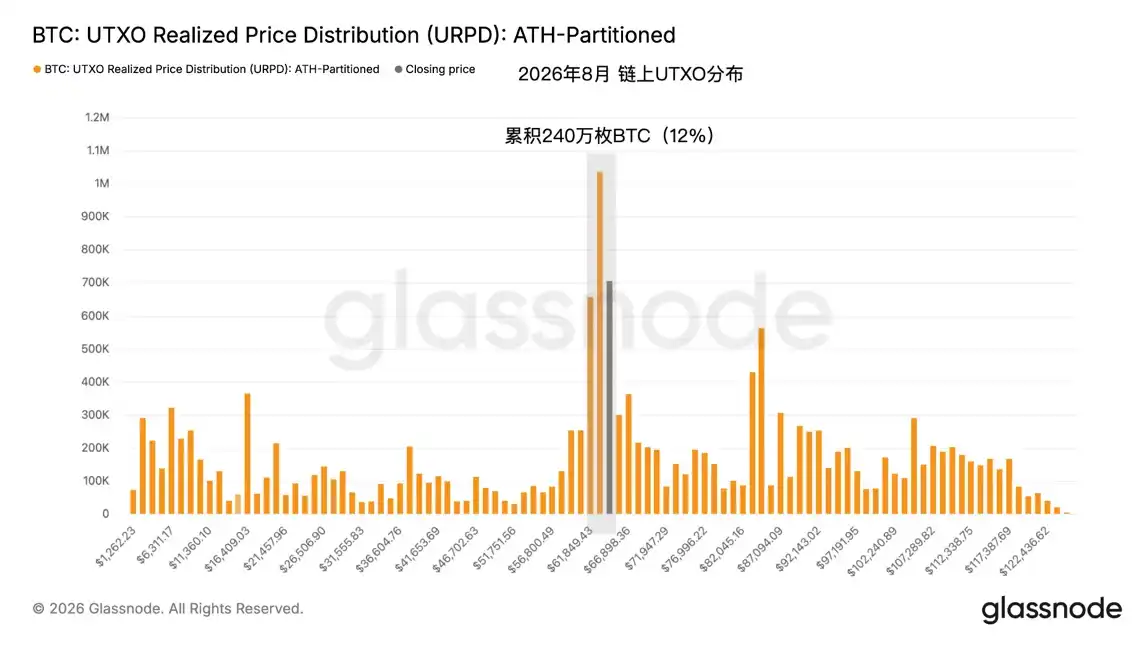
This change deserves more attention than short-term price movements. Bottoms do not appear suddenly; they are "bought out" by the market through repeated tugs-of-war: some exit, while others take positions; old holdings are constantly transferred, and new capital re-establishes a cost basis at lower levels. As more and more BTC clusters around similar price levels, a new price consensus is also being established.

Therefore, changes in momentum often precede price. Looking back at history, between May and November 2024, BTC also experienced a half-year adjustment after the ETF rally. Before rising from $60,000 to $100,000, the chain also showed a highly concentrated structure around the $50,000–$60,000 range. In hindsight, the bottom formed then was the springboard for the subsequent rally.
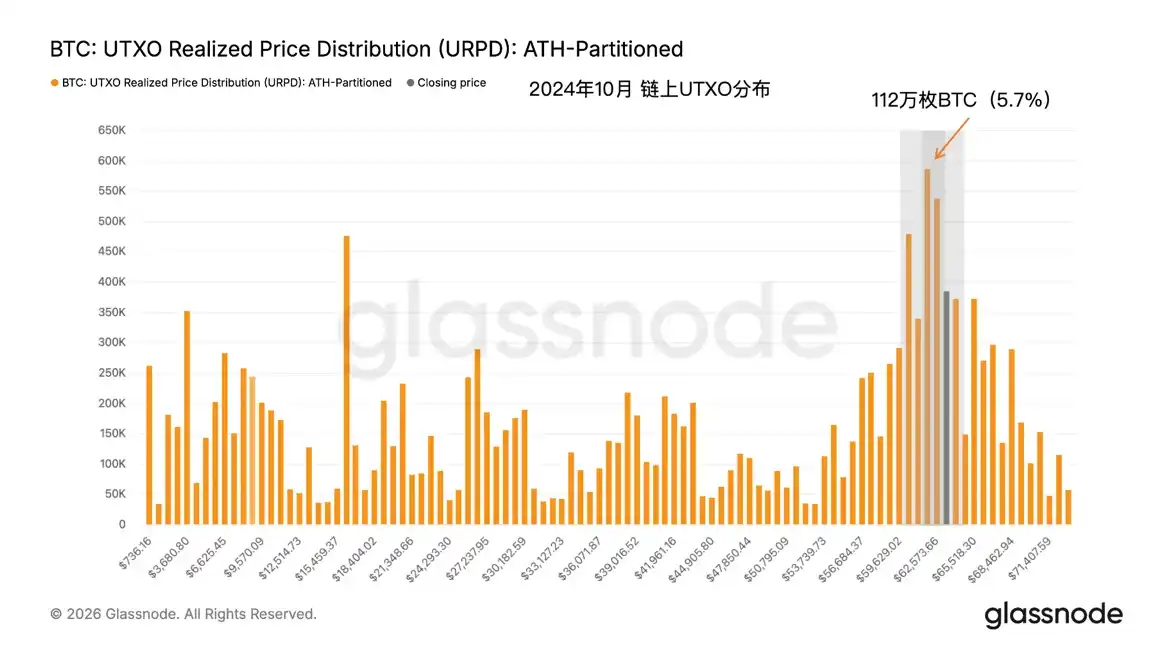
History doesn't simply repeat, but a similar holdings structure indicates the market is undergoing a similar bottoming and transfer process.

II. A Directional Choice Approaches, the Forces Suppressing the Market are Crumbling

Holdings concentration represents intensified contention, meaning the market is about to make a choice, but it alone cannot predict the direction.

What truly tilts the balance upward is that the several forces that drove the market down are weakening.

1. Macro Pressure Easing, Interest Rate Hike Risk Diminishing

The most important driver behind this round of adjustment has been market concerns over higher interest rates.

Geopolitical conflicts fueled inflation expectations, the Fed released hawkish signals, US Treasury yields and the dollar strengthened, naturally pressuring risk assets.

Recently, however, this high-interest-rate pricing logic has begun to loosen.

US CPI for June fell 0.4% month-over-month, the largest single-month drop since April 2020; core CPI was flat month-over-month, below market expectations. Meanwhile, July non-farm payrolls decreased by 23,000, also significantly weaker than expected.

Inflation is cooling, and employment is weakening. This marginal change has reversed the conditions for the market's previous tightening pricing.

When this expectation loosens, the pressure on risk assets naturally lessens.

2. Blow-up Crisis Cooling, Strategy Embarks on a Third Transformation

Over the past few months, FUD surrounding Strategy further amplified panic. Many believed Strategy's capital structure was problematic, and the largest buyer supporting this cycle would turn into a structural seller that could overwhelm the market during a downturn.

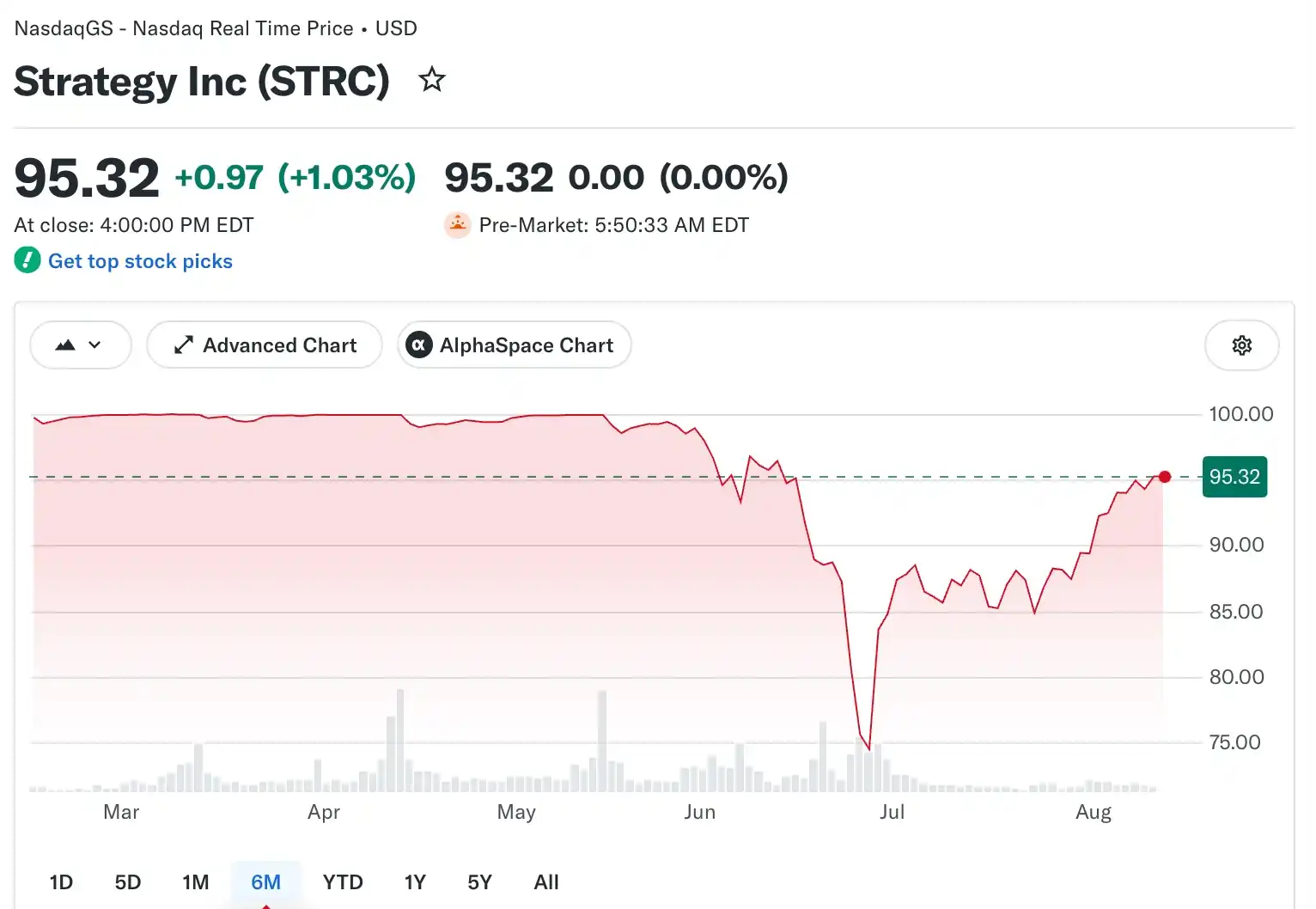
Due to these concerns, STRC once fell to $74, and MSTR's mNAV also dropped below 1x.

However, after Strategy actually began selling coins, the market's reaction gradually diminished. Behind this "desensitization" lies the market's evolving understanding of Strategy's tactics.

To date, Strategy has sold a total of 0.26% of its BTC holdings, boosting cash reserves to about $4.5 billion, sufficient to cover approximately 3 years of interest payments. It has also significantly repurchased discounted STRC, continuously reducing its debt scale at low cost. The market is gradually realizing that Strategy's series of operations precisely constitutes a transformation—from passive holding to active capital management, cutting off the negative spiral the market feared.

By contracting positions during the bear market, supplementing liquidity and stabilizing the capital structure through small-scale sales to ensure survival, Strategy preserves sufficient financing capacity to restart the flywheel in the next market cycle.

Recently, STRC has rebounded to around $95, and Strategy has resumed MSTR financing. Short-term funding pressure has eased, reducing the risk of forced large-scale sell-offs.

This means one of the most concerning structural selling pressures is clearly weakening.
3. AI Trading Cools, Crypto's Allure for Allocation is Rising, Possibly Attracting Fund Flows Back

Over the past six months, the AI sector has significantly diverted global capital.

Compared to narrative-starved Crypto, AI offered investment opportunities with more certain growth. Recently, however, AI trading has begun to cool.

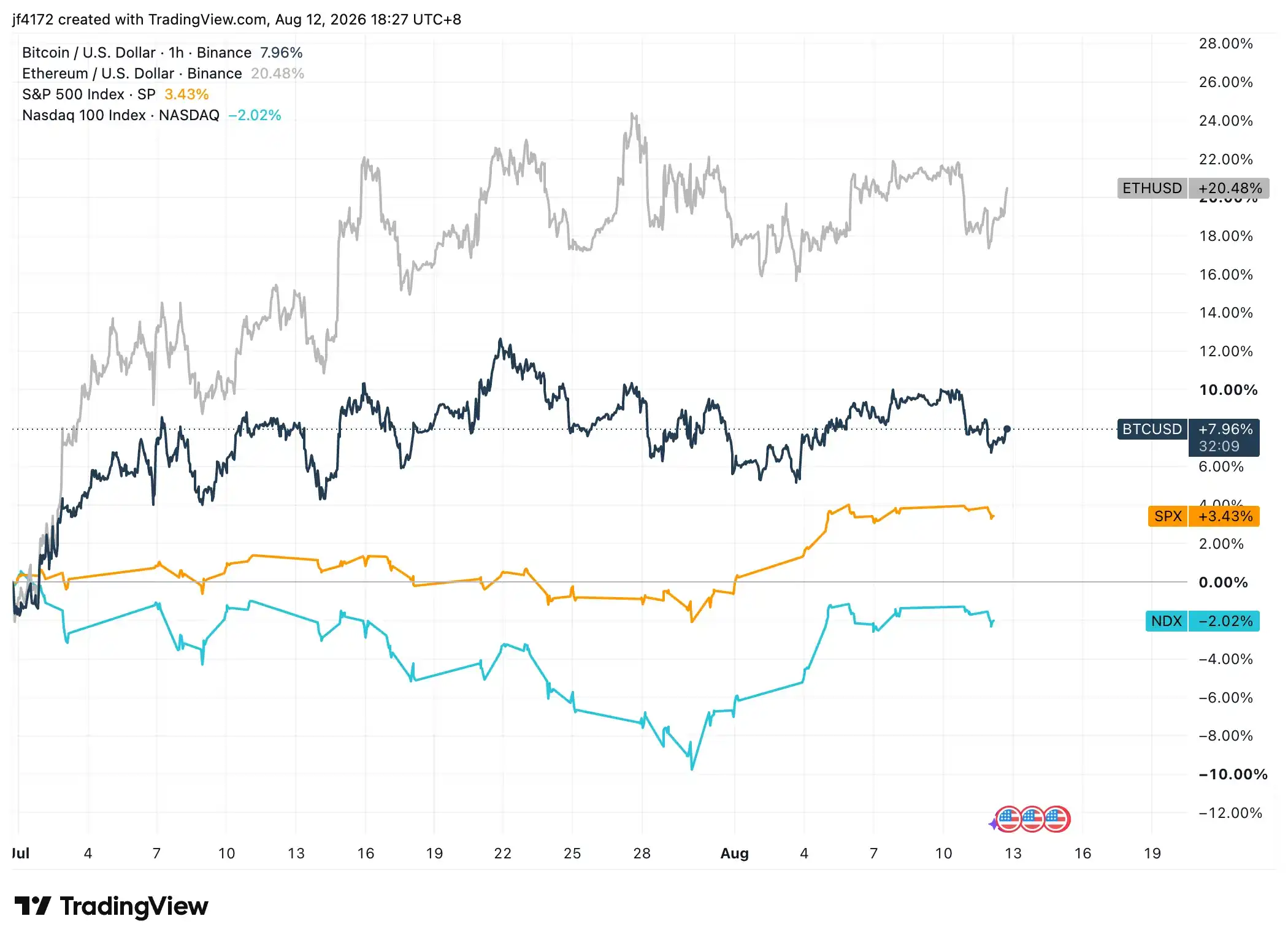
As valuations continued to climb, growth expectations became fully priced in, and the crowded AI trade saw concentrated deleveraging in July: the Nasdaq 100 index fell about 7%, the S&P 500 was flat month-over-month, while previously oversold Crypto assets saw a counter-trend recovery: BTC gained about 6% for the month, ETH rose about 18%. Blue-chip DeFi assets with significantly improved fundamentals performed even stronger, with UNI surging over 100% for the month.

When funds begin looking for new allocation directions, undervalued crypto assets with improving policy and fundamental backdrops may re-enter the sight of capital.
III. Before the Tide Arrives, Position During the "Unclaimed" Period

Marginal improvement in pressure factors does not equal a full reversal, so it's premature to conclude that the rally has already arrived.

While the market waits for clearer signals, this precisely provides a valuable time window.

Legendary investor Stanley Druckenmiller, when reflecting on his investment in Teva Pharmaceuticals, spoke of the concept of the "Unclaimed Territory": value investors were selling due to strategic transformation, while growth investors were still on the sidelines as the transformation was incomplete. When neither type of capital had truly entered, it presented a structurally disjointed investment opportunity.

BTC currently faces a similar disjointed opportunity: Crypto hasn't started its move yet, funds driven by AI FOMO are still chasing the final feast; the long-awaited industry blow-up moment hasn't arrived, and old money within the industry is still waiting for the final dip.

At this juncture, what's truly worth pondering is, when the market steps into the unclaimed territory, do we dare to move ahead of the consensus and position ourselves early?


Criptomoedas em alta

Perguntas relacionadas

QAccording to the Hash Global research report, what key change in Bitcoin's on-chain structure suggests a potential market bottom is forming?

AThe report highlights that a large amount of BTC, over 2.4 million coins (about 12% of circulating supply), has accumulated in the price range of $61k to $65k, with a particular concentration of over 1 million BTC (about 5.2% of supply) near $63k. This high degree of price range concentration indicates strong accumulation and the establishment of a new cost base, a pattern seen before previous bull market cycles, suggesting a new market bottom is being 'bought' through consolidation.

QWhat three main forces that previously pushed the crypto market down are now weakening, according to the report?

A1. Macro Pressure: Expectations for prolonged high interest rates are easing due to cooling inflation (e.g., June CPI drop) and a weakening labor market. 2. Strategy's Crisis: The fear of a large-scale, forced sell-off by Strategy has diminished. Strategy has sold a very small portion of its BTC (0.26%), bolstered cash reserves, repurchased its discounted bonds, and resumed convertible note financing, easing its short-term liquidity pressure. 3. AI Capital Outflow: The hype and capital flow into the AI stock trade has cooled, which may lead funds to seek new allocation opportunities in undervalued assets like crypto, as seen in July's relative outperformance.

QWhat is the concept of the 'unclaimed zone' mentioned in the report, and how does it relate to the current Bitcoin market?

AThe 'unclaimed zone' is a concept from investor Stanley Druckenmiller, referring to a structural gap where one type of investor (e.g., value investors) has sold an asset, but the next group of buyers (e.g., growth investors) has not yet stepped in due to uncertainty or waiting for a catalyst. The report argues that Bitcoin is currently in such a zone: external AI-focused capital is not yet rotating in, while experienced crypto investors ('old money') are still waiting for a final price dip, creating a potential investment opportunity for those willing to act before a clear consensus forms.

QHow did the performance of crypto assets compare to major stock indices in July, and what does the report suggest this indicates?

AIn July, while the Nasdaq 100 index fell about 7% and the S&P 500 was flat, Bitcoin rose about 6% and Ethereum about 18%. Some DeFi blue-chips like UNI performed even stronger, rising over 100%. The report suggests this relative outperformance indicates that as the crowded AI trade cools, capital is beginning to rotate back into undervalued crypto assets with improving fundamentals and policy outlooks, marking a potential shift in market leadership.

QWhat strategic shift has Strategy undertaken according to the report, and how does it address market concerns?

AStrategy has shifted from a passive 'buy and hold' strategy to an active capital management strategy. This involves selling a minimal portion of its BTC holdings to significantly increase its cash reserves (to ~$4.5B, covering ~3 years of interest), repurchasing its heavily discounted bonds (STRC) to reduce debt at low cost, and resuming equity financing via MSTR convertible notes. This transformation aims to break the 'negative spiral' the market feared—where falling BTC prices would force massive liquidations—by proactively securing long-term liquidity and stabilizing its capital structure to survive the bear market and be ready for the next cycle.

Leituras Relacionadas

Wall Street Morning Report: CPI Lands Mildly, U.S. Stocks Stage Deep V-Shaped Reversal, AI Cloud, Storage, and Optical Communications Collectively Surge

Wall Street Morning Report: US stocks staged a deep V-shaped recovery following a mild CPI report, with AI cloud, storage, and optical communication sectors leading the rally. Major indexes were mixed: the Dow dipped slightly, while the S&P 500 and Nasdaq gained, nearing record highs. The July CPI data met expectations, with core inflation hitting its slowest pace since March 2021, further reducing expectations for a September Fed rate hike. Market focus shifted decisively towards AI infrastructure. The Philadelphia Semiconductor Index jumped 2.49%. AI cloud providers NEBIUS and CoreWeave surged 34% and 19% respectively on strong earnings and massive order backlogs. Optical communication stocks like Lumentum and Coherent also posted significant gains. The storage sector rallied broadly, with SK Hynix and Micron among the advancers. Meanwhile, major tech giants saw divergence. Nvidia rose over 3%, while Apple, Microsoft, Amazon, and Meta closed lower. In commodities, gold and silver remained strong, while oil prices retreated as markets awaited developments in the Strait of Hormuz. The US federal budget deficit widened significantly in July, raising long-term concerns. Key upcoming events include US PPI data, Sandisk's investor day, and the SEC's 13F filings deadline, which will reveal institutional holdings.

marsbitHá 39m

Wall Street Morning Report: CPI Lands Mildly, U.S. Stocks Stage Deep V-Shaped Reversal, AI Cloud, Storage, and Optical Communications Collectively Surge

marsbitHá 39m

A 22-Year-Old Mathematical Puzzle, Solved by a Union Hospital Intern?

In an astonishing development, a longstanding mathematical problem known as the Crouzeix conjecture, which had challenged experts in numerical linear algebra for 22 years, appears to have been solved by Shanmu Jin, a neurosurgery resident and postdoctoral researcher at Peking Union Medical College Hospital. With no formal advanced mathematical training—his background is in geology and medicine—Jin relied on self-study and, crucially, the AI model GPT-5.6. The conjecture, proposed by mathematician Michel Crouzeix in 2004, concerns a fundamental constant (speculated to be 2) bounding the relationship between matrix norms and polynomial values over numerical ranges. It is critical for applications in matrix function analysis and numerical methods. Despite dedicated efforts by leading mathematicians, the best proven constant had only been reduced to 2.414. Jin approached the problem using sophisticated prompt engineering with GPT-5.6. He adapted a known prompting strategy, isolating the AI from external resources to force original reasoning, employing multiple divergent "sub-agents" to explore different paths, and enforcing rigorous adversarial review of proposed proof steps. After about 16 hours of autonomous, unsupervised operation, the AI produced a novel and elegant proof. The key insight involved a clever "sampling strategy" that reduced the problem to a simple positivity condition—a solution described as elegant and unexpected by experts. The proof was verified by the conjecture's originator, Michel Crouzeix, and other specialists like Alex Townsend and Anne Greenbaum, who expressed astonishment at its validity. Jin has made the entire process open-source, including the prompt, drafts, and formal verification code. Remarkably, just eight days after Jin's preprint appeared, mathematicians Emiel Lorist and Felix Schwenninger published an independent, concise 5-page proof using a different approach, also developed with the aid of ChatGPT 5.6. Jin welcomed this complementary work. This event marks a potential turning point, demonstrating how AI can enable experts from non-traditional backgrounds to solve deep theoretical problems and dramatically accelerate scientific discovery, heralding what some are calling a new "golden age" for interdisciplinary research.

marsbitHá 53m

A 22-Year-Old Mathematical Puzzle, Solved by a Union Hospital Intern?

marsbitHá 53m

Trading

Spot

Artigos em Destaque

O que é BITCOIN

Compreender o HarryPotterObamaSonic10Inu (ERC-20) e a Sua Posição no Espaço Cripto Nos últimos anos, o mercado de criptomoedas assistiu a um aumento na popularidade das moedas meme, cativando não apenas os traders, mas também aqueles que procuram envolvimento comunitário e valor de entretenimento. Entre estes tokens únicos está o HarryPotterObamaSonic10Inu (ERC-20), um projeto intrigante que mistura referências culturais no tecido das criptomoedas. Este artigo explora os principais aspetos do HarryPotterObamaSonic10Inu, examinando os seus mecanismos, a sua ética orientada pela comunidade e o seu envolvimento com o vasto panorama cripto. O que é o HarryPotterObamaSonic10Inu (ERC-20)? Como o nome sugere, o HarryPotterObamaSonic10Inu é uma moeda meme construída na blockchain Ethereum, classificada sob o padrão ERC-20. Ao contrário das criptomoedas tradicionais, que podem enfatizar a utilidade prática ou o potencial de investimento, este token prospera no valor de entretenimento e na força da sua comunidade. O projeto visa promover um ambiente onde utilizadores envolvidos possam reunir-se, partilhar ideias e participar em atividades inspiradas por diversos fenómenos culturais. Uma característica notável do HarryPotterObamaSonic10Inu é a zero taxa sobre transações. Este elemento atraente visa encorajar a negociação e o envolvimento da comunidade, isento de encargos adicionais que podem desencorajar os traders de pequena escala. A oferta total da moeda está fixada em mil milhões de tokens, uma cifra que marca a sua intenção de manter uma circulação substancial dentro da comunidade. Criador do HarryPotterObamaSonic10Inu (ERC-20) As origens do HarryPotterObamaSonic10Inu estão um pouco envoltas em mistério; os detalhes sobre o criador permanecem desconhecidos. O desenvolvimento deste token carece de uma equipa identificável ou de um plano explícito, o que não é raro no setor das moedas meme. Em vez disso, o projeto surgiu de forma orgânica, com o seu progresso a depender fortemente do entusiasmo e da participação da sua comunidade. Investidores do HarryPotterObamaSonic10Inu (ERC-20) No que diz respeito a investimentos externos e apoios, o HarryPotterObamaSonic10Inu também permanece ambíguo. O token não lista quaisquer fundações de investimento conhecidas ou apoio organizacional significativo. Em vez disso, o “sangue vital” do projeto é a sua comunidade de base, que informa o seu crescimento e sustentabilidade através da ação coletiva e do envolvimento no espaço cripto. Como Funciona o HarryPotterObamaSonic10Inu (ERC-20)? Como uma moeda meme, o HarryPotterObamaSonic10Inu opera principalmente fora dos quadros tradicionais que muitas vezes governam o valor dos ativos. Existem vários aspetos distintivos que definem como o projeto funciona: Transações Sem Taxas: Sem taxas sobre transações, os utilizadores podem comprar e vender o token livremente, sem a preocupação de custos ocultos. Envolvimento da Comunidade: O projeto prospera na interação da comunidade, aproveitando plataformas de redes sociais para criar entusiasmo e facilitar a participação. Discussões, partilha de conteúdo e envolvimento são elementos cruciais que ajudam a expandir o seu alcance e a fomentar a lealdade entre os apoiantes. Sem Utilidade Prática: Deve ser notado que o HarryPotterObamaSonic10Inu não oferece utilidade concreta dentro do ecossistema financeiro. Em vez disso, é classificado como um token principalmente para entretenimento e atividades comunitárias. Referência Cultural: O token incorpora de forma inteligente elementos da cultura popular para atrair interesse, conectando-se tanto com entusiastas de memes como com seguidores de criptomoedas. HarryPotterObamaSonic10Inu exemplifica como as moedas meme operam de forma diferente de projetos de criptomoedas mais tradicionais, entrando no mercado como construções sociais inovadoras em vez de ativos utilitários. Linha do Tempo do HarryPotterObamaSonic10Inu (ERC-20) A história do HarryPotterObamaSonic10Inu é marcada por vários marcos notáveis: Criação: O token surgiu de um meme viral, capturando a imaginação de muitos entusiastas de criptomoedas. Datas específicas de criação não estão disponíveis, sublinhando a sua ascensão orgânica. Listagem em Exchanges: O HarryPotterObamaSonic10Inu conseguiu entrar em várias exchanges, permitindo um acesso e negociação mais fáceis pela comunidade. Iniciativas de Envolvimento da Comunidade: Atividades contínuas direcionadas a melhorar a interação comunitária, incluindo concursos, campanhas em redes sociais e geração de conteúdo por fãs e defensores. Planos de Expansão Futura: O roteiro do projeto inclui o lançamento de uma coleção de NFTs, mercadorias e um site de eCommerce relacionado aos seus temas culturais, envolvendo ainda mais a comunidade e tentando adicionar mais dimensões ao seu ecossistema. Pontos-Chave sobre o HarryPotterObamaSonic10Inu (ERC-20) Natureza Orientada pela Comunidade: O projeto prioriza a contribuição coletiva e a criatividade, assegurando que o envolvimento dos utilizadores está na vanguarda do seu desenvolvimento. Classificação como Moeda Meme: Representa o epítome da criptomoeda baseada em entretenimento, destacando-se dos veículos de investimento tradicionais. Sem Afiliação Direta com o Bitcoin: Apesar da semelhança no nome do ticker, o HarryPotterObamaSonic10Inu é distinto e não tem qualquer relação com o Bitcoin ou outras criptomoedas estabelecidas. Foco na Colaboração: O HarryPotterObamaSonic10Inu é projetado para criar um espaço de colaboração e partilha de histórias entre os seus detentores, proporcionando uma via para a criatividade e o fortalecimento da comunidade. Perspectivas Futuras: A ambição de expandir além da sua premissa inicial para NFTs e mercadorias delineia um caminho para o projeto potencialmente entrar em avenidas mais mainstream dentro da cultura digital. À medida que as moedas meme continuam a capturar a imaginação da comunidade cripto, HarryPotterObamaSonic10Inu (ERC-20) destaca-se devido aos seus laços culturais e abordagem centrada na comunidade. Embora possa não se encaixar no molde típico de um token orientado para utilidade, a sua essência reside na alegria e camaradagem fomentadas entre os seus apoiantes, destacando a natureza em evolução das criptomoedas em uma era cada vez mais digital. À medida que o projeto continua a desenvolver-se, será importante observar como as dinâmicas comunitárias influenciam a sua trajetória no panorama em constante mudança da tecnologia blockchain.

2.3k Visualizações TotaisPublicado em {updateTime}Atualizado em 2024.12.03

O que é BITCOIN

Como comprar BTC

Bem-vindo à HTX.com!Tornámos a compra de Bitcoin (BTC) simples e conveniente.Segue o nosso guia passo a passo para iniciar a tua jornada no mundo das criptos.Passo 1: cria a tua conta HTXUtiliza o teu e-mail ou número de telefone para te inscreveres numa conta gratuita na HTX.Desfruta de um processo de inscrição sem complicações e desbloqueia todas as funcionalidades.Obter a minha contaPasso 2: vai para Comprar Cripto e escolhe o teu método de pagamentoCartão de crédito/débito: usa o teu visa ou mastercard para comprar Bitcoin (BTC) instantaneamente.Saldo: usa os fundos da tua conta HTX para transacionar sem problemas.Terceiros: adicionamos métodos de pagamento populares, como Google Pay e Apple Pay, para aumentar a conveniência.P2P: transaciona diretamente com outros utilizadores na HTX.Mercado de balcão (OTC): oferecemos serviços personalizados e taxas de câmbio competitivas para os traders.Passo 3: armazena teu Bitcoin (BTC)Depois de comprar o teu Bitcoin (BTC), armazena-o na tua conta HTX.Alternativamente, podes enviá-lo para outro lugar através de transferência blockchain ou usá-lo para transacionar outras criptomoedas.Passo 4: transaciona Bitcoin (BTC)Transaciona facilmente Bitcoin (BTC) no mercado à vista da HTX.Acede simplesmente à tua conta, seleciona o teu par de trading, executa as tuas transações e monitoriza em tempo real.Oferecemos uma experiência de fácil utilização tanto para principiantes como para traders experientes.

4.9k Visualizações TotaisPublicado em {updateTime}Atualizado em 2026.06.02

Como comprar BTC

O que é $BITCOIN

OURO DIGITAL ($BITCOIN): Uma Análise Abrangente Introdução ao OURO DIGITAL ($BITCOIN) OURO DIGITAL ($BITCOIN) é um projeto baseado em blockchain que opera na rede Solana, com o objetivo de combinar as características dos metais preciosos tradicionais com a inovação das tecnologias descentralizadas. Embora partilhe um nome com o Bitcoin, frequentemente referido como “ouro digital” devido à sua percepção como uma reserva de valor, o OURO DIGITAL é um token separado projetado para criar um ecossistema único dentro da paisagem Web3. O seu objetivo é posicionar-se como um ativo digital alternativo viável, embora os detalhes sobre as suas aplicações e funcionalidades ainda estejam em desenvolvimento. O que é o OURO DIGITAL ($BITCOIN)? OURO DIGITAL ($BITCOIN) é um token de criptomoeda explicitamente projetado para uso na blockchain Solana. Em contraste com o Bitcoin, que fornece um papel amplamente reconhecido como armazenamento de valor, este token parece focar em aplicações e características mais amplas. Aspectos notáveis incluem: Infraestrutura Blockchain: O token é construído na blockchain Solana, conhecida pela sua capacidade de lidar com transações de alta velocidade e baixo custo. Dinâmicas de Oferta: O OURO DIGITAL tem um fornecimento máximo limitado a 100 quatrilhões de tokens (100P $BITCOIN), embora os detalhes sobre o seu fornecimento circulante ainda não tenham sido divulgados. Utilidade: Embora as funcionalidades precisas não estejam explicitamente delineadas, existem indicações de que o token poderia ser utilizado para várias aplicações, potencialmente envolvendo aplicações descentralizadas (dApps) ou estratégias de tokenização de ativos. Quem é o Criador do OURO DIGITAL ($BITCOIN)? Neste momento, a identidade dos criadores e da equipa de desenvolvimento por trás do OURO DIGITAL ($BITCOIN) permanece desconhecida. Esta situação é típica entre muitos projetos inovadores no espaço da blockchain, particularmente aqueles alinhados com finanças descentralizadas e fenómenos de moedas meme. Embora tal anonimato possa fomentar uma cultura orientada pela comunidade, intensifica as preocupações sobre governança e responsabilidade. Quem são os Investidores do OURO DIGITAL ($BITCOIN)? As informações disponíveis indicam que o OURO DIGITAL ($BITCOIN) não tem apoiantes institucionais conhecidos ou investimentos proeminentes de capital de risco. O projeto parece operar num modelo peer-to-peer focado no apoio e adoção da comunidade, em vez de rotas de financiamento tradicionais. A sua atividade e liquidez estão principalmente situadas em exchanges descentralizadas (DEXs), como a PumpSwap, em vez de plataformas de negociação centralizadas estabelecidas, destacando ainda mais a sua abordagem de base. Como Funciona o OURO DIGITAL ($BITCOIN) A mecânica operacional do OURO DIGITAL ($BITCOIN) pode ser elaborada com base no seu design de blockchain e nas características da rede: Mecanismo de Consenso: Ao aproveitar o exclusivo proof-of-history (PoH) da Solana combinado com um modelo de proof-of-stake (PoS), o projeto assegura uma validação eficiente das transações, contribuindo para o alto desempenho da rede. Tokenomics: Embora mecanismos deflacionários específicos não tenham sido extensivamente detalhados, o vasto fornecimento máximo de tokens implica que pode atender a microtransações ou casos de uso de nicho que ainda estão por definir. Interoperabilidade: Existe o potencial para integração com o ecossistema mais amplo da Solana, incluindo várias plataformas de finanças descentralizadas (DeFi). No entanto, os detalhes sobre integrações específicas permanecem não especificados. Cronologia de Eventos Chave Aqui está uma cronologia que destaca marcos significativos relacionados ao OURO DIGITAL ($BITCOIN): 2023: O lançamento inicial do token ocorre na blockchain Solana, marcado pelo seu endereço de contrato. 2024: O OURO DIGITAL ganha visibilidade ao tornar-se disponível para negociação em exchanges descentralizadas como a PumpSwap, permitindo que os utilizadores o negociem contra SOL. 2025: O projeto testemunha atividade de negociação esporádica e potencial interesse em envolvimentos liderados pela comunidade, embora não tenham sido documentadas parcerias ou avanços técnicos notáveis até ao momento. Análise Crítica Forças Escalabilidade: A infraestrutura subjacente da Solana suporta altos volumes de transações, o que pode aumentar a utilidade do $BITCOIN em vários cenários de transação. Acessibilidade: O potencial preço de negociação baixo por token pode atrair investidores de retalho, facilitando uma participação mais ampla devido a oportunidades de propriedade fracionada. Riscos Falta de Transparência: A ausência de apoiantes, desenvolvedores ou um processo de auditoria publicamente conhecidos pode gerar ceticismo em relação à sustentabilidade e confiabilidade do projeto. Volatilidade do Mercado: A atividade de negociação depende fortemente do comportamento especulativo, o que pode resultar em volatilidade significativa dos preços e incerteza para os investidores. Conclusão O OURO DIGITAL ($BITCOIN) surge como um projeto intrigante, mas ambíguo, dentro do ecossistema em rápida evolução da Solana. Embora tente aproveitar a narrativa do “ouro digital”, a sua divergência do papel estabelecido do Bitcoin como reserva de valor sublinha a necessidade de uma diferenciação mais clara da sua utilidade pretendida e estrutura de governança. A aceitação e adoção futuras dependerão provavelmente da abordagem da atual opacidade e da definição mais explícita das suas estratégias operacionais e económicas. Nota: Este relatório abrange informações sintetizadas disponíveis até outubro de 2023, e desenvolvimentos podem ter ocorrido além do período de pesquisa.

448 Visualizações TotaisPublicado em {updateTime}Atualizado em 2025.05.13

O que é $BITCOIN

Discussões

Bem-vindo à Comunidade HTX. Aqui, pode manter-se informado sobre os mais recentes desenvolvimentos da plataforma e obter acesso a análises profissionais de mercado. As opiniões dos utilizadores sobre o preço de BTC (BTC) são apresentadas abaixo.

活动图片