Liberland Fires Tech Secretary After Alleged Blockchain And Website Takeover Attempt

bitcoinistPublicado em 2026-06-15Última atualização em 2026-06-15

Resumo

Liberland's congress has voted to remove Technology Secretary Dorian Stern Vukotić, following a resolution accusing him of attempting to hijack the Liberland.org domain, removing administrative multisig protections, blocking the president from voting, and launching unauthorized tokens. The incident serves as a case study in blockchain governance, highlighting risks that go beyond smart contracts to include control over domains, admin keys, and off-chain authority. For the crypto industry, it underscores the need to scrutinize decentralization claims against operational realities, where a small group can still compromise governance. The story reflects a broader market shift where infrastructure security and governance are becoming as critical as price action. Editorial framing should treat the development as a verified information signal about governance risks, avoiding overstatement of Liberland's legal status and leaving room for follow-up evidence.

Liberland’s congress has voted to remove Secretary of Technology Dorian Stern Vukotić, according to an official congressional resolution published by the micronation project.

The resolution accuses Vukotić of removing multisig protections on the administrative Sudo account, attempting to hijack the Liberland.org domain, blocking President Vít Jedlička from voting, and launching unauthorized tokens.

The allegations make the story a useful case study in blockchain governance, administrative control, and the risks that arise when technical infrastructure becomes part of a political dispute.

Governance Risk Goes Beyond Code

The Liberland dispute shows that governance failures are not always clean smart-contract exploits. They can also involve permissions, domains, voting rights, multisig design, admin accounts, and disputes over who has legitimate authority.

That makes the story relevant beyond Liberland itself. Many crypto projects rely on a mix of on-chain governance and off-chain control points, including websites, admin keys, social accounts, and multisig signers.

Why This Matters

For crypto users, the key lesson is that decentralization claims need to be tested against operational reality. If a small number of actors can control admin functions, domains, or voting access, governance can still become fragile.

The article should frame Liberland accurately as a micronation project, not as a universally recognized sovereign state.

What To Watch Next

Watch for blockchain explorer records, follow-up votes, and any legal or domain registry updates tied to the dispute.

The article should avoid overstating Liberland’s international legal status.

Market Context

For Bitcoinist, the story sits inside a wider shift in crypto where infrastructure, security, governance, and token utility are becoming just as important as short-term price action. Traders still care about momentum, but they also need to understand the systems, risks, and product changes behind the headlines.

The useful angle is not to overstate the development, but to explain why it belongs in the daily market conversation. Strong crypto stories increasingly come from protocol updates, official notices, security reports, court records, and on-chain data rather than recycled commentary alone.

The editorial takeaway should stay grounded: the source confirms a meaningful crypto development, but the implications depend on adoption, follow-up disclosures, or further on-chain evidence. That balance keeps the piece useful without leaning on hype or unsupported claims.

From an editorial standpoint, this makes the story worth covering as part of the day’s broader crypto operating environment rather than as a standalone hype cycle. The strongest version of the piece should stay close to the verified source, explain the practical risk or opportunity, and leave room for follow-up once more official data, filings, or project statements are available.

For now, the safest editorial framing is to treat the development as an information signal, not a final judgment. That keeps the article useful for traders and industry readers while avoiding claims that go beyond the primary source.

This report is based on information from Liberland’s official congressional resolution.

Perguntas relacionadas

QWhat is the main reason given by Liberland's congress for removing Technology Secretary Dorian Stern Vukotić?

AThe main reason is that he is accused of attempting to take control of key technical infrastructure, including removing multisig protections on an administrative account, trying to hijack the Liberland.org domain, blocking the President from voting, and launching unauthorized tokens.

QWhat broader lesson for crypto users does the article highlight based on the Liberland dispute?

AThe key lesson is that decentralization claims must be tested against operational reality. If a small group can control administrative functions, domains, or voting access, governance can remain fragile, even if the project claims to be decentralized.

QAccording to the article, how should Liberland be accurately framed?

ALiberland should be accurately framed as a micronation project, not as a universally recognized sovereign state.

QWhat does the article say makes the Liberland story relevant beyond its own context?

AIt's relevant because many crypto projects rely on a mix of on-chain governance and off-chain control points like websites, admin keys, social media accounts, and multisig signers. The dispute shows governance failures can involve these real-world administrative elements, not just code exploits.

QWhat editorial framing does the article recommend for covering this development?

AIt recommends treating the development as an information signal or a meaningful crypto governance event, not as a final judgment. The piece should stay close to verified sources, explain the practical risk, and avoid hype or unsupported claims.

Leituras Relacionadas

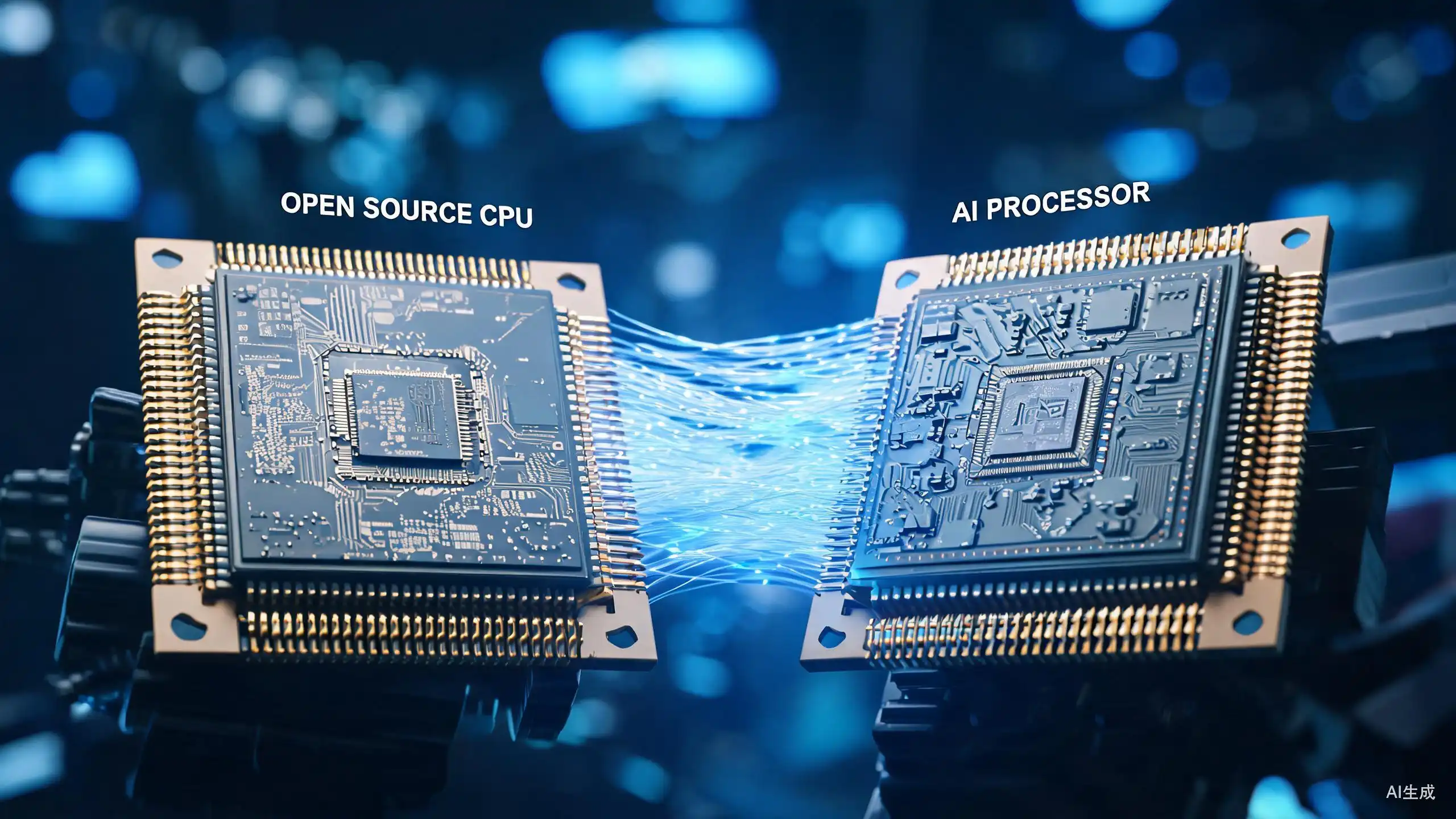
NVIDIA CPU Advances, China's RISC-V Responds: Semiconductor Deep Dive - Part Four

NVIDIA is set to launch its new Vera AI data center CPU in China as early as August, with high pricing. While this move offers a new option, it highlights China's continued dependence on foreign-controlled Arm architecture. In response, the Chinese semiconductor industry is increasingly turning to RISC-V as a strategic alternative for achieving high-performance computing autonomy. The article explores the concept of the "impossible triangle" in CPU development—balancing prosperity, control, and autonomy—and posits that RISC-V's open-source, modular nature offers a unique path to achieving all three. While RISC-V is already dominant in embedded systems, the focus is now shifting to data centers and AI workloads. China has become a global hotspot for RISC-V development, driven by AI-driven compute demand, supply chain concerns from export controls, cost benefits of open-source, and strong policy support. Multiple Chinese companies have reportedly crossed the key performance threshold of 15 SPECint per GHz, a benchmark for entering the high-performance CPU club. Progress extends beyond single-core benchmarks. Companies are developing complete computing subsystems, including commercial-grade coherent network-on-chip (NoC) technology and server processors with up to 40 cores that strictly adhere to the RVA23 standard to ensure software compatibility. Real-world applications are emerging in areas like video transcoding and edge AI. However, significant challenges remain. The RISC-V ecosystem faces fragmentation, immature toolchains and verification processes, and gaps in single-core performance and energy efficiency compared to mature x86 and Arm architectures. The formidable software moat, epitomized by NVIDIA's CUDA, is a long-term hurdle. In conclusion, while RISC-V cannot immediately replace offerings like NVIDIA's Vera, it represents a viable long-term path for China to develop a self-sufficient, high-performance CPU ecosystem. The journey is acknowledged to be long and arduous, requiring sustained effort to overcome technical and ecosystem challenges.

marsbitHá 1h

NVIDIA CPU Advances, China's RISC-V Responds: Semiconductor Deep Dive - Part Four

marsbitHá 1h

My Coding Betting Dashboard is Profiting, but Polymarket is Truly Not a Good Place for 'Arbitrage'

The author built a custom monitoring dashboard for Polymarket, a prediction market platform, and tested it with $1,600, achieving over 30% returns. However, the core argument is that Polymarket is not a good venue for traditional arbitrage. The dashboard has two main sections: a "Portfolio Dashboard" for tracking active positions with key metrics like total capital, P&L, and a risk-control module using a tier system (T1, T2, T3), and an "Opportunity Watchlist" for monitoring markets. The article details a critical structural trap in binary markets: a bet with a high perceived probability of success still carries a 100% loss risk if wrong. The author's T1/T2/T3 system is designed to manage this by limiting position sizes based on conviction and time horizon, emphasizing that high confidence should not equal high concentration. A key insight is the danger of "pseudo-diversification"—betting on different markets driven by the same underlying variable. The author concludes that Polymarket offers few true low-risk, arbitrage opportunities. It is instead a high-risk environment where wins can create a false sense of mastery, leading to large losses. The platform is better viewed as a training ground for honing judgment through disciplined, framework-driven betting rather than a reliable income source. The tools help transform intuition into structured, rule-based decisions to mitigate the risk of catastrophic errors.

marsbitHá 4h

My Coding Betting Dashboard is Profiting, but Polymarket is Truly Not a Good Place for 'Arbitrage'

marsbitHá 4h

WeChat AI Card Hands-On Guide: Has the AI Shopping Era Arrived?

**"WeChat AI Card" Practical Test Guide: Has the Era of AI Shopping Arrived?** WeChat has officially launched the "AI Exclusive Card," a feature integrated into its Workbuddy AI assistant. This card is designed to handle payments for AI-initiated purchases. Our hands-on test reveals it's not yet a tool for fully autonomous AI shopping, but rather a controlled payment layer for AI agents. The AI Card functions as an isolated sub-wallet within WeChat Pay. Users must bind the card and transfer funds into it from their main wallet. Crucially, every transaction requires explicit user confirmation via smartphone scan; AI cannot spend autonomously. Currently accessible through the Workbuddy agent, the card targets specific digital consumption scenarios: purchasing paid content (reports, data), calling paid APIs/tools, and subscribing to services. Its design prioritizes security and control by separating funds and mandating approval for each payment. We tested a real-world scenario: ordering bubble tea via Workbuddy using a "Meituan Life Assistant" skill. The process encountered multiple hurdles: high "skill" usage costs (exceeding daily free credits), and most importantly, while a payment was successfully initiated, the AI purchased an incorrect product (a mismatched group-buy coupon instead of the desired drink). This highlights the current limitation: the **AI Card only solves the payment step**. The broader challenge lies in the **AI agent's execution chain**—accurately understanding intent, navigating third-party platforms, selecting the right product, and ensuring proper fulfillment. The payment succeeded, but the purchase failed to meet the user's need. In conclusion, the WeChat AI Exclusive Card is a cautious, early-step experiment in AI commerce. It provides a secure, user-controlled payment method for agent interactions but is not yet capable of reliable, end-to-end complex purchases. For now, it's best used for low-value, low-risk digital services with careful user verification at each step. The vision of AI handling complete shopping tasks remains a work in progress.

marsbitHá 6h

WeChat AI Card Hands-On Guide: Has the AI Shopping Era Arrived?

marsbitHá 6h

Trading

Spot
Futuros
活动图片