20-Year-Old Founder Hires 18-Year-Old Employee, Funded by 19-Year-Old

marsbitPublicado em 2026-06-23Última atualização em 2026-06-23

Resumo

The AI industry is experiencing a radical youth movement. Companies are aggressively recruiting extremely young talent—interns as young as 17 with daily salaries up to $800, and recent undergraduates earning annual packages of $200k-$1M. This shift prioritizes being "AI Native"—a mindset more common in the post-2000 generation—over traditional experience. Major tech firms like ByteDance, Tencent, and Alibaba restructure to empower young researchers directly, finding that past management expertise can hinder innovation in this fast-paced field. This creates a self-reinforcing cycle: young researchers gain authority, hire peers, attract young investors, and start companies, collectively building a new power network that sidelines older professionals. The intense competition for a limited pool of top young minds has led to astronomical salaries, defensive hiring, and sophisticated early talent scouting from high school. However, this concentration of opportunity exacerbates inequality, leaving many experienced workers facing obsolescence as AI disrupts traditional tech roles. While rewarding "extraordinary" talent unprecedentedly, the industry is simultaneously delivering a harsh penalty for those perceived as ordinary or tied to outdated methods.

Author: LatePost

17-Year-Old AI Intern Earns $5,500 Per Day, Those Born in 1998 Are Considered "Middle-Aged"

A well-known venture capital firm established over 15 years ago specially hosted a dinner party. The invited guests, not suited up, mostly wore T-shirts or hoodies in black, white, or gray, printed with cartoon characters on the chest, their hair not particularly styled. Many carried backpacks, looking like they came for a class reunion.

They are post-00s AI practitioners. Most prefer using anime or cartoon characters as avatars, are accustomed to emojis and exclamation marks, and during work breaks, they might order a cup of cotton candy hot chocolate amidst a string of iced Americano orders. Before meeting a post-00s AI entrepreneur, an investor reminded us that to quickly bridge the distance, it's best to bring him two cups of bubble tea.

Just graduated from undergraduate studies, major companies or investment firms have already offered them annual salaries of 2 million RMB, 5 million RMB, or 1 million USD. However, when discussing these multi-million salaries, the young researcher sipping cotton candy hot cocoa spoke with a flat tone, as if discussing last semester's course schedule.

"Eh, I don't really care, an extra one or two million doesn't matter either," another young researcher had a similar thought, "I'll be starting a business anyway, so I won't be earning a salary for many years." Some major companies and investment firms also wanted to poach him.

The large model industry has mass-produced hundreds, even thousands, of young elites with annual salaries in the millions. Major companies are breaking past limitations of age, rank, and experience, recruiting young talent with high salaries.

Several headhunters and HR personnel said that fresh graduates from top universities, with internship experience in core large model teams at major companies, with top journal paper topics that are a good fit, and who have secured top talent programs at major companies, basically all have annual salaries starting at 1.5 million RMB. A person involved in Seed recruitment said that in 2024, TopSeed fresh graduate salaries were about 1.5 million RMB, rising to 3-5 million RMB in 2025. In 2026, core position fresh graduates can be offered 6 million RMB, with some even higher.

Before graduation, this talent is pre-emptively locked in—starting at $2,000, up to more than $5,500, daily salary. Someone received an internship offer from Meta with a monthly salary of $20,000, plus accommodation and meals. When most industries consider a 200 RMB daily internship salary decent, these numbers defy common sense, often requiring listeners to confirm again, "Daily or monthly salary?" "RMB or USD?"

According to industry statistics, in Q1 2026, the average monthly salary for delivery riders in Beijing was just over 10,000 RMB. A $5,500/day intern is equivalent to 10 delivery riders. An AI researcher with a 3 million RMB annual salary working for one year equals a hardworking 2025 undergraduate graduate working diligently for 39 years. The latter must also ensure they don't lose their job.

Even in major internet companies known for high salaries, to reach an annual salary of 3 million RMB, you need a master's degree, continuous work for 8 to 12 years, at least 3 promotion defenses, each ranking in the top 30%, and also being in a core business or catching a period of rapid development, to successfully reach ByteDance 3-2, Alibaba P9, Tencent T11 or above before age 40. By then, you manage a team of dozens and have some fame in the industry.

Today, a 22-year-old, freshly graduated undergraduate AI researcher, having never managed anyone, made business decisions, or gone through a single performance cycle, receives equivalent income.

Moreover, they are genuinely young. "Born in 1998, already considered 'middle-aged' in the foundation model team," said an intern in a major company's large model team, somewhat dejected that he was older than most interns in the same company. Once working late into the night, he looked up to see an intern "much younger," "literally hopping while writing code," he emphasized, repeating, "literally hopping."

The relatively younger ones are only 17—major companies are increasingly removing age limits; it's hard to say who's the youngest. She was proactively contacted by an HR from a major company, interning in a large model team while preparing for high school final exams, celebrating Children's Day at her workstation.

"Pursuing a PhD is such a waste of time!" A young researcher wanted to persuade his friends in Tsinghua's "Yao Class," "Why should the smartest brains learn so slowly?" He gave an example: a 19-year-old Stanford student left school before sophomore year, quickly raising $4.5 million in funding for his AI startup. "The worst-case scenario is just returning to Stanford."

A recruiter had persuaded three or four PhD students to drop out and convert to full-time positions, offering attractive ranks and salaries. "If studying is for finding a good job, you already have one. And in two years, it might not be there." So these young people chose to drop out midway, leaping to catch the AI train.

An AI company founder had an even more radical idea. He planned to let a high school sophomore suspend studies, working and learning simultaneously. "How could he possibly learn more at school than here with me?"

Global investment firm Antler, after surveying over 3,500 unicorn founders, found that in 2024, the average age of global AI unicorn founders was 29, while in 2020, they were mostly around 40. This number will likely continue to drop—AI makes it possible for these sufficiently smart young people to find much higher-paying jobs and potentially push their net worth to hundreds of millions of dollars.

AI Native: Youth Is More Valuable Than Experience

Senior executives at internet companies were the minority at the pinnacle, managing technical teams of hundreds or having achievements in certain businesses, with high ranks, good reputations, and stable positions, thus staying away from the "35-year-old curse."

Now past experience has become ineffective. A person formerly at ByteDance's Seed said that when initially investing in large models, ByteDance continued its practice, letting "big brothers" who had made business achievements lead new initiatives. Such leaders changed two or three times, bringing their core researchers, but results fell short of expectations. Later, the younger Zhou Chang joined and rapidly advanced multimodal capabilities.

"This made us realize our past hiring strategy was wrong," he said.

If comparing resources, DeepSeek is no match for major companies investing hundreds of billions. Its employee count is less than 1/10th of a major company's, average working hours only half, and it hadn't received any investment previously. Yet it entered the global large model first tier earlier than China's top internet companies. We once compiled the visible resumes of 84 out of 172 researchers involved in DeepSeek's three generations of models; over 70% were under 30.

After studying three "dark horse" companies—OpenAI, Anthropic, and DeepSeek—ByteDance concluded that in the AI field, what truly determines business progress is key researchers; past management experience and business achievements are less important. "Big brothers" may not necessarily fail at leading researchers, but certainly won't do better than letting the researchers themselves decide what to do. It's better to let smart young technical talent lead teams.

An informed source said that to form the Seed team, ByteDance transferred a TikTok growth product lead to oversee Seed recruitment. The hiring logic solely looks at how much to invest and the resulting output; hiring is the same—looking at how much to pay them and the gain for the company. Past rank and salary are meaningless. "Previously, those rated 3-1 were mostly master's graduates with about 5 years of experience. Today, fresh graduates can receive equivalent or higher ranks."

The new rule became: the more AI Native, the greater the opportunity.

Several researchers attempted to explain this concept popular in major company job postings, fundraising plans, and founder speeches. One said, "A mindset completely aligned with large model input and output, asking AI first when encountering problems, and knowing what to ask next." Another analogy: "Why do elderly people need to learn to use smartphones, but children don't? Because children understand what happens when they tap the screen. It's the same with large models."

An AI-focused investor answered more simply, "The younger, the better." They are all post-00s.

From OpenAI making large language models mainstream in 2022, to models gaining multimodal, deep reasoning, and programming capabilities. The industry sees new technologies emerging almost periodically.

Only four years. Someone who chose the hot field "computer vision" during their PhD studies hasn't graduated yet, and the landscape changed. If they don't pivot fast enough, they become part of the "last generation" of AI people.

Over four years, the longer you work, the more passive you become. An HR from a large model company said that in 2024, when recruiting for AIGC text-to-image, text-to-video positions, they habitually looked for people with computer vision algorithm experience. They soon found these hires also had habits, first using past validated technical methods to solve problems, using them directly if results were slightly better. But fresh graduates, more "AI Native" people, don't copy past homework. After changing personnel, results multiplied several times over.

"People with five or six years of experience might adapt quickly, but why would a company gamble? There are younger ones anyway." After over a dozen candidate resumes were rejected, a headhunter collaborating with large model companies grasped the unspoken rule: "33 is probably the upper limit."

Headhunters have some screening techniques. If a candidate asks, "What's the company's revenue like?"—immediately deemed not AI Native enough. Most AI companies aren't profitable yet; they care more about compute, models, and data. Revenue is seen as a last-generation company's financial metric.

"'Genius' managers only want to hire their kind. Would a 30-year-old technical lead want to hire someone older with worse skills?" retorted a headhunter who collaborated with ByteDance.

She quickly listed examples: Zhou Chang, who boosted ByteDance's multimodal capabilities, is in his 30s. Yang Zhilin founded Kimi when he was just 30. Alibaba's Qwen large model former lead, Lin Junyang, was born in 1993. Xiaomi's MiMo large model lead, Luo Fuli, was born in 1995. Tencent's Hunyuan large language model department lead, Yao Shunyu, was born in 1998.

Moreover, most young people can work longer hours. A 21-year-old AI intern usually worked from 11 PM to past 1 AM, with a meal and a couple of walks in between to clear his mind, weekends also "work a bit, play a bit." "This isn't about the company; it's my own requirement," he added, "otherwise it's hard to stand out among peers." Another 22-year-old AI researcher didn't find this special; he sometimes worked from 9 PM overnight until noon the next day for deeper "immersion." They are still far from family care responsibilities and concerns.

Into High Schools, Chartering Cruise Ships: Finding Even Younger People

Large model companies achieved results using young people, a realization that quickly spread—companies must become AI-driven, first by becoming younger. Besides AI researchers, product, design, marketing, and HR also need more young people.

Li Auto announced 2026 is the final window to sprint to become a top AI company. Founder Li Xiang said on his social feed this year that without sufficient deep training and learning, most people with ten years of experience perform significantly worse than those with one year. The gap with top 90th percentile fresh graduates is at least tenfold, akin to "having gold but not using it, instead digging for ore to extract gold blindly."

In March this year, Geely Holding Group and Xinwei Technology announced a talent program targeting high school students for talent reserve for businesses like Geely Intelligent.

Recruiting young people isn't all for telling company transformation stories; there are practical needs. A payment company undergoing AI transformation said media positions basically only consider those born after 1998 because active tech KOLs are getting younger, requiring equally young people to communicate. In venture capital, younger investors can better connect with entrepreneurs.

Ultimately, pressure reached senior management in the internet industry. The currently recognized AI organizational structure must be flat and transparent enough. Young talent dislike traditional high-pressure management and pyramid hierarchies, believing more in meritocracy.

In June, Alibaba replaced Wuzhao, the former DingTalk CEO they had spent over a year recruiting back, in just a few days. His successor was Chen Yusen, born in 1992. A former entrepreneurial partner of Wuzhao said Wuzhao was still the same old Wuzhao, eager to achieve great things, but "he knows times have changed, but might not have realized people have changed, society has changed."

Everyone wants young people. The problem is there are only so many truly smart young people; finding and securing them before graduation is crucial. Several major company HR personnel said they found that if a "young genius" interned at a major company and had a good experience, the probability of choosing that company after graduation was extremely high. "Smart people are limited; it's essentially about establishing links with them early."

In Denver, USA, on the day of CVPR, one of the "three top conferences," NVIDIA, ByteDance Seed, and Intel held dinners inviting young scholars. The next day featured Tencent Qingyun, Alibaba Star, and MiniMax. Half a month later, in Seoul, South Korea, at another top academic conference ICML, Alibaba, Kuaishou, and Tencent again chose the same day for dinners.

Tencent's promotional material said at least 12 leads would attend one of its events this year. Kuaishou chartered a cruise ship on the Han River, customized a sea fireworks display, with Kuaishou's core business leads having zero-distance dialogue with attendees. Alibaba's dinner was on the 38th floor of the Grand Hyatt, where Warren Buffett once spoke.

To show sincerity, some companies have department heads, vice presidents add important interns as contacts, schedule coffee chats, spending an hour or two exchanging views on technology and the industry, discussing life goals. If they don't come this time, it's fine; some HR personnel still ask about recent situations, send small gift boxes during Mid-Autumn Festival and Chinese New Year, saying to consider them for formal work, "the salary ceiling others offer is our starting point."

A Seed personnel said that around 2026, Seed specifically established a "Student Affairs Department" to screen and lock in interns and fresh graduates. Their database nearly exhausts China's excellent students and graduates, holding lists of students, competition experiences, and internship histories from key universities, key labs, and key advisors.

Theoretically, if you are an outstanding student at a key high school, Seed's HR might know better than your relatives where you study, when you graduate, and where you've interned.

For high-level competitions, they can sponsor GPU, tokens, or other resources coaches need, obtaining not just competition award lists but also each participant's specific performance. For example, a participant with a low total score might not be unskilled; perhaps one out of three reviewers gave an exceptionally low score. "A semi-open secret," an HR said, "Ask around, other companies know too."

Regarding competitors, major company HR personnel are required to tag relevant teams as much as possible, including daily performance, output, contribution within the team, technical strengths, asking enough people to verify evaluations, finally checking if they match their team's needs. If a particular advisor's students previously interned exceptionally well, that team becomes a focus. Most advisors are also willing to cooperate with large companies; some students joke about entering the company "as a package" with classmates.

An intern contacted by several major companies said when choosing an internship, first consider the team's reputation—large model or multimodal, pre-training or post-training, Group A or B, first checking if it involves "dirty work"; second, consider GPU card count; third, team atmosphere, opportunity to directly interact with experts; fourth is money.

Major companies aren't short on money. ByteDance specially set up the Top Seed talent program for its Seed department. Last year's average internship daily salary was $2,000. This year, the Top Seed program nominally ended, but the maximum salary has no cap. Tencent's Qingyun Plan covers the entire group, with AI teams like Hunyuan having the most slots. Internships are monthly salaries, ranging from over 20,000 RMB to over 80,000 RMB, some even around 110,000 RMB—this is also a competitive tactic. Daily salary is "paid per day worked," but monthly salary includes pay during holidays.

Interns circulate sayings like "choose Seed if there's Seed" and "choose Tencent if there's Tencent." If not suitable, there are other "Star" programs: Meituan's "Big Dipper Plan," Alibaba's "Alibaba Star," Kuaishou's "Kuaistar," Xiaohongshu's "REDstar."

Job postings are written more earnestly, emphasizing not just salary but what the company can offer researchers, like "leading core projects," "salary no cap," "join now, assume key responsibilities earlier." To enhance attractiveness in the talent war, startup Kimi announced granting equity options a year early to interns passing top talent programs—Zhipu's stock price rose 20-fold in less than half a year, making the equity's potential value quite imaginable.

After joining, these young people also get far more freedom than ordinary fresh graduates.

Some fresh graduates hired through top talent plans are directly managed by business leads, given space to judge what's worth doing, initiating projects, reporting, and forming teams around new directions, rather than optimizing existing business by 1% or 0.1%. Yao Shunyu invites Tencent Hunyuan interns for meals and regularly organizes exchange events. An intern said he felt "the company hopes for long-term cultivation and expects you to achieve something at Tencent."

Some companies promise candidates to bring fellow graduates who also received talent offers, first setting up a small team to explore new directions. A fresh graduate after joining felt compute was insufficient and wrote the need in a weekly report copied to the group's top leader. Three days later, his department received over 10 million RMB in compute resources.

The Interest Chain Behind "Youth"

In investment circles, "post-00s" has become a significant project tag.

A 27-year-old researcher who doesn't consider himself young just started a venture. To secure a share, an investment firm sent a term sheet with the amount left blank, meaning "terms are up to you"—who knows if "the next OpenAI, Anthropic, or DeepSeek" is among the young people carrying backpacks today? This sounds far more imaginative than a 40-year-old founder.

"Finally, it's our turn to enjoy the era's dividends." A 2003-born AI entrepreneur completed a two-year master's program in half a year, devoting the rest of the time to his startup. The first funding round raised tens of millions RMB; his partner is two or three years older. The entire team has over twenty people, with some junior students interning. The company is in an AI community near Tsinghua University—gathering many similar startups.

"This isn't much." His doctoral senior at the same school raised hundreds of millions RMB in months. Among classmates, someone closed 4 funding rounds within a month of starting up, "valuation doubling on the spot." He asked, "Do you know what 'on the spot' means?"

"Nothing changed. Only the amounts differ on the business plan." Investors still came knocking.

After post-00s founders of a company signed funding agreements, days later, one co-founder angrily left. "This is kids starting up," an investor said. But what if this company succeeds in the future? Who would care that Zuckerberg wore pajamas and a T-shirt to meet investors?

Cao Xi, once the youngest partner at Sequoia Capital, who after starting a new fund invested in DeepSeek, said late last year that it's now the era of post-90s founders. Half a year later, the entrepreneurs he contacts became those born between 2000 and 2002. "Sometimes, I even think, if only I weren't post-80s."

Similar to MiraclePlus, which focuses on early-stage funding for young people, some investment firms began setting up funds dedicated to investing in young people. For example, Yunqi Capital's Y Transformer, exclusively investing in founders born after 1998, budgeted at 100 million RMB, planning about 20-25 investments, only investing in the first round, about $600,000 each, decision cycle 2-3 weeks.

The business world's past unspoken默契 was the "old boy's club," where mature tech elites, successful entrepreneurs, and investors managing billions supported each other, "big brothers helping big brothers," with opportunities, trust, and capital circulating among a small group. Core projects in most fields were held by the "last generation" of investors; young people didn't know important entrepreneurs and had no decision-making power. A post-00s investor said he had to adapt to the "big brothers'" rules, needing to be sharp about toasting at dinners, reading the room, asking seniors for guidance.

AI gave young investors an opportunity—veteran investors didn't quite understand, entrepreneurs were mostly young, so "big brothers" were willing to listen to their young investment managers speak more. A founder of an established investment firm said they would heavily rely on interns. "Just as the ceiling of many AI companies depends on the talent and effort of interns, the future of investment firms likely also depends on interns determining the ceiling."

Mutual help isn't just between young investors and entrepreneurs. AI researchers have high salaries, fast mobility, and strong company hiring intentions. One company's strategy is "defensive hiring"—even without an immediate position, can't let rival companies hire them, making generous offers. Except the hiring standard is a bit high, and there are too few people to hire, it perfectly suits the headhunting business.

They hunt and advise smart young people like predators. A headhunter received a request: just get specified researchers from 3 teams to interview; regardless of outcome, $1,000 reward per person. Another company offered a 30% headhunter fee for specified researcher candidates; in other industries, only CEO hires get that rate. "If someone's salary is $1 million, the bonus is at least 2 million RMB," a headhunter calculated.

AI talent getting younger isn't just because young people are more AI Native and "more useful"; all parties benefit from youth. A larger theme is that young people band together, establishing discourse power, collectively "resisting the old-timers."

Young researchers produce results, prove capability, enter major companies or start their own, gaining management authority; they trust peers or younger people more. Younger researchers and interns are motivated to explore, proving themselves to management or being noticed by young investors; young investors back good projects, rising faster.

"Of course, peers connect better!" A researcher spent time in Silicon Valley, the AI storm center, where 20-year-old founders hire 18-year-old employees, funded by 19-year-old investors. They didn't know each other beforehand, directly emailing, "I'm interested in your paper, my idea is xxx, want to chat?"

He said some domestic investors still follow "that old set," first exchanging business cards with a headshot on the left, titles listed on the right. Young people rarely have such; "what titles do we have?" As long as the viewpoint is interesting, he doesn't mind making new friends from an email. Next moment, "I know a few friends like you; you'd get along," gradually forming a network. Ideas spread like wildfire; a few smart young people can form a startup, secure funding, and compete with resource-rich giants.

No One Stays Young Forever

Amid the extreme atmosphere of idolizing youth, a former "Huawei Genius Youth" faced comprehensive impact. When he graduated with a PhD, Huawei Genius Youth's salary far exceeded peers; even at prestigious schools, it was an enviable destination. Two or three years later, his junior peers' salaries completely surpassed fresh graduate imaginations—ByteDance began high-salary recruitment for foundational model R&D talent, no cap on slots, often offering double salary hikes.

Another year later, he started up. Tencent and Alibaba also joined the talent war, with top fresh graduates' salary expectations "shockingly high." He could only play the emotional card, saying he's more reliable, offering more equity, recruiting from his alma mater. Seeking funding, the "Huawei Genius Youth" title still worked, just not as attractive as post-00s star entrepreneurs.

Young people come in waves; there's no youngest, only younger. Competition is fiercer than before, said an AI industry insider, seeing top academic paper submissions in the field rise from around 1,000-2,000 papers around 2020 to 70,000-80,000 now. A master's student previously considered publishing 2 top conference papers good; now that standard has doubled, and doubled again.

An AI researcher posted major company top talent plan interview experiences on a platform, creating chat groups requiring relevant internship experience to join; a 500-person group filled in two days. They discuss interview experiences, actual team situations; HR from many major companies monitor his account "Random Field" for intern and fresh graduate information.

The unspoken rule: to get a top talent plan, you need a good internship. To get a good internship, you first need a good internship. "Then how do you get the first good internship? Rely on strong referrals from senior students or advisors." A post-00s intern said seriously, "No one to refer you? Then you gamble on luck."

Another candidate who got a top talent plan judged, "The foundation model circle is already closed." Interns circulate among a few large model companies, becoming full-time and then recommending junior peers. "People inside don't leave, people outside can't enter."

"Some facts are better unknown; saying them is cruel." A person familiar with AI industry hiring hesitated. "Past ordinary college graduates earned 100,000 RMB a year, Tsinghua/Peking graduates earned 1 million RMB; tenfold difference was acceptable. But now Tsinghua/Peking graduates might earn 5 million RMB, ordinary graduates can't earn 50,000 RMB. The gap widens to 100 times; isn't that cruel?"

A post-00s AI researcher said he felt lucky, "Rewards for the extraordinary have never been so generous in this era"—the AI industry's generosity towards youth makes people notice only the first half of the sentence, overlooking the second half: "...while punishment for the ordinary has never been so severe."

At least that "Huawei Genius Youth" could start up. Most of his peers progressed from undergraduate to PhD, passed at least 5 interview rounds, beat other candidates, entering major internet companies around 2020, becoming elites in a high-salary industry. Of course, there was "35-year-old" anxiety, but they always thought about continuously improving skills, pushing themselves to run faster than the 10% colleagues facing elimination.

Then AI arrived. Front-end developers immediately became "redundant" in company eyes; other software programmers were just a matter of time—most major company programmers live in constant fear, only able to work harder than colleagues to first eliminate colleagues, ultimately being eliminated by AI.

Before the second half of 2025, a major company programmer over 30 never doubted himself for being "too old." He studied for a PhD in the US, smoothly entered a major company, always followed new tech changes. But one day, he suddenly felt large model updates and information burst like an unstoppable faucet; past experience became a "liability."

Immense anxiety struck. "Before, a person couldn't read 200 papers a day; now you can collaborate with AI to read 300, 500, even 1000 papers." The problem is, "What if you miss some?" He assigns tasks to AI before bed each night, trying to alleviate some unease.

Hearing this, a post-00s AI researcher immediately asked, puzzled, "Otherwise? It's like cars replacing carriages; advanced productivity will inevitably replace outdated productivity."

Hours later, another unrelated researcher used the exact same analogy, "Why didn't they switch earlier?"

"But carriage drivers might find it hard to learn to drive cars." "But that's how society progresses." He said, "Four words: vision too narrow."

The over-30 programmer fell silent after hearing the retelling. Hesitating a long time, he spoke, "We all know no one can stop technology; burying one's head in the sand is foolish, can only follow. But it's hard to explain to them that transition isn't that easy." He left that major company, wanting to explore new tech differently.

Days later, he sent a message, saying he again felt the cruel confidence of youth. Chen Yusen, born in 1992, succeeded Wuzhao, who interned at Alibaba back in 1999, as the new DingTalk CEO—this matter has many complex aspects, but the summary from surrounding young people was "replace the 'old-timer' with a young person; everything will get better." He seemed not part of that joyous new world.

Criptomoedas em alta

Perguntas relacionadas

QWhat is the average daily internship salary mentioned in the article for top AI interns at major Chinese tech companies, and what is the highest figure cited?

AThe article mentions that the average daily internship salary for top AI interns at major Chinese tech companies is around 2000 RMB, with the highest figure cited being 5500 RMB per day.

QAccording to the article, why are young AI researchers and graduates being paid such high salaries, and what concept is used to describe their advantage?

AYoung AI researchers and graduates are being paid high salaries because they are considered 'AI Native.' This concept refers to a generation that intuitively understands and works with AI models, possesses a mindset aligned with AI's input-output logic, and is often more adaptable to rapid technological shifts than experienced professionals with older skill sets.

QWhat significant change in the average age of AI unicorn founders does the article highlight based on a 2024 survey?

ABased on a 2024 survey by global investment firm Antler, the article highlights that the average age of AI unicorn founders has dropped to 29 years old, compared to around 40 years old in 2020.

QHow do major tech companies like ByteDance and Tencent compete to recruit top young AI talent, according to the text?

AMajor tech companies compete by offering extremely high salaries (often with no upper limit), hosting exclusive networking events and banquets at academic conferences, creating special recruitment programs (e.g., ByteDance's 'Seed', Tencent's 'Qingyun'), providing significant computational resources, and promising direct mentorship from senior leaders and the freedom to pursue innovative projects.

QWhat is one major social consequence or dilemma highlighted in the article regarding the AI industry's focus on youth?

AThe article highlights a severe social consequence: the AI industry's extreme focus on youth and high rewards for top talent is creating a massive wealth and opportunity gap. It suggests that while rewards for the 'extraordinary' are unprecedentedly high, the 'punishment' for being average or having older skills is becoming increasingly severe, leading to anxiety among experienced professionals and potentially exacerbating societal inequality.

Leituras Relacionadas

Ethlabs Founded, Treasury Companies to Fund Ethereum Post-EF

Former Ethereum Foundation (EF) core researchers Ansgar Dietrichs, Barnabé Monnot, Caspar Schwarz-Schilling, Josh Rudolf, and Julian Ma announced the launch of Ethlabs, an independent non-profit R&D lab focused on Ethereum core protocol research and institutional-grade infrastructure. The initiative, backed by over 50 community participants including ETH treasury companies BitMine and Sharplink, Joseph Lubin, Hayden Adams, and Jesse Pollak, aims to make Ethereum the global economic settlement layer. This move comes amidst significant pressure on the EF, which has seen key departures and a strategic narrowing of its focus. A critical funding gap of approximately $30 million annually for core client development, following the expiration of the client incentive program, poses a near-term risk to the network's development. The context includes the evolution of ETH's value narrative. While mechanisms like EIP-1559 and the Merge previously supported the "ultrasound money" thesis, the success of L2 scaling via EIP-4844 has drastically reduced L1 fee revenue, leading to net ETH issuance and challenging that narrative. Ethlabs has listed ETH monetary economics as a primary research focus. Backing from corporate ETH treasuries like BitMine and Sharplink represents a strategic alignment, as these entities' asset values are directly tied to Ethereum's health and adoption. Their support is an investment rather than a pure donation. Ethereum's governance is shifting from a centralized EF model to a distributed network of specialized "manager nodes," including Ethlabs and a streamlined EF. While this promotes efficiency and reduces single-point failure risk, it introduces new challenges in coordination, priority alignment, and filling critical funding gaps across the decentralized ecosystem.

Foresight NewsHá 3m

Ethlabs Founded, Treasury Companies to Fund Ethereum Post-EF

Foresight NewsHá 3m

From Logo to Bo Niu: TRON Further Perfects Its Brand Visual Assets

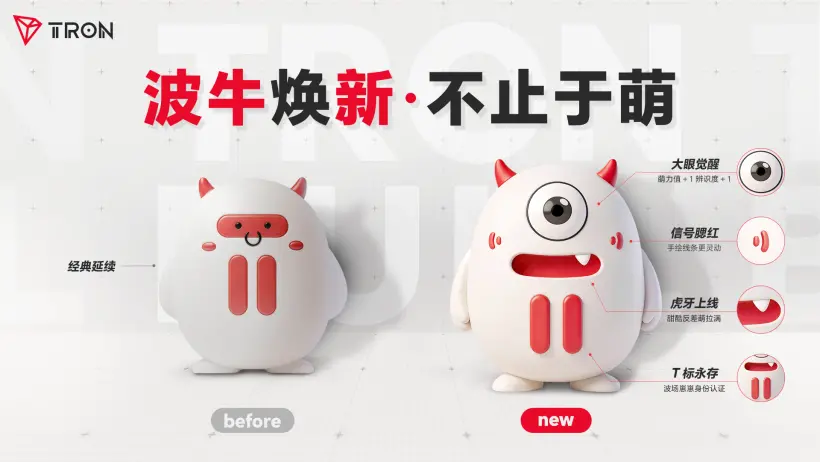
On June 23rd, TRON completed a significant upgrade to its official mascot, Bo Niu. The revamped character features larger, brighter eyes, more expressive facial details, and a clearer "T" structural motif, while retaining its signature red-and-white color scheme and horned design. This refresh aims to enhance Bo Niu's approachability, emotional range, and versatility for use across social media, community interactions, offline events, and branded merchandise. The redesign focuses on creating a stronger first impression. A more open facial structure with distinct, expressive eyes and the addition of a mouth with a small fang make the character friendlier and more suitable for dynamic content like animations and emojis. Subtle brand elements are integrated, such as stylized cheek lines inspired by "signal" icons, referencing the "wave" in "TRON," and a "T" shape formed by its smile and chest markings. Bo Niu has also been given a more defined personality as "TRON's Chief Luck Officer," with traits like being playful and sweet. This persona provides a more accessible and emotionally resonant entry point to the TRON brand, contrasting with often technical Web3 narratives. This mascot upgrade is part of TRON's ongoing effort to build a comprehensive and extensible visual identity system, following its recent logo refresh. Bo Niu is positioned as a key asset to connect with users, foster community, and convey brand warmth in everyday contexts.

marsbitHá 7m

From Logo to Bo Niu: TRON Further Perfects Its Brand Visual Assets

marsbitHá 7m

TRON Refreshes the Bull Image, Creating a More Approachable Brand Character

TRON's official mascot "BONiu" (Wave Bull) has received a comprehensive visual upgrade. Retaining its core red-and-white color scheme, horned silhouette, and brand DNA, the refreshed character features larger, brighter eyes, more expressive facial details including a mouth with a small fang, and enhanced emotive capabilities. The redesign aims to strengthen the mascot's亲和力, emotional expressiveness, and adaptability across various scenarios. Key updates include a clearer facial structure for instant recognition, a simplified and more intuitive五官 design, and the integration of subtle brand language. The cheek blushes are now inspired by a "signal" icon, while the smile and chest lines form a stable "T" structure, creating a cohesive超级符号 for the brand. The character has also been equipped with a 12-phoneme lip-sync system to support future动画 and interactive content. Beyond its visual role, BONiu's persona has been enriched. Now titled "TRON's Chief Luck Officer," it carries playful personality tags like "foodie enthusiast" and "full-of-tricks," allowing it to engage with the community in a more approachable and relatable manner. This update provides a lower-barrier, emotionally warm entry point for users amidst the often technical and abstract narratives of Web3. This mascot revamp is part of TRON's ongoing effort to refine its visual asset system, following the earlier logo update. By evolving from a static visual into a dynamic, expressive brand角色, the new BONiu is positioned to become a key asset for connecting with users, building brand记忆, and conveying TRON's personality across社交传播, community互动,线下活动, and merchandise.

链捕手Há 24m

TRON Refreshes the Bull Image, Creating a More Approachable Brand Character

链捕手Há 24m

With Labour Changing Leaders, Is the Long-Suppressed UK Crypto Market About to Turn Around?

Labour leader change: Hope for UK crypto market? With Keir Starmer's resignation as Prime Minister and Labour leader, a leadership contest has begun. Andy Burnham, the former Mayor of Greater Manchester and now the overwhelming favourite to succeed, has sparked cautious optimism within the UK cryptocurrency industry. Industry figures hope Burnham, seen as more receptive to digital assets than much of the Labour establishment, could shift the party's traditionally harder line. The leadership transition is expected to be swift, with prediction markets like Polymarket assigning a 97% probability to Burnham becoming the next Prime Minister. However, this political shift comes as a comprehensive regulatory framework for crypto, established by law earlier this year, is in its final implementation phase. The Financial Conduct Authority (FCA) is finalizing detailed rules covering trading, custody, stablecoins, and market abuse, with the full regime set to go live in October 2027. While a new Prime Minister can reshuffle ministers and adjust policy priorities, the core regulatory architecture is now law and unlikely to be fundamentally overturned without significant, deliberate government intervention. The main industry hope is that a Burnham government, focusing on economic growth, will ensure the FCA's implementation is pragmatic and growth-oriented. Industry advocates seek proportionate capital requirements, a streamlined licensing process, and clear rules for staking and stablecoins. They argue that embracing the crypto sector could attract investment and listings to London's struggling markets. Despite the optimism, concerns remain that regulatory implementation may still be influenced by more sceptical factions within the Labour party.

Foresight NewsHá 52m

With Labour Changing Leaders, Is the Long-Suppressed UK Crypto Market About to Turn Around?

Foresight NewsHá 52m

Trading

Spot
Futuros

Artigos em Destaque

O que é GROK AI

Grok AI: Revolucionar a Tecnologia Conversacional na Era Web3 Introdução No panorama em rápida evolução da inteligência artificial, a Grok AI destaca-se como um projeto notável que liga os domínios da tecnologia avançada e da interação com o utilizador. Desenvolvida pela xAI, uma empresa liderada pelo renomado empreendedor Elon Musk, a Grok AI procura redefinir a forma como interagimos com a inteligência artificial. À medida que o movimento Web3 continua a florescer, a Grok AI visa aproveitar o poder da IA conversacional para responder a consultas complexas, proporcionando aos utilizadores uma experiência que é não apenas informativa, mas também divertida. O que é a Grok AI? A Grok AI é um sofisticado chatbot de IA conversacional projetado para interagir com os utilizadores de forma dinâmica. Ao contrário de muitos sistemas de IA tradicionais, a Grok AI abraça uma gama mais ampla de perguntas, incluindo aquelas tipicamente consideradas inadequadas ou fora das respostas padrão. Os principais objetivos do projeto incluem: Raciocínio Fiável: A Grok AI enfatiza o raciocínio de senso comum para fornecer respostas lógicas com base na compreensão contextual. Supervisão Escalável: A integração de assistência de ferramentas garante que as interações dos utilizadores sejam monitorizadas e otimizadas para qualidade. Verificação Formal: A segurança é primordial; a Grok AI incorpora métodos de verificação formal para aumentar a fiabilidade das suas saídas. Compreensão de Longo Contexto: O modelo de IA destaca-se na retenção e recordação de um extenso histórico de conversas, facilitando discussões significativas e contextualizadas. Robustez Adversarial: Ao focar na melhoria das suas defesas contra entradas manipuladas ou maliciosas, a Grok AI visa manter a integridade das interações dos utilizadores. Em essência, a Grok AI não é apenas um dispositivo de recuperação de informações; é um parceiro conversacional imersivo que incentiva um diálogo dinâmico. Criador da Grok AI A mente por trás da Grok AI não é outra senão Elon Musk, um indivíduo sinónimo de inovação em vários campos, incluindo automóvel, viagens espaciais e tecnologia. Sob a égide da xAI, uma empresa focada em avançar a tecnologia de IA de maneiras benéficas, a visão de Musk visa reformular a compreensão das interações com a IA. A liderança e a ética fundacional são profundamente influenciadas pelo compromisso de Musk em ultrapassar os limites tecnológicos. Investidores da Grok AI Embora os detalhes específicos sobre os investidores que apoiam a Grok AI permaneçam limitados, é reconhecido publicamente que a xAI, a incubadora do projeto, é fundada e apoiada principalmente pelo próprio Elon Musk. As anteriores empreitadas e participações de Musk fornecem um forte apoio, reforçando ainda mais a credibilidade e o potencial de crescimento da Grok AI. No entanto, até agora, informações sobre fundações ou organizações de investimento adicionais que apoiam a Grok AI não estão prontamente acessíveis, marcando uma área para exploração futura potencial. Como Funciona a Grok AI? A mecânica operacional da Grok AI é tão inovadora quanto a sua estrutura conceptual. O projeto integra várias tecnologias de ponta que facilitam as suas funcionalidades únicas: Infraestrutura Robusta: A Grok AI é construída utilizando Kubernetes para orquestração de contêineres, Rust para desempenho e segurança, e JAX para computação numérica de alto desempenho. Este trio assegura que o chatbot opere de forma eficiente, escale eficazmente e sirva os utilizadores prontamente. Acesso a Conhecimento em Tempo Real: Uma das características distintivas da Grok AI é a sua capacidade de aceder a dados em tempo real através da plataforma X—anteriormente conhecida como Twitter. Esta capacidade concede à IA acesso às informações mais recentes, permitindo-lhe fornecer respostas e recomendações oportunas que outros modelos de IA poderiam perder. Dois Modos de Interação: A Grok AI oferece aos utilizadores a escolha entre “Modo Divertido” e “Modo Regular”. O Modo Divertido permite um estilo de interação mais lúdico e humorístico, enquanto o Modo Regular foca em fornecer respostas precisas e exatas. Esta versatilidade assegura uma experiência adaptada que atende a várias preferências dos utilizadores. Em essência, a Grok AI combina desempenho com envolvimento, criando uma experiência que é tanto enriquecedora quanto divertida. Cronologia da Grok AI A jornada da Grok AI é marcada por marcos fundamentais que refletem as suas fases de desenvolvimento e implementação: Desenvolvimento Inicial: A fase fundamental da Grok AI ocorreu ao longo de aproximadamente dois meses, durante os quais o treinamento inicial e o ajuste do modelo foram realizados. Lançamento Beta do Grok-2: Numa evolução significativa, o beta do Grok-2 foi anunciado. Este lançamento introduziu duas versões do chatbot—Grok-2 e Grok-2 mini—cada uma equipada com capacidades para conversar, programar e raciocinar. Acesso Público: Após o seu desenvolvimento beta, a Grok AI tornou-se disponível para os utilizadores da plataforma X. Aqueles com contas verificadas por um número de telefone e ativas há pelo menos sete dias podem aceder a uma versão limitada, tornando a tecnologia disponível para um público mais amplo. Esta cronologia encapsula o crescimento sistemático da Grok AI desde a sua concepção até ao envolvimento público, enfatizando o seu compromisso com a melhoria contínua e a interação com o utilizador. Principais Características da Grok AI A Grok AI abrange várias características principais que contribuem para a sua identidade inovadora: Integração de Conhecimento em Tempo Real: O acesso a informações atuais e relevantes diferencia a Grok AI de muitos modelos estáticos, permitindo uma experiência de utilizador envolvente e precisa. Estilos de Interação Versáteis: Ao oferecer modos de interação distintos, a Grok AI atende a várias preferências dos utilizadores, convidando à criatividade e personalização na conversa com a IA. Base Tecnológica Avançada: A utilização de Kubernetes, Rust e JAX fornece ao projeto uma estrutura sólida para garantir fiabilidade e desempenho ótimo. Consideração de Discurso Ético: A inclusão de uma função de geração de imagens demonstra o espírito inovador do projeto. No entanto, também levanta considerações éticas em torno dos direitos autorais e da representação respeitosa de figuras reconhecíveis—uma discussão em curso dentro da comunidade de IA. Conclusão Como uma entidade pioneira no domínio da IA conversacional, a Grok AI encapsula o potencial para experiências transformadoras do utilizador na era digital. Desenvolvida pela xAI e impulsionada pela abordagem visionária de Elon Musk, a Grok AI integra conhecimento em tempo real com capacidades avançadas de interação. Esforça-se por ultrapassar os limites do que a inteligência artificial pode alcançar, mantendo um foco nas considerações éticas e na segurança do utilizador. A Grok AI não apenas incorpora o avanço tecnológico, mas também representa um novo paradigma de conversas no panorama Web3, prometendo envolver os utilizadores com conhecimento hábil e interação lúdica. À medida que o projeto continua a evoluir, ele permanece como um testemunho do que a interseção da tecnologia, criatividade e interação humana pode alcançar.

485 Visualizações TotaisPublicado em {updateTime}Atualizado em 2024.12.26

O que é GROK AI

O que é ERC AI

Euruka Tech: Uma Visão Geral do $erc ai e as suas Ambições no Web3 Introdução No panorama em rápida evolução da tecnologia blockchain e das aplicações descentralizadas, novos projetos surgem frequentemente, cada um com objetivos e metodologias únicas. Um desses projetos é a Euruka Tech, que opera no vasto domínio das criptomoedas e do Web3. O foco principal da Euruka Tech, particularmente do seu token $erc ai, é apresentar soluções inovadoras concebidas para aproveitar as capacidades crescentes da tecnologia descentralizada. Este artigo tem como objetivo fornecer uma visão abrangente da Euruka Tech, uma exploração das suas metas, funcionalidade, a identidade do seu criador, potenciais investidores e a sua importância no contexto mais amplo do Web3. O que é a Euruka Tech, $erc ai? A Euruka Tech é caracterizada como um projeto que aproveita as ferramentas e funcionalidades oferecidas pelo ambiente Web3, focando na integração da inteligência artificial nas suas operações. Embora os detalhes específicos sobre a estrutura do projeto sejam um tanto elusivos, ele é concebido para melhorar o envolvimento dos utilizadores e automatizar processos no espaço cripto. O projeto visa criar um ecossistema descentralizado que não só facilita transações, mas também incorpora funcionalidades preditivas através da inteligência artificial, daí a designação do seu token, $erc ai. O objetivo é fornecer uma plataforma intuitiva que facilite interações mais inteligentes e um processamento eficiente de transações dentro da crescente esfera do Web3. Quem é o Criador da Euruka Tech, $erc ai? Neste momento, a informação sobre o criador ou a equipa fundadora da Euruka Tech permanece não especificada e algo opaca. Esta ausência de dados levanta preocupações, uma vez que o conhecimento sobre o histórico da equipa é frequentemente essencial para estabelecer credibilidade no setor blockchain. Portanto, categorizamos esta informação como desconhecida até que detalhes concretos sejam disponibilizados no domínio público. Quem são os Investidores da Euruka Tech, $erc ai? De forma semelhante, a identificação de investidores ou organizações de apoio para o projeto Euruka Tech não é prontamente fornecida através da pesquisa disponível. Um aspeto que é crucial para potenciais partes interessadas ou utilizadores que consideram envolver-se com a Euruka Tech é a garantia que vem de parcerias financeiras estabelecidas ou apoio de empresas de investimento respeitáveis. Sem divulgações sobre afiliações de investimento, é difícil tirar conclusões abrangentes sobre a segurança financeira ou a longevidade do projeto. Em linha com a informação encontrada, esta seção também se encontra no estado de desconhecido. Como funciona a Euruka Tech, $erc ai? Apesar da falta de especificações técnicas detalhadas para a Euruka Tech, é essencial considerar as suas ambições inovadoras. O projeto procura aproveitar o poder computacional da inteligência artificial para automatizar e melhorar a experiência do utilizador no ambiente das criptomoedas. Ao integrar IA com tecnologia blockchain, a Euruka Tech visa fornecer funcionalidades como negociações automatizadas, avaliações de risco e interfaces de utilizador personalizadas. A essência inovadora da Euruka Tech reside no seu objetivo de criar uma conexão fluida entre os utilizadores e as vastas possibilidades apresentadas pelas redes descentralizadas. Através da utilização de algoritmos de aprendizagem automática e IA, visa minimizar os desafios enfrentados por utilizadores de primeira viagem e agilizar as experiências transacionais dentro do quadro do Web3. Esta simbiose entre IA e blockchain sublinha a importância do token $erc ai, que se apresenta como uma ponte entre interfaces de utilizador tradicionais e as capacidades avançadas das tecnologias descentralizadas. Cronologia da Euruka Tech, $erc ai Infelizmente, devido à informação limitada disponível sobre a Euruka Tech, não conseguimos apresentar uma cronologia detalhada dos principais desenvolvimentos ou marcos na jornada do projeto. Esta cronologia, tipicamente inestimável para traçar a evolução de um projeto e compreender a sua trajetória de crescimento, não está atualmente disponível. À medida que informações sobre eventos notáveis, parcerias ou adições funcionais se tornem evidentes, atualizações certamente aumentarão a visibilidade da Euruka Tech na esfera cripto. Esclarecimento sobre Outros Projetos “Eureka” É importante abordar que múltiplos projetos e empresas partilham uma nomenclatura semelhante com “Eureka.” A pesquisa identificou iniciativas como um agente de IA da NVIDIA Research, que se concentra em ensinar robôs a realizar tarefas complexas utilizando métodos generativos, bem como a Eureka Labs e a Eureka AI, que melhoram a experiência do utilizador na educação e na análise de serviços ao cliente, respetivamente. No entanto, estes projetos são distintos da Euruka Tech e não devem ser confundidos com os seus objetivos ou funcionalidades. Conclusão A Euruka Tech, juntamente com o seu token $erc ai, representa um jogador promissor, mas atualmente obscuro, dentro do panorama do Web3. Embora os detalhes sobre o seu criador e investidores permaneçam não divulgados, a ambição central de combinar inteligência artificial com tecnologia blockchain destaca-se como um ponto focal de interesse. As abordagens únicas do projeto em promover o envolvimento do utilizador através da automação avançada podem diferenciá-lo à medida que o ecossistema Web3 avança. À medida que o mercado cripto continua a evoluir, as partes interessadas devem manter um olhar atento sobre os avanços em torno da Euruka Tech, uma vez que o desenvolvimento de inovações documentadas, parcerias ou um roteiro definido pode apresentar oportunidades significativas no futuro próximo. Neste momento, aguardamos por insights mais substanciais que possam desvendar o potencial da Euruka Tech e a sua posição no competitivo panorama cripto.

527 Visualizações TotaisPublicado em {updateTime}Atualizado em 2025.01.02

O que é ERC AI

O que é DUOLINGO AI

DUOLINGO AI: Integrar a Aprendizagem de Línguas com Inovação Web3 e IA Numa era em que a tecnologia transforma a educação, a integração da inteligência artificial (IA) e das redes blockchain anuncia uma nova fronteira para a aprendizagem de línguas. Apresentamos DUOLINGO AI e a sua criptomoeda associada, $DUOLINGO AI. Este projeto aspira a unir o poder educativo das principais plataformas de aprendizagem de línguas com os benefícios da tecnologia descentralizada Web3. Este artigo explora os principais aspectos do DUOLINGO AI, analisando os seus objetivos, estrutura tecnológica, desenvolvimento histórico e potencial futuro, mantendo a clareza entre o recurso educativo original e esta iniciativa independente de criptomoeda. Visão Geral do DUOLINGO AI No seu cerne, DUOLINGO AI procura estabelecer um ambiente descentralizado onde os alunos podem ganhar recompensas criptográficas por alcançar marcos educativos em proficiência linguística. Ao aplicar contratos inteligentes, o projeto visa automatizar processos de verificação de habilidades e alocação de tokens, aderindo aos princípios do Web3 que enfatizam a transparência e a propriedade do utilizador. O modelo diverge das abordagens tradicionais de aquisição de línguas ao apoiar-se fortemente numa estrutura de governança orientada pela comunidade, permitindo que os detentores de tokens sugiram melhorias ao conteúdo dos cursos e à distribuição de recompensas. Alguns dos objetivos notáveis do DUOLINGO AI incluem: Aprendizagem Gamificada: O projeto integra conquistas em blockchain e tokens não fungíveis (NFTs) para representar níveis de proficiência linguística, promovendo a motivação através de recompensas digitais envolventes. Criação de Conteúdo Descentralizada: Abre caminhos para educadores e entusiastas de línguas contribuírem com os seus cursos, facilitando um modelo de partilha de receitas que beneficia todos os colaboradores. Personalização Através de IA: Ao empregar modelos avançados de aprendizagem de máquina, o DUOLINGO AI personaliza as lições para se adaptar ao progresso de aprendizagem individual, semelhante às características adaptativas encontradas em plataformas estabelecidas. Criadores do Projeto e Governança A partir de abril de 2025, a equipa por trás do $DUOLINGO AI permanece pseudónima, uma prática frequente no panorama descentralizado das criptomoedas. Esta anonimidade visa promover o crescimento coletivo e o envolvimento das partes interessadas, em vez de se concentrar em desenvolvedores individuais. O contrato inteligente implementado na blockchain Solana indica o endereço da carteira do desenvolvedor, o que significa o compromisso com a transparência em relação às transações, apesar da identidade dos criadores ser desconhecida. De acordo com o seu roteiro, o DUOLINGO AI pretende evoluir para uma Organização Autónoma Descentralizada (DAO). Esta estrutura de governança permite que os detentores de tokens votem em questões críticas, como implementações de funcionalidades e alocação de tesouraria. Este modelo alinha-se com a ética de empoderamento comunitário encontrada em várias aplicações descentralizadas, enfatizando a importância da tomada de decisão coletiva. Investidores e Parcerias Estratégicas Atualmente, não existem investidores institucionais ou capitalistas de risco publicamente identificáveis ligados ao $DUOLINGO AI. Em vez disso, a liquidez do projeto origina-se principalmente de trocas descentralizadas (DEXs), marcando um contraste acentuado com as estratégias de financiamento das empresas tradicionais de tecnologia educacional. Este modelo de base indica uma abordagem orientada pela comunidade, refletindo o compromisso do projeto com a descentralização. No seu whitepaper, o DUOLINGO AI menciona a formação de colaborações com “plataformas de educação blockchain” não especificadas, com o objetivo de enriquecer a sua oferta de cursos. Embora parcerias específicas ainda não tenham sido divulgadas, estes esforços colaborativos sugerem uma estratégia para misturar inovação em blockchain com iniciativas educativas, expandindo o acesso e o envolvimento dos utilizadores em diversas vias de aprendizagem. Arquitetura Tecnológica Integração de IA O DUOLINGO AI incorpora dois componentes principais impulsionados por IA para melhorar as suas ofertas educativas: Motor de Aprendizagem Adaptativa: Este motor sofisticado aprende a partir das interações dos utilizadores, semelhante a modelos proprietários de grandes plataformas educativas. Ele ajusta dinamicamente a dificuldade das lições para abordar desafios específicos dos alunos, reforçando áreas fracas através de exercícios direcionados. Agentes Conversacionais: Ao empregar chatbots alimentados por GPT-4, o DUOLINGO AI oferece uma plataforma para os utilizadores se envolverem em conversas simuladas, promovendo uma experiência de aprendizagem de línguas mais interativa e prática. Infraestrutura Blockchain Construído na blockchain Solana, o $DUOLINGO AI utiliza uma estrutura tecnológica abrangente que inclui: Contratos Inteligentes de Verificação de Habilidades: Esta funcionalidade atribui automaticamente tokens aos utilizadores que passam com sucesso em testes de proficiência, reforçando a estrutura de incentivos para resultados de aprendizagem genuínos. Emblemas NFT: Estes tokens digitais significam vários marcos que os alunos alcançam, como completar uma seção do seu curso ou dominar habilidades específicas, permitindo-lhes negociar ou exibir as suas conquistas digitalmente. Governança DAO: Membros da comunidade com tokens podem participar na governança votando em propostas-chave, facilitando uma cultura participativa que incentiva a inovação nas ofertas de cursos e funcionalidades da plataforma. Cronologia Histórica 2022–2023: Conceituação O trabalho preliminar para o DUOLINGO AI começa com a criação de um whitepaper, destacando a sinergia entre os avanços em IA na aprendizagem de línguas e o potencial descentralizado da tecnologia blockchain. 2024: Lançamento Beta Um lançamento beta limitado introduz ofertas em línguas populares, recompensando os primeiros utilizadores com incentivos em tokens como parte da estratégia de envolvimento comunitário do projeto. 2025: Transição para DAO Em abril, ocorre um lançamento completo da mainnet com a circulação de tokens, promovendo discussões comunitárias sobre possíveis expansões para línguas asiáticas e outros desenvolvimentos de cursos. Desafios e Direções Futuras Obstáculos Técnicos Apesar dos seus objetivos ambiciosos, o DUOLINGO AI enfrenta desafios significativos. A escalabilidade continua a ser uma preocupação constante, particularmente no equilíbrio dos custos associados ao processamento de IA e à manutenção de uma rede descentralizada responsiva. Além disso, garantir a criação e moderação de conteúdo de qualidade num ambiente descentralizado apresenta complexidades na manutenção dos padrões educativos. Oportunidades Estratégicas Olhando para o futuro, o DUOLINGO AI tem o potencial de aproveitar parcerias de micro-certificação com instituições académicas, proporcionando validações verificadas em blockchain das habilidades linguísticas. Além disso, a expansão cross-chain poderia permitir que o projeto acedesse a bases de utilizadores mais amplas e a ecossistemas de blockchain adicionais, melhorando a sua interoperabilidade e alcance. Conclusão DUOLINGO AI representa uma fusão inovadora de inteligência artificial e tecnologia blockchain, apresentando uma alternativa focada na comunidade aos sistemas tradicionais de aprendizagem de línguas. Embora o seu desenvolvimento pseudónimo e o modelo económico emergente tragam certos riscos, o compromisso do projeto com a aprendizagem gamificada, educação personalizada e governança descentralizada ilumina um caminho a seguir para a tecnologia educativa no domínio do Web3. À medida que a IA continua a avançar e o ecossistema blockchain evolui, iniciativas como o DUOLINGO AI poderão redefinir a forma como os utilizadores interagem com a educação linguística, empoderando comunidades e recompensando o envolvimento através de mecanismos de aprendizagem inovadores.

458 Visualizações TotaisPublicado em {updateTime}Atualizado em 2025.04.11

O que é DUOLINGO AI

Discussões

Bem-vindo à Comunidade HTX. Aqui, pode manter-se informado sobre os mais recentes desenvolvimentos da plataforma e obter acesso a análises profissionais de mercado. As opiniões dos utilizadores sobre o preço de AI (AI) são apresentadas abaixo.

活动图片