2026-08-16 Domingo

Notícias de cripto - Página 719

Mantenha-se a par do mercado de cripto. Notícias em tempo real, análises, preços, histórias em alta e análise de especialistas — tudo num só lugar.

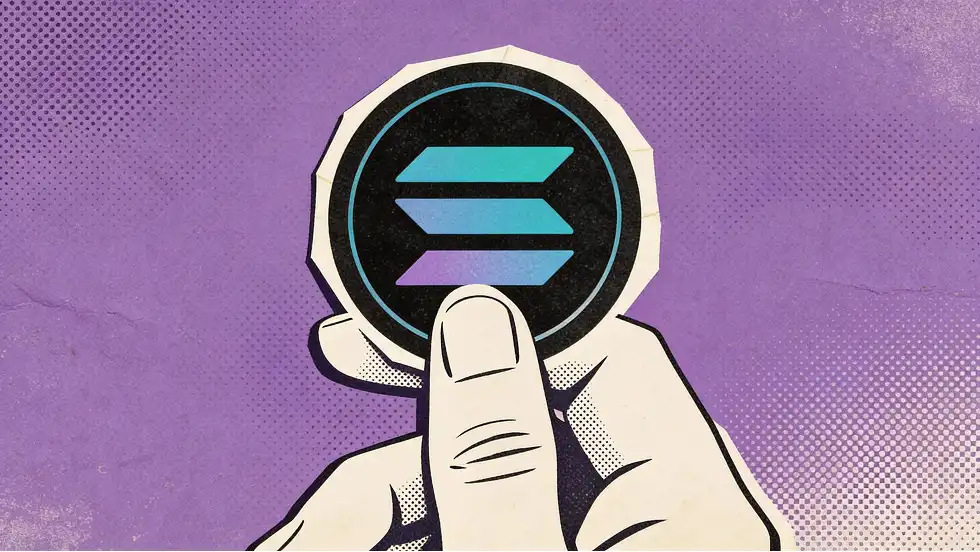
Solana Q1 Report: Revenue Plunges 68% Year-on-Year, Developers Decrease by 30%

Solana Q1 2026 Report: Key Metrics Show Significant Decline Amid Market Reset Solana experienced a substantial downturn in Q1 2026, with key performance indicators reflecting a broader market cooling. Total network revenue (REV) fell to $89.9 million, down 68% year-over-year (YoY) and 1.4% quarter-over-quarter (QoQ). This decline was driven by reduced speculative activity, which had previously fueled the network during the 2024/2025 bull market. Key revenue components saw mixed results: base fees dropped 8.7% QoQ, Jito tips (MEV) fell 19.7%, priority fees rose 23%, and vote fees declined 44.5%. The annualized real yield for stakers was just 0.17%, down 67% YoY. Network GDP, generated by top applications, fell 7% QoQ to $451 million. Pump Fun emerged as a standout, generating $103 million (up 3% QoQ), surpassing Solana's L1 revenue. However, daily active addresses averaged 2.4 million, down 4.8% YoY. Stablecoin supply on Solana reached $15.9 billion, down 2.7% QoQ but up 18% YoY. USDC and USDT remained dominant. DEX volumes averaged $3.2 billion daily, with private DEXs now accounting for 60% of all volume. The network's net dilution rate was 4.38%, while the cost to produce $1 of REV was $8.10, up 93% YoY. The number of new tokens created on launchpads grew 42% QoQ to 3 million, with Pump Fun dominating 85% of this market. Despite the downturn, Solana's core strengths remain: its position as a hub for retail trading apps, potential in perpetual markets, and growing use in stablecoin-based fintech applications, particularly in Latin America. However, developer activity declined 32% YoY, slightly worse than Ethereum's 29% drop. The network must now focus on attracting traditional finance, competing in perpetual markets, and sustaining developer ecosystem growth to drive the next expansion cycle.

marsbit04/20 10:42

Solana Q1 Report: Revenue Plunges 68% Year-on-Year, Developers Decrease by 30%

marsbit04/20 10:42

When Top Crypto VCs Are Shrinking Across the Board, Why Has This Firm Grown by 150%?

In a declining crypto market where top venture capital firms like Paradigm, Pantera, a16z crypto, and Multicoin saw significant reductions in assets under management (AUM), Haun Ventures stood out with a 150% growth, increasing its AUM from $1 billion to $2.5 billion by 2025. Founded by Katie Haun, a former federal prosecutor and a16z crypto veteran, the firm combines regulatory insight with investment discipline. Initially investing heavily in NFTs during the 2022 hype, Haun Ventures quickly pivoted as the bubble burst, adopting a cautious approach with only six investments over the following 18 months. The firm balanced its portfolio between digital tokens and traditional equity, allocating about 30% to liquid tokens like Bitcoin and Ethereum, which contributed significantly to returns as Bitcoin’s price surged. By 2024, Haun Ventures shifted focus to B2B solutions in payments and developer infrastructure, leading over 56% of its investment rounds—the highest rate among top VCs. This strategy paid off with several high-multiple exits via acquisitions, such as Bridge (acquired at $1.1 billion from a $200 million valuation) and BVNK (acquired at $1.8 billion from a $750 million valuation). The firm’s success is attributed to its regulatory foresight, adaptive strategy, high-conviction lead investments, and emphasis on real-world utility and exit efficiency—making it a standout performer during the crypto downturn.

marsbit04/20 10:32

When Top Crypto VCs Are Shrinking Across the Board, Why Has This Firm Grown by 150%?

marsbit04/20 10:32

A Transformative Era for DeFi Collateral: Exploring RWA as the New Composable Infrastructure for DeFi

DeFi Collateral Transformation: RWA Emerges as Composable Infrastructure The tokenized Real-World Asset (RWA) market has reached $27 billion, yet only about $2.7 billion is actively used as collateral in DeFi lending markets. This growth was accelerated by key 2025-2026 regulatory milestones in the U.S., including the GENIUS Act for stablecoins and the classification of major blockchain tokens as digital commodities. The composition of tokenized assets differs significantly from those actively used in DeFi. U.S. Treasuries dominate tokenized AUM (48.5%) but represent only 2% of DeFi deposits. Conversely, credit assets (17% of AUM) constitute 80% of deposits, driven by yield differentials that enable profitable leverage strategies. Reinsurance is emerging as a new composable asset class, with over 80% of its tokenized supply active in DeFi. The market is evolving in real-time. As yield spreads compress, collateral diversification is increasing, evidenced by Aave Horizon's shifting composition. Permissionless access is a critical driver for distribution, as demonstrated by Maple Finance's 'syrup' tokens, which have been composably deployed across multiple chains and protocols without requiring permissions. In conclusion, while the absolute value of RWA in DeFi is still small, its rapid growth rate, the divergence between tokenized and utilized assets, and the power of permissionless composability are the key trends shaping this new infrastructure layer.

marsbit04/20 10:22

A Transformative Era for DeFi Collateral: Exploring RWA as the New Composable Infrastructure for DeFi

marsbit04/20 10:22

When Wallets Start Embedding AI Agent: The New Interaction Paradigm of ERC-8211, Why Is It Worth Attention?

The article discusses ERC-8211, a new Ethereum standard developed by Biconomy and the Ethereum Foundation, aimed at enabling dynamic, multi-step on-chain execution for AI agents and complex DeFi workflows. Currently, AI agents can plan multi-step operations (e.g., swapping ETH for USDC, bridging, and depositing into a protocol), but execution fails due to static parameters in existing batch processing standards like ERC-4337. These static batches freeze values (e.g., swap amounts) at signing, making them vulnerable to slippage, gas changes, and chain state shifts, often resulting in partial or failed transactions. ERC-8211 introduces a programmatic approach ("From transactions to programs") with three primitives: - **Fetchers**: Retrieve real-time on-chain values (e.g., current balance) during execution. - **Constraints**: Enforce conditions (e.g., minimum output amount) before proceeding. - **Predicates**: Act as gatekeepers between steps (e.g., wait for cross-chain funds to arrive). This allows atomic execution of multi-step transactions with dynamic, condition-based flow, reducing failure risks and idle capital. The standard is compatible with account abstraction (e.g., ERC-4337) and shifts wallets from mere signers to interpreters of intent-based programs, enhancing security and usability for AI-driven DeFi. It represents the next evolution in on-chain interaction, enabling one signature to execute a dynamic, outcome-oriented program.

marsbit04/20 10:21

When Wallets Start Embedding AI Agent: The New Interaction Paradigm of ERC-8211, Why Is It Worth Attention?

marsbit04/20 10:21

Ant Digital Tech Proposes New Architecture for Agent Economy, Covering Four Layers: Identity, Payment, Risk Control, and Compliance

Ant Digital Technologies (Ant Digital) has introduced a new architectural framework for the agentic economy, named the "4R Full-Stack Architecture," at the Hong Kong Web3 Festival. The framework is designed to address four core challenges in AI agent operations: identity, payment, risk control, and compliance. The four layers include: - **Agentic Runtime**, featuring DTClaw with the CARLI security model to enforce behavioral constraints and ensure controllability and auditability; - **Payment Rails**, which provide on-chain payment channels supporting smart decision-making, verifiable credentials, instant settlement, and cross-chain asset transfers; - **Agent Registry**, leveraging DIDs and the ERC-8004 standard to assign verifiable on-chain identities to agents; - **Root Infrastructure**, built on Jovay Layer2 and ZKVM technology to enable high-speed micro-payments and trusted off-chain computation with on-chain verification. According to CTO Yan Ying, the architecture aims to resolve fundamental gaps in the current agent economy—such as execution vulnerabilities, identity issues, payment barriers, and trust deficits—by redesigning underlying infrastructure rather than applying superficial fixes. The initiative builds on Ant Digital’s extensive experience in financial-grade security, privacy computing, and blockchain.

marsbit04/20 09:24

Ant Digital Tech Proposes New Architecture for Agent Economy, Covering Four Layers: Identity, Payment, Risk Control, and Compliance

marsbit04/20 09:24

The $290 Million Deficit: A Three-Way Game Between Aave, L0, and Kelp—Who Should Foot the Bill?

An incident involving the theft of 116,500 rsETH (worth approximately $290 million) from Kelp DAO’s cross-chain bridge contract has triggered a complex dispute over responsibility and compensation among Kelp DAO, LayerZero, and Aave. The attack occurred due to a compromised RPC provider used by LayerZero’s Decentralized Verifier Network (DVN). Since Kelp DAO’s bridge used a 1/1 DVN configuration—a single point of failure—the attacker successfully forged a cross-chain message, leading to the unauthorized release of rsETH tokens from the mainnet. These genuine tokens were then deposited into Aave and other lending platforms to borrow WETH, enabling the attacker to exit with the funds. Responsibility is attributed primarily to Kelp DAO for its risky 1/1 DVN setup. LayerZero bears secondary responsibility for permitting such a vulnerable configuration in its protocol layer. Aave also shares indirect blame for over-collateralizing rsETH and other Liquid Restaking Token (LRT) assets without adequate ongoing risk oversight. Kelp DAO lacks sufficient funds to cover the loss, shifting focus to the deeper-pocketed players: LayerZero, whose cross-chain ecosystem and reputation are at risk, and Aave, which faces massive bad loans and declining Total Value Locked (TVL). Aave has asserted that mainnet rsETH remains fully backed, implying it expects Kelp DAO to allow redemption of underlying ETH. This approach would preserve Aave’s mainnet positions but invalidate Layer2 rsETH, damaging LayerZero’s cross-chain credibility. Potential solutions include: - A universal 18.5% haircut on all rsETH holders, causing significant Aave bad debt. - Writing off Layer2 rsETH entirely, protecting Aave mainnet but harming LayerZero and Kelp DAO. - Negotiating a bounty with the hacker for partial fund return. - A joint bailout, possibly led by LayerZero’s ecosystem fund, given its long-term stake in the cross-chain ecosystem. The situation remains unresolved as the parties negotiate, but prolonged delay risks broader DeFi instability, including potential liquidity crises and loss of confidence in LRT and cross-chain infrastructures.

Odaily星球日报04/20 08:52

The $290 Million Deficit: A Three-Way Game Between Aave, L0, and Kelp—Who Should Foot the Bill?

Odaily星球日报04/20 08:52

活动图片