2026-08-13 Quinta

Notícias de cripto - Página 557

Mantenha-se a par do mercado de cripto. Notícias em tempo real, análises, preços, histórias em alta e análise de especialistas — tudo num só lugar.

A Quick Look at the Latest Moves of the 24-Year-Old 'AI Stock God': Sixty Percent of the Portfolio Hedging Against Semiconductor Downturn

24-year-old AI investing prodigy Leopold Aschenbrenner's fund, Situational Awareness LP, has disclosed its Q1 2026 13F holdings. The fund's total portfolio nominal value surged 148% to $13.7 billion, driven by both investment gains and significant new capital inflows. The most striking move was the establishment of massive short-term hedges against potential volatility in the AI semiconductor sector. Over 60% of the fund's nominal exposure is now in put options (bets on declines) targeting major AI hardware stocks like NVIDIA (NVDA), VanEck Semiconductor ETF (SMH), Broadcom (AVGO), and AMD. Notably, the fund also holds call options (bets on rises) on some names like Micron (MU) and TSMC, indicating it expects extreme price swings in these stocks. Alongside these hedges, the fund remains a long-term bull on AI infrastructure. It significantly increased its equity stakes in companies like GPU cloud provider CoreWeave (CRWV) and added to positions in power/energy infrastructure firms like Bloom Energy (BE), albeit after taking substantial profits on the latter. The fund also exited positions in optical communication hardware (LITE, COHR) and reduced leverage by clearing out large call option positions on Intel and CoreWeave. In essence, the portfolio reflects a dual strategy: cautious on near-term semiconductor valuations and potential over-extension, while maintaining a conviction that the true long-term bottlenecks and value will be in the underlying infrastructure powering the AI revolution—such as energy, data centers, and compute availability.

marsbit05/18 13:31

A Quick Look at the Latest Moves of the 24-Year-Old 'AI Stock God': Sixty Percent of the Portfolio Hedging Against Semiconductor Downturn

marsbit05/18 13:31

A Quick Look at the Latest Portfolio of the 24-Year-Old 'AI Stock God': 60% Allocation Hedges Against Semiconductor Downturn

Summary: The article analyzes the latest 13F filing from "AI stock prodigy" Leopold Aschenbrenner's fund, Situational Awareness LP, for Q1 2026. The fund's holdings surged to $13.7 billion, with a significant 32.5% net inflow. Key portfolio adjustments reveal a dual strategy: * **Hedging Semiconductor Downturn:** Over 60% of the fund's *notional value* is allocated to massive put options on major AI semiconductor and hardware stocks (e.g., NVDA, AVGO, AMD, SMH ETF). This acts as a high-leverage hedge against potential short-term volatility or correction in the chip sector. * **Long-term Bullishness on AI Infrastructure:** Alongside the hedges, the fund maintains and increases core long positions in companies providing critical AI infrastructure. This includes substantial equity stakes in CoreWeave (GPU cloud services), Bloom Energy (on-site power), and various power/electrical/data center firms (KEEL, IREN, etc.). Other notable moves include switching Intel exposure from high-leverage calls to minimal stock, exiting optical networking stocks (LITE, COHR), and taking profits in some positions like Bloom Energy and CoreWeave calls. The analysis concludes that Aschenbrenner is not simply turning bearish on AI. Instead, the strategy reflects a nuanced view: extreme caution toward near-term "chip maker" valuations deemed potentially frothy, coupled with strong conviction in the long-term scarcity and value of the underlying *infrastructure* (power, data centers, cloud capacity) required to sustain the AI boom. The fund is preparing for industry volatility while betting on the next potential bottlenecks in the AI supply chain.

Odaily星球日报05/18 13:30

A Quick Look at the Latest Portfolio of the 24-Year-Old 'AI Stock God': 60% Allocation Hedges Against Semiconductor Downturn

Odaily星球日报05/18 13:30

BNB Chain Releases Research Report, Exploring the Path to Post-Quantum Cryptography Migration for BSC

BNB Chain has released a new research report exploring a potential migration path for BNB Smart Chain (BSC) to post-quantum cryptography (PQC). The study assesses the feasibility and performance impact of replacing traditional blockchain cryptography with quantum-resistant alternatives, aiming to ensure long-term network security. Key areas evaluated include post-quantum transaction signatures (proposing ML-DSA-44), validator signature aggregation, transaction verification, public key storage, and cross-regional network performance under increased data loads. A major finding is that while technically feasible now, achieving PQC-readiness involves significant scalability trade-offs. Test data showed transaction size increased from ~110 bytes to ~2.5 KB, block size grew from ~110 KB to ~2 MB, and native transfer TPS decreased from 4,973 to 2,997. The primary performance bottleneck was identified as increased network transmission overhead due to larger data volumes, rather than the signature verification process itself. Notably, the pqSTARK aggregation technique proved efficient, compressing validator signatures at a ~43:1 ratio, which helps manage consensus layer overhead. The report clarifies this is a research-oriented exploration, not a response to an imminent threat, and notes that areas like P2P handshakes and KZG commitments require further study and broader ecosystem coordination.

链捕手05/18 13:24

BNB Chain Releases Research Report, Exploring the Path to Post-Quantum Cryptography Migration for BSC

链捕手05/18 13:24

From 'Cash Incinerator' to 'Money Printing Machine': ChangXin Technology's Remarkable Turnaround, Raking in 50 Billion in Half a Year

Changxin Technology: From "Money Incinerator" to "Money Printer" in Six Months Changxin Technology, a Chinese DRAM chipmaker once dubbed a "money incinerator" for years of massive losses, has staged a staggering financial turnaround. Its updated IPO prospectus reveals explosive 2026 first-half results: revenue forecast of 110-120 billion yuan (up 613-677% year-on-year) and net profit of 50-57 billion yuan (up 2244-2544% year-on-year). This half-year profit rivals that of major state-owned energy giants. The reversal stems from a historic memory chip super-cycle fueled by AI. Massive demand from AI servers, consuming 8-10x more DRAM than traditional servers, coupled with a supply crunch as major players shift capacity to premium HBM, has driven DRAM prices to multi-year highs. As China's only large-scale DRAM IDM (integrated design and manufacturing) firm, Changxin was positioned to capitalize. With upgraded product lines (DDR5/LPDDR5) and high capacity utilization, it achieved both volume and price increases, doubling its global market share to 7.67% in just half a year. This follows a decade of heavy investment and losses totaling 36.65 billion yuan, a gamble led by Chairman Zhu Yiming, who famously vowed to take no salary until the company was profitable. The IPO aims to raise 29.5 billion yuan, implying a valuation that some analysts project could reach 1-2 trillion yuan long-term. Debate persists over the sustainability of profits given DRAM's cyclicality, but supporters point to structurally sustained AI demand and Changxin's strategic national importance. The story is a textbook financial comeback, rewarding persistent investment in a critical industry.

marsbit05/18 13:04

From 'Cash Incinerator' to 'Money Printing Machine': ChangXin Technology's Remarkable Turnaround, Raking in 50 Billion in Half a Year

marsbit05/18 13:04

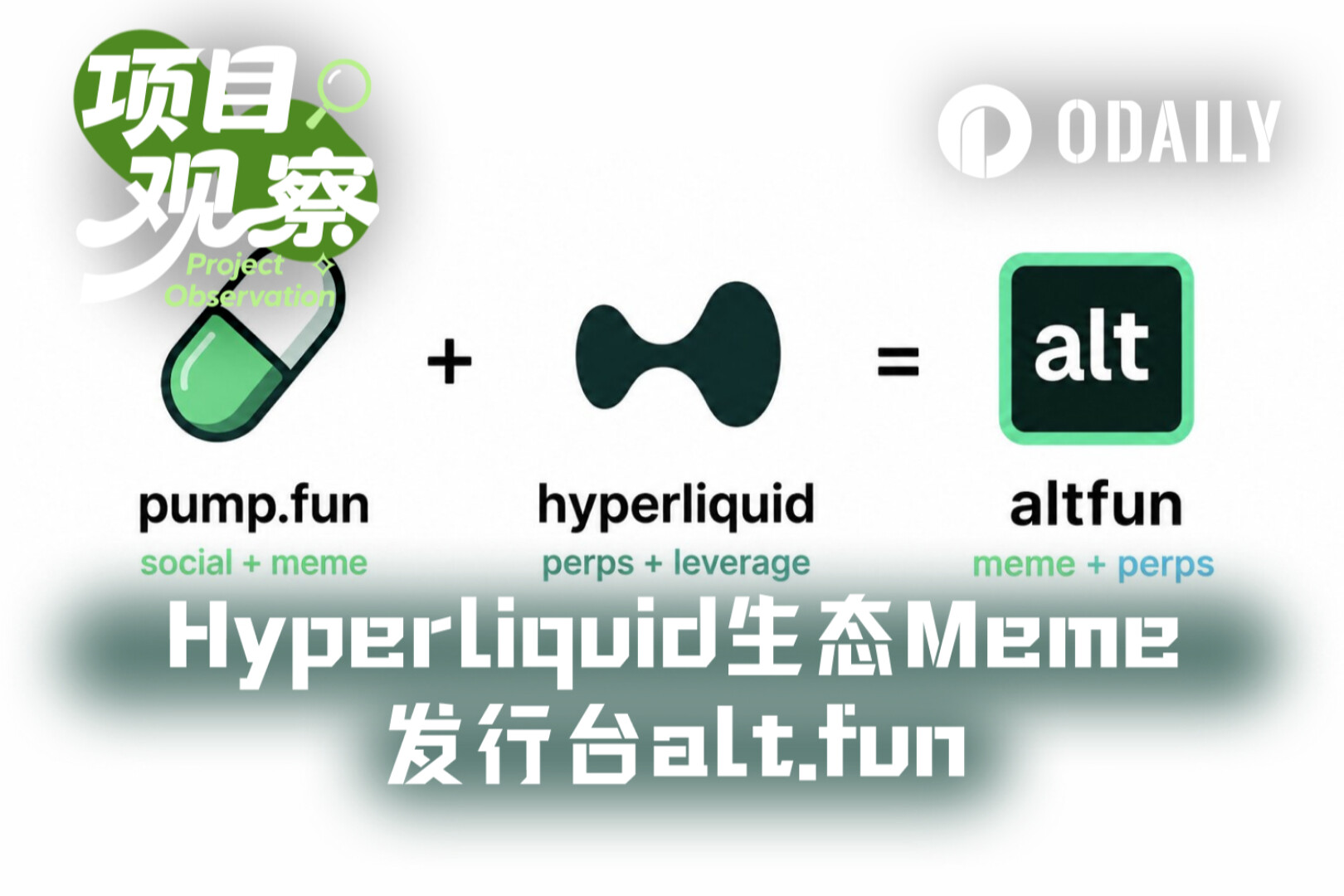
Meme Wrapped Contracts: Is alt.fun Real Innovation or a Pseudo-Need?

A new platform called alt.fun on Hyperliquid has gained attention by merging meme coin creation with leveraged futures trading. Unlike typical meme platforms like Pump.fun, alt.fun requires creators to select an underlying asset (like HYPE or S&P 500) and a leverage level (2x, 3x, or 5x) to take a long or short position. The issued meme token is directly linked to a corresponding leveraged token (LT) on BounceTech, which represents that perpetual contract position. This means the token's price is driven by both the standard bonding curve (community buying/selling) and the performance of its leveraged underlying asset, allowing value to increase even without new purchases. The platform's "graduation" to a DEX pool requires a市值 of $9,000, achievable through market demand or underlying asset growth. While this mechanism can amplify gains in trending markets, it also introduces significant risks from asset volatility, leverage decay during rebalancing, and potential liquidation during sharp price moves. Despite early traction—with its top token ALT reaching an $8.8M market cap—alt.fun faces challenges. Its limited selection of 14 underlying assets constrains variety, leading to tokens with identical financial profiles. More fundamentally, critics argue it misunderstands the meme coin ethos: its tokens are primarily financial instruments tied to asset performance, lacking the community-driven narratives and cultural appeal essential for sustaining meme coin value. The article concludes that while mechanically innovative, alt.fun may be better suited as a niche DeFi product than a true meme platform.

marsbit05/18 12:45

Meme Wrapped Contracts: Is alt.fun Real Innovation or a Pseudo-Need?

marsbit05/18 12:45

Meme Wrapped Contracts: Is alt.fun Real Innovation or Pseudo-Demand?

"Last week, the new Meme token launch platform alt.fun on Hyperliquid gained significant attention. Its flagship token ALT reached a peak market cap of $8.8 million. The platform's novelty lies in combining the mechanics of Pump.fun with leveraged trading on Hyperliquid. When a user creates a Meme token on alt.fun, they must also open a leveraged long/short position (2x, 3x, or 5x) on an underlying asset like HYPE. The platform then mints a corresponding leveraged token (LT) on BounceTech, which represents that perpetual contract position. Essentially, users are trading a tokenized derivative. This creates a dual price driver: the token's value is influenced both by market buying/selling via a bonding curve and by the performance of its underlying leveraged position. Hence the slogan: 'Your token pumps even when nobody's buying.' Tokens 'graduate' to a liquidity pool when their market cap (effectively the LT's value) reaches $9,000, achievable through either mechanism. However, this model faces key challenges. Gains are amplified only in strong, one-directional markets for the underlying asset. In volatile conditions, the mandatory 'rebalancing' of LTs leads to value decay. More fundamentally, alt.fun struggles to foster the community consensus vital for Meme tokens. Investment is driven primarily by price speculation on the underlying asset, not by narrative or cultural appeal. With limited underlying assets, token differentiation is low. The article concludes that while mechanically innovative, alt.fun may be better suited as a DeFi platform than a true Meme launchpad, as its core product lacks the community-driven essence of successful Memes."

Odaily星球日报05/18 12:41

Meme Wrapped Contracts: Is alt.fun Real Innovation or Pseudo-Demand?

Odaily星球日报05/18 12:41

South Korea's Financial Turmoil: Samsung Strike, AI Communism, and Crypto Market Bleeding Out

The South Korean financial market is facing a turbulent period marked by a triple threat: labor unrest at Samsung Electronics, controversial government proposals for redistributing AI profits, and a severe downturn in the cryptocurrency sector. The stability of the "Korean stock market bellwether," Samsung Electronics, is under threat as its largest union plans to strike on May 21st despite a partial court injunction. The government warns a prolonged strike could cause catastrophic losses, highlighting the high stakes for Korea's critical semiconductor industry. Simultaneously, a proposal by a presidential policy chief to redistribute "AI citizen dividends" from excess corporate taxes triggered significant foreign capital outflow and market volatility last week. While clarified as not a direct tax on company profits, the discussion underscores intense debates over wealth distribution in the AI era, where profits are concentrated in a few chip giants like Samsung and SK Hynix. In stark contrast to the booming AI-driven stock market, Korea's cryptocurrency sector is experiencing a dramatic collapse. Major exchanges Upbit and Bithumb reported steep declines in revenue and profits for Q1 2026. The overall crypto market valuation has nearly halved since early 2025, with trading volumes plummeting 74%. This is exacerbated by tightening regulations, including impending crypto taxes, strict anti-money laundering rules, and frozen assets from defunct exchanges affecting nearly 200,000 users. While regulators are tightening risk controls on financial institutions, the situation presents a new era of financial instability for Korea, caught between AI-fueled growth, social equity debates, and a crumbling crypto market.

Odaily星球日报05/18 12:25
South Korea's Financial Turmoil: Samsung Strike, AI Communism, and Crypto Market Bleeding Out

Odaily星球日报05/18 12:25

Nvidia's Wednesday Earnings Night: The Battle That Decides the Fate of the AI Bull Market is Here

NVIDIA is set to report its quarterly earnings after the U.S. market closes on Wednesday, May 20. This event is widely seen as a crucial test for the current AI-driven bull market. The semiconductor sector is exhibiting severe technical overbought conditions, with the Philadelphia Semiconductor Index (SOX) trading approximately 60% above its 200-day moving average—the most extreme deviation since the dot-com bubble peak of 1999/2000. Market sentiment is highly concentrated on a few AI-related stocks, raising concerns about overall market breadth. Analysts highlight a key contradiction: while fundamentals for AI and semiconductors remain strong, significant technical pressures are building. Option market activity reflects this tension. Positions are heavily skewed towards bullish calls, yet there is also notable hedging activity through put options on broad indices and sector ETFs, signaling preparation for potential downside volatility. An unusual pattern of rising stock prices alongside rising implied volatility further underscores the market's expectation for a major move. For NVIDIA specifically, the market's primary focus will be on its forward guidance for the next quarter, which is deemed more critical than the immediate earnings results. Despite a recent seven-day rally adding roughly $1.7 trillion in market cap, historical data shows NVIDIA's stock has often declined the day after its past five earnings reports. The outcome of this report is expected to have a significant ripple effect across the broader technology and semiconductor markets, given NVIDIA's pivotal role.

marsbit05/18 12:02

Nvidia's Wednesday Earnings Night: The Battle That Decides the Fate of the AI Bull Market is Here

marsbit05/18 12:02

活动图片