2026-08-13 Quinta

Notícias de cripto - Página 548

Mantenha-se a par do mercado de cripto. Notícias em tempo real, análises, preços, histórias em alta e análise de especialistas — tudo num só lugar.

Circle: From Issuance to Infrastructure

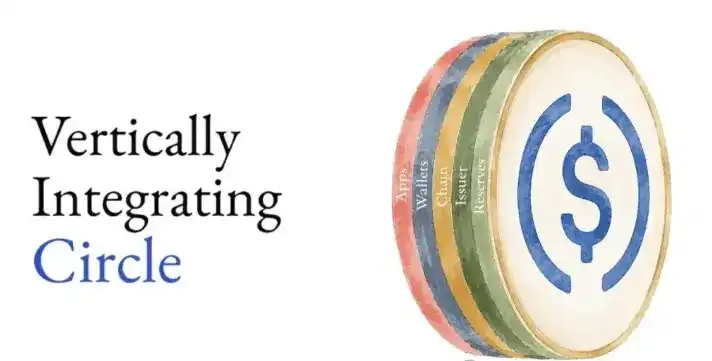
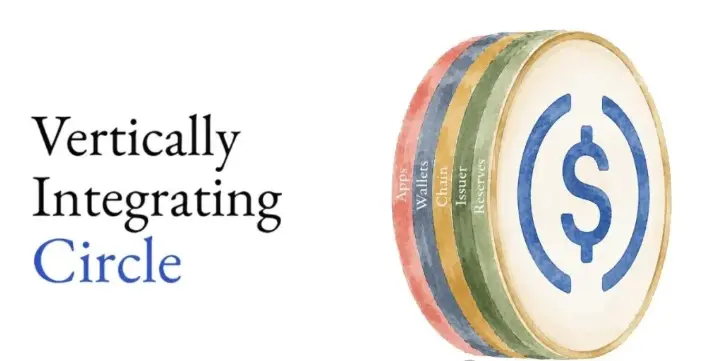
Title: Circle: From Issuance to Infrastructure Circle, the issuer of the USDC stablecoin, is undergoing a strategic transformation to reduce its dependence on interest income from reserve holdings, which is declining due to falling interest rates. Historically, Circle's revenue came primarily from the yield on US Treasury reserves backing USDC. However, it also paid significant fees (approximately 60 cents of every dollar earned) to partners like Coinbase for distributing and settling USDC. To capture more value across the financial stack, Circle is vertically integrating into three new layers: 1. **Settlement Layer:** It is launching **Arc**, a native Layer-1 blockchain. Arc, which uses USDC as its gas token, aims to capture transaction fees currently paid to other blockchains (like Ethereum and Solana) and offers features like privacy for institutional payments. 2. **Distribution Layer:** The **Circle Payments Network (CPN)** connects financial institutions directly to Circle, reducing reliance on exchanges like Coinbase. While not yet monetized, CPN growth has improved Circle's margins. 3. **Application Layer:** Circle is building an **AI Agent Economy** infrastructure with products like Agent Wallets and Nanopayments. The goal is to capture fees from high-volume, automated transactions executed by AI agents, a market where USDC already dominates. These moves represent Circle's shift from a single-product company (USDC issuance) to a full-stack financial platform. The strategy faces challenges, including market competition from players like Stripe and Tether, and potential internal tension regarding how value created by the new Arc blockchain and token (ARC) will accrue to Circle's public shareholders (CRCL). Circle's long-term success depends on its ability to successfully execute this vertical integration and diversify its revenue streams away from interest income.

marsbit05/19 11:58

Circle: From Issuance to Infrastructure

marsbit05/19 11:58

Circle: From Issuance to Infrastructure

Title: Circle: From Issuance to Infrastructure Circle, the issuer of the USDC stablecoin, is undergoing a strategic transformation from a single-product company dependent on reserve interest income to a vertically integrated, full-stack financial platform. Its primary revenue source, earnings from US Treasury reserves backing USDC, is under pressure from declining Federal Reserve interest rates. Furthermore, Circle pays out a significant portion (~60 cents per dollar earned) to partners like Coinbase for distribution and settlement, leading to value leakage. To address these challenges and capture more value across the payment stack, Circle announced three key initiatives in Q1 2026: 1. **Settlement Layer**: Launching its own Layer-1 blockchain, **Arc**. Designed for institutional use with configurable privacy and quantum-resistant architecture, Arc uses USDC as its native gas token, allowing Circle to capture transaction fees currently paid to other blockchains like Ethereum. 2. **Distribution Layer**: Expanding the **Circle Payments Network (CPN)**, which connects financial institutions directly to Circle, reducing reliance on third-party exchanges for USDC distribution and on/off-ramps. 3. **Application Layer**: Building infrastructure for an **AI agent economy**, including tools for agent wallets, nanopayments, and a marketplace. Circle aims to monetize the high volume of AI-driven microtransactions predominantly settled in USDC. This vertical integration strategy aims to diversify Circle's revenue away from volatile interest income. However, a key challenge remains: aligning the value capture of the new ARC token with the interests of existing public market shareholders (CRCL) who invested primarily for reserve yields. The success of this stack-wide expansion hinges on Arc's adoption and Circle's ability to balance value distribution between its core corporate entity and its new blockchain ecosystem.

链捕手05/19 11:51

Circle: From Issuance to Infrastructure

链捕手05/19 11:51

Nvidia's Wednesday 'Big Test': The Battle That Will Determine the Fate of the AI Bull Market is Here!

NVIDIA Faces Key AI Bull Market Test with Wednesday Earnings Report NVIDIA is set to release its quarterly earnings after the market close on Wednesday, May 20th (US Eastern Time). This report is seen as a critical stress test for the current AI-driven bull market cycle. The semiconductor sector is technically severely overbought, with extremely bullish options positioning. The rare signal of stock prices and implied volatility rising simultaneously indicates significantly amplified two-way risk around this earnings event. The core tension identified by analysts is strong fundamental demand for AI versus mounting technical pressures. The Philadelphia Semiconductor Index (SOX) is trading approximately 60% above its 200-day moving average, a deviation not seen since the peak of the dot-com bubble in 1999/2000. While NVIDIA's current quarter revenue is expected to beat estimates by a substantial margin, market focus is intensely on the guidance for the next quarter. Historically, NVIDIA's stock has frequently declined on the day following its last five earnings reports. The options market presents contradictory signals: extreme bullish call skew persists, yet there is notable activity in tail-risk hedging via put options on broader indices and semiconductor ETFs. This suggests traders are chasing gains while simultaneously preparing for potential sharp volatility. A broader market concern is narrowing breadth. Despite the S&P 500's YTD gain, only about half of its constituents are positive, with leadership heavily concentrated in a few mega-cap AI and semiconductor names like NVIDIA. Analysts question whether this reflects market health or a "funding source" effect, where money flows out of lagging sectors into the AI trade. The earnings outcome and, crucially, the forward guidance will test the market's conviction in the AI compute super-cycle thesis. Given NVIDIA's high correlation with the semiconductor and broader tech sector, its results are poised to trigger widespread market moves in either direction.

marsbit05/19 11:43

Nvidia's Wednesday 'Big Test': The Battle That Will Determine the Fate of the AI Bull Market is Here!

marsbit05/19 11:43

The AI-Era Power Arms Race: Energy Order Reshuffle Behind NextEra's Acquisition of Dominion

The AI arms race is shifting from a focus on chips and models to a fundamental battle over electricity. NextEra Energy's proposed $66.8 billion acquisition of Dominion Energy highlights this profound change, as AI's explosive growth is rewriting the growth logic for the power sector. The deal is less about traditional utility consolidation and more about securing a strategic gateway to Virginia’s "Data Center Alley," a critical hub where tech giants have massive, signed load requirements. The core challenge is a growing disconnect: data center construction cycles are far shorter than the years needed to build new power generation and transmission infrastructure. Morgan Stanley predicts a 49GW gap in power availability for U.S. data centers by 2028. Electricity, once a taken-for-granted commodity, is now a scarce and strategic resource. This transforms the competitive landscape—future AI competitiveness may hinge not just on algorithms but on a company's ability to secure long-term, stable, and affordable power supply. The transaction signals a broader revaluation of the entire energy infrastructure chain, from natural gas and nuclear power for base load to storage and transmission equipment. However, the largest variable is regulation. Balancing rapid AI-driven grid expansion with public concerns over costs, fairness, and environmental impact will be a complex political and social challenge. The true value in the coming AI era may lie not just in power generation assets, but in owning the crucial infrastructure nodes, grid access rights, and the regulatory relationships needed to deliver electricity where it's needed most.

marsbit05/19 11:37

The AI-Era Power Arms Race: Energy Order Reshuffle Behind NextEra's Acquisition of Dominion

marsbit05/19 11:37

VISA Steps Up Stablecoin Settlement Efforts, The Path for Crypto Payments Becomes Increasingly Clear

VISA continues to expand its global pilot for stablecoin settlement, adding support for five more blockchain networks (Arc, Base, Canton, Polygon, Tempo) to bring the total to nine. More significantly, the program's annualized settlement volume has grown 50% quarter-over-quarter to $7 billion. This move highlights a key shift: stablecoins are increasingly being integrated not as a front-end consumer novelty but as a foundational infrastructure for back-end settlement between issuers, acquirers, and the payment network itself. Against a backdrop where many Web3 narratives have lost momentum, crypto payments stand out due to their tangible utility. The core value proposition is clear: enabling faster, cheaper, and more accessible value transfer, especially for cross-border business, payroll, and B2B transactions. Stablecoins like USDC and USDT have evolved into a de facto on-chain dollar network, creating sustained demand for related payment, exchange, and compliance services. While major players like VISA are building the underlying networks, opportunities remain for specialized service providers in areas like cross-border payments for e-commerce, payroll for Web3 companies, or fiat on/off-ramps for exchanges. However, this growing legitimacy also raises the regulatory bar. Touching monetary flows inevitably attracts scrutiny regarding licensing, KYC/AML, and the precise classification of activities (e.g., custody, money transmission). Success in this increasingly defined sector will depend not just on technical execution but on building compliant business structures from the outset.

marsbit05/19 11:36

VISA Steps Up Stablecoin Settlement Efforts, The Path for Crypto Payments Becomes Increasingly Clear

marsbit05/19 11:36

The World Cup is Approaching: Sports Entering the Era of 'Fragmented Finance'

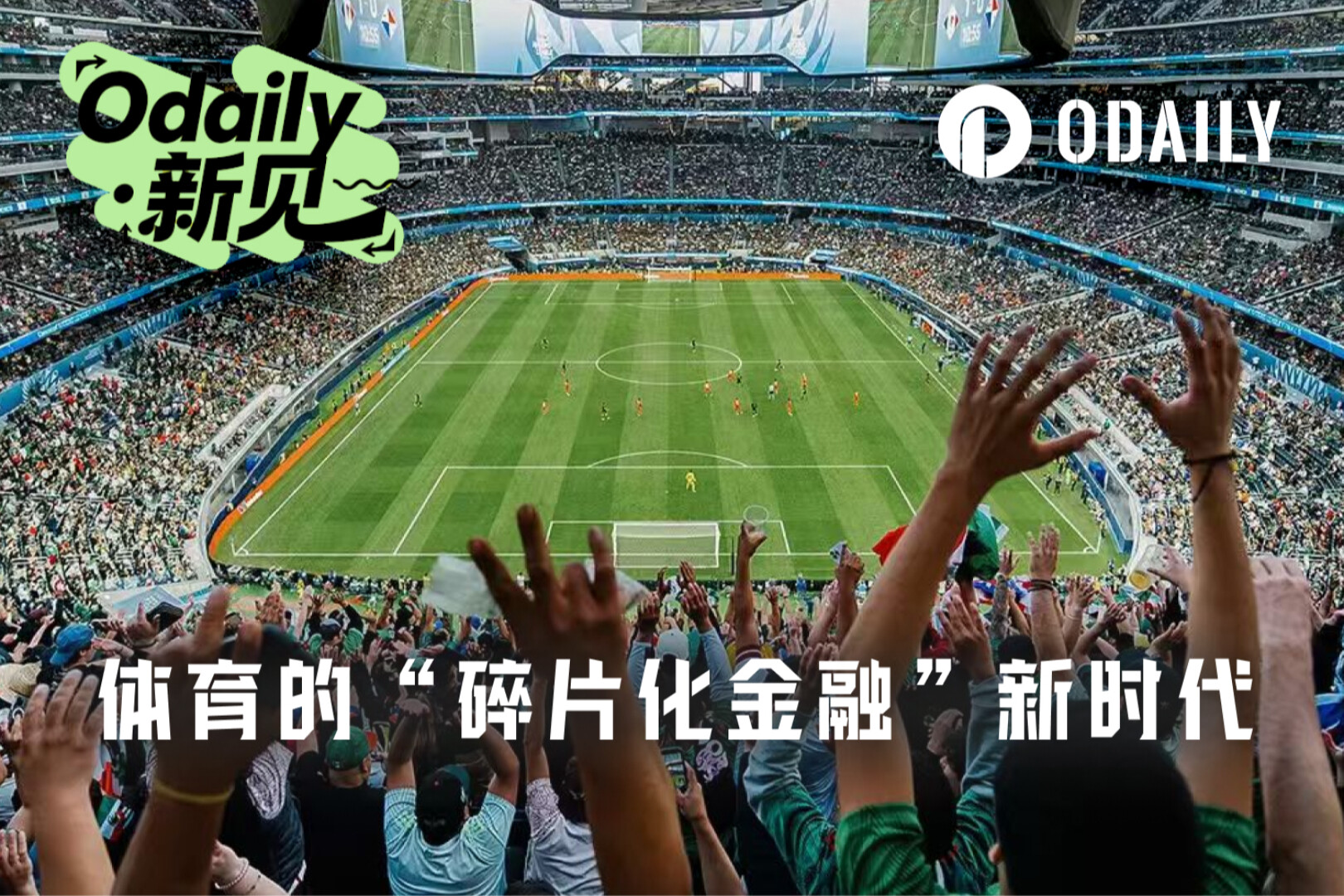
With the approaching World Cup, sports are entering an era of "fragmented finance." This shift is exemplified by FIFA's new rule requiring debutant players to wear a special "World Cup debut patch." Post-tournament, these patches will be authenticated, cut, and embedded into collectible cards, potentially transforming into high-value assets. The global sports trading card market, valued at over $11.5 billion, represents a sophisticated alternative asset class with deep secondary markets and distinct bull/bear cycles. While football has a massive fanbase, its card market has historically lacked the liquidity and unified narrative of the NBA's system. The NBA's success stems from its centralized, star-driven storytelling—from draft nights to championships—which perfectly fuels financialization. The World Cup patch initiative is FIFA's attempt to create similar "financial raw material" for football. The NBA card market, evolving over 70 years, has matured into a financial ecosystem. After a 1990s crash due to overproduction, the industry rebounded by embracing scarcity: limited editions, autographs, game-worn memorabilia (patches), and serial numbering. Today, it features professional grading (e.g., PSA, BGS), auction platforms, live "break" streams, and dedicated marketplaces, mirroring aspects of cryptocurrency markets with their volatility, speculation, and community-driven trading. The core driver is narrative. A card's value is tied to a specific historic moment or player potential—like Stephen Curry's 1/1 card commemorating his Olympic game-winning shot selling for $518,500. This trade in "ownership of history" or "future greatness" parallels prediction markets, both monetizing collective emotion. Unlike many NFT projects that struggle to generate sustained narratives, sports are a perpetual emotion-generating machine. Leagues like the NBA and UFC constantly produce real-world drama—rivalries, comebacks, and triumphs—that fuels ongoing interest and investment. For younger audiences consuming sports via highlights and social media clips, trading cards become a direct financial instrument for engaging with these narratives. Thus, traditional sports leagues are leading the charge in assetization, leveraging their unique advantages: real events, global fan consensus, and endless storytelling. They are becoming platforms for issuing financial assets, turning fragments of history—a patch, a signature, a moment—into tradable commodities.

Odaily星球日报05/19 10:42
The World Cup is Approaching: Sports Entering the Era of 'Fragmented Finance'

Odaily星球日报05/19 10:42

活动图片