2026-08-12 Quarta

Notícias de cripto - Página 527

Mantenha-se a par do mercado de cripto. Notícias em tempo real, análises, preços, histórias em alta e análise de especialistas — tudo num só lugar.

ARM's Stock Price Soars 30% Against the Trend, Is ARM, Now Making AI Chips, Winning Big?

ARM's stock surged over 15% on May 21, 2026, reaching a record high of $259, driven by its strategic pivot beyond its traditional IP licensing business. For over three decades, ARM has profited by licensing chip designs to companies like Apple and Qualcomm, earning mere cents per chip. However, with the mobile market maturing, growth stalled. In March 2026, ARM announced a historic shift: it would design and sell its own finished chips for the first time. Its "AGI CPU," built for AI data centers, targets the growing computational needs of AI Agents—tasks like workflow orchestration and data preprocessing where CPUs are crucial. This move positions ARM directly in the high-value server CPU market, competing with some of its own licensees. Analysts believe the rise of Agentic AI will dramatically increase demand for data center CPUs. Bernstein set a $300 price target, forecasting ARM's annual revenue could reach $26 billion by 2030 as the server CPU market expands. Major customers like Meta and OpenAI have already signed on for the AGI CPU, with committed demand reportedly doubling to over $2 billion within six weeks of launch. While this transformation offers massive upside, risks remain. ARM's valuation is extremely high (P/E ~300), pricing in future success. The company must also navigate potential conflicts with existing partners and execute flawless chip manufacturing. Nevertheless, Wall Street is betting that ARM's move from a "tax collector" to an AI infrastructure provider could redefine its growth trajectory for the AI era.

marsbit05/22 04:08

ARM's Stock Price Soars 30% Against the Trend, Is ARM, Now Making AI Chips, Winning Big?

marsbit05/22 04:08

An 80s-Born from Tianjin, Set to Become the First Human on a Journey to Mars

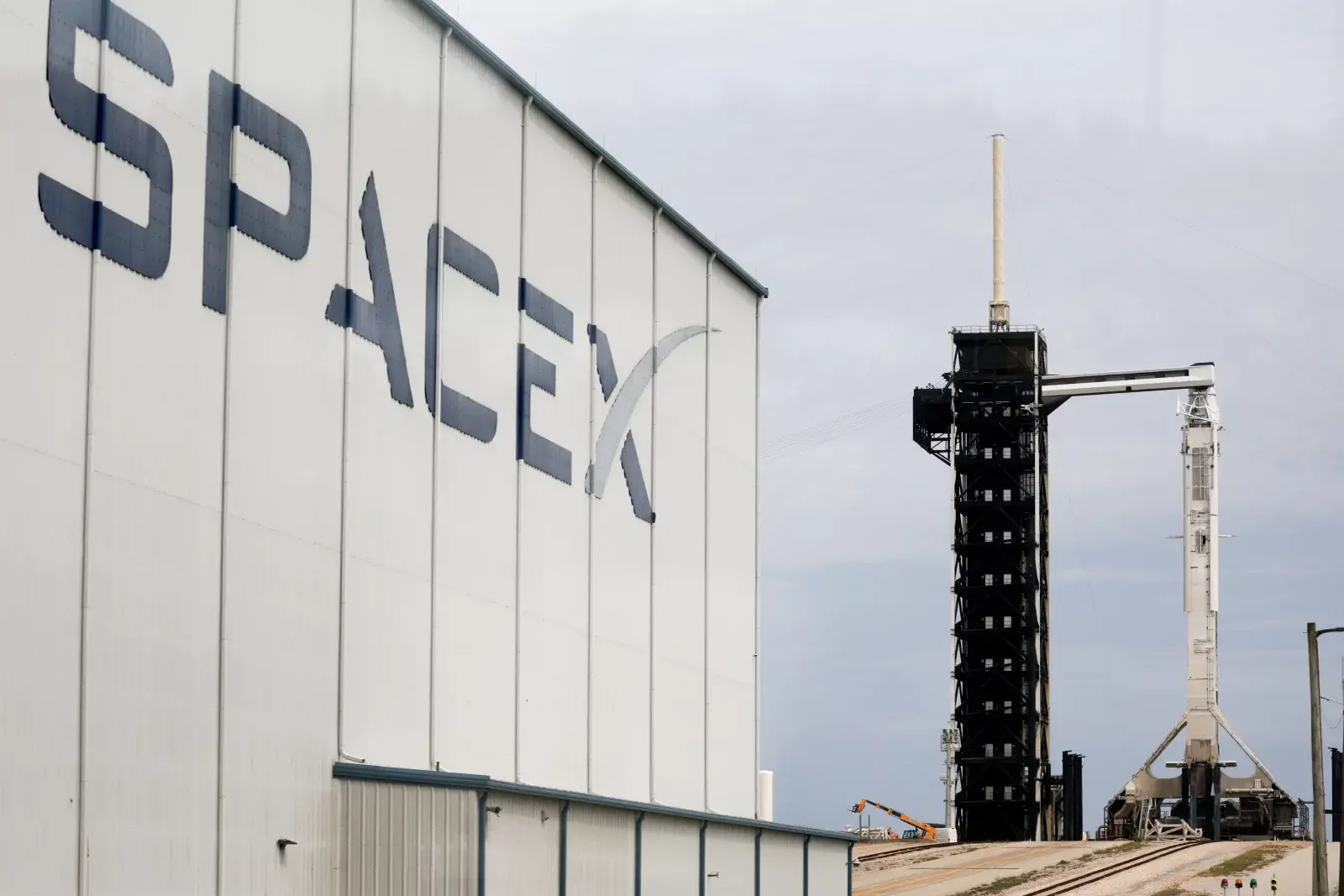
Chun Wang, an 80s-born native of Tianjin, is set to become the first person to journey to Mars. SpaceX recently announced that Wang, co-founder of F2Pool and commander of the Fram2 mission, will travel on Starship for a historic two-year deep-space mission to fly by Mars (without landing) and return to Earth. Prior to this, he will also participate in a week-long commercial crewed mission around the Moon. Wang's passion for exploration began in childhood. After university, he embarked on extensive travels, eventually visiting every province in China by train and earning the nickname "Thousand High-Speed Rail Man." His interest in technology led him to programming and, in 2011, to Bitcoin. He purchased his first bitcoin at $8.70 and later co-founded F2Pool, one of the world's largest mining pools, in 2013. The success of his cryptocurrency ventures provided the wealth that later funded his ambitious projects. Having reached both the South and North Poles, Wang sought new frontiers. Inspired by SpaceX's advancements, he conceived and funded the private Fram2 mission in 2025. As mission commander, he led an all-civilian, non-American crew on a unique polar orbit flight aboard a Crew Dragon spacecraft, conducting scientific experiments and capturing unprecedented views of Earth's poles. Now, his journey continues toward the ultimate destination. From his current location on the remote Bouvet Island near Antarctica, Wang prepares for the next steps: a lunar flyby and humanity's first crewed mission to the vicinity of Mars.

Odaily星球日报05/22 03:58

An 80s-Born from Tianjin, Set to Become the First Human on a Journey to Mars

Odaily星球日报05/22 03:58

From Token Explosion to Physical Bottlenecks: The Storage Bull Market Driven by Agentic AI

**From Token Explosion to Physical Bottlenecks: The Agentic AI-Driven Storage Bull Market** The AI semiconductor narrative is shifting from training to inference, which now accounts for 66% of AI compute. In the inference "Decode" phase (autoregressive token generation), GPU performance is bottlenecked by memory bandwidth and capacity, not raw compute (FLOPS). The key constraints are **HBM (High Bandwidth Memory) bandwidth** (determining token generation speed) and **HBM capacity** (determining how many requests/models can be served simultaneously). This creates a core economics equation: Token cost is proportional to (GPU + power cost) divided by Tokens/sec, which is fundamentally limited by HBM specs. This drives unprecedented demand for advanced storage. **HBM**, a 3D-stacked DRAM, is critical for AI accelerators. Its complex production consumes 3-4x more wafer capacity than standard DRAM, squeezing supply for traditional memory (DDR) and causing severe shortages. **HBF (High Bandwidth Flash)**, an emerging high-bandwidth NAND, aims to bridge the gap between HBM speed and SSD capacity for AI model weights. The market is experiencing a historic, structurally driven super-cycle. Demand is fueled by a triple engine: 1) AI training (parameter arms race), 2) AI inference explosion (especially Agentic AI with long contexts), and 3) general data center expansion. Supply is constrained by the HBM产能挤压 effect and the 2-3 year lead time for new fab capacity. Analysts project a DRAM supply deficit of ~5% in 2026. Inventory across the supply chain is at historically low levels, with OEMs securing long-term agreements (LTAs) locking in future supply. Current indicators (Q2 2026) suggest the cycle is in its mid-phase, not peaking. While spot prices have corrected from highs, contract prices are forecast to rise sharply (e.g., +70-75% QoQ for NAND). Capacity utilization remains high, and inventory days are still low. The cycle is expected to peak around mid-2027. The storage landscape is stratified, with key players in HBM (SK Hynix, Samsung, Micron), NAND/SSD/HBF (Samsung, Kioxia/WD, SanDisk), and NOR Flash (Winbond, GigaDevice) well-positioned for this AI-driven era.

marsbit05/22 03:41
From Token Explosion to Physical Bottlenecks: The Storage Bull Market Driven by Agentic AI

marsbit05/22 03:41

BIT Research: After U.S.-China Summit, Markets Begin Repricing "Long-Term Competition"

The market is undergoing a macro repricing driven by geopolitics and policy expectations. Initial interpretations of the recent U.S.-China summit as a signal of eased tensions triggered a risk-on rally, boosting tech stocks and Bitcoin while weakening the dollar. However, as details emerged, this optimism faded due to a lack of concrete progress on tariffs, AI export controls, or key geopolitical issues like Taiwan and Iran. Inflation concerns have resurfaced, renewing selling pressure on bonds and precious metals. Longer-term, the summit underscored ongoing strategic competition: a marginal decline in dollar dominance, a push for diversified global reserve assets, AI and semiconductor supply chain restructuring, and intensified rivalry in frontier tech like low-earth orbit satellites. Bitcoin's price action mirrored high-beta tech stocks more than a structural hedge, highlighting its continued sensitivity to risk appetite and liquidity over traditional safe-haven characteristics. While the meeting yielded modest outcomes like a U.S. agricultural purchase pledge and continued dialogue mechanisms, it primarily reflects "managed competition." Structural tensions remain unresolved in areas like tech and geopolitics, affirming trends toward strategic decoupling and prolonged geopolitical risk. The key for markets is the broader repricing of global liquidity, real yields, and this enduring competitive landscape.

marsbit05/22 03:22

BIT Research: After U.S.-China Summit, Markets Begin Repricing "Long-Term Competition"

marsbit05/22 03:22

Hot Interactive Projects Collection | Catena Labs Waitlist Application; DogeOS Launches Points System (May 22nd)

Hot Interactive Compilation: Catena Labs Waitlist Application; DogeOS Launches Loyalty System (May 22) Original | Odaily Planet Daily(@OdailyChina) Author | Asher(@Asher_0210) 1. Catena Labs: AI Financial Infrastructure Catena Labs, an AI financial infrastructure founded by Circle co-founder Sean Neville, aims to build an "AI-native bank" framework enabling AI Agents to conduct payments, transfers, and asset management. It has applied for a New York trust bank charter with the OCC. On May 20th, it announced a $30 million Series A round co-led by Acrew Capital and a16z crypto. Interactive Tutorial: Visit the official website to apply for the waitlist by providing basic personal information. 2. DogeOS: Dogecoin Ecosystem Application Layer DogeOS is building an application development layer on the Dogecoin blockchain to support consumer apps like games and AI, aiming to enhance Dogecoin's ecosystem and DeFi services. On May 6th, it announced a $6.9 million funding round led by Polychain Capital. Interactive Tutorial: Connect your wallet on the official site, link your X and Discord accounts, join communities, and complete tasks to earn points in the new loyalty system. 3. Nof1: AI Research Lab for Financial Markets Nof1 is an AI research lab focused on financial markets, planning to launch a consumer-facing AI agent platform for market coding. On May 15th, it announced a $15 million funding round co-led by SUI Group and Karatage. Interactive Tutorial: Visit the official website and submit your information to join the waitlist.

Odaily星球日报05/22 03:11

Hot Interactive Projects Collection | Catena Labs Waitlist Application; DogeOS Launches Points System (May 22nd)

Odaily星球日报05/22 03:11

Who is Selling, Who is Holding, Who is Still Buying? The Divergence of U.S. Old Money's Crypto ETF Holdings

"American Institutional Crypto ETF Holdings Show Divergence in Q1 2026. Amidst a quarter of market pullback, major institutional 13F filings reveal distinct strategies towards crypto ETFs. Key sell-offs/trimming: Harvard Management cut its iShares Bitcoin Trust (IBIT) holdings by ~43% and fully exited its iShares Ethereum Trust (ETHA) position, reallocating some funds toward AI/tech stocks. Goldman Sachs reduced its overall crypto ETF exposure, notably clearing its XRP and Solana ETF holdings while adding to selected crypto-related equities like Circle and Galaxy Digital. Hedge funds Millennium Management and Capula Management also significantly reduced or fully exited major Bitcoin and Ethereum ETF positions. Holders maintaining positions: Brown University kept its IBIT stake unchanged, demonstrating a long-term allocation approach. Dartmouth College maintained its core Bitcoin ETF holding while shifting some Ethereum exposure to a staking ETF and initiating a position in a Bitwise Solana Staking ETF. Strategic buyers increasing exposure: Sovereign wealth fund Mubadala increased its IBIT holdings by ~16%. JPMorgan significantly boosted its IBIT stake by 174%, while Wells Fargo raised its Ethereum ETF allocations. Market maker Jane Street rebalanced, cutting Bitcoin ETF holdings but adding ~$82 million in Ethereum ETF exposure. The filings indicate institutions are actively sorting crypto assets by perceived risk and liquidity, with Bitcoin often treated as a 'core' holding, Ethereum facing mixed treatment, and altcoins like Solana and XRP being the first to be cut or used for tactical 'elastic' allocations by some. It's crucial to note that 13F data is a lagging snapshot (as of March 31) and doesn't reveal entry costs or potential off-balance-sheet hedging strategies."

marsbit05/22 02:59

Who is Selling, Who is Holding, Who is Still Buying? The Divergence of U.S. Old Money's Crypto ETF Holdings

marsbit05/22 02:59

活动图片