2026-07-29 Quarta

Notícias de cripto - Página 47

Mantenha-se a par do mercado de cripto. Notícias em tempo real, análises, preços, histórias em alta e análise de especialistas — tudo num só lugar.

Five Historic Indicators Simultaneously Flash Signals: Bitcoin Bear Market Bottoms Out

Title: "Five Major Historical Indicators Simultaneously Flash, Bitcoin Bear Market Hits Bottom" Bitcoin is currently down 50% from its all-time high, with the bear market persisting over 40 weeks. A set of long-term cyclical indicators suggests the market may be at or nearing a price and time-cycle low point. Key Indicators: 1. Nasdaq/BTC Relative Strength: The 14-week moving average of the Nasdaq 100/BTC ratio's RSI has reached a historically unprecedented overbought level of 72.6, indicating Bitcoin is extremely oversold relative to equities. Historically, such extremes have preceded major cycle lows and strong outperformance by Bitcoin over the next 1-3 years. 2. Long-Term Expected Returns: Past instances of extreme Nasdaq/BTC RSI readings have been followed by asymmetric positive returns for Bitcoin over a 1-3 year horizon, though the magnitude of gains has diminished each cycle. 3. Gold/BTC Relative Strength: A similar RSI indicator for the Gold/BTC ratio also hit a record high in February 2026, another signal aligning with historical cycle lows for Bitcoin. 4. Bitcoin Realized Price: The on-chain realized price (average cost basis) is currently $53,000, 18% above the spot price. Historically, Bitcoin's spot price has spent only 12% of its time below this level, and every past bear market bottom has occurred below the realized price. 5. Cycle Clock: Previous cycles saw price lows form around 60 weeks after the all-time high. The current cycle is at week 40. If this pattern holds, a low point could form around late November 2026. Conclusion: The convergence of these rare, extreme signals points to Bitcoin being at or very near a long-term cyclical bottom, likely forming before the end of 2026. This period may present a highly attractive opportunity for long-term accumulation, with an asymmetric return profile favoring significant upside over the next 1-3 years, despite noted risks like diminishing marginal returns, small sample size, and potential structural market changes.

marsbit07/24 07:13

Five Historic Indicators Simultaneously Flash Signals: Bitcoin Bear Market Bottoms Out

marsbit07/24 07:13

Intel Data Center Revenue Soars 59%, CEO Chan: CPU Demand 'Taking Off', Supply Can't Keep Up

Intel Reports Strong Q2 2026 Results, Led by Surging Data Center Revenue Intel demonstrated a robust recovery, posting second-quarter revenue of $16.1 billion, a 25% year-over-year increase—its highest growth rate since 2011. On a non-GAAP basis, net income was $2.2 billion, with earnings per share of $0.42, far exceeding analyst expectations. A key highlight was the performance of the Data Center and AI (DCAI) business, where revenue soared 59% to $6.3 billion, significantly outperforming overall company growth. CEO Patrick Gelsinger noted that "CPU demand is taking off" in the data center segment, with demand outpacing the company's growing supply capacity. This supply-demand dynamic has granted Intel renewed pricing power, with server CPU prices in China reportedly rising over 40% since the start of 2026. The company has secured ten long-term supply agreements with customers. The Client Computing Group (CCG), which includes PC chips, saw revenue grow 13% to $8.9 billion. Intel Foundry revenue grew 31% to $5.8 billion and achieved a milestone by signing its first named external customer, cybersecurity firm Fortinet. The company reported strong progress on its Intel 18A manufacturing process, with yields improving approximately 7% per month. To support future growth, Intel raised its full-year 2026 capital expenditure forecast from $18 billion to $20 billion, including a $5.7 billion investment to expand manufacturing capacity for its Xeon processors. For the third quarter, Intel provided optimistic guidance, projecting revenue between $15.8 billion and $16.8 billion and non-GAAP EPS of approximately $0.38, both above analyst estimates. Following the earnings release, Intel's stock rose about 11% in after-hours trading.

链捕手07/24 07:07

Intel Data Center Revenue Soars 59%, CEO Chan: CPU Demand 'Taking Off', Supply Can't Keep Up

链捕手07/24 07:07

AI is Turning Nuclear Power from a 'National Project' into a Replicable Commercial Product

Artificial intelligence is transforming nuclear energy from a "national-level project" into a replicable commercial product. Traditionally, nuclear power has been characterized by massive investments, long timelines, and complex regulations, making it inaccessible to most private enterprises. However, the emergence of AI data centers is shifting this dynamic. Major tech companies like Microsoft, Google, and Amazon, urgently needing large-scale, stable, and low-carbon power, are becoming powerful commercial buyers for nuclear energy. This new demand is driving several key developments. While large-scale nuclear plants remain national infrastructure, small modular reactors (SMRs) are advancing toward commercial validation, offering a more suitable scale for data centers, industrial parks, and energy-intensive industries. Furthermore, innovations in passive safety systems, modular manufacturing, and improved regulatory efficiency are helping to standardize nuclear technology into a more replicable industrial product. The value of nuclear energy is also expanding beyond electricity generation to include applications like industrial heat, hydrogen production, seawater desalination, and power for heavy manufacturing, supported by an entire supply chain. Challenges such as construction delays, cost overruns, waste management, fuel supply, regulation, and project financing remain significant risks. Fusion energy also still requires considerable time for commercialization. AI has not instantly matured nuclear technology, but it is providing unprecedented commercial demand, capital support, and concrete orders. Over the next decade, nuclear energy may become one of the most underestimated yet critical infrastructures supporting the AI industry.

链捕手07/24 06:56

AI is Turning Nuclear Power from a 'National Project' into a Replicable Commercial Product

链捕手07/24 06:56

Decentralization Is Not Idealism

Decentralization Is Not Idealism The core argument is that in the era of programmable, global settlement systems, decentralization is the single most critical feature for long-term survival and success—not an idealistic luxury, but a practical necessity rooted in a cynical understanding of power and incentives. The author, a former crypto expert at Citi, positions himself not as an idealist but as a realist informed by history. He observes that any sufficiently large and valuable network inherently creates massive incentives for its own corruption and capture by powerful incumbents (corporations, governments) seeking to protect profits and power. The pattern is consistent: first try to stop a disruptive technology; if that fails, co-opt it. Therefore, only crypto systems built from day one to be maximally open, neutral, and permissionless have a chance to reach "escape velocity" and resist this inevitable pressure. The essay critiques "permissioned networks," highly centralized "permissionless" Layer-1s, and Layer-2s with single sequencers as fundamentally naive. These are essentially "databases with an off-switch" that will be captured, rendering them inferior to both traditional efficient systems and truly decentralized alternatives. Historical examples like Visa, Mastercard, and Google are cited to illustrate the "platform corruption" trajectory, where networks originally built as neutral utilities evolved into profit-maximizing, gatekeeping entities. The potential market for a general-purpose L1 blockchain (encompassing finance, social, gaming, identity, etc.) is so vast that the incentive for capture is even greater. The piece uses a rhetorical question: if you were the CEO of a profitable payment company, would you embrace a public, permissionless blockchain that gives your competitors equal footing, or would you support a "hybrid" alternative that lets you retain control and pricing power? The answer, driven by competitive instinct, is obvious. While incumbents may temporarily promote "pseudo-decentralized" solutions as a delaying tactic, the author argues these are objectively worse—less efficient than legacy systems and less secure than real decentralization. In the long run, assets and value will naturally flow to the most secure, censorship-resistant infrastructure, just as water flows to the lowest point. Systems like Ethereum, despite their flaws and costs, represent this necessary, realistic defense against capture and are ultimately superior to any corporate-controlled alternative.

链捕手07/24 06:50

Decentralization Is Not Idealism

链捕手07/24 06:50

New Fire Group Chief Economist Fu Peng's Latest Speech: Crypto Assets Deeply Bound to Liquidity, Global Assets 'Shrink Circle' with Widening Divergence

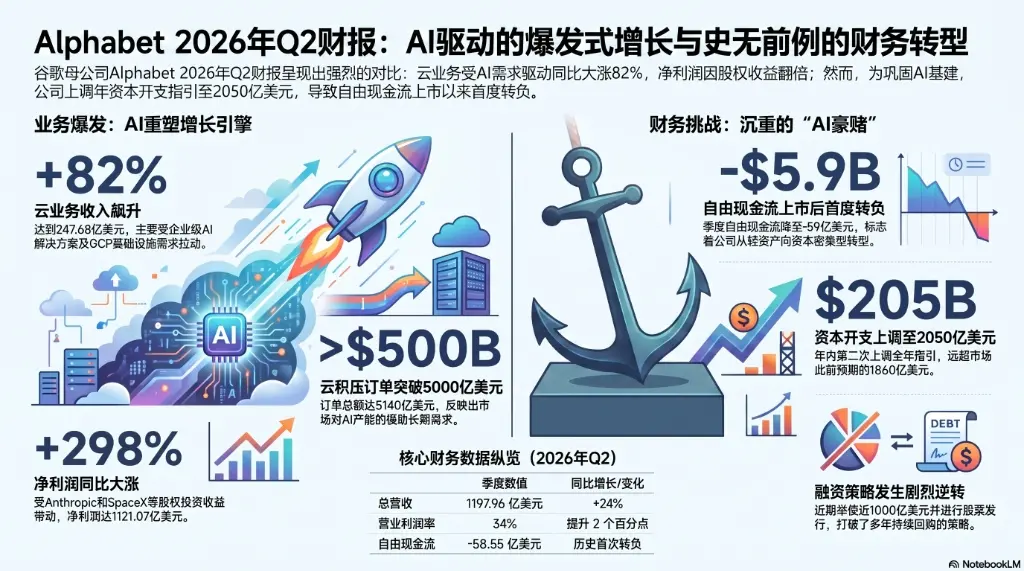
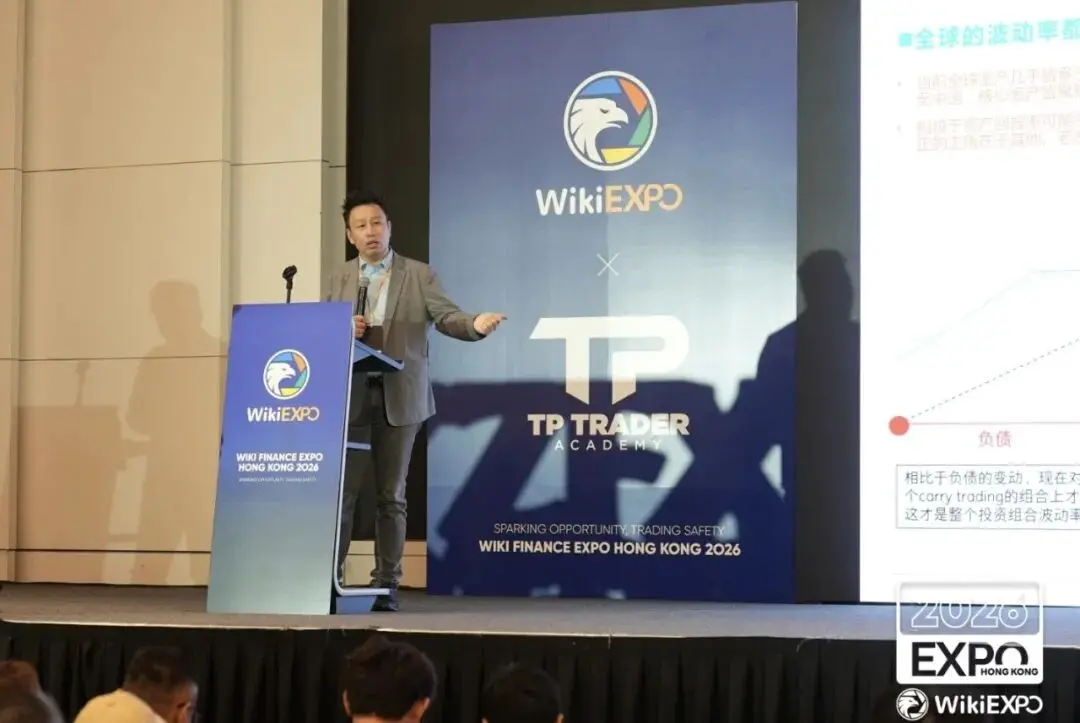
The chief economist of Sinovation Group delivered a speech at Wiki Finance EXPO Hong Kong 2026, analyzing the global market through the lens of liquidity. He argues that all major assets, including cryptocurrencies, are fundamentally tied to global liquidity, which is now shifting from an era of extreme post-2008 ease to sustained tightening under new Fed leadership. This marks the end of widespread "asset flooding" and ushers in a "shrinking circle" dynamic: capital is abandoning speculative, low-quality assets and concentrating in a few high-conviction, value-driven core holdings. The only dominant global investment theme is AI, viewed as a 20-25 year productivity cycle. However, a critical inflection point has been reached in Q2, where major tech firms' free cash flow has turned negative. The market narrative has pivoted from rewarding pure capital expenditure growth to demanding proof of future revenue generation and returns. While the AI super-cycle's long-term thesis remains intact, the initial hardware-driven phase (e.g., Nvidia, memory chips) is maturing. The speaker warns of significant volatility risk not from industry fundamentals, but from excessive financial leverage built up in these "certain" assets. He emphasizes that investment strategy must evolve from broad diversification to focused, cyclical allocation within the AI value chain (upstream hardware, midstream, downstream applications), avoiding blind long-term holds on single names. For crypto, this liquidity paradigm shift means the era of speculative "air coin" mania is over; the market is maturing, with institutional participation increasing and volatility stabilizing for core assets like Bitcoin and Ethereum. The core takeaway is that understanding the top-down liquidity framework is essential for navigating the current era of market分化 and focused capital allocation.

链捕手07/24 06:31

New Fire Group Chief Economist Fu Peng's Latest Speech: Crypto Assets Deeply Bound to Liquidity, Global Assets 'Shrink Circle' with Widening Divergence

链捕手07/24 06:31

活动图片