2026-08-11 Terça

Notícias de cripto - Página 453

Mantenha-se a par do mercado de cripto. Notícias em tempo real, análises, preços, histórias em alta e análise de especialistas — tudo num só lugar.

Reddit Crypto Discussion: Tech Stocks Surge for 8 Months, Is the Crypto Community Starting to 'Accept Fate'?

Reddit Crypto Discussion: Has the Community 'Given Up' as Tech Stocks Soar? A recent post on Reddit's r/CryptoMarkets asking if the crypto market feels "dead" compared to surging tech stocks has sparked intense debate. The discussion highlights a community grappling with underperformance: Bitcoin is down ~44% from its October 2025 high and ~20% YTD in 2026, while the S&P 500 and Nasdaq 100 have gained significantly. The debate features classic opposing views. Some users, citing Bitcoin's history, are "cycle believers" who anticipate a return to form, arguing it has "died" many times before. Others counter that crypto's narratives keep shifting without delivering a stable, compelling real-world use case beyond speculation. A prevalent third view pinpoints AI as the core issue: the tech sector's transformative boom is absorbing all attention and capital, while crypto lacks a comparable, impactful utility. Data supports the pessimistic mood. Bitcoin spot ETFs saw their largest monthly net outflow in May 2026 (~$2.3B), indicating institutional de-risking. The Crypto Fear & Greed Index has fallen to "Fear" levels. When asked about the timing of a potential market rotation back to crypto, answers are uncertain. A key practical point raised is the current high-interest-rate environment, which makes stable yields from cash and bonds attractive, reducing incentive to move into volatile assets like crypto. The underlying anxiety, as one user summarized, is "opportunity cost"—the worry about missing gains elsewhere while waiting for a crypto revival.

marsbit06/02 10:49

Reddit Crypto Discussion: Tech Stocks Surge for 8 Months, Is the Crypto Community Starting to 'Accept Fate'?

marsbit06/02 10:49

Chatbot has been burning money for three years, is it still the 'New Continent' of the AI era?

For years, the AI industry has been guided by a singular "map" — the belief that the AI era's "new continent" would be found in the Chatbot, a super-app akin to the mobile internet's super-apps. This belief was fueled by ChatGPT's explosive 2022 debut. However, three years of heavy investment reveal a different reality: the Chatbot-as-ultimate-entry-point model is struggling. The core issue is economic. Chatbots defy traditional internet economics. Unlike apps with near-zero marginal cost, each AI query consumes significant, expensive compute. More users mean higher costs, not profits. OpenAI, despite ~900M weekly active users, reportedly loses money. The expected network effects and data flywheels that power internet giants are weak in Chatbots, as one user's interactions don't improve another's experience. Monetization is a major hurdle. The subscription model faces low conversion rates, especially in China where users expect AI to be free. The "free + ads" model also struggles. Chatbot interactions often lack commercial intent, and inserting ads compromises the trust essential for an answer engine. Perplexity's minimal ad revenue and subsequent pivot away from ads highlight this difficulty. Switching between Chatbots is easy, making user loyalty low and competition a potential race to the bottom on price. Data suggests the standalone Chatbot's growth is slowing, and user engagement (avg. ~6 mins/day) pales compared to apps like TikTok. The product form itself is limiting; studies show nearly half of interactions are simple Q&A, trapping AI's potential in a passive, single-turn "cage." A contrasting, more successful path is emerging, exemplified by Anthropic. With over 85% of its ~$30B annualized revenue from enterprises, it focuses on AI as a productivity tool, not a companion. The rise of AI Agents (like OpenClaw) and the integration of AI into existing workflows (e.g., Google's AI Overviews, Apple Intelligence in OS) signal a shift. The future may not be a dominant Chatbot app, but AI embedded seamlessly into social apps, operating systems, and hardware — a capability-layer revolution, not a new distribution container. The conclusion is clear: the old "map" centered on a standalone Chatbot super-app is leading to a dead end. To find the true valuable "continent" of the AI era, the industry must update its navigation to prioritize deep integration, practical utility, and sustainable economics over a generic conversation window.

marsbit06/02 10:35

Chatbot has been burning money for three years, is it still the 'New Continent' of the AI era?

marsbit06/02 10:35

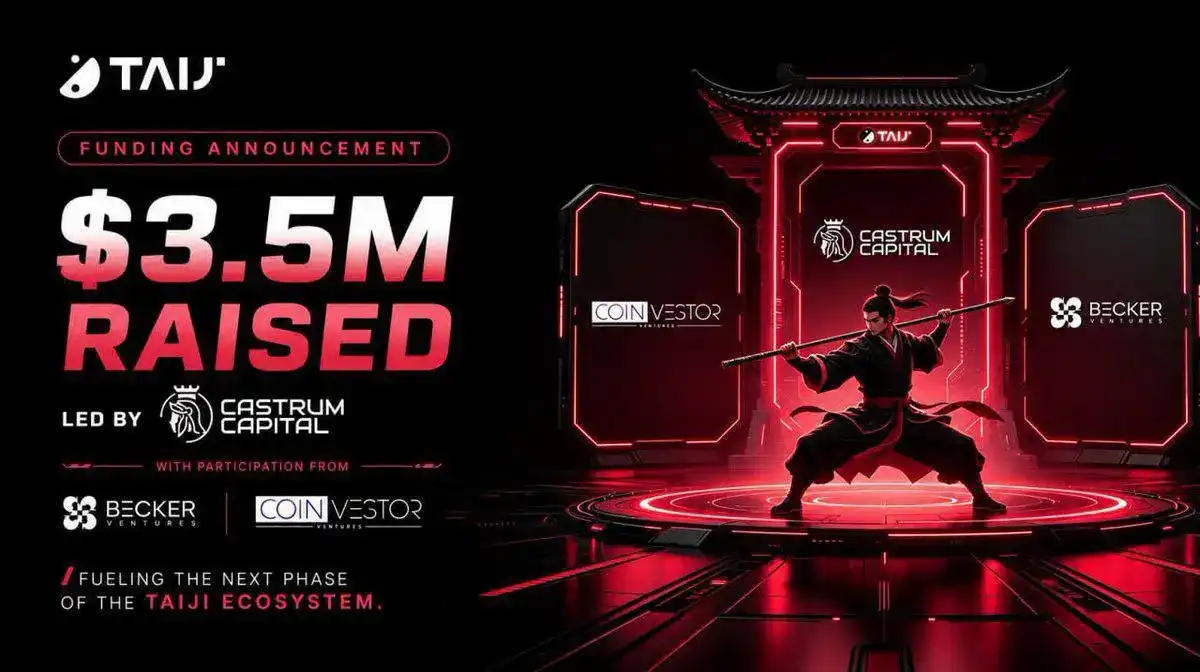
TaiJi Completes $3.5 Million Strategic Financing with Participation from Castrum Capital, Becker Ventures, and Coinvestor Ventures

TaiJi, an AI-driven market intelligence platform for Web3, has completed a $3.5 million strategic funding round. The investment was led by Castrum Capital, Becker Ventures, and Coinvestor Ventures. The funds will be allocated to product R&D, upgrading its AI inference engine, building a multi-agent analysis system, improving market data infrastructure, expanding its global community, and advancing ecosystem partnerships, particularly within the BSC ecosystem. TaiJi aims to transform how users understand the Web3 market by moving beyond simple data display. It integrates market data, on-chain signals, liquidity changes, social sentiment, and news events into a unified AI system. This system generates structured event inferences, impact pathways, risk assessments, and follow-up indicators. The platform's core approach involves a multi-agent framework where specialized agents (Market, On-chain, Sentiment, Risk, Event) collaboratively analyze disparate signals to produce coherent market intelligence. Its initial product will feature modules including Market Intelligence, a Scenario Engine for AI-powered event analysis, an Impact Map, Risk Signals, and a personalized user dashboard called "My TaiJi." TaiJi emphasizes that it does not custody user assets, execute trades, provide investment advice, or promise returns. Following this funding round, the company plans to accelerate product development and testing, gradually rolling out its core features to the broader Web3 market.

marsbit06/02 09:47

TaiJi Completes $3.5 Million Strategic Financing with Participation from Castrum Capital, Becker Ventures, and Coinvestor Ventures

marsbit06/02 09:47

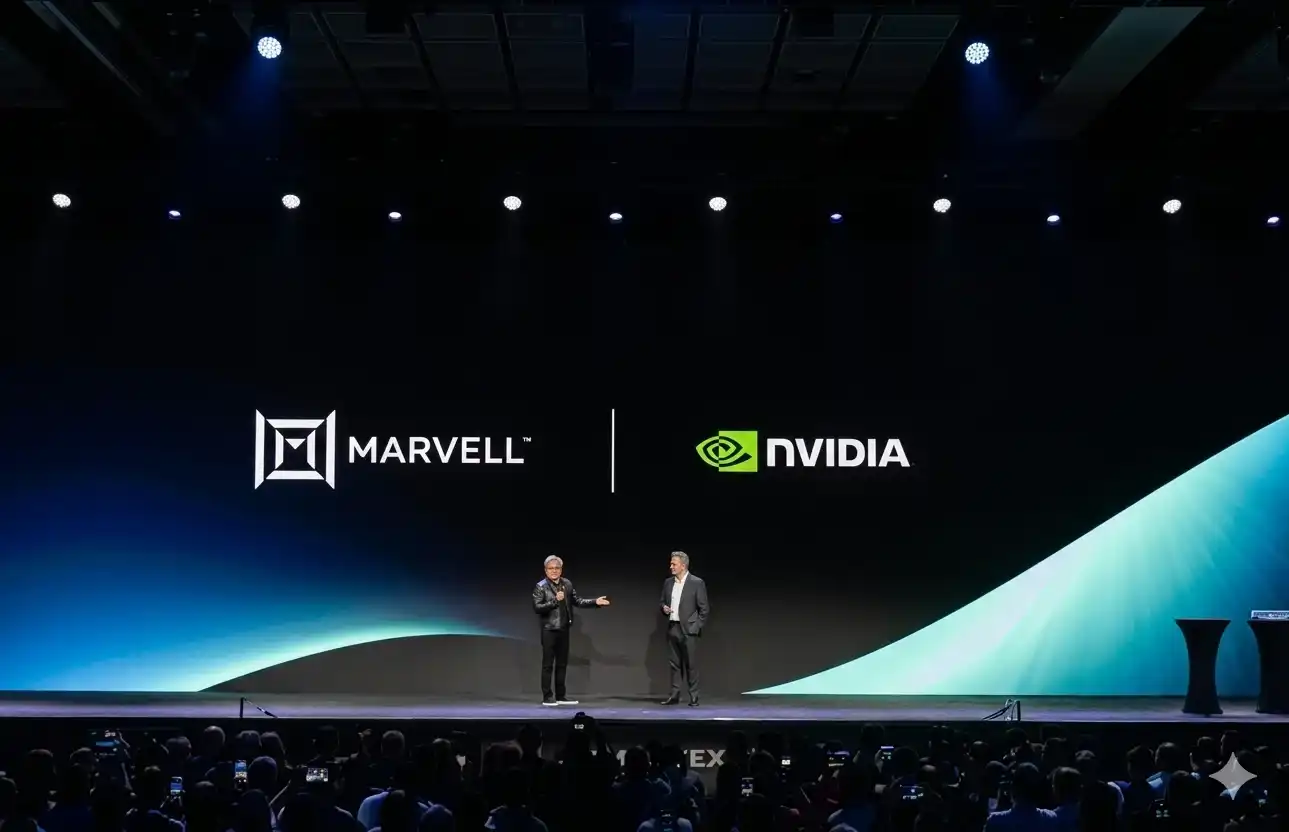
Huang Renxun and Marvell CEO Discuss on Stage: The Future of AI Competition is Not Computing Power but Connectivity, 'Use Copper Where You Can, Use Optics Only Where You Must'

Summary: At Computex 2024, NVIDIA CEO Jensen Huang joined Marvell CEO Matt Murphy on stage, highlighting the strategic partnership between their companies. The core theme was that the next decisive battleground for AI infrastructure is not compute or memory, but connectivity. As AI models evolve into vast agent-based systems, the ability to connect millions of processors efficiently is becoming the critical bottleneck. Huang announced NVIDIA's strategic $20 billion investment in Marvell, reflecting the deep integration between their technologies for AI data centers. A key discussion point was the transition from copper to optical interconnects within racks. The guiding principle, articulated by Huang, is: "You use optics wherever you must, you use copper wherever you can." While copper remains cost-effective for short distances, its physical limits are being reached as bandwidth demands double. When moving to 400Gbps, copper can no longer fully connect an entire rack. This shift necessitates innovations like Co-Packaged Optics (CPO), which integrates optical engines directly into the chip package to solve density and power challenges. Marvell demonstrated its 51.2T CPO-based switch, eliminating copper traces on the PCB. The future vision is a "distance-free data center," where optical connectivity removes physical constraints. This allows for fully disaggregated, dynamic architectures where compute, memory, and storage pools can be combined on-demand based on workload requirements, rather than being limited by connection boundaries. Marvell, positioned as a neutral "Switzerland" in the ecosystem with a comprehensive portfolio across all connectivity distances, is central to enabling this next era of AI infrastructure.

marsbit06/02 09:41

Huang Renxun and Marvell CEO Discuss on Stage: The Future of AI Competition is Not Computing Power but Connectivity, 'Use Copper Where You Can, Use Optics Only Where You Must'

marsbit06/02 09:41

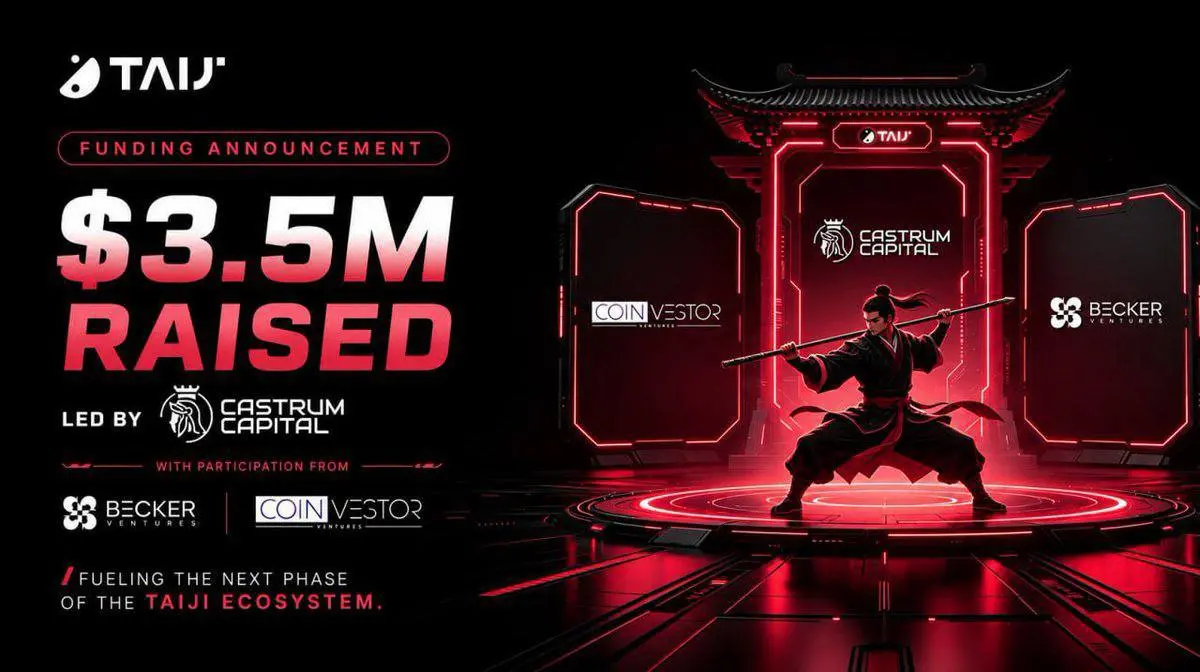
TaiJi Secures $3.5 Million Strategic Funding with Participation from Castrum Capital, Becker Ventures, and Coinvestor Ventures

TaiJi Secures $3.5 Million Strategic Funding TaiJi has announced the completion of a $3.5 million strategic funding round, with participation from Castrum Capital, Becker Ventures, and Coinvestor Ventures. The investment will support product development, upgrades to its AI inference engine, the construction of a multi-agent analysis system, improvements to market data infrastructure, global community expansion, and the advancement of ecosystem partnerships. Operating within the BSC ecosystem, TaiJi is building an AI-driven on-chain market intelligence network. The platform integrates market data, on-chain fund flows, liquidity changes, social media sentiment, news events, and project developments into a unified AI inference system. This approach aims to transform fragmented information into structured event inferences, impact pathways, risk assessments, and follow-up indicators, helping users navigate the increasingly complex and event-driven Web3 market. Unlike traditional market tools, TaiJi is constructing an intelligent analysis framework. It continuously aggregates real-time data to form a native market data network and builds a dataset of post-event market reactions for review. A core component is its multi-agent inference framework, where specialized agents—for markets, on-chain activity, sentiment, risk, and events—collaborate to analyze signals and generate insights. The first phase of TaiJi's product will focus on several key modules: Market Intelligence for real-time data aggregation; a Scenario Engine for AI-driven event inference; an Impact Map visualizing effects on assets and narratives; Risk Signals for identifying potential threats; and My TaiJi for personalized tracking and historical analysis. With this new funding, TaiJi plans to accelerate product development and testing, gradually rolling out its core features while expanding its presence within the BSC ecosystem and the broader global Web3 market.

链捕手06/02 09:26

TaiJi Secures $3.5 Million Strategic Funding with Participation from Castrum Capital, Becker Ventures, and Coinvestor Ventures

链捕手06/02 09:26

Eight Global Central Banks Enter the Fray, Aiming to Claim a Piece of the Stablecoin Pie?

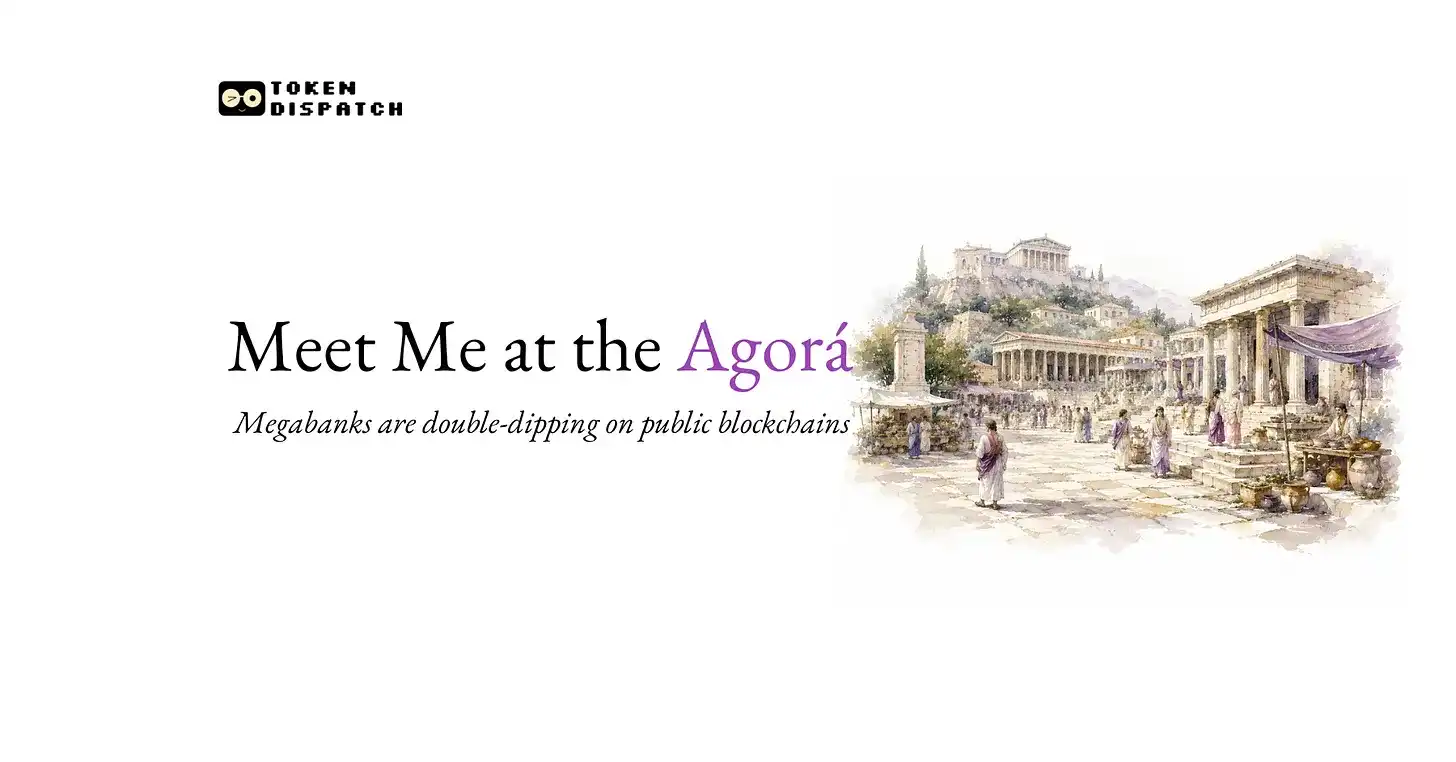
The article discusses the Agorá project, a global cross-border payment system initiative led by the Bank for International Settlements (BIS) with participation from eight major central banks (including the Federal Reserve Bank of New York, Bank of England, and Bank of Japan) and over 40 private financial institutions like JPMorgan and SWIFT. Agorá aims to create a unified platform for the instant settlement of cross-border transactions using tokenized commercial bank deposits. A key feature is its strict "permissioned" design, where funds are pre-labeled by country and smart contracts enforce AML and sanctions checks. This contrasts with the "permissionless" ideal suggested by its ancient Greek namesake. The system employs a two-tier architecture: central banks retain full control over sovereign reserves on separate ledgers, while private entities manage a shared ledger for multi-currency clearing. The project, which completed a prototype in May 2026, seeks to streamline the slow, multi-step process of traditional cross-border payments. It is positioned as a centralized, regulatory-compliant alternative to decentralized stablecoins like Tether, targeting large-scale institutional transfers. The analysis highlights a potential future market split: projects like Agorá could dominate wholesale institutional payments, while public blockchain-based stablecoins retain their role in retail, remittance, and emerging market use cases. This represents an effort by traditional finance to establish boundaries for decentralized networks. The upcoming integration of the EU's Pontes framework with its core settlement system will test this dynamic.

marsbit06/02 09:07

Eight Global Central Banks Enter the Fray, Aiming to Claim a Piece of the Stablecoin Pie?

marsbit06/02 09:07

活动图片