2026-08-10 Segunda

Notícias de cripto - Página 447

Mantenha-se a par do mercado de cripto. Notícias em tempo real, análises, preços, histórias em alta e análise de especialistas — tudo num só lugar.

a16z: Why Prediction Markets Could Become the Infrastructure for 'Future Probabilities'

The article explores the concept and potential of prediction markets, arguing that they are evolving from niche trading tools into a foundational infrastructure for assessing the probability of future events. A prediction market creates tradable contracts on specific event outcomes, using market price to aggregate dispersed information and approximate a collective probability assessment. This mechanism offers advantages over polls or expert forecasts by providing a real-time, incentivized signal, as participants risk real money on their judgments. Key strengths include the ability to generate probabilistic estimates, built-in financial incentives that encourage genuine information gathering, and the capacity to address specialized questions (e.g., AI model performance, geopolitical events) not easily captured by traditional financial markets. The author emphasizes that a prediction market is essentially a market—a tool for both resource allocation and information aggregation. However, the article also outlines significant challenges for reliability and effectiveness. Success depends on participation from well-informed traders, thoughtful contract design, unambiguous outcome resolution, and robust safeguards against manipulation (e.g., by insiders or groups seeking to influence public perception). Without these, prices may be mere noise or tools for propaganda. The future of prediction markets, therefore, lies not simply in scaling up trading volume, but in building more credible and transparent infrastructure. This includes clear rules for participation, auditable settlement mechanisms, and designs that mitigate manipulation. If these challenges can be addressed, prediction markets could become a vital public utility for navigating uncertainty, providing a new class of probability signals about the future.

marsbit06/03 04:49

a16z: Why Prediction Markets Could Become the Infrastructure for 'Future Probabilities'

marsbit06/03 04:49

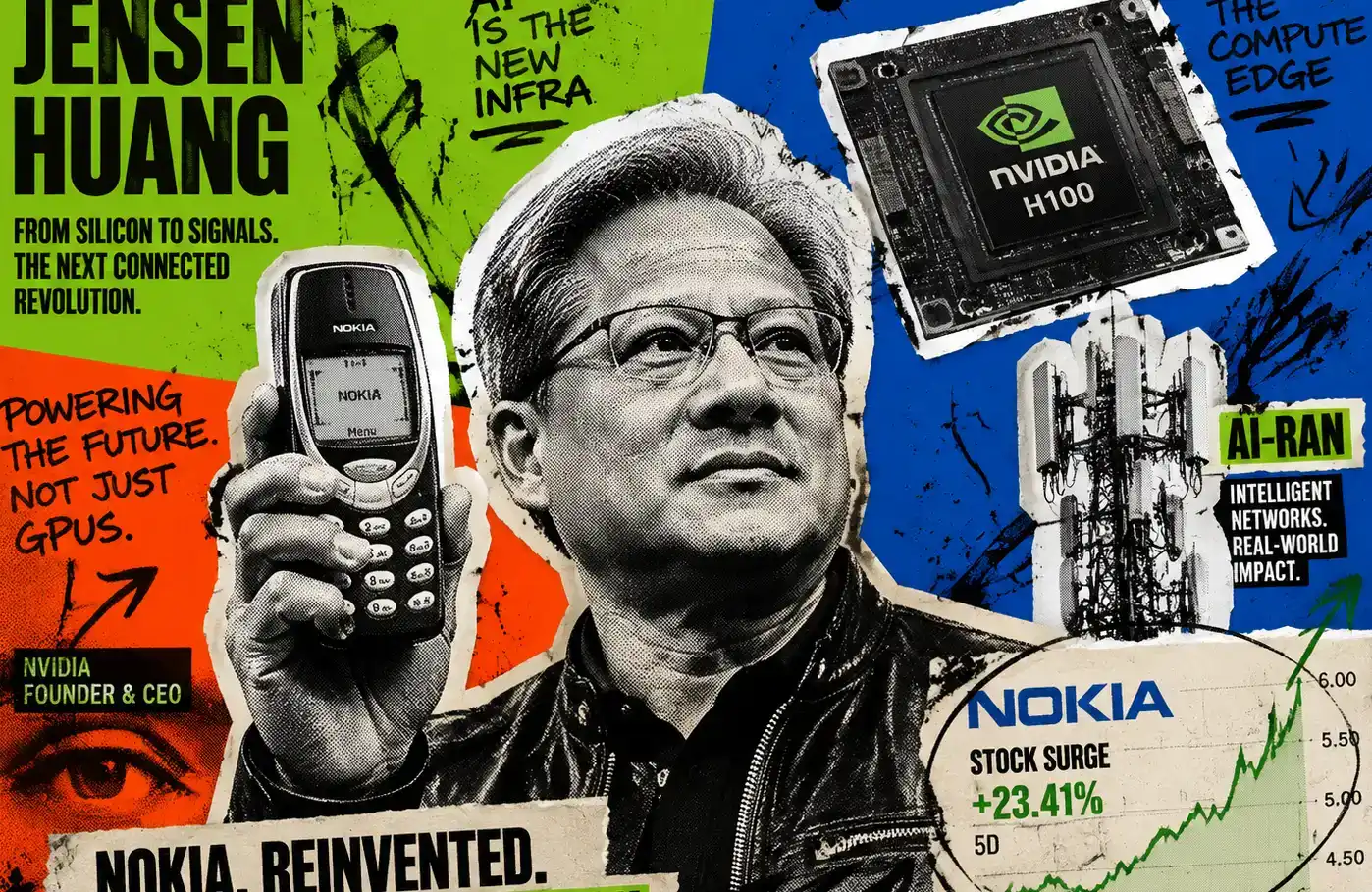
Optical Modules Soar, Why Is NOK the Second Leader After MRVL?

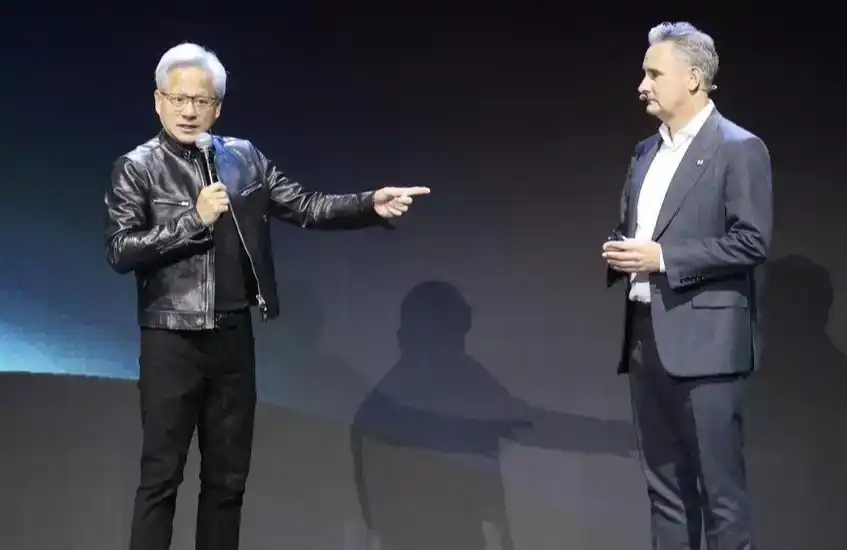
Nokia's stock has surged nearly 170% to around $16.8 since Nvidia's $1 billion investment and AI-RAN partnership in October 2025, reflecting a market re-rating from a cyclical telecom equipment provider to an AI infrastructure player. This rise, adding roughly $60 billion in market cap, is driven by AI capex expansion into telecom edge, RAN, and optical networks. The company's Q1 2026 results showed strong momentum, with AI & Cloud net sales up 49% and 10 billion euros in new orders, prompting Nokia to raise its AI & Cloud market growth forecast to a 27% CAGR (2025-2028). Optical network growth of 20% further strengthens its position in connecting AI data centers. Recent tests with operators like T-Mobile and the opening of an AI Networking Innovation Lab demonstrate progress from concept to early commercial deployment. Nokia's strategy integrates Nvidia GPUs into its network hardware, enabling concurrent AI processing and RAN tasks for real-time optimization and new edge services. However, with a trailing P/E nearing 100x and consensus price targets lagging the current stock price, significant future growth is already priced in. The key constraint now is the pace and scale of large-scale operator deployments. While execution signals remain positive and the company's position in AI edge infrastructure is established, high valuation leaves limited room for error, making tangible commercial contracts the critical factor for further stock performance.

marsbit06/03 04:39

Optical Modules Soar, Why Is NOK the Second Leader After MRVL?

marsbit06/03 04:39

Popular Interactive Projects Collection | Xeffy Launches TG Mini Program; Pod Network Testnet Event (June 3rd)

Hot Interaction Roundup | Xeffy Launches TG Mini-App; Pod Network Testnet Campaign (June 3rd) Original: Odaily Planet Daily (@OdailyChina); Author: Asher (@Asher_0210) This article highlights interactive opportunities for three crypto projects. **1. Xeffy: An RWA + DeFi Yield Project** Xeffy focuses on real-world assets (RWA) and DeFi, aiming to build a one-stop institutional multi-strategy yield and infrastructure portal. It has raised $20 million in funding. The project recently launched a Telegram mini-app. Early participants and contributors can earn token airdrops. * **Interaction Guide:** Visit the Xeffy website, join its Telegram channel via "JOIN NOW," start the app, complete social tasks, then perform daily check-ins and tasks within the app to earn points. **2. Pod Network: A High-Performance Decentralized Exchange** Pod Network is an L1 blockchain aiming to create a high-performance, decentralized market for trading all global assets (stocks, bonds, forex, etc.). It completed a $10 million seed round in January 2025 and launched its testnet in April. * **Interaction Guide:** Go to the Pod Network testnet website, log in with a Google account, link your X account, receive test tokens to participate in stock trading simulations, and join the official Discord for an early community role. **3. Blockscout: An Open-Source Block Explorer** Blockscout is an open-source block explorer for EVM-compatible chains, allowing users to view and analyze blockchain data. It raised $3 million in a seed round in August 2024. * **Interaction Guide:** Visit the Catena (associated with Blockscout ecosystem) waitlist page, connect a wallet to log in and receive initial points, then complete the daily check-in in the "Merits" dashboard to earn 10 points per day.

Odaily星球日报06/03 04:24

Popular Interactive Projects Collection | Xeffy Launches TG Mini Program; Pod Network Testnet Event (June 3rd)

Odaily星球日报06/03 04:24

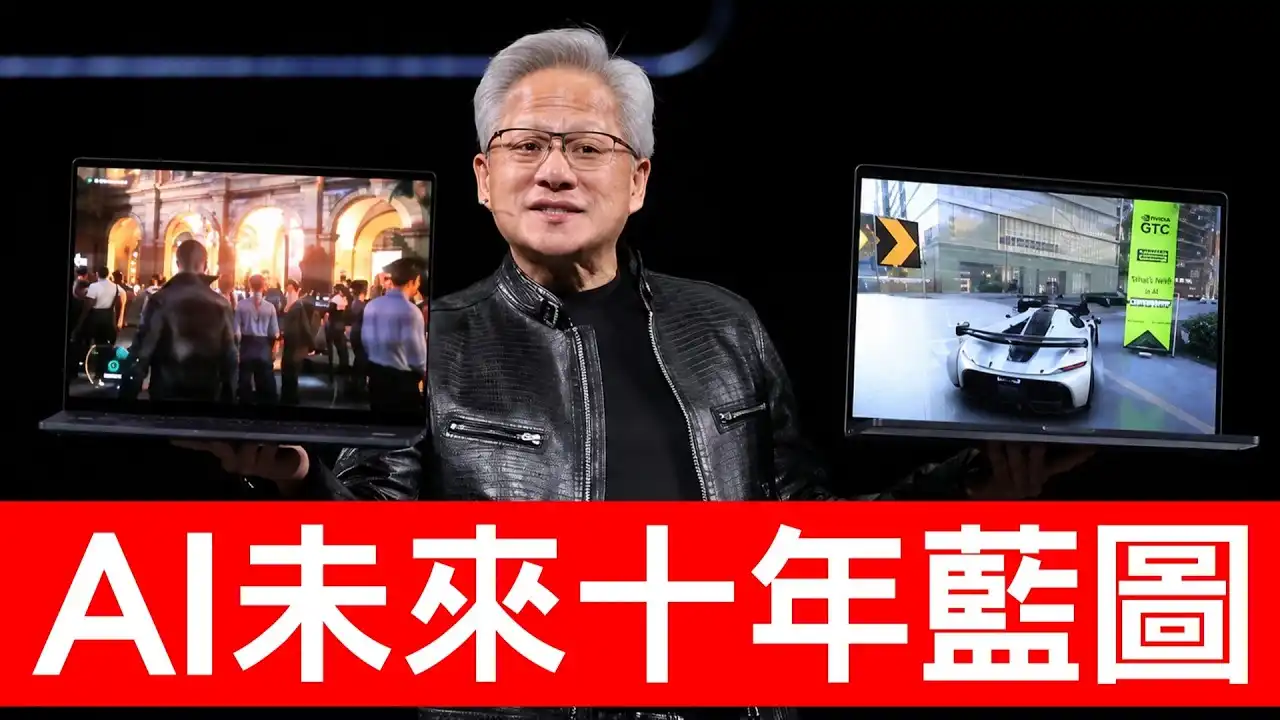
Jensen Huang's 2026 GTC Taipei Speech: The Era of AI Agents is Here, Computing is Revenue

NVIDIA CEO Jensen Huang's 2026 GTC Taipei speech announces the arrival of the "Agent AI" era, where AI transitions from content generation to performing useful work. Huang positions tokens as units of profit and GDP, driving massive demand for computing power and "AI factories." NVIDIA's strategy revolves around a new computing paradigm centered on AI agents, which combine large language models (LLMs) with agent frameworks for planning, memory, and tool use. Key announcements include: * **Vera Rubin:** A complete, end-to-end system (not just a GPU) designed from the ground up to run AI agents at scale, representing NVIDIA's evolution into an infrastructure company. * **Vera CPU:** A revolutionary CPU architecture built specifically for impatient AI agents, prioritizing low latency, single-thread performance, and massive bandwidth over traditional multi-core throughput. * **Enterprise AI Agent Toolkit:** A suite including open models (like Nemotron 3 Ultra), frameworks, tools, and a secure runtime (Open Shell) to enable every company to build and deploy its own AI agents. * **Next-Gen PCs with Microsoft:** A new line of Windows desktops, laptops, and workstations co-developed with Microsoft, featuring the N1X chip and designed to run local AI agents, redefining the personal computer. * **Physical AI Foundation Models:** Introduction of Cosmos 3 for robotics and physical AI, Alpamayo 2 for autonomous driving, and the Isaac GR00T platform—a fully integrated humanoid robot reference system. Huang emphasizes that the same core agent computing pattern (model + framework + tools + runtime) will extend from the cloud and PCs to robots, factories, and edge devices. He concludes that the industry is fundamentally changed as useful, agentic AI creates a vast new market where "compute is revenue."

marsbit06/03 03:35

Jensen Huang's 2026 GTC Taipei Speech: The Era of AI Agents is Here, Computing is Revenue

marsbit06/03 03:35

活动图片