2026-08-10 Segunda

Notícias de cripto - Página 445

Mantenha-se a par do mercado de cripto. Notícias em tempo real, análises, preços, histórias em alta e análise de especialistas — tudo num só lugar.

为什么我依然看好 ETH ?

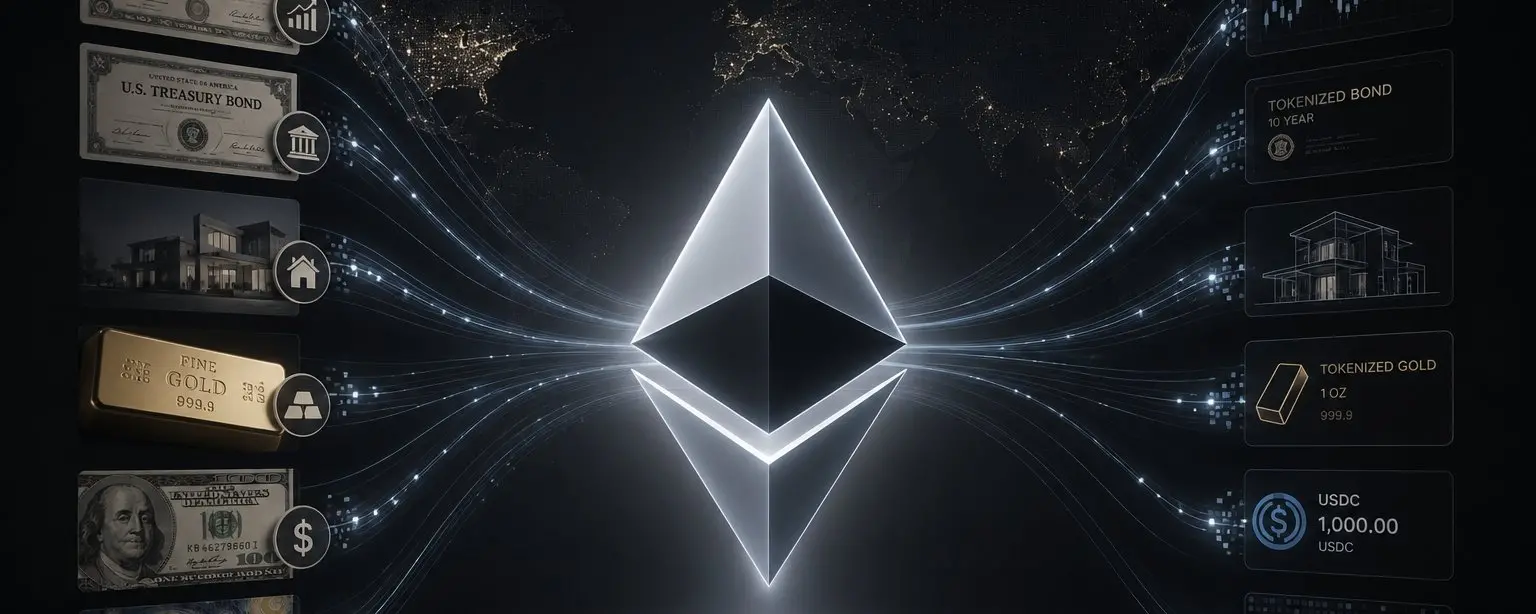
Despite widespread pessimism in crypto circles and ETH's disappointing price performance over the past five years—lagging behind Bitcoin and traditional markets—the author remains highly bullish on Ethereum's future. The article argues that extended consolidation periods, like the one ETH is experiencing, are common precursors to major growth for transformative assets, citing historical examples like Amazon, NVIDIA, Apple, and Microsoft. Crucially, Ethereum's fundamentals are stronger than ever: network activity is at all-time highs with record transaction volume and significantly lower fees, address growth is steady, and over 32% of ETH supply is now staked, securing the network. The core bullish thesis is that Ethereum is poised to become the foundational settlement layer for the global tokenization of real-world assets (RWA), a market worth hundreds of trillions of dollars. Early data supports this: Ethereum already dominates the stablecoin market (~54% share) and over 53% of existing non-stablecoin RWA value resides on its network. This current RWA growth phase is compared to the early days of DeFi, which eventually catalyzed a massive ETH price surge. The potential passage of pro-crypto legislation like "The Clarity Act" could further accelerate this trend. In conclusion, while sentiment is negative, Ethereum's proven security, reliability, and burgeoning role in asset tokenization position it to capture immense value as the world's financial infrastructure migrates on-chain.

链捕手06/03 09:08

为什么我依然看好 ETH ?

链捕手06/03 09:08

"Crypto Retirement Plan" Heavily Criticized by Democrats: Trump Is "Harvesting" American Workers' Pensions

Democratic senators Bernie Sanders (I-VT) and Elizabeth Warren (D-MA), along with Representative Bobby Scott (D-VA), are urging the Labor Department to repeal a proposed rule that would open U.S. retirement savings accounts, such as 401(k)s, to investments in cryptocurrencies like Bitcoin and other alternative assets. The rule, stemming from an August executive order by President Trump, would provide a legal safe harbor for plan fiduciaries offering these volatile assets if they follow a prescribed process. The lawmakers argue in a 14-page letter that the rule dangerously weakens long-standing "prudent man" standards under the Employee Retirement Income Security Act (ERISA), potentially exposing the $14.2 trillion in 401(k) savings to high-risk, minimally regulated investments. They cite warnings from FINRA about crypto's high volatility and from the FBI about massive cryptocurrency scam losses. The letter also alleges a conflict of interest, noting that President Trump's adult children manage the family's crypto business, which has reportedly raised billions from digital token sales. They contend the rule change could enrich the Trump family at the expense of workers' retirement security. In defense, the Trump administration frames the rule as expanding worker choice. Acting Labor Secretary Keith Sonderling stated it ends the department "picking winners and losers," requiring fiduciaries to follow a prudent process. Treasury Secretary Scott Bessent supported it as a step toward the president's "Golden Age."

marsbit06/03 08:47

"Crypto Retirement Plan" Heavily Criticized by Democrats: Trump Is "Harvesting" American Workers' Pensions

marsbit06/03 08:47

When Google Also 'Prints Stocks' to Build AI, Whose Narrative is Shattering the High Valuations of Neocloud?

Google has announced its first equity financing since 2005, a series of moves totaling $80 billion that signal a strategic challenge to Nvidia's GPU dominance in the AI compute market. This impacts "Neocloud" companies like CoreWeave, Nebius, and IREN, whose valuations are heavily tied to Nvidia's perceived uniqueness. Google's three-part strategy involves: launching new TPU chips (TPU 8t/8i) and selling them to third parties for the first time; forming a $25 billion compute-as-a-service joint venture with Blackstone; and raising ~$50 billion in new equity (part of an $80B package) to fund AI infrastructure, underscoring the massive capital demands even for tech giants. This marks a divergence from Microsoft's path. Microsoft, lacking a mature in-house AI chip, relies heavily on outsourcing to Neocloud providers using Nvidia GPUs. Google, with its proprietary TPU, is pursuing vertical integration—building its own data centers, selling chips, and competing directly with Neocloud services. While Neocloud firms have strong near-term revenue from locked-in Nvidia GPU contracts (e.g., CoreWeave's ~$100B backlog), Google's moves undermine their long-term valuation narrative based on Nvidia's sole supremacy and perpetual supply shortage. TPU performance claims and adoption by firms like Anthropic add credibility to Google's alternative. The AI compute market is transitioning from a uniform seller's market to a layered one: top AI labs are diversifying their hardware stacks; hyperscalers are pursuing different chip strategies; and financing costs will become a critical differentiator, favoring players like Google with lower capital costs. Key metrics to watch include the progress of the Google-Blackstone JV, expansion of the TPU customer base beyond Anthropic, and potential shifts in Microsoft's sourcing strategy. If Google succeeds on these fronts, the Neocloud investment thesis will require significant reassessment.

marsbit06/03 07:04
When Google Also 'Prints Stocks' to Build AI, Whose Narrative is Shattering the High Valuations of Neocloud?

marsbit06/03 07:04

活动图片