2026-08-10 Segunda

Notícias de cripto - Página 397

Mantenha-se a par do mercado de cripto. Notícias em tempo real, análises, preços, histórias em alta e análise de especialistas — tudo num só lugar.

Why Does Ethereum Still Need Kohaku? Privacy Concerns Aren't Just in Transactions

The article "Why Ethereum Still Needs Kohaku: Privacy Issues Extend Beyond Transactions" explains the Kohaku initiative as a suite of privacy-first tools designed to improve user privacy on the Ethereum network. It addresses the problem that while Ethereum's transparency enables innovation, it also exposes users' financial activities, asset holdings, and social connections when they reuse a single address. Kohaku aims to bridge the gap between existing privacy protocols (like Railgun, Privacy Pools) and practical user experience by integrating privacy features into wallets, developer tools, and daily interactions. Key focuses include: enabling wallets to manage multiple accounts for different purposes ("many accounts, many you"), facilitating controlled visibility for transactions instead of full transparency, protecting user data during RPC queries and network activity, and providing developers with easier ways to integrate privacy. The article clarifies that Kohaku is not a single product but an ongoing effort to make privacy a default, usable component of the ecosystem, moving beyond complex protocols to practical application. It counters common misconceptions, arguing that privacy is a fundamental user right for normal activities, not just for anonymity, and that it can coexist with compliance through selective disclosure. Ultimately, Kohaku represents an essential step for Ethereum's maturation, ensuring users can participate in the open network while maintaining control over their personal information boundaries.

marsbit06/09 00:44

Why Does Ethereum Still Need Kohaku? Privacy Concerns Aren't Just in Transactions

marsbit06/09 00:44

AI Kills India's Most Profitable Business: 2 Trillion

The article discusses the significant impact of AI on India's IT outsourcing industry, a sector that has been the backbone of the country's economic growth for three decades. On June 3, India's IT stock index plunged 5.8%, with major firms like TCS, Infosys, and Wipro seeing sharp declines. The panic stems from the realization that AI tools capable of coding, testing, documentation, and customer service directly threaten India's core business model of selling programmer hours. The industry, which generated approximately $282 billion in revenue in the 2025 fiscal year with nearly 80% from exports, faces an existential challenge. The traditional growth logic—more projects requiring more engineers—is being dismantled. Estimates suggest AI could reduce development teams from 100 people to just 2-3 for certain tasks, slashing project costs and company profit margins. Consequently, leading firms have begun reducing headcounts, a reversal of a decades-long trend, and entry-level job openings have plummeted. The risk is profound as IT services account for over 7% of India's GDP and support millions of jobs. With high youth unemployment, the AI-driven reduction in low-to-mid-level engineering roles poses a severe socio-economic threat. However, India also shows potential to adapt and lead in the AI era. Reports indicate it has the world's highest rates of AI tool adoption among employees and managers. Major IT firms are rapidly deploying enterprise AI solutions like Microsoft Copilot. The new opportunity may lie not in competing to build foundational AI models but in becoming the world's premier center for AI implementation, deployment, and productivity enhancement—exporting AI-powered services and expertise instead of just manual coding labor.

marsbit06/09 00:38

AI Kills India's Most Profitable Business: 2 Trillion

marsbit06/09 00:38

Fei-Fei Li's Manifesto for World Models

"Feifei Li's World Model Manifesto" draws a crucial distinction between current AI's linguistic prowess and its lack of understanding of the physical world. Citing Wittgenstein, Li argues that true intelligence requires moving beyond text statistics to comprehend physical laws like optics, inertia, and collision. The article diagnoses the current confusion around "world models" and proposes a clear taxonomy based on the Partially Observable Markov Decision Process (POMDP) framework. Li identifies three core, interdependent pillars for building such models: 1) The **Renderer**, which masters visual plausibility and pixel generation (e.g., Sora, image models) but lacks structural integrity. 2) The **Simulator**, which prioritizes strict adherence to physical laws (mass, friction, collision) and is essential for robotics and real-world application, though it is computationally demanding and data-hungry. 3) The **Planner**, which connects perception to action, enabling decision-making in complex, unstructured environments. Li posits the **Simulator as the critical nexus** linking rendering and planning, highlighting NVIDIA's Omniverse as a leading example. Mastering physical simulation is key to industrial AI applications. Despite challenges like scarce annotated 3D data and "physics-unrealistic" generative outputs, a convergent trend is emerging. The future lies in a **unified foundational model** that seamlessly integrates rendering, simulation, and planning into a dynamic, interactive system. Ultimately, this pursuit of "world models" represents the next evolutionary step for AI: developing **spatial intelligence** to interact with the physical world. It's not merely an algorithmic challenge but a redefinition of digital-physical standards on the path to AGI. However, as noted by Yann LeCun, achieving even rudimentary physical understanding akin to a dog's intelligence may still be years away.

marsbit06/09 00:37

Fei-Fei Li's Manifesto for World Models

marsbit06/09 00:37

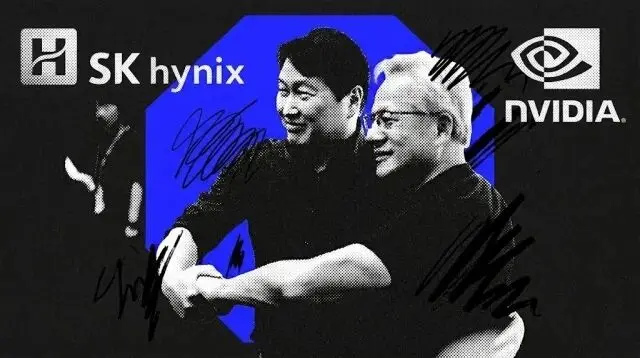
Huang Renxun Dramatically 'Saves' South Korean Stock Market

In early June, South Korea's stock market experienced a sharp decline, with the KOSPI index dropping over 5% and triggering a trading halt. Amid this volatility, NVIDIA CEO Jensen Huang's visit to Seoul provided a dramatic boost to market sentiment. During his trip, Huang held a dinner meeting with SK Group Chairman Chey Tae-won and SK Hynix CEO Kwak Noh-Jung. He announced that NVIDIA's new Vera CPU would utilize SK Hynix DRAM and confirmed a multi-year technical collaboration between the two companies. This partnership aims to co-develop next-generation memory for NVIDIA's AI infrastructure roadmap, covering products from data center supercomputers to personal AI devices. Huang also publicly commented that AI company stocks were attractively priced. A key announcement was that NVIDIA's upcoming Vera Rubin AI supercomputer systems will use HBM4 memory, with supply qualifications granted to all three major suppliers: SK Hynix, Samsung Electronics, and Micron Technology. Despite this multi-sourcing strategy, Huang warned that the industry-wide chip shortage, affecting everything from wafers to packaging, is expected to persist for several years due to relentless demand from global AI factory construction. The collaboration extends beyond memory supply. SK Hynix will employ NVIDIA's AI platforms and Omniverse digital twin technology to enhance its own semiconductor design, simulation, and manufacturing processes, aiming for more autonomous factory operations. This visit builds upon a prior October 2025 agreement for SK Group to build a large-scale AI data center using over 50,000 NVIDIA GPUs. Huang's itinerary also included meetings with other Korean giants like Hyundai, LG, and Samsung, indicating NVIDIA's broader strategy to deepen ties with South Korea's tech industry.

链捕手06/08 15:45

Huang Renxun Dramatically 'Saves' South Korean Stock Market

链捕手06/08 15:45

When Inference Becomes a Scarce Resource, Who Captures the Value?

When Inference Becomes the Scarce Resource, Who Captures the Value? The core AI bottleneck has shifted from model training to inference (runtime execution). While concerns persisted about an "AI compute gap"—initially a $200B, now a $600B problem—the market is now recognizing that the solution and value lie in the inference layer. Nvidia's financial restructuring around "serving tokens" and Cerebras's successful IPO highlight this shift. Inference is a recurring, usage-based cost, estimated to be 10-50x larger than the one-time training market, especially with the rise of agentic AI. The inference stack spans six layers: silicon (e.g., Nvidia), bare metal (e.g., CoreWeave), GPU rental/aggregation, deployment/optimization, model APIs, and end applications. Most companies operate in one layer. However, Hyperbolic uniquely spans three layers (GPU rental, deployment, and model APIs) without owning any hardware. It aggregates fragmented GPU supply from multiple cloud providers into a standardized pool, offering developers the cheapest available compute through intelligent routing. Its multi-cloud aggregation creates a data moat and a flywheel: more supply leads to better pricing data and liquidity, attracting more developers and providers. In contrast, applications like Venice operate at the top of the stack, reselling privacy-wrapped inference but remaining dependent on and constrained by the underlying compute costs they purchase. As inference demand explodes, value accrues not just to consumer applications but increasingly to the aggregation and routing layer that captures their cost of revenue. The coming potential GPU oversupply reinforces this dynamic. While hardware owners may suffer from depreciation, asset-light aggregators like Hyperbolic benefit from price arbitrage, routing workloads to the cheapest available capacity. The ultimate winner in the inference economy may not be the entity with the most GPUs, but the one that can most efficiently discover, aggregate, and route the world's fragmented compute.

链捕手06/08 15:39

When Inference Becomes a Scarce Resource, Who Captures the Value?

链捕手06/08 15:39

活动图片