2026-08-06 Quinta

Notícias de cripto - Página 291

Mantenha-se a par do mercado de cripto. Notícias em tempo real, análises, preços, histórias em alta e análise de especialistas — tudo num só lugar.

A Hard-Fought Battle to Defend Par Value: STRC Drifts Further Away from $100

STRC, the dividend-paying stock issued by Michael Saylor's bitcoin reserve firm Strategy (formerly MicroStrategy), is trading far below its intended $100 par value, closing recently at $80.84. With a key dividend snapshot date approaching, Saylor aims to pull the price back to $100, as per SEC filings stating the company's goal to stabilize the stock near that level. The situation is complicated by the June volume-weighted average price (VWAP) falling below $95, triggering an internal rule that mandates the next dividend increase to be at least double the standard 0.25% per cycle, potentially pushing the annualized dividend yield to 12%. However, attracting buyers with this higher yield faces challenges: the payout is spread over 24 bi-monthly installments, the board can alter or suspend dividends at any time, and there is no guarantee against further price declines. Beyond raising dividends, Strategy has limited tools to boost the stock. These include direct share buybacks (never utilized), halting new share issuances above $100 (which currently cap the price), selling ordinary MSTR shares to build a cash buffer for dividends (with limited effect so far), or announcing special shareholder benefits. Historically, STRC has reclaimed the $100 mark, such as in October last year, driven by a combination of dividend fulfillment, a rate hike, and a pause in share sales. The core question remains how much cost and effort Strategy is willing to bear to attract the necessary buying pressure to restore the $100 par value.

Foresight News06/25 08:00

A Hard-Fought Battle to Defend Par Value: STRC Drifts Further Away from $100

Foresight News06/25 08:00

Fable 5 is about to make a comeback, code exposed? Anthropic CEO kicked out of the White House

Fable 5, a previously restricted AI model from Anthropic, appears poised for a comeback. Evidence from leaked code in the Claude Code v2.1.190 version suggests a shift in its business model from a separate purchase to a potentially limited weekly usage allowance within standard Claude subscriptions. Furthermore, the model has reportedly reappeared in Amazon Bedrock documentation. This potential revival coincides with significant internal changes at Anthropic. According to a report by The Wired, CEO Dario Amodei was reportedly sidelined from negotiations with the Trump administration over Fable 5's export restrictions. Government officials found him difficult to communicate with. Co-founder Tom Brown and policy head Sarah Heck took over discussions, leading to more productive technical talks aimed at addressing White House security concerns about the model being "jailbroken." External pressure is mounting as a bipartisan group of US lawmakers has demanded answers from the Commerce Department by a June 26 deadline regarding the criteria and timeline for potentially reinstating public access to Fable 5. The potential return of Fable 5 comes as competitors OpenAI and Google have reportedly delayed their own major model releases. If Anthropic successfully navigates the government's security review, Fable 5 could gain a significant "safety-certified" advantage in the enterprise market. The countdown to the June 26 deadline is now underway.

marsbit06/25 07:29

Fable 5 is about to make a comeback, code exposed? Anthropic CEO kicked out of the White House

marsbit06/25 07:29

Comprehensive Analysis of the AI Inference Market: How Can Crypto Projects Break Through?

"AI Inference Market: A Strategic Overview and Crypto's Path to Disruption" The AI inference market, where trained models generate responses to user prompts, is now the primary economic driver, surpassing model training in value. This market is fragmented: hyperscalers (AWS, Google, Microsoft) dominate enterprise reliability; specialized providers (Together, Fireworks) optimize performance; and routing platforms like OpenRouter act as critical bottlenecks, dynamically allocating requests based on cost, latency, and privacy. Crypto AI networks are not competing directly on reliability but are carving out distinct niches: permissionless access, lower-cost supply, privacy, verifiable computation, and agent-native payments. Key projects include Chutes (decentralized inference platform), Akash & io.net (GPU marketplaces), Targon (confidential computing), Darkbloom & Venice (private, consumer-focused inference), and NuNet (orchestration for distributed workloads). The core differentiator is that traditional providers sell trust and enterprise workflows, while crypto networks offer new incentive loops, censorship resistance, and programmable access to resources like compute. For crypto projects to succeed, key metrics are paid token volume (not just usage), sustainable GPU provider revenue, integration into routers like OpenRouter, robust verification against fraud, and genuine privacy guarantees. Ultimately, market control will belong to entities that route, verify, and settle demand—not just those supplying raw compute. The inference market is evolving to resemble a financial system, with tokens as units of account, and crypto's unique value propositions position it to capture emerging segments in this expanding landscape.

Foresight News06/25 07:08

Comprehensive Analysis of the AI Inference Market: How Can Crypto Projects Break Through?

Foresight News06/25 07:08

The War Without a Unified Name: The Domestic Tech Giants' World Model Landscape

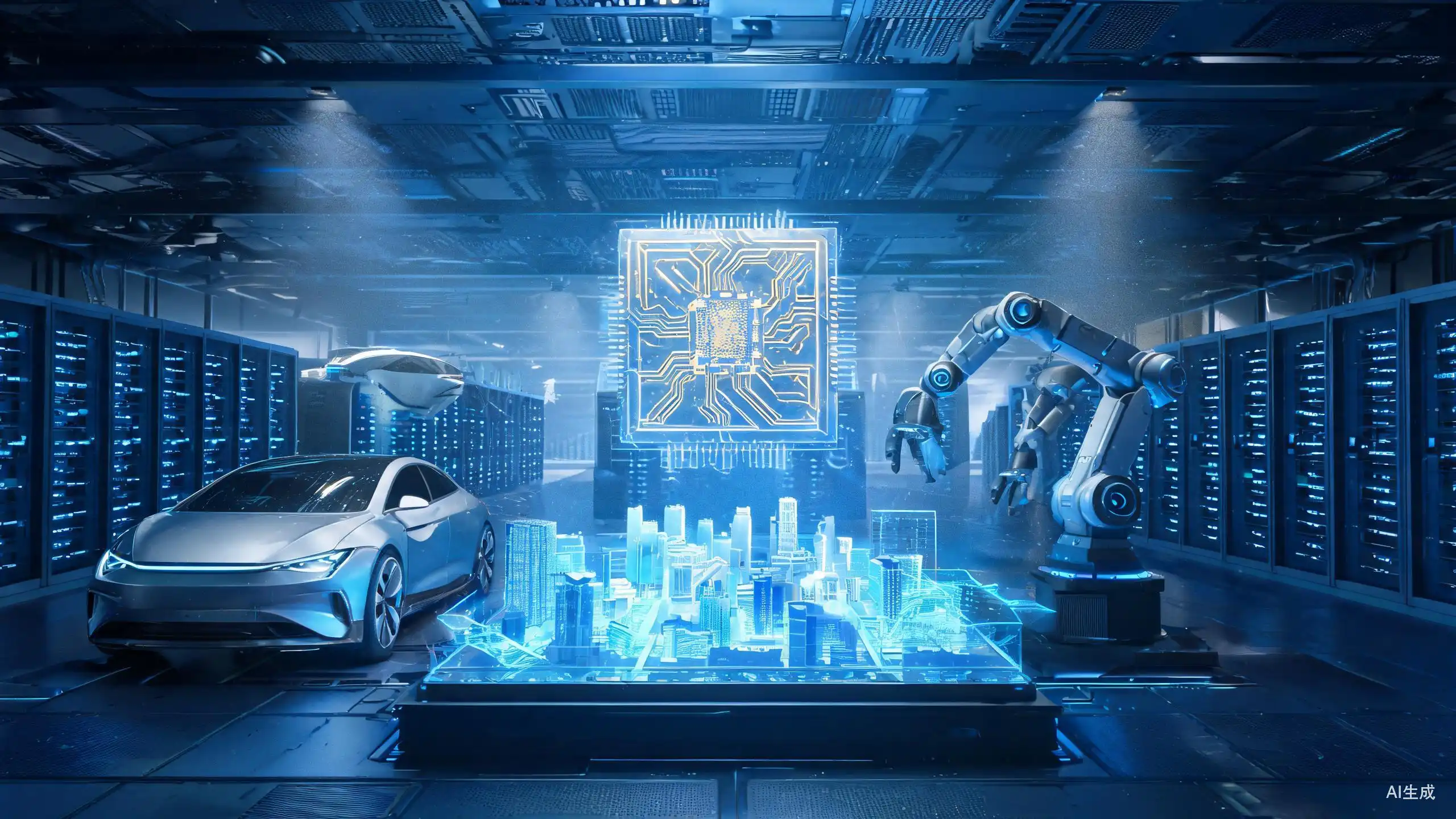
The article outlines the diverse and fragmented landscape of "World Models" in China's tech industry, where major players are pursuing similar goals under different names like world foundational models, physical AI, or integrated within autonomous driving and embodied intelligence systems. The core aim is to enable AI to create an internal, dynamic environment for simulation, reasoning, and learning, reducing reliance on infinite real-world data. This "data engine" allows for unlimited generation, experimentation, and iteration. The report categorizes the approaches of different companies: * **Internet Giants:** Alibaba is developing models for linguistic, virtual, and physical worlds (Qwen-AgentWorld, HappyOyster, Qwen-RobotWorld). Tencent's HY-World focuses on 3D, game, and social scenarios. ByteDance leverages its vast video data for a potential "digital twin" model. Huawei integrates its model into industrial applications like smart cars and robotics without separately branding it. Baidu embeds world model capabilities within its Apollo autonomous driving and Ernie systems. * **Automakers:** Companies like NIO, Li Auto, XPeng, and Geely are using world models as virtual "driving schools" and "testing grounds." They generate complex scenarios (e.g., rain, snow) to train and validate autonomous driving systems in simulation, aiming for more capable and safer AI drivers. * **Autonomous Driving Suppliers:** Firms such as Momenta, Horizon Robotics, Haomo.ai, and DeepRoute.ai are building the underlying "world engines." They focus on large-scale video generation for simulation, reinforcement learning, and enhancing end-to-end autonomous driving models, often integrating these capabilities into commercial products. While startups bring focus and innovation, they face challenges like limited data, compute resources, and deployment channels. Large companies possess these advantages and are rapidly transitioning world models from research projects into core business infrastructure powering products in vehicles, games, and industry. The conclusion is that world models represent an evolution and convergence of existing AI fields into crucial industrial infrastructure, moving the competition from simply building a model to effectively deploying it to understand and interact with the physical world.

marsbit06/25 06:52

The War Without a Unified Name: The Domestic Tech Giants' World Model Landscape

marsbit06/25 06:52

活动图片