2026-08-21 Sexta

Notícias de cripto - Página 1036

Mantenha-se a par do mercado de cripto. Notícias em tempo real, análises, preços, histórias em alta e análise de especialistas — tudo num só lugar.

Strive Buys Strategy Stock, Bitcoin Treasury Firms Begin Interlocking Dolls

On March 11, Strive, a Bitcoin treasury company, announced it had purchased $50 million worth of preferred shares (STRC) issued by MicroStrategy (now Strategy)—another major corporate Bitcoin holder. This represents over one-third of Strive’s treasury. Both companies use raised capital to buy Bitcoin, and both issue high-yield preferred shares (SATA from Strive, STRC from Strategy) to fund these purchases. Strive’s Chief Risk Officer justified the move by claiming STRC offers better risk-adjusted returns than U.S. Treasuries. However, this creates a circular dependency: Strategy uses proceeds from STRC to buy Bitcoin, and Strive relies on Strategy’s Bitcoin performance to earn yield on its STRC investment—which it may use to buy more Bitcoin or pay dividends on its own SATA shares. Strive, founded in 2022, has rapidly accumulated 13,311 BTC (worth ~$930 million), making it a top-ten corporate Bitcoin holder. Its stock (ASST) has fallen 97% from its peak, trading far below its Bitcoin-backed NAV. Despite this, Strive continues to aggressively accumulate Bitcoin and raise dividends on SATA shares. This reflects a broader trend: over 200 companies now emulate MicroStrategy’s “Bitcoin treasury” strategy. As these firms begin investing in each other’s debt-like instruments, the ecosystem becomes increasingly interconnected—and vulnerable—to Bitcoin's price volatility.

marsbit03/12 05:20

Strive Buys Strategy Stock, Bitcoin Treasury Firms Begin Interlocking Dolls

marsbit03/12 05:20

Behind the 16% User Growth: A Review of Huobi HTX's February Report and Three Potential 'Catch-up Sectors' in the Post-Holiday Crypto Market

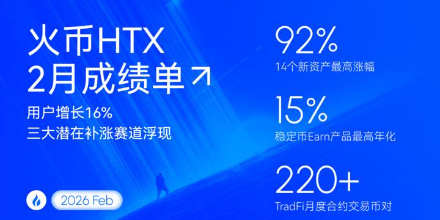
Huobi HTX February Review: User Growth Up 16%, Identifying Three Potential "Catch-Up Sectors" in the Post-Holiday Crypto Market Following the Spring Festival, the crypto market entered a new trading cycle. Capital began rotating from single hot sectors to multiple areas, with AI, privacy computing, DeFi, and stablecoin yields remaining active. Huobi HTX saw a 16% month-on-month increase in new registrations and ranked second in the industry for net monthly capital inflows. Its "Clean Assets" reserve climbed to a historic sixth place globally. The platform highlighted three key sectors with potential for growth: 1. **AI Meme Sector:** Projects combining AI narratives with meme culture, like those in the OpenClaw ecosystem, gained traction due to strong community appeal. Huobi HTX listed 14 new assets in February, including popular Base ecosystem AI Meme tokens like CLAWD, MOLT, and CLAWDCH. 2. **Privacy Computing & Tech Infrastructure:** Technical projects like the ZK protocol ZAMA and privacy infrastructure ESP (which saw an 80% surge post-listing) were launched. Other performers included Base DeFi project UP (+60%) and automation token ROBO (+92%). 3. **Stablecoin Yields:** As a hedge against market fluctuations, stablecoin earnings products gained popularity. Huobi Earn platform offered subsidized annual yields of up to 15% on assets like USDT and USDC, with its USDe product exceeding $100 million in holdings. Product upgrades included a new TradFi section offering derivatives for gold, silver, and crude oil, and the public release of its index price composition data for greater transparency. Globally, HTX Ventures participated in major conferences, and the platform advanced its expansion into markets like Pakistan following regulatory approval there. A large-scale trading competition with a $1.5 million prize pool also boosted user engagement. Concluding, Huobi HTX continues to expand its trading ecosystem through diversified assets, product optimization, and global布局 (layout), capitalizing on the market's recovery.

marsbit03/12 05:15

Behind the 16% User Growth: A Review of Huobi HTX's February Report and Three Potential 'Catch-up Sectors' in the Post-Holiday Crypto Market

marsbit03/12 05:15

When AI Starts Paying with USDC, Circle's Victory and the Custodial Challenge of Funds

The article discusses the rise of AI agents as independent economic entities, highlighting that 99% of their payments are made using USDC, positioning Circle as a key beneficiary. Over a nine-month period, AI agents conducted 140 million transactions totaling $43 million, with an average transaction size of $0.31. This shift signifies AI's transition from conceptual to real economic activity, raising questions about financial infrastructure and asset management for autonomous agents. Circle’s three-layer infrastructure—stablecoin issuance, efficient on-chain settlement, and integration with traditional finance—enables seamless micro-payments. However, as AI agents accumulate capital, they will need to manage idle funds, creating opportunities for Real World Asset (RWA) tokenization. Projects like Ondo Finance are making RWA assets machine-readable and programmable, allowing AI agents to automate investments in tokenized treasury bonds or other low-risk assets. The integration of payment and asset management systems could enable AI agents to optimize operational efficiency by automatically investing surplus USDC into yield-generating RWA products. However, challenges remain, including data authenticity, model and liquidity risks, regulatory disparities, and technical security. The article concludes that while Circle provides the "payment nervous system" for AI economies, RWA must evolve to serve as the "energy storage system," ensuring AI agents can manage assets as efficiently as they execute transactions.

比推03/12 04:31

When AI Starts Paying with USDC, Circle's Victory and the Custodial Challenge of Funds

比推03/12 04:31

活动图片