Surging and Warning Signs Appear Simultaneously: Is SHIB Building Up for a Big Move? ADA Flatlines with Warning, BEAT Soars 480% but Hides Risks, ZEC Holds Firm at $400

金色财经Publicado em 2025-12-16Última atualização em 2025-12-16

Resumo

The cryptocurrency market is currently showing mixed signals with significant divergence across major tokens. SHIB appears to be consolidating after months of decline, showing signs of reduced selling pressure and potential accumulation by large holders. Key indicators like RSI suggest building momentum, though it remains under its moving averages. ZEC is struggling, down 3.82%, and is heavily reliant on holding the crucial $400 support level. Its performance is being dragged down by the broader privacy coin sector. A break above $425 is needed to signal a potential bullish trend reversal. ADA has triggered a major bearish signal with its weekly SuperTrend indicator turning negative—a similar signal in 2022 preceded an 80% crash. It has already retreated from $0.48 to $0.40, indicating strong downward pressure. BEAT has been an outlier, surging 480% in 30 days due to high speculative interest, AI-driven token burns, and extreme scarcity (only 16% of supply in circulation). However, it faces strong resistance at its all-time high of $3, and indicators like MACD show buying momentum cooling, suggesting a potential pullback toward $2.40 or even $1.25. Overall, the market is highly fragmented. Caution is advised—watch key support and resistance levels before making moves.

The crypto world is now directly上演 "some are building momentum while others panic"! SHIB appears to be lying flat but is actually quietly蓄力, ZEC is holding firm at the $400关口, ADA has triggered a danger signal, and only BEAT is疯狂蹦迪 with a 480% surge. This剧情 is more exciting than a TV drama~

? SHIB: Pretending to Slack Off, Are Big Players Secretly Accumulating?

Shiba Inu is主打 "deceptive operations" this time! On the surface, the price seems平平无奇, but it actually hides a key signal — after falling for several months, it's no longer accelerating downward but instead starting to "横盘压缩". This isn't a sign of weakness; it's selling pressure slowly decreasing!

The most crucial point is the "volume-price divergence": the price drops slightly, but the trading volume doesn't follow at all. The recent几次下跌的成交量 is much weaker than during the previous抛售. Technically, it's even more interesting: although the long-term trend is still bearish, there are already "higher lows", indicating that big players aren't chasing the decline but are instead secretly布局 during low market sentiment and low volatility.

QQ:326035359

DingTalk:msp252580

The RSI indicator is also in the neutral zone, not oversold but showing signs of increasing momentum. The bears haven't succeeded in smashing it down completely. However,普通交易者 are still panicking, as the moving averages are still压制在上面. To summarize: SHIB is now in "蓄力模式". As long as the volume放大 and it holds the recent highs and lows, it might suddenly reverse and rise!

?️ ZEC: Holding Firm at $400! Privacy Coin Sector Drags It Down, Needs to Break $425 for Prospects

The privacy coin leader ZEC is having a tough time! It fell 3.82% in the past 24 hours, didn't follow Bitcoin's rebound, and is being dragged down by the entire privacy coin sector — Monero fell 0.89%, and Dash was even worse, falling 14.5% in four days. Truly, "teammates aren't helping".
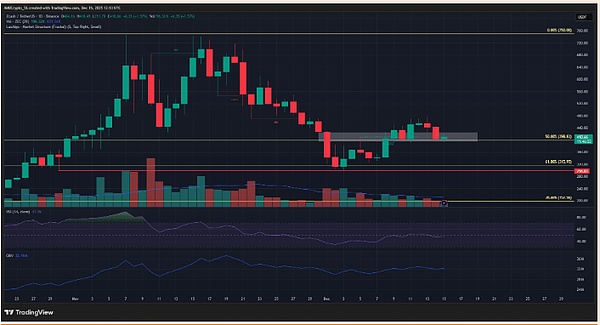
Fortunately, the psychological support level at $400 is still holding strong. It has been tested three times in the past week and held. Moreover, after breaking through $409.3 on December 9th, the area around $410 has become a stable demand zone. OBV and RSI also hint at a shift.
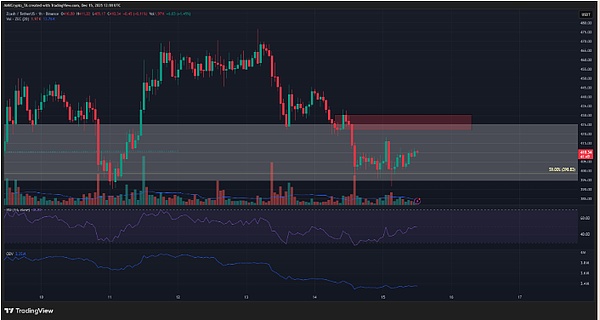
But the problems are also obvious: selling pressure on lower time frames is intensifying, and多次测试支撑 has weakened its strength. A break below $400 is not impossible.

QQ:326035359

DingTalk:msp252580

Don't rush to go long! Wait for ZEC to break through the local resistance at $425 and successfully retest and hold above it before considering the trend aligned. Otherwise, remain neutral and wait for improved Bitcoin capital inflows and better market sentiment~

? ADA: SuperTrend Turns Bearish! Last Time This Happened, It Fell 80%, Are You Worried Now?

ADA has triggered a "danger signal" this time! Analyst Ali Martinez revealed that the weekly "SuperTrend indicator" for ADA has turned bearish — this indicator is a key line for judging rises and falls; price above it is bullish, below it is bearish.
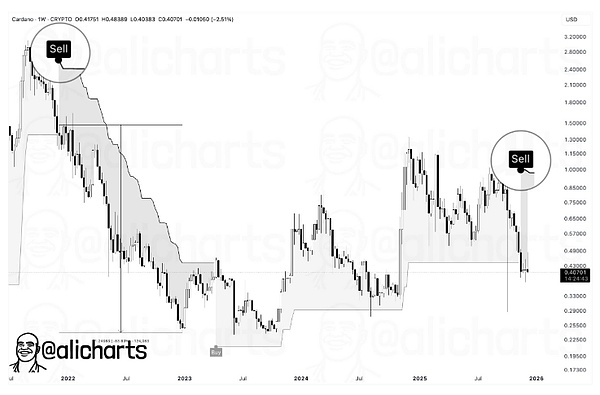
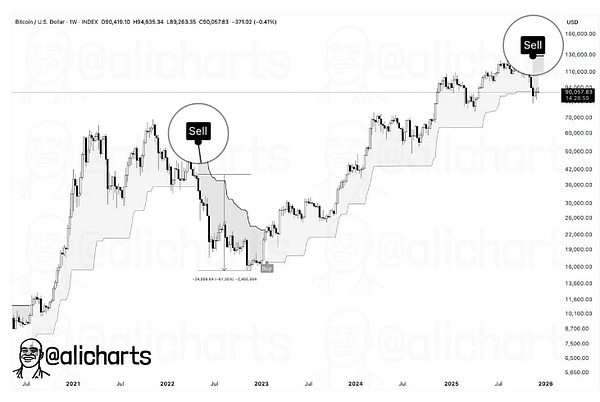
Even scarier is that the last time ADA showed this signal was in 2022, and it directly fell 80%! And it's not just ADA; Bitcoin's SuperTrend has also turned bearish. The last time this happened was during the bear market, and BTC fell 60%.
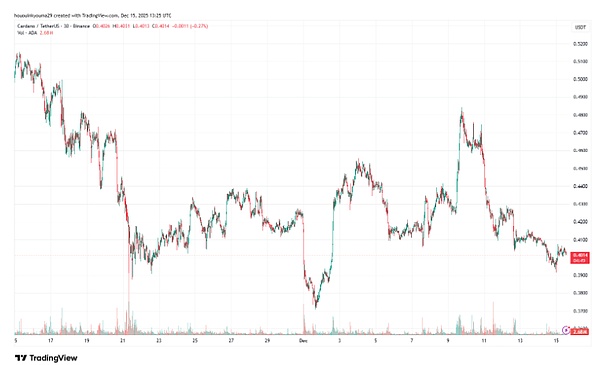
Now ADA is even worse. It just反弹到 $0.48 last week, then turned around and fell back to $0.40. This downtrend is likely to continue.
? BEAT: Meme Coin Surges 480%! AI Burning + Scarcity, But Hides a Correction Risk?

The new sensation on BNB Chain, BEAT, has gone crazy! It's only been listed for a month, surged 84% in 24 hours, and累计暴涨 480% in the past 30 days, directly rushing into the top 100 by market cap. In a weak market, it's like "a breath of fresh air".

Why such a猛 surge? Three key points:

1. Speculative sentiment is maxed out, with $20 million in volume on DEX platforms alone, and nearly 7000 more buyers than sellers;
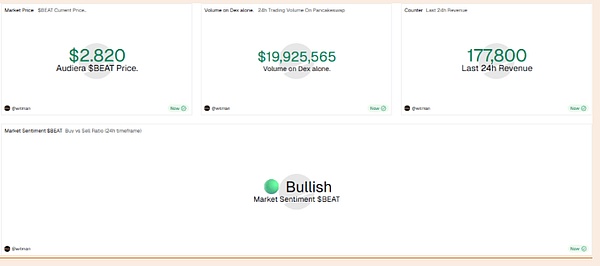
2. Scarce circulating supply, only 16% of the total supply — scarcity drives value;

3. AI-driven token burning, plus integrated AI payments, reducing supply while generating income, maximizing deflationary pressure.
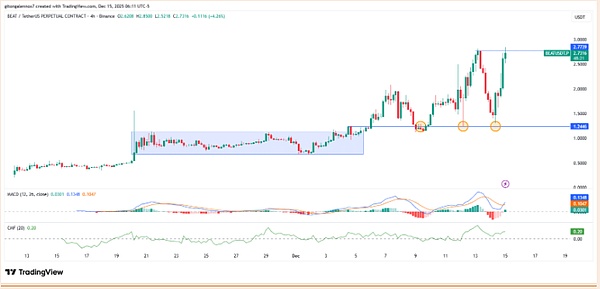
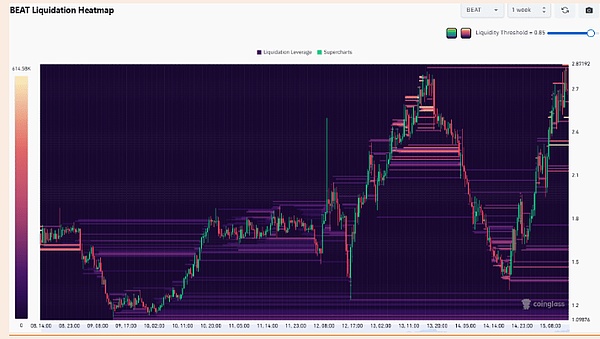
But don't blindly FOMO in! BEAT encountered resistance when冲击 the $3 all-time high. Capital is starting to flow out, the MACD shows buying cooling down, and more liquidity is聚集 below. If the bulls run out of steam, it could fall towards $2.40 (where there is $1 million in leverage liquidations below) or even retest the $1.25 support level that hasn't been broken in three tests. If you want to chase, wait for it to successfully break through the all-time high~
To summarize: SHIB is building momentum waiting for a reversal, ZEC is guarding $400 watching for a break above $425, ADA is警惕大跌风险, and BEAT has surged but has significant回调隐患. The crypto circle is now severely分化. Don't blindly follow the trend; keep a close eye on key levels before making a move!QQ:3260353596

DingTalk:msp252580

Perguntas relacionadas

QWhat is the current technical pattern of SHIB, and what does it indicate?

ASHIB is currently in a 'sideways compression' pattern, which indicates that selling pressure is decreasing. Despite a long-term downtrend, it has formed higher lows, suggesting that large players are accumulating positions quietly rather than selling off.

QWhat key support level is ZEC defending, and what condition is needed for a bullish trend?

AZEC is defending the $400 psychological support level. A bullish trend would require a break above the local resistance at $425, followed by a successful retest and hold above that level.

QWhat bearish signal has appeared for ADA, and what historical precedent is associated with it?

AADA's weekly SuperTrend indicator has turned bearish. Historically, the last time this occurred in 2022, ADA's price declined by 80%.

QWhat are the main reasons behind BEAT's 480% price surge in 30 days?

ABEAT's surge is driven by speculative sentiment (with 2000万美元 volume on DEXs), scarcity (only 16% of total supply in circulation), and AI-driven token burns combined with AI payment integrations, creating deflationary pressure.

QWhat risks are associated with BEAT's current price action despite its significant gains?

ABEAT faces resistance near its all-time high of $3, with signs of capital outflow and cooling buying momentum. If buyers weaken, it could correct towards $2.40 (where $1 million in leverage may be liquidated) or even retest the $1.25 support level.

Leituras Relacionadas

2029 Finale Prediction: When Cryptocurrency Completely "Vanishes", Who Can Remain in This Financial Upheaval?

By 2029, the crypto industry will have transformed into a largely invisible but foundational layer for traditional finance. This timeline outlines the key shifts from now until then. By mid-2026, the most sought-after assets on-chain will not be traditional tokens, but synthetic perpetual contracts for private, high-growth companies (like SpaceX, OpenAI). These become primary price discovery tools, highlighting the market's craving for real-world asset value. Most altcoins enter a sustained bear market as their fundamental lack of asset-backed value is exposed. In late 2026, the "AI + Crypto" narrative largely fades as AI giants prove they don't need crypto infrastructure, except for prediction markets betting on model performance. Simultaneously, a quiet but significant wave of tokenization for institutional assets (money market funds, private credit) begins. The industry splits into a noisy speculative economy and a silent institutional one. Throughout 2027, major public blockchain foundations pivot decisively to serve institutional clients, building compliance toolkits and sales teams. However, key sectors hit growth ceilings: private perpetual contracts are legally restricted from public promotion, stable币 growth is capped by looming political uncertainty, and tokenization projects remain cautious. In 2028, following a U.S. election assumed to maintain a regulatory (not prohibitive) stance, a pivotal change occurs. After a major liquidation crisis exposes the flaws of synthetic contracts lacking a real-asset anchor, new regulations allow the *public solicitation* of private security sales (secondary market shares) to accredited investors. This creates a legitimate, direct on-ramp for retail capital into previously illiquid private equity. By 2029, the resulting bull market is driven by trading in real, innovative company shares (biotech, robotics, AI labs), not speculative tokens. "Crypto" as a distinct asset class recedes; it becomes the mundane, unseen plumbing for this new global private markets infrastructure. Tokens that survive are those capturing real cash flows from this infrastructure. Speculation persists but is marginalized. The core questions posed at the start are answered: token value is tied to legally enforceable claims on real assets, frontier tech adoption happens via private market channels, and crypto's absorption into traditional finance is marked by its becoming boring and invisible. The key validation for this entire thesis is whether, by late 2028, a legal pathway exists for ordinary accredited investors to access private assets directly.

marsbitHá 32m

2029 Finale Prediction: When Cryptocurrency Completely "Vanishes", Who Can Remain in This Financial Upheaval?

marsbitHá 32m

After the U.S. Banned Fable 5, Zhipu's Stock Soared 47%

On June 15, Chinese AI company Zhipu's stock surged up to 47.6% in Hong Kong, closing with a 32.82% gain. This sharp rise followed two key industry events. On June 12, Anthropic was compelled by a U.S. government export control order to suspend global access to its latest flagship models, Claude Fable 5 and Claude Mythos 5, impacting developers and businesses reliant on them. The next day, Zhipu announced it was opening access to its new open-source flagship model, GLM-5.2, for all Coding Plan users, with API and model weights (under the MIT license) to follow. The Anthropic incident highlighted a critical shift in the AI industry: beyond raw capability, the stability, continuous accessibility, and control over AI models are becoming equally vital, especially as AI integrates deeper into business workflows. Zhipu's move, emphasizing that "frontier intelligence should not belong to a few nor be subject to arbitrary revocation," positioned its open, accessible model as an alternative. GLM-5.2 focuses on "Long Horizon Tasks" with a 1M context window, aiming for consistency in complex, extended projects. Market analysts suggest this event exposes the risk of dependency on closed-source models subject to single jurisdiction policies, potentially accelerating a shift toward domestic base models and localized deployments. The investment response indicates a new valuation metric is emerging—prioritizing which companies can provide AI capabilities that are not only advanced but also reliably and sustainably accessible.

marsbitHá 33m

After the U.S. Banned Fable 5, Zhipu's Stock Soared 47%

marsbitHá 33m

PANews Column Registration and Article Submission Guide

"PANews Column Registration and Submission Guide" provides instructions for users to register as columnists and publish articles on the PANews platform. Key application requirements are emphasized: content should focus on in-depth analysis within Crypto, Web3, blockchain, data, and viewpoints. Content primarily for brand/product introductions will not be approved, and heavily AI-generated content will be rejected. Promotional (PR/soft) content is directed to the business channel. **Registration Process:** * **Web:** Go to the official website footer, click "Apply for Column," and register with a phone number or email (login via verification code, no password). Fill in the column name, description, upload an avatar, and submit links to previously published work. * **Mobile:** Navigate to "My" -> "Contribute & Create" and complete the form. **Article Submission Tutorial:** 1. Log in to the PANews website. 2. Access the "Creator Center" from your personal homepage. 3. Use the editor to create and publish articles. **Video Upload:** The platform supports embedding videos from third-party sites (e.g., Bilibili). Copy the embed code from the source video, use the editor's "Insert/Edit media" button, paste the code under the "Embed" tab, and adjust the display size (recommended: width 100%, height 560px). **PANews Skills (AI Agent Tool):** PANews offers an official AI Agent skill set called PANews Skills, enabling AI tools to query platform content, track trends, and publish column articles directly. It includes three main skills: 1. `panews`: For tracking daily must-read lists, popular articles, and funding news. 2. `panews-creator`: For managing columns, publishing articles, and uploading images. 3. `panews-web-viewer`: For parsing PANews webpages into Markdown. These skills are compatible with various AI Agent tools (OpenClaw, Cursor, Claude Code, ChatGPT, Gemini, etc.). To use the `panews-creator` skill, users must obtain a specific authentication value from the PANews website after logging into their columnist account.

marsbitHá 44m

PANews Column Registration and Article Submission Guide

marsbitHá 44m

I Built Myself an Investment Workbench Using AI

For the past two weeks, I've been immersed in Vibe Coding—using AI to write code from natural language descriptions. This process has enabled me to quickly build functional tools that address long-standing personal ideas. Previously, I had many concepts but found execution too cumbersome. Key ideas included a unified dashboard for assets across US stocks, Crypto, HK stocks, and A-shares; a real-time alert system for price movements; an investment map visualizing sector relationships; and a tool to correlate prediction market bets with news and market data. Traditional development hurdles meant these often remained unrealized. Using AI (Codex, Claude Code, and DeepSeek API), I built four initial tools: 1. A **Cross-Market Asset Dashboard** showing total assets, daily P&L, and holdings by market, with added features for alerts and sector mapping. It's deployed locally for privacy. 2. A **Prediction Market (PM) Monitor** tracking bets on events (e.g., company valuations) and correlating probability shifts with news and market movements. I categorize bets by conviction to filter noise. 3. A **Simple Operations Backend** for managing my writing workflow (topics, progress, publishing). It's cloud-deployed for mobile access. 4. A **One-Click Formatting Tool** that automates converting drafts into various platform-specific formats, saving manual effort. While these tools are basic, they represent a significant shift: AI lowers the barrier to creating personalized systems. I believe individual investors can now feasibly build core systems for: * **Asset Observation** (tracking holdings and changes) * **Signal Monitoring** (watching for key market shifts) * **Sector Mapping** (understanding network relationships within a sector) * **Performance Review** (documenting rationale and outcomes) The power of Vibe Coding is its fast feedback loop. Ideas can be implemented, tested, and iterated on rapidly, turning "want-to-do" into "done." This marks the start of my new phase, where I'll share investment thoughts, tool tests, on-chain operations, and educational Web3 content.

marsbitHá 1h

I Built Myself an Investment Workbench Using AI

marsbitHá 1h

Trading

Spot
Futuros

Artigos em Destaque

O que é ATWO

I. Introdução ao ProjetoArena Two é uma plataforma interativa descentralizada que permite aos fãs desempenhar um papel ativo e tokenizado nos resultados de eventos em tempo real. Ao contrário dos modelos tradicionais de transmissão que reduzem os fãs a espectadores passivos, a Arena Two utiliza a tecnologia blockchain para permitir que os fãs votem diretamente em tempo real e influenciem os resultados em campo.II. Informação sobre o TokenNome do token: ATWO(Arena Two)III. Links RelacionadosWebsite:https://arenatwo.com/Exploradores:https://basescan.org/token/0x499D35eBE6cEe9B2Ac35Fd003fcBbeeB9CFc7B32Twitter:https://x.com/arenatwoXNota: A introdução ao projeto provém dos materiais publicados ou fornecidos pela equipa oficial do projeto, que é apenas para referência e não constitui aconselhamento de investimento. A HTX não se responsabiliza por quaisquer perdas diretas ou indiretas resultantes.

258 Visualizações TotaisPublicado em {updateTime}Atualizado em 2026.06.02

O que é ATWO

Como comprar ATWO

Bem-vindo à HTX.com!Tornámos a compra de Arena Two (ATWO) simples e conveniente.Segue o nosso guia passo a passo para iniciar a tua jornada no mundo das criptos.Passo 1: cria a tua conta HTXUtiliza o teu e-mail ou número de telefone para te inscreveres numa conta gratuita na HTX.Desfruta de um processo de inscrição sem complicações e desbloqueia todas as funcionalidades.Obter a minha contaPasso 2: vai para Comprar Cripto e escolhe o teu método de pagamentoCartão de crédito/débito: usa o teu visa ou mastercard para comprar Arena Two (ATWO) instantaneamente.Saldo: usa os fundos da tua conta HTX para transacionar sem problemas.Terceiros: adicionamos métodos de pagamento populares, como Google Pay e Apple Pay, para aumentar a conveniência.P2P: transaciona diretamente com outros utilizadores na HTX.Mercado de balcão (OTC): oferecemos serviços personalizados e taxas de câmbio competitivas para os traders.Passo 3: armazena teu Arena Two (ATWO)Depois de comprar o teu Arena Two (ATWO), armazena-o na tua conta HTX.Alternativamente, podes enviá-lo para outro lugar através de transferência blockchain ou usá-lo para transacionar outras criptomoedas.Passo 4: transaciona Arena Two (ATWO)Transaciona facilmente Arena Two (ATWO) no mercado à vista da HTX.Acede simplesmente à tua conta, seleciona o teu par de trading, executa as tuas transações e monitoriza em tempo real.Oferecemos uma experiência de fácil utilização tanto para principiantes como para traders experientes.

141 Visualizações TotaisPublicado em {updateTime}Atualizado em 2026.06.02

Como comprar ATWO

O que é ZEST

I. Introdução ao Projeto1. O que é o Zest Protocol?O Zest Protocol é um protocolo de empréstimos nativo do Bitcoin construído na camada 2 do Stacks que permite aos utilizadores ganhar rendimento com BTC ou emprestar ativos colateralizando BTC. Os contratos inteligentes do protocolo são escritos na linguagem Clarity, operam totalmente em cadeia e são de código aberto, com um design inspirado no Aave v3. O Zest é atualmente o maior protocolo DeFi no Stacks, com mais de 800 BTC depositados e um pico de TVL superior a 100 milhões de dólares. Em maio de 2026, o protocolo introduziu ainda os Cofres de Colateral em Bitcoin, estendendo as capacidades de empréstimo do Stacks para a rede principal do Bitcoin. Isso permite que os utilizadores emprestem stablecoins sem mover BTC da rede Bitcoin, possibilitando empréstimos com custódia própria.2. Como funciona o Zest Protocol?O Zest Protocol consiste em dois mercados. O mercado do Stacks é construído sobre o Aave v3, permitindo que os utilizadores depositem ativos como sBTC, STX e USDC para ganhar rendimento ou contrair empréstimos sobre-colateralizados. O LTV máximo padrão é de 50% (70% para sBTC). O mercado do Bitcoin opera através dos recém-lançados Cofres de Colateral em Bitcoin. Os utilizadores emprestam stablecoins ao bloquear BTC em cofres de custódia própria na cadeia do Bitcoin. O colateral permanece na rede principal do Bitcoin durante todo o processo, e os utilizadores mantêm a custódia, a menos que a posição seja liquidada.3. Quem fundou o Zest Protocol?Tycho Onnasch (Co-Fundador): Formado na Universidade de Oxford. Envolvido em pesquisa e subsídios para a Stacks Open Internet Foundation. Antigo Gestor na Trust Machines e Fundador da Deedmob. Perfil do LinkedIn: https://www.linkedin.com/in/tychokoonnasch/.Fernando Foy (Co-Fundador): Trabalhou anteriormente em consultoria de TI na Objectif Emploi. Perfil do LinkedIn: https://www.linkedin.com/in/fernando-foy/.Emil E. (Co-Fundador): Possui um Mestrado em Física pela Universidade de Warwick. Antigo Partner de Engenharia na Trust Machines, Desenvolvedor Full-Stack para projetos Web3 e Cientista de Dados no HSBC. Perfil do LinkedIn: https://www.linkedin.com/in/emil-e-49771a145/.Detalhes de Financiamento: Em maio de 2024, o Zest Protocol anunciou a conclusão de uma ronda de financiamento inicial de 3,5 milhões de dólares liderada por Tim Draper, com a participação da Binance Labs, Flow Traders, Trust Machines, entre outros.4. Tokenomics do $ZEST$ZEST é o token nativo do Zest Protocol com um fornecimento total fixo de 1 mil milhões de tokens e sem mecanismo inflacionário.Comunidade (27,83%): Usado para airdrops e incentivos aos utilizadores;Desenvolvimento do Ecossistema (24,82%): Usado para liquidez, parcerias, marketing, listagens em bolsas, etc.;Investidores (22,35%): Apoio às partes investidoras que apoiaram o desenvolvimento inicial do Zest Protocol;Equipa (25%): Alocado para colaboradores principais.Calendário de Vesting: Os tokens da Equipa e dos Investidores estão sujeitos a um período de bloqueio de 1 ano, seguido de 3 anos de desbloqueio linear.5. Cronologia dos Principais Marcos2022: O Zest Protocol é oficialmente fundado.Março de 2024: Concluída a auditoria de segurança e lançado o mercado de empréstimos do Stacks na rede principal.Em fevereiro de 2026, é lançado o Stacks Market V2, introduzindo Grupos de Risco.Em maio de 2026, foram introduzidos os Cofres de Colateral em Bitcoin, e um protótipo operacional da rede principal está agora disponível. Isso permite que os utilizadores utilizem BTC com custódia própria na L1 do Bitcoin como colateral para emprestar stablecoins em cadeias EVM, encerrando a necessidade de bridging, wrapping e custódia de terceiros. Este lançamento é dividido em duas fases. Fase 1: Utiliza transações pré-assinadas para restringir o movimento de BTC; Fase 2: Utiliza BitVM para verificação. II. Informações sobre o TokenNome do token: ZEST (Zest Protocol)III. Links RelacionadosWebsite: https://www.zestprotocol.com/Exploradores: https://bscscan.com/token/0x5506599c722389a60580b5213ea1da60d64754a1Twitter: https://twitter.com/ZestProtocolNota: A introdução ao projeto provém dos materiais publicados ou fornecidos pela equipa oficial do projeto, que é apenas para referência e não constitui aconselhamento de investimento. A HTX não se responsabiliza por quaisquer perdas diretas ou indiretas resultantes.

203 Visualizações TotaisPublicado em {updateTime}Atualizado em 2026.06.02

O que é ZEST

Discussões

Bem-vindo à Comunidade HTX. Aqui, pode manter-se informado sobre os mais recentes desenvolvimentos da plataforma e obter acesso a análises profissionais de mercado. As opiniões dos utilizadores sobre o preço de A (A) são apresentadas abaixo.

活动图片