Staggering $2,800,000,000 in Bitcoin (BTC) Has Exited Crypto Exchanges in Just One Month: Glassnode

dailyhodlPublicado em 2022-11-28Última atualização em 2022-11-28

Resumo

Leading analytics firm Glassnode reveals that crypto exchanges are witnessing a massive exodus of Bitcoin...

Leading analytics firm Glassnode reveals that crypto exchanges are witnessing a massive exodus of Bitcoin as BTC holders take the initiative to self-custody their coins.
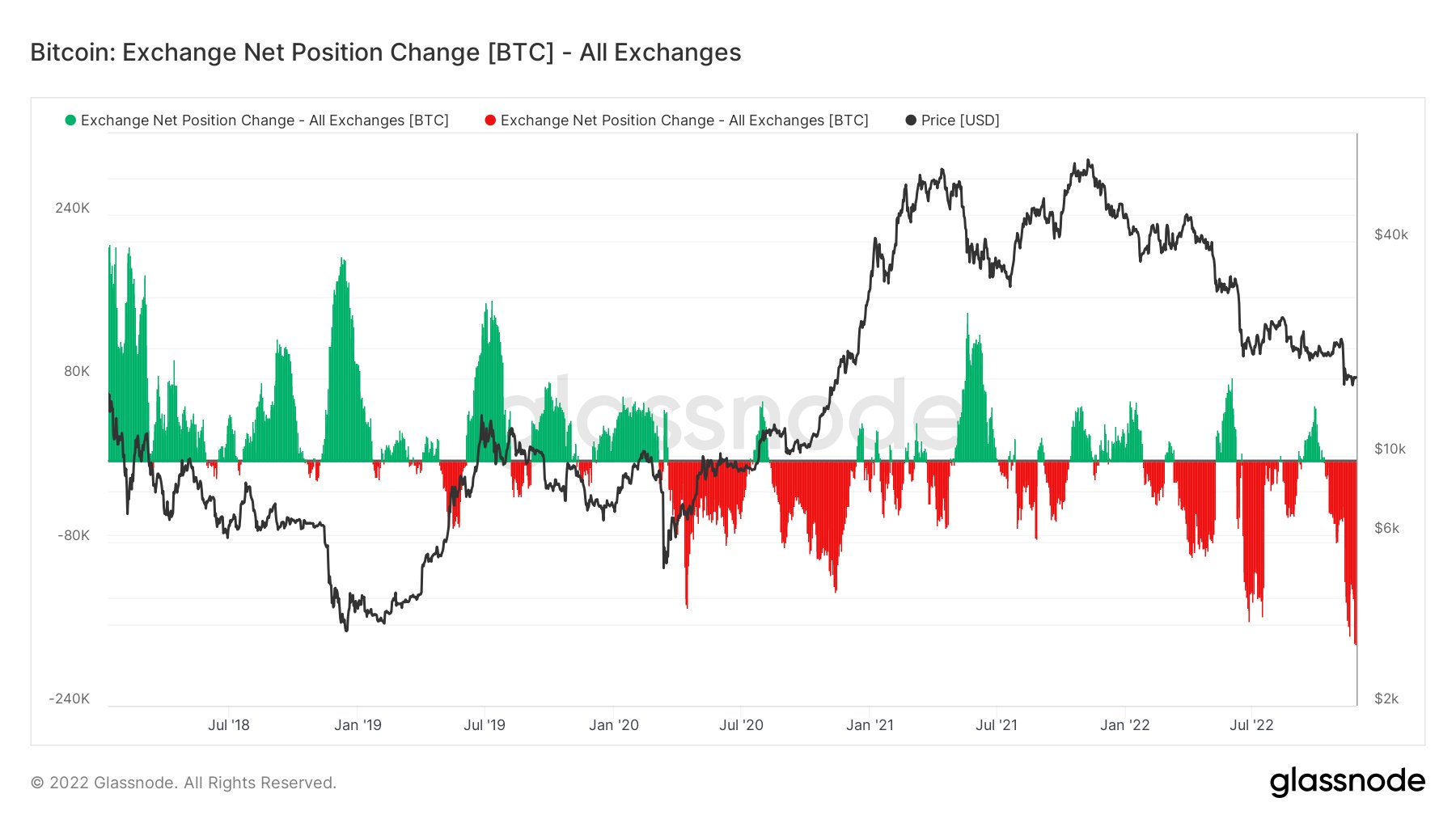
According to Glassnode’s Bitcoin exchange net position change metric, which tracks the 30-day supply held in exchange wallets, 179,250 BTC worth over $2.8 billion at time of writing has exited centralized crypto exchanges in the last month.
Image

Source: Glassnode Looking at Glassnode’s chart, the current rate of BTC leaving crypto exchange platforms is at its highest in over four years.
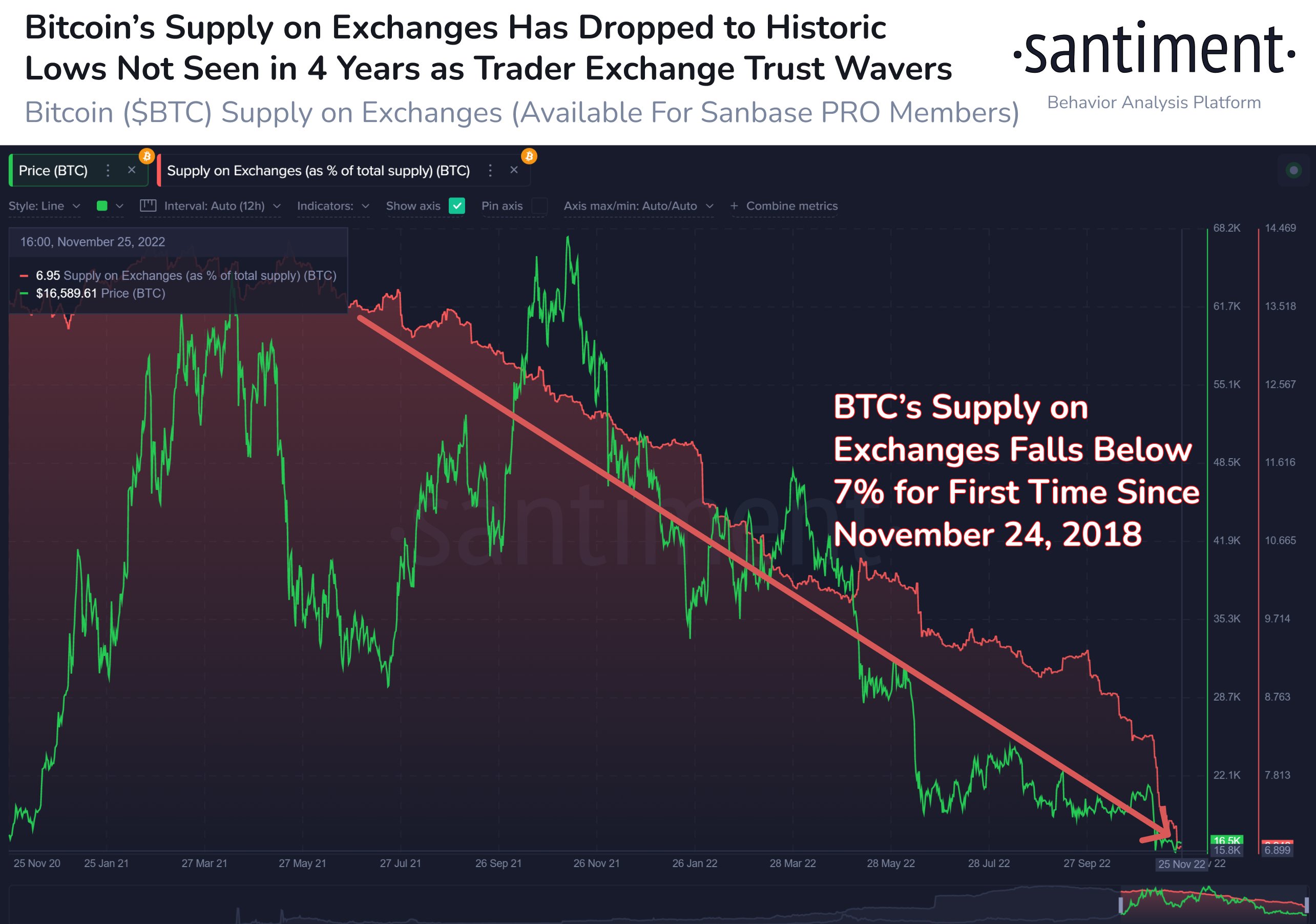
Analytics firm Santiment is also keeping a close watch on the supply of Bitcoin sitting on crypto exchanges. According to Santiment, BTC’s supply on crypto exchanges has fallen below 7% for the first time since November 24th, 2018.
“Just 6.95% of Bitcoin is sitting on exchanges, according to Santimentfeed data. There had already been a gradual shift in BTC moving into self custody going back to Black Thursday (Mar 2020). But with the FTX fallout, this trend has accelerated.” 
Image

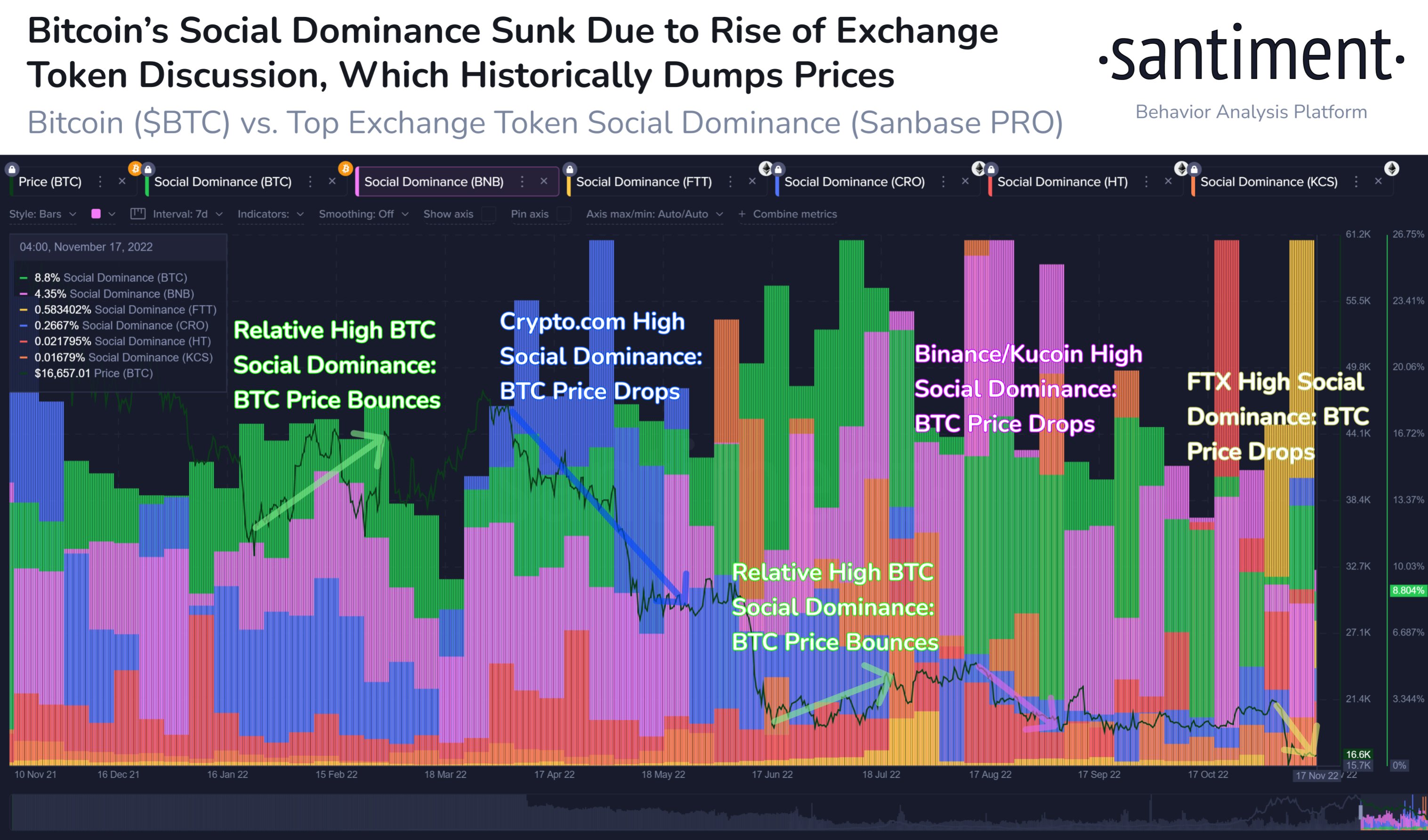
Source: Santiment Earlier this month, Santiment noted that crypto has a history of bouncing when market participants shift their focus away from digital asset exchanges.
“Crypto generally thrives when exchanges are NOT a focal point. The most impactful exchange collapse ever will have lasting shockwaves. But as shown, the key for a turnaround will likely be focus moving away from exchange tokens and back to Bitcoin.”
Image

Source: Santiment On November 11th, Sam Bankman-Fried’s FTX filed for bankruptcy amid accusations that the crypto exchange mishandled customer funds. The news sent shockwaves across the industry, prompting many investors to withdraw their digital assets from centralized crypto platforms.


Leituras Relacionadas

Second Half of U.S. Crypto Policy: The Clarity Act Aims for 60 Votes, CFTC's "One-Person Commission" Becomes Biggest Variable

In a pivotal year for US crypto policy, the "CLARITY Act" is advancing in the Senate but faces a high hurdle, needing 60 votes to pass. Key challenges include bridging partisan divides on ethics and swaying undecided Republican senators within a tight legislative calendar of only about 40 working days. The policy "second half" involves intense negotiations on a broader framework for Web3 and DeFi, including crypto tax reforms and the Blockchain Regulatory Certainty Act. A significant uncertainty is the understaffed CFTC, operating with four commissioner vacancies, which complicates regulatory clarity. Meanwhile, the departure of key "crypto champions"—SEC Commissioner Hester Peirce and Senator Cynthia Lummis—will impact ongoing policy efforts. Industry experts are cautiously optimistic but realistic. Sara K. Weed notes that while progress is being made, CLARITY is unlikely to pass this Congress, pushing agencies like the SEC and CFTC to provide more guidance. Sulolit Mukherjee suggests meaningful crypto tax legislation is more likely to be attached to larger must-pass bills. Rashan Colbert discusses the jurisdictional debate over prediction markets, emphasizing the need for a regulatory framework that fosters their development as financial tools rather than treating them broadly as gambling. The clock is ticking, but opportunities remain for substantive progress through continued bipartisan dialogue and pragmatic efforts.

marsbitHá 2h

Second Half of U.S. Crypto Policy: The Clarity Act Aims for 60 Votes, CFTC's "One-Person Commission" Becomes Biggest Variable

marsbitHá 2h

Research Report Analysis: Morgan Stanley Details SanDisk SNDK, The Truth About Cloud Data Center Pricing Power and AI Inference Benefits

Morgan Stanley raised its price target for SanDisk (SNDK) from $1100 to $1750 on June 22, maintaining an Overweight rating. The upgrade is driven by AI inference demand reshaping the NAND market, particularly for KV Cache and context window storage in cloud data centers. These cloud clients exhibit price inelasticity and sign long-term contracts, granting SanDisk significant pricing power. SanDisk's New Business Model (NBM) agreements, covering over one-third of FY27 bit shipments with 3-5 year terms and fixed price/price collar structures, are crucial. They are projected to sustain gross margins around 80% even at floor prices, providing a buffer against cyclical downturns. Morgan Stanley forecasts gross margins to surge from 30.3% in FY25 to 86.7% in FY27e. With NAND supply expected to remain tight into 2026/2027 and cloud/data centers becoming the largest end-market, SanDisk holds supply-side pricing power. The company targets 15-19% bit growth via technology transitions, not capacity expansion. Revenue is projected to grow ~6.6x from FY25 to FY27, with EPS rising from $2.74 to $14.73, driven by high-margin cloud business. Key upside catalysts include faster enterprise SSD adoption and edge AI growth. Downside risks involve slower industry growth, competitor capex increases, market share loss, and competition from Chinese players like YMTC. The investment thesis rests on AI-driven structural demand, NBM's margin protection, and sustained supply tightness. The $1750 target implies ~28x FY27e P/E.

marsbitHá 3h

Research Report Analysis: Morgan Stanley Details SanDisk SNDK, The Truth About Cloud Data Center Pricing Power and AI Inference Benefits

marsbitHá 3h

Trading

Spot
Futuros
活动图片