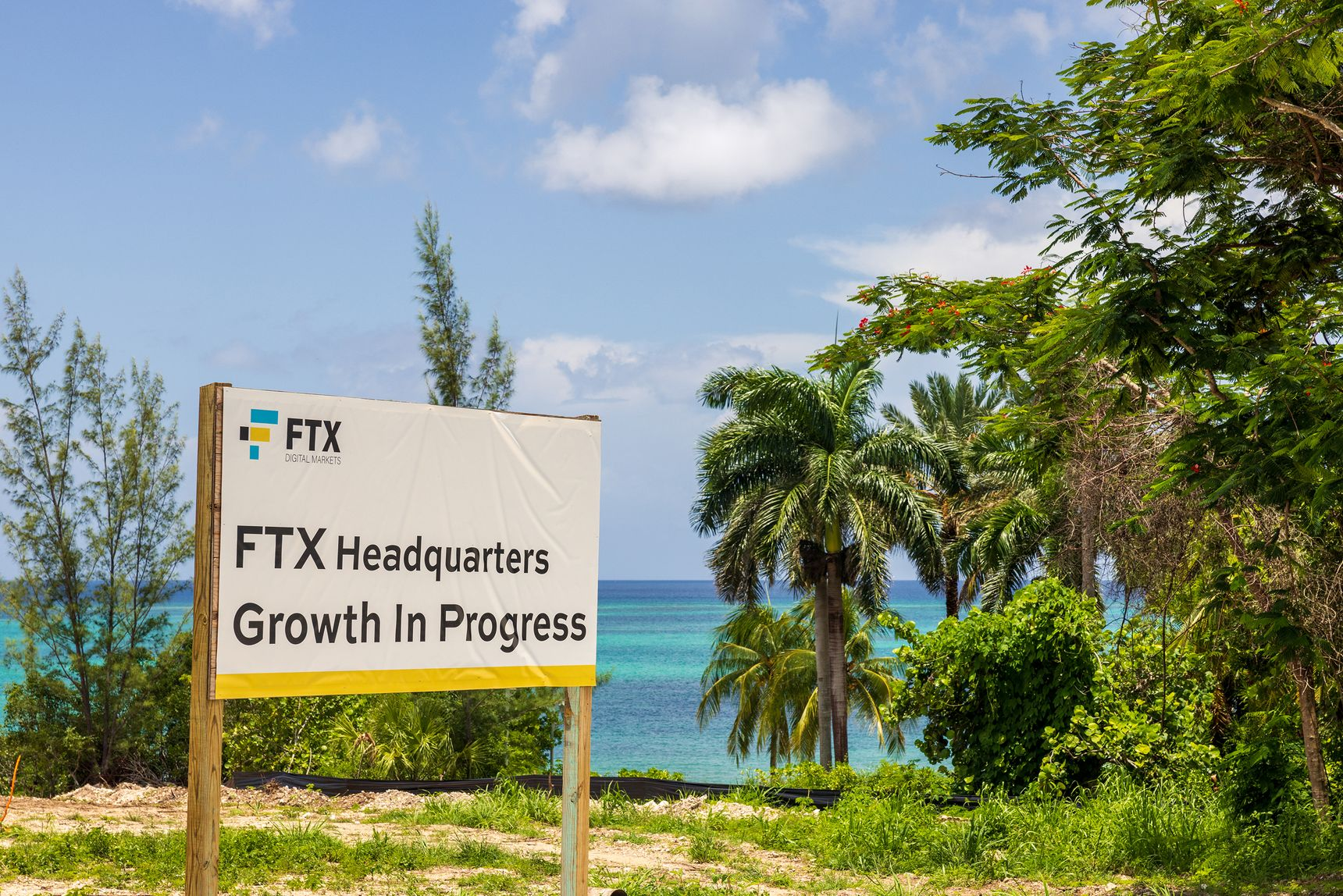
FTX’s offshore status and its willingness to keep American traders off its Bahamas-based exchange in large part shielded the company from strict U.S. laws that govern trading and how investments can be sold to the public.
But FTX’s implosion last week and reports that it used customer funds to back an affiliate’s risky venture investments have exposed the company and its founder to potential criminal liability, according to attorneys who specialize in white-collar criminal law.
The Manhattan U.S. attorney’s office is investigating FTX’s collapse, according to people familiar with the matter. One focus for prosecutors, at least initially, is likely to be examining reports that FTX lent customer funds to Alameda Research, a crypto-trading firm that traded on FTX and other exchanges. FTX founder Sam Bankman-Fried, who resigned as chief executive on Friday, also founded and owns Alameda Research.
Mr. Bankman-Fried has acknowledged in tweets that he made mistakes before his company’s downfall and bankruptcy.
FTX’s terms of service told its users that they own the cryptocurrencies in their accounts. “None of the digital assets in your account are the property of, or shall or may be loaned to, FTX Trading,” the document says. The terms of service with FTX Trading Ltd.—the entity that filed for bankruptcy last week in Delaware federal court—are still online.
Using customer funds for proprietary trading or lending them out—without an investor’s consent—is generally forbidden in the regulated securities and derivatives markets.
MF Global Holdings Ltd., a firm formerly run by New Jersey ex-Gov. Jon Corzine, was accused in 2013 of unlawfully using customer money to meet the firm’s funding needs. Mr. Corzine paid $5 million to settle the Commodity Futures Trading Commission’s allegations, while neither admitting nor denying misconduct.
In the unregulated crypto market, no such customer-protection rules exist. Still, using customer funds for a purpose that wasn’t disclosed can constitute fraud or embezzlement, according to former prosecutors and other legal experts.
“What this will boil down to is, were there deliberate lies to convince depositors or investors to part with their assets?” said Samson Enzer, a former Manhattan federal prosecutor. “Were there statements made that were false, and the maker of those statements knew they were false and made with the intent to deceive the investor?”
Prosecutors also could home in, the lawyers said, on statements Mr. Bankman-Fried made on Twitter last week, when he said FTX was “fine” and customer assets were safe—comments he later deleted.

A spokesman for the Manhattan U.S. attorney’s office declined to comment. A spokesman for FTX didn’t respond to a request for comment. Ryne Miller, FTX US’s general counsel, declined to comment.
Authorities would need to show Mr. Bankman-Fried intended to mislead customers when he wrote those tweets. Intent can be hard to prove, but other facts, such as any secret efforts FTX took to prop up Alameda or vice versa, can support the inference, attorneys said.
“That is all potentially powerful circumstantial evidence of intent,” said Aitan Goelman, a former federal prosecutor and CFTC enforcement chief who is now a partner at Zuckerman Spaeder LLP.
One challenge for prosecutors: showing they have jurisdiction over FTX, which is based in the Bahamas. Mr. Bankman-Fried and some of his top executives lived there in a shared house. The exchange was earlier based in Hong Kong, where many of Alameda’s traders still worked.
But Mr. Bankman-Fried traveled to the U.S., including to meet with American lawmakers and regulators. FTX US, an affiliate of FTX, catered to American customers. Mr. Bankman-Fried has written on Twitter that none of the problems affected FTX’s U.S. entity, although that entity was part of a bankruptcy filing that FTX made Friday.
U.S. authorities generally can investigate when part of an illegal scheme happens there, such as when funds move through American banks or even when emails that relate to a crime pass through the country. The most flexible charge they can use is wire fraud, which only requires that a false statement was made using an electronic form of communication.
“The burden for venue is not very high,” said Mr. Enzer, now an attorney at Cahill Gordon & Reindel LLP. “The government would argue that if a single email went through New York, that would suffice.”
Attorneys cautioned that U.S. authorities might not have a strong claim to jurisdiction if all of the conduct happened overseas and there were no direct ties to the U.S. Former prosecutors said that was unlikely because the Justice Department has become so sophisticated at finding ways to establish its authority.
“As broad as the law is, and the fact that every transaction uses a wire and these people are Americans, I can’t imagine there is no U.S. jurisdiction here,” said Tarek Helou, a former federal prosecutor now at law firm Wilson Sonsini Goodrich & Rosati.