Will CEX's Crisis of Trust Affect Huobi?

mediumPublicado em 2022-11-14Última atualização em 2022-11-21

Resumo

Can Huobi 's assets survive the winter? The answer is definitely yes!

The crypto world is in turmoil right now. Over the past week, Bitcoin and Ethereum have both lost more than 15%, and the cryptocurrency market has wiped out nearly $200 billion in market value.

1. FTX triggers a tsunami in the crypto world

November 2, It was revealed that FTX was facing a liquidity crisis. Binance founder CZ also tweeted about the incident, stressing that Binance would sell all FTT in the account within a few months. No one could have imagined that this tweet became the last straw that overwhelmed FTX. Despite the dramatic announcement of FTX and Binance within 48 hours of their initial acquisition intentions. The next day, Binance announced it walked away from the table. With the bankruptcy of FTX, market panic began to spread, users began to question the existence of CEX, and Bitcoin and Ethereum also hit new lows after the epidemic.
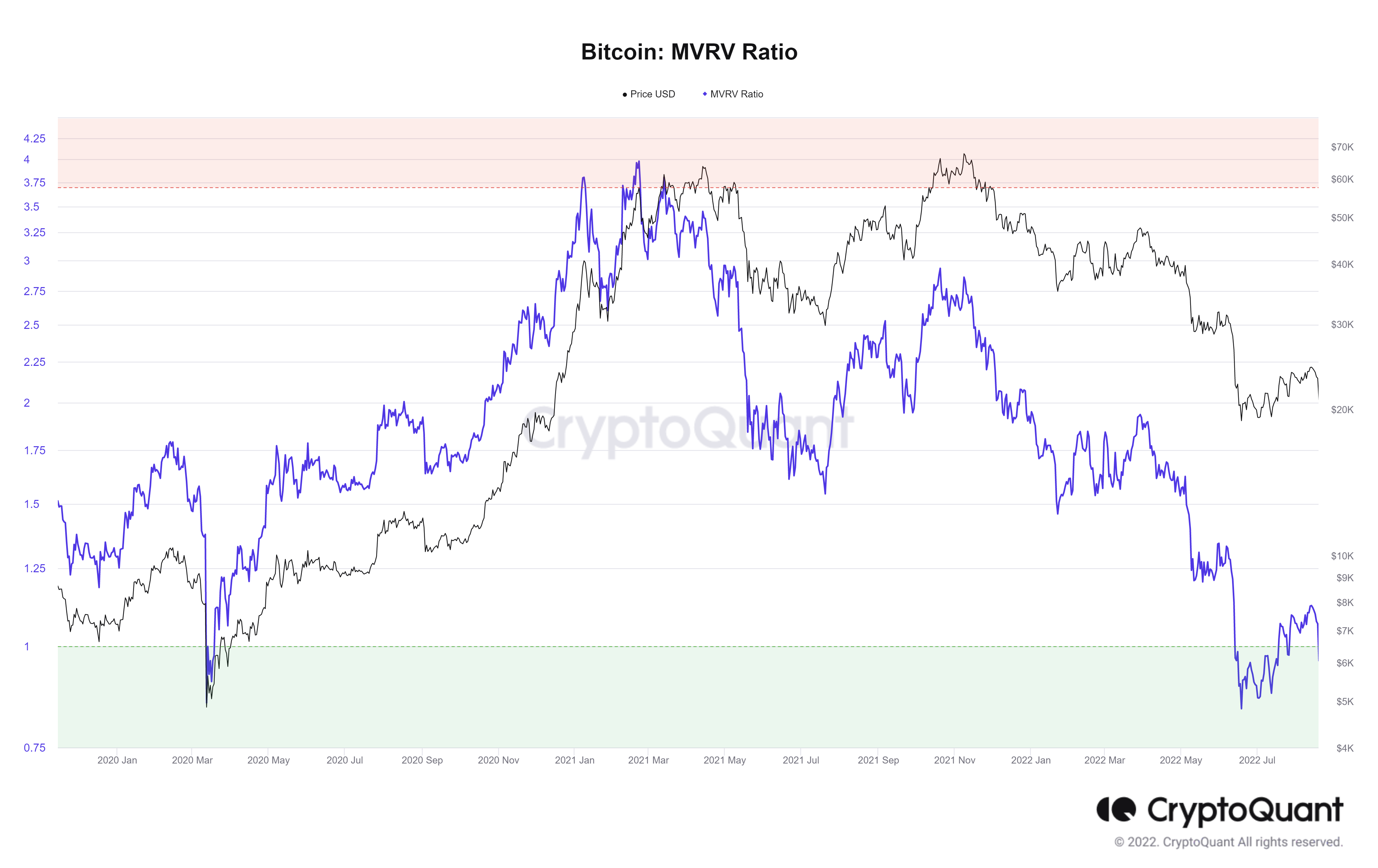
As the chart above shows, the Bitcoin panic has reached pandemic levels.

2. The panic of FUD began to spread

With the fall of FTX, its related parties have suffered a lot. For example, Blockfi has issued an announcement that it cannot repay client assets on time. In addition, the solvency of other small and medium-sized exchanges has also been seriously distrust, and small and medium-sized exchanges have experienced a solvency crisis.

The market believes that all CEXs need to rewin the trust of their customer, and the "dark forest" argument has begun to reoccupy the crypto participants' minds. As the whistleblower of this crisis, Binance also facing a confidence crisis.

In order to regain their trust, centralized exchanges have released Merkel Trees to prove the total value of their assets.

The market believes that all CEXs need to rewin the trust of their customer, and the "dark forest" argument has begun to reoccupy the crypto participants' minds. As the whistleblower of this crisis, Binance also facing a confidence crisis.

In order to regain their trust, centralized exchanges have released Merkel Trees to prove the total value of their assets.

3. Can Huobi's assets survive the winter?

In response to this question, Huobi's official answer is direct and rapid: Huobi disclosure their reserve assets at around3.5 billion USD on November 13. We may believe that Huobi has not misappropriated customer assets at will, and has enough reserves to withstand the cold spring of crypto.

In addition, Huobi promises to perform another Merkle Tree Proof of Reserves audit with a third party within 30 days.

4. Can Huobi's growth beat this cold winter?

In the pre-Justin era, Huobi failed to maintain its No. 1 position in the industry due to regulatory pressure, but the Huobi brand was not untarnished. After Justin Sun came to Huobi, Huobi started boosting again.

(1) Focus HT

After Justin Sun entered Huobi, his first step was to pour resources to rebuild HT's reputation. This is also in line with the industry consensus: the increase in the exchange's Token price is the first step of the flywheel, and its price increase can increase transaction volume on the one hand, and reduce transaction slippage on the other hand.

(2) Cost reduction and efficiency increase

From the perspective of the LBO acquisition logic: after the LBO acquisition is completed, the shareholders want to sell at a better price or enjoy the company's growth for a long time. New shareholders usually use layoffs + austerity spending to strengthen the company's long-term endogenous value. We can conclude that after Huobi vigorously compresses all kinds of expenses, its cash flow must be getting stronger.

5. Bottom-line thinking examines

(1) From a historical perspective, Huobi has strong fundamentals

When the Shanxi incident occurred in 2020, Huobi insisted on allowing users to withdraw their tokens, unlike OK when they stopped withdrawing coins. After the incident, customers withdrew 5 billion US dollars.

When the Chinese users were forced to detach from the CEX by Chinese regulators in 2021, Huobi lost more than 20 billion US dollars in one night.

However, Huobi got through all these incidents with dignity.

(2) From the perspective of Huobi's trasaction, Huobi will keep resilient

Since Huobi has just completed the full delivery to Justin Sun, it must go through very strict due diligence, and the financial data is likely to be strong, and there is no problem with its liquidity.

(3) From the perspective of Justin Sun’s profit, Huobi needs to grow

Justin Sun has only entered in October, and he must hold a large amount of HT. It is obviously not in the best interest to sell them in a bear market. In addition, the market generally expects that the U.S. dollar will enter a bubble in 2023, and the market is expected to boost. It is obviously not in the best interests of Justin Sun to sell HT.

6. CEX will still be the backbone of the industry

At the moment when the FUD sentiment swept the industry, the market's distrust of CEX has been put on the table again, and the tokens of large exchanges have been sold off. But is this really the end of the industry? Is CEX doomed to have no meaning in existence? The industry recovery fund allows us to see the self-correction capability within the CEX system. Huobi will also participate in rebuilding CEX confidence and the Crypto industry.

As part of the Crypto community, we all firmly believe that decentralization and minimization of trust are the future directions of the industry. However, the CLOB order book of CEX is still the optimal solution for the current trading system. Although AMM 's genius concept has solved the liquidity of DEX, high slippage price and Gas Fee still restrict the further growth of Uniswap, and related problems may not be solved in the short term. In addition, the Makers of Uniswap V3 are also filled by professional players, which proves centralize is still play an important rule of DEX .

CEX can provide better products, and it is still the optimal solution for the current exchange.

7. The last of the last

All in all, I don't think Huobi's robustness and CEX 's long-term prospects should be questioned. On the contrary, the robustness of Crypto will be further strengthened after this crisis, and the prospects of CEX are still worth looking forward to.

Long May the Crypto!
Leituras Relacionadas

The Ethereum Foundation Has Split?! An In-depth Look at Ethlabs' "Bright Future"

"Ethereum Foundation Splits? Understanding Ethlabs and Its 'Bright Future'" Former Ethereum Foundation members Ansgar Dietrichs, Barnabé Monnot, Caspar Schwarz-Schilling, Josh Rudolf, and Julian Ma have announced the launch of Ethlabs, an independent non-profit research and development lab. Announced on June 22nd, the initiative comes amidst discussions about the need for new organizational structures within the Ethereum ecosystem, a point highlighted by Bankless founder David Hoffman. Ethlabs' mission is to establish Ethereum as the foundational settlement layer for the global economy. The organization positions itself as a bridge connecting frontline developers, applications, and user needs with the core protocol. It aims to translate real-world demands into protocol improvements, industry standards, and deployable products. The founding team brings significant expertise: Dietrichs and Monnot are highly cited researchers in areas like Proposer-Builder Separation (PBS) and MEV, while Schwarz-Schilling, Rudolf, and Ma contribute backgrounds in economic modeling, consensus research, and applied cryptography. Initial supporters include BitMine, a major corporate ETH treasury; Sharplink, another treasury firm; and Consensys founder Joe Lubin in a personal capacity. Community backers include figures like Uniswap's Hayden Adams and Base's Jesse Pollak. The timing coincides with internal Ethereum Foundation discussions about "spinout" projects. While Ethlabs and the Foundation share research interests like MEV mitigation, Ethlabs frames its role not as a competitor but as part of a shift from a "single-core coordination model" to a "multi-R&D entity collaboration model." It views Ethereum as a public project belonging to all builders, with Ethlabs as one node in a broader governance network. Ultimately, Ethlabs represents an organizational evolution within the maturing Ethereum ecosystem. The key question is whether multiple research bodies can collaborate effectively to advance Ethereum as a competitive global settlement infrastructure.

Odaily星球日报Há 5m

The Ethereum Foundation Has Split?! An In-depth Look at Ethlabs' "Bright Future"

Odaily星球日报Há 5m

'Bear' Doomsday Prophecy: AI 'Reaching Its Peak', U.S. Stocks to Top Out Fastest in Q3, Down 30-50%

"A Short Seller's Dire Prediction: AI Boom Fading, US Stocks to Peak by Q3 with 30-50% Decline" Prominent macro investors Jeffrey Gundlach and Felix Zulauf warn that the AI-driven market rally is nearing its end, forecasting a major US stock market correction of 30-50%, potentially beginning as early as Q3. Their analysis points to alarming parallels with historical market tops, citing extreme concentration in the top AI-related stocks within the S&P 500. Zulauf's bearish thesis hinges on unsustainable capital expenditure trends among major cloud companies, negative free cash flow emergence, and soaring semiconductor prices. Gundlach highlights dangerous parallels to the 1999 tech bubble peak. A key divergence from conventional wisdom is Gundlach's view that long-term Treasury yields will not fall meaningfully even during a recession, due to America's structurally out-of-control fiscal deficits and soaring interest costs. He warns this could force the government into yield curve control or even a sovereign debt restructuring. Both investors express severe concerns about the opaque private credit market, drawing parallels to the pre-2008 financial crisis environment. They allege widespread rating inflation, misrepresented credit quality, liquidity illusions, and fraudulent asset valuations within this sector. The analysis links the AI boom and private credit crisis through financing costs. They argue that as AI companies' cash flows weaken and they seek funding, a high and sticky long-term interest rate environment will severely stress lower-rated corporate borrowers, exposing cracks in credit markets. Finally, they predict a regime shift where the US dollar weakens and US equities underperform global markets, marking the end of their long dominance. The stage is set for a significant market reversal.

marsbitHá 13m

'Bear' Doomsday Prophecy: AI 'Reaching Its Peak', U.S. Stocks to Top Out Fastest in Q3, Down 30-50%

marsbitHá 13m

Why Does No One Buy DeFi Insurance?

**Title: Why Isn't DeFi Insurance Being Bought?** DeFi insurance, which promised automated, unbiased payouts via smart contracts, has failed to gain traction. The core issue is economic: high premiums severely erode the yields that attract users to DeFi in the first place. For example, insuring a USDC deposit on Aave V3 could cost 1.5–2.5% of the annual yield, leaving a net return barely above a savings account. For riskier platforms like Maple Finance or Ethena, premiums can even turn net yields negative. Consequently, users often forgo insurance, as it nullifies their profit motive. The market also suffers from structural flaws. First, DeFi risks are highly correlated (e.g., an oracle failure can impact multiple protocols simultaneously), unlike the independent risks in traditional insurance. This makes large-scale events potentially catastrophic for insurers. Second, the total capital in DeFi insurance pools (e.g., Nexus Mutual's ~$81.5M) is minuscule compared to the hundreds of billions in total value locked (TVL), creating a massive capacity gap. A single major hack could drain the entire industry's reserves. Furthermore, the governance model where tokenholders vote on claims creates a conflict of interest, incentivizing them to deny payouts to protect their own funds. As a result, the sector is shrinking. While pioneers like Nexus Mutual are pivoting to preventative measures (bug bounties) and seeking external capital via reinsurance, the fundamental problems remain. DeFi insurance represents a public good—its stability benefits the entire ecosystem—but without a mechanism to share costs, a "tragedy of the commons" ensues where no one is willing to pay, leaving the system vulnerable.

marsbitHá 27m

Why Does No One Buy DeFi Insurance?

marsbitHá 27m

Trading

Spot
Futuros
活动图片