Ethereum faces test of survival after Merge, can $1,400 support hold?

newsbtcPublicado em 2022-09-17Última atualização em 2022-09-17

Resumo

After showing so much strength as the price rallied from $1,024 to a region of $2,000 against tether (USDT) ahead of the anticipated merge, many call for a bull run...

After showing so much strength as the price rallied from $1,024 to a region of $2,000 against tether (USDT) ahead of the anticipated merge, many call for a bull run and a $4,000 Ethereum price at the end of the “Ethereum Merge.” The price of Ethereum has not shown that run it showed in recent months as the price has struggled to break above $1,800.
""

Ethereum (ETH) Token Price Analysis On The Weekly Chart 
""

ETH saw a decline in its price from $4,500 to around $1,024, with an over 70% drop from its all-time high despite having good fundamentals. The price of ETH bounced off after touching a weekly low of $1,024, and the price rallied to $2,000, showing some great strength ahead of the scheduled merge, but the price was quickly rejected as this area acts as resistance for the price of ETH.
""

The price of ETH on the weekly chart formed an uptrend line as the price continued to respect this support line bouncing off to maintain its bullish run, but the price of ETH broke this trendline after a while, creating mixed feelings in the heart of many holders of ETH.
""

ETH’s price is trading above the key support of $1,400; the price of ETH needs to hold above this support to avoid the price going lower to its weekly low. With the price of ETH holding this support, we could have the chance of trading higher to a region of $1,630. A break below $1,400 would mean retesting the key weekly support at lower regions of $1,200 and $1,000.
""

For ETH’s price to restore its bullish move price need to break and hold above $1,700 with good volume. A break and close above $1,700 give ETH price the boost it needs to rally to a region of $1,900 and possibly $2,000. 
""

Weekly resistance for the price of ETH – $1,630-$1,700.

""

Weekly support for the price of ETH – $1,400-$1,200.
""

Price Analysis Of ETH On The Daily (1D) Chart

Daily ETH Price Chart | Source: ETHUSDT On Tradingview.com

""

The daily timeframe for ETH prices continues to weaken as prices break to the downside of an asymmetric triangle signaling a downtrend to the next support area is ideal for bulls to build more buy orders as prices continue to range in this zone. 
""

A break and close below $1,400 for the price of ETH on the daily timeframe would send the price of ETH to a region of $1,300-$1,200, where it seems to be a good zone for more buy orders and demand.
""

ETH price needs to hold above $1,400; breaking below this zone will flip the price into a resistance making it harder to trend to higher heights.
""

On the daily timeframe, the price of ETH is currently trading at $1,450 below the 50 and 200 Exponential Moving Average (EMA), acting as resistance for ETH price. The price of $1,620 and $2,000 corresponds to the resistance at 50 and 200 EMA for the price of ETH. The price of ETH needs to reclaim 50 EMA for a chance to trend to $2,000; for the price of ETH to have a better chance to reclaim 50 EMA price needs to hold $1,400 support. 
""
The Relative Strength Index (RSI) for ETH is above 40 on the daily chart, indicating more sell order volume. 
""

Daily resistance for the ETH price – $1,620, $2,000.
""

Daily support for the ETH price – $1,400.

Leituras Relacionadas

Making Music in a Bear Market: The Survival Experiment of a Bitcoin Band

"Orange Pill Jam: A Bitcoin Band's Survival in the Bear Market" Orange Pill Jam is a musical group exploring themes of financial sovereignty and privacy, born from the Bitcoin community. Formed after singer Mermaid performed her song "Dollar Apocalypse" at a 2022 conference, the band creates music intended for both Bitcoin enthusiasts and general audiences. Their creative process involves Mermaid writing lyrics and melodies, which producer/multi-instrumentalist Michi then shapes with a precise, rhythm-focused approach, often demanding numerous retakes to achieve his unique standard of timing. Their songs, like "Cypherpunks' Manifesto" and "Fire of Freedom," tackle concepts of digital privacy, the pitfalls of "free" services, and personal sovereignty, influenced by experiences in places like El Salvador. Despite operating in a crypto bear market with a Copyleft model (offering music for free sharing/remixing and accepting optional Bitcoin donations), they face practical challenges. Their growth is slow on platforms like YouTube and Spotify, which aren't optimized for their niche content. The band also navigates the rise of AI-generated music. While acknowledging AI's efficiency for certain tasks, they believe human creativity occupies a unique space that algorithms cannot replicate—the ability to create new genres and capture intangible rhythmic feeling. For Orange Pill Jam, the core argument for both Bitcoin in a downturn and human artistry in the AI age lies in this irreplaceable, intentional, and imperfectly human creative process. Their project persists as an anti-algorithm experiment, valuing the unquantifiable impact of music over scalable metrics.

marsbitHá 4m

Making Music in a Bear Market: The Survival Experiment of a Bitcoin Band

marsbitHá 4m

Latin America's Payments Landscape Is Not What You Think It Is

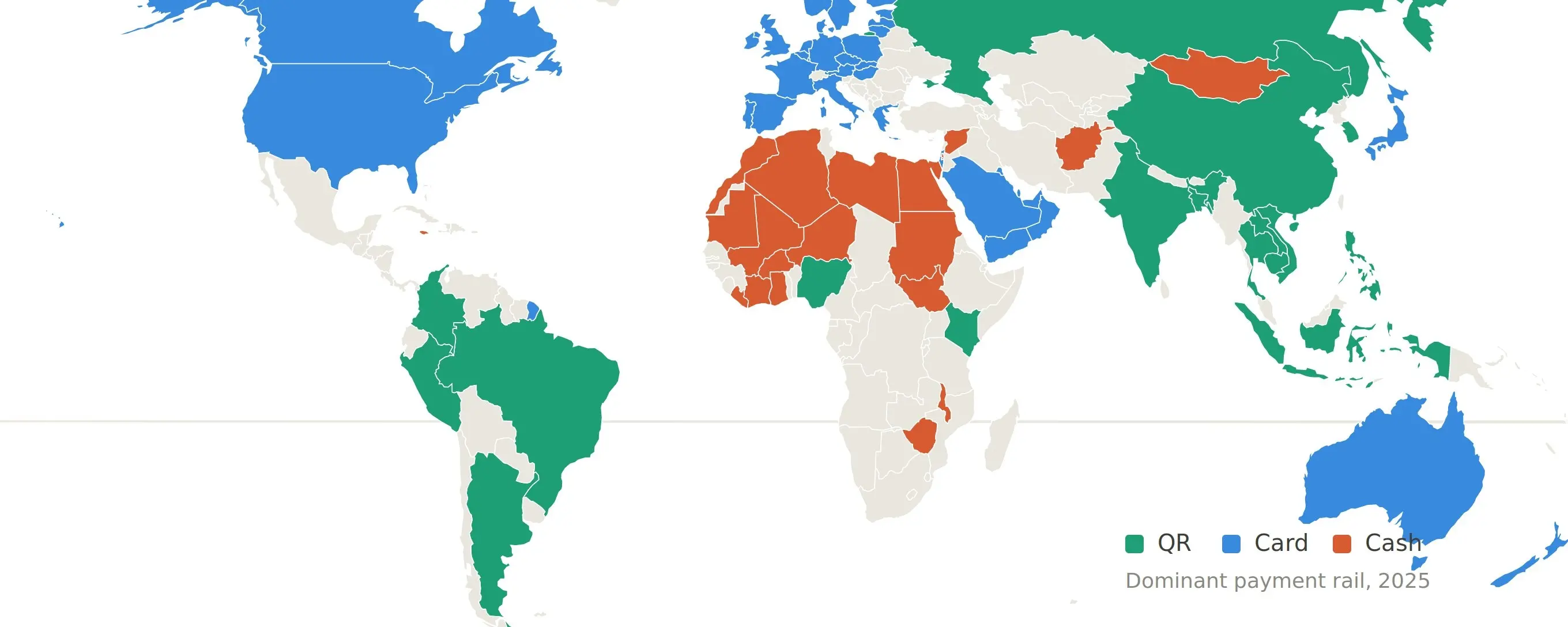
This report challenges common misconceptions about Latin America's payment landscape, based on over 500 hours of firsthand research. Key findings include: 1) Crypto card transaction volume primarily comes from high-net-worth individuals receiving USDT salaries, not retail spending. 2) QR code payments (e.g., Brazil's Pix, Argentina's Mercado Pago) are the dominant payment method across most emerging markets, not cards. 3) A major untapped opportunity lies in enabling cross-border interoperability between domestic instant payment systems. 4) Payment competition is shifting from customer acquisition to owning the settlement layer (e.g., acquiring banks). 5) Latin America is not a single market; Brazil, Mexico, Argentina, and smaller "forgotten five" countries (e.g., Guatemala, Honduras) have vastly different dynamics. 6) Stablecoin-to-fiat conversion margins are collapsing toward zero, pushing companies to build value-added services on top. 7) Future payment winners will be multi-country brands, not single-corridor specialists. 8) Marketing must target specific user segments (e.g., digital nomads, unbanked immigrants) with tailored messaging, not a generic "Brazilian" audience. 9) Contrary to perception, Latin American regulators are often ahead of the US in creating frameworks for digital assets and instant payments, with clear licensing deadlines. The core takeaway is that the region's payment rules are being rewritten, moving beyond cards and stablecoin arbitrage towards integrated, cross-border QR-based solutions.

链捕手Há 15m

Latin America's Payments Landscape Is Not What You Think It Is

链捕手Há 15m

Vitalik's Algorithmic Stablecoin Vision: Interpreting the Mechanism and Challenges from an Options Perspective

Vitalik Buterin's recent algorithmic stablecoin proposal envisions using an option-like mechanism to create a stablecoin without the liquidation risks inherent in traditional collateralized debt position (CDP) models. The design splits one unit of ETH into two components: a 'stable' leg (P) that maintains value up to a certain strike price, and an 'upside' leg (N) that captures any appreciation above that price. Together, they always sum to one ETH, eliminating the need for debt or liquidation mechanisms. From an options perspective, the stable leg essentially functions as a synthetic, covered call position. However, significant challenges exist. For the stable asset to maintain its peg, it must continuously roll deep in-the-money call options, leading to potential rollover slippage, predictable trading paths vulnerable to front-running, and liquidity issues. Crucially, the system's scalability depends on a constant demand for the upside leg—a form of leveraged ETH long position without funding rates or liquidation risk. It's unclear if such persistent, specific demand will materialize from speculators or market makers who have simpler alternatives like perpetual swaps. The author, drawing from experience with Rysk, argues that DeFi options have struggled as standalone trading products due to complexity and fragmented liquidity. Their potential lies instead as foundational infrastructure underpinning more complex financial primitives like stablecoins, structured yields, or index products—transforming from a direct product into a core pricing and risk distribution engine for the next generation of on-chain finance.

marsbitHá 1h

Vitalik's Algorithmic Stablecoin Vision: Interpreting the Mechanism and Challenges from an Options Perspective

marsbitHá 1h

Trading

Spot
Futuros
活动图片