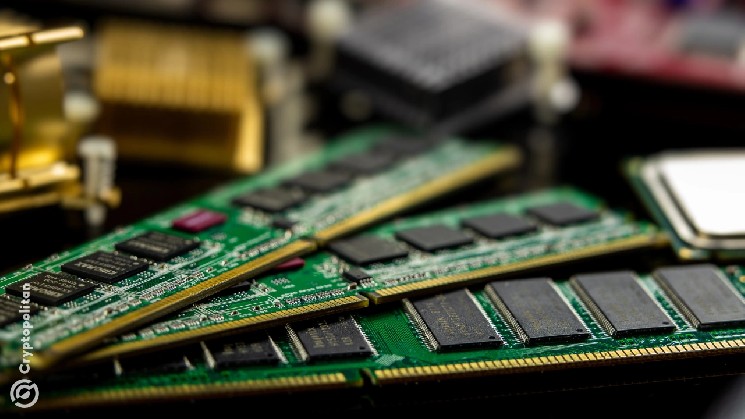
Citi Research Report Analysis: U.S. Proposed Ban on Chinese Optical Modules Has No Substantial Progress, Short-term Enforcement Faces Supply Constraints

marsbitPublicado em 2026-08-11Última atualização em 2026-08-11

Resumo

Citi Report Analysis: U.S. Proposed Ban on Chinese Optical Modules Lacks Substantive Progress, Faces Supply Bottlenecks in Short Term. Reuters reported on August 4th that the U.S. government and FCC are considering a ban on Chinese optical modules. Citi's August 9th report clarifies that optical modules are not listed on any effective FCC ban. The FCC's Order 26-50 established two restricted list mechanisms (based on manufacturer and production location), but optical modules were only mentioned once, as an example in a disclosure requirement, not as a restricted product. The reported ban remains at a proposal stage. Citi estimates Chinese suppliers provide 60-70% of high-speed optical modules for U.S. hyperscalers. Non-Chinese suppliers cannot fill this gap in the short term, making the immediate implementation of a genuine ban unlikely. Future regulatory paths could be manufacturer-based (least likely), location-based covering all offshore production (strictest), or location-based covering only China (more feasible but with unresolved definitions). A ban would pressure U.S. AI infrastructure, conflicting with stated policy goals. Citi sees low near-term implementation probability, with the issue potentially becoming a negotiation chip in bilateral talks. U.S. domestic capacity build-out is a key long-term variable. Among Chinese companies, XSENS and Dongshan Precision have the highest U.S. exposure, while Tianfu Communication, as a passive component supplier, is relatively i...

Written by: Rita

Reuters reported on August 4th that the Trump administration and the FCC are considering banning Chinese optical modules from entering the U.S. market. In a research report dated August 9th, Citi reviewed the regulatory framework already enacted by the FCC and found that optical modules do not appear on any effective ban list. FCC Order 26-50 established two restricted list mechanisms: one based on manufacturers and one based on country of origin. However, optical modules were only mentioned once in the order, as an example in the context of hardware/material list disclosure requirements, not as a restricted product. The reported ban remains at the proposal stage. Citi's assessment is that Chinese suppliers provide 60% to 70% of high-speed optical modules for U.S. hyperscale customers. Non-Chinese suppliers cannot fill this gap in the short term, making the immediate enforcement of a real ban unlikely.

Optical Modules Not Listed in Effective Bans; FCC Mechanism Has Three Potential Paths

The FCC's Order 26-50, passed on July 22nd, formally established two types of restricted lists. The first is manufacturer-based, directly naming entities like Huawei and ZTE, restricting their products regardless of where they are produced. The second is country-of-origin-based, restricting entire product categories produced outside the U.S., currently covering drones, routers, inverters, and advanced robotics equipment. Optical modules are not in either category.

The only place optical modules appear in FCC Order 26-50 is in an example sentence regarding hardware/software material list disclosure requirements: "Should we list several key components, such as modular transmitters, IoT modules, semiconductors, and optical modules?" This sentence appears in the disclosure section, not the ban section. The status of optical modules as components is similar to that of chips in routers or sensors in drones.

Citi outlines three potential regulatory paths forward. The manufacturer-based scenario is the least likely, as Chinese suppliers meet 60% to 70% of U.S. hyperscalers' high-speed optical module demand. Banning major manufacturers would directly impact U.S. AI infrastructure construction. The country-of-origin scenario covering all foreign production is the most stringent but would have similarly massive impact, likely forcing the U.S. to implement broad exemption mechanisms, which could benefit equipment and automation companies. The country-of-origin scenario restricting only Chinese production leaves room for overseas capacity deployment, but the definition of "origin" remains unresolved, with factors like design, firmware, and supply chain control playing a role. Citi believes origin-based restrictions are more likely to be implemented than manufacturer-based ones, but the probability of near-term implementation is low.

Chinese Optical Modules Are Supply Mainstay; Ban Difficult to Enforce in Short Term

Citi estimates that Chinese optical module suppliers collectively hold a 60% to 70% share of the high-speed optical module market for U.S. hyperscale customers. U.S. optical module companies are already building domestic production lines, but ramping up capacity takes time and cannot meet the demand from AI data centers in the short term. If a ban were actually enforced, U.S. AI infrastructure construction would come under direct pressure, contradicting the Trump administration's publicly stated goal of advancing AI leadership.

The FCC explicitly reserves the right to modify or suspend restrictions, with similar precedents existing. The U.S.-China diplomatic calendar in September and November 2026 provides natural inflection points. Optical module restrictions could be incorporated into negotiations on topics like rare earths, agricultural product purchases, or other bilateral priorities, serving as a bargaining chip rather than necessarily being implemented.

The speed of domestic production line construction by U.S. optical module companies will be a key variable. Companies providing automation equipment and production line integration may benefit from this process, but it requires a ramp-up cycle spanning several quarters. Citi judges the probability of a ban being implemented in the near term as low, though the long-term trend of substitution is already established.

Sunny Optical (XYS) and Dongshan Precision Most Exposed; TFC Optical Relatively Insulated

If an optical module ban is implemented, the degree of impact will vary significantly among companies. Sunny Optical (XYS) and Dongshan Precision have the largest exposure to U.S. optical module exports, facing higher risks under both the manufacturer-based and the all-foreign-origin scenarios, only moderating under the China-only origin scenario due to overseas capacity ramp-up. TFC Optical, as a supplier of passive components, is only indirectly affected and relatively insulated.

Dongshan Precision: Citi gives a target price of RMB 350 based on a sum-of-the-parts valuation, with a Buy rating. This values the optical module business at 20x expected 2027 EPS, the optical chip business at 50x, the AI PCB business at 25x, and the traditional business at 15x. Dongshan Precision's optical module and optical chip businesses have dual exposure, but if the regulatory path ultimately remains at the origin level, its overseas capacity layout may provide some buffer.

Sunny Optical (XYS): Citi gives a target price of RMB 701 with a Buy rating, based on 20x expected 2027 EPS, 0.5 standard deviations below its five-year historical average. This valuation already reflects the strong 800G/1.6T cycle and ASIC/Scale-Up opportunities but does not fully account for the potential replacement risk from CPO for NVIDIA customers.

TFC Optical: Citi gives a target price of RMB 419 with a Buy rating, based on 34.3x expected 2027 EPS, in line with its five-year average. As a supplier of passive components, TFC's products are not covered by the restricted lists regardless of how a ban is formulated, making it the lowest-risk stock among the three.

Citi's conclusion is clear: Chinese optical module manufacturers hold an irreplaceable position in the U.S. AI supply chain, and the U.S. lacks sufficient capacity to fill this gap in the short term. Ban discussions will continue but are unlikely to materialize quickly. What investors should truly monitor is the pace of U.S. domestic capacity build-out and the negotiation trajectory of the optical module issue within the U.S.-China diplomatic agenda. The logic of domestic substitution for optical modules remains unchanged, but the time window is longer than the market expects.
Disclaimer

This article is a compilation and interpretation by Trend Research of a third-party brokerage research report (Citi Research, August 9, 2026), combined with publicly available market information. The ratings, target prices, earnings forecasts, and related judgments cited herein are the views of the analyst(s) from that brokerage, representing only the stance of their institution, and do not represent the views of Trend Research, nor do they constitute any investment advice.

The market carries risks, and decisions should be made independently. This article should not be used as a basis for trading any securities.


Criptomoedas em alta

Perguntas relacionadas

QAccording to Citigroup's report, what is the key reason why a potential US ban on Chinese optical modules is unlikely to be implemented in the near term?

ACitigroup's report highlights that Chinese suppliers account for 60% to 70% of the high-speed optical modules for US hyperscalers. Non-Chinese suppliers lack the capacity to fill this gap in the short term, and a ban would directly pressure US AI infrastructure construction, conflicting with the stated goal of AI leadership. Therefore, near-term implementation is considered low.

QIn the FCC's regulatory framework (Order 26-50), how are optical modules currently categorized, and what are the two types of restricted lists established?

AOptical modules are not listed in any effective ban under FCC Order 26-50. They are only mentioned once in an example sentence regarding Hardware/Software Bill of Materials disclosure requirements, not as a restricted product. The order established two restricted list mechanisms: one based on producers (naming entities like Huawei, ZTE) and one based on country of origin (covering product categories like drones, routers).

QWhat are the three potential regulatory paths for optical modules outlined by Citigroup, and which does the report consider most and least likely?

ACitigroup outlines three paths: 1) A producer-based ban (least likely due to severe supply impact), 2) A broad country-of-origin ban covering all non-US production (most strict but would likely require widespread exemptions), and 3) A country-of-origin ban limited to China-produced goods (leaves room for overseas capacity). The report considers producer-based restrictions least likely and country-of-origin restrictions more plausible, though still with low near-term implementation probability.

QWhich two Chinese optical module companies are identified as having the greatest exposure to the US market, and which company is seen as relatively insulated?

AAccording to the report, XinYiSheng and Dongshan Precision have the greatest exposure to US optical module exports. Tianfu Communication, as a supplier of passive components, is relatively insulated as its products are not covered by the potential restricted lists.

QWhat does Citigroup identify as the key long-term trend and critical variable for investors to watch regarding the US-China optical module situation?

ACitigroup concludes that the long-term trend of substitution/supply chain decoupling is established. The key variable for investors is the pace of US domestic optical module production capacity build-out. Additionally, the negotiation trajectory of the optical module issue within the broader US-China diplomatic agenda (e.g., linked to talks on rare earths, agriculture) is important to monitor.

Leituras Relacionadas

How AI Agents Simplify Mastering Complex Web3 Tools

Coinfello has launched a major update, Fello 2, featuring an AI agent platform designed to simplify complex Web3 operations. Users can now create, execute, and automate on-chain financial strategies using simple language prompts. The update introduces an intent-based infrastructure that eliminates manual, multi-step interactions with dApps, replacing them with a single command. Traditionally, tasks like managing yield strategies or monitoring loan positions required juggling multiple applications, manual transaction approvals, and constant market monitoring. Fello 2 allows users to describe a strategy once; the AI agent then analyzes conditions, formulates an execution plan for user review, and handles continuous background monitoring and security. The platform operates on a non-custodial delegation model where the agent never holds private keys and proactively screens transactions to reject phishing attempts, drainer scripts, and blind signing requests. Users with standard wallets can monitor positions without a new wallet, only needing one with automation features for active fund transfers. Coinfello's COO, Minchi Park, stated that natural language interfaces address a core misconception in Web3 UX: they separate the mechanics of tools from financial literacy. The barrier is often not understanding financial risks, but the operational costs of navigating multiple chains and managing protocol approvals. She noted that these AI agents excel in complex edge cases, such as prioritizing margin protection over principal repayment during volatile market drops, and can calculate true net yield by factoring in gas and protocol fees. Park predicts that as agent-based workflows expand, dApp interfaces will become secondary to contract clarity and pure performance. "If a user's entry point is a prompt, your interface stops being the evaluation criteria," she said. Alongside Fello 2, Coinfello launched a rewards program paid in MON, Monad's native token, offering 100% fee rebates during an initial promo period. Future updates will allow earned rewards to be deposited into a self-custodied account managed by Fello for auto-compounding. A co-founder emphasized that Fello 2 converts manual processes into automated actions, managing schedules and conditions within the user's own wallet, with no unapproved operations.

cryptonews.ruHá 7m

How AI Agents Simplify Mastering Complex Web3 Tools

cryptonews.ruHá 7m

Trading

Spot

Artigos em Destaque

Como comprar BAN

Bem-vindo à HTX.com!Tornámos a compra de Comedian (BAN) simples e conveniente.Segue o nosso guia passo a passo para iniciar a tua jornada no mundo das criptos.Passo 1: cria a tua conta HTXUtiliza o teu e-mail ou número de telefone para te inscreveres numa conta gratuita na HTX.Desfruta de um processo de inscrição sem complicações e desbloqueia todas as funcionalidades.Obter a minha contaPasso 2: vai para Comprar Cripto e escolhe o teu método de pagamentoCartão de crédito/débito: usa o teu visa ou mastercard para comprar Comedian (BAN) instantaneamente.Saldo: usa os fundos da tua conta HTX para transacionar sem problemas.Terceiros: adicionamos métodos de pagamento populares, como Google Pay e Apple Pay, para aumentar a conveniência.P2P: transaciona diretamente com outros utilizadores na HTX.Mercado de balcão (OTC): oferecemos serviços personalizados e taxas de câmbio competitivas para os traders.Passo 3: armazena teu Comedian (BAN)Depois de comprar o teu Comedian (BAN), armazena-o na tua conta HTX.Alternativamente, podes enviá-lo para outro lugar através de transferência blockchain ou usá-lo para transacionar outras criptomoedas.Passo 4: transaciona Comedian (BAN)Transaciona facilmente Comedian (BAN) no mercado à vista da HTX.Acede simplesmente à tua conta, seleciona o teu par de trading, executa as tuas transações e monitoriza em tempo real.Oferecemos uma experiência de fácil utilização tanto para principiantes como para traders experientes.

814 Visualizações TotaisPublicado em {updateTime}Atualizado em 2026.06.02

Como comprar BAN

Discussões

Bem-vindo à Comunidade HTX. Aqui, pode manter-se informado sobre os mais recentes desenvolvimentos da plataforma e obter acesso a análises profissionais de mercado. As opiniões dos utilizadores sobre o preço de BAN (BAN) são apresentadas abaixo.

活动图片