Hong Kong prepares banks for quantum threats amid tokenization push

cointelegraphPublicado em 2026-07-28Última atualização em 2026-07-28

Resumo

The Hong Kong Monetary Authority (HKMA) has launched a quantum preparedness framework and a Quantum Preparedness Index (QPI) for banks, as the city expands its use of blockchain and tokenized assets. The sector's current readiness score is 2.3 out of 10, with about half of surveyed institutions lacking formal plans. The HKMA aims for full readiness (QPI 10) by 2030. This initiative addresses rising risks as Hong Kong moves more financial activity, including tokenized green bonds and deposits, onto distributed ledgers. The HKMA warns that quantum computers could eventually break widely used cryptography, threatening core functions like transaction authorization and data security in these systems. The regulator urges banks to begin risk assessments and migration planning now.

The Hong Kong Monetary Authority (HKMA) has launched a framework to assess banks’ preparedness for quantum-computing threats as the city expands its use of tokenized deposits, digital assets and blockchain settlement.

On Monday, the HKMA introduced a white paper on quantum preparedness and the sector’s first Quantum Preparedness Index (QPI). The index gave the sector an overall readiness score of 2.3 out of 10, while the white paper found that around half of surveyed institutions had no formal post-quantum planning in place. The HKMA said it aims to achieve full sector readiness, represented by a QPI score of 10, by 2030.

The development comes as Hong Kong moves more traditional financial activity onto distributed ledgers. Government figures show that Hong Kong has issued three batches of tokenized green bonds totaling about HK$16.8 billion (about $2.1 billion) since 2023, while the HKMA is advancing tokenized deposits and digital-asset settlement through Project Ensemble.

The HKMA white paper said distributed ledger applications and payment networks depend on cryptography for core functions and could face severe disruption if those protections were compromised.

It also said one surveyed institution completed a proof of concept applying post-quantum cryptography to distributed-ledger connectivity and cited HSBC’s 2024 use of quantum-safe technology to move tokenized gold across distributed ledgers.

Hong Kong’s tokenization push raises quantum stakes

The quantum initiative follows the launch of the HKMA’s Fintech 2030 strategy in 2025, which made tokenization one of four strategic pillars in a plan comprising more than 40 initiatives.

The regulator said it would accelerate real-world asset (RWA) tokenization, regularize tokenized government bond issuance and explore tokenized Exchange Fund papers, with blockchain settlement supported by e-HKD, tokenized deposits and regulated stablecoins.

Related: Hong Kong launches initiative to help banks with DLT adoption

In a Feb. 11, 2026, speech, Hong Kong Financial Secretary Paul Chan said banks in Hong Kong held more than HK$14 billion (about $1.785 billion) in digital assets under custody at the end of 2025, up about 180% year over year, while tokenized deposits had reached HK$29 billion ($3.7 billion).

According to the HKMA white paper, quantum computers capable of running Shor’s algorithm at scale could eventually break widely used RSA and elliptic-curve cryptography. This could allow attackers to decrypt protected data or forge the digital signatures used to authorize transactions, verify identities and establish trust in financial systems.

Because replacing embedded cryptographic systems can take years, the HKMA urged banks to begin inventories, risk assessments and migration planning before such machines become available.

Magazine: Ethereum’s EEZ could pull other blockchains into its orbit

Criptomoedas em alta

Perguntas relacionadas

QWhat is the main purpose of the Hong Kong Monetary Authority's new Quantum Preparedness Index (QPI) and what was the initial sector score?

AThe main purpose of the Hong Kong Monetary Authority's (HKMA) new Quantum Preparedness Index (QPI) is to assess and drive the banking sector's readiness for threats posed by quantum computing. It aims to measure preparedness, with a goal of achieving a full readiness score of 10 by 2030. The initial overall sector readiness score was 2.3 out of 10.

QHow is Hong Kong's push for tokenization related to the urgency of addressing quantum computing threats?

AHong Kong's push for tokenization, which involves moving traditional financial activities like bonds and deposits onto distributed ledgers, increases the urgency of addressing quantum threats. These distributed ledger applications and payment networks rely heavily on cryptography for core functions such as transaction authorization and identity verification. If quantum computers break this cryptography, it could lead to severe disruption, data decryption, and forged digital signatures in the tokenized financial system.

QWhat specific actions did the HKMA white paper find lacking in surveyed financial institutions regarding post-quantum planning?

AThe HKMA white paper found that around half of the surveyed financial institutions had no formal post-quantum planning in place. This highlights a significant gap in preparedness for the future threat quantum computers pose to current cryptographic systems.

QAccording to the article, what are some examples of Hong Kong's progress in tokenizing real-world assets and digital assets?

AExamples of Hong Kong's progress in tokenization include: issuing three batches of tokenized green bonds totaling about HK$16.8 billion since 2023; banks holding over HK$14 billion in digital assets under custody by the end of 2025 (a 180% year-over-year increase); and tokenized deposits reaching HK$29 billion. The HKMA is also advancing these areas through Project Ensemble and plans to regularize tokenized government bond issuance.

QWhat potential risk does large-scale quantum computing pose to current cryptographic systems, and what preparatory step does the HKMA advise banks to take now?

ALarge-scale quantum computers capable of running Shor's algorithm could eventually break widely used public-key cryptography systems like RSA and elliptic-curve cryptography. This could allow attackers to decrypt protected data or forge digital signatures critical for financial transactions. Because replacing embedded cryptographic systems can take years, the HKMA urges banks to begin preparatory steps now, including conducting inventories of cryptographic assets, performing risk assessments, and starting migration planning to quantum-resistant cryptography.

Leituras Relacionadas

UNI Doubles in Two Months Against the Trend: A 5-Year-Overdue Value Realization

Amidst a generally stagnant crypto market in June and July, UNI, the governance token of Uniswap, saw a significant surge, nearly doubling in price from around $2.3 to $4.6. This rally represents a delayed but significant value reassessment, triggered by the practical implementation of its long-debated "fee switch" mechanism. The key turning point was the on-chain execution of the UNIfication proposal in December 2025. It activated a protocol fee on select pools, directed Unichain sequencer revenue (net of costs) to a communal treasury, executed a one-time burn of 100 million UNI, and established a system where all protocol revenue flows into a "TokenJar" contract. This treasury has a single exit: purchasing and permanently burning UNI via a "Firepit" contract. Initially, the market reacted tepidly as the generated revenue and corresponding burn rate were modest. The narrative shifted dramatically in July 2025 with two major developments. First, the launch of Robinhood Chain, tailored for tokenized stocks, rapidly became a primary source of volume and fees for Uniswap, at one point contributing nearly half of its weekly fees. Second, governance votes successfully expanded the fee mechanism to v4 pools and initiated a temperature check for fees on Robinhood Chain. The activation of v4 fees caused the protocol's daily revenue earmarked for UNI burns to nearly triple. The core of UNI's recent price action is the transition from a pure governance token to a cash-flow asset with a permanent, protocol-funded buyer. Its effectiveness is amplified by UNI's mature and widely distributed supply, with no major impending unlocks to dilute the impact of the buybacks. The sustainability of this rally now hinges on whether the transaction volume, particularly on Robinhood Chain, persists after its initial gas subsidies expire, determining if this is a genuine value realization or a subsidy-fueled spike.

marsbitHá 46m

UNI Doubles in Two Months Against the Trend: A 5-Year-Overdue Value Realization

marsbitHá 46m

Breaking: Google Earth Urgently Pulls Back Nano Banana 2 Image Generation Feature!

Google Earth's newly launched "Create image" feature, powered by the Nano Banana 2 AI image generation model, was abruptly withdrawn shortly after its release due to being "played" by users. The feature allowed users to generate and overlay AI-created visuals directly onto real-world satellite and 3D maps in Google Earth. The tool enabled creative applications like historical recreations (e.g., visualizing ancient Pompeii), generating informational graphics for landmarks, and envisioning architectural projects or futuristic cityscapes on real terrain. It operated under "geospatial grounding," meaning the AI respected the underlying geography, topography, and perspective of the chosen map view. The model also integrated with Gemini to retrieve relevant factual information. However, upon release, users quickly tested its limits. A prominent example involved reimagining Philadelphia's historic Independence Hall as a post-apocalyptic ruin overrun by "happy" zombies, evil clowns, and giant alien mechs. This highlighted both the feature's playful potential and its risks regarding the generation of inappropriate or misleading content on realistic maps, leading to its swift temporary removal. Google stated it would re-release the feature after implementing "enhanced guardrails." Analysts note this move strategically leverages Google's vast proprietary geospatial data, positioning its AI not just for artistic generation but for spatially accurate world visualization—a unique advantage in the competitive AI image generation landscape.

marsbitHá 2h

Breaking: Google Earth Urgently Pulls Back Nano Banana 2 Image Generation Feature!

marsbitHá 2h

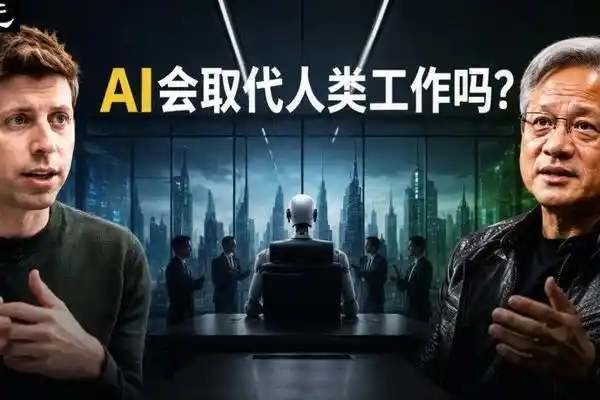
Altman Admits: Overestimated AI Snatching Jobs! Huang Renxun: The Unemployment Narrative Is Completely Backwards

Sam Altman has revised his earlier predictions about AI rapidly replacing jobs, admitting he overestimated the speed at which AI would eliminate entry-level white-collar roles. Speaking on the "Invest Like the Best" podcast, he stated that people do not truly want an AI CEO, as accountability and human connection remain critical. He found that individuals prefer interacting with people who can be held responsible for decisions. Similarly, NVIDIA's Jensen Huang argued that the narrative of AI destroying jobs is misguided. He distinguishes between tasks and jobs, noting that while AI can automate specific tasks, entire jobs—encompassing communication, judgment, coordination, and accountability—are not eliminated. He cited examples like radiologists and software engineers, where demand for these roles has increased as AI handles repetitive tasks, allowing for business expansion and the creation of more positions. Data from a University of Maryland and LinkUp study supports this, showing that U.S. job postings for new graduates have actually risen, countering the fear of vanishing entry-level roles. However, a significant shift is occurring: the traditional entry-level tasks that help newcomers gain experience are being automated, making initial career access more challenging. The key insight is that as AI takes over standardized tasks, the enduring value of human work shifts toward areas of responsibility, trust-building, and final decision-making—aspects that AI cannot replicate. The real "moat" for professionals lies in these irreplaceable human elements.

marsbitHá 2h

Altman Admits: Overestimated AI Snatching Jobs! Huang Renxun: The Unemployment Narrative Is Completely Backwards

marsbitHá 2h

Trading

Spot

Artigos em Destaque

Como comprar PUSH

Bem-vindo à HTX.com!Tornámos a compra de Push Protocol (PUSH) simples e conveniente.Segue o nosso guia passo a passo para iniciar a tua jornada no mundo das criptos.Passo 1: cria a tua conta HTXUtiliza o teu e-mail ou número de telefone para te inscreveres numa conta gratuita na HTX.Desfruta de um processo de inscrição sem complicações e desbloqueia todas as funcionalidades.Obter a minha contaPasso 2: vai para Comprar Cripto e escolhe o teu método de pagamentoCartão de crédito/débito: usa o teu visa ou mastercard para comprar Push Protocol (PUSH) instantaneamente.Saldo: usa os fundos da tua conta HTX para transacionar sem problemas.Terceiros: adicionamos métodos de pagamento populares, como Google Pay e Apple Pay, para aumentar a conveniência.P2P: transaciona diretamente com outros utilizadores na HTX.Mercado de balcão (OTC): oferecemos serviços personalizados e taxas de câmbio competitivas para os traders.Passo 3: armazena teu Push Protocol (PUSH)Depois de comprar o teu Push Protocol (PUSH), armazena-o na tua conta HTX.Alternativamente, podes enviá-lo para outro lugar através de transferência blockchain ou usá-lo para transacionar outras criptomoedas.Passo 4: transaciona Push Protocol (PUSH)Transaciona facilmente Push Protocol (PUSH) no mercado à vista da HTX.Acede simplesmente à tua conta, seleciona o teu par de trading, executa as tuas transações e monitoriza em tempo real.Oferecemos uma experiência de fácil utilização tanto para principiantes como para traders experientes.

577 Visualizações TotaisPublicado em {updateTime}Atualizado em 2026.06.02

Como comprar PUSH

Discussões

Bem-vindo à Comunidade HTX. Aqui, pode manter-se informado sobre os mais recentes desenvolvimentos da plataforma e obter acesso a análises profissionais de mercado. As opiniões dos utilizadores sobre o preço de PUSH (PUSH) são apresentadas abaixo.

活动图片