刚刚,诺贝尔奖得主成Anthropic新员工

marsbitPublicado em 2026-06-20Última atualização em 2026-06-20

Resumo

诺贝尔奖得主John Jumper宣布离开工作近9年的Google DeepMind,加入AI公司Anthropic。Jumper是AlphaFold项目的核心领导者,该AI模型彻底改变了结构生物学,曾因此获得诺贝尔化学奖。他的离职被视为谷歌的重大损失。 就在两天前,Transformer论文核心作者、Gemini联合负责人Noam Shazeer也宣布离开谷歌加入OpenAI。短短72小时内,谷歌连续流失两位顶尖AI人才。分析认为,新兴的AI实验室能提供“个人改变公司轨迹”的机遇,这对顶尖研究者颇具吸引力。 Jumper在2017年博士毕业后即加入DeepMind,并迅速领导AlphaFold团队。在他的带领下,AlphaFold系列模型成功预测了数亿个蛋白质结构,将生物学研究效率提升了上千倍。此次加入Anthropic,Jumper将助力该公司在生命科学领域的布局。Anthropic此前已收购生物科技公司Coefficient Bio,并推出专注于医疗和生命科学的AI工具。 目前,Anthropic、OpenAI和Google DeepMind三大AI实验室均已将生命科学视为下一个核心战场,竞相投入巨资,旨在用AI技术颠覆药物研发、基因组学等传统领域。Jumper的转会标志着这场顶级人才与技术竞赛进入新阶段。

诺贝尔奖得主,入职Anthropic了!

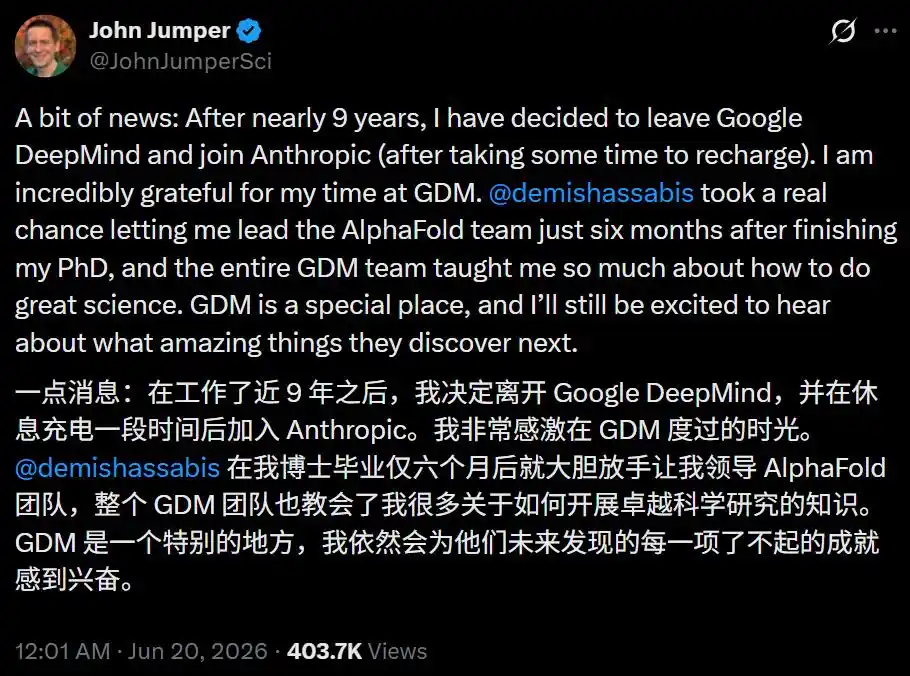
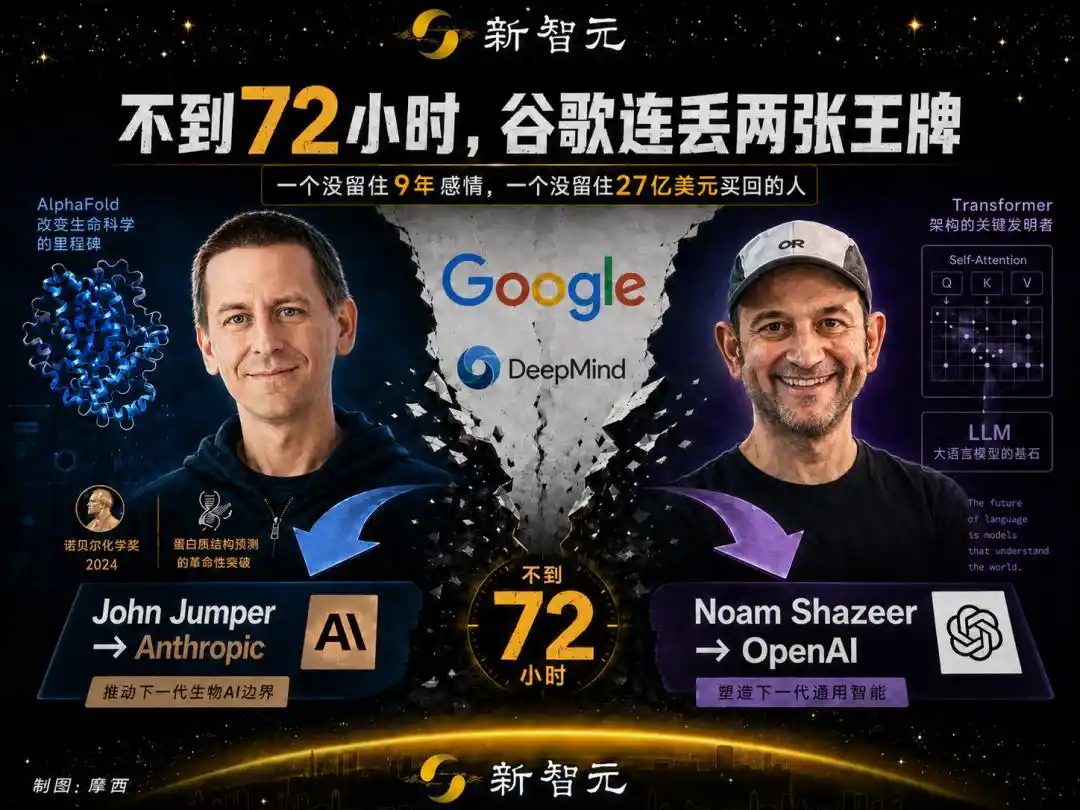
今天,AlphaFold核心领导者John Jumper官宣:离开工作近9年的Google DeepMind,加入Anthropic。

用一个AI模型改写了整个结构生物学的诺奖得主,转身走了。
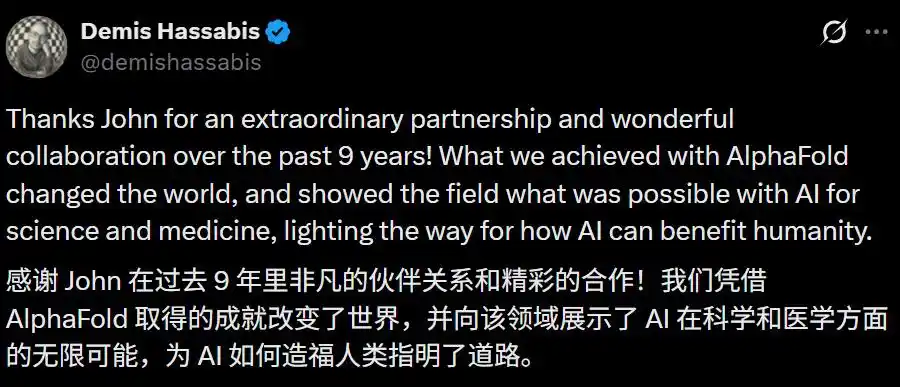
Hassabis很快回应:「感谢John在过去9年里非凡的伙伴关系!我们凭借AlphaFold取得的成就改变了世界。」

合作9年、共享诺奖,这大概是科技圈最体面的一次告别了。
而就在两天前,Transformer论文的传奇共一、Gemini联合负责人Noam Shazeer刚宣布离开Google,去了OpenAI。

不到72小时,谷歌连丢两张王牌。

一个花27亿美元买回来也没留住,一个9年感情也没留住。

博士毕业6个月,直接领队AlphaFold

John Jumper在生命科学界,可以说就是「用AI改写整个学科」的代名词。

1985年,Jumper出生于阿肯色州小石城,一个普通的美国南方小城。

本科在Vanderbilt拿了数学和物理双学位,之后进入芝加哥大学一路读到博士,研究方向是理论化学。具体来说,就是用计算方法模拟蛋白质的动力学行为。

数学给他建模的直觉,物理给他对复杂系统的理解,理论化学让他比任何纯AI研究者都更懂蛋白质这个问题本身。

三个方向合在一起恰好是解蛋白质折叠问题最稀缺的知识组合。

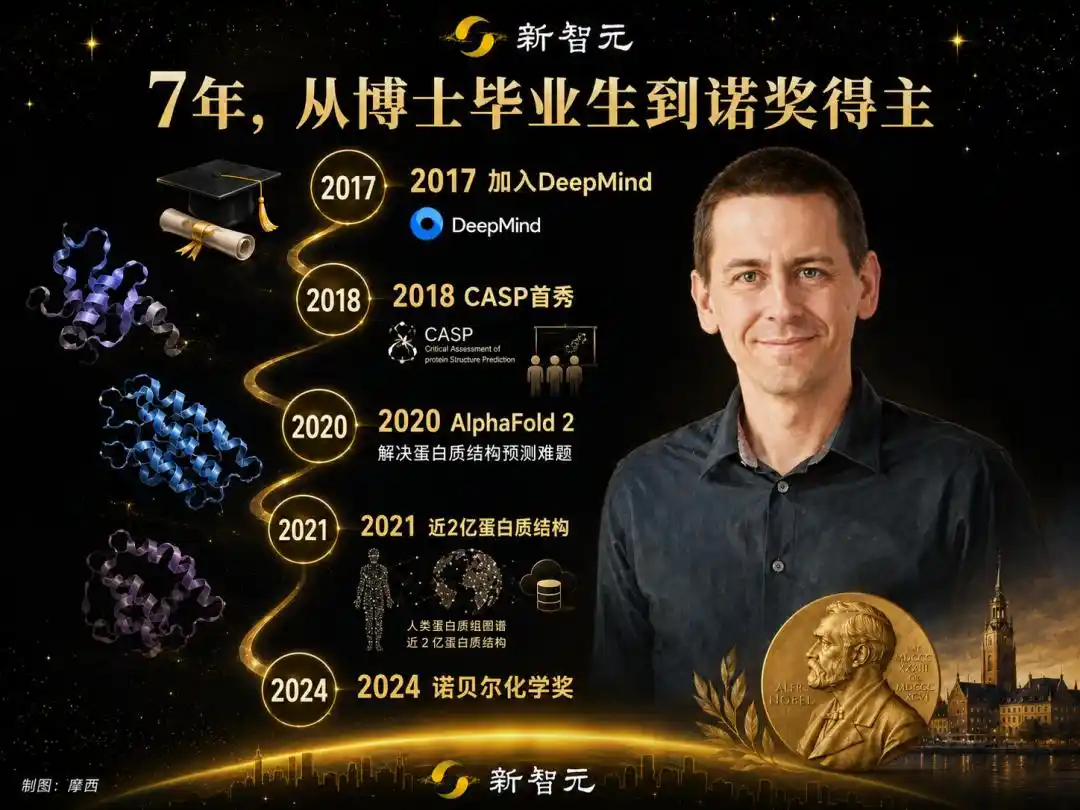
2017年拿到博士学位后,Jumper直接就加入了DeepMind。
值得注意的是,彼时他几乎没有深度学习经验,简历上最突出的不是对神经网络的掌握,而是对蛋白质物理的理解。

但Hassabis看中的恰恰是这一点。

紧接着,他就做了一个谁都没想到的决定——让这个毕业仅6个月、连深度学习都要边干边学的年轻人,直接领导AlphaFold团队。

没有过渡期,没有「先做几年研究员攒攒资历」。

Hassabis赌的是,解蛋白质折叠这道题,懂蛋白质比懂AI更重要。而Jumper接下的,是整个计算生物学领域最大的一场豪赌。

一个人把生物学翻了1000倍

接下来几年发生的事,只能用「离谱」来形容——

2018年,AlphaFold在蛋白质结构预测竞赛CASP上首次亮相,碾压传统方法。

2020年,AlphaFold 2横空出世,困扰生物学家50年的蛋白质折叠问题,被一个AI模型直接「解了」。

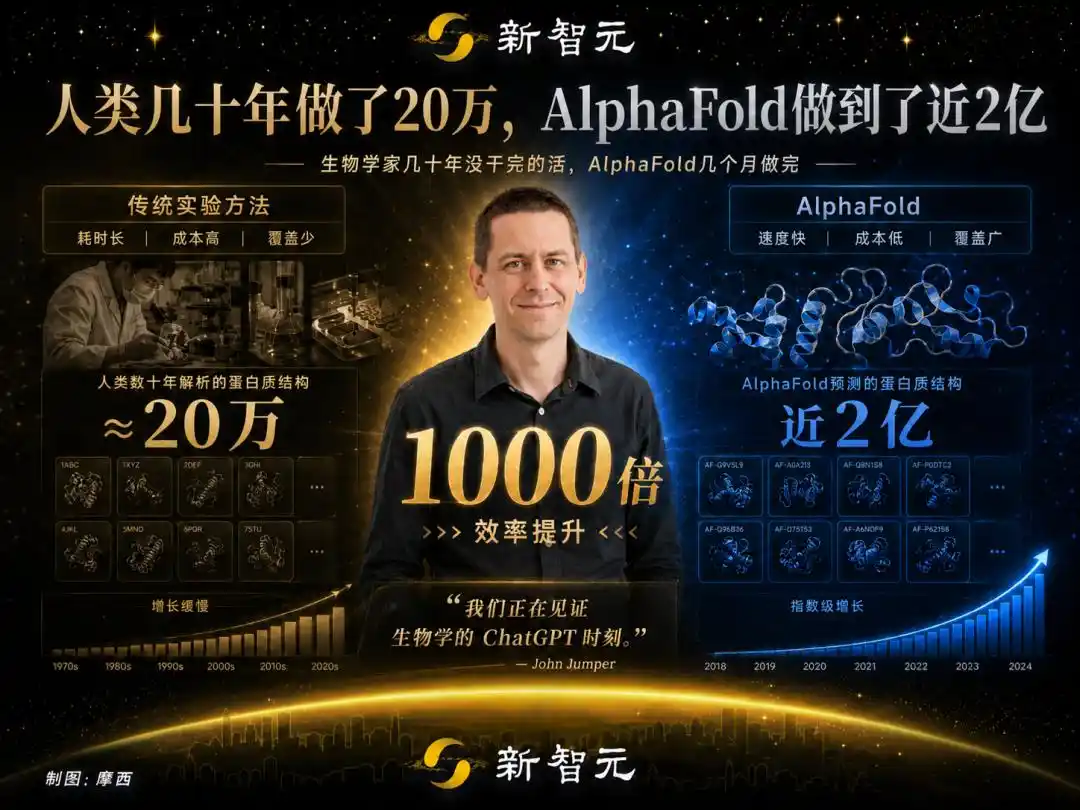
2021年,Jumper带队算出了几乎所有5万多种人类蛋白质的3D结构。并在最终实现了约100万个物种、近2亿种已知蛋白质结构的生成。

在AlphaFold之前,人类花了几十年,用X射线晶体学、冷冻电镜等实验手段,一共解出了大约20万个蛋白质结构。

Jumper的团队,一次性翻了1000倍。

毫不夸张地说,生物学家过去一百年没干完的活,AlphaFold几个月就干完了。
2024年5月,AlphaFold 3发布——不只预测蛋白质了,DNA、RNA、小分子药物之间的相互作用,全能算。蛋白质-配体对接准确率76.4%,比前代方法提升1.8倍。

5个月后的斯德哥尔摩,John Jumper和Demis Hassabis一起站上了诺贝尔化学奖的领奖台。

那一年Jumper 39岁,是70年来最年轻的化学诺奖得主。

从一个连深度学习都要现学的博士毕业生,到站在斯德哥尔摩的聚光灯下,他只用了7年。

至此,Hassabis当年那个赌注的回报率,怕是人类科学史上都排得上号。

所以今天他走,Google DeepMind的痛,不只是少了一个Director那么简单。

谷歌到底怎么了?

消息炸开之后,X上的评论区直接沸腾了。

网友Chubby直呼:「这对Google来说是巨大的损失,对Anthropic来说简直是疯了!」
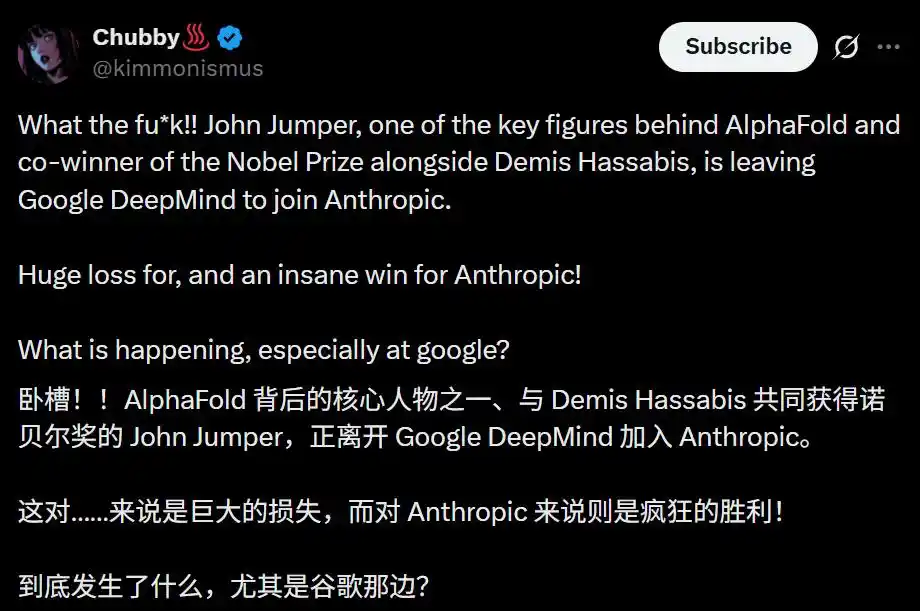
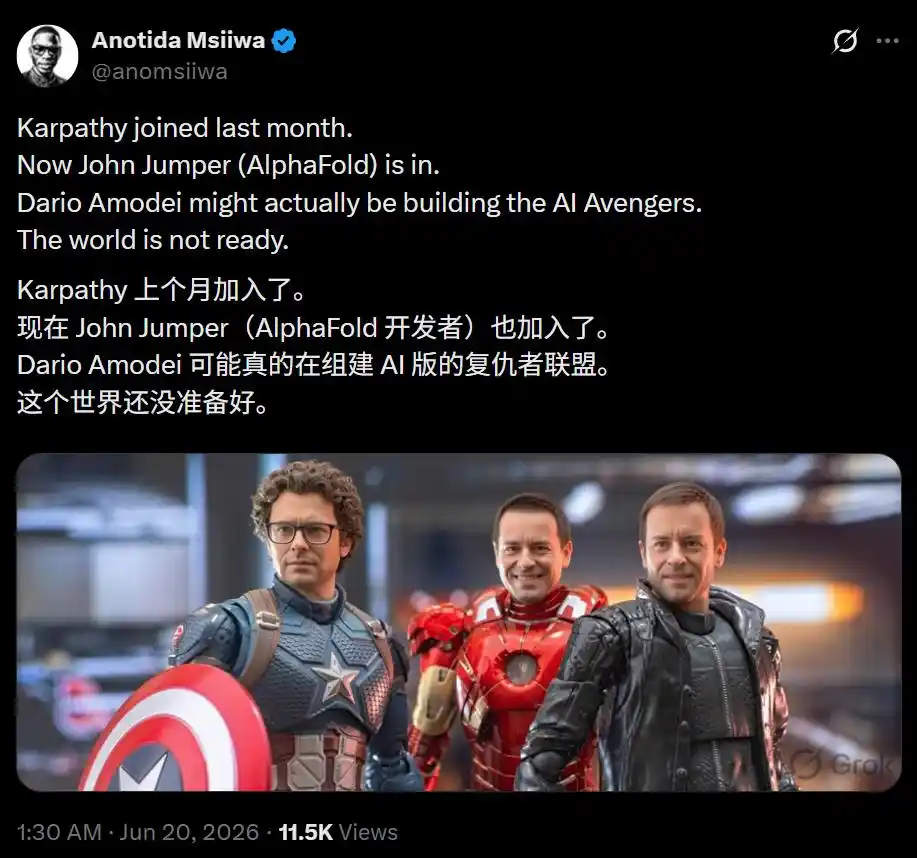
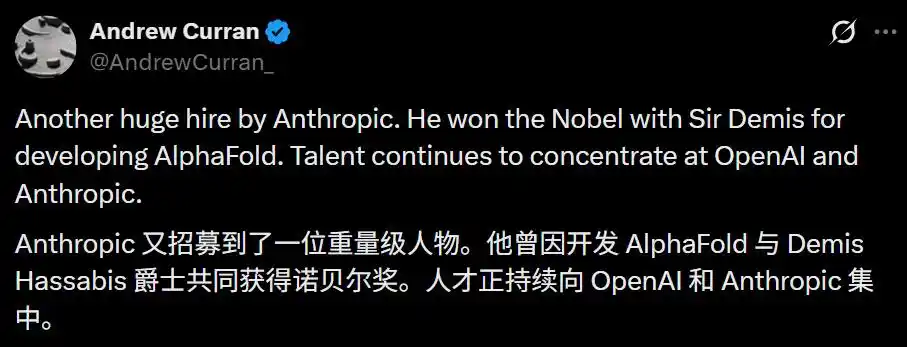
有网友感慨「Anthropic迎来了一位诺贝尔奖得主,人才正持续向OpenAI和Anthropic集中」,还有人直接喊出来:「先是Karpathy,现在又是AlphaFold背后的人,Anthropic这是在组AI复仇者联盟。」

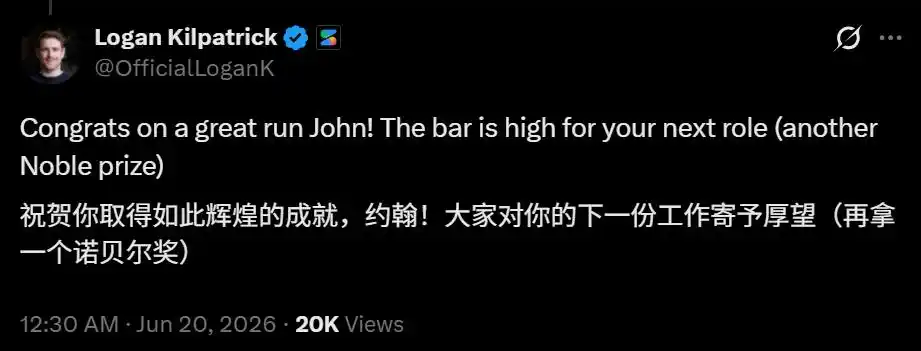
Logan Kilpatrick开玩笑说期待Jumper「再拿一个诺贝尔奖」。语气是调侃,但仔细想想,还真不算夸张。

而震惊过后,所有人都在问同一个问题——谷歌到底怎么了?
Jumper没说,Anthropic没说,谷歌也没说。

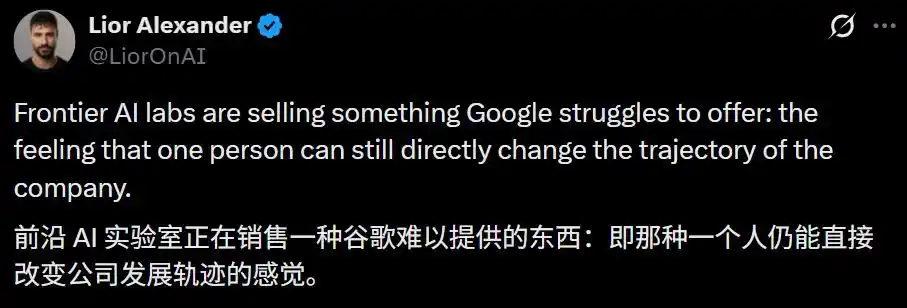
或许,投资人Lior Alexander的一条评论,是目前最接近答案的——

「前沿AI实验室在兜售一种Google给不了的东西:一个人就能改变公司轨迹的感觉。」
27亿美元买回来的人,也没留住

就在Jumper官宣的两天前,Noam Shazeer宣布离开谷歌,加入OpenAI,任「架构研究负责人」。

2017年那篇现代AI的奠基之作「Attention Is All You Need」,他是核心作者之一。多头注意力是他设计的,第一个跑赢SOTA的可用实现是他一行一行敲出来的。

而谷歌为了把他从Character.AI请回来,砸了27亿美元。

回来后Shazeer出任Gemini联合负责人,成了谷歌大模型反攻的头号功臣。

结果不到两年,又走了。隔了两天,Jumper也走了。

他们既不是第一个,也不会是最后一个。
过去8年,超过20位在里程碑论文上署名的顶级研究者陆续离开DeepMind/Brain。

2025年一年,至少11名高管离职。DeepMind联合创始人Mustafa Suleyman本人,也在一轮6.5亿美元的acqui-hire中被微软挖走。

生命科学,AI三巨头的下一个战场

回到Anthropic这边。早在两个多月前,布局就已经开始了。

4月3日,Anthropic用4亿美元股票收购了生物科技公司Coefficient Bio。团队不到10人,但已经在AI驱动的抗体设计领域做出了业内顶尖的成果。

与此同时,Anthropic也在建自己的湿实验室,去年10月推出了帮助研究人员加速药物发现和生物实验设计的Claude for Life Sciences,今年1月又上线了面向医疗机构的Claude for Healthcare。

他们说,目标是把生命科学的研发周期压缩10倍。而现在,一个诺贝尔奖级别的蛋白质科学家来领这件事了。

事实上,不只是Anthropic在押注生命科学。
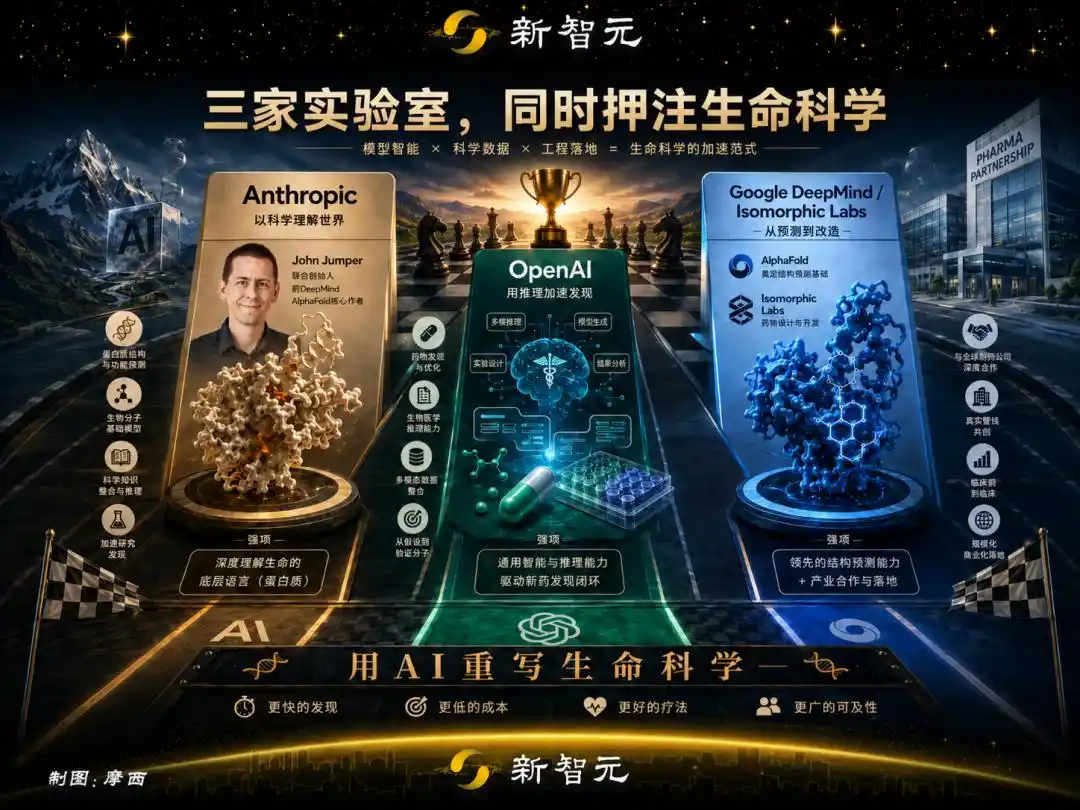
OpenAI今年4月发布了专门面向生物医学的推理模型GPT-Rosalind,主攻药物发现、基因组分析和蛋白质工程,已经和Amgen、Moderna、Thermo Fisher等头部药企达成合作。

OpenAI基金会更是直接表态:未来一年在生命科学方向的投入不低于10亿美元。加上刚刚挖来的Shazeer坐镇架构研究,OpenAI在这条赛道上同样来势凶猛。

而Google DeepMind这边,Hassabis旗下的Isomorphic Labs去年融了6亿美元,和礼来、诺华签下了总里程碑价值高达30亿美元的合作协议,AlphaFold的技术底座依然是行业标杆。

三家实验室,同时把筹码压向了同一个方向——用AI重写生命科学。

Jumper的选择,只是这场大棋的最新一步。

参考资料:

https://x.com/JohnJumperSci/status/2068001285173834106

编辑:摩西

本文来自微信公众号“新智元”,作者:ASI启示录

Criptomoedas em alta

Perguntas relacionadas

Q哪位诺贝尔奖得主新近入职了Anthropic,以及他此前在哪里工作?

A诺贝尔化学奖得主、AlphaFold的核心领导者John Jumper新近入职了Anthropic。他此前在Google DeepMind工作了近9年。

Q在加入Google DeepMind前,John Jumper的学术背景是什么?

AJohn Jumper在本科期间于范德比尔特大学获得了数学和物理双学位,之后在芝加哥大学攻读理论化学博士学位,研究方向是利用计算方法模拟蛋白质的动力学行为。

QJohn Jumper加入DeepMind后,Demis Hassabis做出了一个什么关键决策?

AJohn Jumper博士毕业仅6个月后,Demis Hassabis决定让他直接领导AlphaFold团队,这是一个大胆的赌注,因为他当时深度学习经验尚浅,但Hassabis认为解决蛋白质折叠问题,理解蛋白质本身比精通AI技术更为关键。

QAlphaFold系列模型在生命科学领域取得了哪些里程碑式的成就?

AAlphaFold系列模型取得了多项里程碑式成就:AlphaFold 2在2020年基本解决了困扰生物学界50年的蛋白质折叠问题;2021年,团队预测了约100万个物种、近2亿种蛋白质的结构,将已知结构数量提升了约1000倍;2024年发布的AlphaFold 3能预测蛋白质、DNA、RNA及小分子药物间的相互作用。

Q除了Anthropic,还有哪些AI巨头在重点布局生命科学领域?

A除了Anthropic(通过收购Coefficient Bio、建立湿实验室、发布Claude for Life Sciences),OpenAI也发布了生物医学推理模型GPT-Rosalind并计划投入巨额资金,而Google DeepMind则通过旗下的Isomorphic Labs与大型药企合作。这三家公司都在积极投入资源,旨在用AI技术重塑生命科学。

Leituras Relacionadas

Financing Weekly Report | 11 Public Financing Events, Stablecoin Payment Infrastructure Company Trace Finance Completes $32 Million Series A Round Led by CoinFund

Financing Weekly Report | 11 public funding events recorded, with a total scale exceeding $264 million. The stablecoin payment infrastructure sector remains a hot spot. Key Deals: - Trace Finance, a stablecoin payment infrastructure firm, raised $32 million in a Series A round led by CoinFund to expand in Latin America and Asia-Pacific. - Galaxy Ventures co-led a $140 million Series A round for Karta, a US credit card provider for global travelers without requiring an SSN. - Instant payment platform Interchecks completed a $50 million Series C round. - Paradigm led a $9 million Series A for Latin American cross-border payment app El Dorado. - Range, a stablecoin compliance startup, raised $8.3 million in an oversubscribed Series A. - RWA infrastructure project Renaiss raised $1.5 million to expand its on-chain collectibles platform. Sector Breakdown: - Infrastructure & Tools: 6 deals, including the above-mentioned Trace Finance, Range, and Renaiss. - Centralized Finance (CeFi): 3 deals, led by Karta's $140 million round. - DeFi: 1 deal – reinsurance protocol Re secured strategic investment from Coinbase Ventures. - Prediction Markets: 1 deal – K25.ai completed a $10 million Pre-A round from NewGen. Other notable transactions include digital asset depository RDC raising $7 million, ad-tech startup EarnOS securing $6 million, and a $1 million strategic investment in LitVM, a ZK Layer 2 for Litecoin. The report highlights sustained investor interest in stablecoin payment infrastructure, compliant on-chain finance, and real-world asset (RWA) tokenization.

marsbitHá 17m

Financing Weekly Report | 11 Public Financing Events, Stablecoin Payment Infrastructure Company Trace Finance Completes $32 Million Series A Round Led by CoinFund

marsbitHá 17m

When Transfers Become Truly Frictionless: How Sui Uses 'Zero Gas' to Become the Underlying Infrastructure for Stablecoin Payments

Title: Sui Launches Zero-Gas Stablecoin Transfers to Become the Foundation for Stablecoin Payments Sui has introduced a zero-gas fee feature for peer-to-peer stablecoin transfers, eliminating the need for users or businesses to hold separate SUI tokens to pay transaction costs. This innovation, built on a new underlying account architecture called Address Balances, significantly reduces validator processing costs for eligible transactions. Currently, the feature applies to a whitelist of stablecoins for transfers meeting a minimum amount, effectively preventing spam. This development aims to unlock mainstream payment use cases for stablecoins—such as everyday purchases, remittances, and subscriptions—by removing cost and complexity barriers. It is also positioned to benefit high-frequency micro-payments for AI agents and institutional B2B payments, reducing operational friction. Major custody provider Fireblocks has already announced support. The move follows Sui processing over $1 trillion in stablecoin transfer volume since August 2025. Looking ahead, Sui plans to enhance this infrastructure with protocol-level confidential transactions later in 2026, aiming to provide scalable, free, and privacy-preserving payments. Together, these advancements strengthen Sui's goal of becoming the default settlement layer for stablecoin payments.

marsbitHá 18m

When Transfers Become Truly Frictionless: How Sui Uses 'Zero Gas' to Become the Underlying Infrastructure for Stablecoin Payments

marsbitHá 18m

Ethereum Is Retracing the Path of the Internet and Linux: No One Yields, and the Neutral Party Ultimately Prevails

This article argues that Ethereum is following the historical path of open, neutral systems like the Internet and Linux, which eventually triumphed over proprietary, centrally-controlled alternatives. Major financial institutions like JPMorgan, Stripe, and Circle are building their own proprietary blockchains or networks (e.g., Tempo, Arc), but will never agree to build on a competitor's controlled infrastructure. This creates the perfect opportunity for Ethereum as the only neutral, credibly neutral settlement layer that no single entity controls. The piece draws parallels to the 1990s, when experts like Bill Gates predicted proprietary networks (from Microsoft, Oracle) would win over the open Internet, and when Sun Microsystems' Unix lost to the open-source "bazaar" development model of Linux. This model, described in Eric Raymond's "The Cathedral and the Bazaar," thrives on permissionless innovation where countless contributors improve the system, outpacing any centralized competitor. Ethereum embodies this through its decentralized development, broad validator distribution, and credible neutrality—rules that are transparent, equally applied, hard to change, and open to all. This has attracted over a million developers and major institutions like Coinbase, BlackRock, and JPMorgan, who choose Ethereum for its security, ecosystem, and sovereignty (the inability of any single party to change the rules). While proprietary chains offer initial speed and control, they inherit the downsides of both centralization and decentralization without the long-term innovation benefits. The article concludes that, just as open systems historically win, Ethereum is poised to become the foundational, neutral settlement layer for global finance.

marsbitHá 28m

Ethereum Is Retracing the Path of the Internet and Linux: No One Yields, and the Neutral Party Ultimately Prevails

marsbitHá 28m

Kalshi's Biggest Rival is Not Polymarket

Kalshi's CEO Tarek Mansour has identified the company's primary competitors not as the crypto-based prediction market Polymarket, but as established financial and gaming giants: CME Group, Robinhood, and DraftKings. This reflects a shift in the prediction market landscape, where the 2026 FIFA World Cup is expected to bring massive new trading volume. Traditional platforms are increasingly integrating prediction markets as a feature within their existing ecosystems. Robinhood has seen rapid growth with its prediction markets, contributing significantly to its "other transaction revenue." Similarly, Interactive Brokers (IBKR) integrates contracts from Kalshi and CME Group, while DraftKings and FanDuel (via CME) have launched their own prediction products. This allows these firms to leverage their vast user bases and infrastructure at low marginal cost, turning prediction markets from standalone apps into embedded functionalities. In response, prediction market platforms are evolving along two paths. First, they are expanding into new event categories like sports (e.g., the World Cup) and financial data to reduce reliance on election cycles. Second, they are moving towards becoming infrastructure and liquidity providers for distribution platforms. Kalshi's lead over Polymarket in trading volume is partly attributed to this channel strategy, integrating with brokers like Robinhood, Coinbase, and Webull. However, this strategy faces a challenge as distributors like Robinhood begin building their own in-house prediction market capabilities (e.g., Rothera), potentially threatening the value of pure infrastructure providers. The situation parallels historical tech battles, such as Zoom competing with Microsoft Teams and Google Meet, where embedded features in larger platforms reshape market dynamics. The future of standalone prediction market leaders like Kalshi and Polymarket will depend on their ability to navigate this new competitive landscape dominated by integrated financial and gaming titans.

链捕手Há 35m

Kalshi's Biggest Rival is Not Polymarket

链捕手Há 35m

Trading

Spot
Futuros

Artigos em Destaque

Como comprar CORE

Bem-vindo à HTX.com!Tornámos a compra de CORE (CORE) simples e conveniente.Segue o nosso guia passo a passo para iniciar a tua jornada no mundo das criptos.Passo 1: cria a tua conta HTXUtiliza o teu e-mail ou número de telefone para te inscreveres numa conta gratuita na HTX.Desfruta de um processo de inscrição sem complicações e desbloqueia todas as funcionalidades.Obter a minha contaPasso 2: vai para Comprar Cripto e escolhe o teu método de pagamentoCartão de crédito/débito: usa o teu visa ou mastercard para comprar CORE (CORE) instantaneamente.Saldo: usa os fundos da tua conta HTX para transacionar sem problemas.Terceiros: adicionamos métodos de pagamento populares, como Google Pay e Apple Pay, para aumentar a conveniência.P2P: transaciona diretamente com outros utilizadores na HTX.Mercado de balcão (OTC): oferecemos serviços personalizados e taxas de câmbio competitivas para os traders.Passo 3: armazena teu CORE (CORE)Depois de comprar o teu CORE (CORE), armazena-o na tua conta HTX.Alternativamente, podes enviá-lo para outro lugar através de transferência blockchain ou usá-lo para transacionar outras criptomoedas.Passo 4: transaciona CORE (CORE)Transaciona facilmente CORE (CORE) no mercado à vista da HTX.Acede simplesmente à tua conta, seleciona o teu par de trading, executa as tuas transações e monitoriza em tempo real.Oferecemos uma experiência de fácil utilização tanto para principiantes como para traders experientes.

311 Visualizações TotaisPublicado em {updateTime}Atualizado em 2026.06.02

Como comprar CORE

Discussões

Bem-vindo à Comunidade HTX. Aqui, pode manter-se informado sobre os mais recentes desenvolvimentos da plataforma e obter acesso a análises profissionais de mercado. As opiniões dos utilizadores sobre o preço de CORE (CORE) são apresentadas abaixo.

活动图片