纳斯达克一夜暴跌 4%,1.3 万亿美元蒸发,美股遭遇三重杀

marsbitPublicado em 2026-06-06Última atualização em 2026-06-06

Resumo

2026年6月5日,美股遭遇惨烈暴跌,纳斯达克指数重挫4.18%,标普500创去年10月以来最大跌幅,市场单日蒸发市值约1.3万亿美元。此次暴跌由三重因素叠加引爆。 首先,AI增长叙事出现裂痕。半导体巨头博通发布的财报显示其AI芯片收入虽大幅增长,但对下一季度的展望略低于市场最乐观预期,引发投资者对整个AI产业链增长斜率可能放缓的担忧,导致芯片股集体遭抛售。 其次,过于强劲的5月非农就业数据成为市场毒药。新增岗位远超预期,结合持续的高油价引发的通胀压力,市场大幅押注美联储不仅不会降息,甚至可能转向加息,这直接压缩了高估值科技股的未来现金流折现价值。 第三,持续的伊朗战争阴影加剧了通胀不确定性。霍尔木兹海峡封锁推高油价,使美联储陷入政策两难,市场对“通胀已被驯服”的共识产生动摇。 三者共同作用,动摇了支撑美股高估值的“AI无限增长”、“美联储即将降息”和“通胀受控”三大核心叙事。全球市场随之震动。这更像是一次对极端估值进行的“重定价”而非AI叙事的彻底崩塌。未来市场走向将取决于美联储6月会议立场、更多AI公司财报的验证以及伊朗局势的发展。

作者:小饼,潮向研究

6 月 5 日,美股经历了 2025 年 4 月关税危机以来最惨烈的一天。

纳斯达克综合指数暴跌 4.18%,收于 25709 点,单日蒸发超过 1121 点。标普 500 下跌 2.64%,收于 7383 点,创 10 月以来最大单日跌幅。道琼斯工业指数下跌 695 点(-1.35%),而就在前一天,它刚刚站上历史新高。VIX 恐慌指数单日飙升 34%冲破 20 关口,CNN 恐惧贪婪指数从“贪婪”骤降至“恐惧”。

仅仅 72 小时前,6 月 2 日,标普 500 首次收在 7600 点上方。三大指数全部处于历史高位。市场连续上涨了 9 个星期,一片歌舞升平,一切在 48 小时内逆转。

要理解这场暴跌,需要看清三条导火索是如何同时被点燃的。

第一条:博通财报撕开了 AI 叙事的第一道裂缝

故事要从 6 月 3 日收盘后说起。

博通(Broadcom)发布了 2026 财年第二季度财报。表面上,这是一份漂亮的成绩单:营收 222 亿美元,超过华尔街预期;调整后每股收益 2.44 美元,也超过预期;AI 芯片收入同比暴增 143%至 108 亿美元,远超公司自己的预测。

问题出在下一季度的展望上。

博通预计第三季度 AI 芯片收入为 160 亿美元。分析师的共识预期是 172 亿美元。这 12 亿美元的缺口,在正常年份可能只会引发一次温和的回调,但 2026 年不是正常年份。

过去一年,整个半导体板块的估值建立在一个核心假设之上:AI 基础设施的资本开支是无限的,超大规模云计算公司(谷歌、微软、亚马逊、Meta)会不计代价地购买算力。

博通的财报并没有否定 AI 的高增长,143%的同比增速足以说明需求的强劲。它只是暗示了一种可能性:增速的斜率,也许没有最乐观的预期那么陡峭。

更致命的细节出现在财报电话会上。CEO 陈福阳(Hock Tan)承认,谷歌可能会引入更多芯片供应商,意味着博通不再是唯一的宠儿。他还指出,AI 芯片业务的高速增长正在稀释公司的整体毛利率。

在一只股票过去一年涨了 88%、估值已经“priced for perfection”的背景下,这些信号足以触发一场踩踏。

博通在周四暴跌 12.6%。到了周五,恐慌蔓延至整个半导体供应链:美光科技暴跌 13.2%,Marvell 暴跌 16.7%,英特尔下跌 11.3%,AMD 下跌约 11%,ARM 下跌 12.8%,高通下跌 11%。费城半导体指数单日暴跌 10.26%,全部 30 只成分股无一幸免。

美国上市的芯片公司在这一天总共蒸发了约 1.3 万亿美元的市值。

一个细节很关键:这些暴跌的公司,没有一家发布了自己的坏消息。英特尔、AMD、美光,它们只是因为投资者在"外推"博通的信号,如果博通的 AI 增速放缓了,整个 AI 供应链是不是都要重新估值?

这就是“叙事 Alpha”的反面。当一个故事足够强大时,所有相关资产都会被卷入同一个方向,无论它们各自的基本面如何。

第二条:太强的就业数据,成了市场的毒药

周五早上 8:30,美国劳工部发布了 5 月非农就业报告:新增 17.2 万个就业岗位,失业率维持在 4.3%。

这个数字乍一看甚至算温和。但放在预期面前,它是一颗炸弹:道琼斯共识预期只有 8 万,路透调查中位数 8.8 万。17.2 万,是华尔街预期的整整两倍。

更让人坐不住的是,前两个月的数据还被大幅上修:3 月从 18.5 万修正至 21.4 万,4 月从 11.5 万修正至 17.9 万,合计多出了 9.3 万个岗位。过去三个月的月均新增约 18.8 万,远超美联储内部估算的 15 万“盈亏平衡线”。只要就业持续在这条线以上,降息就没有理由。

在正常的经济逻辑中,强劲的就业数据是好消息,意味着经济韧性十足,企业在扩张,消费者有钱花。

但 2026 年 6 月的美国,不在“正常的经济逻辑”中运行。

自从伊朗战争在 2 月底爆发以来,霍尔木兹海峡的实质性封锁推高了全球油价。WTI 原油在 6 月 5 日仍维持在 92 美元/桶以上,布伦特原油超过 94 美元。高油价推高了一切:从运输成本到食品价格,通胀压力已经从供给端渗入经济的毛细血管。

在这个背景下,一份超预期的就业报告传递的信号变了味:经济太热了,热到美联储可能不仅不会降息,甚至可能被迫加息。

债券市场的反应比股市更快、更诚实。10 年期美国国债收益率从 4.47%跳升至 4.54%,触及 5 月下旬以来的最高水平。CME FedWatch 工具的数据更触目惊心:就在一天前,市场对年底前加息的概率定价还是 50%左右,五五开;报告一出,这个数字跳升至 73%,收盘后突破 80%。降息预期几乎归零。

这对科技股的杀伤力是双重的。

第一层是估值压缩。科技股,尤其是 AI 相关的高增长股票,其估值高度依赖未来现金流的折现。当无风险利率上升,未来的每一美元利润在今天的价值就变小了。利率每上升一个百分点,一只预期市盈率 40 倍的成长股,其理论估值可能缩水 10%以上。

第二层是资金轮动。当债券收益率上升到 4.5%以上,你不需要承担任何风险,就能获得不错的回报。对于那些在 AI 股票上已经赚得盆满钵满的投资者来说,卖出高估值的科技股、转入国债锁定收益,变成了一道简单的数学题。

一个有趣的反证是,罗素 2000 小盘股指数当天逆势上涨 1.45%。资金从估值过高的大型科技股流出,一部分流入了估值更合理、对利率敏感度更低的中小市值股票。这种分化本身就说明:市场没有恐慌到不分青红皂白地抛售一切,它只是在重新定价 AI 故事中那些被推到极端的部分。

而在 17.2 万这个大数字的表面之下,就业的质量同样在传递不安的信号。撑住这个数字的是酒店服务员(休闲酒店业 +7 万)、政府雇员(地方政府 +5.5 万)和护士(医疗 +3.5 万);真正反映经济冷热的行业却在萎缩:金融业减少了 2.2 万人,信息业的就业自 2022 年 11 月峰值以来已下降 11%。

工资数据同样经不起细看。5 月平均时薪同比增长 3.4%,听起来不错,但 4 月 CPI 已经达到 3.8%。做一道小学减法:实际工资增长是负数。名义上工资在涨,口袋里的购买力在缩水。这不是经济繁荣,这是“越干越穷”。

第三条:伊朗战争的通胀阴影挥之不去

第三条线索更像一条暗流,它不会单独引发暴跌,但它让前两条导火索的破坏力成倍放大。

2026 年 2 月 28 日,美国和以色列对伊朗发动军事行动。伊朗随即封锁霍尔木兹海峡,全球约 20%的石油供应通道被掐断。国际能源署将其定性为“全球石油市场有史以来最大规模的供应中断”。

三个月过去了,战争仍未结束。虽然美伊在上周达成了临时停火协议的框架,但黎巴嫩局势的新变数让最终协议搁浅。油价从 3 月份的 110 美元高点回落,但 WTI 仍维持在 90 美元以上,远高于战前水平。

这种持续的高油价,对美联储构成了两难困境。一方面,战争导致的供给侧通胀并非货币政策能解决的问题,加息不会让霍尔木兹海峡重新开放。另一方面,如果通胀预期因高油价而失锚,美联储又不得不做出反应。

6 月的 FOMC 会议即将来临。美联储的最新经济预测摘要(SEP)仍然暗示下一步行动是降息,维持宽松倾向。但市场已经不买账了。联邦基金期货定价的是加息,而非降息。如果美联储在 6 月会议上被迫转向鹰派立场,那将是对过去两年"软着陆"叙事的正式终结。

花旗的分析师在 6 月 5 日当天发出警告:全球股市的泡沫程度已经达到 2008 年以来的最高水平。

当叙事的地基开始松动

分开来看这三条导火索,你会发现它们各自攻击了市场信心的一个不同维度:

博通财报攻击的是“AI 增长无极限”的叙事。它没有说 AI 不好,它只是说,增速可能不会永远保持指数级。但当整个板块的估值都建立在"指数级增长"的假设之上,哪怕一丝减速的暗示,就足以引发估值的集体重估。

非农数据攻击的是“美联储即将降息”的预期。过去一年,股市上涨的另一根支柱是流动性预期。如果美联储不仅不降息,还可能加息,那么支撑高估值的两根柱子(增长叙事和流动性预期)就同时晃动了。

伊朗战争攻击的是“通胀已被驯服”的共识。当油价维持在 90 美元以上,当霍尔木兹海峡仍未完全恢复通航,通胀的幽灵就始终徘徊在市场上空,让美联储的每一个决策都变得更加艰难。

三者叠加,构成了一个危险的反馈循环:AI 增速放缓,科技股估值承压,加息预期上升,资金成本增加,高估值股票进一步承压,抛售蔓延。

美股的暴跌迅速传导至全球。

韩国 KOSPI 指数在周五暴跌 5.54%,三星电子下跌 6.4%,SK 海力士暴跌 9.9%。东京股市同样大幅走低。欧洲方面,荷兰的 ASML 下跌 3.8%,德国的英飞凌暴跌超过 6%。

加密货币市场也未能幸免。比特币下跌约 4%至 60000 美元附近,Coinbase 股价下跌 7.1%,Strategy(前 MicroStrategy)下跌 6.9%。当风险资产全面撤退时,加密市场的“数字黄金”叙事再一次被现实检验。

黄金期货微跌 0.35%至 4489 美元/盎司,未能扮演传统避险角色。在加息预期升温的环境中,无息资产的吸引力也在下降。

这是 AI 泡沫破裂的开始吗?

这是所有人最关心的问题,但答案没有表面上那么简单。

看空的论据很明确:费城半导体指数单日暴跌 10%,这种级别的抛售通常意味着市场对整个板块的增长假设发生了根本性质疑。Marvell 两天暴跌超过 16%,美光两天暴跌 17%,这是信仰在动摇。

但看多的论据同样有分量。博通的 AI 芯片收入同比增长 143%,全年 AI 半导体收入指引仍然超过 560 亿美元。这些不是一个泡沫破裂的行业应该交出的数字。问题出在增速的斜率上:AI 需求仍然真实且庞大,但增速能否匹配华尔街最疯狂的想象?

更准确的定性也许是:这是一次“估值重定价”,而非“叙事崩塌”。市场正在从“AI 可以让一切涨到天上”的亢奋中醒来,开始用更冷静的眼光审视:哪些公司能真正从 AI 中赚到钱,哪些只是搭了顺风车。

标普 500 在暴跌之后仍然接近历史高位。它从本周高点回落了约 5%,这在历史上属于正常的技术性修正区间。真正的考验在于:这次回调会停在 5%,还是会滑向 10%甚至更深?

未来两周,三个关键节点将决定市场的方向。

第一,6 月 FOMC 会议。美联储会继续维持下一步行动是降息的立场,还是正式转向鹰派?如果美联储承认加息的可能性,市场可能面临又一轮估值压缩。

第二,更多 AI 公司的财报和指引。博通打开了潘多拉魔盒,市场需要其他 AI 赢家(尤其是英伟达)来证明 AI 增长的故事没有讲完。下一个财报季将是关键验证窗口。

第三,伊朗局势的演变。如果停火协议能最终落地,油价回落至 80 美元以下,通胀压力缓解,美联储的政策空间将大幅打开,市场有望快速反弹。如果战争继续拖延,一切都会变得更加复杂。

6 月 5 日的暴跌是一次警告,还不是宣判。AI 革命的底层逻辑没有改变,芯片的需求仍然真实存在,改变的是市场对增速的预期,以及投资者愿意为这种预期支付的价格。

当潮水开始退去的时候,你才能看清谁在裸泳。

6 月 5 日,潮水本身还在,只是上涨的速度慢了一拍,但就这一拍,已经足够让满仓的人泪水湿透衣裳,比如说可怜的小编。

Perguntas relacionadas

Q根据文章,导致美股6月5日暴跌的三条主要导火索是什么?

A三条主要导火索是:1. 博通财报暗示AI芯片收入增速可能不及市场最乐观的预期,引发对AI增长叙事的担忧。2. 远超预期的强劲非农就业数据(17.2万)引发市场对美联储可能不仅不降息、甚至加息的恐慌。3. 伊朗战争导致的持续高油价加剧了通胀压力,限制了美联储的政策空间,并动摇‘通胀已被驯服’的市场共识。

Q博通(Broadcom)的财报数据为何引发了市场对AI芯片板块的广泛抛售?

A博通尽管当季AI芯片收入同比暴增143%,但其对下一季度AI芯片收入的展望(160亿美元)低于市场共识预期(172亿美元)。这暗示AI需求的增长速度可能没有市场此前设想的那么极端和无限。同时,CEO在电话会中提及谷歌可能引入更多供应商会稀释其份额,且AI业务的快速增长正在稀释公司整体毛利率。在板块估值极高、已‘price for perfection’的背景下,这些微小的负面信号触发了投资者对整个AI供应链增长假设的集体重估和抛售。

Q文章中提到,强劲的非农就业数据在当下反而成为‘市场的毒药’,这是为什么?

A因为在当前伊朗战争导致高油价和通胀压力持续的背景下,一份远超预期(17.2万 vs 预期8万左右)的非农报告,传递的信号是经济过热。这大幅提升了市场对美联储不仅不会降息,甚至可能被迫加息的预期(根据文章,市场定价的年底前加息概率从50%左右飙升至80%以上)。加息预期会直接导致高估值的科技股未来现金流折现价值下降(估值压缩),并可能引发资金从高风险的成长股流向收益率上升的无风险国债,从而对股市,尤其是科技股,形成双重打击。

Q文章认为这次暴跌是‘AI泡沫破裂的开始’吗?作者对此给出了什么定性和展望?

A文章认为这次暴跌更准确的定性是‘估值重定价’,而非‘叙事崩塌’或泡沫彻底破裂。核心观点是:AI需求仍然真实且庞大(如博通收入仍高增长),但市场正从‘AI可以让一切涨到天上’的亢奋中清醒,开始更冷静地审视增速能否匹配最疯狂的预期,以及哪些公司能真正赚到钱。未来的市场方向将取决于美联储6月FOMC会议的立场、更多AI公司的后续财报验证,以及伊朗局势的发展。这是一次警告,AI革命的底层逻辑并未改变,但市场对增速的预期和愿意支付的价格正在调整。

Q除了美国市场,这次美股暴跌对全球其他市场产生了怎样的影响?

A美股的暴跌迅速传导至全球市场:1. 亚洲市场:韩国KOSPI指数暴跌5.54%,三星电子和SK海力士等主要科技股大幅下跌;东京股市同样大幅走低。2. 欧洲市场:荷兰的ASML、德国的英飞凌等欧洲科技股也出现显著下跌。3. 加密货币市场:比特币下跌约4%,相关公司如Coinbase股价下跌。这显示当以AI和高估值科技股为首的风险资产遭到抛售时,全球风险情绪同步恶化,资金从相关领域撤离。

Leituras Relacionadas

Robots Begin to 'Consume Data': The Hidden Production Chain from Indian Data Factories to Billion-Dollar Humanoid Robots

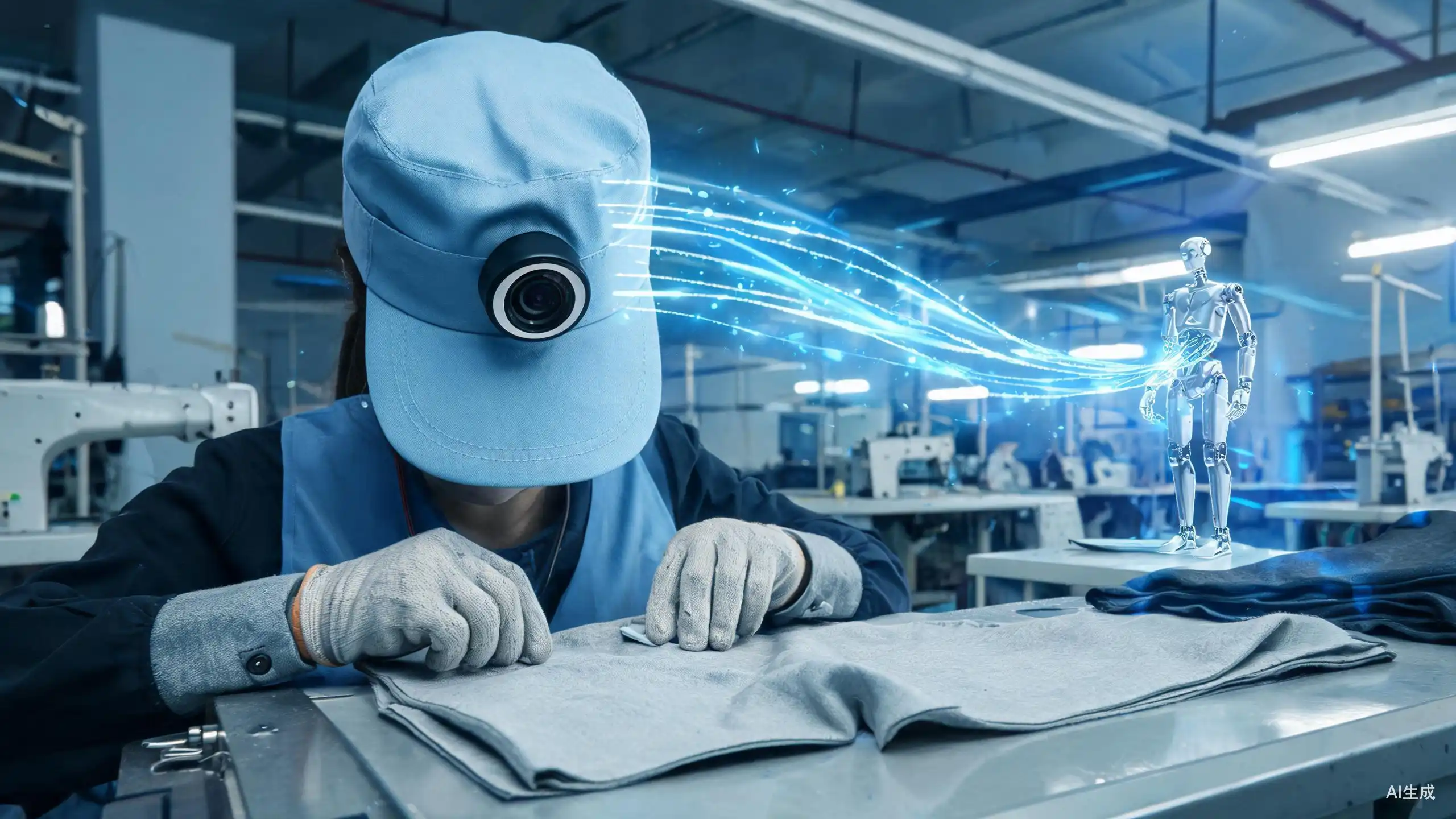
Robots have started to 'consume data,' driving the formation of a new industrial supply chain focused on producing training data for embodied AI. Unlike large language models, which are trained on vast internet text corpora, embodied AI models face a 'data desert' in the physical world. This has created a massive demand for first-person perspective video data (Ego Data), captured by workers wearing cameras in places like Indian garment factories. Companies like Neocambrian AI are establishing 'data factories' where workers perform standardized tasks (e.g., sorting clothes, kitchen organization) to generate thousands of hours of video. Research, such as NVIDIA's EgoScale, demonstrates that scaling this human demonstration data predictably improves robot performance, particularly for dexterous manipulation. This has validated a training path combining large-scale human data for pre-training with smaller amounts of robot-specific data for fine-tuning. The value of different data types varies significantly, forming a 'data pyramid.' The base consists of low-cost, large-scale internet and Ego Data. Higher layers include more expensive motion-capture data (e.g., from data gloves), simulation/synthetic data, and the most costly and scarce layer: real robot teleoperation data. This demand has spawned a layered ecosystem of data suppliers: low-cost data factories, motion capture and alignment specialists, robot-native teleoperation service providers, simulation data companies, and platforms aiming for data standardization. Robot companies themselves are adopting a 'layered procurement' strategy: outsourcing generic Ego Data while building in-house capabilities for robot-specific adaptation data and the critical deployment/failure data generated in real-world applications. The industry is shifting focus from hardware and basic mobility to the data pipelines required for general-purpose capability. While parallels exist to data labeling companies like Scale AI in the LLM boom, the physical complexity of robot data—involving action success ambiguity and sim-to-real gaps—requires more integrated solutions for data collection, annotation, and a continuous feedback loop. The race is on to build the data engines that will teach robots to operate reliably in the unstructured real world.

marsbitHá 1h

Robots Begin to 'Consume Data': The Hidden Production Chain from Indian Data Factories to Billion-Dollar Humanoid Robots

marsbitHá 1h

Spicy Commentary | Michael Saylor's 'Player Talk'; 60-Year-Old Aunt Liquidated After 'Scamming a Young Man'

**"Spicy Commentary": Three Tales of Crypto's Wild Week** This week's "Spicy Commentary" column highlights three dramatic stories from the cryptocurrency world. First, **MicroStrategy's Michael Saylor** addressed the controversy over his company potentially selling Bitcoin. At the BTC Prague event, he clarified, "I never said the company can't sell Bitcoin. I told *you* never to sell *your* Bitcoin." This "do as I say, not as I do" stance was criticized by netizens as peak linguistic gymnastics, noting a history of him previously stating the company would "never" sell. Second, a **bizarre fraud case** emerged from Beijing. A 60-year-old woman, obsessed with getting rich from crypto but unwilling to risk her own savings, posed online as the 20-something "god-daughter" of a high-ranking official. She catfished a young man, convincing him to give her over 200,000 yuan for fabricated emergencies. She then invested all the stolen money into cryptocurrency with 10x leverage, only to lose everything in a market crash. The woman was sentenced to four years in prison for fraud. Finally, a **sobering trader's tale** surfaced on Reddit. A user posted "Tale of a crypto trader," confessing their net worth had plummeted from a peak of $45 million to roughly $17,200, primarily due to holding meme coins too long. The post, described as a crypto "book of confessions," sparked reactions ranging from sympathy to critique about greed, poor risk management, and the perils of treating meme coins as long-term investments instead of taking profits. The column concludes that this week featured masterful rhetoric, elaborate scams, and extreme financial volatility, stitching together another chapter in crypto's unpredictable theater.

Foresight NewsHá 2h

Spicy Commentary | Michael Saylor's 'Player Talk'; 60-Year-Old Aunt Liquidated After 'Scamming a Young Man'

Foresight NewsHá 2h

Tremble Humans, AI Continues Its Accelerated Sprint

Trembling, Humans: AI Continues Its Accelerated Sprint Yes, AI is still rapidly accelerating. While deep learning seemed to stall quickly in its early years, large models after years of development show no sign of hitting their ceiling. At the Zhiyuan Conference 2026, the focus is on enabling AI to move from the digital world into the physical world. Scaling Law remains effective, continuing to drive advancements in both large language models and multimodal models. The industry is now entering a phase of pursuing World Models, though unresolved technical paths and data issues mean this exploration may take 3-5 more years. Concurrently, breakthroughs in Agents are accelerating AI's real-world application in fields like healthcare and meetings. Making Agents truly useful requires key hardware-software co-design, evident from the strong presence of chip vendors at the conference. We stand at a new historical threshold where AI is becoming a foundational force reshaping the world. The first day of the conference highlighted AI's evolution from "knowing how to chat" to "knowing how to work." Scaling Law persists, World Models are the next key battleground, and Agents are transitioning from usable to好用 (user-friendly). Scaling Law is not ending but diversifying. New models like Anthropic's Fable 5 demonstrate scaling through parameter size, synthetic data, and reinforcement learning. Advancements in AI Coding and Agent deployment are enabling a trend of AI self-evolution, potentially allowing AI to take over digital world iterations. World Models represent the next frontier for large models extending into the physical realm, but no current model is truly impressive at solving real-world problems. Technical consensus is lacking, with debates on data sources (video, simulation, real-world). Different approaches are emerging: language-centric, pixel-centric, 3D-structure-centric, and visual-representation-centric models. Zhiyuan Institute is exploring a fifth path: unified latent space modeling fusing language and visual representations, and introduced its own under-development World Model, Physis-v0.1. On the product side, Agents are key to bringing AI into daily life. Since 2025, the "Year of the Agent," products have become more proactive and capable of complex tasks. Zhiyuan showcased four vertical Agents for cardiac diagnosis, autonomous research, meeting summarization, and protein risk discovery. However, technical challenges remain, particularly in context engineering like memory and orchestration. "Harness" – the engineering framework around an Agent – is crucial for maximizing its capabilities by clarifying intent, designing workflows, and incorporating validation and feedback. In summary, AI's breakneck pace continues on multiple fronts: foundational model scaling, the ambitious pursuit of World Models for physical understanding, and the ongoing refinement of practical Agents. The journey from capable to truly reliable and useful AI systems is well underway.

marsbitHá 2h

Tremble Humans, AI Continues Its Accelerated Sprint

marsbitHá 2h

The Backside of Musk's Trillion-Dollar Fortune: 85% Can't Be Sold

Elon Musk becomes the world's first trillionaire, driven by SpaceX's IPO valuing the company at $1.77 trillion. However, his vast wealth is largely illiquid: he holds over 85% voting control, likely through super-voting shares that are subject to lock-ups and selling restrictions. While his net worth surpasses $1 trillion across SpaceX, Tesla, and private holdings, only a tiny fraction (potentially under 2% annually) could be converted to cash without jeopardizing control and market confidence. SpaceX's IPO also creates paper millionaires for roughly 4,400 employees, but their holdings face lock-up periods, exercise costs, and taxes, delaying and reducing actual cash proceeds. Only 4.2% of total shares are initially available for public trading, making the stock price highly sensitive to limited net buying or selling pressure. A major test will come when lock-ups expire for the remaining 96% of shares. The article contrasts SpaceX's wealth distribution with potential AI IPOs. Anthropic and OpenAI could generate employee wealth pools 20 times larger than SpaceX's in paper value, due to their higher valuations relative to revenue and potentially more distributed ownership. However, sustaining those high price-to-sales multiples post-IPO is uncertain. A key financial puzzle for SpaceX investors is its xAI unit. While it has locked in an estimated $26 billion in annual compute revenue from clients like Anthropic and Google, the unit reported a $6.4 billion loss in 2025. More critically, estimated annual capital expenditures of ~$30.8 billion exceed that revenue. The long-term viability of SpaceX's AI narrative hinges on whether this compute income can eventually cover the unit's massive ongoing investments and losses.

链捕手Há 2h

The Backside of Musk's Trillion-Dollar Fortune: 85% Can't Be Sold

链捕手Há 2h

Trading

Spot
Futuros

Artigos em Destaque

Como comprar 4

Bem-vindo à HTX.com!Tornámos a compra de 4 (4) simples e conveniente.Segue o nosso guia passo a passo para iniciar a tua jornada no mundo das criptos.Passo 1: cria a tua conta HTXUtiliza o teu e-mail ou número de telefone para te inscreveres numa conta gratuita na HTX.Desfruta de um processo de inscrição sem complicações e desbloqueia todas as funcionalidades.Obter a minha contaPasso 2: vai para Comprar Cripto e escolhe o teu método de pagamentoCartão de crédito/débito: usa o teu visa ou mastercard para comprar 4 (4) instantaneamente.Saldo: usa os fundos da tua conta HTX para transacionar sem problemas.Terceiros: adicionamos métodos de pagamento populares, como Google Pay e Apple Pay, para aumentar a conveniência.P2P: transaciona diretamente com outros utilizadores na HTX.Mercado de balcão (OTC): oferecemos serviços personalizados e taxas de câmbio competitivas para os traders.Passo 3: armazena teu 4 (4)Depois de comprar o teu 4 (4), armazena-o na tua conta HTX.Alternativamente, podes enviá-lo para outro lugar através de transferência blockchain ou usá-lo para transacionar outras criptomoedas.Passo 4: transaciona 4 (4)Transaciona facilmente 4 (4) no mercado à vista da HTX.Acede simplesmente à tua conta, seleciona o teu par de trading, executa as tuas transações e monitoriza em tempo real.Oferecemos uma experiência de fácil utilização tanto para principiantes como para traders experientes.

620 Visualizações TotaisPublicado em {updateTime}Atualizado em 2026.06.02

Como comprar 4

Discussões

Bem-vindo à Comunidade HTX. Aqui, pode manter-se informado sobre os mais recentes desenvolvimentos da plataforma e obter acesso a análises profissionais de mercado. As opiniões dos utilizadores sobre o preço de 4 (4) são apresentadas abaixo.

活动图片