为什么以太坊迫切地需要ZK化?

marsbitPublicado em 2026-01-13Última atualização em 2026-01-13

Resumo

以太坊当前最关键的叙事转向是主网全面ZK化。虽然此前依靠提高Gas上限将理论TPS提升至200以上,但节点服务器成本压力限制了去中心化特性的维持。ZK化通过零知识证明技术,使节点只需快速验证证明而无需逐笔处理交易,大幅降低计算负荷,为未来继续提升Gas上限(实现千级TPS)奠定基础,同时保持去中心化优势。 ZK化不直接提升性能,而是核心前提。Vitalik近期宣布ZKEVM进入Alpha阶段,标志重大进展。第三方ZK团队(如Polygon、Scroll、ZKsync、Taiko)分头推进四类ZK-EVM方案,仍具重要意义:既分担开发风险,也促进创新。ZK-VM(如Brevis)因非EVM兼容且性能更高,作为生态多样性补充,受官方鼓励。 主网ZK化可能吸引部分L2用户回流,但同样会降低L2成本,形成协同。ZK与L2研究逐渐分离,更多转向应用驱动(如ZK算力市场)。历经五六年投入,以太坊ZK化迈入新阶段,成为支撑未来高性能叙事的关键。

最近问的最多的一个问题就是,如何看待以太坊的叙事?

诚然,以太坊在 17 年主打 ICO 和世界计算机,21 年则是DeFi 和金融结算层。而 25 年这一轮,却似乎鲜有能和之前老叙事,在高度上与之相媲美的新叙事

可能 ETF 以及 Staking ETF 算半个,但是这并不在以太坊开发者的掌握之中。如果要说另外半个,那只能是 ZK。

以太坊确实是整个 Crypto 世界对 ZK 下注最多的公链,毫无疑问。

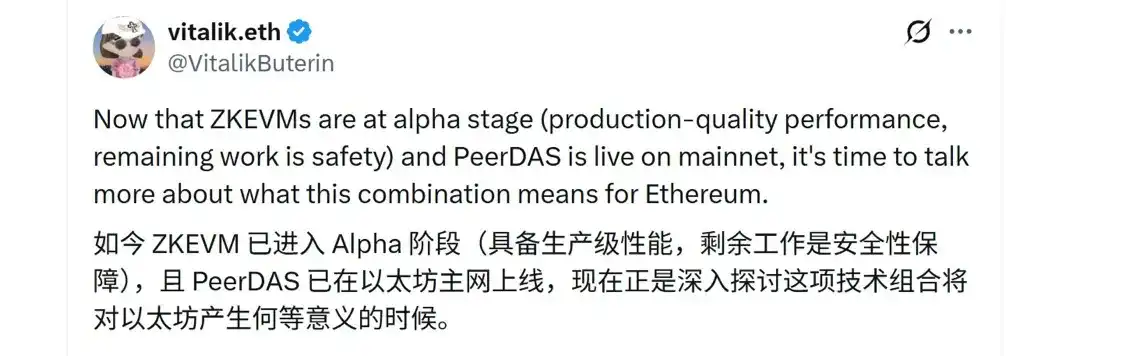
前几天 Vitalik 相当兴奋,他在推特上官宣,如今 ZKEVM 已进入 Alpha 阶段。
为什么以太坊这么执着于 ZK 呢?

其实现在以太坊 TPS 已经不低了,理论峰值已经提高到了 200 多 TPS,究其原因就是以太坊多次提高 Gas 上限。
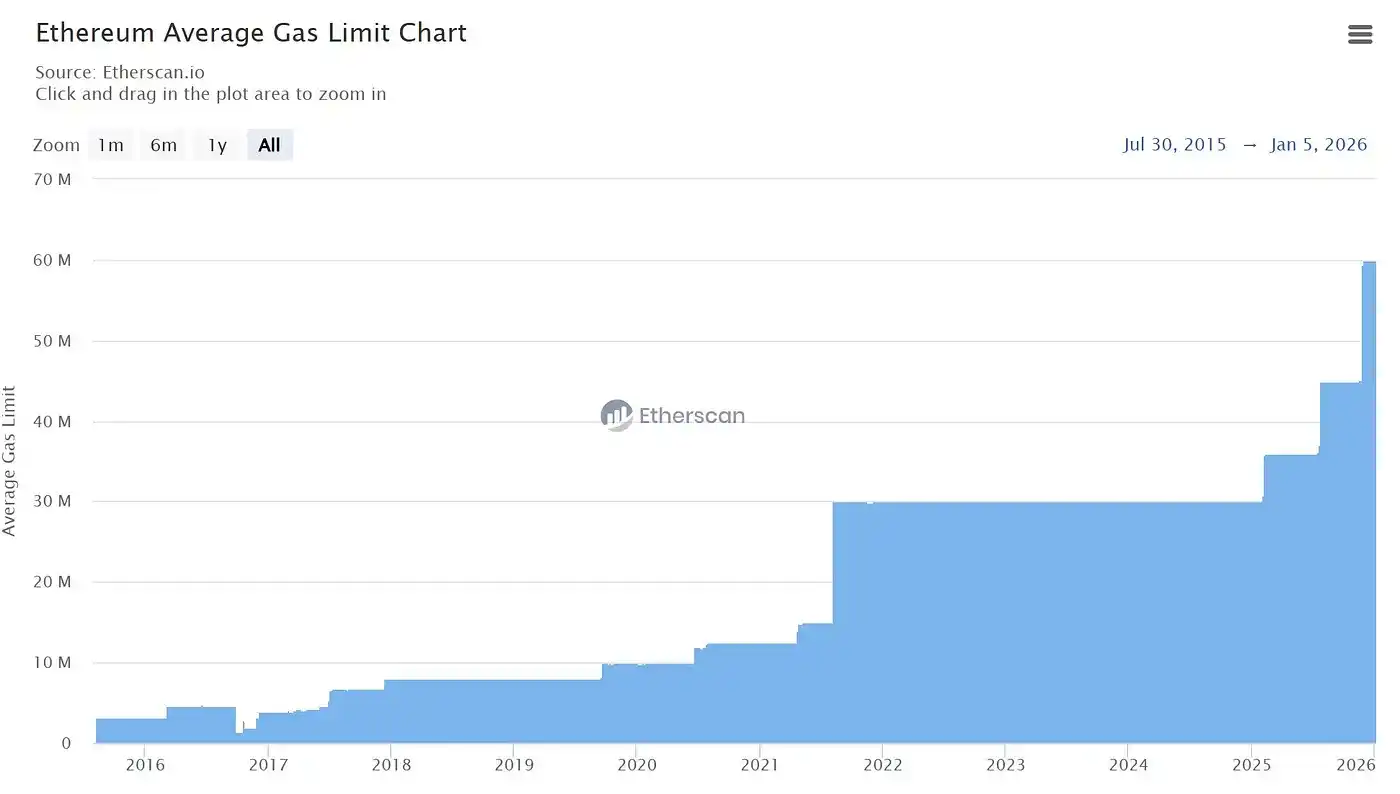
但是,提高 Gas 上限这事是有代价的,不能无止尽地提高。它的代价就是节点们需要更贵的服务器来跑。

但是以太坊又希望保留它引以为傲的高度去中心化,所以不能把节点们的服务器性能拉得太高(参考 Solana 单台服务器大概比 ETH 单台服务器昂贵 5–10 倍)。

因此,必须得主网 ZK 化。注意,它不是弄几个 ZK L2 那么简单,这是 L1 主网全盘 ZK 化。

那么 ZK 之后,有个什么好处呢?

那些 ETH 节点,可以简单地检验这些ZK 证明,而不需要像过去那样一笔一笔繁琐核实交易。
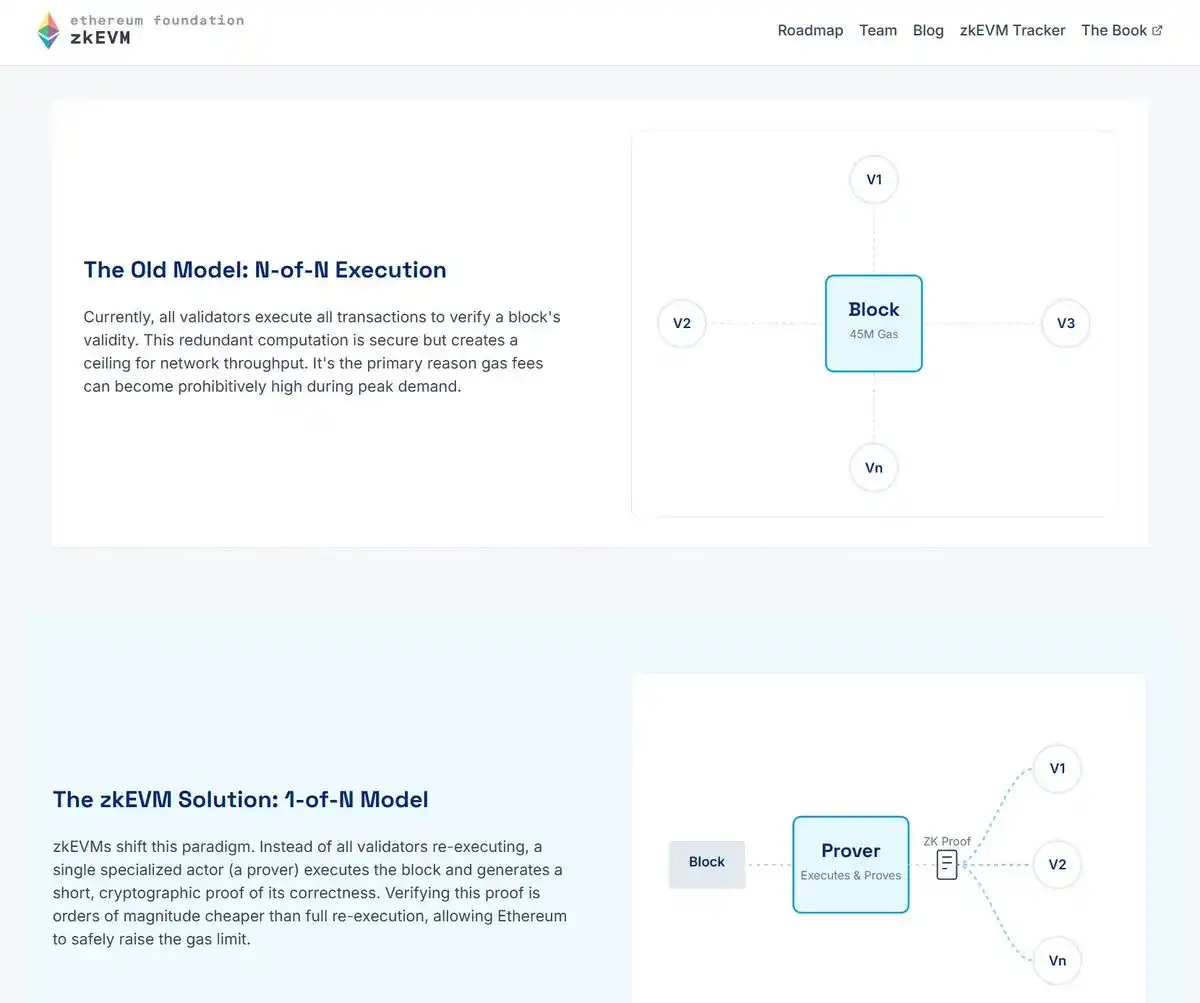
打个比方,假如你是判卷老师(节点),那些交易是就是学生的卷子。

你过去手动判卷肯定很慢。但是自从有了涂答题卡(ZK 化)这一神器,机器一秒就算出了学生的总分,那么作为老师,你岂不是大大地轻松了?

你轻松了,过去一个人只能判 50 张卷子,现在可以判 1000 张,人还是那个人,效率骤增。

所以,以太坊必须先主网 ZK 化,然后才能继续去大幅提高 Gas 上限。

ZK 化本身不直接提高 TPS,它是先决条件。提高性能还是得靠拉高 Gas 上限,但是 ZK 化之后,节点们不需要增加太多服务器费用,这让代价变得很小。

而经过上次 Fusaka 升级之后(尤其是 PeerDAS 升级)运行良好,以太坊已经距离主网 ZK 化又进了一步,所以 Vitalik 才这么兴奋。

试想一个 TPS 破千的主网,对于以太坊来说,确实也能算不错的叙事了。

有人提出一个问题:

如果以太坊亲自给主网做 ZK-EVM,那么其他 ZK 团队还有意义么?

先说结论,依然有意义。

为什么呢?

首先,ZK 这个工程是全网最难的开发之一,和 FHE 坐一桌的。它需要大量的密码学人才。

相信 ETH 基金会在这方面有一定的储备,但是作为开源社区,以太坊秉承的理念就是众人拾柴火焰高,需要靠大量的第三方 ZK 团队做试错和创新。作为回报,以太坊会给予大量的支持。

其次,ZK-EVM 有四种类型,从type1 到 type4。包括 Polygon、Scroll、ZKsync、Taiko 在内的几路人马,有点像每个人认领任务似的,都在分头实现其中一个类型。

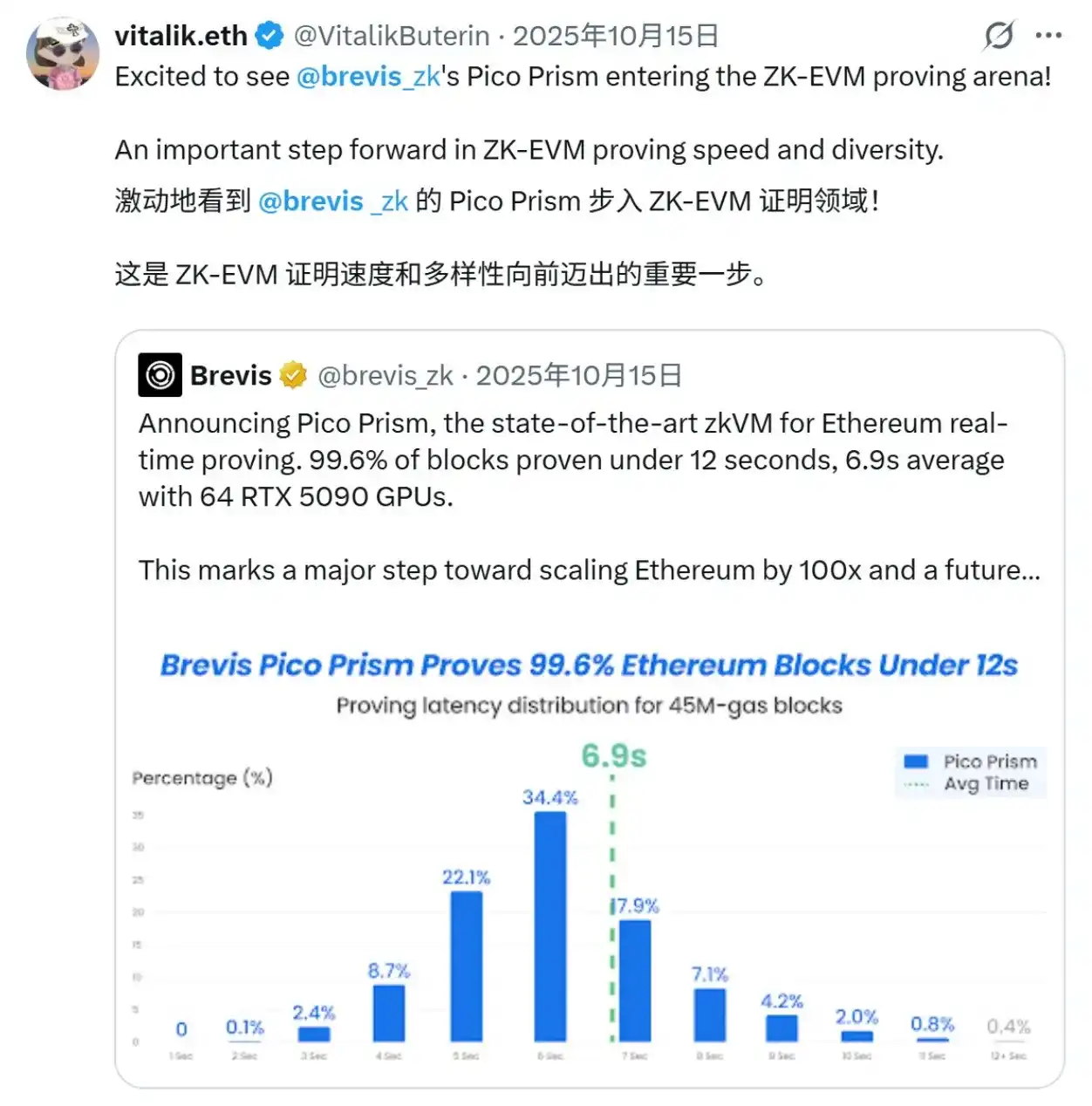
此外,还有 ZK-VM,例如Brevis。

其实 ZK-VM 相比 ZK-EVM 的地位还要更稳。

原因就是上面的四大 ZK-EVM 类型,最终大概率还是要决出一个性价比最高的方案,变成以太坊主网 ZK-EVM 的钦点方案的一部分,那么其他三家可能受到影响。

但是 ZK-VM 的话,它本身不是EVM 兼容的,因此它一定是作为以太坊多样性的一部分。

而且 VM 因为不用受制于 EVM 的限制,其性能会跑得很高。以太坊的 ZK-EVM 对其毫无威胁,反而以太坊官方会持续鼓励。

例如,之前 Vitalik 就专门提及过Brevis的 ZK-VM 的性能表现,并且期待它们进入 ZK-EVM 领域。
对 L2 呢?可能有点影响,但是依然不大。

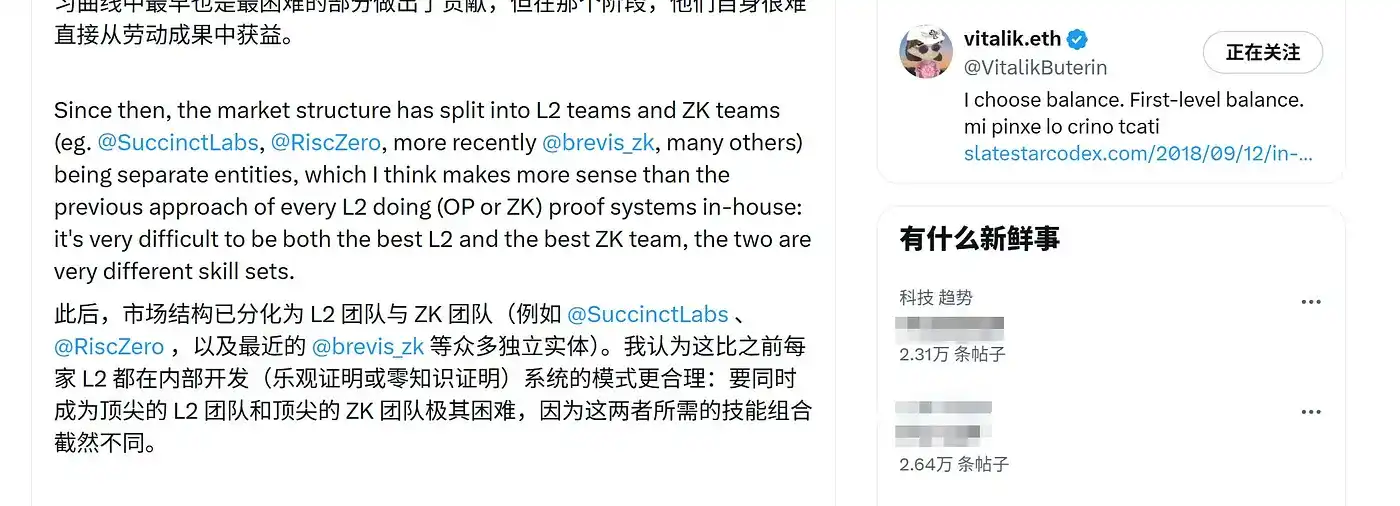
Vitalik 在聊 Polygon 的时候曾经说过,ZK 和 L2 应该分开比较好。

ZK 化的 L1 后面肯定是反向吸引回一些 ZK L2 上的用户,毕竟 L1 足够便宜的话,上 L2 的用户可能会变少。

但是反过来想,打比方 L1 是地基,L2 是摩天大楼。地基肯定打得越结实越好,所以 L1 主网 ZK 化了,L2 也会降费,也有好处。

而且那一篇推文中 Vitalik 也专门提及了做 ZK-VM 的 Brevis。原因就是 Brevis 做的很多 ZK 工作不局限于 L2,即“ZK 研究 和 L2 研究分开”。

例如他们有 ZK 算力的市场,帮 Uniswap 的钩子做 ZK 化的奖励分发,算是应用驱动的。
总而言之,以太坊上线至今 10 年了,提出 ZK 化的口号也有五六年的时间了,耕耘至今,终于 ZK 化这事进入 Alpha 阶段,这离不开以太坊和包括 Brevis、Polygon 在内的众多第三方 ZK 团队的持续不断的投入。


Criptomoedas em alta

Perguntas relacionadas

Q为什么以太坊需要主网ZK化?

A以太坊主网ZK化是为了在不显著增加节点服务器成本的前提下,大幅提高Gas上限和网络性能(如TPS),同时保持其高度去中心化的特性。ZK化后,节点只需验证ZK证明,无需逐笔处理交易,从而提升效率。

QZK化如何帮助以太坊提高TPS?

AZK化本身不直接提高TPS,但它是提高TPS的先决条件。通过ZK证明简化交易验证过程,节点可以处理更多交易而无需升级硬件,从而允许以太坊安全地提高Gas上限,最终实现TPS的大幅提升(例如破千)。

Q以太坊主网ZK化后,第三方ZK团队(如Polygon、Scroll)是否还有价值?

A是的,第三方ZK团队依然有价值。ZK开发难度高,需要多方创新和试错。以太坊鼓励第三方团队贡献技术,例如分头实现ZK-EVM的不同类型(Type1到Type4)或开发ZK-VM,以丰富生态多样性和性能。

QZK-VM与ZK-EVM有什么区别?为什么ZK-VM地位更稳?

AZK-VM不兼容EVM,因此不受EVM限制,性能更高且专注于通用计算;而ZK-EVM专注于以太坊虚拟机兼容性。ZK-VM地位更稳是因为它作为生态多样性的一部分,不受主网ZK-EVM方案竞争的影响,且得到以太坊官方持续鼓励。

Q主网ZK化对Layer2(L2)解决方案会产生什么影响?

A主网ZK化可能反向吸引部分L2用户回归L1(因L1费用降低),但整体对L2利大于弊。L1性能提升会使L2费用同步下降,且ZK技术发展(如Brevis的ZK算力市场)可推动L2和应用层创新,形成协同效应。

Leituras Relacionadas

Low Investment Isn't Apple's Immunity Pass

While Meta and Google face investor scrutiny over ballooning AI capital expenditures, Apple's minimal AI investment has paradoxically become a strength. Its market cap recently reclaimed the global top spot, surpassing $5 trillion. The irony is deep: Apple's own AI efforts have lagged, with "Apple Intelligence" delayed and core talent lost, forcing reliance on partners like Google Gemini and Alibaba's Qianwen. Its Q3 FY2026 (Q2 CY) earnings initially seemed stellar. Revenue hit $109.4B (up 16% YoY), with iPhone and Mac sales, growing 22% and 29% respectively, driving most of the growth. However, the stock fell over 8% post-earnings. The primary concern was a weaker Q4 revenue growth forecast of 9-11%, below expectations, due to looming supply chain constraints. Apple is feeling the indirect cost of the AI boom. Soaring memory and chip prices, fueled by massive data center investments from Microsoft, Amazon, and others, are forcing Apple to raise Mac and iPad prices significantly. The upcoming iPhone launch is also expected to see substantial price hikes. Despite avoiding heavy AI infrastructure spending—its capital expenditures are actually down 28%—Apple cannot escape the industry-wide supply and cost pressures. While Apple's operating cash flow remains robust, its substantial R&D spending (up 32% YoY) has yet to yield major AI breakthroughs. As Tim Cook prepares to step down as CEO, Apple faces a challenging transition: balancing its premium hardware success against the strategic and cost pressures of the AI era it has so far cautiously navigated.

marsbitHá 31m

Low Investment Isn't Apple's Immunity Pass

marsbitHá 31m

PA Graphics Explanation | One Chart to Understand the Major Web3 Events in August 2026

**PANews Crypto Calendar: Key Web3 Events in August 2026** PANews introduces its revamped crypto calendar, featuring comprehensive coverage, flexible filtering, and easy export options. The market in August will be shaped by multiple key events across macroeconomics, regulation, tokenomics, and project developments: * **Macro & Policy:** Key US economic data releases (July Non-Farm Payrolls, CPI), the Federal Reserve meeting minutes, and the Jackson Hole Economic Symposium will be in focus. On the regulatory front, the US Senate plans to release a new draft of the *CLARITY Act*, while the EU's expanded crypto ban against Belarus comes into effect. * **Token Unlocks:** Significant token unlocks are scheduled for assets including ENA, AVAX, CONX, ZRO, and KAITO, which may influence market volatility. * **Project Updates & Shutdowns:** Several services, including Exchange Art, Ctrl Wallet, Zapper, NFTfi, and Summer.fi, are set to cease operations or undergo major adjustments. Users are advised to manage their assets accordingly. * **Corporate Activity:** Q2 earnings reports from companies like SpaceX, Circle, and Nvidia are due. Unitree Robotics will initiate its IPO subscription on the STAR Market, and Moonshot AI plans to begin a Pre-IPO financing round. * **Industry Events:** Major conferences such as Bitcoin Asia 2026 and the 2026 Digital Expo will take place. The overarching market narrative for August will revolve around macroeconomic expectations, regulatory developments, token unlock schedules, and ongoing industry consolidation.

marsbitHá 41m

PA Graphics Explanation | One Chart to Understand the Major Web3 Events in August 2026

marsbitHá 41m

Wall Street's Most Famous 'Cassandra' Now Has His Sights Set on Nvidia

Michael Burry, the famed "Big Short" investor, has once again captured Wall Street's attention with a series of short positions against major tech and semiconductor stocks, most notably Nvidia. In late June and July, through his "Cassandra Unchained" newsletter, Burry disclosed short bets against Nvidia, Tesla, Applied Materials, Caterpillar, the SOXX semiconductor ETF, and later, Micron Technology. His core thesis revolves around potential distortions in the AI infrastructure boom, specifically questioning whether extended depreciation schedules (e.g., 6 years vs. a realistic 2-3 years for AI chips) by cloud giants like Microsoft and Google artificially inflate profits. He also raises concerns about possible "off-balance-sheet circular financing," where chip demand might be propped up by vendor-backed funding to clients. Nvidia's stock experienced volatility following these disclosures, briefly dipping but largely holding near Burry's reported entry points, leaving his positions roughly flat or slightly underwater as of late July. This move is part of a pattern for Burry, whose track record since his legendary 2008 bet is mixed. He has faced notable losses, such as on Tesla in 2021, while scoring on broader market turns like the 2020 pandemic crash. His methodology focuses intensely on free cash flow and scrutinizing original financial documents to spot overvaluation and structural risks, but it often struggles with timing the market. The article contrasts Burry's stance with other prominent investors. Steve Eisman, another "Big Short" figure, is not shorting Nvidia, citing strong fundamentals but expressing nervousness about sustainability. Jim Chanos agrees with the broad "accounting mismatch" concern—comparing it to the dot-com bubble—but targets financial leverage in private equity firms rather than the chip stocks themselves. While Nvidia's short interest remains relatively low at 1.3-1.4% of float, the massive stock size means absolute short losses have been significant, exceeding $5 billion earlier this year. The piece concludes that for ordinary investors, the key takeaway is not replicating specific short bets but learning from the critical frameworks these investors use: questioning rosy accounting, identifying structural vulnerabilities, and maintaining skepticism during market euphoria, even if pinpointing the exact catalyst for a downturn remains elusive.

marsbitHá 1h

Wall Street's Most Famous 'Cassandra' Now Has His Sights Set on Nvidia

marsbitHá 1h

Weekly Selection丨Epic Stock Market Volatility, Changxin Tech's IPO Reshapes Storage Landscape, Saylor Aims to Re-Anchor STRC Around September 8th

PANews Weekly Digest: Market Turmoil, Tech Breakthroughs, and Crypto Developments. The week saw significant volatility across global markets. South Korea's KOSPI index experienced extreme turbulence, including multiple trading halts, largely driven by sharp declines in AI hardware stocks like SK Hynix. In contrast, China's Changxin Xinqiao (CXC) achieved a landmark IPO with a market cap surpassing 4 trillion yuan, marking a major success for the domestic DRAM industry after a decade of losses. In the crypto and Web3 space, several key narratives emerged. AI is driving demand for new infrastructure, with projects like AI agent wallets and programmable payments gaining traction, attracting interest from firms like Coinbase. The Bitcoin mining sector is pivoting, with companies like MARA focusing on energy management as electricity becomes a core AI-era asset. Meanwhile, the RWA (Real World Assets) sector faces a "utilization puzzle," with hundreds of billions in on-chain assets remaining dormant. Notable market movements included a historic single-day surge of over 17% for the KOSPI index and a significant migration of $16.5 billion in staked ETH within the Lido ecosystem. Michael Saylor announced a target to re-peg the STRC stablecoin around September 8th. Other highlights include discussions on Ethereum's ambitious 2030 roadmap for scaling and privacy, analysis showing high protocol revenues not always translating to token price gains, and warnings from Citi about potential extreme commodity price shocks by late 2026.

marsbitHá 1h

Weekly Selection丨Epic Stock Market Volatility, Changxin Tech's IPO Reshapes Storage Landscape, Saylor Aims to Re-Anchor STRC Around September 8th

marsbitHá 1h

When the Market Begins to Question AI Capex: A Full Analysis of Q2 Earnings Reports from Five Tech Giants

In late July 2026, five major US tech giants—Alphabet, Intel, Microsoft, Meta, and Apple—released their Q2 earnings reports. While all companies exceeded revenue and profit expectations, driven by strong AI-related business growth, investor reactions diverged sharply due to concerns over escalating AI capital expenditures (capex) and their impact on free cash flow. Alphabet reported strong revenue growth and a surging cloud business, but its stock fell after announcing a doubled year-on-year capex and negative quarterly free cash flow for the first time. Intel posted its strongest revenue growth in over 15 years, but its stock experienced volatile trading after significantly raising its full-year capex guidance. Microsoft saw its stock surge after beating estimates and, crucially, lowering its capex forecast while projecting positive free cash flow. Meta faced the most severe sell-off as its profits declined despite revenue beats, with free cash flow plunging over 90% and its capex guidance raised. Apple reported record June-quarter results, but its stock plummeted after providing Q4 revenue guidance that fell short of expectations, citing supply chain constraints and forex headwinds. The overall takeaway is that the market's focus has shifted from validating AI demand to scrutinizing the timeline for returns on massive AI investments. Companies demonstrating a clearer path to managing capex and preserving free cash flow, like Microsoft, were rewarded, while those signaling continued aggressive spending faced investor skepticism.

Odaily星球日报Há 1h

When the Market Begins to Question AI Capex: A Full Analysis of Q2 Earnings Reports from Five Tech Giants

Odaily星球日报Há 1h

Trading

Spot

Artigos em Destaque

Como comprar ZK

Bem-vindo à HTX.com!Tornámos a compra de ZKsync (ZK) simples e conveniente.Segue o nosso guia passo a passo para iniciar a tua jornada no mundo das criptos.Passo 1: cria a tua conta HTXUtiliza o teu e-mail ou número de telefone para te inscreveres numa conta gratuita na HTX.Desfruta de um processo de inscrição sem complicações e desbloqueia todas as funcionalidades.Obter a minha contaPasso 2: vai para Comprar Cripto e escolhe o teu método de pagamentoCartão de crédito/débito: usa o teu visa ou mastercard para comprar ZKsync (ZK) instantaneamente.Saldo: usa os fundos da tua conta HTX para transacionar sem problemas.Terceiros: adicionamos métodos de pagamento populares, como Google Pay e Apple Pay, para aumentar a conveniência.P2P: transaciona diretamente com outros utilizadores na HTX.Mercado de balcão (OTC): oferecemos serviços personalizados e taxas de câmbio competitivas para os traders.Passo 3: armazena teu ZKsync (ZK)Depois de comprar o teu ZKsync (ZK), armazena-o na tua conta HTX.Alternativamente, podes enviá-lo para outro lugar através de transferência blockchain ou usá-lo para transacionar outras criptomoedas.Passo 4: transaciona ZKsync (ZK)Transaciona facilmente ZKsync (ZK) no mercado à vista da HTX.Acede simplesmente à tua conta, seleciona o teu par de trading, executa as tuas transações e monitoriza em tempo real.Oferecemos uma experiência de fácil utilização tanto para principiantes como para traders experientes.

194 Visualizações TotaisPublicado em {updateTime}Atualizado em 2026.06.02

Como comprar ZK

Discussões

Bem-vindo à Comunidade HTX. Aqui, pode manter-se informado sobre os mais recentes desenvolvimentos da plataforma e obter acesso a análises profissionais de mercado. As opiniões dos utilizadores sobre o preço de ZK (ZK) são apresentadas abaixo.

活动图片