Джеймс Уинн назвал Zcash организованной инфлюенсерами памп и дамп схемой

cryptonews.ruPublicado em 2025-11-25Última atualização em 2025-11-25

Трейдер Джеймс Уинн выступил против Zcash (ZEC) и назвал рост монеты результатом организованной схемы. Его позиция вызвала обширную реакцию сообщества на фоне продолжающейся поддержки со стороны лидеров мнений.

В своем посте Уинн призвал не покупать Zcash, описав актив как организованную памп и дамп схему, которую якобы поддерживают влиятельные инфлюенсеры.

«Неужели именно я должен об этом говорить?» — написал он.

При этом одной из причин отклика «толпы» стала собственная репутация Уинна, известного на рынке своими провальными сделками.

По теме: трейдер Джеймс Уинн удвоил шорт-позиции после 12 ликвидаций, ожидая падения биткоина ниже $92 000

Так, в сообществе поставили под сомнение его компетентность.

«Представьте, что вы худший трейдер и заявляете, что что-то не покупаете. Это лишь подтверждает неминуемость роста цены актива», — отреагировал пользователь под ником Purp.

Ранее курс Zcash укрепился на фоне активного обсуждения альткоина среди известных участников отрасли. Глава BitMEX Артур Хэйес, Навал Равикант, Мерт Мумтаз, Ансем и Threadguy публично разгоняли нарратив о приватности, что усилило внимание к монете.

Их дискуссии и прогнозы помогли Zcash показать повышенную доходность по сравнению с большинством активов. Что позволило ему в кратчайшие сроки закрепиться в топ-15 криптовалют по рыночной капитализации.

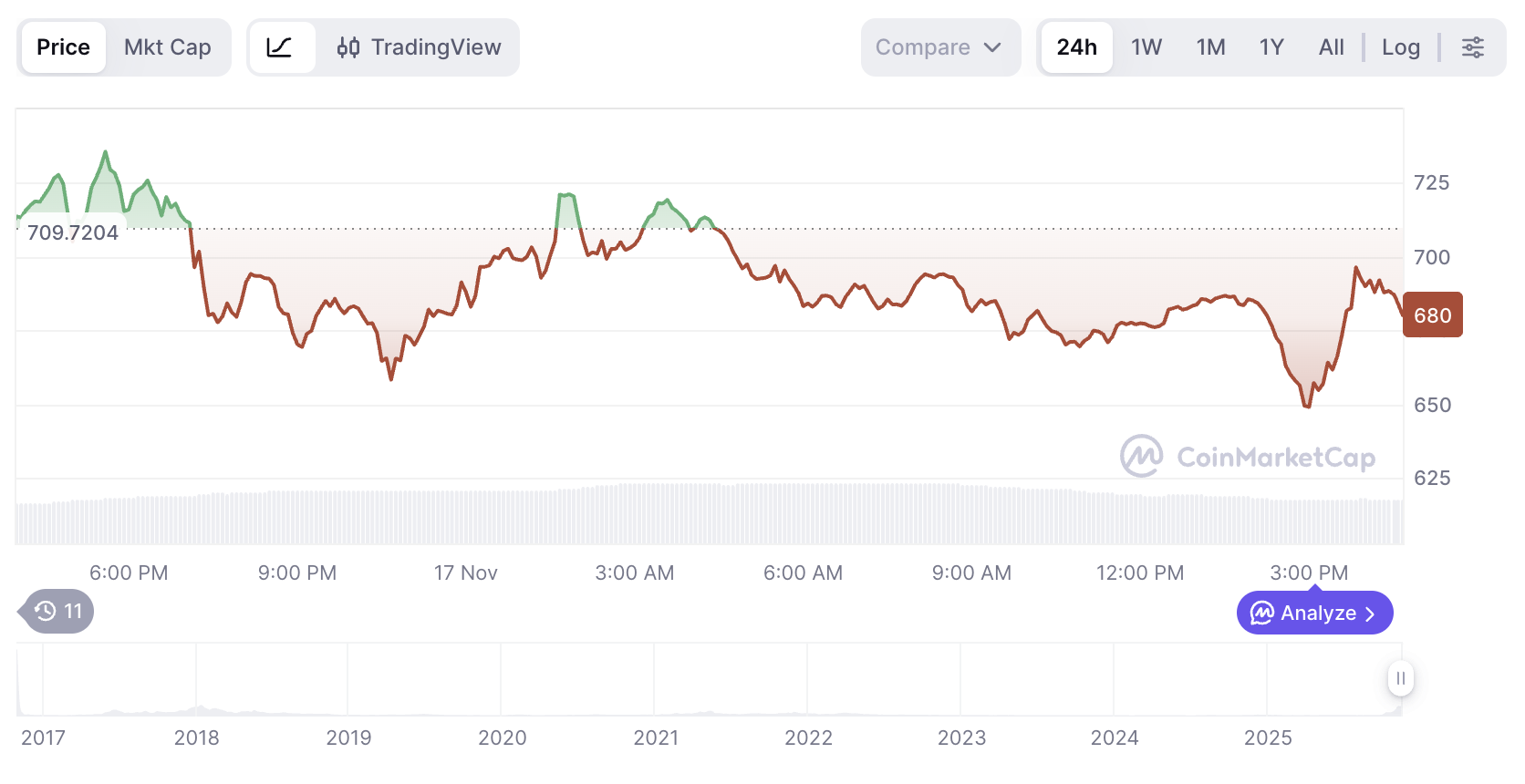
На момент публикации Zcash торгуется по $680, упав за последние сутки на 6,5%, по данным Coinmarketcap. Рост за месяц — 222%.
Криптовалюты
Динамика ZEC/USD. Источник: Coinmarketcap.

На этом фоне в соцсетях усилились споры о том, насколько движение цены является органичным.

По теме: Zcash на грани «болезненного финала» после роста на 1500%

Падение неминуемо?

По данным аналитиков, недельный индекс относительной силы RSI для Zcash достиг 94,24. Это рекордный уровень. Зона выше 70 традиционно указывает на перегретость, а исторически ZEC после таких значений продолжал расти недолго. Затем следовали коррекции от 45% до 90% и выше.

Участники обсуждения под постом Уинна напомнили и о других причинах, которые могут негативно повлиять на цену актива.

Так, пользователь SirBiscuits напомнил о раннем баге Zcash, связанном с теоретически бесконечным предложением монеты.

«Многие предпочитают не вспоминать о сбое в проекте, когда возникла возможность бесконечной эмиссии. Они хотят, чтобы вы об этом забыли», — написал он.

Инвестор Vince Crypto назвал происходящее «повторением старой схемы».

«Если в 2025 году люди все еще ведутся на один и тот же заезженный памп и дамп, это их проблема. Zcash не стал внезапно “злым” — просто парочка клоунов поняла, что им нужна ликвидность», — отметил он.

По мнению пользователя DeFi Chad и вовсе проект организован и поддерживается Fidelity.

По теме: Fidelity добавила Solana в список доступных активов

По словам трейдера BTC_Chopsticks, в каждом цикл есть монета, за которой якобы кто-то стоит и манипулирует ею.

«Если Zcash и правда проект инфлюенсеров, то это самый медленный памп и дамп в истории — три года падения перед одной неделей роста», — заявил он.

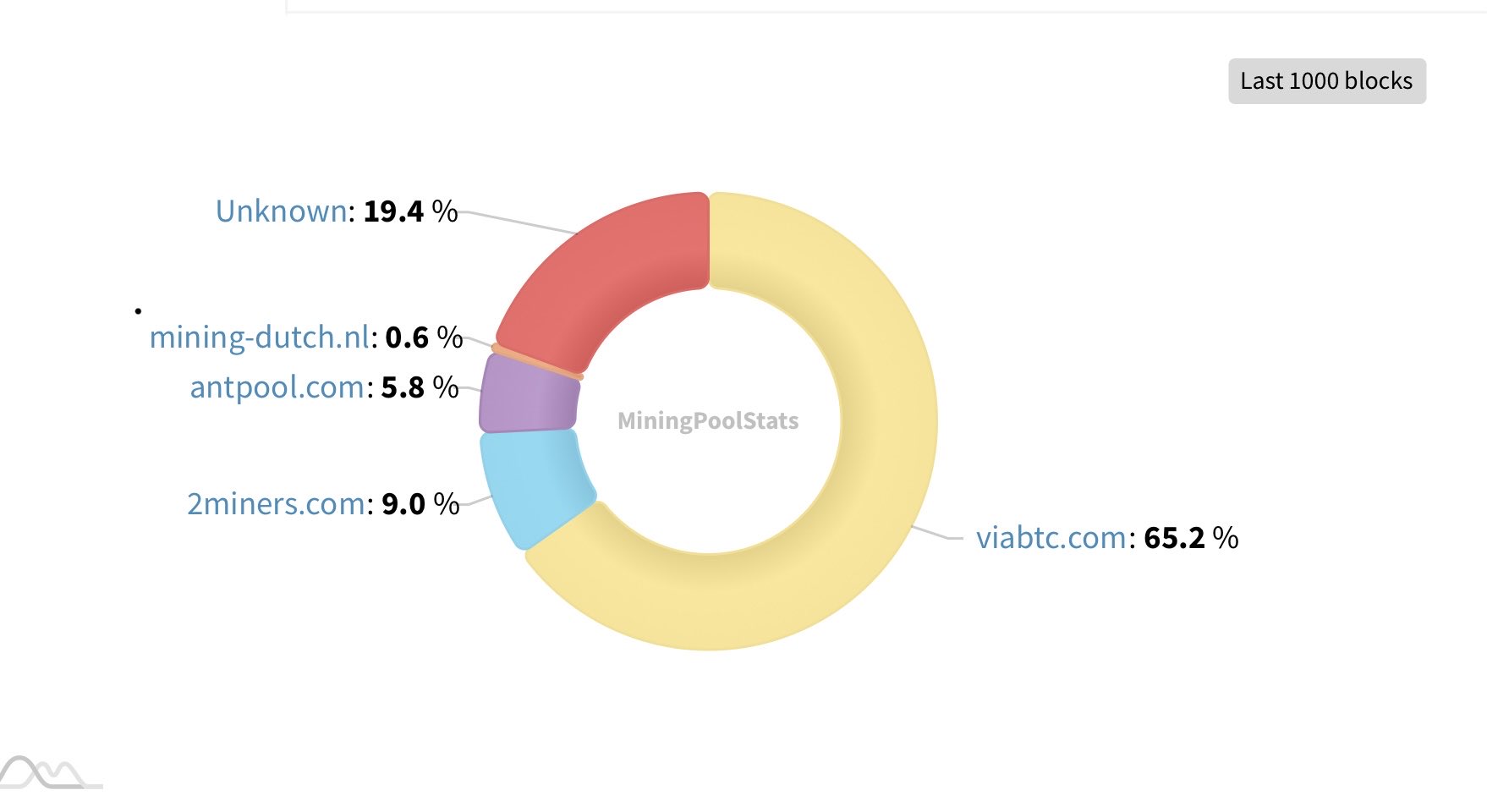
Пользователь Cliff обратил внимание на майнинг пулы проекта, подчеркнув их централизованность.
Криптовалюты
Майнинг пул Zcash. Источник: Coinmarketcap.

Тем временем 12 ноября Артур Хэйес рекомендовал держателям Zcash выводить монеты с централизованных бирж (CEX). Он уточнил, что использование некастодиальных кошельков позволит проводить приватные транзакции

«Если вы храните актив CEX, переведите его оттуда в целях защиты», — написал сооснователь BitMEX.

По теме: Артур Хэйес снова пообещал рост Zcash до $10 000

Criptomoedas em alta

Leituras Relacionadas

NVIDIA CPU Advances, China's RISC-V Responds: Semiconductor Deep Dive - Part Four

NVIDIA is set to launch its new Vera AI data center CPU in China as early as August, with high pricing. While this move offers a new option, it highlights China's continued dependence on foreign-controlled Arm architecture. In response, the Chinese semiconductor industry is increasingly turning to RISC-V as a strategic alternative for achieving high-performance computing autonomy. The article explores the concept of the "impossible triangle" in CPU development—balancing prosperity, control, and autonomy—and posits that RISC-V's open-source, modular nature offers a unique path to achieving all three. While RISC-V is already dominant in embedded systems, the focus is now shifting to data centers and AI workloads. China has become a global hotspot for RISC-V development, driven by AI-driven compute demand, supply chain concerns from export controls, cost benefits of open-source, and strong policy support. Multiple Chinese companies have reportedly crossed the key performance threshold of 15 SPECint per GHz, a benchmark for entering the high-performance CPU club. Progress extends beyond single-core benchmarks. Companies are developing complete computing subsystems, including commercial-grade coherent network-on-chip (NoC) technology and server processors with up to 40 cores that strictly adhere to the RVA23 standard to ensure software compatibility. Real-world applications are emerging in areas like video transcoding and edge AI. However, significant challenges remain. The RISC-V ecosystem faces fragmentation, immature toolchains and verification processes, and gaps in single-core performance and energy efficiency compared to mature x86 and Arm architectures. The formidable software moat, epitomized by NVIDIA's CUDA, is a long-term hurdle. In conclusion, while RISC-V cannot immediately replace offerings like NVIDIA's Vera, it represents a viable long-term path for China to develop a self-sufficient, high-performance CPU ecosystem. The journey is acknowledged to be long and arduous, requiring sustained effort to overcome technical and ecosystem challenges.

marsbitHá 2h

NVIDIA CPU Advances, China's RISC-V Responds: Semiconductor Deep Dive - Part Four

marsbitHá 2h

My Coding Betting Dashboard is Profiting, but Polymarket is Truly Not a Good Place for 'Arbitrage'

The author built a custom monitoring dashboard for Polymarket, a prediction market platform, and tested it with $1,600, achieving over 30% returns. However, the core argument is that Polymarket is not a good venue for traditional arbitrage. The dashboard has two main sections: a "Portfolio Dashboard" for tracking active positions with key metrics like total capital, P&L, and a risk-control module using a tier system (T1, T2, T3), and an "Opportunity Watchlist" for monitoring markets. The article details a critical structural trap in binary markets: a bet with a high perceived probability of success still carries a 100% loss risk if wrong. The author's T1/T2/T3 system is designed to manage this by limiting position sizes based on conviction and time horizon, emphasizing that high confidence should not equal high concentration. A key insight is the danger of "pseudo-diversification"—betting on different markets driven by the same underlying variable. The author concludes that Polymarket offers few true low-risk, arbitrage opportunities. It is instead a high-risk environment where wins can create a false sense of mastery, leading to large losses. The platform is better viewed as a training ground for honing judgment through disciplined, framework-driven betting rather than a reliable income source. The tools help transform intuition into structured, rule-based decisions to mitigate the risk of catastrophic errors.

marsbitHá 5h

My Coding Betting Dashboard is Profiting, but Polymarket is Truly Not a Good Place for 'Arbitrage'

marsbitHá 5h

WeChat AI Card Hands-On Guide: Has the AI Shopping Era Arrived?

**"WeChat AI Card" Practical Test Guide: Has the Era of AI Shopping Arrived?** WeChat has officially launched the "AI Exclusive Card," a feature integrated into its Workbuddy AI assistant. This card is designed to handle payments for AI-initiated purchases. Our hands-on test reveals it's not yet a tool for fully autonomous AI shopping, but rather a controlled payment layer for AI agents. The AI Card functions as an isolated sub-wallet within WeChat Pay. Users must bind the card and transfer funds into it from their main wallet. Crucially, every transaction requires explicit user confirmation via smartphone scan; AI cannot spend autonomously. Currently accessible through the Workbuddy agent, the card targets specific digital consumption scenarios: purchasing paid content (reports, data), calling paid APIs/tools, and subscribing to services. Its design prioritizes security and control by separating funds and mandating approval for each payment. We tested a real-world scenario: ordering bubble tea via Workbuddy using a "Meituan Life Assistant" skill. The process encountered multiple hurdles: high "skill" usage costs (exceeding daily free credits), and most importantly, while a payment was successfully initiated, the AI purchased an incorrect product (a mismatched group-buy coupon instead of the desired drink). This highlights the current limitation: the **AI Card only solves the payment step**. The broader challenge lies in the **AI agent's execution chain**—accurately understanding intent, navigating third-party platforms, selecting the right product, and ensuring proper fulfillment. The payment succeeded, but the purchase failed to meet the user's need. In conclusion, the WeChat AI Exclusive Card is a cautious, early-step experiment in AI commerce. It provides a secure, user-controlled payment method for agent interactions but is not yet capable of reliable, end-to-end complex purchases. For now, it's best used for low-value, low-risk digital services with careful user verification at each step. The vision of AI handling complete shopping tasks remains a work in progress.

marsbitHá 8h

WeChat AI Card Hands-On Guide: Has the AI Shopping Era Arrived?

marsbitHá 8h

Trading

Spot
Futuros

Artigos em Destaque

Como comprar ZEC

Bem-vindo à HTX.com!Tornámos a compra de Zcash (ZEC) simples e conveniente.Segue o nosso guia passo a passo para iniciar a tua jornada no mundo das criptos.Passo 1: cria a tua conta HTXUtiliza o teu e-mail ou número de telefone para te inscreveres numa conta gratuita na HTX.Desfruta de um processo de inscrição sem complicações e desbloqueia todas as funcionalidades.Obter a minha contaPasso 2: vai para Comprar Cripto e escolhe o teu método de pagamentoCartão de crédito/débito: usa o teu visa ou mastercard para comprar Zcash (ZEC) instantaneamente.Saldo: usa os fundos da tua conta HTX para transacionar sem problemas.Terceiros: adicionamos métodos de pagamento populares, como Google Pay e Apple Pay, para aumentar a conveniência.P2P: transaciona diretamente com outros utilizadores na HTX.Mercado de balcão (OTC): oferecemos serviços personalizados e taxas de câmbio competitivas para os traders.Passo 3: armazena teu Zcash (ZEC)Depois de comprar o teu Zcash (ZEC), armazena-o na tua conta HTX.Alternativamente, podes enviá-lo para outro lugar através de transferência blockchain ou usá-lo para transacionar outras criptomoedas.Passo 4: transaciona Zcash (ZEC)Transaciona facilmente Zcash (ZEC) no mercado à vista da HTX.Acede simplesmente à tua conta, seleciona o teu par de trading, executa as tuas transações e monitoriza em tempo real.Oferecemos uma experiência de fácil utilização tanto para principiantes como para traders experientes.

327 Visualizações TotaisPublicado em {updateTime}Atualizado em 2026.06.02

Como comprar ZEC

Discussões

Bem-vindo à Comunidade HTX. Aqui, pode manter-se informado sobre os mais recentes desenvolvimentos da plataforma e obter acesso a análises profissionais de mercado. As opiniões dos utilizadores sobre o preço de ZEC (ZEC) são apresentadas abaixo.

活动图片