读懂200亿爆仓:市场的风险从来没走远

比推Publicado em 2025-10-13Última atualização em 2025-10-13

原文来源:区块链骑士

原文标题:200亿爆仓的背后:我们应该了解什么?


2025年10月10日,加密货币市场迎来史诗级去杠杆化风暴。

当狂热的多头交易员被迫直面市场铁律时,一小时内超过200亿美元杠杆仓位爆仓,比特币单日暴跌15%,山寨币流动性几近枯竭,就连资深玩家也在血色盘面前措手不及。

这场屠杀由宏观层面多重利空引爆:贸易紧张局势升级触发风险资产恐慌性抛售。

比特币一小时内重挫13%,山寨币滑点情况更为惨烈。ATOM等代币在缺乏流动性的交易所一度逼近归零,虽后续部分收复失地,但市场已遭重创。

全市场中心化与去中心化平台清算总额突破200亿美元,创下加密货币史上最大单日爆仓纪录。
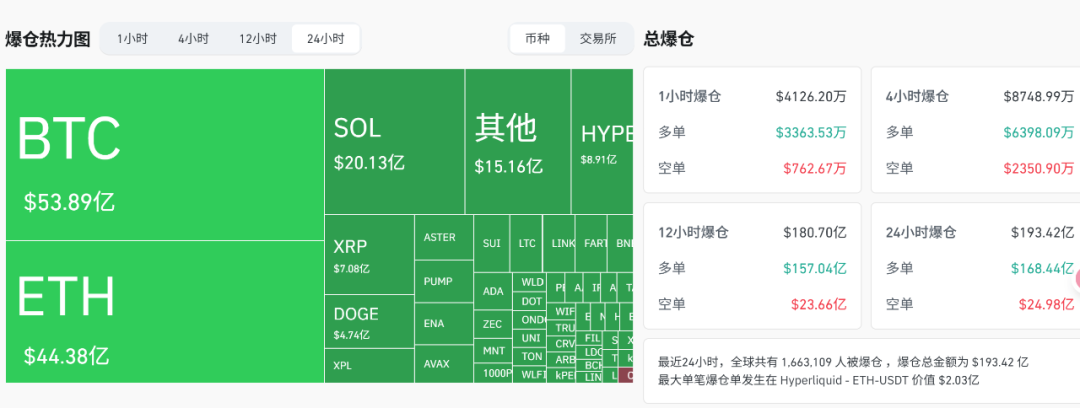
这并非温和阴跌——数周积累的看涨情绪与高企未平仓合约一夜蒸发,650亿美元未平仓头寸从系统消失,市场格局直接退回数月前水平。

表面看是"散户溃败",但《华尔街之狼》的Scott Melker与多位分析师指出真相:"爆仓者并非散户,而是使用去中心化交易所杠杆的加密原生交易员,这是对最坚定持有者的杠杆清洗。"

数据印证:新入市资金主要配置现货ETF或主流资产,规避了DeFi杠杆机制冲击。真正受重创的是高杠杆永续合约玩家,其中又主要是加密老兵而非新手。

据Bitwise基金经理Jonathan复盘,祸根在于市场结构缺陷,永续合约作为零和游戏,当亏损方偿付能力崩溃时便引发系统性风险。

波动率飙升导致流动性提供商撤离,山寨币订单簿薄弱引发价格塌方,自动减仓机制甚至误伤盈利仓位。

Hyperliquid等平台则通过链上流动性池反向获利,趁强制平仓以折价收购资产。截至收盘,连市场中性的精密策略也因操作延迟与抵押品清算问题遭遇突袭。

中心化交易所尤其是长尾代币成为重灾区,而DeFi凭借严格抵押标准与硬编码价格机制展现韧性。

例如Aave等协议要求高质量抵押品,避免稳定币价格脱钩引发的死亡螺旋。但痛点犹存:部分交易所USDe跌至0.65美元,相关保证金仓位瞬间蒸发。

交易所间高达300美元价差为套利者创造机会,但更值得警醒的是:200亿美元蒸发同时,现货买盘保持稳定。

价格从极端值反弹,市场过剩杠杆被强制出清。正如Jonathan所言,决定生存的关键不仅是方向判断,更是运营能力与流动性管理艺术。

Bitwise首席执行官亨特·霍斯利对此评价:"比特币史上最大爆仓日跌幅仅15%,彰显其内在强度,这辆列车不可阻挡。"

加密货币与宏观环境日益增强的关联性意味着,此类去杠杆化既是不可避免的市场调节机制,也是重塑健康生态的必经阵痛。

当杠杆的残酷性显露无疑,每个参与者都需铭记:风险控制永远比收益追逐更重要。


Twitter:https://twitter.com/BitpushNewsCN

比推 TG 交流群:https://t.me/BitPushCommunity

比推 TG 订阅: https://t.me/bitpush

说明: 比推所有文章只代表作者观点,不构成投资建议

Leituras Relacionadas

Following the KelpDAO Hack: $40 Billion in Assets Flee LayerZero, Chainlink Emerges as the Primary 'Beneficiary'

Following a major security breach in April where KelpDAO's bridge using LayerZero was attacked for approximately $292 million, a significant shift is underway in the cross-chain infrastructure landscape. An estimated $40 billion in assets is in the process of migrating or has already migrated from LayerZero to Chainlink's Cross-Chain Interoperability Protocol (CCIP). The attack exploited a single-point-of-failure vulnerability due to KelpDAO's 1-of-1 validator configuration within the LayerZero network. Attackers corrupted RPC nodes and used DDoS attacks to force the system to rely on compromised nodes, allowing fraudulent messages. While LayerZero acknowledged a serious error in allowing its validator network to service high-value transactions with such a configuration, the incident highlighted critical security risks. This triggered a rapid migration wave. Starting with KelpDAO on May 6th, several major protocols—including Solv Protocol, Re, Tydro, Kraken, and Lombard—announced switching their cross-chain infrastructure exclusively to Chainlink CCIP. The combined value of these migrations is estimated to be around $40 billion. This movement followed earlier major adoptions by Coinbase (in late 2025) and Circle (in early 2024). Market sentiment reflected this shift, with LINK's price showing relative stability while ZRO (LayerZero's token) declined significantly. Data indicates a net outflow of approximately $20.1 billion from the LayerZero network over 30 days. The migration is largely driven by perceived security differences. Chainlink CCIP employs a decentralized oracle network as its default consensus layer, featuring multiple independent node operators, a separate Risk Management Network, and built-in safeguards like rate limits. In contrast, LayerZero's highly modular architecture offers flexibility but places more responsibility on application developers to configure security settings, a risk underscored by the KelpDAO incident. LayerZero has since apologized for its communication handling post-attack and stated the protocol itself was not compromised, but rather its Labs DVN's internal RPC was poisoned. An official post-mortem report with external security partners is forthcoming.

marsbitHá 27m

Following the KelpDAO Hack: $40 Billion in Assets Flee LayerZero, Chainlink Emerges as the Primary 'Beneficiary'

marsbitHá 27m

Making AI Products Is No Longer the Hard Part; Being Seen Is: Developers, Web3, and Chinese AI Opportunities at mu Shanghai

The article discusses the shifting challenges of AI entrepreneurship, based on insights from the mu Shanghai AI WEEK event in May 2026. As AI tools drastically lower the barrier to creating product prototypes, the core difficulty for startups has moved from "how to build" to "who to build for"—finding real users, sustainable business models, and community engagement. The event itself was structured as an extended, immersive developer community space rather than a traditional conference, attracting a global mix of participants (40% AI, 20-30% Web3). This format emphasized deep networking and collaborative creation over one-way presentations. A key observation is that with powerful models and coding assistants becoming ubiquitous, execution is less of a moat. The new scarce resource is judgment—identifying valuable, defensible scenarios where an application won't be quickly rendered obsolete by the next model update. This pushes competition downstream to distribution, user acquisition, and commercialization. Notably, many Web3 practitioners are migrating into AI, bringing with them expertise in community building, global collaboration, and grassroots marketing—skills highly relevant as AI apps fight for visibility. Meanwhile, opportunities in AI hardware, robotics, and embodied intelligence are seen as more durable, leveraging China's robust manufacturing and supply chain ecosystem as a key advantage. The article notes that major Chinese model companies (like MiniMax) are now actively competing for developer mindshare through community programs, hackathons, and improved tooling, recognizing developers as core users. Ultimately, the conclusion is that while AI simplifies building, the harder part of the journey is ensuring a product is truly needed, understood, and retained by its users.

marsbitHá 45m

Making AI Products Is No Longer the Hard Part; Being Seen Is: Developers, Web3, and Chinese AI Opportunities at mu Shanghai

marsbitHá 45m

Why is the RWA Boom Failing to Benefit DeFi?

The rapid growth of the tokenized real-world assets (RWA) market, now nearing $30 billion on-chain, has largely bypassed the DeFi ecosystem. Only about $2.47 billion is actively locked in DeFi protocols, indicating a penetration rate of just 9%. A major barrier is the "permissioned" architecture of most RWA products, like BlackRock's BUIDL fund, which are designed for institutional compliance. They require whitelisting, off-chain settlement, and strict investor accreditation, making them incompatible with open, permissionless DeFi applications like Aave or Uniswap. This is evident in categories like bonds/money market funds ($16.6B on-chain, $920M in DeFi) and tokenized equities ($2.7B on-chain, $78M in DeFi). Notable exceptions are private credit protocols (e.g., Maple Finance, Centrifuge) and assets like Ondo's USDY, which were designed from inception for DeFi composability, allowing them to be used freely as collateral. Morpho and Aave Horizon also demonstrate successful RWA lending integrations. However, industry reports (IOSCO, ECB) warn that growth may remain confined within traditional financial systems due to fragmented regulations, lack of unified standards, and inherent conflicts between DeFi's open logic and compliance requirements like minimum investments and fixed redemption windows. The RWA sector is effectively split into two markets: a compliant, permissioned on-chain finance market and a smaller DeFi-native market focused on composability. For DeFi penetration to rise significantly, asset issuers must prioritize designs that enable permissionless circulation from the start, moving away from models centered solely on institutional compliance.

marsbitHá 1h

Why is the RWA Boom Failing to Benefit DeFi?

marsbitHá 1h

Trading

Spot
Futuros
活动图片