Billions Of XRP Set To Be Taken Out Of Circulation – Here’s How

bitcoinistPublicado em 2025-09-26Última atualização em 2025-09-27

Resumo

A quiet yet powerful shift could be underway within the XRP ecosystem as billions of tokens are steadily moving away...

Trusted Editorial content, reviewed by leading industry experts and seasoned editors. Ad Disclosure

A quiet yet powerful shift could be underway within the XRP ecosystem as billions of tokens are steadily moving away from open trading and into systems that keep them locked for longer stretches of time. According to crypto pundit Zach Rector, network upgrades and DeFi opportunities could encourage holders to commit their XRP for the long term, thereby reducing the number of tokens available for active trading.

Zach Rector Warns Of Looming XRP “Supply Shock”

Zach Rector, a well-followed crypto commentator, has raised the alarm about what lies ahead for XRP. According to Rector, billions of tokens are on track to be locked and deployed inside decentralized finance protocols in the near future. Rector argues that massive amounts of XRP are on track to leave circulation as they get stored inside long-term blockchain systems and institutional programs.

Rector points out that liquidity is no longer moving freely across open exchanges as it once did. Trading volume that once flowed across markets is now shifting into smart contracts, secure custody accounts, and platforms that offer steady returns. Such moves reduce the number of tokens left for open trading on exchanges.

As the pool of active tokens shrinks, upward pressure on prices is likely to intensify over time. Short-term traders who focus solely on daily movements may overlook the more profound changes now underway. The Rector’s view suggests that demand is no longer the sole factor shaping XRP. Supply is shrinking step by step, setting up the possibility of a crunch that could change the market’s direction soon.

Innovations To Drive Large-Scale Token Lockups

At the core of these changes is the XRP Ledger itself, which now includes an Ethereum Virtual Machine (EVM) sidechain, opening the door to smart contracts, lending markets, and liquidity pools. These new capabilities allow holders to utilize their XRP directly on the network, making long-term token commitments more attractive.

Cross-chain bridges, such as Axelar, allow XRP to move easily between networks, facilitating the deployment of tokens into DeFi projects by institutions and large holders for extended periods. The more effortless movement of assets gives institutions and large holders a clear path to place tokens into DeFi projects for long-term use.

Exchanges and custodians are launching yield products, including wrapped tokens and staking-style services, that allow investors to earn rewards while keeping their XRP locked. The rewards make it far more tempting for holders to keep XRP out of trading circulation.

Analysts stress that even if adoption grows only at a modest pace, billions of tokens could end up sidelined. A tighter supply could result in significantly fewer tokens in circulation, leading to more intense price movements. While there are still technical and regulatory challenges to be faced, the tools for long-term XRP lockups are already available. With momentum building, the supply shock Zach Rector has warned about may arrive sooner than many expect.

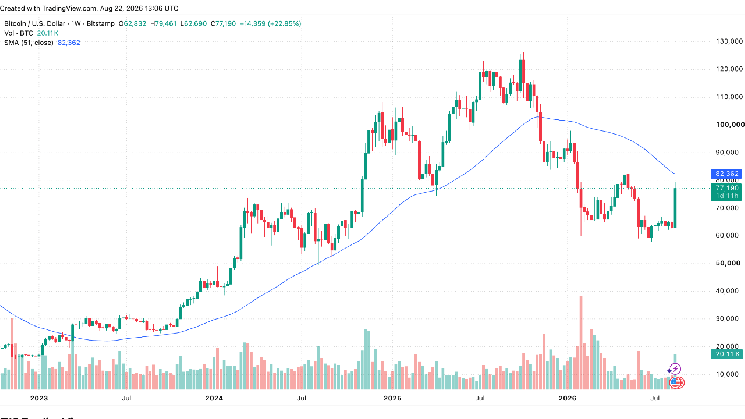
XRP price chart from Tradingview.com
Price struggles amid constant sell-offs | Source: XRPUSDT on Tradingview.com
Featured image created with Dall.E, chart from Tradingview.com
Editorial Process for bitcoinist is centered on delivering thoroughly researched, accurate, and unbiased content. We uphold strict sourcing standards, and each page undergoes diligent review by our team of top technology experts and seasoned editors. This process ensures the integrity, relevance, and value of our content for our readers.

I'm Sandra White, a writer at Bitcoinist, and I provide the latest updates on the world of cryptocurrencies. I believe crypto a gateway to a new order and I have made it my life's mission to help educate as much people as possible. When I'm not at work, I love listening to music, learning new things, and dream of traveling around the world.

Leituras Relacionadas

Second Half of U.S. Crypto Policy: The Clarity Act Aims for 60 Votes, CFTC's "One-Person Commission" Becomes Biggest Variable

In a pivotal year for US crypto policy, the "CLARITY Act" is advancing in the Senate but faces a high hurdle, needing 60 votes to pass. Key challenges include bridging partisan divides on ethics and swaying undecided Republican senators within a tight legislative calendar of only about 40 working days. The policy "second half" involves intense negotiations on a broader framework for Web3 and DeFi, including crypto tax reforms and the Blockchain Regulatory Certainty Act. A significant uncertainty is the understaffed CFTC, operating with four commissioner vacancies, which complicates regulatory clarity. Meanwhile, the departure of key "crypto champions"—SEC Commissioner Hester Peirce and Senator Cynthia Lummis—will impact ongoing policy efforts. Industry experts are cautiously optimistic but realistic. Sara K. Weed notes that while progress is being made, CLARITY is unlikely to pass this Congress, pushing agencies like the SEC and CFTC to provide more guidance. Sulolit Mukherjee suggests meaningful crypto tax legislation is more likely to be attached to larger must-pass bills. Rashan Colbert discusses the jurisdictional debate over prediction markets, emphasizing the need for a regulatory framework that fosters their development as financial tools rather than treating them broadly as gambling. The clock is ticking, but opportunities remain for substantive progress through continued bipartisan dialogue and pragmatic efforts.

marsbitHá 2h

Second Half of U.S. Crypto Policy: The Clarity Act Aims for 60 Votes, CFTC's "One-Person Commission" Becomes Biggest Variable

marsbitHá 2h

Research Report Analysis: Morgan Stanley Details SanDisk SNDK, The Truth About Cloud Data Center Pricing Power and AI Inference Benefits

Morgan Stanley raised its price target for SanDisk (SNDK) from $1100 to $1750 on June 22, maintaining an Overweight rating. The upgrade is driven by AI inference demand reshaping the NAND market, particularly for KV Cache and context window storage in cloud data centers. These cloud clients exhibit price inelasticity and sign long-term contracts, granting SanDisk significant pricing power. SanDisk's New Business Model (NBM) agreements, covering over one-third of FY27 bit shipments with 3-5 year terms and fixed price/price collar structures, are crucial. They are projected to sustain gross margins around 80% even at floor prices, providing a buffer against cyclical downturns. Morgan Stanley forecasts gross margins to surge from 30.3% in FY25 to 86.7% in FY27e. With NAND supply expected to remain tight into 2026/2027 and cloud/data centers becoming the largest end-market, SanDisk holds supply-side pricing power. The company targets 15-19% bit growth via technology transitions, not capacity expansion. Revenue is projected to grow ~6.6x from FY25 to FY27, with EPS rising from $2.74 to $14.73, driven by high-margin cloud business. Key upside catalysts include faster enterprise SSD adoption and edge AI growth. Downside risks involve slower industry growth, competitor capex increases, market share loss, and competition from Chinese players like YMTC. The investment thesis rests on AI-driven structural demand, NBM's margin protection, and sustained supply tightness. The $1750 target implies ~28x FY27e P/E.

marsbitHá 3h

Research Report Analysis: Morgan Stanley Details SanDisk SNDK, The Truth About Cloud Data Center Pricing Power and AI Inference Benefits

marsbitHá 3h

Trading

Spot
Futuros
活动图片