MoneyGram Taps Stablecoins To Shield Colombians From Peso Weakness

bitcoinistPublicado em 2025-09-18Última atualização em 2025-09-18

Resumo

According to multiple reports, MoneyGram is rolling out a new mobile app in Colombia that lets users receive, hold and...

Trusted Editorial content, reviewed by leading industry experts and seasoned editors. Ad Disclosure

According to multiple reports, MoneyGram is rolling out a new mobile app in Colombia that lets users receive, hold and move money using USD-backed stablecoins, specifically USDC.

The service is being positioned as a hybrid: a stored-value USD balance that can be funded, received and cashed out through MoneyGram’s existing network. The launch is set to start in Colombia before a wider regional rollout.

Stablecoins Meet Money Transfer Agents

MoneyGram will use the Stellar blockchain for settlement and has partnered with Crossmint for wallet infrastructure.

Users will not be required to handle private keys or pay gas fees directly; the blockchain work is hidden behind the app.

Reports say MoneyGram already counts more than 6,000 retail locations in Colombia, giving users clear places to convert between USDC and Colombian pesos.

Why Some People Might Use It

The Colombian peso has lost over 40% of its value in recent years, and that erosion of buying power is a major reason people are interested in holding value in a USD-pegged unit.

The app promises near-instant receipt of funds in the USDC balance, which could cut down on delays tied to conventional remittances.

Cash-outs to pesos will be possible at MoneyGram agents, and the company is planning card features that would let users spend in USD outside the country.

As of today, the market cap of cryptocurrencies stood at $3.41 trillion. Chart: TradingView

Regulatory Questions Remain

Reports have disclosed that regulators, KYC and AML rules will shape how the product is rolled out and used.

The legal framework for stablecoins in Colombia is still evolving, and how protections apply to stored USDC balances is not fully spelled out in public documents. That could affect limits on transfers, reporting rules and fees.
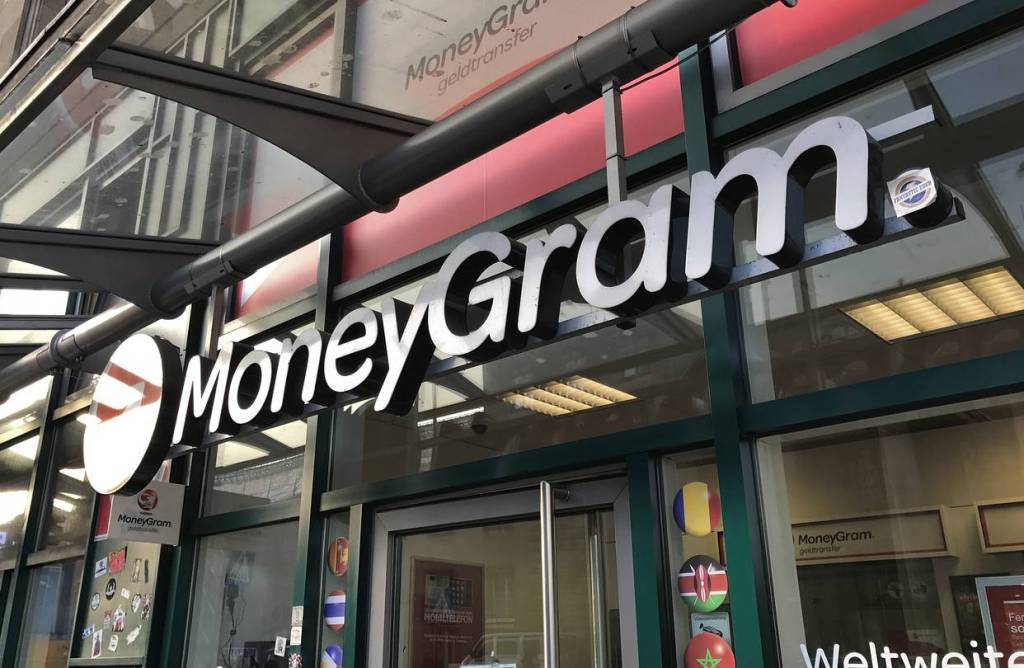
Image: European Pressphoto Agency

What Users Should Watch For

Fees for converting between USDC and pesos, agent commissions, and any withdrawal costs were not fully detailed in the initial announcements.

Liquidity and the maintenance of the USDC peg are other factors users should keep in mind. While stablecoins aim to track the US dollar, risks around backing, liquidity and market pressure can affect that peg.

MoneyGram is launching basic functions first and has said that debit card spending in USD and incentive programs for deposits are planned but not available at day one.

The firm describes the app as a way to give people more choice about how they hold and move money, without requiring deep crypto knowledge.

Featured image from PlanetofHotels.com, chart from TradingView

Editorial Process for bitcoinist is centered on delivering thoroughly researched, accurate, and unbiased content. We uphold strict sourcing standards, and each page undergoes diligent review by our team of top technology experts and seasoned editors. This process ensures the integrity, relevance, and value of our content for our readers.

Christian, a journalist and editor with leadership roles in Philippine and Canadian media, is fueled by his love for writing and cryptocurrency. Off-screen, he's a cook and cinephile who's constantly intrigued by the size of the universe.

Leituras Relacionadas

Sam Altman's Personal Alchemy of Wealth: Investing in 400 Companies, Over 10 Deeply Tied to OpenAI

The article investigates Sam Altman's personal wealth strategy, centered around his investments in approximately 400 companies while serving as OpenAI's CEO. Despite not holding direct equity in OpenAI, Altman has built a vast portfolio, with at least 10 of his investments having commercial ties or ongoing negotiations with OpenAI. This creates a complex network of potential conflicts of interest, drawing scrutiny from U.S. congressional committees and state attorneys general. Key investments highlighted include the anti-aging startup Retro Biosciences (valued at $258 million for his stake as of late last year) and the chipmaker Cerebras, whose value soared following an OpenAI procurement deal. His most significant financial gain is linked to the nuclear fusion company Helion, where a recent funding round reportedly increased his stake's value to at least $4.1 billion. The article details a decade-long relationship between Altman, Helion, and OpenAI, including a controversial non-binding power purchase agreement and Altman's efforts to secure investments from OpenAI and its backer SoftBank for Helion. Other points include internal investigations at Tools for Humanity (developer of Worldcoin) and OpenAI's massive contracts with tech giants like Nvidia. According to Forbes, Altman's net worth is around $3.4 billion, ranking him 1251st globally—a rise of over 1400 places since 2024. OpenAI's board states that Altman's external dealings are transparent and potential conflicts are carefully managed.

Odaily星球日报Há 17m

Sam Altman's Personal Alchemy of Wealth: Investing in 400 Companies, Over 10 Deeply Tied to OpenAI

Odaily星球日报Há 17m

Former SpaceX Engineer Reconstructs Financial Execution System Using First Principles

Former SpaceX engineer Lex Li applies "First Principles Thinking" to financial infrastructure with Plan Execution Lab, recently raising angel funding at a $50M post-money valuation. The team argues that the core function of finance is capital allocation, and the critical gap is not in trading but in execution, which remains highly manual and fragmented. While assets, liquidity, and settlement have migrated on-chain, execution workflows (monitoring, risk management, liquidity coordination) are still human-native. In an era of accelerating AI agents, strategy decay is rapid, shifting the competitive edge from having the best strategy to having the most robust execution network. Plan Execution Lab introduces two core components: 1. **PlanX**: A Financial Execution Protocol designed as infrastructure for the migration from CEX to DEX, providing on-chain execution capabilities, liquidity access, risk management, and capital orchestration. 2. **Xgent**: An Autonomous Financial Runtime. Users define investment intents, risk preferences, and constraints; Xgent automatically constructs an execution graph, verifies it, and handles ongoing execution and optimization—streamlining the process from Intent to Autonomous Execution. The long-term vision is to create the "Bloomberg Terminal for Autonomous Finance"—a shared operating environment and execution network built collectively by participants like execution nodes, liquidity providers, and autonomous agents. The future of finance, they contend, belongs not to isolated algorithms but to open, collaborative execution networks.

marsbitHá 51m

Former SpaceX Engineer Reconstructs Financial Execution System Using First Principles

marsbitHá 51m

Former SpaceX Engineer Reconstructs Financial Execution System from First Principles

Plan Execution Lab, a financial infrastructure project founded by former SpaceX engineer Lex Li, has raised angel funding at a $50M post-money valuation. The startup is applying "first principles thinking" from Li's SpaceX experience to rethink financial market execution. Their analysis posits that while assets, liquidity, and settlement have moved on-chain, the execution layer remains fundamentally human-dependent and fragmented. In the era of AI Agents, strategy advantages decay rapidly, shifting the competitive edge from isolated algorithms to robust **execution networks**. Plan Execution Lab's solution is a two-part system: **PlanX**, a Financial Execution Protocol designed to facilitate the migration from centralized exchanges (CEX) to on-chain markets by providing core on-chain execution capabilities; and **Xgent**, an Autonomous Financial Runtime. Xgent allows users to define investment goals and constraints, then autonomously constructs and manages the execution logic—moving from **Intent to Execution Graph to Verification to Autonomous Execution**. The long-term vision is to create the "Bloomberg Terminal for Autonomous Finance"—an operating environment not for humans, but for agents and execution nodes. The future financial system, they argue, will be a collaborative network built by diverse participants contributing execution capabilities, not secret strategies. The core competition will shift to who builds the most powerful and adaptive execution network.

链捕手Há 52m

Former SpaceX Engineer Reconstructs Financial Execution System from First Principles

链捕手Há 52m

First Long-Horizon Doc2Repo Training Dataset: Code Agents Move Beyond Bug Fixing and Begin Creating Repositories

With the advancement of LLM Code Agents, the research focus is shifting towards long-horizon, real-world tasks, moving beyond simple bug fixes to full repository generation. To address this, researchers from Renmin University of China introduced the DeNovoSWE dataset. This dataset focuses on long-term software engineering tasks, specifically the "document-to-repository" challenge—generating an entire, executable code repository from a task description. The DeNovoSWE construction method employs a Divide & Conquer approach. It breaks down target repositories into core capabilities and uses a multi-agent Draft-Critic-Repair workflow to automatically generate high-quality, evaluation-aligned task documents. The dataset also implements difficulty-aware filtering to balance quality and diversity. The result is a high-quality, anti-leakage dataset of 4,818 instances. Experiments show that models trained on DeNovoSWE achieve significant improvements in long-horizon repository generation. For instance, Qwen3-30B-A3B-Instruct's performance on the BeyondSWE-Doc2Repo benchmark increased from 5.8% to 47.2%, and on NL2RepoBench from 4.3% to 23.0%. Similar gains were observed with stronger backbones, demonstrating that dedicated long-horizon training data is crucial for advancing Code Agents from maintainers to architects capable of planning and building complete software projects from scratch.

marsbitHá 1h

First Long-Horizon Doc2Repo Training Dataset: Code Agents Move Beyond Bug Fixing and Begin Creating Repositories

marsbitHá 1h

Trading

Spot
Futuros
活动图片