Аналитик Bloomberg прогнозирует одобрение XRP ETF в сентябре или октябре

cryptonews.ruPublicado em 2025-07-14Última atualização em 2025-07-31

  • Эрик Балчунас из Bloomberg считает, что вероятным временем одобрения XRP ETF станет сентябрь или октябрь после обновления стандартов листинга SEC.
  • Комиссия по ценным бумагам и биржам (SEC) ввела правила, разрешающие крипто-ETF для монет с фьючерсными торговыми периодами более 6 месяцев, что выгодно для основных альткоинов, таких как XRP.
  • Эрик Балчунас оценивает вероятность одобрения нескольких ETF альткоинов, включая XRP, в 85%.

Аналитик Bloomberg Эрик Балчунас прогнозирует, что ETF XRP и другие ETF на основе альткоинов, вероятно, будут одобрены к сентябрю или октябрю. Это произошло после того, как Комиссия по ценным бумагам и биржам США (SEC) представила новый стандарт листинга для криптовалютных биржевых продуктов (ETP).

По его мнению, после недавних изменений в стандартах листинга, предложенных Комиссией по ценным бумагам и биржам США (SEC), вероятность одобрения ETF на основе XRP и других альткоинов значительно возросла․ Балчунас прогнозирует, что это может произойти уже к сентябрю или октябрю текущего года․

Новый стандарт листинга SEC: Ключевой фактор

В новом документе Комиссии по ценным бумагам и биржам США (SEC) изложены «Стандарты листинга» для криптовалютных ETP, нацеленных на монеты, фьючерсы на которые торгуются не менее шести месяцев на таких платформах, как биржа деривативов Coinbase.

Представление SEC нового стандарта листинга для криптовалютных ETP (Exchange Traded Products) стало поворотным моментом․ Ранее, регулятор проявлял крайнюю осторожность в отношении одобрения продуктов, связанных с криптовалютами, особенно с альткоинами, ссылаясь на опасения по поводу манипулирования рынком и защиты инвесторов․ Новый стандарт, по мнению Балчунаса, сигнализирует о смягчении позиции SEC и готовности к более гибкому подходу․

Детали нового стандарта листинга пока не полностью раскрыты, но эксперты предполагают, что он включает в себя более четкие требования к прозрачности, безопасности и механизмам предотвращения манипулирования рынком․ Вероятно, SEC будет требовать от эмитентов ETF более надежных систем мониторинга и контроля за ценообразованием базовых активов․

Аналитик Bloomberg прогнозирует одобрение XRP ETF в сентябре-октябре

Аналитик Bloomberg Эрик Балчунас отметил, что это изменение может открыть путь к появлению нескольких ETF на альткоины, включая ETF на XRP, к началу осени. По его словам, наиболее вероятным временем одобрения представляется сентябрь или октябрь.

Балчунас подчеркнул, что обновлённые стандарты в первую очередь касаются криптовалют, по которым уже наблюдается активность деривативов. В список входят такие значимые активы, как XRP, Dogecoin и Solana. Аналитик пояснил, что любая монета, фьючерсы на которую торгуются более шести месяцев, будет одобрена, добавив, что его команда по-прежнему видит высокие шансы на появление нескольких криптовалютных ETF.
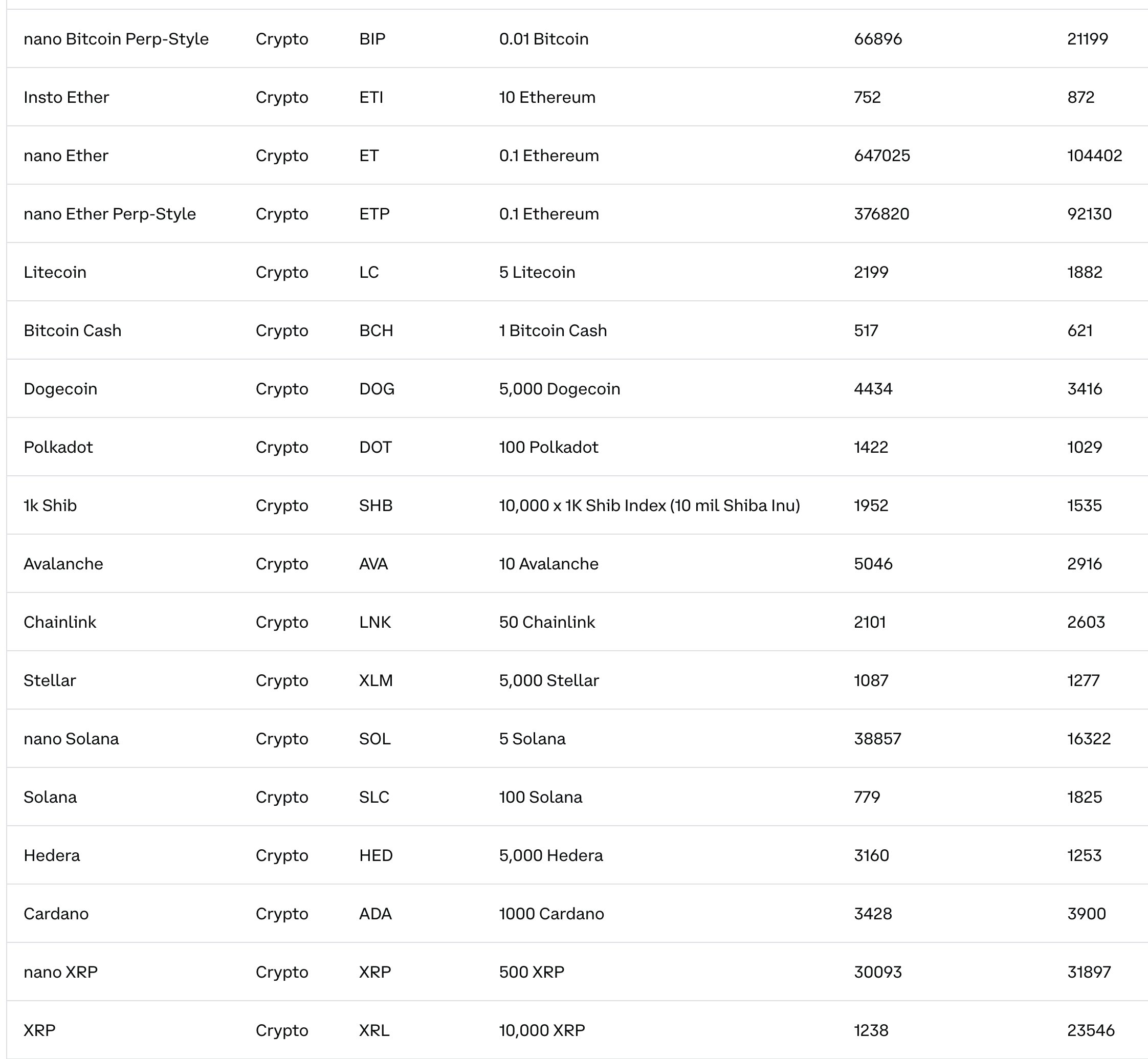
Источник: X

Регулятор ранее одобрил создание и погашение криптобиржевых фондовых индексных фондов (ETP) в натуральной форме. Обновление позволяет авторизованным участникам напрямую создавать или выкупать акции ETF за базовую криптовалюту, а не за наличные. Это может стать последним операционным барьером перед развитием ETF на альткоинах, таких как предлагаемый XRP ETF.

Юрист по криптовалютам Билл Морган подчеркнул этот момент, предположив, что действия SEC значительно повышают эффективность и сокращают расходы. Это, в свою очередь, повышает вероятность одобрения. ETF теперь могут поддерживаться маркет-мейкерами, использующими реальную криптовалюту. Это упрощает расчёты и приближает их к продуктам, обеспеченным товарами, таким как золотые ETP.

Ожидаемые заявки на XRP ETF от Ripple и задержки

Комиссия по ценным бумагам и биржам (SEC) в настоящее время рассматривает множество заявок на XRP ETF, включая известные заявки от таких компаний, как Bitwise и Franklin Templeton. SEC продлила срок рассмотрения XRP ETF Franklin Templeton до конца 2025 года. Однако последние обновления нормативных актов указывают на то, что этот затянувшийся период может подойти к концу, поскольку аналитик Bloomberg Балчунас сохраняет стабильную 85% вероятность одобрения.

Этот прогноз подтверждается данными Polymarket , которые указывают на то, что вероятность одобрения XRP ETF по-прежнему близка к 86%, несмотря на процедурные задержки.
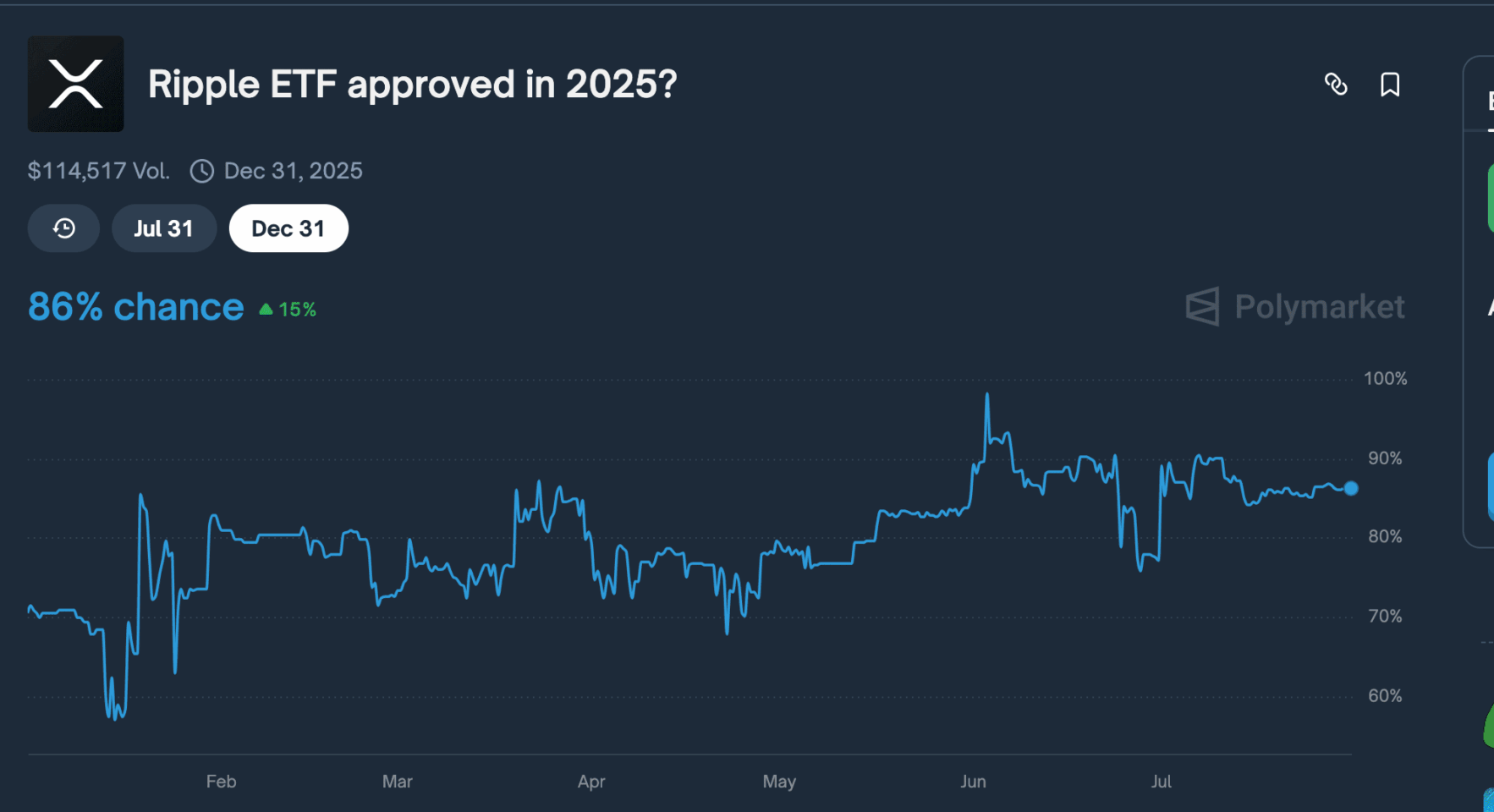
Источник: Polymarket

Юридический спор между Ripple и Комиссией по ценным бумагам и биржам (SEC) — ещё один фактор, влияющий на процесс запуска XRP ETF. Это дело затруднило процесс одобрения со стороны SEC, но, возможно, вскоре будут приняты меры. Бывший юрист SEC Марк Фейгель предположил, что обе стороны могут отклонить свои апелляции до крайнего срока подачи отчёта о статусе проекта 15 августа, что потенциально позволит преодолеть одно из последних серьёзных препятствий.

По прогнозам аналитиков Bloomberg, рынок рассматривает октябрь как наиболее вероятный месяц, когда ETF XRP наконец пересечёт финишную черту. Это может придать новый импульс более широкому ландшафту криптовалютных ETF.


Criptomoedas em alta

Leituras Relacionadas

Manufacturing's Share Drops Below 25%: Is Hangzhou Unconcerned?

Hangzhou is entering a critical phase of industrial restructuring. While its manufacturing-to-GDP ratio has fallen below 25%, the city is not alarmed. Instead, it is strategically navigating a dual focus: advancing advanced manufacturing and expanding its service sector, particularly producer services. Recently, the city celebrated the IPO of a humanoid robotics company, seen as a milestone in moving beyond its e-commerce era. Simultaneously, it set an ambitious target for its service sector: to exceed 2 trillion yuan in value by 2030, with producer services making up over 60%. Data shows a clear trend: the service sector's share of GDP has risen to 75.3%, while manufacturing's share has declined to around 20.1%. This shift revives the debate on whether a strong service sector weakens a city's manufacturing "foundation." Hangzhou's approach challenges the notion of a fixed manufacturing "red line" near 25%. The city argues that the quality and integration of industries matter more than simple ratios. Its strategy is "using software to drive hardware," leveraging its core strengths in digital economy and producer services—like R&D, software, and supply chain management—to empower and add value to manufacturing. This is embodied by its emerging "AI era" companies, whose innovation in Hangzhou feeds into national industrial chains. The city believes that for a hub like Hangzhou, the key is not merely boosting visible manufacturing output, but strengthening the "invisible" competitive edge provided by high-end producer services, which ultimately determine manufacturing profitability. National policy is also shifting from insisting on a "stable" manufacturing share to acknowledging a "reasonable" range, allowing for quality-focused development. Hangzhou's future industrial blueprint aims for a manufacturing share above 22% of GDP by 2027, coupled with a dominant, high-value service sector. The goal is not to choose between manufacturing and services, but to deeply integrate them, using advanced services as the accelerator for next-generation manufacturing.

marsbitHá 25m

Manufacturing's Share Drops Below 25%: Is Hangzhou Unconcerned?

marsbitHá 25m

SEC Suddenly Proposes "Regulation Crypto": U.S. Token Fundraising May Become Legal Again

On August 18, the U.S. Securities and Exchange Commission (SEC) proposed a landmark set of permanent rules, "Regulation Crypto Assets," specifically designed for crypto asset investment contracts. The 402-page proposal introduces two registration exemption paths and a groundbreaking safe harbor mechanism, representing the SEC's first dedicated crypto-specific regulatory framework. Two exemption tiers are proposed: a "Startup Exemption" allowing a one-time raise of up to $5 million within four years with basic disclosure requirements, and a "Financing Exemption" permitting raises of up to $75 million every 12 months with stricter obligations, including financial statements and ongoing reporting. Both paths require "principles-based narrative disclosure," a flexible approach distinct from traditional IPO forms. The most transformative element is the investment contract safe harbor. It provides a legal path for tokens to "graduate" from being classified as securities. If an issuer completes or permanently ceases its "essential managerial efforts" as promised in the investment contract and meets specific conditions, it can file with the SEC to have the token exit the securities framework. This creates a novel legal lifecycle where a token can begin as a regulated security for fundraising and later become a non-security asset as the network decentralizes. This move is seen as the SEC pragmatically filling a legislative vacuum, as the stalled CLARITY Act in Congress faces significant delays. The proposal aims to offer a compliant pathway for token offerings within the U.S., countering the trend of projects moving overseas. While currently a proposal open for a 60-day public comment period, it signals a major potential shift from an enforcement-heavy approach toward establishing clearer rules for the crypto industry.

marsbitHá 29m

SEC Suddenly Proposes "Regulation Crypto": U.S. Token Fundraising May Become Legal Again

marsbitHá 29m

Late Qing County Magistrates' 'Official Debt' and the Crypto World's 'Exchange Listings': The Cross-Temporal Truth of Financializing Power

This article draws parallels between financialization of power in late Qing Dynasty China and the modern cryptocurrency industry. It opens with a staggering contemporary corruption case involving billions, illustrating how official positions control massive cash flows, akin to toll booths. The core analysis focuses on Du Fengzhi, a late Qing county magistrate. His 22-year journey from passing the provincial exam to finally obtaining a post highlights how bureaucratic "qualification" (like a VC investment) doesn't guarantee immediate benefit. Crucially, upon receiving his appointment, Du had to borrow heavily—"official debt"—to cover travel and networking costs to actually assume his position. Lenders, seeing his future post as a revenue-generating asset, offered loans with exorbitant effective interest rates (e.g., borrowing 4000 taels but receiving only 2000), effectively discounting and financializing his future power. Once in office, Du faced immense pressure from both public tax quotas and his crippling private debt. His diaries reveal aggressive, sometimes extreme, tax collection methods (sealing ancestral temples, pressuring local gentry) to meet these demands. The article argues this created a system where public duty and private financial survival became indistinguishable, with corruption evolving from operational necessity to normalized practice. The piece consistently analogizes this to crypto: VC funding as mere "qualification," the costly "listing" process on exchanges, the role of market makers and KOLs as intermediaries akin to local gentry, and the relentless pressure on funded projects to deliver returns—often leading to perpetual pivots, artificial metrics, and ultimately, the extraction of value from retail liquidity. Both systems, it concludes, are driven by the financialization of future potential, trapping individuals in cycles of debt and obligation with limited alternatives for upward mobility.

marsbitHá 36m

Late Qing County Magistrates' 'Official Debt' and the Crypto World's 'Exchange Listings': The Cross-Temporal Truth of Financializing Power

marsbitHá 36m

U.S. Stock Market Trends (August 19th): AI Hardware Rally Loosens, Long-Term Bond Yields Challenge Tech Valuations

U.S. stocks weakened further on Tuesday, with major indices hitting two-week lows for a third consecutive session. Pressure centered on the AI hardware sector, as the previously rebounding Philadelphia Semiconductor Index fell sharply. Meanwhile, persistently high long-term Treasury yields and rising oil prices fueled by Middle East tensions prompted a cautious reassessment of high-valuation tech assets. Key closing data: The S&P 500 fell 0.69%, the Dow Jones dropped 0.22%, and the Nasdaq declined 1.33%. The 10-year Treasury yield hovered near 4.70%, while the 30-year yield briefly touched a new high since 2007 before settling around 5.28%. WTI crude rose to $84.94. The chip sector led the decline, with the Philadelphia Semiconductor Index dropping about 5%. Losses spread across memory, optical communication, and AI infrastructure stocks. This shift indicates investor focus is moving from chasing AI demand momentum to evaluating valuations and earnings timing. The "Magnificent Seven" stocks showed mixed performance, with pressure more concentrated on AI hardware than software giants. The market is observing whether capital will rotate back to large-cap tech, sustaining the internal AI sector rotation, or if the broader AI trade is entering a cooling phase. Chinese stocks were mostly weaker, with the Nasdaq Golden Dragon China Index down about 1%. Baidu's stock fell sharply post-earnings due to profit pressure from AI investments, while Alibaba gained. Persistently high long-term bond yields and rising oil prices are re-emerging as key anchors for U.S. stock pricing, constraining valuation multiples for AI-related companies. Corporate events, including earnings from Home Depot and AI financing news like Anthropic's reported credit line expansion, continue to highlight cost and capital expenditure pressures. Focus for the coming sessions: 1) Whether the 30-year Treasury yield stabilizes below 5.30%, and 2) The market's ability to absorb the chip sector sell-off, determining if it's a pre-earnings consolidation or the start of a broader AI hardware cool-down.

marsbitHá 40m

U.S. Stock Market Trends (August 19th): AI Hardware Rally Loosens, Long-Term Bond Yields Challenge Tech Valuations

marsbitHá 40m

Galaxy Research: Crypto Lending Contracts for Third Consecutive Quarter, Market Undergoing Orderly Deleveraging

**Galaxy Research Report: Crypto Lending Market Sees Orderly Deleveraging for Third Consecutive Quarter** The crypto asset-backed lending market contracted for a third consecutive quarter in Q2 2026, shrinking by $11.33B (-16.78%) to a total of $56.16B. This represents a 40.13% decline from the Q3 2025 peak. The process is marked by a controlled, "stair-step" decline rather than the sharp, cascading collapses seen in 2022, suggesting a healthier, more orderly deleveraging driven by market retrenchment rather than forced liquidations. Key findings include: * **CeFi vs. DeFi:** Centralized Finance (CeFi) lending ($22.98B) surpassed Decentralized Finance (DeFi) lending ($20.43B) for the first time since Q3 2023, as DeFi loan volumes fell 27.61% quarter-over-quarter. * **Market Leaders:** Tether remains the dominant CeFi lender, holding 58.54% market share. CeFi's top three players (Tether, Maple, Nexo) control nearly 75% of that segment. * **Corporate Debt:** Debt used by companies for digital asset treasury strategies declined by $1.5B to $16.1B, mainly due to a debt buyback by MicroStrategy. * **Rates & Leverage:** Stablecoin borrowing costs edged higher. Analysis of Aave V3 shows e-mode loans, primarily used for leveraged Ethereum staking strategies, carry significantly higher risk (debt-weighted avg. Health Factor ~1.06) compared to standard loans. * **Futures:** Aggregate futures open interest (OI) was relatively stable, down only 3.08% to $103.2B at quarter-end, though it has since rebounded. BTC and ETH futures OI together comprised 65% of the total. In conclusion, the crypto market continues to shed leverage in a measured manner. If this trend persists, the market may avoid the type of disorderly, cascading failures seen in the last cycle, even if lending activity continues to contract.

marsbitHá 1h

Galaxy Research: Crypto Lending Contracts for Third Consecutive Quarter, Market Undergoing Orderly Deleveraging

marsbitHá 1h

Trading

Spot

Artigos em Destaque

O que é XRP 2.0

XRP 2.0: Uma Nova Fronteira no Landscape das Criptomoedas Introdução ao XRP 2.0 No reino em constante evolução das criptomoedas, novos projetos surgem continuamente, lutando por atenção e adoção. Uma dessas iniciativas promissoras é o XRP 2.0, um novo projeto de criptomoeda concebido para aproveitar a tecnologia de blockchain avançada e as metodologias de criptografia robustas. Embora o nome tenha paralelos com o XRP da Ripple, é crucial notar que o XRP 2.0 opera de forma independente, focando em melhorar a segurança das transações, a privacidade e a escalabilidade. À medida que o panorama financeiro digital abraça cada vez mais soluções descentralizadas, o XRP 2.0 visa contribuir de forma significativa para a web3 e a expansão global dos projetos de criptomoedas. O que é o XRP 2.0? No seu núcleo, o XRP 2.0 é um projeto de criptomoeda que visa criar um ecossistema de moeda digital seguro e descentralizado. Sua tecnologia fundamental integra princípios de blockchain sofisticados com técnicas de criptografia de ponta. O objetivo abrangente do XRP 2.0 é estabelecer-se como uma plataforma confiável e eficiente que possibilita a execução rápida de transações, priorizando a proteção de privacidade aprimorada para os seus usuários. O projeto é promovido como uma solução para muitas limitações enfrentadas pelas criptomoedas existentes, propondo um sistema que pode lidar com um volume maior de transações com velocidade e privacidade melhoradas. Esta versatilidade posiciona o XRP 2.0 como um concorrente significativo em um mercado repleto de várias moedas digitais. Quem é o Criador do XRP 2.0? A identidade do criador por trás do XRP 2.0 foi identificada como 'Wilbur.' No entanto, detalhes abrangentes sobre Wilbur ou a sua entidade associada permanecem elusivos. O anonimato de muitos criadores de criptomoedas não é um fenômeno incomum na indústria, muitas vezes concebido para manter um grau de privacidade e segurança. Quem são os Investidores do XRP 2.0? Até agora, informações específicas relacionadas às fundações ou organizações de investimento que apoiam o XRP 2.0 não estão disponíveis publicamente. No setor das criptomoedas, o apoio de investidores reputados pode influenciar significativamente a credibilidade e o sucesso de um projeto, no entanto, a transparência em relação aos apoiantes financeiros do XRP 2.0 não foi estabelecida. Como Funciona o XRP 2.0? O XRP 2.0 destaca-se por empregar uma combinação de tecnologia blockchain e algoritmos de criptografia avançados que asseguram transações seguras e descentralizadas. Sua estrutura inovadora inclui características únicas projetadas para fomentar o envolvimento dos usuários e ampliar as funcionalidades além das transações convencionais de criptomoedas. Entre essas características, o XRP 2.0 incorpora capacidades potenciadas por IA, como funcionalidades de texto-para-imagem e texto-para-fala. Estas adições são projetadas para melhorar a experiência interativa dos usuários, promovendo uma maior aplicabilidade em vários setores. Ao unir avanços tecnológicos com um design centrado no utilizador, o XRP 2.0 pretende captar a atenção de uma diversa gama de indivíduos e empresas que procuram integrar soluções de criptomoedas em suas estruturas operacionais. Cronologia do XRP 2.0 Compreender o XRP 2.0 requer examinar os marcos que definiram sua jornada até agora: 23 de Julho de 2023: O XRP 2.0 é apresentado como um novo projeto de criptomoeda, visando revolucionar as capacidades de transação seguras e descentralizadas no domínio do blockchain. 8 de Setembro de 2023: O lançamento de outro projeto, XRP20, ocorre, marcando o surgimento de um token ERC-20 na blockchain Ethereum que permanece não relacionado ao XRP 2.0. 13 de Novembro de 2023: O XRP Ledger passa por uma atualização significativa com o lançamento da versão 2.0.0 do software do servidor rippled. É importante notar que este desenvolvimento está desconectado do projeto de criptomoeda XRP 2.0. Pontos-chave sobre o XRP 2.0 Para destilar a essência do XRP 2.0, vários fatores críticos emergem: Características Únicas: A inclusão de características como texto-para-imagem e texto-para-fala potenciadas por IA diversifica ainda mais as aplicações potenciais do XRP 2.0. Tecnologia Blockchain: A estrutura utiliza mecanismos de blockchain avançados e protocolos de criptografia, assegurando um ambiente seguro e descentralizado para transações. Escalabilidade e Privacidade: O XRP 2.0 prioriza proteção de privacidade aprimorada nos processos de transação e a escalabilidade necessária para acomodar uma base de utilizadores crescente. Sem Afiliação com a Ripple: Importante, apesar do seu nome, o XRP 2.0 não tem qualquer lealdade ou colaboração com o XRP da Ripple, distinguindo sua estrutura operacional e objetivos dentro do ecossistema das criptomoedas. Conclusão O XRP 2.0 representa uma empreitada ambiciosa no domínio das criptomoedas, visando oferecer uma combinação de segurança, privacidade e eficiência em transações digitais. Ao integrar tecnologias sofisticadas e características amigáveis ao utilizador, o projeto propõe-se a ampliar os horizontes do que as criptomoedas podem alcançar na economia digital atual. Embora o anonimato do seu criador e a falta de investidores divulgados possam levantar questões para alguns, o foco do XRP 2.0 em funcionalidades avançadas e descentralização aumenta seu apelo num mercado de criptomoedas cada vez mais congestionado. À medida que o panorama das criptomoedas continua a evoluir, o XRP 2.0 pode ainda emergir como um jogador crucial na expansão de soluções de blockchain seguras e escaláveis.

237 Visualizações TotaisPublicado em {updateTime}Atualizado em 2024.12.03

O que é XRP 2.0

Como comprar XRP

Bem-vindo à HTX.com!Tornámos a compra de XRP (XRP) simples e conveniente.Segue o nosso guia passo a passo para iniciar a tua jornada no mundo das criptos.Passo 1: cria a tua conta HTXUtiliza o teu e-mail ou número de telefone para te inscreveres numa conta gratuita na HTX.Desfruta de um processo de inscrição sem complicações e desbloqueia todas as funcionalidades.Obter a minha contaPasso 2: vai para Comprar Cripto e escolhe o teu método de pagamentoCartão de crédito/débito: usa o teu visa ou mastercard para comprar XRP (XRP) instantaneamente.Saldo: usa os fundos da tua conta HTX para transacionar sem problemas.Terceiros: adicionamos métodos de pagamento populares, como Google Pay e Apple Pay, para aumentar a conveniência.P2P: transaciona diretamente com outros utilizadores na HTX.Mercado de balcão (OTC): oferecemos serviços personalizados e taxas de câmbio competitivas para os traders.Passo 3: armazena teu XRP (XRP)Depois de comprar o teu XRP (XRP), armazena-o na tua conta HTX.Alternativamente, podes enviá-lo para outro lugar através de transferência blockchain ou usá-lo para transacionar outras criptomoedas.Passo 4: transaciona XRP (XRP)Transaciona facilmente XRP (XRP) no mercado à vista da HTX.Acede simplesmente à tua conta, seleciona o teu par de trading, executa as tuas transações e monitoriza em tempo real.Oferecemos uma experiência de fácil utilização tanto para principiantes como para traders experientes.

1.9k Visualizações TotaisPublicado em {updateTime}Atualizado em 2026.06.02

Como comprar XRP

Discussões

Bem-vindo à Comunidade HTX. Aqui, pode manter-se informado sobre os mais recentes desenvolvimentos da plataforma e obter acesso a análises profissionais de mercado. As opiniões dos utilizadores sobre o preço de XRP (XRP) são apresentadas abaixo.

活动图片