Circle 暴涨 675%:谁是背后的中国赢家?

比推Publicado em 2025-06-22Última atualização em 2025-06-22

来源:金色财经

原标题:535亿美元的稳定币第一股Circle:哪些中国的投资机构吃到了


2025年6月5日,稳定币第一股/加密货币的第二股-Circle正式登陆美股,股票发行价为31美元,截止2025年6月20日,股价已经涨到240.28美元/股,涨幅达到675%,市值已经涨到535亿美元。

Circle是一家由美国人在美国创办并在美国上市的纯美国公司,按照一般发展的惯例,和中国的VC基本就没有什么交集的机会了,但是因为各种原因,有些中国的VC机构参与了对其的融资,在本次IPO盛宴中吃到了大肉。

Circle一家专注在美元稳定币USDC的稳定币发型商,其商业模式简单又利润丰厚:公司发行与美元 1:1 锚定的 USDC 稳定币,将用户存入的资金主要投资于短期美国国债,从而赚取几乎无风险的收益。

创始人之一是Jeremy Allaire,现年53岁,在大学的时候学习了政治学、哲学和经济学,是互联网极简主义的信仰者,同时也是一名连续创业者,于1995年和2012年缔造了两家上市公司,分别是软件公司Allaire和在线视频平台Brightcove。2013年和Adobe首席科学家Sean Neville创立Circle,提出“让价值像信息一样自由流动”的愿景,主张区块链技术重塑金融基础设施。

Circle最开始的主要业务并不是稳定币,其发展过程经历了很多曲折和转变,具体而言可以概括如下:

2013–2017年:支付探索与早期融资

2013年10月:

  • Allaire与Neville在美国波士顿创立Circle,初期聚焦区块链跨境支付,推出Circle Pay(被称为“美国支付宝”)

2015–2016年:

  • 累计融资超1.3亿美元,投资者包括高盛、IDG资本、百度等。业务重心为消费者支付,但市场接受度有限

2018年:战略转型与USDC诞生

关键融资:

  • 华兴新经济基金(雷鸣主导)、比特大陆、IDG等机构投资

业务里程碑:

  • 与Coinbase合资成立Centre联盟,推出美元稳定币USDC,主打合规透明,对标USDT

战略调整:

  • 关闭消费者支付业务,全力投入稳定币

2021–2022年:上市尝试与危机

2021年7月:

  • 宣布SPAC合并上市,估值45亿美元,后上调至90亿美元(2022年2月)

2022年12月:

  • SPAC上市因SEC未批准招股书而终止,损失4400万美元

2023年3月:

  • 硅谷银行危机:33亿美元储备被冻结,USDC脱锚。危机后确立“牌照+上市+透明度”核心战略

2023–2024年:重组与扩张

2023年:

  • 收购Coinbase持有的Centre股份,成为USDC唯一发行方

  • 总部迁至纽约世贸中心,强化金融合规形象

2024年:

  • 财务表现:营收16.8亿美元(99%来自稳定币),净利润1.6亿美元,但54%收入分给Coinbase

  • 市场份额:USDC流通量达601亿美元,占稳定币市场29%

2025年:收购、IPO与上市

2025年1月:

  • 以9980万美元收购RWA发行商Hashnote(管理13亿美元代币化国债),强化资产代币化布局

2025年4月–6月:

  • 4月:提交纽交所IPO申请,代码CRCL

  • 5月:上调IPO规模:发行价从$24–26升至$27–28,募资额从6亿增至8.8亿美元;获ARK Invest(木头姐)1.5亿美元锚定认购

  • 6月:正式上市:发行价31美元,募资11亿美元,首日涨168%,市值183.6亿美元;两日后市值达240亿美元

标志意义:成为全球首个稳定币发行商IPO。

根据创投数据库及公开的媒体信息,显示国内参与Circle的机构包括:

IDG(D-E轮,有媒体说C-D轮,但是根据创投数据库显示的投资时间和IPO文件中对轮次的定义,应该是D-E轮)、分布式资本(万向,D轮)、比特大陆(E轮)、百度(D轮)、光大控股(D轮)、宜信(D轮)、中金甲子(D轮)、华兴新经济(E轮)。

在这些机构中,最重要的是IDG,这也是这些机构里面唯一出现在Circle的IPO文件中的,得到明确印证的,作为重要股东,持股比例为12.8%。IDG的李彤曾经担任Circle中国业务的CEO和中国主体-天津世可科技的董事,IDG合伙人周全也是该公司曾经的董事。
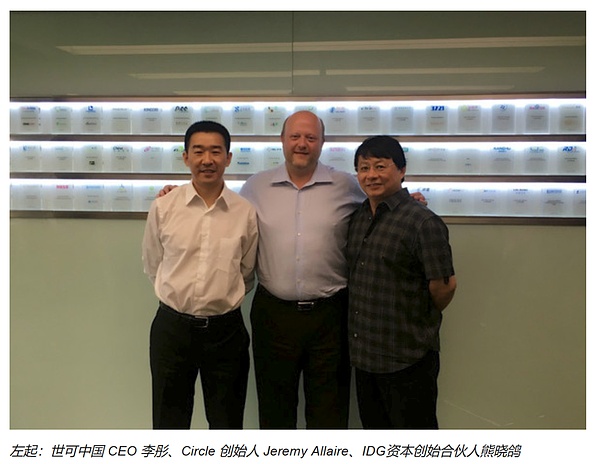
另外分布式资本也可以得到确证,因为其创始人肖风出现在Circle曾经在境内的运营主体-天津世可科技有限公司的董事中;还有就是光大控股也得到确证,在其上市公司的公告中有提到过,但是没有说是直接还是间接投资,光大控股在2016年和IDG合作成立了一支101亿规模的基金-爱奇光控股权投资基金(上海)合伙企业(有限合伙);最后得到印证的是华兴新经济基金,其主导投资人雷鸣(现追觅旗下追创创投的合伙人)在近期接受的采访中分享了对Circle的投资。

根据Circle的IPO文件,不同轮次投资人的投资价格和对应公司估值如下:

D轮投资人按照目前的股价投资回报倍数为87x,E轮投资人的投资回报倍数为14.8x。

IDG在IPO之前持有2327.504万股,分别由2个主体Chuang Xi Capital Limited和Wide Palace Limited持有,具体如下:

其中: IDG-Accel China Capital GP II Associates Ltd是IDG和Accel合作的基金,Accel是IDG在美国的合作机构,该基金的规模根据公开信息搜索为7.5亿美元,持有859.871万股Circle股票;至于基金IDG China Capital Fund GP III Associates Ltd对应的主体则持有。1467.633万股Circle股票,但是就不太确定其具体对应是哪支基金,以及是否和上面提到的和光大控股在2016年合作成立的基金-爱奇光控股权投资基金(上海)合伙企业(有限合伙)有关系。

Accel是Circle的天使投资人,其合伙人Jim Breyer也是IDG在美国的投资合伙人,这为2016年Circle试图在中国拓展业务及IDG的投资埋下了伏笔。

IDG选择在IPO的时候出售232.7504万股,按照31美元/股的发行价,价值7215万美元,猜测这个数值和投资成本相当,目前剩余股份的价值为50.33亿美元,这些价值对应所投资的2支基金的规模而言,肯定是可以实现Homerun了,对于和Accel合作的7.5亿美元基金而言,则直接可以贡献2x以上的DPI。

那么D-E轮次的其他境内投资人目前持股价值多少呢,按照后续没有卖老股且在IPO时没有选择出售股份来假设:

D-E轮次合计发行了6059.4万股,IDG持有2327.504万股,其他投资机构合计持有3731.896万股,如果境内机构持有这其中的50%,对应1865.948万股,对应目前最新股价价值为38亿美元。

说明: 比推所有文章只代表作者观点,不构成投资建议

Leituras Relacionadas

Base Halts for Two Hours: A Single Invalid Block Reveals the Centralized Reality of L2s

Base, an Ethereum Layer-2 Rollup, experienced a two-hour network outage starting around 00:03 UTC on June 26. The halt was caused by a consensus issue that led to an invalid block being sequenced, which prevented the generation of new blocks after block 47806542. The team identified the problem, restored block sequencing by 01:51 UTC, and confirmed full recovery of ecosystem infrastructure synchronization shortly after. This incident highlights the operational reality for many L2s: while they leverage Ethereum for security and data availability, their day-to-day usability heavily depends on their sequencer and internal systems. Base employs a high-availability sequencer system with one active leader, but this setup did not prevent the outage when a consensus-level problem arose. This follows a previous 33-minute outage in August 2025 related to a faulty sequencer handover process. The downtime occurred near the scheduled activation window for the "Beryl" network upgrade, which has since been postponed. Beryl introduces the native B20 token standard, among other improvements. The incident has sparked renewed discussion about Base potentially launching its own network token in the future, shifting the conversation from mere speculation to questions about how a token might relate to sequencer decentralization, governance, and accountability in such failure scenarios.

Foresight NewsHá 9m

Base Halts for Two Hours: A Single Invalid Block Reveals the Centralized Reality of L2s

Foresight NewsHá 9m

STRC Must Re-Anchor for a BTC Bull Market to Happen

Title: STRC's Depegging Threatens MicroStrategy's Bitcoin-Buying Machine, and Thus the BTC Bull Run Summary: The sustained depegging of MicroStrategy's priority share STRC (trading ~25% below its $100 target) is severely disrupting the company's core business model and poses a major risk to Bitcoin (BTC) price support. STRC was MicroStrategy's most efficient and low-cost funding tool, designed to allow continuous capital raises near its $100 par value to fuel relentless BTC accumulation. Its depegging has effectively blocked this primary funding channel. The situation creates a severe cash flow crisis. STRC and other priority shares now obligate MicroStrategy to pay approximately $1.7 billion in annual cash dividends, while the company's cash reserves are only about $1.4 billion — insufficient to cover one year of payments. To raise cash, MicroStrategy is increasingly resorting to issuing common stock (MSTR) through ATM offerings. However, recent raises show most proceeds (around 90% in one week) are now used to bolster cash reserves rather than buy Bitcoin. This dilutes the key metric of Bitcoin per MSTR share, eroding the fundamental value proposition for equity investors. The company faces grim alternatives: issuing high-cost debt or selling its massive Bitcoin holdings. The latter, though hinted at, would likely trigger significant negative market reactions. Conclusion: As BTC's largest corporate holder and a major marginal buyer, MicroStrategy's funding woes mean reduced, and potentially reversing, institutional buy-side pressure. The company has shifted from being a guaranteed source of BTC demand to a significant overhang on the market. The article argues that without STRC re-anchoring to restore its funding engine, a sustained BTC bull market is in jeopardy.

marsbitHá 29m

STRC Must Re-Anchor for a BTC Bull Market to Happen

marsbitHá 29m

No Bull Market for BTC Without STRC Re-pegging

Summary: The sustained de-pegging of MicroStrategy's (MSTR) Strategy Preferred Shares (STRC) poses a severe threat to Bitcoin (BTC) and could prevent a bull market. STRC, designed to trade near a $100 target, has plunged to around $75, effectively shutting down MicroStrategy's cheapest and most efficient funding channel. This channel was critical for its "raise funds, buy BTC" business model. More critically, MicroStrategy now faces a massive cash outflow from these preferred shares. With approximately $10.49 billion of STRC outstanding at an 11.5% dividend yield, the annual cash obligation exceeds $1.2 billion. Combined with other preferred shares, the total annual payout nears $1.7 billion, depleting its current ~$1.4 billion cash reserve within a year. To address this, MicroStrategy is increasingly relying on common stock (MSTR) offerings via its ATM program. However, recent sales show most raised capital is now used to bolster cash reserves rather than buy more Bitcoin. This dilutes the key metric of BTC per share for common stockholders, eroding the foundation of its premium valuation. If STRC cannot re-peg, this costly dilution may continue. Worse, if cash pressure intensifies, selling Bitcoin becomes a real risk. As the largest corporate BTC holder (~847,363 BTC), any significant sales could crash the market. Thus, MicroStrategy is transforming from BTC's most reliable institutional buyer into a major potential seller, casting a significant shadow over Bitcoin's price prospects.

Odaily星球日报Há 30m

No Bull Market for BTC Without STRC Re-pegging

Odaily星球日报Há 30m

Tornado Cash Suffers Another Governance Attack: A Fake Proposal Targets $23 Million Community Treasury

On June 25, 2026, a deceptive governance proposal (#67) appeared in the Tornado Cash DAO, masquerading as an upgrade to implement fee adjustments and token burns. Security researchers, including Sergey Shemyakov and Pascal Caversaccio, quickly identified it as malicious. The proposal's unverified code contained a hidden function designed to stealthily replace the protocol's legitimate governance address (0x5efda50f22d34F262c29268506C5Fa42cB56A1Ce) with an attacker-controlled address (0x5efda50f22d34f272c7077689d6abc42f15e285f). If passed, this would have granted the attacker control over the DAO's treasury, containing approximately $23 million in TORN tokens, and the ability to drain all relayers. The attacker's wallet (0xd4eca8c9242b9f9faa3cf19a78defc21dc97a925) was funded via the privacy protocol Railgun four days prior, obscuring the source. The community response was swift, with the proposal receiving 27,163 TORN votes against (100%) and 0 for, far below the 100,000 TORN quorum required for validity. It is set to expire on June 30. This incident marks the second major governance attack on Tornado Cash, following a May 2023 exploit that stole $2.17 million. It highlights persistent vulnerabilities in DAO structures where power derives from token ownership. The article advises users to follow security researchers, vote against unverified proposals, and delegate voting power. For developers, implementing timelocks—a delay between proposal approval and execution—is presented as a critical security measure to allow for community review and intervention.

Foresight NewsHá 49m

Tornado Cash Suffers Another Governance Attack: A Fake Proposal Targets $23 Million Community Treasury

Foresight NewsHá 49m

Trading

Spot
Futuros
活动图片