Биткоин как инструмент для ЦРУ. Как разведка видит криптовалюту

RBK-cryptoPublicado em 2025-05-03Última atualização em 2025-05-03

Высокопоставленный чиновник ЦРУ заявил, что агентство активно использует криптовалюты для отслеживания противников США

Биткоин и другие криптовалюты «прекрасно подходят» для разведывательной деятельности, заявил заместитель директора Центрального разведывательного управления (ЦРУ) Майкл Эллис в подкасте с главой Professional Capital Management Энтони Помплиано. Кроме того, он сообщил, что ЦРУ использует биткоин и криптовалюты как инструмент для борьбы с противниками США.

Майкл Эллис был назначен заместителем директора ЦРУ в феврале 2025 года по решению президента Дональда Трампа. Тогда Трамп назвал Эллиса «умным и уважаемым юристом», который поможет восстановить эффективность разведывательного ведомства. Во время первого срока Трампа Эллис работал в Совете национальной безопасности Белого дома и, по словам Трампа, помог выявить злоупотребления со стороны администрации Обамы в рамках дела о «российском вмешательстве», которое Трамп называл фальсификацией.

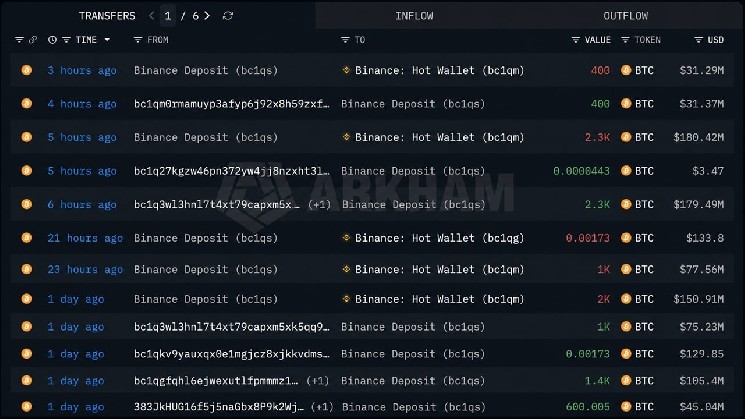
Американские правоохранительные органы «в восторге» от возможности использовать биткоин для отслеживания преступной активности, отметил Эллис. Само ЦРУ, по его словам, воспринимает биткоин аналогично за счет возможности отслеживать транзакции. Он подтвердил, что ЦРУ регулярно работает с силовыми структурами, чтобы отслеживать незаконные криптоплатежи.

Еще в 2019 году исследователи компании Bitfury заявили, что смогут раскрыть личности более 16% всех владельцев биткоин-адресов. А несколькими годами ранее группа разработчиков CryptoLux провела исследование анонимности транзакций в сети биткоина и доказала, что можно успешно деанонимизировать до 60% адресов. В своей работе они показали возможность привязки биткоин-счета к ip-адресам пользователей, даже если те пользуются сетью Tor или другими подобными средствами анонимизации.

Биткоин для разведки

Криптовалюта — это «еще одна область технологической конкуренции», в которой США категорически не должны отставать, объяснил Эллис, подчеркнув, что администрация президента Дональда Трампа не должна допустить отставания от Китая и других противников в сфере технологий.

В рамках предвыборной кампании Трамп отмечал роль криптовалют в противостоянии между крупными державами.

«Если мы этого не сделаем, это сделает Китай. Если мы этого не сделаем, мы не будем крупнейшими», — заявлял Трамп в контексте намерения сделать США крупнейшим криптохабом в мире.

Как устроен криптопроект Трампа. Почему он опасается конкуренции с Китаем

Ссылаясь на возможности криптовалют, Эллис отметил огромный потенциал для применения правоохранительными органами и спецслужбами с целью отслеживания действий противников и их дестабилизации. Он также подчеркнул, что ЦРУ использует эти технологии как еще один инструмент в арсенале» для борьбы с противниками США.

В дополнение к тому, что криптовалюты и биткоин являются отличным инструментом для правоохранительных органов и разведки, Эллис убежден, что крипторынок прочно укоренился в мировой финансовой системе.

«Биткоин останется. Криптовалюты останутся. Все больше институтов внедряют их. Считаю, это отличная тенденция», — заявил он.

Роль ЦРУ в создании биткоина

Примечательно, что комментарии и мнение представителя ЦРУ на счет биткоина было озвучено в подкасте в годовщину исчезновения анонимного создателя биткоина Сатоши Накамото. 14 лет назад, 26 апреля 2011 года, Сатоши перестал публиковать сообщения в личной переписке и тематических форумах, где обсуждалась главная криптовалюта.

В одном из последних сообщений 23 апреля 2011 года Сатоши написал, что «переключился на другие вещи и что биткоин в надежных руках Гэвина и всех остальных».

14 лет без Сатоши Накамото. Почему пропал создатель биткоина

Гэвин Андрессен — американский разработчик, с 2010 года принимающий участие в развитии биткоина. В 2011 году сам Сатоши назвал его ведущим разработчиком Bitcoin Core (программное обеспечение биткоина). 

А 27 апреля 2011 года Андрессен публично заявил, что собирается выступить с докладом о биткоине в штаб-квартире ЦРУ в июне на конференции по новым технологиям для разведывательного сообщества США. Биткоин «уже у них радаре», писал он, мотивируя свое решение.

На той же конференции Андрессену даже удалось продать некоторое количество биткоина агенту ЦРУ, согласно цитате Blockworks: «Ко мне потом подошли несколько человек и сказали, что биткоин — это действительно круто. Один интересный случай: я на самом деле продал биткоины одному из людей ЦРУ».

Многие предполагают, что именно тот факт, что Андрессена пригласили выступать в ЦРУ, мог повлиять на решение Сатоши прекратить публичную деятельность. Тогда же возникла теория о том, что биткоин и есть проект ЦРУ.

Журналист Такер Карсон в ходе закрытой панельной дискуссии на конференции Bitcoin 2024, летом 2024 года придал ей новый импульс.  «Очевидно, что это ЦРУ, мы все это понимаем. Это как [мессенджер] Signal, они добрались туда первыми. Это ловушка!», - заявил он со сцены, но уточнив при этом, что криптовалюта является «лучшим в мире инструментом для обеспечения финансового суверенитета».

«Забирать прибыль и не торопиться». Что будет с биткоином в мае

Дирхам, золото и рубль. Какие перспективы у недолларовых стейблкоинов

Апрель стал самым удачным месяцем для биткоина в 2025 году. Что произошло
Leituras Relacionadas

GPT-5.6 Countdown: Abandon the Illusion of a Single API, Computational Iteration Can't Outpace a Single Page of Compliance

In mid-June, three seemingly independent industry events—the compliance-driven throttling of Fable 5, the open-sourcing of GLM-5.2, and the leaked release timeline for GPT-5.6—are pushing the global AI industry toward a watershed moment. These shifts signal a fundamental restructuring of the industry's underlying logic. First, **"usability" has substantially overtaken "advanced capabilities"** as the primary weight, pushing the global large language model (LLM) supply chain into a "dual-track" phase of controlled closed-source and local open-source coexistence. Second, **the competitive moats of closed-source giants are shifting**. Their technical focus is moving from "language intelligence" toward "spatial intelligence (world models)"—a domain heavily reliant on computing power. Third, faced with常态化 transnational compliance risks, **a "model-agnostic" decoupled design has become a survival necessity for application-layer developers to maintain business continuity.** The article details how Anthropic's Fable 5, despite its advanced engineering feats, was restricted for non-U.S. citizens within 72 hours of launch, highlighting how geopolitical compliance can instantly limit even the most advanced models. In response, the open-source camp, exemplified by Zhipu AI's MIT-licensed GLM-5.2, is gaining market share by offering stable performance improvements and significant cost advantages (up to 70% savings for enterprises), while achieving full adaptation with domestic semiconductor platforms. Meanwhile, closed-source leaders like OpenAI are pivoting. The anticipated GPT-5.6 reportedly shifts focus from language to spatial intelligence and world models, aiming to rebuild a generational gap in areas like 3D understanding, simulation, and industrial design that demand immense compute. The core conclusion is that the LLM supply chain's logic has changed. Enterprises must now evaluate infrastructure based on a composite of technical performance and policy compliance. For developers, complete reliance on a single closed-source API poses unacceptable risk. Implementing a truly model-agnostic architecture—enabling swift switches to compliant, locally deployable open-source alternatives—is no longer just good practice but a fundamental baseline for business continuity.

marsbitHá 6m

GPT-5.6 Countdown: Abandon the Illusion of a Single API, Computational Iteration Can't Outpace a Single Page of Compliance

marsbitHá 6m

Is the 'Token Subsidy War' Among AI Giants Almost Over?

The article discusses the ongoing "token subsidy war" among AI giants like OpenAI and Anthropic, questioning whether it's nearing its end. It reveals that current AI subscription prices are heavily subsidized, with some plans offering tokens at up to 70 times the actual cost to attract and retain heavy users, especially developers and enterprises. This strategy mirrors past internet-era subsidy battles, but with a key difference: AI tokens lack "lock-in" effects. Unlike ride-hailing or food delivery apps, users can easily switch between AI providers as APIs become standardized, making it difficult for companies to raise prices post-subsidy. The piece highlights a structural asymmetry in the competition. Giants like Google, with massive advertising revenue, can afford to subsidize tokens indefinitely, akin to using "tokens as a weapon." In contrast, venture-backed companies like OpenAI and Anthropic face pressure to become profitable, especially as they approach IPO. The article cites Google Ventures founder Bill Maris, who suggests Google could slash token prices by 80%, putting immense pressure on competitors. Two potential endgames are presented: the "internet service" model (subsidize, monopolize, then raise prices) and the "utility" model (tokens become a standardized, low-margin commodity like electricity). Given the low switching costs, the latter seems more likely. The competition may not have a single winner but could instead accelerate AI's evolution into a foundational, infrastructure-level technology, akin to a public utility. For now, users continue to benefit from heavily subsidized token costs.

marsbitHá 23m

Is the 'Token Subsidy War' Among AI Giants Almost Over?

marsbitHá 23m

Beyond the Stadium: The Profitable Games Surrounding the World Cup

"Beyond the Pitch: The Profit Game Around the World Cup" The FIFA World Cup transcends being a sporting spectacle, evolving into a massive global arena for speculation and profit-seeking. The 2026 tournament has amplified this dynamic, creating a multi-layered ecosystem of financial opportunism alongside the football. **Prediction markets** have surged into the mainstream. Platforms like Polymarket and Kalshi saw trading volumes for World Cup contracts soar, attracting new users with their financial trading model and high-profile, chain-based wealth stories that overshadow traditional sports betting in terms of growth and narrative. However, **traditional sportsbooks** remain the dominant force, leveraging established user habits, legal markets, and comprehensive product offerings to handle the vast majority of speculative wagers, with projections suggesting record-breaking betting volumes. Capital markets also react. **"Concept stocks"** in countries like South Korea and Japan experience volatile price swings based on team performance and anticipated fan spending on items like chicken, beer, and viewing parties, effectively becoming a stock market reflecting fan sentiment. The **ticket resale market** has become a sophisticated arena for arbitrage. Prices fluctuate wildly based on team draws and star power, with sellers sometimes listing tickets they don't yet own in a practice akin to short-selling, while FIFA's own "Right to Buy" tokens add another layer of speculative trading. **Collectibles and merchandise** offer another avenue. Panini sticker albums, with their inherent scarcity and nostalgic value, can become high-value collectibles. Limited-edition or locally themed jerseys command significant premiums on secondary markets, and even counterfeit vendors profit from fans' desire for affordable match-day identity. The **cryptocurrency** space has seen a frenzy of speculative, unauthorized World Cup-themed meme coins on chains like Solana. These tokens, often exploiting team names and player imagery, experience extreme pump-and-dump cycles, creating stories of massive gains for a few early entrants and steep losses for many others. Finally, an entire industry thrives on **providing information and tools** to other speculators. Developers create platforms like SeatSidekick to track ticket inventory and prices, while paid Telegram groups and subscriptions sell betting tips and predictions, monetizing the widespread desire for an informational edge. In essence, the World Cup has become a compressed, global laboratory for speculation. While the games determine champions on the field, a parallel, complex network of financial transactions—spanning prediction contracts, bets, stocks, tickets, collectibles, crypto, and information services—settles its own scores in the global market.

marsbitHá 1h

Beyond the Stadium: The Profitable Games Surrounding the World Cup

marsbitHá 1h

How Does Codex Use a Computer? Three Entry Points and Permission Boundaries

This article explains the three primary methods for Codex to interact with a computer, each with distinct use cases, permission boundaries, and trust levels. **1. Computer Use:** This offers the broadest access, allowing Codex to visually control and interact with the graphical user interface of authorized macOS/Windows apps, system settings, and even iOS simulators. It's ideal for tasks lacking APIs or structured tools, such as operating legacy software or multi-app workflows. However, it's the slowest method and has the widest permission scope, requiring careful supervision for sensitive actions. **2. Chrome Extension:** This grants Codex access to the user's logged-in Chrome browser state, including cookies, profiles, and open tabs. It's best for tasks requiring user identity across websites like Gmail, LinkedIn, Salesforce, or internal dashboards. Its key advantage is multi-tab control for complex workflows. While more powerful for browser-based tasks than Computer Use, it carries higher sensitivity as actions are performed under the user's identity. **3. In-App Browser:** This is a browser isolated within the Codex thread, separate from the user's personal browsing data. It excels in web development and debugging scenarios—previewing local servers, testing responsive layouts, or annotating designs directly on the page. Its isolation is a strength for development but a limitation for tasks requiring login sessions. The core principle is to choose the narrowest, safest, and most structured interface for the task. Use plugins or MCPs first, resort to visual control (Computer Use) only for GUI-dependent tasks, employ the Chrome extension for identity-reliant browser work, and prefer the In-App Browser for isolated development. **Appshots** are clarified as a fourth, complementary tool for *inputting* context—capturing a screenshot of a window to point Codex to something—rather than a method for Codex to *act*. Together, this layered approach highlights a key to AI agent productization: not granting unlimited permissions, but constraining them within clear boundaries for specific tasks while preserving user oversight.

marsbitHá 2h

How Does Codex Use a Computer? Three Entry Points and Permission Boundaries

marsbitHá 2h

Trading

Spot
Futuros
活动图片