Arizona Leads Bitcoin Reserve Race As Two Bills Pass House Commerce Committee Vote

bitcoinistPublicado em 2025-03-20Última atualização em 2025-03-20

Resumo

Arizona has taken the lead in the US Strategic Bitcoin Reserve (SBR) race after two bills passed the House of...

Trusted Editorial content, reviewed by leading industry experts and seasoned editors. Ad Disclosure

Arizona has taken the lead in the US Strategic Bitcoin Reserve (SBR) race after two bills passed the House of Representatives Commerce Committee vote on March 18. The state now has two active crypto reserve legislations and a legal tender bill, which have also advanced to the next stage.

House Commerce Committee Passes Bitcoin Reserve Bills

On Tuesday, the Arizona House Commerce Committee met to consider three Bitcoin-related legislations, including two strategic reserve bills, which passed the vote to advance to the next legislative stage.

Senate Bill 1025 (SB1025), also known as the “Arizona Strategic Bitcoin Reserve Act,” passed the vote with a 6 – 4 majority. Bitcoin Laws noted that the vote “was along partisan lines: Republicans for; Democrats against.”

bitcoin


SB1025 passes with a 6 - 4 majority. Source: Bitcoin Laws

If passed, the legislation, sponsored by Republican Senator Wendy Rogers, would allow public funds in Arizona, such as the state treasurer or state retirement system, to invest up to 10% of their assets under management in cryptocurrencies, focusing on Bitcoin (BTC).

“If the United States Secretary of the Treasury establishes a strategic Bitcoin reserve for the storage of government Bitcoin holdings, a public fund may store the virtual currency holdings of the public fund in a secure segregated account within the strategic Bitcoin reserve,” SB1025 reads.

The bill also provides a framework for public funds to diversify their investments and establishes clear guidelines and definitions to manage them.

Meanwhile, Senate Bill 1373 (SB1373), sponsored by Republican Senator Mark Finchem, passed with a 6 – 4 vote on Tuesday. The legislation aims to establish a Digital Assets Strategic Reserve Fund in the state, comprised of seized cryptocurrencies and appropriated legislative funds that can be held through secure custody solutions or exchange-traded products (ETPs).

The fund would be managed by the state treasurer, who could invest up to 10% of its total deposit in any fiscal year and may loan its assets to generate additional returns if it doesn’t increase the state’s financial risks.

“The bill also outlines strict requirements for secure custody solutions, including exclusive key access, encrypted environments, hardware maintenance in multiple secure data centers, multi-party governance, comprehensive logging, regular security audits, and disaster recovery protocols,” Bitcoin Laws explains.

Arizona Takes The SBR Lead

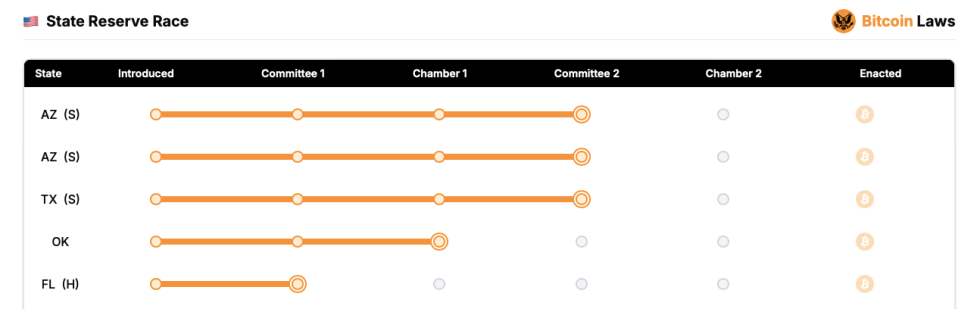
After Utah scrapped its BTC reserve clause, Arizona became the state with the most advanced SBR legislation. As reported by Bitcoinist, the Utah State Senate exited the SBR race this month after amending the proposed bill allowing the state treasury to invest in digital assets.
bitcoin

Arizona has advanced two SBR bills. Source: Bitcoin Laws

Following this development, Arizona took the lead with two reserve bills awaiting a final floor vote in the Senate before moving to the House Commerce Committee. Both strategic reserve bills now move to the House Rules Committee, which has a 5 – 3 Republican majority.

If they pass the Rules Committee vote, SB1015 and SB1373 will only require a vote by the full House before heading to the governor’s desk. Similarly, another BTC-related bill passed the House Commerce Committee on Tuesday with a 6-4 vote and heads to the next stage.

Senate Bill 1062 (SB1062), also sponsored by Senator Mark Finchem, aims to expand the state’s definition of legal tender to include cryptocurrencies, including BTC, alongside traditional currencies.

The legislation also updates different sections of Arizona’s tax code to include the new legal tender definition and ensure consistency across different statutes, suggesting an effort to recognize the industry as a key sector.
Bitcoin

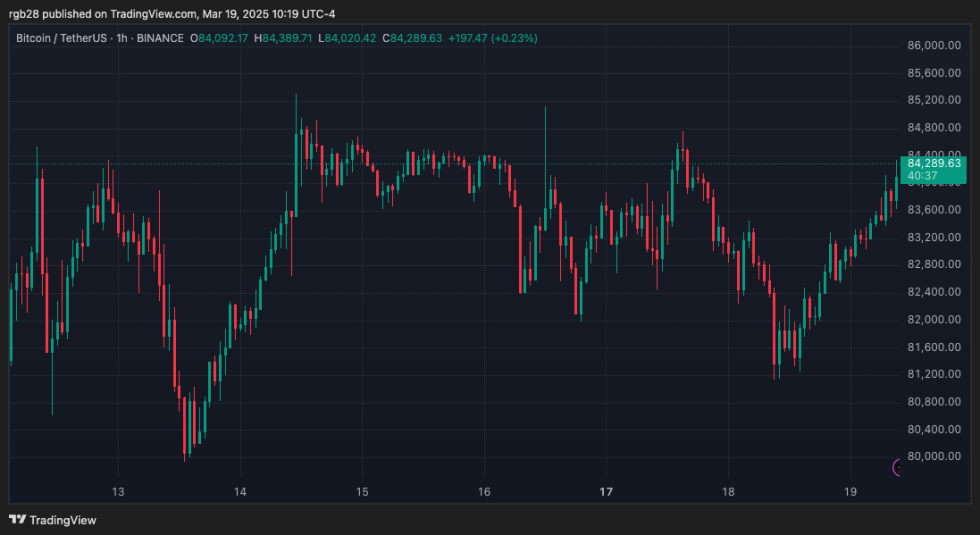
BTC trades at $84,289 in the one-week chart. Source: BTCUSDT on TradingView
Featured Image from Unsplash.com, Chart from TradingView.com
Editorial Process for bitcoinist is centered on delivering thoroughly researched, accurate, and unbiased content. We uphold strict sourcing standards, and each page undergoes diligent review by our team of top technology experts and seasoned editors. This process ensures the integrity, relevance, and value of our content for our readers.

Rubmar is a crypto enthusiast who likes learning and improving constantly. She enjoys reporting on the latest news and developments in the crypto industry. Rubmar also enjoys scrapbooking, crafting, simulation games, and watching football.

Leituras Relacionadas

Bankless Co-founder: Why I Sold All My ETH

Author David Hoffman, founder of Bankless, explains his decision to sell all his ETH, despite being a prominent figure in the Ethereum ecosystem. He clarifies that his move is not a bearish take on Ethereum itself, which he remains highly optimistic about as a network. His core argument is that the "ETH is money" thesis, which he helped popularize, has largely played out. Hoffman argues that ETH has achieved the market valuation it deserves based on Ethereum's current success and competitive position. He details several reasons for this view. First, the path for ETH to become global money required nearly flawless execution and sustained dominance across Ethereum's entire technical and social stack—a coordination challenge he now believes had a narrower window for success than anticipated. Second, market data shows a strong correlation between L1 chain activity/fees and the price of its native asset; Ethereum's fee dominance has been challenged by competitors like Solana. Third, the "strong version" of crypto (decentralized, native crypto economies) that ETH's monetary thesis relied upon has struggled to maintain a positive mainstream narrative and stable adoption beyond a brief period. Finally, Ethereum's architecture as a "giver"—providing secure block space and tokenization capabilities at cost to L2s and applications—means it doesn't capture premium value directly. Its rollup-centric roadmap further directs most profits to L2s and applications ("fat app theory"). In conclusion, Hoffman believes the opportunity for ETH to be revalued significantly upward as money has diminished. He sold not because ETH will fail, but because its monetary thesis has matured, and he seeks to allocate capital to other opportunities he finds more compelling.

链捕手Há 2h

Bankless Co-founder: Why I Sold All My ETH

链捕手Há 2h

From Issuer to Infrastructure Owner: Circle's Arc Strategy and the Fatal Gap in the GENIUS Act

Circle raised $222 million for its proprietary Layer-1 blockchain, Arc, positioning itself not just as a stablecoin issuer but as the owner of the settlement infrastructure USDC relies on. This move, backed by investors like BlackRock and Apollo, highlights a significant structural conflict unaddressed by the GENIUS Act of 2025. While the act focuses on stablecoin reserves and issuer oversight, it remains silent on the market structure implications of an issuer controlling the underlying network—a scenario akin to a currency issuer also owning the payment rails. Traditionally, financial regulations separate issuers from settlement infrastructure to ensure neutrality. With Arc, Circle gains control over transaction ordering, fees, and network rules, potentially favoring USDC over competitors. The article argues that this creates a permanent structural temptation, even if no abuse occurs. The solution lies in applying established market infrastructure principles: mandating neutral transaction ordering, transparent fee schedules, and governance separated from Circle’s commercial interests. The current pre-mainnet phase offers a critical window for regulators to establish these rules before Arc becomes entrenched. Once operational, enforcing changes would be costly and disruptive. The core question remains: should a regulated stablecoin issuer be allowed to own the settlement network its competitors must use? The GENIUS Act doesn’t answer this, but Circle’s Arc strategy makes it urgent.

marsbitHá 2h

From Issuer to Infrastructure Owner: Circle's Arc Strategy and the Fatal Gap in the GENIUS Act

marsbitHá 2h

Trading

Spot
Futuros
活动图片