Biggest ICO of 2024: IntelMarkets Stuns With $770K Raised in 36 Hours: Cardano Price Could Pump to $2 This Weekend

bitcoinistPublicado em 2024-11-28Última atualização em 2024-11-28

Resumo

IntelMarkets (INTL) has emerged as one of the biggest ICOs of 2024. With more than $770K raised in 36 hours,...

IntelMarkets (INTL) has emerged as one of the biggest ICOs of 2024. With more than $770K raised in 36 hours, this AI-powered altcoin is already being compared to some of the best-performing ICOs of all time. Furthermore, following recent market trends, Cardano could pump to more than $2 this weekend.

Cardano (ADA): $2 This Weekend?

Cardano (ADA) remains one of the most influential cryptocurrencies and maintains dominance for its proof-of-stake blockchain, which has entered the market with a robust ecosystem for decentralized applications (dApps). 2024 has been a challenging year for ADA, however there are signs of recovery, with optimism among investors.

Cardano is sitting at $0.97 as of now, having risen from a recent low of $0.33 earlier in the quarter. Although it has been down since its ATH of $3.10, ADA has seen some excellent performance. Following the victory of crypto-friendly president Donald Trump, ADA saw a 190% increase. Even though in the past 7 days, Cardano’s momentum has slowed down a bit, yesterday, it saw a 5% increase. Together with the 5% increase in market cap, if ADA crosses the $1.20 resistance, then analysts believe a rally to $2 is possible as soon as this weekend.

Although Cardano has long-term growth potential, it lacks the exponential momentum new ICOs like IntelMarkets have. With a $34 billion market cap, replicating the massive gains seen in smaller-cap coins isn’t easy. Nevertheless, Cardano’s emphasis on scalability and energy efficiency places it highly among other cryptos.

A New Leader in the ICO Space: IntelMarkets (INTL)

The relatively new ICO IntelMarkets (INTL) has made some headlines. It raised an impressive $770,000 in an incredible 36 hours, placing it among the biggest ICOs of 2024. IntelMarkets is an ambitious project presenting a platform with a unique dual-chain architecture powered by Ethereum and Solana and an AI-powered trading protocol.

Its AI is integrated into all levels of INTL, allowing it to create trading robots that analyze huge amounts of data and apply trading strategies with extreme precision. This innovation fixes the inefficiencies of traditional trading systems and provides a new standard for crypto exchanges.

IntelMarkets also offers leverage of up to 1,000x, significantly amplifying potential returns. This feature appeals to experienced traders seeking to maximize gains from market movements. INTL has recognized the importance of security and has implemented initiatives like Route X21, a quantum-proof security mechanism to protect user funds from future quantum computing threats.

IntelMarkets’ ICO is in stage 6 right now, and the price of the tokens is just $0.055. The analysts predict a post-launch rally of up to 100x, making this one of the most compelling new crypto investments. Already having raised over $2.4 million and boasting a road map that includes Tier-1 exchange listings, IntelMarkets is a definite contender in the AI-DeFi sector.

Conclusion

Although Cardano (ADA) is a well-established crypto with the potential to rally to $2 this weekend, its massive market cap restricts its potential for further growth. On the other hand, one of the best ICOs of 2024 boasts huge investors’ interest, raising $770,000 in just 36 hours. IntelMarkets is a no-brainer if you are looking for life-changing gains with projections of 75x to 100x rally after launch. INTL stands out as the ICO of 2024 to invest in, with its innovative AI-powered platform and fast-rising presale. Use Promo Code “INTL20” to get 20% BONUS.

Buy Presale
Website
Telegram

Bitcoinist

Bitcoinist

Bitcoinist is the ultimate news and review site for the crypto currency community!

Leituras Relacionadas

Five Core Forms of AI Agent in YC's Eyes

The article outlines five core architectural patterns for effective AI Agents, emerging from tools like Codex and Claude, that move beyond simple prompts towards reusable, process-based capabilities. 1. **Skills**: Reusable, parameterized workflows that function like method calls, allowing a single process (e.g., "/investigate") to handle various tasks based on input parameters. 2. **Thin Harness**: A lightweight execution framework (~200 lines) that manages the AI model's "hands and feet"—handling loops, file I/O, and context—without becoming bloated. 3. **Resolvers**: Routing tables that map tasks to specific Skills, preventing "context corruption" when managing dozens of Skills and ensuring outputs go to the correct locations. 4. **Latent vs. Deterministic Layer**: A critical separation where LLMs handle judgment, synthesis, and pattern recognition, while deterministic code handles tasks requiring precision, consistency, and low cost (like calculations). 5. **Memory**: A persistent, accumulating knowledge base (e.g., a markdown folder) with a "current trusted conclusion" section and an append-only timeline, enabling the system to learn and retain context over time. Together, these patterns create a "process power"—a durable competitive advantage. Unlike one-off prompt-based applications whose value quickly commoditizes, a well-designed AI Agent system encodes experience into reusable, parameterized workflows, offloads stable rules to code, and continuously learns through memory. This creates a structured, hard-to-replicate capability that can provide sustained value for individuals or businesses, such as an accountant automating client reviews while preserving privacy and accumulating expertise.

marsbitHá 43m

Five Core Forms of AI Agent in YC's Eyes

marsbitHá 43m

Tiger Research: On-Chain Risk Operators, The Market Cap Gap Between 147 Trillion and 70 Billion

This report by Tiger Research examines the evolution of risk management in decentralized finance (DeFi) lending. It highlights a power shift from protocol developers to specialized professional risk operators who manage on-chain capital. The era of protocols and community governance solely dictating DeFi lending is ending. A new professional asset management layer has emerged. While the sector is nascent, capital and distribution channels are rapidly consolidating around top risk operator teams, whose past performance is now a key criterion for institutional entry. The industry's development, accelerated by modular infrastructures like Morpho, has led to a clear division of labor mirroring traditional finance: distribution channels (e.g., exchanges), strategy/risk management (the risk operators), and product infrastructure/asset custody (smart contract protocols). This structure lowers the entry barrier for traditional institutions. Currently, the total value managed by risk operators is approximately $70 billion, dominated by a few leading teams like Steakhouse (RWA focus), Sentora (AI models), and Gauntlet (crisis management). Competition now centers on collateral standards, distribution access, and crisis response capabilities. The report outlines three primary entry paths for institutions: 1) **Distribution Model**: Leveraging external risk operators as backend service providers (common for exchanges). 2) **Asset Supply Model**: Onboarding real-world assets to DeFi as collateral. 3) **Independent Operator Model**: Building an in-house team to become a risk operator (e.g., Bitwise). The core opportunity lies in the strategy/risk management layer, where traditional financial institutions can leverage their existing expertise in due diligence and risk assessment without deep technical development. A vast opportunity gap exists: the global traditional asset management industry manages ~$147 trillion, while the entire DeFi sector is only ~$800 billion, with the risk operator niche at ~$70 billion. This disparity signifies immense growth potential. Once robust risk frameworks and clearer regulations are established, even a minor allocation from traditional markets could trigger exponential DeFi growth. Early movers who help build these foundational systems will gain significant rule-setting influence and first-mover advantages.

marsbitHá 50m

Tiger Research: On-Chain Risk Operators, The Market Cap Gap Between 147 Trillion and 70 Billion

marsbitHá 50m

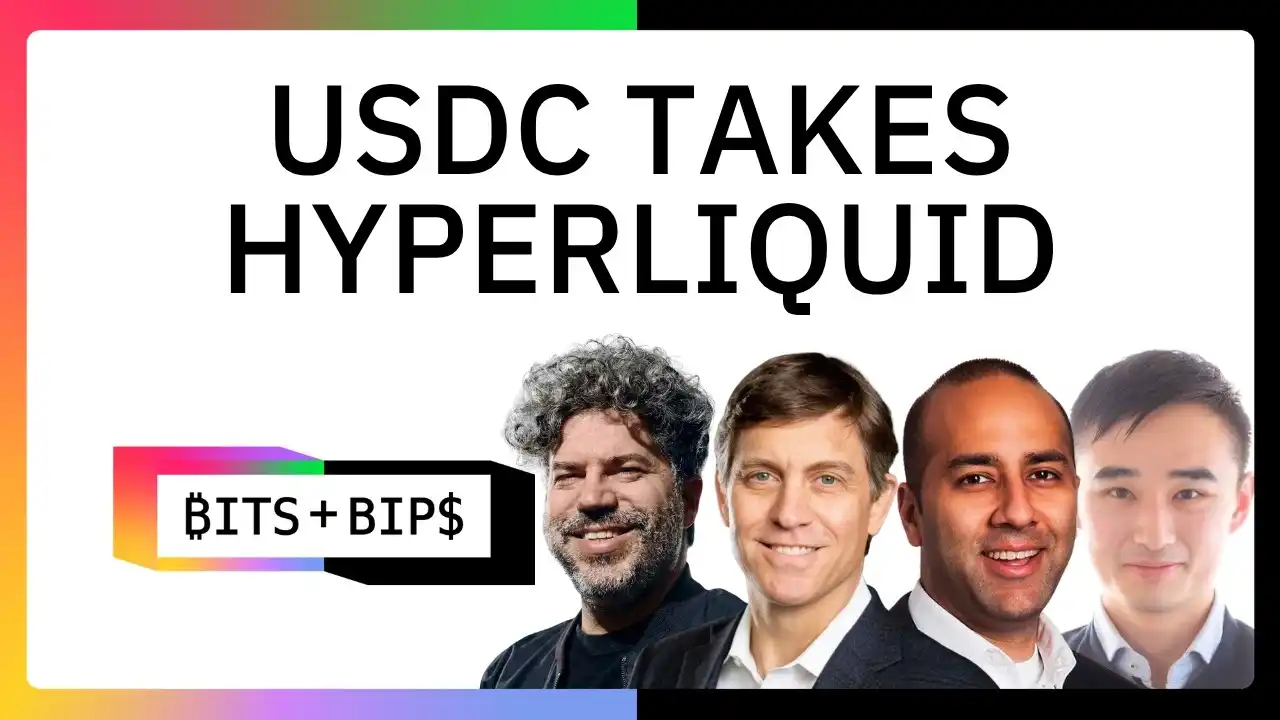
Interview with Circle's Chief Economist: USDC's Entry into Hyperliquid Benefits Circle and HYPE, Stablecoins Are Becoming Marginal Buyers of U.S. Treasuries

In an interview with Circle's Chief Economist Gordon Liao, the conversation covers the strategic significance of USDC replacing USDH as the reference asset on the decentralized perpetual exchange Hyperliquid. This shift, facilitated by Coinbase as the reserve manager and Circle providing technical infrastructure, aims to capture net interest income for the platform, with 90% of reserve earnings directed back to Hyperliquid for HYPE token buybacks. Liao discusses how stablecoins like USDC, with their substantial on-chain settlement volumes (e.g., $21 trillion in Q1 2026), are emerging as marginal buyers of U.S. Treasuries, concentrating on short-term debt and effectively reducing the weighted duration of the market, which may provide underlying support for long-term rates. The dialogue also explores the evolving nature of stablecoins as both a medium of exchange and a vehicle for capital and collateral liquidity. Additionally, the panel touches on the CLARITY Act's legislative progress, noting compromises around "activity-based rewards" and remaining hurdles like ethics concerns. On AI, there's debate over value capture, with predictions that distribution and application layers, rather than foundational model companies like OpenAI, will accrue most value. Regarding the bond market, Liao attributes the rise in 30-year yields primarily to an increased term premium (around 80 bps) driven by supply-demand dynamics, including fiscal expansion and changing investor demand, rather than expectations of Fed rate hikes.

marsbitHá 55m

Interview with Circle's Chief Economist: USDC's Entry into Hyperliquid Benefits Circle and HYPE, Stablecoins Are Becoming Marginal Buyers of U.S. Treasuries

marsbitHá 55m

Trading

Spot
Futuros

Artigos em Destaque

Como comprar ADA

Bem-vindo à HTX.com!Tornámos a compra de Cardano (ADA) simples e conveniente.Segue o nosso guia passo a passo para iniciar a tua jornada no mundo das criptos.Passo 1: cria a tua conta HTXUtiliza o teu e-mail ou número de telefone para te inscreveres numa conta gratuita na HTX.Desfruta de um processo de inscrição sem complicações e desbloqueia todas as funcionalidades.Obter a minha contaPasso 2: vai para Comprar Cripto e escolhe o teu método de pagamentoCartão de crédito/débito: usa o teu visa ou mastercard para comprar Cardano (ADA) instantaneamente.Saldo: usa os fundos da tua conta HTX para transacionar sem problemas.Terceiros: adicionamos métodos de pagamento populares, como Google Pay e Apple Pay, para aumentar a conveniência.P2P: transaciona diretamente com outros utilizadores na HTX.Mercado de balcão (OTC): oferecemos serviços personalizados e taxas de câmbio competitivas para os traders.Passo 3: armazena teu Cardano (ADA)Depois de comprar o teu Cardano (ADA), armazena-o na tua conta HTX.Alternativamente, podes enviá-lo para outro lugar através de transferência blockchain ou usá-lo para transacionar outras criptomoedas.Passo 4: transaciona Cardano (ADA)Transaciona facilmente Cardano (ADA) no mercado à vista da HTX.Acede simplesmente à tua conta, seleciona o teu par de trading, executa as tuas transações e monitoriza em tempo real.Oferecemos uma experiência de fácil utilização tanto para principiantes como para traders experientes.

1.2k Visualizações TotaisPublicado em {updateTime}Atualizado em 2025.03.21

Como comprar ADA

Discussões

Bem-vindo à Comunidade HTX. Aqui, pode manter-se informado sobre os mais recentes desenvolvimentos da plataforma e obter acesso a análises profissionais de mercado. As opiniões dos utilizadores sobre o preço de ADA (ADA) são apresentadas abaixo.

活动图片