Создателя системы привязки курса USTC к $1 наградят $250 000

cryptonews.ruPublicado em 2022-06-18Última atualização em 2024-08-18

Представители криптосообщества объявили награду $250 000 за решение проблемы, связанной с привязкой к $1 курса некогда стейблкоина TerraClassicUSD (USTC).

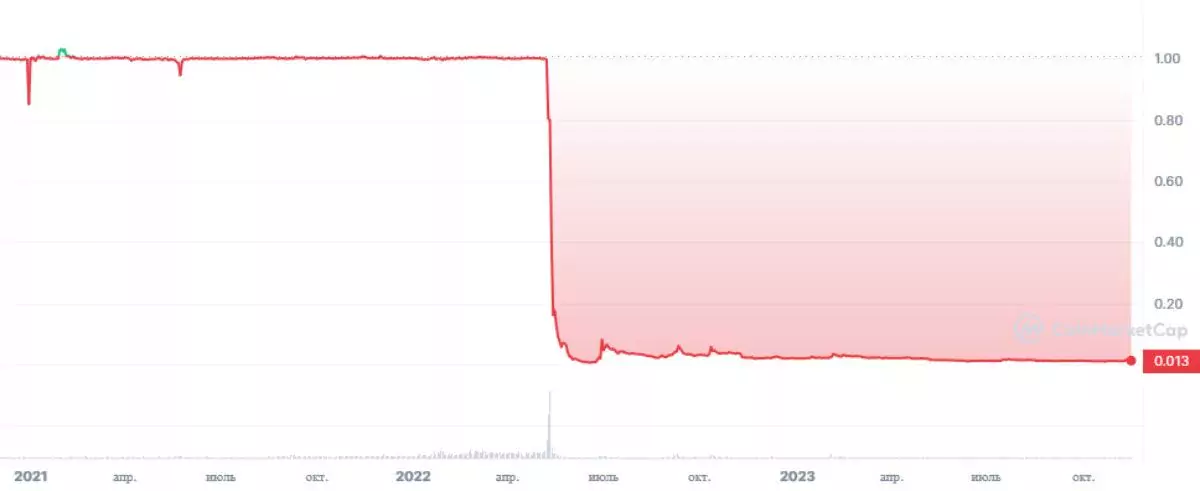
Цена Terra USD (UST), впоследствии переименованного в TerraClassicUSD, рухнула в мае 2022 года в результате коллапса экосистемы Terra. После изначального краха цена актива повысилась в несколько раз и достигла $0,016, но более на 98% уступает показателю, зафиксированному до дампа.

Крах курса TerraClassicUSD

Члены криптосообщества Terra Luna Classic решили всерьёз взяться за восстановление экосистемы и предложили всем желающим попробовать свои силы в баунти-кампании, направленной на поиск способа привязки стоимости USTC к $1. Человек, который придумает эффективный метод, получит в награду $250 000.

Система обеспечения стабильности курса TerraClassicUSD должна быть:

  • Безопасной;
  • Устойчивой;
  • Прозрачной;
  • Децентрализованной;
  • Экономически жизнеспособной;
  • Масштабируемой;
  • Интероперабельной.

Автор подобной системы должен предоставить белую книгу с описанием механизма привязки цены USTC к $1, техническую документацию, результаты аудиторской проверки и информацию о сроке реализации проекта. В случае успеха TerraClassicUSD снова станет стейблкоином и, как надеются авторы инициативы, будет защищён от ценовых флуктуаций.

Criptomoedas em alta

Leituras Relacionadas

Deep Insight: Decentralized Inference is Not Hype, but a Key Track for AI to Break Through Centralized Monopoly

Decentralized Reasoning: Beyond the Hype, a Key to Breaking AI's Centralized Monopoly A future scenario where a powerful AI model is banned by a major government illustrates the core value proposition of decentralized AI: resistance to censorship. The core bet of decentralized inference networks is mitigating this risk, with other benefits like cost being secondary. The path is extremely difficult, involving four key challenges: 1. **Running Massive Models:** Distributing a single model across a decentralized GPU swarm requires sophisticated techniques like pipeline and speculative decoding to overcome crippling network latency, aiming for usable speeds (e.g., 30-40 tokens/second). 2. **Proving Model Integrity:** Verifying that a node runs the correct model is critical. Solutions range from cryptographically secure but slow ZKML to faster, economically-secure methods like statistical fingerprints, deterministic re-execution, or live-weight proofs, each involving trade-offs between integrity, latency, and cost. 3. **Ensuring Prompt Privacy:** Simply sharding a model does not protect user inputs from nodes. Robust solutions currently require trusted hardware (TEEs) or advanced cryptography (FHE), which are not yet widely deployed in consumer swarms. 4. **Building a Real Market:** Identifying the ideal customer is tough. Beyond speculative AI agents, the viable market currently consists of startups embedding AI and projects needing batch processing (e.g., synthetic data generation), where decentralized aggregation can be an advantage over low-latency needs. The article analyzes several projects tackling these problems, such as Dolphin Network (live-weight proofs), Inference.net (statistical verification), Morpheus (TEE-based), and Darkbloom (Apple Secure Enclave). It provides a framework: decentralization is a "tax" for latency-sensitive applications (e.g., chat) but a potential supply-side advantage for throughput-oriented tasks (e.g., batch processing). The long-term vision is a closed data loop where decentralized inference generates valuable data (traces, preferences) to feed decentralized training networks, which in turn produce better open-weight models for the inference networks. A due diligence checklist advises focusing on projects that: are truly decentralized at specific layers; have a credible integrity method; offer real cost benefits; ensure genuine privacy; handle node reliability; have paying users; and are built by teams with deep AI expertise. The ultimate goal should be products that appeal beyond the crypto-native audience, using crypto mechanisms invisibly to deliver better cost, performance, or privacy.

Foresight NewsHá 7m
Deep Insight: Decentralized Inference is Not Hype, but a Key Track for AI to Break Through Centralized Monopoly

Foresight NewsHá 7m

The Final Piece of Franklin Templeton's Crypto Ambition

Franklin Templeton Completes Crypto Ambition with Acquisition of 250 Digital On June 22, Franklin Templeton announced the acquisition of 250 Digital and established Franklin Crypto, a new division focused on actively managed cryptocurrency strategies for institutional investors. The unit is led by Christopher Perkins and Seth Ginns. This acquisition marks a key piece in Franklin Templeton's multi-year crypto strategy, which began in 2018 with a digital assets team. The firm's crypto product suite now spans three layers: tokenized funds like the blockchain-based money market fund BENJI (~$831M AUM); a series of passive ETFs including Bitcoin (EZBC, ~$368M), Ethereum (EZET), XRP (XRPZ, ~$252M), Solana (SOEZ), and a multi-crypto index fund (EZPZ); and the newly added active management strategies from Franklin Crypto. The company has also expanded its crypto ecosystem through investments in projects like Ethena and Crossmint, and collaborations with blockchains such as Aptos and Sui. With approximately $18B in digital asset AUM and a total firm AUM of ~$1.78T, Franklin Templeton is positioning itself as a comprehensive crypto asset manager for pensions and sovereign wealth funds. In contrast, competitor Fidelity Investments has taken a different path, focusing early on building its own custody and trading infrastructure. Fidelity's Bitcoin ETF (FBTC) holds over $11B, significantly larger than Franklin Templeton's equivalent offering. Both giants' moves underscore the deepening trend of traditional finance entering the crypto space.

Foresight NewsHá 31m

The Final Piece of Franklin Templeton's Crypto Ambition

Foresight NewsHá 31m

Trading

Spot
Futuros

Artigos em Destaque

Como comprar USTC

Bem-vindo à HTX.com!Tornámos a compra de Terra Classic USD (USTC) simples e conveniente.Segue o nosso guia passo a passo para iniciar a tua jornada no mundo das criptos.Passo 1: cria a tua conta HTXUtiliza o teu e-mail ou número de telefone para te inscreveres numa conta gratuita na HTX.Desfruta de um processo de inscrição sem complicações e desbloqueia todas as funcionalidades.Obter a minha contaPasso 2: vai para Comprar Cripto e escolhe o teu método de pagamentoCartão de crédito/débito: usa o teu visa ou mastercard para comprar Terra Classic USD (USTC) instantaneamente.Saldo: usa os fundos da tua conta HTX para transacionar sem problemas.Terceiros: adicionamos métodos de pagamento populares, como Google Pay e Apple Pay, para aumentar a conveniência.P2P: transaciona diretamente com outros utilizadores na HTX.Mercado de balcão (OTC): oferecemos serviços personalizados e taxas de câmbio competitivas para os traders.Passo 3: armazena teu Terra Classic USD (USTC)Depois de comprar o teu Terra Classic USD (USTC), armazena-o na tua conta HTX.Alternativamente, podes enviá-lo para outro lugar através de transferência blockchain ou usá-lo para transacionar outras criptomoedas.Passo 4: transaciona Terra Classic USD (USTC)Transaciona facilmente Terra Classic USD (USTC) no mercado à vista da HTX.Acede simplesmente à tua conta, seleciona o teu par de trading, executa as tuas transações e monitoriza em tempo real.Oferecemos uma experiência de fácil utilização tanto para principiantes como para traders experientes.

36 Visualizações TotaisPublicado em {updateTime}Atualizado em 2026.06.02

Como comprar USTC

Discussões

Bem-vindo à Comunidade HTX. Aqui, pode manter-se informado sobre os mais recentes desenvolvimentos da plataforma e obter acesso a análises profissionais de mercado. As opiniões dos utilizadores sobre o preço de USTC (USTC) são apresentadas abaixo.

活动图片