一个归零的土狗突然拉了一百倍引发的思考

币界网Publicado em 2024-08-16Última atualização em 2024-08-16

币界网报道:

一个归零的土狗突然拉了一百倍引发的思考

现在的SOL说他用户多数据好,其实都是冲meme的人顶着,如果这些流量撤了,其实数据也就一般。现在冲土狗已经没有之前的感觉了,记得前些年,我记得flkoi刚出来时候,21年我朋友天天给我CX,说这个币绝对牛,当时我是对土狗不屑一顾的,但是看着他账户一天翻一倍,一天涨一点,我确实心动,然后就也买了一些,给粉丝也说了一下,然后研究过后感觉确实是做事的项目方,愿意花大钱去做宣发,大家了解过的应该都知道,floki的营销是做的很牛逼的,然后就是账户水涨船高。当时是大家看好一个币,都愿意去CX,去宣传,共同努力把这个币做起来,做出圈,大家都有的赚。

但是现在呢,土狗完全变成了场内PVP,尤其是pump出来之后,阿猫阿狗都能出来发土狗,群友创业项目多不胜数。不要信那些天天暴富的天天赚麻的,有这好事能轮到你?一买就是十倍百倍的币,谁能做到?

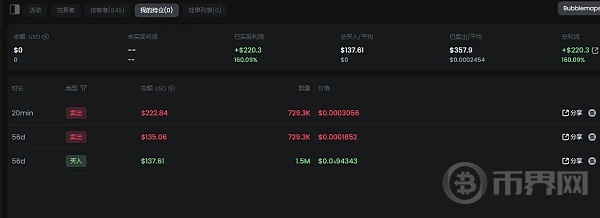
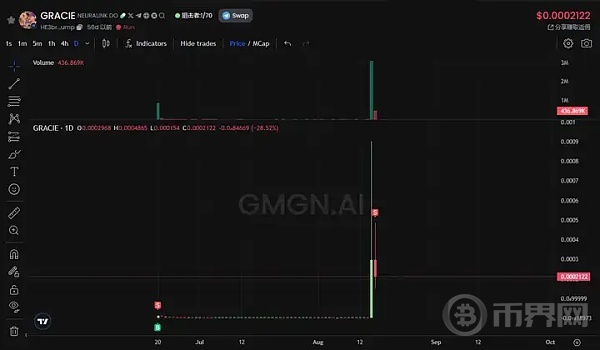
就拿我今天这个GRAICE来说,开盘我冲了1Sol,买完腰斩了,本想着就不管了,但是后来回本了,我就出了1S,可能是因为SOL涨了点,所以没卖干净,留了一点点仓位,后来直接归零了,市值只有仅仅3000不到,就剩了2U,但是今天拉了一百多倍,高点应该有个将近三百倍,但是我还没睡醒没看见,看见的时候只要一百多倍了,然后卖了两百U。如果跌倒2U加仓呢,谁敢加?明显就归零了谁敢加?

所以就有几个问题,这种要不是中间SOL涨了,我肯定是一点不留的,如果换成你们,有几个能拿住的呢?即使拿住了归零了敢加仓吗?

v2-a9681b59b1451c45f992156f15019a7a_720w.webpv2-d6611840fe40d5159cc4f47bd2fda656_720w.webp

冲进去了腰斩了,跑还是不跑?

腰斩后又回本了,跑还是不跑?

回本后又腰斩了,跑还是不跑?

腰斩后快归零了,跑还是不跑?

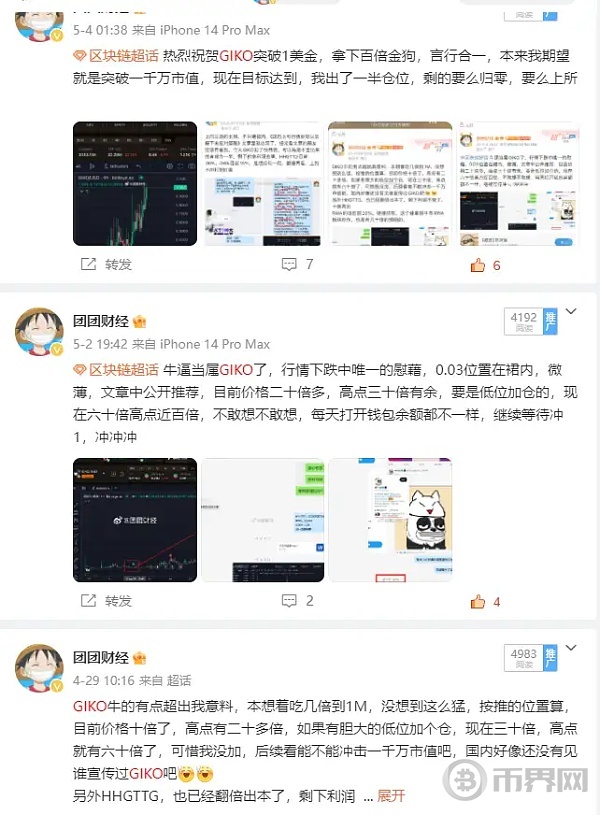
今年到现在只买过一个成功的土狗就是GIKO,底部上来吃了将近百倍,后续清仓后波段也吃了好几拨,这个土狗我在群里包括社交平台都是公开发了的,每次上车下车的点位都有提醒。至于其他的火的土狗,我也买了,要么是卖飞,要么是冲高止损走了。想每个都抓住,我承认我做不到,你们谁能做到呢?

v2-387fb228de414d6377f80dcfe99f00a8_720w.webp

SOL现在感觉就是个巨大的养猪盘子,做出来一个造富效应,会有成千上完的散户去冲下一个,然后开始收割,割的差不多了,再出来一个金狗,继续割,只要有暴富的例子在,韭菜不会断的。

所以,至于大家,除非你有过硬的链上知识,会盯钱包,会盯链上动作,会观察土狗的一个潜力,可以试着玩。如果不会这些,还是老老实实拿现货吧,玩这个迟早割进去的,或者就是你有无限子弹,每个都冲,总能碰见牛逼的,那些聪明钱也不是每个都中的,而是无数次的失败换来的成功,想要收获总要付出代价的。

至此,小赌怡情,大赌伤身,强赌灰飞烟灭。

后期会给大家带来其他赛道的龙头项目分析。感兴趣的可以点个关注。我也会不定期整理一些前沿资询和项目点评,欢迎各位志同道合的币圈人一起来探索。有问题可以评论提问或者私信

Criptomoedas em alta

Leituras Relacionadas

Trillion-Dollar Pension Fund Entry? Franklin Bitcoin Dividend Reinvestment ETF Comes with a Built-in Selling Pressure Ceiling

Franklin Templeton has filed to launch two ETFs that embed a "default configuration" logic into Bitcoin investment, aiming to tap into massive pension fund flows. These "Bitcoin Dividend Reinvestment Index ETFs" will initially hold 95% equities and 5% Bitcoin, automatically reinvesting stock dividends to buy Bitcoin. However, a quarterly rebalancing rule forces selling of Bitcoin if its allocation exceeds 5%, capping its maximum holding at 20%. While the product cleverly circumvents advisor reluctance and compliance hurdles by labeling itself as a U.S. equity product, its actual Bitcoin buying power is minimal. Given low dividend yields (e.g., ~1% for broad market indices), annual Bitcoin purchases from a fund the size of Franklin's existing Bitcoin ETF would be a mere $3.6 million—negligible against Bitcoin's daily trading volume. Crucially, during bull markets, the fund becomes a programmed, passive *seller* of Bitcoin, potentially creating sustained sell pressure if many similar funds emerge. The strategy leverages investor inertia and automatic enrollment, similar to the success of target-date funds in 401(k) plans. It also uses an offshore Cayman subsidiary for holding Bitcoin and raises a tax complication where investors must pay taxes on dividends they never receive as cash. Although recent U.S. regulatory changes allow crypto in retirement plans, widespread adoption as a default option faces legal hurdles. The core premise remains: the system doesn't need to convince anyone to buy Bitcoin actively; it simply relies on people doing nothing.

marsbitHá 4m

Trillion-Dollar Pension Fund Entry? Franklin Bitcoin Dividend Reinvestment ETF Comes with a Built-in Selling Pressure Ceiling

marsbitHá 4m

Bitcoin Hits 20-Month Low as Largest Bull Suffers $15 Billion Paper Loss

Bitcoin Hits 20-Month Low as Major Bull Loses $15 Billion On June 25th, Bitcoin fell below $60,000, hitting a low of $58,030—its lowest level since October 2024. The sell-off triggered over $1 billion in leveraged liquidations in 24 hours, with longs accounting for $788 million. This marks a more than 53% decline from the October 2025 all-time high of $126,198. A critical factor in the downturn is the weakening position of MicroStrategy, the largest corporate Bitcoin holder. With 847,363 BTC at an average cost of $75,651, the company now faces over $14.6 billion in unrealized losses. Its core financing flywheel—raising capital to buy Bitcoin—is stalling. Its variable-rate preferred shares (STRC), a key fundraising tool, have fallen 25% below their $100 target. This raises doubts about its ability to continue providing steady institutional demand for Bitcoin. Simultaneously, U.S. spot Bitcoin ETFs are experiencing significant outflows, with a single-day net outflow of $469 million on June 24th. This represents the most severe sustained capital flight since their launch. The macroeconomic backdrop remains restrictive, with persistent inflation delaying expected Fed rate cuts. Analysts note a shift in capital allocation, with institutional funds moving away from crypto towards AI infrastructure stocks. Immediate pressure comes from approximately $10 billion worth of Bitcoin options expiring on June 26th, which could increase market volatility. The combined effect of these factors—eroding core demand pillars, macro headwinds, and capital rotation—has decisively broken the $60,000 support level.

Foresight NewsHá 10m

Bitcoin Hits 20-Month Low as Largest Bull Suffers $15 Billion Paper Loss

Foresight NewsHá 10m

STRC Falls Below $80, Can Conservative Investors Still Buy the Dip?

The article analyzes whether the STRC (a perpetual preferred stock issued by MicroStrategy) presents a buying opportunity after its price fell below its $100 par value to around $80, offering a seemingly high yield of 13-15%. The core argument is that STRC's discount reflects market skepticism about the sustainability of MicroStrategy's capital structure model, not just temporary panic. This model relies on issuing securities (like STRC) to raise funds to buy more Bitcoin, a "flywheel" that works in a bull market. The recent small sale of BTC to fund dividends, while minor, broke the psychological "never sell" anchor and signaled potential strain. Key risks identified are not a traditional Ponzi collapse but a potential breakdown in the financing narrative: 1) If Bitcoin enters a deep bear market, crushing MicroStrategy's stock premium (mNAV), its ability to raise cheap capital weakens. 2) If STRC remains deeply discounted, it signifies permanently higher funding costs. 3) The high cash dividend yield represents a significant ongoing expense. 4) If selling BTC to pay dividends becomes routine, the bullish narrative reverses. The conclusion is that STRC is not a risk-free high-yield asset. It is a high-coupon bet on whether MicroStrategy's BTC treasury financing model can withstand a bear market. Buying it is a wager that the market will continue to believe in and fund this structure at acceptable costs. The current price asks if this cycle's "casualty" might be a BTC treasury company's融资 model itself.

marsbitHá 26m

STRC Falls Below $80, Can Conservative Investors Still Buy the Dip?

marsbitHá 26m

Why Do Crypto Projects Keep Changing Their Names?

**Why Do Crypto Projects Keep Changing Names?** In the crypto world, changing a project's name is common—over 16% of projects have done so, including major ones like Polygon (formerly Matic Network). This contrasts sharply with traditional businesses, which fiercely protect brand equity. The core reason is that in crypto, brand loyalty is often weak. Users are frequently investors, airdrop hunters, or yield seekers, not traditional consumers. A name associated with price crashes, hacks, or failed narratives becomes a liability, not an asset. Renaming can be a strategic reset to shed this baggage. Name changes serve as a potent marketing tool. They can signal a genuine pivot in strategy or scope (e.g., EthSign dropping "Eth" as it expanded). However, they are often used to "narrative surf," rebranding to align with hot trends like AI, RWA, or the metaverse (e.g., Elrond → MultiversX). Critically, renaming is also a PR tactic to distance a project from past failures like security breaches (e.g., Anyswap → Multichain). The most significant risk emerges when a name change is coupled with a token migration or swap. This process can allow projects to reset exchange price charts, erase visible historical downtrends, and create an illusion of a fresh start. It often facilitates liquidity resets, where low float can be exploited for pumps. More alarmingly, migrations sometimes mask overhauls to tokenomics, introducing substantial new token supply through "ecosystem funds" or "node rewards," effectively diluting existing holders. The fundamental issue isn't renaming itself, which can be valid for strategic evolution. The problem is when it functions as an escape from history—a way to avoid accountability for past mistakes, failed promises, and poor performance. When a project announces a rebrand, the critical questions are: What tangible new capability or strategy does it represent? Has the tokenomics changed? And what part of its past is it most trying to make users forget?

marsbitHá 32m

Why Do Crypto Projects Keep Changing Their Names?

marsbitHá 32m

A Trillion-Dollar Entry Point for Pension Funds? Franklin's Bitcoin Dividend Reinvestment ETFs Come with a Built-In Selling Pressure Ceiling

Franklin Templeton filed for two ETFs on June 18 that embed a "default option" logic into Bitcoin investing. These funds—the Franklin US Equity Bitcoin Dividend Reinvestment Index ETF and the Franklin US Innovative Equity Bitcoin Dividend Reinvestment Index ETF—aim to automatically allocate a portion of investor dividends to Bitcoin, initially with a 95% stock and 5% Bitcoin allocation. The mechanism is designed for financial advisors, not retail investors. By packaging Bitcoin exposure within a standard equity fund label, advisors can bypass internal compliance restrictions against direct cryptocurrency allocation for their clients. Dividends from the stock holdings are automatically used to buy Bitcoin via spot ETFs, futures, or options. However, the structure imposes strict rebalancing rules: if Bitcoin's allocation exceeds 5%, it is trimmed back to 4.5% quarterly, with a hard cap of 20%. This means the fund becomes a systematic seller during Bitcoin price rallies. Realistically, the potential buying pressure is minimal. Based on dividend yields (approximately 1.05% for broad market, 0.52% for innovative equity), the annual inflow into Bitcoin would be a tiny fraction of the fund's assets. For comparison, Franklin's existing Bitcoin ETF ($359 million AUM) would generate only about $3.6 million in annual Bitcoin purchases—negligible against Bitcoin's daily trading volume. The innovative equity fund, heavily weighted in low-dividend stocks like Nvidia, would have even weaker buying power. The product utilizes an offshore Cayman subsidiary to hold Bitcoin, a common compliance tactic for commodity exposure in mutual funds. A key drawback for investors is the tax liability: they must pay taxes on dividends that are automatically converted into Bitcoin, requiring out-of-pocket cash for a gain they never directly receive. For the strategy to scale significantly, such funds would need to become a default or near-default option in retirement plans like 401(k)s. Recent regulatory moves, including a Trump executive order and a Department of Labor proposal offering fiduciary safe harbors for including crypto assets, could pave the way. However, widespread employer adoption likely awaits further legal clarity. Ultimately, the fund's model leverages investor inertia and automated systems, rather than convincing anyone to actively choose Bitcoin. While it creates a new, albeit small, structural buyer, its rebalancing rules also establish a built-in "selling ceiling" that could dampen price upside if similar products proliferate.

Foresight NewsHá 34m

A Trillion-Dollar Entry Point for Pension Funds? Franklin's Bitcoin Dividend Reinvestment ETFs Come with a Built-In Selling Pressure Ceiling

Foresight NewsHá 34m

Trading

Spot
Futuros

Artigos em Destaque

O que é MEME 2.0

Memecoin 2.0: A Ascensão do $MEME 2.0 no Mundo das Criptomoedas Introdução No panorama em constante evolução das criptomoedas, um novo concorrente surgiu. Memecoin 2.0, simbolizado como $MEME 2.0, eleva o conceito de moedas meme a um novo nível emocionante. Como um subproduto do Memecoin original, este projeto capturou a atenção da comunidade crypto ao mudar o foco de incentivos financeiros típicos para uma experiência envolvente e divertida. Operando na blockchain Ethereum, Memecoin 2.0 redefine audaciosamente o envolvimento da comunidade na esfera crypto. O que é Memecoin 2.0, $MEME 2.0? No seu cerne, Memecoin 2.0 é um projeto de criptomoeda que prioriza o espírito comunitário e a diversão associada à cultura meme. Ao contrário das criptomoedas convencionais, que se concentram em casos de uso práticos e benefícios tangíveis, Memecoin 2.0 distingue-se ao abraçar o lado mais leve da moeda digital. O projeto existe sem promessas de utilidade, um roteiro estruturado ou retornos financeiros, focando em vez disso em fomentar uma comunidade vibrante centrada em memes e no prazer partilhado. Ao fazer isso, aproveita a crescente tendência da cultura meme no espaço online, tornando-se num jogador único no mundo dos ativos digitais. Criador do Memecoin 2.0, $MEME 2.0 Apesar de extensa pesquisa sobre as origens do Memecoin 2.0, a identidade explícita do seu criador continua desconhecida. Esta anonimidade não é incomum na comunidade crypto, onde muitos projetos são liderados por indivíduos ou grupos que preferem ficar nos bastidores. A falta de informações publicamente disponíveis sobre o criador pode ser vista como um movimento estratégico, colocando os holofotes no envolvimento da comunidade em vez de na notoriedade individual dentro do espaço. Investidores do Memecoin 2.0, $MEME 2.0 As informações sobre os investidores ou o financiamento do Memecoin 2.0 são escassas. Esta ausência de detalhes pode sugerir que o projeto é autofinanciado ou que o seu foco na comunidade, em vez de estruturas de investimento tradicionais, atraiu um tipo diferente de apoiador. Como o mundo das moedas memes geralmente envolve mais envolvimento de base do que investimento institucional, esta abordagem alinha-se ao ethos de projetos orientados pela comunidade. Como Funciona o Memecoin 2.0, $MEME 2.0? O Memecoin 2.0 opera inteiramente na blockchain Ethereum, aproveitando as suas robustas características de segurança e escalabilidade. Ao aproveitar os pontos fortes da Ethereum, o Memecoin 2.0 pode oferecer um ambiente seguro para interações dos utilizadores enquanto assegura que as transações são eficientes e custo-efetivas. Uma das características únicas do Memecoin 2.0 reside na sua estrutura orientada pela comunidade. O valor e a popularidade do token $MEME 2.0 derivam da participação ativa dos seus utilizadores, em vez de uma utilidade inerente. Este design reforça o foco do projeto no aspecto de entretenimento das criptomoedas, implicando que o riso e o envolvimento da comunidade são as verdadeiras moedas que impulsionam o seu sucesso. Além disso, o projeto insere-se no ecossistema mais amplo das moedas meme, onde o valor de cada moeda meme oscila com base na cultura, nas tendências e no envolvimento da comunidade, em vez de nos princípios económicos tradicionais. Linhas do Tempo do Memecoin 2.0, $MEME 2.0 Para melhor entender a evolução e os marcos do Memecoin 2.0, aqui está uma linha do tempo que destaca eventos significativos na sua história: 2024: O início do Memecoin 2.0 é reconhecido como um desdobramento do Memecoin original, estabelecendo-se dentro do contexto próspero das moedas meme enquanto opera na blockchain Ethereum. 13 de Julho de 2024: O Memecoin 2.0 posiciona-se oficialmente como uma moeda meme centrada na comunidade na rede Ethereum, enfatizando a sua abordagem centrada no entretenimento que convida os utilizadores a participar e envolver-se no seu crescimento. Pontos Chave Sobre o Memecoin 2.0, $MEME 2.0 Várias características críticas definem o Memecoin 2.0: Abordagem Centrada na Comunidade: A missão primária do Memecoin 2.0 é criar uma experiência comunitária divertida e envolvente, capitalizando o prazer coletivo derivado da cultura meme. Construído na Ethereum: Operar na blockchain Ethereum fornece ao projeto uma infraestrutura essencial que garante segurança e escalabilidade. Falta de Utilidade ou Roteiro: Numa notável divergência das criptomoedas tradicionais, o Memecoin 2.0 não promete quaisquer características utilitárias ou retornos financeiros, reafirmando o seu compromisso com o envolvimento da comunidade e a participação social. Foco na Cultura Meme: Ao abraçar os aspectos humorísticos e culturais do fenómeno meme, o Memecoin 2.0 fornece uma plataforma para que os utilizadores se envolvam com a crypto offline e online. Contexto Adicional: A Importância das Moedas Meme As moedas meme emergiram como uma classe distinta de criptomoeda, frequentemente impulsionadas pelo humor e por uma abordagem leve ao comércio. Estas moedas geralmente carecem de utilidade significativa ou roteiros de desenvolvimento, atraindo os utilizadores com a promessa de diversão, interação comunitária e relevância cultural. No panorama do ecossistema crypto mais amplo, as moedas meme revive a importância do envolvimento da comunidade, resistindo contra abordagens exclusivamente orientadas para o lucro. Projetos como o Memecoin 2.0 inauguram uma era em que o entretenimento pode harmonizar-se com aspirações financeiras, transformando a blockchain numa plataforma para criatividade e interação social. Conclusão O Memecoin 2.0, ou $MEME 2.0, representa uma nova onda de criptomoeda que prioriza o envolvimento da comunidade em detrimento de estruturas financeiras rígidas. Com um foco no humor e na interação social, capitaliza a fascinação em torno da cultura meme. Ao operar na blockchain Ethereum, o Memecoin 2.0 aproveita as capacidades da tecnologia, enquanto mantém um compromisso firme com o valor de entretenimento da moeda digital. À medida que o espaço em torno das criptomoedas continua a evoluir, o Memecoin 2.0 serve como um testemunho da ideia de que o futuro dos ativos digitais pode muito bem depender de experiências partilhadas, risadas e conexões comunitárias sólidas. No mundo imprevisível da crypto, talvez a alegria possa ser tão valiosa quanto o ganho financeiro tradicional.

38 Visualizações TotaisPublicado em {updateTime}Atualizado em 2024.12.03
O que é MEME 2.0

Como comprar MEME

Bem-vindo à HTX.com!Tornámos a compra de Memeland (MEME) simples e conveniente.Segue o nosso guia passo a passo para iniciar a tua jornada no mundo das criptos.Passo 1: cria a tua conta HTXUtiliza o teu e-mail ou número de telefone para te inscreveres numa conta gratuita na HTX.Desfruta de um processo de inscrição sem complicações e desbloqueia todas as funcionalidades.Obter a minha contaPasso 2: vai para Comprar Cripto e escolhe o teu método de pagamentoCartão de crédito/débito: usa o teu visa ou mastercard para comprar Memeland (MEME) instantaneamente.Saldo: usa os fundos da tua conta HTX para transacionar sem problemas.Terceiros: adicionamos métodos de pagamento populares, como Google Pay e Apple Pay, para aumentar a conveniência.P2P: transaciona diretamente com outros utilizadores na HTX.Mercado de balcão (OTC): oferecemos serviços personalizados e taxas de câmbio competitivas para os traders.Passo 3: armazena teu Memeland (MEME)Depois de comprar o teu Memeland (MEME), armazena-o na tua conta HTX.Alternativamente, podes enviá-lo para outro lugar através de transferência blockchain ou usá-lo para transacionar outras criptomoedas.Passo 4: transaciona Memeland (MEME)Transaciona facilmente Memeland (MEME) no mercado à vista da HTX.Acede simplesmente à tua conta, seleciona o teu par de trading, executa as tuas transações e monitoriza em tempo real.Oferecemos uma experiência de fácil utilização tanto para principiantes como para traders experientes.

280 Visualizações TotaisPublicado em {updateTime}Atualizado em 2026.06.02

Como comprar MEME

Discussões

Bem-vindo à Comunidade HTX. Aqui, pode manter-se informado sobre os mais recentes desenvolvimentos da plataforma e obter acesso a análises profissionais de mercado. As opiniões dos utilizadores sobre o preço de MEME (MEME) são apresentadas abaixo.

活动图片