Trillion-Dollar Pension Fund Entry? Franklin Bitcoin Dividend Reinvestment ETF Comes with a Built-in Selling Pressure Ceiling

marsbitPublicado em 2026-06-26Última atualização em 2026-06-26

Resumo

Franklin Templeton has filed to launch two ETFs that embed a "default configuration" logic into Bitcoin investment, aiming to tap into massive pension fund flows. These "Bitcoin Dividend Reinvestment Index ETFs" will initially hold 95% equities and 5% Bitcoin, automatically reinvesting stock dividends to buy Bitcoin. However, a quarterly rebalancing rule forces selling of Bitcoin if its allocation exceeds 5%, capping its maximum holding at 20%. While the product cleverly circumvents advisor reluctance and compliance hurdles by labeling itself as a U.S. equity product, its actual Bitcoin buying power is minimal. Given low dividend yields (e.g., ~1% for broad market indices), annual Bitcoin purchases from a fund the size of Franklin's existing Bitcoin ETF would be a mere $3.6 million—negligible against Bitcoin's daily trading volume. Crucially, during bull markets, the fund becomes a programmed, passive *seller* of Bitcoin, potentially creating sustained sell pressure if many similar funds emerge. The strategy leverages investor inertia and automatic enrollment, similar to the success of target-date funds in 401(k) plans. It also uses an offshore Cayman subsidiary for holding Bitcoin and raises a tax complication where investors must pay taxes on dividends they never receive as cash. Although recent U.S. regulatory changes allow crypto in retirement plans, widespread adoption as a default option faces legal hurdles. The core premise remains: the system doesn't need to convinc...

By: Thejaswini M A

Compiled by: Saoirse, Foresight News

The simplest way to control other people's money is to wait for them to let their guard down and pay less attention. A significant portion of financial institutions' profits is built purely on people's procrastination and inertia.

Years ago, two economists, Richard Thaler and Shlomo Benartzi, concluded that trying to persuade others through argument is futile. Rather than striving to win a debate, it's better to design rules that leverage the inertia of people's inaction to change their choices. Clearly, most people are too lazy to actively check an 'opt-out' box.

If signing up for a retirement savings plan required manually filling out forms, participation rates would be less than half. But once enrollment is set as the default, and opting out requires manual action, participation instantly surpasses 90%. The same logic applies to auto-renewing subscriptions: over half of paying users don't even use the service they're subscribed to. Last week, I subscribed to watch the FIFA World Cup, knowing full well I'd completely forget about the service after the tournament ended.

A key premise of this mechanism is that the fund holder and the person who designs the product allocation must be two different individuals. The employer selects the optional fund pool for the 401(k) pension, and the employee passively enters this allocation system.

On June 18th, Franklin Templeton filed an application to launch two ETFs, embedding this 'default allocation' logic into Bitcoin investment.

Looking at the broader capital landscape, the capital moat these products can create is actually minuscule.

Making the decision to buy Bitcoin itself is a major barrier hindering widespread adoption. Even though Trump's appearance at a Bitcoin industry conference briefly alleviated public concerns, this barrier still objectively exists.

Financial advisors need to actively allocate Bitcoin, explain the decision to clients and compliance departments, and bear all the loss risk if the price halves. Due to professional risk considerations, the vast majority of advisors deliberately avoid it and simply won't recommend Bitcoin to their clients.

Financial advisors build standardized portfolio models, independently select underlying funds, and clients passively hold the allocated assets. When clients review their holdings statements, they only see broad labels like 'US Large Cap Stocks, 40%' and don't delve into what assets are actually held. If the advisor uses this dividend reinvestment version of the fund, clients unknowingly hold Bitcoin.

This product is not designed to trick ordinary retail investors—institutions know retail investors actively check their holdings. This underlying architecture is actually tailor-made for financial advisors.

This is the core playbook of Wall Street. The massive $4 trillion target-date fund industry also grew using this logic: the default allocation itself is the product. As long as users choose inaction, they automatically hold the asset. Investors who manually enter codes to pick their own stocks are not covered by this logic, and Franklin isn't counting on these retail investors. The funds are truly targeting capital managed downstream by other professionals.

Dividend Reinvestment Plans (DRIPs) are the most effortless 'set-and-forget' tool in investing: when a stock pays a dividend, the money doesn't go into your account but automatically buys more of the same stock. You continuously add to what you already hold, with almost no effort required to manage it. That's what DRIP means.

Franklin has reversed this mechanism: its two funds—the Franklin U.S. Equity Bitcoin Dividend Reinvestment Index ETF and the Franklin U.S. Innovative Sectors Bitcoin Dividend Reinvestment Index ETF—will not use dividends to buy more stocks but will directly purchase Bitcoin.

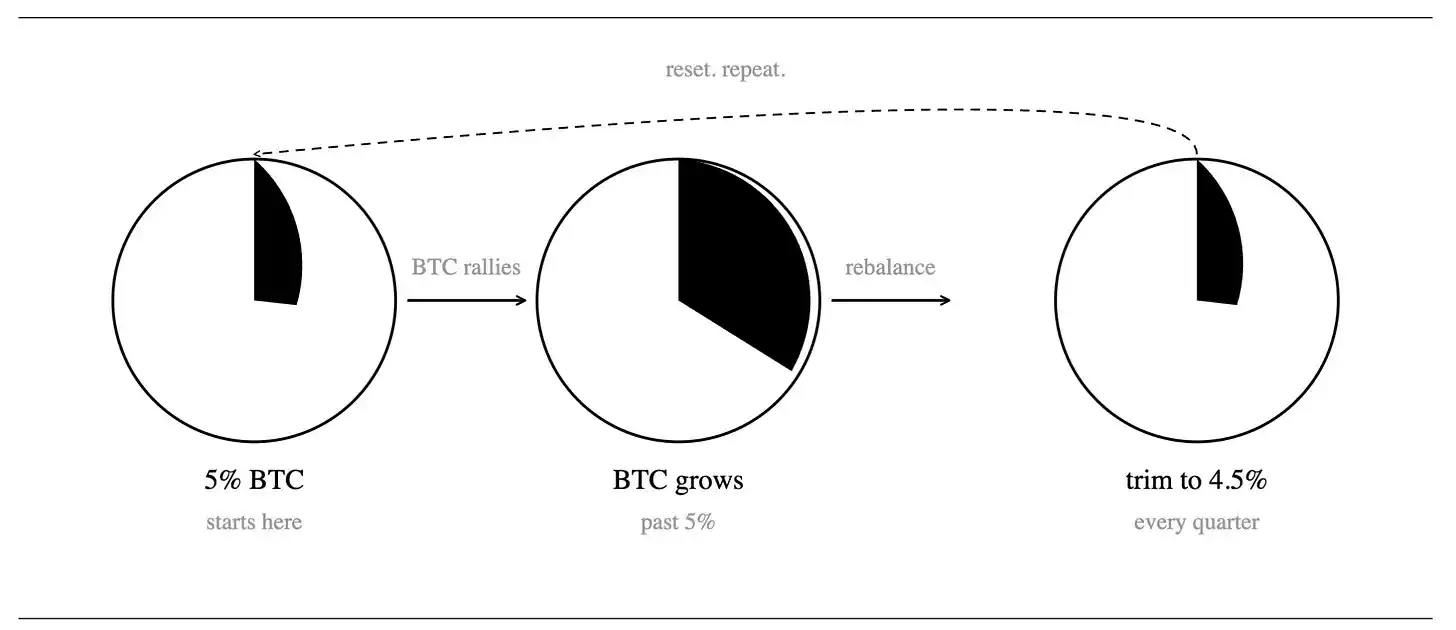
For the Bitcoin allocation, the funds plan to hold spot Bitcoin ETFs, Bitcoin futures, and options. The products feature asymmetric quarterly rebalancing rules: if Bitcoin rises significantly and its weight exceeds the 5% target line, it will be reduced to 4.5% during the next quarterly rebalance. A hard cap is also set, with Bitcoin holdings never exceeding 20% of the fund's total assets.

The initial allocation is 95% stocks and 5% Bitcoin. All dividends paid out quarterly will be used to increase the Bitcoin position. If the Bitcoin price rises and its allocation inflates, part of the Bitcoin will be sold during the quarterly rebalancing to bring the allocation back down to 4.5%, with the proceeds from the sale flowing back into stock assets.
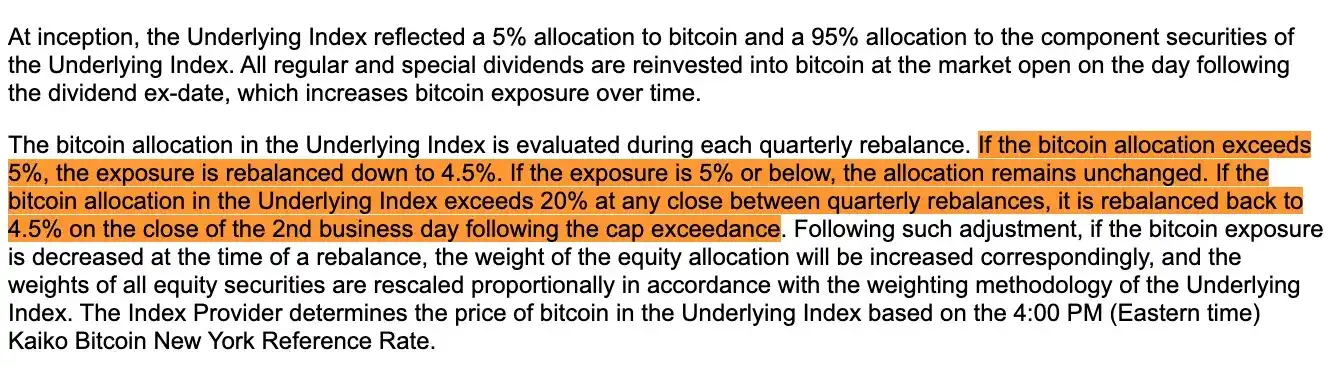
Even if Bitcoin's price surges between two rebalancing periods, its share in the fund will never break through the 20% red line.

To bypass numerous regulatory processes, all Bitcoin held by the fund will be custodied by a wholly-owned Franklin subsidiary in the Cayman Islands, with that subsidiary handling the configuration using spot cryptocurrencies, futures, and options.

Both funds track custom indices designed by VettaFi. Franklin plans to launch them officially on September 1st; the fee section in the filing is blank, and the management fee has not been announced yet.

Setting Aside Rosy Expectations, Facing Reality

While it seems to connect to the Wall Street system, adding stable Bitcoin buyers with bright prospects, calculating the real numbers reveals that the so-called incremental buying is merely a trickle.

The annualized dividend yield for a broad US stock index is 1.05%, while for the innovative sectors index, it's only 0.52%. Both funds start with a 95% stock + 5% Bitcoin allocation, and only dividends from the stock portion are used to buy Bitcoin. In simple terms, the broad-based fund can only allocate about 1% of its total assets annually to buy Bitcoin, and the innovative fund only 0.5%.
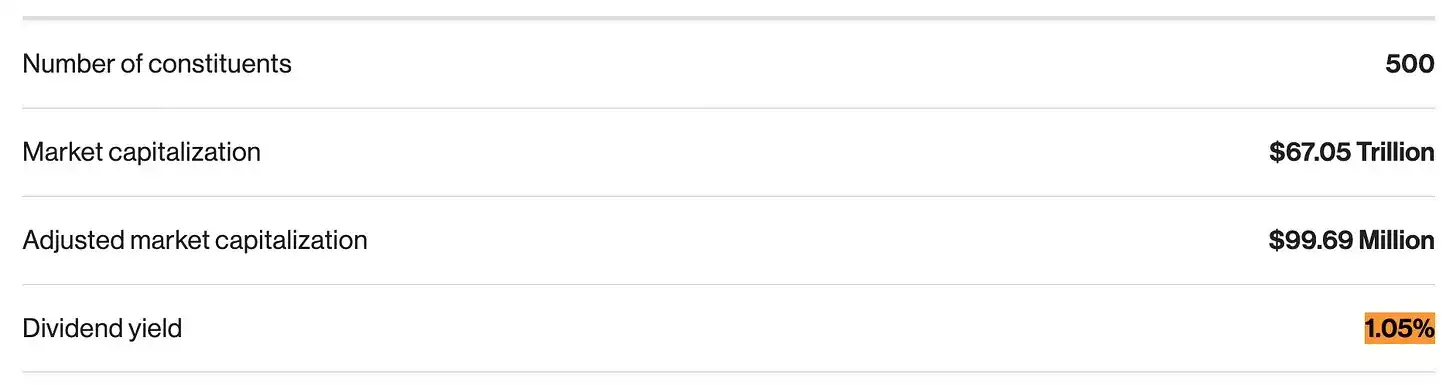
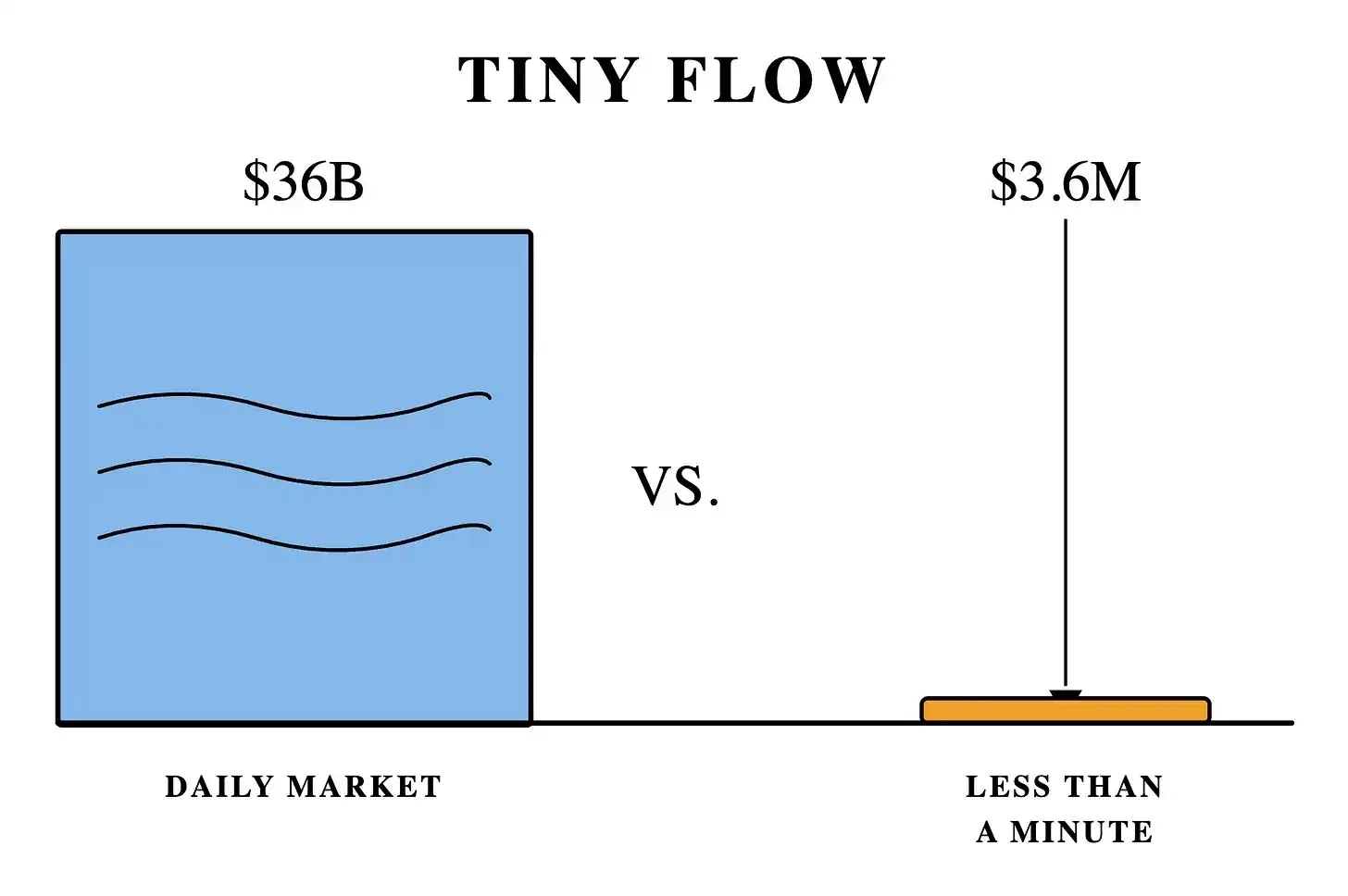
Based on Franklin's existing Bitcoin ETF (size $359 million), the corresponding annual incremental buying power for Bitcoin is only $3.6 million. With Bitcoin's average daily trading volume around $36 billion, the fund's entire year of buying can be absorbed by the market in less than a minute.
The design of the innovative sectors fund harbors deeper flaws: it holds heavy positions in stocks like Nvidia, Apple, and Microsoft, which pay very low or no dividends. The fund relies entirely on stock dividends to buy Bitcoin, meaning it lacks a steady cash flow for continuous accumulation. Coupled with the reverse mechanism of quarterly rebalancing, once Bitcoin's share exceeds 5%, it must be reduced to 4.5%. The higher Bitcoin rises, the harder the fund sells. In a bull market, the selling pressure from continuous sales would easily offset the tiny buying increment from meager dividends. This product, by its underlying design, is destined to struggle with holding an appreciating asset long-term.

On days when Bitcoin performs well, this fund becomes a passive seller instead.

Why? Index funds are forced into passive trading by the market. Traders know the fixed times and targets for index buying and selling, allowing them to front-run for profit. Franklin's two funds恰恰 create the opposite situation: they are programmed, passive, continuous selling tools. The funds are fixed to buy Bitcoin the day after dividends are received and sell uniformly each quarter during rebalancing. Short-term traders can accurately predict these operational nodes, harvesting profits from the fund on both the buy and sell sides.

The selling pressure from a single fund of similar size is minuscule, like a mosquito bite. But once a whole category of similar products forms, the cumulative selling pressure becomes significant. If a large amount of similar capital floods the market, every Bitcoin price rise would encounter continuous selling, creating a difficult-to-break price ceiling.
Beyond this core 'default allocation' playbook, the filing also cleverly hides three other design elements:

  1. Compliance avoidance. Many financial institutions' internal rules prohibit crypto allocation, but this fund is externally labeled merely as a 'US large-cap equity product.' Advisors can allocate it for clients compliantly, indirectly achieving Bitcoin exposure.
  2. Offshore structure compliance solution. Bitcoin is custodied by a wholly-owned Cayman Islands subsidiary, a common compliance method for public funds holding commodity-like assets. It doesn't breach the fund's original tax qualifications, is legal, and widely used in the industry.
  3. Tax legacy issue. Dividends are automatically converted into Bitcoin before they reach you, but those dividends are still taxable. The money is already locked into crypto assets, forcing you to use your own cash to pay taxes on dividends that never landed in your account.

For this model to truly take shape, such funds must become the default allocation for pensions or be positioned right next to the default asset pool. After the 2006 Pension Protection Act, employers gained legal support to auto-enroll employees with default allocations to corresponding funds.

Back then, only 5% of 401(k) plans offered target-date funds; now coverage is 96%, with total industry assets exploding from $100 billion to $4 trillion.

In August 2025, Trump signed an executive order officially lifting restrictions, allowing 401(k) pensions to allocate to cryptocurrencies. In March 2026, the U.S. Department of Labor released a draft rule stating that if plan fiduciaries include alternative assets like cryptocurrencies in the pension's optional list, they can enjoy liability protection.

The public comment period for the draft ended on June 1st. For a final rule to be enacted by the end of this year, the process must be completed before then. Compared to adding optional crypto products for investors, directly setting crypto assets as the pension default allocation faces higher implementation hurdles. Therefore, regardless of the final rule's text, corporate legal counsel generally believes most employers will choose to wait and see, acting only after court precedents confirm the safe harbor liability protection clause.

The core of this system was never to convince anyone to actively buy Bitcoin. Human attention is the world's scarcest resource. Any model that saves thinking and runs automatically on inertia will ultimately win.

The whole system just needs to leverage people's inertia.

Criptomoedas em alta

Perguntas relacionadas

QWhat is the core strategy of Franklin Templeton's new Bitcoin ETF products according to the article?

AThe core strategy is to embed Bitcoin into investors' portfolios through a 'default configuration' logic, similar to automatic enrollment in 401(k) plans. The funds automatically use stock dividends to purchase Bitcoin, requiring no active choice from the investor or their financial advisor.

QWhy does the article suggest the funds' impact on Bitcoin buying pressure might be minimal?

AThe buying pressure is minimal because the funds primarily use stock dividends to buy Bitcoin. With dividend yields of ~1.05% and ~0.52% for the respective indices, and only 95% of the fund initially in stocks, the annual Bitcoin purchase amounts are a tiny fraction (e.g., ~$3.6M for a $359M fund) compared to Bitcoin's daily trading volume of ~$36B.

QHow do these ETFs potentially create a 'selling ceiling' or passive selling pressure for Bitcoin?

AThe funds have a quarterly rebalancing rule: if Bitcoin's weight exceeds the 5% target, it's reduced to 4.5%. If Bitcoin's price rises significantly, this forces the fund to sell Bitcoin to rebalance. In a bull market, this programmatic selling could counteract the small dividend-based buying, making the fund a net seller as Bitcoin appreciates.

QWhat are the three key design features mentioned in the article that benefit financial advisors?

A1. Compliance circumvention: The fund is labeled as a 'U.S. large-cap equity product,' allowing advisors to bypass internal rules against crypto. 2. Offshore compliance: Bitcoin is held by a Cayman Islands subsidiary, a standard legal structure for commodities. 3. A target audience of advisors, not active retail investors, as the 'set-and-forget' design fits into model portfolios advisors build for clients.

QWhat recent regulatory changes are mentioned as potentially enabling this type of product to scale?

AIn August 2025, an executive order allowed 401(k) plans to include cryptocurrencies. In March 2026, the U.S. Department of Labor proposed a rule granting fiduciary liability relief for including alternative assets like crypto in retirement plans. The article notes that for mass adoption, such funds would need to become a default or near-default option in retirement plans.

Leituras Relacionadas

Domestic First Explosion-Proof Certification, World's First Fueling Brain Solution: How Did They Secure Two 'Firsts'?

China's embodied AI sector is booming, with over ¥37 billion in funding this year. The focus has shifted decisively to real-world application, particularly in hazardous, repetitive tasks humans should avoid. A key, often prohibitive, barrier to entry for robots in environments like gas stations and oil fields is obtaining explosion-proof certification, requiring meticulous hardware and circuit design from the ground up. The article explores three main application areas. At gas stations, the challenge lies in executing a long, precise sequence of actions (opening caps, handling the fuel nozzle) with millimeter accuracy across diverse car models. For facility inspections, robots need sustained autonomous patrols combined with real-time anomaly detection and response. Port scenarios introduce the complexity of multi-robot coordination. Addressing the core challenge of long-horizon tasks, the piece highlights a technical breakthrough: a "world model"-driven approach. This enables predictive planning, allowing the AI to visualize the desired end-state (e.g., nozzle returned, cap closed) and work backward to synthesize intermediate visual frames. This "imagination" of the task trajectory, as implemented in the H-GAR architecture, guides action generation, significantly reducing cumulative error in multi-step operations. The three-step H-GAR process involves generating a coarse action draft, synthesizing target-conditioned observation frames, and then refining actions based on visual context and a memory of past successful motions. The conclusion emphasizes that success in specialized, safety-critical fields requires long-term commitment and deep integration of the "embodied brain" (AI) with a purpose-built, certified physical "body." Mastering this brain-body-data闭环 (closed-loop) is positioned as a crucial competitive advantage for commercialization.

marsbitHá 34m

Domestic First Explosion-Proof Certification, World's First Fueling Brain Solution: How Did They Secure Two 'Firsts'?

marsbitHá 34m

Bitcoin Bear Market Triggers Crypto Layoffs, Yet Fuels Industry's Most Aggressive M&A Wave Ever

A prolonged Bitcoin downturn is forcing crypto companies to lay off employees and automate operations, but has simultaneously triggered the industry's most aggressive wave of mergers and acquisitions (M&A). In the first half of 2026, crypto M&A deal value reached $93.7 billion, 26 times higher than the same period last year. This activity is primarily driven by traditional financial institutions—banks, payment processors, and asset managers—who are acquiring compliant crypto infrastructure like custody solutions, payment rails, and regulatory licenses instead of building them internally. Examples include Mastercard's acquisition of stablecoin firm BVNK and Franklin Templeton's launch of a dedicated crypto division via acquisition. This consolidation contrasts sharply with a shrinking crypto labor market, where active job openings have plummeted. Companies like Coinbase are restructuring to become "AI-native," leading to a sharp increase in roles requiring AI skills, while engineering and compliance positions now dominate hiring. Financially pressured crypto firms, such as Messari which was acquired at a fraction of its prior valuation, are becoming prime targets. Capital remains available but is highly selective, flowing overwhelmingly into businesses that bridge digital assets with traditional finance, such as tokenization platforms and regulated trading venues. The trend indicates a market where capital is rewarding compliant, utility-focused infrastructure while weaker models consolidate or downsize.

marsbitHá 35m

Bitcoin Bear Market Triggers Crypto Layoffs, Yet Fuels Industry's Most Aggressive M&A Wave Ever

marsbitHá 35m

Bitcoin Hits 20-Month Low as Largest Bull Suffers $15 Billion Paper Loss

Bitcoin Hits 20-Month Low as Major Bull Loses $15 Billion On June 25th, Bitcoin fell below $60,000, hitting a low of $58,030—its lowest level since October 2024. The sell-off triggered over $1 billion in leveraged liquidations in 24 hours, with longs accounting for $788 million. This marks a more than 53% decline from the October 2025 all-time high of $126,198. A critical factor in the downturn is the weakening position of MicroStrategy, the largest corporate Bitcoin holder. With 847,363 BTC at an average cost of $75,651, the company now faces over $14.6 billion in unrealized losses. Its core financing flywheel—raising capital to buy Bitcoin—is stalling. Its variable-rate preferred shares (STRC), a key fundraising tool, have fallen 25% below their $100 target. This raises doubts about its ability to continue providing steady institutional demand for Bitcoin. Simultaneously, U.S. spot Bitcoin ETFs are experiencing significant outflows, with a single-day net outflow of $469 million on June 24th. This represents the most severe sustained capital flight since their launch. The macroeconomic backdrop remains restrictive, with persistent inflation delaying expected Fed rate cuts. Analysts note a shift in capital allocation, with institutional funds moving away from crypto towards AI infrastructure stocks. Immediate pressure comes from approximately $10 billion worth of Bitcoin options expiring on June 26th, which could increase market volatility. The combined effect of these factors—eroding core demand pillars, macro headwinds, and capital rotation—has decisively broken the $60,000 support level.

Foresight NewsHá 1h

Bitcoin Hits 20-Month Low as Largest Bull Suffers $15 Billion Paper Loss

Foresight NewsHá 1h

Trading

Spot
Futuros

Artigos em Destaque

O que é BITCOIN

Compreender o HarryPotterObamaSonic10Inu (ERC-20) e a Sua Posição no Espaço Cripto Nos últimos anos, o mercado de criptomoedas assistiu a um aumento na popularidade das moedas meme, cativando não apenas os traders, mas também aqueles que procuram envolvimento comunitário e valor de entretenimento. Entre estes tokens únicos está o HarryPotterObamaSonic10Inu (ERC-20), um projeto intrigante que mistura referências culturais no tecido das criptomoedas. Este artigo explora os principais aspetos do HarryPotterObamaSonic10Inu, examinando os seus mecanismos, a sua ética orientada pela comunidade e o seu envolvimento com o vasto panorama cripto. O que é o HarryPotterObamaSonic10Inu (ERC-20)? Como o nome sugere, o HarryPotterObamaSonic10Inu é uma moeda meme construída na blockchain Ethereum, classificada sob o padrão ERC-20. Ao contrário das criptomoedas tradicionais, que podem enfatizar a utilidade prática ou o potencial de investimento, este token prospera no valor de entretenimento e na força da sua comunidade. O projeto visa promover um ambiente onde utilizadores envolvidos possam reunir-se, partilhar ideias e participar em atividades inspiradas por diversos fenómenos culturais. Uma característica notável do HarryPotterObamaSonic10Inu é a zero taxa sobre transações. Este elemento atraente visa encorajar a negociação e o envolvimento da comunidade, isento de encargos adicionais que podem desencorajar os traders de pequena escala. A oferta total da moeda está fixada em mil milhões de tokens, uma cifra que marca a sua intenção de manter uma circulação substancial dentro da comunidade. Criador do HarryPotterObamaSonic10Inu (ERC-20) As origens do HarryPotterObamaSonic10Inu estão um pouco envoltas em mistério; os detalhes sobre o criador permanecem desconhecidos. O desenvolvimento deste token carece de uma equipa identificável ou de um plano explícito, o que não é raro no setor das moedas meme. Em vez disso, o projeto surgiu de forma orgânica, com o seu progresso a depender fortemente do entusiasmo e da participação da sua comunidade. Investidores do HarryPotterObamaSonic10Inu (ERC-20) No que diz respeito a investimentos externos e apoios, o HarryPotterObamaSonic10Inu também permanece ambíguo. O token não lista quaisquer fundações de investimento conhecidas ou apoio organizacional significativo. Em vez disso, o “sangue vital” do projeto é a sua comunidade de base, que informa o seu crescimento e sustentabilidade através da ação coletiva e do envolvimento no espaço cripto. Como Funciona o HarryPotterObamaSonic10Inu (ERC-20)? Como uma moeda meme, o HarryPotterObamaSonic10Inu opera principalmente fora dos quadros tradicionais que muitas vezes governam o valor dos ativos. Existem vários aspetos distintivos que definem como o projeto funciona: Transações Sem Taxas: Sem taxas sobre transações, os utilizadores podem comprar e vender o token livremente, sem a preocupação de custos ocultos. Envolvimento da Comunidade: O projeto prospera na interação da comunidade, aproveitando plataformas de redes sociais para criar entusiasmo e facilitar a participação. Discussões, partilha de conteúdo e envolvimento são elementos cruciais que ajudam a expandir o seu alcance e a fomentar a lealdade entre os apoiantes. Sem Utilidade Prática: Deve ser notado que o HarryPotterObamaSonic10Inu não oferece utilidade concreta dentro do ecossistema financeiro. Em vez disso, é classificado como um token principalmente para entretenimento e atividades comunitárias. Referência Cultural: O token incorpora de forma inteligente elementos da cultura popular para atrair interesse, conectando-se tanto com entusiastas de memes como com seguidores de criptomoedas. HarryPotterObamaSonic10Inu exemplifica como as moedas meme operam de forma diferente de projetos de criptomoedas mais tradicionais, entrando no mercado como construções sociais inovadoras em vez de ativos utilitários. Linha do Tempo do HarryPotterObamaSonic10Inu (ERC-20) A história do HarryPotterObamaSonic10Inu é marcada por vários marcos notáveis: Criação: O token surgiu de um meme viral, capturando a imaginação de muitos entusiastas de criptomoedas. Datas específicas de criação não estão disponíveis, sublinhando a sua ascensão orgânica. Listagem em Exchanges: O HarryPotterObamaSonic10Inu conseguiu entrar em várias exchanges, permitindo um acesso e negociação mais fáceis pela comunidade. Iniciativas de Envolvimento da Comunidade: Atividades contínuas direcionadas a melhorar a interação comunitária, incluindo concursos, campanhas em redes sociais e geração de conteúdo por fãs e defensores. Planos de Expansão Futura: O roteiro do projeto inclui o lançamento de uma coleção de NFTs, mercadorias e um site de eCommerce relacionado aos seus temas culturais, envolvendo ainda mais a comunidade e tentando adicionar mais dimensões ao seu ecossistema. Pontos-Chave sobre o HarryPotterObamaSonic10Inu (ERC-20) Natureza Orientada pela Comunidade: O projeto prioriza a contribuição coletiva e a criatividade, assegurando que o envolvimento dos utilizadores está na vanguarda do seu desenvolvimento. Classificação como Moeda Meme: Representa o epítome da criptomoeda baseada em entretenimento, destacando-se dos veículos de investimento tradicionais. Sem Afiliação Direta com o Bitcoin: Apesar da semelhança no nome do ticker, o HarryPotterObamaSonic10Inu é distinto e não tem qualquer relação com o Bitcoin ou outras criptomoedas estabelecidas. Foco na Colaboração: O HarryPotterObamaSonic10Inu é projetado para criar um espaço de colaboração e partilha de histórias entre os seus detentores, proporcionando uma via para a criatividade e o fortalecimento da comunidade. Perspectivas Futuras: A ambição de expandir além da sua premissa inicial para NFTs e mercadorias delineia um caminho para o projeto potencialmente entrar em avenidas mais mainstream dentro da cultura digital. À medida que as moedas meme continuam a capturar a imaginação da comunidade cripto, HarryPotterObamaSonic10Inu (ERC-20) destaca-se devido aos seus laços culturais e abordagem centrada na comunidade. Embora possa não se encaixar no molde típico de um token orientado para utilidade, a sua essência reside na alegria e camaradagem fomentadas entre os seus apoiantes, destacando a natureza em evolução das criptomoedas em uma era cada vez mais digital. À medida que o projeto continua a desenvolver-se, será importante observar como as dinâmicas comunitárias influenciam a sua trajetória no panorama em constante mudança da tecnologia blockchain.

1.7k Visualizações TotaisPublicado em {updateTime}Atualizado em 2024.12.03

O que é BITCOIN

Como comprar BTC

Bem-vindo à HTX.com!Tornámos a compra de Bitcoin (BTC) simples e conveniente.Segue o nosso guia passo a passo para iniciar a tua jornada no mundo das criptos.Passo 1: cria a tua conta HTXUtiliza o teu e-mail ou número de telefone para te inscreveres numa conta gratuita na HTX.Desfruta de um processo de inscrição sem complicações e desbloqueia todas as funcionalidades.Obter a minha contaPasso 2: vai para Comprar Cripto e escolhe o teu método de pagamentoCartão de crédito/débito: usa o teu visa ou mastercard para comprar Bitcoin (BTC) instantaneamente.Saldo: usa os fundos da tua conta HTX para transacionar sem problemas.Terceiros: adicionamos métodos de pagamento populares, como Google Pay e Apple Pay, para aumentar a conveniência.P2P: transaciona diretamente com outros utilizadores na HTX.Mercado de balcão (OTC): oferecemos serviços personalizados e taxas de câmbio competitivas para os traders.Passo 3: armazena teu Bitcoin (BTC)Depois de comprar o teu Bitcoin (BTC), armazena-o na tua conta HTX.Alternativamente, podes enviá-lo para outro lugar através de transferência blockchain ou usá-lo para transacionar outras criptomoedas.Passo 4: transaciona Bitcoin (BTC)Transaciona facilmente Bitcoin (BTC) no mercado à vista da HTX.Acede simplesmente à tua conta, seleciona o teu par de trading, executa as tuas transações e monitoriza em tempo real.Oferecemos uma experiência de fácil utilização tanto para principiantes como para traders experientes.

4.2k Visualizações TotaisPublicado em {updateTime}Atualizado em 2026.06.02

Como comprar BTC

O que é $BITCOIN

OURO DIGITAL ($BITCOIN): Uma Análise Abrangente Introdução ao OURO DIGITAL ($BITCOIN) OURO DIGITAL ($BITCOIN) é um projeto baseado em blockchain que opera na rede Solana, com o objetivo de combinar as características dos metais preciosos tradicionais com a inovação das tecnologias descentralizadas. Embora partilhe um nome com o Bitcoin, frequentemente referido como “ouro digital” devido à sua percepção como uma reserva de valor, o OURO DIGITAL é um token separado projetado para criar um ecossistema único dentro da paisagem Web3. O seu objetivo é posicionar-se como um ativo digital alternativo viável, embora os detalhes sobre as suas aplicações e funcionalidades ainda estejam em desenvolvimento. O que é o OURO DIGITAL ($BITCOIN)? OURO DIGITAL ($BITCOIN) é um token de criptomoeda explicitamente projetado para uso na blockchain Solana. Em contraste com o Bitcoin, que fornece um papel amplamente reconhecido como armazenamento de valor, este token parece focar em aplicações e características mais amplas. Aspectos notáveis incluem: Infraestrutura Blockchain: O token é construído na blockchain Solana, conhecida pela sua capacidade de lidar com transações de alta velocidade e baixo custo. Dinâmicas de Oferta: O OURO DIGITAL tem um fornecimento máximo limitado a 100 quatrilhões de tokens (100P $BITCOIN), embora os detalhes sobre o seu fornecimento circulante ainda não tenham sido divulgados. Utilidade: Embora as funcionalidades precisas não estejam explicitamente delineadas, existem indicações de que o token poderia ser utilizado para várias aplicações, potencialmente envolvendo aplicações descentralizadas (dApps) ou estratégias de tokenização de ativos. Quem é o Criador do OURO DIGITAL ($BITCOIN)? Neste momento, a identidade dos criadores e da equipa de desenvolvimento por trás do OURO DIGITAL ($BITCOIN) permanece desconhecida. Esta situação é típica entre muitos projetos inovadores no espaço da blockchain, particularmente aqueles alinhados com finanças descentralizadas e fenómenos de moedas meme. Embora tal anonimato possa fomentar uma cultura orientada pela comunidade, intensifica as preocupações sobre governança e responsabilidade. Quem são os Investidores do OURO DIGITAL ($BITCOIN)? As informações disponíveis indicam que o OURO DIGITAL ($BITCOIN) não tem apoiantes institucionais conhecidos ou investimentos proeminentes de capital de risco. O projeto parece operar num modelo peer-to-peer focado no apoio e adoção da comunidade, em vez de rotas de financiamento tradicionais. A sua atividade e liquidez estão principalmente situadas em exchanges descentralizadas (DEXs), como a PumpSwap, em vez de plataformas de negociação centralizadas estabelecidas, destacando ainda mais a sua abordagem de base. Como Funciona o OURO DIGITAL ($BITCOIN) A mecânica operacional do OURO DIGITAL ($BITCOIN) pode ser elaborada com base no seu design de blockchain e nas características da rede: Mecanismo de Consenso: Ao aproveitar o exclusivo proof-of-history (PoH) da Solana combinado com um modelo de proof-of-stake (PoS), o projeto assegura uma validação eficiente das transações, contribuindo para o alto desempenho da rede. Tokenomics: Embora mecanismos deflacionários específicos não tenham sido extensivamente detalhados, o vasto fornecimento máximo de tokens implica que pode atender a microtransações ou casos de uso de nicho que ainda estão por definir. Interoperabilidade: Existe o potencial para integração com o ecossistema mais amplo da Solana, incluindo várias plataformas de finanças descentralizadas (DeFi). No entanto, os detalhes sobre integrações específicas permanecem não especificados. Cronologia de Eventos Chave Aqui está uma cronologia que destaca marcos significativos relacionados ao OURO DIGITAL ($BITCOIN): 2023: O lançamento inicial do token ocorre na blockchain Solana, marcado pelo seu endereço de contrato. 2024: O OURO DIGITAL ganha visibilidade ao tornar-se disponível para negociação em exchanges descentralizadas como a PumpSwap, permitindo que os utilizadores o negociem contra SOL. 2025: O projeto testemunha atividade de negociação esporádica e potencial interesse em envolvimentos liderados pela comunidade, embora não tenham sido documentadas parcerias ou avanços técnicos notáveis até ao momento. Análise Crítica Forças Escalabilidade: A infraestrutura subjacente da Solana suporta altos volumes de transações, o que pode aumentar a utilidade do $BITCOIN em vários cenários de transação. Acessibilidade: O potencial preço de negociação baixo por token pode atrair investidores de retalho, facilitando uma participação mais ampla devido a oportunidades de propriedade fracionada. Riscos Falta de Transparência: A ausência de apoiantes, desenvolvedores ou um processo de auditoria publicamente conhecidos pode gerar ceticismo em relação à sustentabilidade e confiabilidade do projeto. Volatilidade do Mercado: A atividade de negociação depende fortemente do comportamento especulativo, o que pode resultar em volatilidade significativa dos preços e incerteza para os investidores. Conclusão O OURO DIGITAL ($BITCOIN) surge como um projeto intrigante, mas ambíguo, dentro do ecossistema em rápida evolução da Solana. Embora tente aproveitar a narrativa do “ouro digital”, a sua divergência do papel estabelecido do Bitcoin como reserva de valor sublinha a necessidade de uma diferenciação mais clara da sua utilidade pretendida e estrutura de governança. A aceitação e adoção futuras dependerão provavelmente da abordagem da atual opacidade e da definição mais explícita das suas estratégias operacionais e económicas. Nota: Este relatório abrange informações sintetizadas disponíveis até outubro de 2023, e desenvolvimentos podem ter ocorrido além do período de pesquisa.

102 Visualizações TotaisPublicado em {updateTime}Atualizado em 2025.05.13

O que é $BITCOIN

Discussões

Bem-vindo à Comunidade HTX. Aqui, pode manter-se informado sobre os mais recentes desenvolvimentos da plataforma e obter acesso a análises profissionais de mercado. As opiniões dos utilizadores sobre o preço de BTC (BTC) são apresentadas abaixo.

活动图片