
LINK代币突破下跌楔形 鲸鱼大量买入 还可以进场吗

金色财经Publicado em 2024-08-13Última atualização em 2024-08-13

v2-5b0000f2e053663a30e02fc5de78c516_720w.webp

Chainlink (LINK) 近期的价格上涨让我们对其持有者的行为有了有趣的了解。虽然有些人迅速利用了这一上涨,但其他人就没有那么幸运了。

不管采取何种行动,链上分析显示 LINK 已达到数月来未曾达到的水平。这也暗示着代币价格将迎来关键走势。

Chainlink 持有者获利后又亏损

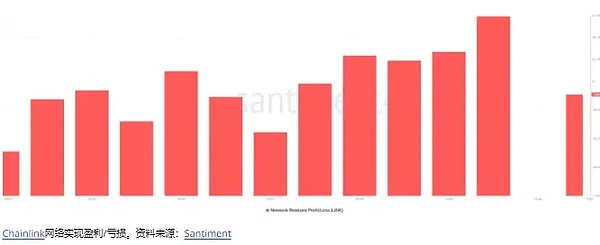
7 月 21 日星期日,Chainlink 的价格在 30 多天内首次达到 15 美元。随着价格上涨,Santiment 的数据显示,该网络的实际利润/亏损跃升至 1.0655 亿美元。
v2-bb7b607e47a94d039b16369f904be9db_720w.webp

网络已实现盈亏显示交易者是亏本出售还是实现盈利。LINK 的正值区域飙升至 1.0688 亿,表明许多持有者因该增长而获利。

然而,抛售压力的增加导致价格回落,截至发稿时交易价格为 14.36 美元。因此,一些持有者迟到了,截至撰写本文时,网络已实现利润/损失为 -13,000,这意味着已实现损失现在占主导地位。已实现利润的下降可能对 LINK 的价格来说是一个好兆头。这是因为抛售压力已经减轻,价格可能会稳定下来或再次进入上升趋势。

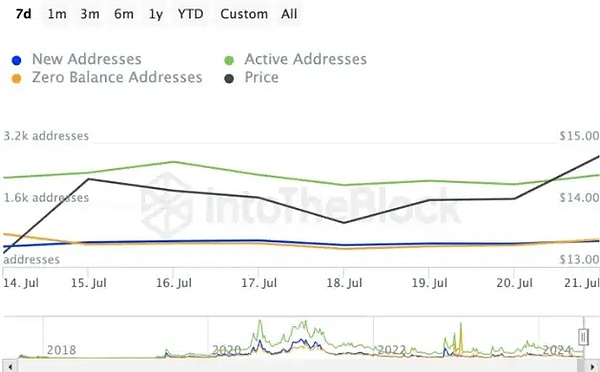
网络上新地址和活跃地址的激增也支持了潜在的增长。这两个指标在过去七天内都有所增加。

此次涨价意味着一批新的市场参与者正在采用 LINK 并将该代币添加到他们的投资组合中。同样,这意味着用户正在不断与 Chainlink 网络交互。此外,只要这种情况持续或改善,LINK 交易上涨的潜力就会增加。
v2-f26365d9d5f11e5948ee40c1d3980e8c_720w.webp

然而,了解到价格变动不仅限于链上活动并且技术状态也发挥了作用,使得预测更加可信。

LINK 价格预测:下一个目标揭晓

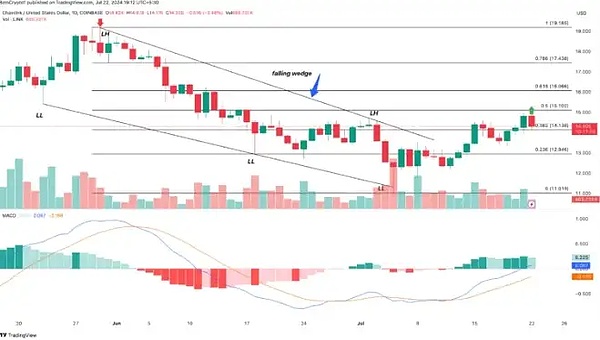
从技术角度来看, LINK 的价格在突破下降楔形后能够上涨。从非技术角度来看,下降楔形是由两条下降趋势线形成的形态。

顶部的趋势线代表较低的高点(LH),表明价格峰值正在逐渐减弱。另一方面,底部的趋势线(LL)代表较低的低点(LL)

由于趋势线下降,下降楔形被错误地认为是看跌形态。然而,事实并非如此。这是因为随着价格下跌,抛售压力会减小。因此,它会带来反转并突破上方阻力。

从下图可以看出,LINK 已经突破了 14.15 美元的阻力位。在小幅回撤后,出现了强烈的买入信号。
v2-aaa11dba3a4f2755c2aa7b5fccf7e959_720w.webp

这也得到了正向移动平均线收敛散度 (MACD) 的支持。MACD 的正读数意味着动量为正。如果情况仍然如此,Chainlink 可能会先触及 15.10 美元,然后再尝试测试 16.06 美元。

然而,如果持有者继续蒙受损失,LINK 的价格可能无法达到这些目标。如果发生这种情况,加密货币的下一步走势可能是跌至 14.13 美元。

简单来说

Chainlink 实现收益飙升至 1.0655 亿美元,但随后,实现损失的减少可能引发上升趋势。

随着网络上活跃地址和新地址的增加,代币的价格可能会持续增长。

LINK 已经突破下降楔形,尽管略有下跌,但出现了买入信号,暗示将上涨至 16.06 美元。

Criptomoedas em alta

Leituras Relacionadas

Deep Insight: Decentralized Inference is Not Hype, but a Key Track for AI to Break Through Centralized Monopoly

Decentralized Reasoning: Beyond the Hype, a Key to Breaking AI's Centralized Monopoly A future scenario where a powerful AI model is banned by a major government illustrates the core value proposition of decentralized AI: resistance to censorship. The core bet of decentralized inference networks is mitigating this risk, with other benefits like cost being secondary. The path is extremely difficult, involving four key challenges: 1. **Running Massive Models:** Distributing a single model across a decentralized GPU swarm requires sophisticated techniques like pipeline and speculative decoding to overcome crippling network latency, aiming for usable speeds (e.g., 30-40 tokens/second). 2. **Proving Model Integrity:** Verifying that a node runs the correct model is critical. Solutions range from cryptographically secure but slow ZKML to faster, economically-secure methods like statistical fingerprints, deterministic re-execution, or live-weight proofs, each involving trade-offs between integrity, latency, and cost. 3. **Ensuring Prompt Privacy:** Simply sharding a model does not protect user inputs from nodes. Robust solutions currently require trusted hardware (TEEs) or advanced cryptography (FHE), which are not yet widely deployed in consumer swarms. 4. **Building a Real Market:** Identifying the ideal customer is tough. Beyond speculative AI agents, the viable market currently consists of startups embedding AI and projects needing batch processing (e.g., synthetic data generation), where decentralized aggregation can be an advantage over low-latency needs. The article analyzes several projects tackling these problems, such as Dolphin Network (live-weight proofs), Inference.net (statistical verification), Morpheus (TEE-based), and Darkbloom (Apple Secure Enclave). It provides a framework: decentralization is a "tax" for latency-sensitive applications (e.g., chat) but a potential supply-side advantage for throughput-oriented tasks (e.g., batch processing). The long-term vision is a closed data loop where decentralized inference generates valuable data (traces, preferences) to feed decentralized training networks, which in turn produce better open-weight models for the inference networks. A due diligence checklist advises focusing on projects that: are truly decentralized at specific layers; have a credible integrity method; offer real cost benefits; ensure genuine privacy; handle node reliability; have paying users; and are built by teams with deep AI expertise. The ultimate goal should be products that appeal beyond the crypto-native audience, using crypto mechanisms invisibly to deliver better cost, performance, or privacy.

Foresight NewsHá 15m

Deep Insight: Decentralized Inference is Not Hype, but a Key Track for AI to Break Through Centralized Monopoly

Foresight NewsHá 15m

The Final Piece of Franklin Templeton's Crypto Ambition

Franklin Templeton Completes Crypto Ambition with Acquisition of 250 Digital On June 22, Franklin Templeton announced the acquisition of 250 Digital and established Franklin Crypto, a new division focused on actively managed cryptocurrency strategies for institutional investors. The unit is led by Christopher Perkins and Seth Ginns. This acquisition marks a key piece in Franklin Templeton's multi-year crypto strategy, which began in 2018 with a digital assets team. The firm's crypto product suite now spans three layers: tokenized funds like the blockchain-based money market fund BENJI (~$831M AUM); a series of passive ETFs including Bitcoin (EZBC, ~$368M), Ethereum (EZET), XRP (XRPZ, ~$252M), Solana (SOEZ), and a multi-crypto index fund (EZPZ); and the newly added active management strategies from Franklin Crypto. The company has also expanded its crypto ecosystem through investments in projects like Ethena and Crossmint, and collaborations with blockchains such as Aptos and Sui. With approximately $18B in digital asset AUM and a total firm AUM of ~$1.78T, Franklin Templeton is positioning itself as a comprehensive crypto asset manager for pensions and sovereign wealth funds. In contrast, competitor Fidelity Investments has taken a different path, focusing early on building its own custody and trading infrastructure. Fidelity's Bitcoin ETF (FBTC) holds over $11B, significantly larger than Franklin Templeton's equivalent offering. Both giants' moves underscore the deepening trend of traditional finance entering the crypto space.

Foresight NewsHá 39m

The Final Piece of Franklin Templeton's Crypto Ambition

Foresight NewsHá 39m

Trading

Spot
Futuros

Artigos em Destaque

Como comprar LINK

Bem-vindo à HTX.com!Tornámos a compra de ChainLink (LINK) simples e conveniente.Segue o nosso guia passo a passo para iniciar a tua jornada no mundo das criptos.Passo 1: cria a tua conta HTXUtiliza o teu e-mail ou número de telefone para te inscreveres numa conta gratuita na HTX.Desfruta de um processo de inscrição sem complicações e desbloqueia todas as funcionalidades.Obter a minha contaPasso 2: vai para Comprar Cripto e escolhe o teu método de pagamentoCartão de crédito/débito: usa o teu visa ou mastercard para comprar ChainLink (LINK) instantaneamente.Saldo: usa os fundos da tua conta HTX para transacionar sem problemas.Terceiros: adicionamos métodos de pagamento populares, como Google Pay e Apple Pay, para aumentar a conveniência.P2P: transaciona diretamente com outros utilizadores na HTX.Mercado de balcão (OTC): oferecemos serviços personalizados e taxas de câmbio competitivas para os traders.Passo 3: armazena teu ChainLink (LINK)Depois de comprar o teu ChainLink (LINK), armazena-o na tua conta HTX.Alternativamente, podes enviá-lo para outro lugar através de transferência blockchain ou usá-lo para transacionar outras criptomoedas.Passo 4: transaciona ChainLink (LINK)Transaciona facilmente ChainLink (LINK) no mercado à vista da HTX.Acede simplesmente à tua conta, seleciona o teu par de trading, executa as tuas transações e monitoriza em tempo real.Oferecemos uma experiência de fácil utilização tanto para principiantes como para traders experientes.

899 Visualizações TotaisPublicado em {updateTime}Atualizado em 2026.06.02

Como comprar LINK

Discussões

Bem-vindo à Comunidade HTX. Aqui, pode manter-se informado sobre os mais recentes desenvolvimentos da plataforma e obter acesso a análises profissionais de mercado. As opiniões dos utilizadores sobre o preço de LINK (LINK) são apresentadas abaixo.

活动图片