Шансы Трампа и Харрис на победу сравнялись на платформе Polymarket

investing.ruPublicado em 2024-08-08Última atualização em 2024-08-08

Happycoin.club - Шансы Дональда Трампа и Камалы Харрис на победу на президентских выборах в США сравнялись на платформе для ставок в криптовалюте Polymarket.

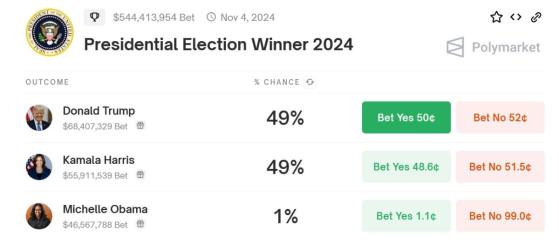
Вероятность выигрыша обоих кандидатов оценивается в 49%. Однако успешное пари на Трампа принесёт 100% прибыли, а на Харрис – 106%. Судя по всему, это обусловлено тем, что на Дональда поставили больше. На его викторию зарядили $68,4 млн, а на триумф Камалы – $55,9 млн.

Вероятность победы кандидатов на президентских выборах в США

Вера азартных членов криптосообщества в выигрыш Трампа сильно пошатнулась. 16 июля шанс его победы оценивался в 72%, то есть вероятность виктории Дональда снизилась на 32%. А Харрис, наоборот, набрала очки в глазах избирателей. С 16 июля шанс её триумфа вырос более чем в восемь раз.

Сотрудник криптовалютной площадки YouHodler Руслан Лиенха считает, что выигрыш Харрис на выборах сыграет против отрасли цифровых активов. По его словам, инвесторы полагают, что демократы, которых представляет Камала, ужесточат регулирование оборота криптовалют. Соответственно, если Харрис станет президентом, курс биткоина может упасть.

Первенство Трампа, напротив, сулит старт бычьего ралли на рынке BTC, потому что Дональд публично высказался в поддержку цифрового актива и пообещал вкладывать бюджетные деньги в криптовалюту.

Выступление Дональда Трампа на биткоин-конференции

Читайте оригинальную статью на сайте Happycoin.club
Leituras Relacionadas

Collateral Dollars: How Does a 'Second-Layer Dollar' Above Stablecoins Form?

Collateral Dollars: How Does a "Second Layer of Dollars" Form on Top of Stablecoins? Most assume stablecoins replicate Eurodollar functions, expanding the offshore dollar system. However, stablecoins primarily replace specific functions like operational dollar balances for settlement. They do not inherently create new dollar credit; they substitute existing claims. The key question is: what happens when financial intermediaries use stablecoins as collateral to create a new layer of dollar-denominated claims? This "collateral dollar" channel operates through secured lending, not direct money creation. A money-like event only occurs when a liability issued against the controlled stablecoin is funded, rolled over, or accepted at near-par value by another balance sheet. The discount (haircut) prices the gap between "effective control over the token" and "reliable convertibility to bank dollars." Elasticity stems not from the stablecoin itself but from the liability issued against it and the willingness of third-party balance sheets to treat that liability as a near-par asset. Compared to the traditional Eurodollar system—where elasticity originates from bank deposit creation—the stablecoin collateral chain is structurally different. Eurodollar deposits are credit-expansive from inception. Stablecoins are initially substitutive; elasticity emerges later if an intermediary's liability against them gains monetary acceptance. Stablecoins disrupt specific tiers of the offshore dollar system, mainly replacing operational settlement balances. They do not replace the need for full dollar balance-sheet capacity (credit lines, hedging, maturity transformation). For systemic impact, the second-layer liability must pass three tests: transferability, funding capacity, and monetary acceptance (being fundable or held at par by others). Pressure transmission also differs. In the Eurodollar system, stress moves up a hierarchy of claims. In a stablecoin collateral chain, the second-layer liability can lose its money-like status well before the underlying stablecoin faces a run, often triggered by haircut increases and margin calls that create a dynamic spiral of falling token prices and rising discounts. In conclusion, the "collateral dollar" is not the stablecoin itself. It is the second-layer liability issued against a controlled token balance that is willing to be funded and maintained at near-par value. Its existence depends on that liability surviving the leap from "token liquidity" to "bank dollar liquidity."

marsbitHá 1h

Collateral Dollars: How Does a 'Second-Layer Dollar' Above Stablecoins Form?

marsbitHá 1h

Trading

Spot
活动图片